


Are Smeg stand mixers good?
Smeg stand mixers have an average overall score of 7, ranking #9 among all stand mixer brands, and an average review score of 8.2, placing them at #5 among brands graded by independent reviewers.
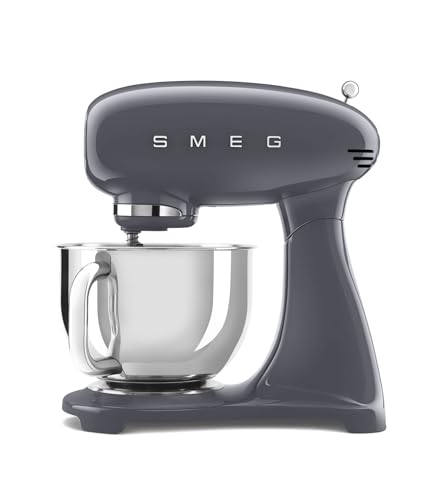
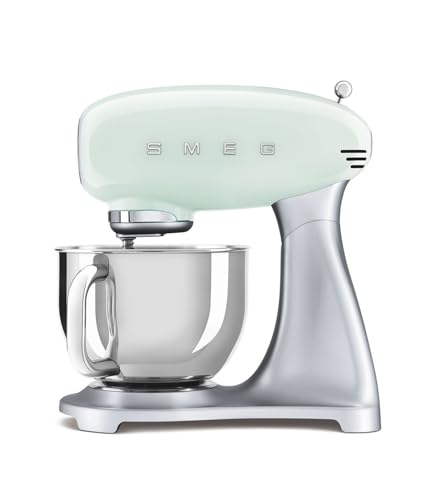
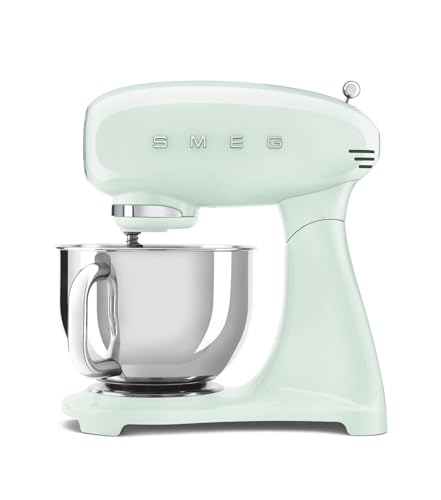
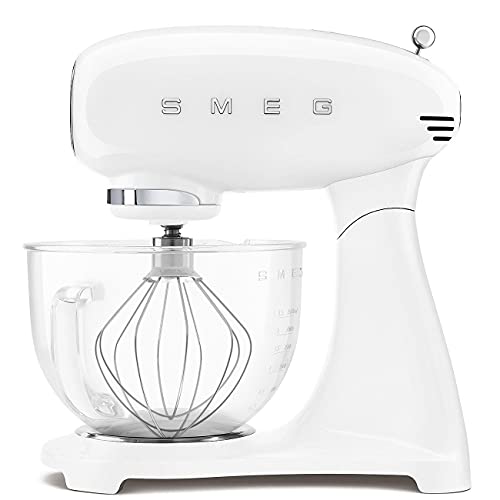
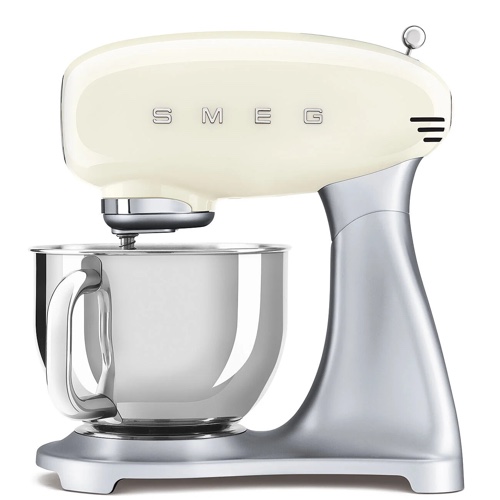
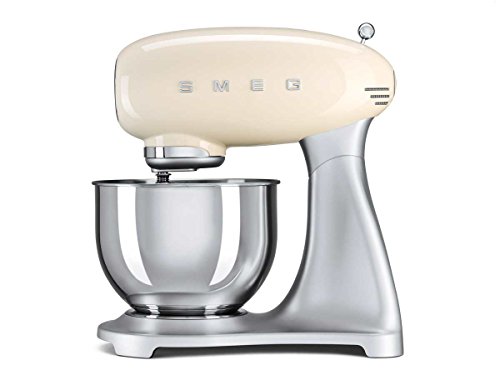
Smeg is known for its 50's Style range, and the stand mixers carry the same look: a die-cast aluminium body, rounded lines and finishes from pastel blue to cream and black. Under the shell sits a tilt-head planetary mixer with 10 speeds and a soft start that keeps flour in the bowl. The SMF02 and SMF13 form the core of the range, while the SMF05 steps up to 1000 W for firmer dough.
The real limit is choice. Every model uses the same bowl size and the same tilt-head build, so there is no larger or bowl-lift option for people who bake in bulk. Stiff rye or bagel dough also pushes the standard 800 W motor hard. Part of the price pays for the design rather than extra torque.
(Note: A total of 19 brands were evaluated in the comparison in the first paragraph. Only those with at least 3 stand mixer models in our database were included.)
The chart below ranks stand mixer brands by average overall score.
[horizontal-chart-06026235020310824255111444020147985445831378845645]What are the main advantages of Smeg stand mixers?
The main advantages of Smeg stand mixers are as follows:
- Retro design: The SMF02 has the rounded 50's Style body in a wide choice of colours. It looks good on an open worktop, and few mixers double as a kitchen centrepiece this well.
- Planetary mixing: The SMF01 turns the beater around the bowl while it spins on its own axis. Batter at the edges gets mixed with little scraping.
- Smooth start: Each speed on the SMF13 ramps up gently. Flour and icing sugar stay in the bowl instead of dusting the counter.
- Die-cast body: The SMF04 uses a die-cast aluminium housing rather than plastic. Its weight keeps it steady when it whips cream or beats a thick cake batter.
- Extra power: The SMF05 draws 1000 W, the most in the lineup. Brioche and other enriched dough put it under less strain.
- Attachment hub: The SMF03 comes with 4 tools, and its front hub takes the optional pasta roller, mincer and slicer. One base covers jobs that would otherwise need separate machines.
What are the main disadvantages of Smeg stand mixers?
The main disadvantages of Smeg stand mixers are the following:
- One bowl size: The SMF01, SMF02 and SMF03 all share a bowl just under 5 litres. Large families and batch bakers have no bigger Smeg to step up to.
- Limited torque: The SMF02 runs at 800 W, which suits cakes and soft bread. Two loaves of wholemeal or rye dough at once make the motor labour and warm up.
- No scale or pulse: Neither the SMF13 nor the SMF03 has a built-in scale or a pulse button. You weigh ingredients on a separate scale and control short bursts by hand.
- Noise: The SMF04 is rated at 76 dB. At top speed that is close to a vacuum cleaner, so early-morning whipping wakes the house.
- Price for the specs: The SMF03 costs more than the SMF01 yet uses the same 800 W motor. Much of the premium pays for the finish and extra tools, not mixing power.