Scored using Routers Methodology v3.0
Routers Methodology v3.0
Mathematical & Unbiased Scoring
Products in this category are scored under Frontum Routers Methodology v3.0: the technical score from the specifications is the base, and independent expert and video reviews (up to ±0.5 points), owner opinions (up to ±0.3) and best-of lists (up to +0.3) move it up or down.
Explore Routers Methodology v3.0

ASUS RT-N66R review: 77 specs compared

Avg. price:~£35Wi-Fi version:Wi-Fi 4 (802.11n)Wi-Fi speed:900 MbpsLAN port speeds:1 GbpsMesh Wi-Fi:no

ASUS RT-N66R Review: Compare 77 technical specifications to see how this product ranks in the Routers category and whether it is worth buying.
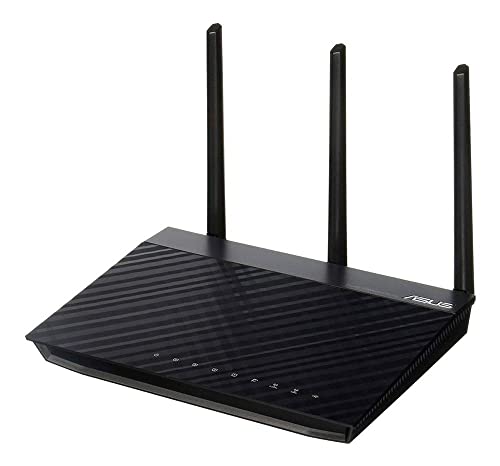
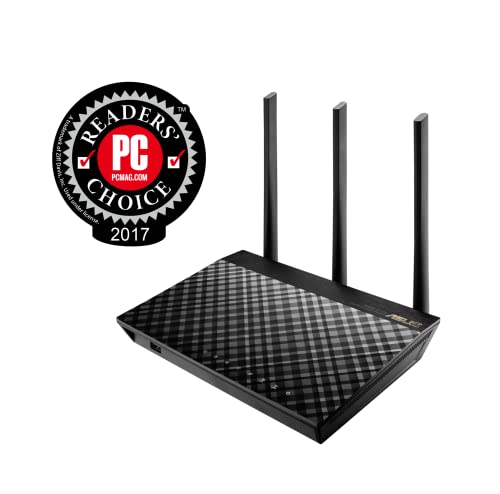
ASUS RT-N66R
7.3/10

Overall score

Score
7.3/ 10
✕
What it is
Our main score for this model, 1–10. It combines specs, expert reviews, best-of lists and owners.
How we count it
Parts: Technical score 40%, Reviews score 25%, List score 25%, Sentiment score 10%
Marks: Each part gets a mark out of 10. For reviews, lists and owners, a typical model in this category gets about 8 and the best one gets 10.
No data yet: A part with no data shows "?". It counts as the mark of a weaker model in this category (4 in 5 models with data score higher). This way, models with reviews, lists and owners usually come out ahead.
Score distribution
â–¼
<55-66-77-88-99-10
Score components

40%

7.1

Technical score

25%

?

Reviews scoreNot enough data yet, so we use 7.7, the mark of a weaker model in this category

25%

?

List scoreNot enough data yet, so we use 7.5, the mark of a weaker model in this category

10%

?

Sentiment scoreNot enough data yet, so we use 6.9, the mark of a weaker model in this category

â–¼Worse than 52% of routers
8.1

Value for money

Value for money
8.1/ 10
✕
What it is
An indicator that combines the router's overall rating with its cost.
When it matters
When you are looking for a router with a good balance between network performance, features, and price.
Score distribution
â–¼
<55-66-77-88-99-10
Score components

70%

7.3

Overall score

30%

10

Price

â–¼Worse than 54%
7.1

Technical score

Technical score
7.1/ 10
✕
What it is
How good the specs are compared with the other models in this category, 1–10.
How we count it
Areas: We rate the specs in each area against the other models in this category.
Weighting: The areas that matter most to buyers count more. The shares are shown under Score components.
Share: The technical score is 40% of the overall score.
Score distribution
â–¼
<55-66-77-88-99-10
Score components

26%

4.9

Wireless

20%

6.3

Ports

18%

9.8

Networking

14%

9.1

Security

12%

6.3

Hardware

10%

8.0

Management

â–²Better than 50%
?

Reviews score

Reviews score
✕
What it is
Average grade from independent test sites, magazines and video reviewers, 1–10.
How we count it
Grades: Each review's own score is converted to 1–10; without one, we grade the review ourselves. Big test sites count more, short reviews half as much as full tests. A video review counts half.
Score: The average grade is 80% of the review mark; the number of reviews is the other 20% (1 review = 5, the typical number in this category = 8, the most-reviewed model = 10).
Enough data: With few reviews, the average grade is pulled toward the typical grade of this category. No reviews yet: 7.7 for now.
Share: Reviews count 25% of the overall score.
Score distribution
â–¼
<55-66-77-88-99-10
Grades by review (0)
We have not found an independent test of this model yet. Until we do, its review part counts as 7.7.
User ratings collected online are not part of this score.
No expert tests yet
?

List score

List score
7.5/ 10
✕
What it is
How often independent test sites, magazines and video reviewers put this model in their best-of lists for this category.
How we count it
Points: The model in the most lists of this category gets 10; the others get 8 to 10 in proportion. In no list yet: 7.5. Lists count 25% of the overall score.
Enough data: Every list counts, even a single one. With fewer than 5 best-of lists in the category, this part is left out.
Lists with this model (0)
Not in any best-of list yet, so this part counts as 7.5. Models in a list get 8 to 10.
Not in any best-of list yet
  • asus-rt-n66r
asus-rt-n66r
Where to buy
    N/A~ £35
Best rankings
Available: ranking among products currently available (including other versions of this product).All: ranking among all products in the database.
Loading...
Loading category ranking...

Technical Specifications of router ASUS RT-N66R

Technical score
Technical score
7.1/ 10
✕
What it is
How good the specs are compared with the other models in this category, 1–10.
How we count it
Areas: We rate the specs in each area against the other models in this category.
Weighting: The areas that matter most to buyers count more. The shares are shown under Score components.
Share: The technical score is 40% of the overall score.
Score distribution
â–¼
<55-66-77-88-99-10
Score components:

26%

4.9

Wireless

20%

6.3

Ports

18%

9.8

Networking

14%

9.1

Security

12%

6.3

Hardware

10%

8.0

Management

7.1
Reviews score
7.7
List score
?
Value for money
Value for money
8.1/ 10
✕
What it is
An indicator that combines the router's overall rating with its cost.
When it matters
When you are looking for a router with a good balance between network performance, features, and price.
Score distribution
â–¼
<55-66-77-88-99-10
Score components:

70%

7.3

Overall score

30%

10

Price

8.1
Brand name
ASUS
Wi-Fi version
Wi-Fi 4 (802.11n)
This router uses Wi-Fi 4 (802.11n), which is less advanced than 65% of routers and equal to 32.7% of routers.
Wi-Fi bands
2.4 GHz + 5 GHz
This router supports 2.4 GHz + 5 GHz Wi-Fi bands, which are more versatile than 24.2% of routers and equal to 65.6% of routers.
Wi-Fi speed
900 Mbps
This router delivers 900 Mbps Wi-Fi speed, which is lower than 64.3% of routers and equal to 1.6% of routers.
Channel widths supported
20 MHz + 40 MHz
This router supports 20 MHz + 40 MHz channel width options, which is fewer than 63.7% of routers and the same as 31.2% of routers.
Show more
Wi-Fi security protocols
WPA2, WPA, WEP, WPS
This router supports WPA2, WPA, WEP, WPS Wi-Fi security protocols, which are less advanced than 69.1% of routers and equal to 9.4% of routers.
DoS protection
yes
This router includes DoS protection. 9.8% of routers include DoS protection.
SPI intrusion protection
yes
This router includes SPI-based intrusion protection. 4.7% of routers include SPI-based intrusion protection.
MAC address filtering
yes
This router supports MAC address filtering. 1.7% of routers include MAC address filtering.
URL filter
yes
This router supports URL filtering. 2.6% of routers include URL filtering.
Show more
IPv6 support
yes
This router supports IPv6. 8.8% of routers are IPv6-ready.
Dynamic routing
yes
This router supports dynamic routing. 54% of routers support dynamic routing.
Inter-VLAN routing
no
This router does not support inter-VLAN routing. 24.5% of routers support inter-VLAN routing.
VLAN tagging
yes
This router supports VLAN tagging. 33.6% of routers include VLAN tagging.
QoS
yes
This router includes QoS controls. 2.4% of routers include QoS controls.
Show more
N. of LAN ports
4
This router has 4 LAN ports, which is more than 34.2% of routers and the same as 59.3% of routers.
LAN port speeds
1 Gbps
This router offers 1 Gbps on its LAN ports, which is faster than 25.7% of routers and on par with 56.1% of routers.
N. of WAN ports
1
This router has 1 WAN ports, which is more than 0.8% of routers and the same as 89.4% of routers.
N. of USB ports
2
This router has 2 USB ports, which is more than 81.9% of routers and the same as 17.9% of routers.
Power over Ethernet (PoE)
no
This router does not support Power over Ethernet (PoE). 1.7% of routers can be powered over Ethernet.
Show more
Management interface
Web UI, App
This router uses Web UI, App for management, which is more advanced than 29.7% of routers and equal to 60.9% of routers.
Firmware upgrade method
Web UI, App, Automatic
This router supports Web UI, App, Automatic firmware update methods, which are more convenient than 71.9% of routers and equal to 27.2% of routers.
Traffic monitoring
yes
This router includes traffic monitoring. 13.9% of routers include traffic monitoring.
Guest Wi-Fi network
yes
This router offers a guest Wi‑Fi network. 7.3% of routers offer a guest Wi‑Fi network.
Captive portal
no
This router does not offer captive portal features. 22.4% of routers offer captive portal features.
Show more
CPU clock speed
1x 0.6 GHz
This router runs at 1x0.6 GHz, which is slower than 70.9% of routers and on par with 1.8% of routers.
RAM capacity
256 MB
This router has 256 MB of RAM, which is more than 46.3% of routers and the same as 14.9% of routers.
Internal storage
0.03125 GB
This router has 0.03125 GB of internal storage, which is less than 52.8% of routers and the same as 2.1% of routers.
Hardware acceleration
yes
This router offers hardware acceleration. 24.9% of routers offer hardware acceleration.
N. of external antennas
3
This router has 3 external antennas, which is more than 57.9% of routers and the same as 11.8% of routers.
Show more

ASUS RT-N66R vs the average router

246810TotalWirelessSecurityNetworkingPortsManagementHardware
  • Supports automatic failover
    This router offers automatic failover, while the average router does not. 31.2% of routers offer automatic failover.
  • 285,000 more NAT sessions
    This router has more concurrent NAT sessions than the average router (300,000 vs 15,000). The average router supports 15,000 concurrent NAT sessions.
    300,000 vs 15,000
  • 1 more USB ports
    This router has more USB ports than the average router (2 vs 1). The average router has 1 USB ports.
    2 vs 1
  • Supports dynamic routing
    This router supports dynamic routing, while the average router does not. 46.1% of routers support dynamic routing.
  • Suitable for gaming
    This router is designed for gaming, while the average router is not. 37.9% of routers are designed for gaming.
  • More capable NAS services
    This router includes SMB, FTP, media server, time machine NAS services, while the average router includes SMB, media server.
    SMB, FTP, media server, time machine vs SMB, media server
  • Removable antennas
    This router has removable antennas, while the average router does not. 27.8% of routers have removable antennas.
  • Includes memory card slot
    This router has a memory card slot, while the average router does not. 7.7% of routers have a memory card slot.
  • 2.71x cheaper
    ASUS RT-N66R is cheaper than the average router (£35 vs £95).
    £35 vs £95
  • Stronger Wi-Fi security
    This router supports the Wi-Fi security protocols WPA2, WPA, WEP, WPS, while the average router supports WPA2, WPA/WPA2, WEP.
    WPA2, WPA, WEP, WPS vs WPA2, WPA/WPA2, WEP
  • Supports automatic failover
    This router offers automatic failover, while the average router does not. 31.2% of routers offer automatic failover.
  • 285,000 more NAT sessions
    This router has more concurrent NAT sessions than the average router (300,000 vs 15,000). The average router supports 15,000 concurrent NAT sessions.
    300,000 vs 15,000
  • Supports dynamic routing
    This router supports dynamic routing, while the average router does not. 46.1% of routers support dynamic routing.
  • 1 more USB ports
    This router has more USB ports than the average router (2 vs 1). The average router has 1 USB ports.
    2 vs 1
  • Includes memory card slot
    This router has a memory card slot, while the average router does not. 7.7% of routers have a memory card slot.
  • More capable NAS services
    This router includes SMB, FTP, media server, time machine NAS services, while the average router includes SMB, media server.
    SMB, FTP, media server, time machine vs SMB, media server
  • Suitable for gaming
    This router is designed for gaming, while the average router is not. 37.9% of routers are designed for gaming.
  • Removable antennas
    This router has removable antennas, while the average router does not. 27.8% of routers have removable antennas.
  • 1 more external antennas
    This router has more external antennas than the average router (3 vs 2). The average router has 2 external antennas.
    3 vs 2
  • Older Wi-Fi version
    This router uses an older Wi-Fi version than the average router (Wi-Fi 4 (802.11n) vs Wi-Fi 5 (802.11ac)). The average router uses Wi-Fi 5 (802.11ac).
    Wi-Fi 4 (802.11n) vs Wi-Fi 5 (802.11ac)
  • No MU-MIMO
    This router does not support MU-MIMO, while the average router does. 54% of routers support MU-MIMO.
  • Narrower channel widths
    This router has a lower supported channel width than the average router (20 MHz + 40 MHz vs 20 MHz + 40 MHz + 80 MHz). The average router supports channel width of 20 MHz + 40 MHz + 80 MHz.
    20 MHz + 40 MHz vs 20 MHz + 40 MHz + 80 MHz
  • Lower CPU clock speed
    This router has a lower CPU clock speed than the average router (1x0.6 GHz vs 2x1 GHz). The average router has a CPU clock speed of 2x1 GHz.
    1x0.6 GHz vs 2x1 GHz
  • 48.6% slower Wi-Fi speed
    This router has a lower Wi-Fi speed than the average router (900 Mbps vs 1,750 Mbps). The average router reaches Wi-Fi speed of 1,750 Mbps.
    900 Mbps vs 1,750 Mbps
  • No band steering
    This router does not support band steering, while the average router does. 57.6% of routers support band steering.
  • No beamforming
    This router does not support beamforming, while the average router does. 62.1% of routers support beamforming.
  • 75% less internal storage
    This router has less internal storage than the average router (0 GB vs 0.1 GB). The average router offers 0.125 GB of internal storage.
    0.03125 GB vs 0.125 GB
  • Older Wi-Fi version
    This router uses an older Wi-Fi version than the average router (Wi-Fi 4 (802.11n) vs Wi-Fi 5 (802.11ac)). The average router uses Wi-Fi 5 (802.11ac).
    Wi-Fi 4 (802.11n) vs Wi-Fi 5 (802.11ac)
  • No MU-MIMO
    This router does not support MU-MIMO, while the average router does. 54% of routers support MU-MIMO.
  • Narrower channel widths
    This router has a lower supported channel width than the average router (20 MHz + 40 MHz vs 20 MHz + 40 MHz + 80 MHz). The average router supports channel width of 20 MHz + 40 MHz + 80 MHz.
    20 MHz + 40 MHz vs 20 MHz + 40 MHz + 80 MHz
  • 48.6% slower Wi-Fi speed
    This router has a lower Wi-Fi speed than the average router (900 Mbps vs 1,750 Mbps). The average router reaches Wi-Fi speed of 1,750 Mbps.
    900 Mbps vs 1,750 Mbps
  • No band steering
    This router does not support band steering, while the average router does. 57.6% of routers support band steering.
  • No beamforming
    This router does not support beamforming, while the average router does. 62.1% of routers support beamforming.
  • Narrower DFS range
    This router has fewer supported DFS channels than the average router (52-64 + 100-140 vs 52-64 + 100-144). The average router supports 52-64 + 100-144 DFS channels.
    52-64 + 100-140 vs 52-64 + 100-144
  • Lower CPU clock speed
    This router has a lower CPU clock speed than the average router (1x0.6 GHz vs 2x1 GHz). The average router has a CPU clock speed of 2x1 GHz.
    1x0.6 GHz vs 2x1 GHz
  • 75% less internal storage
    This router has less internal storage than the average router (0 GB vs 0.1 GB). The average router offers 0.125 GB of internal storage.
    0.03125 GB vs 0.125 GB
  • 7 years older release date
    This router is an older model than the average router (2012 vs 2019). The average router release year is 2019.
    September 2012
    2012 vs 2019

Video reviews

Hands-on testing, unboxing, and real-world video evaluations
Overview video

Third-party reviews

What customers like about ASUS RT-N66R

  • Excellent wireless range and coverage for large, multi-level homes
  • High-speed 5GHz performance with stable signals
  • Easy-to-use ASUSWRT user interface with straightforward setup
  • Versatile feature set including built-in VPN server and parental controls
  • Dual USB ports for file sharing, printers, or 3G/4G failover modems
  • Support for multiple guest SSIDs on both 2.4GHz and 5Ghz bands
  • Three detachable antennas allow for future high-gain upgrades

What customers don't like about ASUS RT-N66R

  • Generates significant heat, which can lead to stability issues in poorly ventilated areas
  • 2.4GHz band performance at close range is often cited as underwhelming
  • High power consumption compared to some other dual-band N-routers
  • Lack of USB 3.0 support (features two USB 2.0 ports)
  • Initial firmware versions were reported to be buggy by some users
  • Average USB throughput speeds when used as a mini NAS

Verdict

The Asus RT-N66R (also known as the 'Dark Knight') is a dual-band N900 gigabit router featuring concurrent 2.4 GHz and 5 GHz bands with combined speeds of up to 900 Mbps. It is equipped with a 600 MHz Broadcom processor, 256 MB of RAM, and three detachable high-powered antennas that utilize AiRadar beamforming to provide coverage for up to 2,000 square feet. Key characteristics include four Gigabit LAN ports, one Gigabit WAN port, and two multi-functional USB 2.0 ports for printer and file sharing. Main pros include its intuitive ASUSWRT interface, support for up to 300,000 concurrent data sessions, and robust VPN and guest network capabilities. However, notable cons include significant heat generation during operation, lack of modern Wi-Fi 5 (802.11ac) or Wi-Fi 6 support, and slower USB 2.0 transfer speeds compared to newer standards.

Compare ASUS RT-N66R with other routers

1Product to compare no. 1
VS
2Product to compare no. 2
VS
3Product to compare no. 3 (optional)

Graphic comparison of ASUS RT-N66R and other routers

No results found