
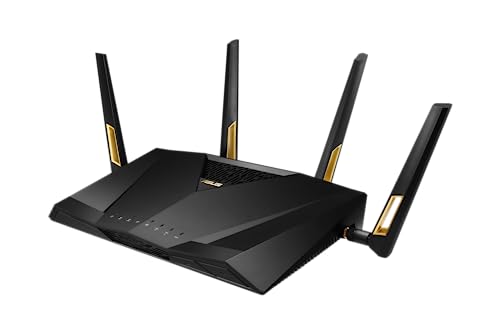
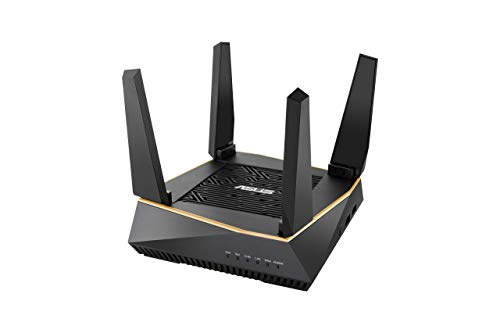
Are Asus routers good?
Asus routers have an average overall score of 8.6, ranking #1 among all router brands, and a user rating of 9, placing them at #6 based on user reviews.
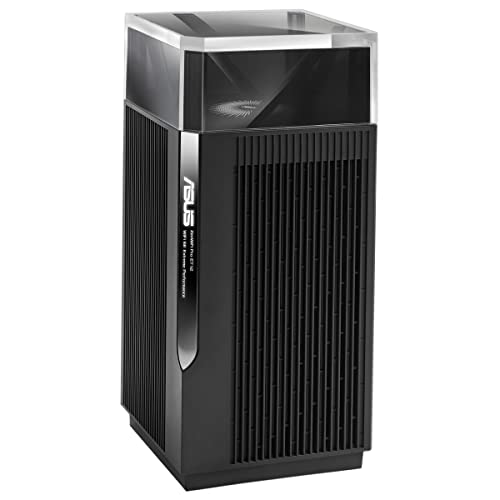
Asus routers are good and represent a solid choice for home and small business networking needs. The company has built a strong reputation in the router market through consistent performance, reliable hardware, and regular firmware updates that address security vulnerabilities and add new features.
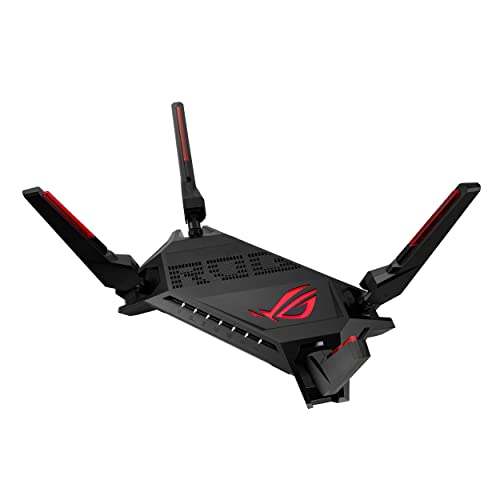
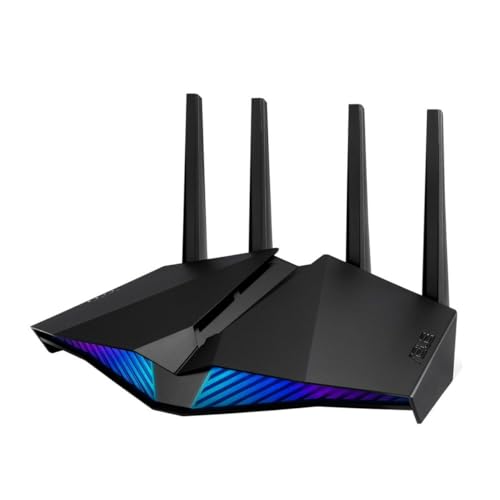
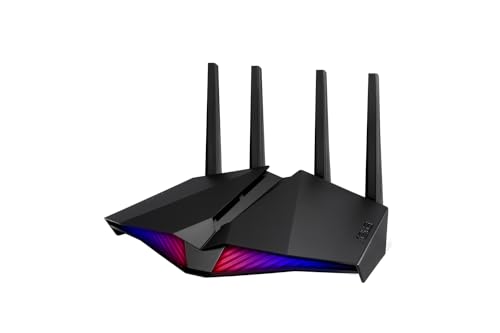
Asus routers typically deliver excellent wireless performance with strong signal coverage and stable connections across different price ranges. The brand's gaming-focused ROG series routers excel in low-latency performance and advanced QoS features, while their standard models balance performance with affordability.
The best Asus routers are as follows.
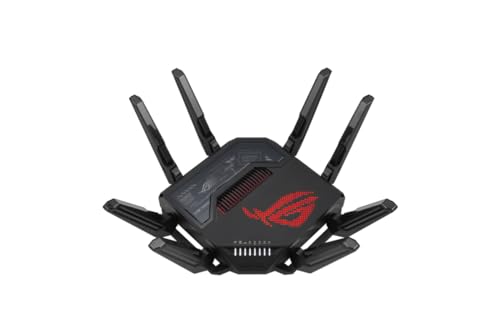
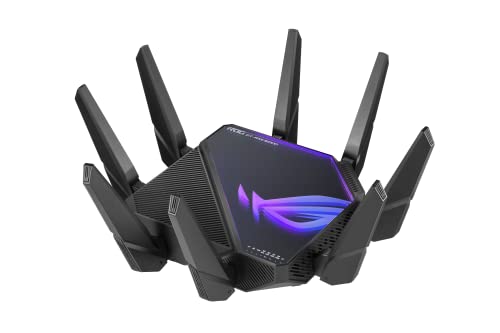
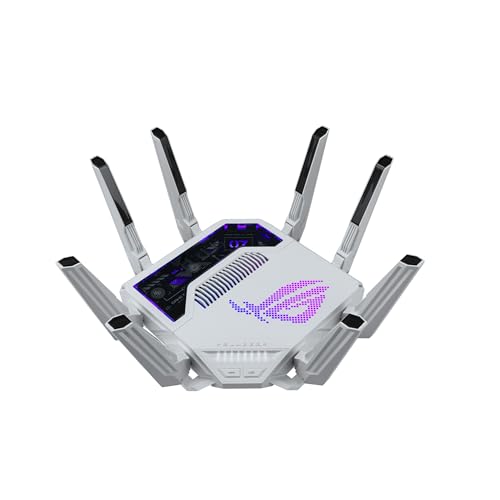
- ASUS ROG Rapture GT BE98 (Overall score: 9 points)
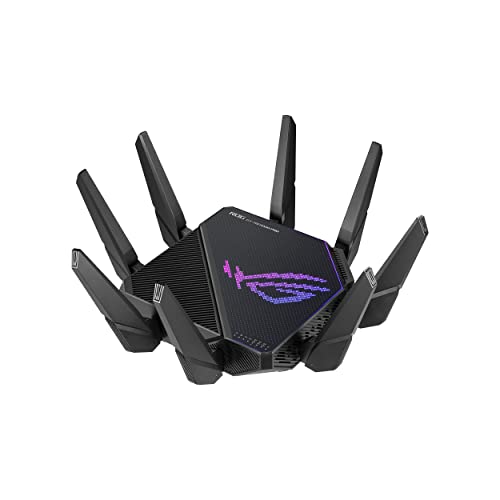
- ASUS ROG Rapture GT AX11000 Pro (Overall score: 8.95 points)
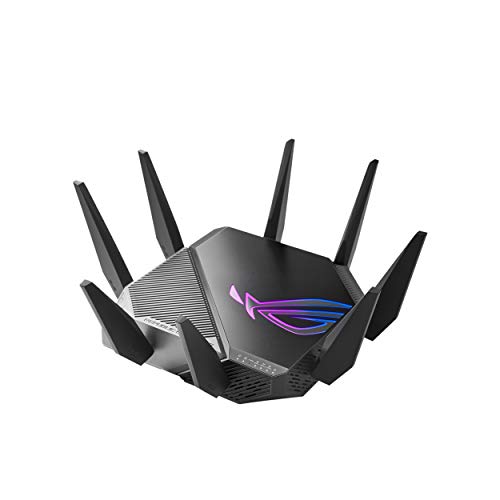
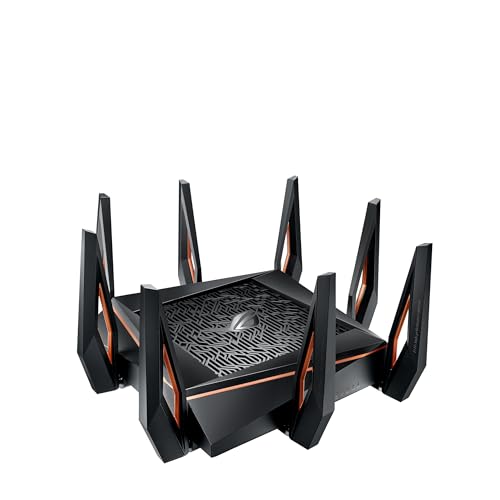
- ASUS ROG Rapture GT AXE11000 (Overall score: 8.9 points)
The chart below ranks router brands by average overall score.
[horizontal-chart-12358809363490758653123200512821428302133513557861]
What are the main advantages of Asus routers?
The main advantages of Asus routers are as follows.
- Wide Wi-Fi coverage: Asus routers use multiple high-gain antennas and technologies like AiRadar beamforming, which extend coverage up to 500 m² in larger homes and offices. This results in fewer dead zones and more stable connections across multiple floors.
- High-speed connections: Many Asus models support Wi-Fi 6 (802.11ax) with speeds up to 11,000 Mbps in tri-band routers. This speed is beneficial for 4K/8K streaming, gaming, and households with more than 20 devices connected at the same time.
- Advanced security features: Asus integrates AiProtection Pro powered by Trend Micro, which includes real-time threat detection, parental controls, and automatic blocking of malicious sites. These security updates stay active without subscription costs, which reduces ongoing expenses.
- Strong gaming performance: The ROG series includes features like Game Boost (adaptive QoS) and dedicated gaming LAN ports. Latency can drop by up to 90% compared to standard routers, which is critical for competitive online play.
- Flexible network setup: AiMesh technology lets users connect multiple Asus routers to build a mesh network with a single SSID. This solution provides seamless roaming and performance comparable to dedicated mesh systems, which usually cost more.
- Powerful hardware: Asus high-end routers use quad-core processors up to 1.8 GHz and 1 GB RAM. This hardware supports many simultaneous tasks such as VPN connections, NAS storage, and streaming without performance drops.
What are the main disadvantages of Asus routers?
The main disadvantages of Asus routers are as follows.
- Higher price: Premium Asus routers like the ROG Rapture GT-AXE16000 often exceed £430, which makes them less accessible compared to TP-Link or Netgear mid-range models.
- Complex interface: AsusWRT has many advanced settings, which can overwhelm less experienced users. It often requires manual adjustments to reach optimal performance.
- Large size: High-performance models with multiple antennas and strong cooling systems are bulky (over 25 cm wide and with 8 external antennas). This design can be inconvenient in small spaces.
- Firmware updates: Although frequent, some updates introduce stability issues that require manual fixes or rollbacks. This creates downtime for users who depend on reliable connections.
- Power consumption: High-end tri-band models with Wi-Fi 6E consume more power, often above 20 watts under load, which is higher than average routers in the same category.

Who makes Asus routers?
Asus routers are made by AsusTek Computer Inc., a Taiwanese multinational company founded in 1989 in Taipei. Asus designs and manufactures its own routers under the Asus brand and sells them worldwide. The company has its headquarters in Taipei, Taiwan, and employs more than 15,000 people globally.
Asus started as a motherboard manufacturer and grew into one of the largest hardware companies in the world. It expanded into networking equipment in the late 1990s and early 2000s, producing wireless routers, modems, and mesh systems under the Asus brand.
The routers are designed and developed in Taiwan, with large-scale production handled in both Taiwan and China. Asus is known as one of the top three consumer router brands globally, competing with TP-Link and Netgear.
How popular are Asus routers?
Asus routers are well positioned worldwide, with shipments in 2024 estimated at around 7 million units and a global market share near 5 %, which placed the brand among the top 5 vendors. The ROG Rapture series dominated in the gaming segment, while the Asus ZenWiFi line performed strongly in the mesh category.
Asus performed best in Asia and Europe, where its share reached about 6–7 %, while in North America it stayed closer to 4 %.
What are the main Asus router series?
The main Asus router series are as follows.
- The main Asus router series are as follows:
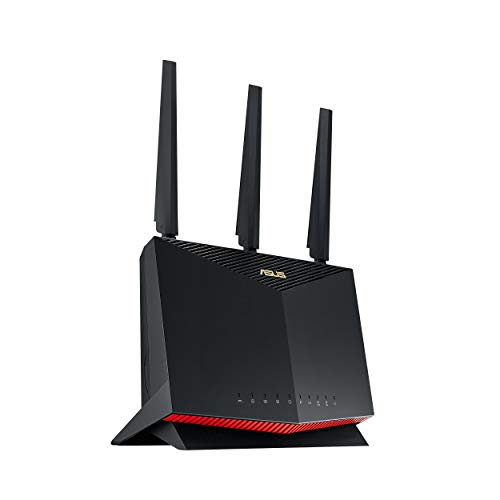
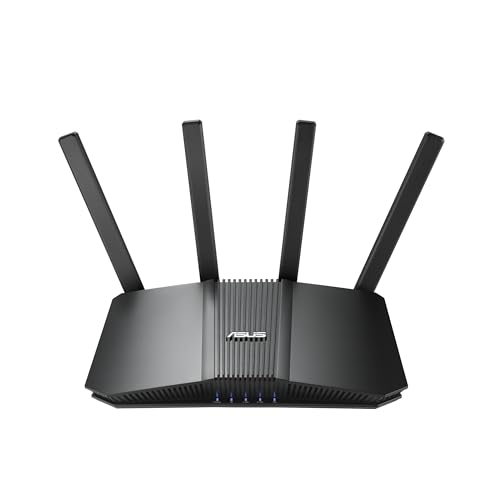
- RT series: Standard home routers that focus on stable Wi-Fi performance and easy configuration. They suit everyday internet use and cover a wide range of budgets and speeds.
- ROG Rapture series: High-end gaming routers with advanced features such as low latency modes, powerful processors, and multi-gigabit connections. They are built for gamers who need fast and stable performance.
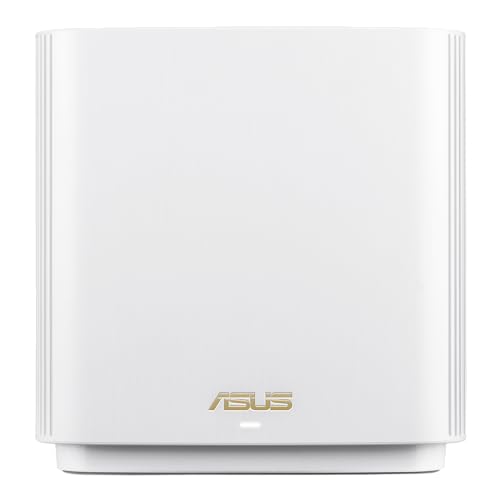
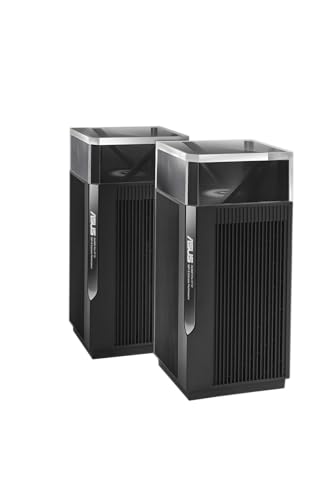
- ZenWiFi series: Mesh Wi-Fi systems that extend coverage across larger homes or offices. They use multiple nodes to deliver seamless connections and remove dead zones.
- TUF Gaming series: Routers designed with durable hardware and stable performance for long gaming sessions. They combine solid build quality with gaming-oriented features at lower prices than the ROG line.
- 4G/5G series: Routers with integrated mobile broadband connectivity. They use SIM cards to create Wi-Fi networks where wired internet is not available.
- DSL series: Routers with built-in DSL modems that connect directly to telephone lines. They are aimed at users who rely on DSL broadband without needing a separate modem.
- Business series (BRT/ExpertWiFi): Routers built for small businesses and offices. They include features like VPN support, multiple WAN ports, and stronger security controls for professional use.
How much do Asus routers cost?
Asus routers cost between £35 and £550 depending on the series and specifications.
Entry-level models aimed at basic home use stay in the 40–£70 range, while mid-range dual-band and Wi-Fi 6 models usually fall between £90 and £220. High-end gaming and professional routers, such as the ROG series, can reach 400–£550 because they integrate advanced processors, stronger antennas, and extra gaming features.
The following chart shows the price distribution of Asus routers.
[vertical-chart-15017487639149155542118065834106532998580434491317]
What should you consider while choosing the best Asus router?
You should consider the following factors while choosing the best Asus router.
- Purpose: The RT series targets general consumers with entry-level to high-end options, while the GT series focuses on gaming with specialized features like Game Port and RGB lighting. ROG models like the GT-BE98 include advanced gaming optimizations and dedicated gaming ports with priority traffic. The ZenWiFi series works as purpose-built mesh systems for whole-home coverage, while ExpertWiFi targets business users with advanced networking options.
- Wi-Fi standard: Wi-Fi 6 (AX series) delivers faster speeds than Wi-Fi 5 (AC series). The RT-AX86U supports speeds up to 900 Mbps on 160 MHz channels while the older RT-AC86U lacks this capability. Wi-Fi 7 models like the GT-BE98 reach up to 24.4 Gbps but come at premium costs. Modern AX series routers also include improved processors, with the RT-AX86U featuring a 1.8 GHz quad-core CPU that handles multiple tasks better than older AC models.
- Gaming & Performance: Gaming routers include Open NAT profiles, Mobile Game Mode, and Gear Accelerator for automatic device prioritization. High-end models add Gaming Private Network support, Game Radar for server monitoring, and VPN Fusion to mix VPN and non-VPN connections. The RT-AX88U Pro and GT-AX6000 both deliver excellent gaming performance with customizable QoS settings.
- Coverage: Range varies significantly between models. The RT-AX86U Pro maintains 906 Mbps at 50 feet compared to 939 Mbps wired baseline, making it ideal for larger homes over 2,500 square feet. Single routers work well for most homes, but larger spaces benefit from AiMesh-compatible models that can expand into mesh systems.
- Processor and memory: Higher-end models feature more powerful processors that handle multiple services simultaneously. The RT-AX86U runs services efficiently while the older RT-AC86U reaches full CPU utilization during intensive tasks. More processing power supports VPN servers, traffic analysis, and USB-connected devices without performance drops.
- Connectivity: Models vary in Ethernet port speeds and quantities. Gaming routers often include dedicated gaming ports and multiple gigabit connections. Wi-Fi 7 models add 10 Gbps ports for ultra-fast wired connections, while standard models typically include four 1 Gbps LAN ports. USB 3.0 ports support external storage and achieve transfer rates around 113 MB/s for reading and writing.
- Security and Management Features: All Asus routers include WPA3 certification, automatic firmware updates, and parental controls as standard. Advanced models add VPN server capabilities, traffic analyzer tools, and flexible client management through the unified ASUSWRT interface. Business-focused ExpertWiFi models include enhanced security options and network customization tools.
The chart below shows the Wi-Fi speed distribution of Asus routers.
[vertical-chart-13286937204202777922111723267056875195443110264025]