Scored using Robot Vacuums Methodology v1.0
Robot Vacuums Methodology v1.0
Mathematical & Unbiased Scoring
Products in this category are scored under Frontum Robot Vacuums Methodology v1.0: technical specifications plus authentic consumer ratings, with 0% commercial bias.
Explore Robot Vacuums Methodology v1.0

Shark AV2800ZEEUWH review: 118 specs compared

Avg. price:~£790Max suction power:?Runtime:110 minDustbin capacity:300 mLMax threshold height:25 mm

Shark AV2800ZEEUWH Review: Compare 118 technical specifications and user reviews to see how this product ranks in the Robot Vacuums category and whether it is worth buying.
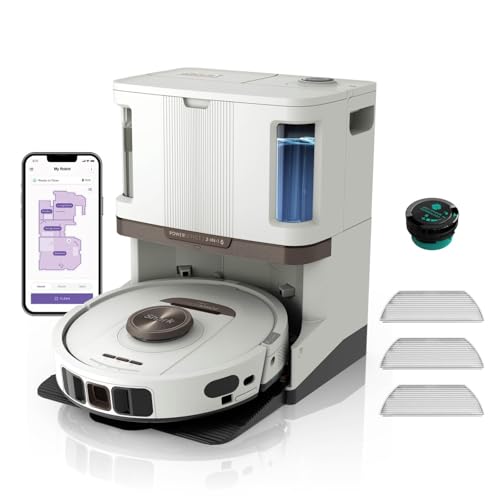
Shark AV2800ZEEUWH
7.4/10

Overall score

Score
7.4/ 10
✕
What it is
An overall evaluation of the robot vacuum's quality, based on technical analyses and user reviews.
When it matters
When you need a quick reference to identify the best robot vacuums on the market.
Score distribution
▼
<55-66-77-88-99-10
Score components

80%

7.5

Technical score

20%

6.7

User score

▲Better than 58% of robot vacuums
7.1

Value for money

Value for money
7.1/ 10
✕
What it is
An indicator that combines the robot vacuum's overall rating with its cost.
When it matters
When you are looking for a robot vacuum with a good balance between quality and price.
Score distribution
▼
<55-66-77-88-99-10
Score components

70%

7.4

Overall score

30%

6.3

Price

▼Worse than 79%
7.5

Technical score

Technical score
7.5/ 10
✕
What it is
An assessment of robot-vacuum performance across cleaning, navigation, mopping, battery life, filtration, brush design, smart features, and dimensions.
When it matters
When you want to compare robot vacuums based on technical performance and available features.
Score distribution
▼
<55-66-77-88-99-10
Score components

30%

8.1

Cleaning

23%

7.0

Navigation

18%

8.3

Mopping

12%

5.9

Battery

10%

8.5

Smart Features

7%

6.4

Design

▲Better than 67%
6.7

User score

User score
6.7/ 10
✕
What it is
A rating that combines user reviews and the total number of reviews received by the robot vacuum
When it matters
When you want to know how a robot vacuum handles daily tasks and how reliable it remains over time according to user feedback.
Score distribution
▼
<55-66-77-88-99-10
Score components

70%

7.0

User ratings

30%

5.9

Number of reviews

Based on ratings from across the web.
▼Worse than 92%
  • shark-av2800zeeuwh
  • shark-av2800zeeuwh
  • shark-av2800zeeuwh
  • shark-av2800zeeuwh
  • shark-av2800zeeuwh
  • shark-av2800zeeuwh
  • shark-av2800zeeuwh
  • shark-av2800zeeuwh
  • shark-av2800zeeuwh
  • shark-av2800zeeuwh
  • shark-av2800zeeuwh
shark-av2800zeeuwh
shark-av2800zeeuwh
shark-av2800zeeuwh
shark-av2800zeeuwh
shark-av2800zeeuwh
shark-av2800zeeuwh
shark-av2800zeeuwh
shark-av2800zeeuwh
shark-av2800zeeuwh
shark-av2800zeeuwh
shark-av2800zeeuwh
Where to buy
*As an Amazon Associate, we earn from qualifying purchases.
Best rankings
Available: ranking among products currently available (including other versions of this product).All: ranking among all products in the database.
Loading...
Loading category ranking...

Technical Specifications of robot vacuum Shark AV2800ZEEUWH

Technical score
Technical score
7.5/ 10
✕
What it is
An assessment of robot-vacuum performance across cleaning, navigation, mopping, battery life, filtration, brush design, smart features, and dimensions.
When it matters
When you want to compare robot vacuums based on technical performance and available features.
Score distribution
▼
<55-66-77-88-99-10
Score components:

30%

8.1

Cleaning

23%

7.0

Navigation

18%

8.3

Mopping

12%

5.9

Battery

10%

8.5

Smart Features

7%

6.4

Design

7.5
User score
User score
6.7/ 10
✕
What it is
A rating that combines user reviews and the total number of reviews received by the robot vacuum
When it matters
When you want to know how a robot vacuum handles daily tasks and how reliable it remains over time according to user feedback.
Score distribution
▼
<55-66-77-88-99-10
Score components

70%

7.0

User ratings

30%

5.9

Number of reviews

Based on ratings from across the web.
6.7
Popularity
Popularity
5.9/ 10
✕
What it is
An indicator based on the number of reviews received by the robot vacuum.
When it matters
When you prefer to purchase a product chosen and reviewed by many other consumers.
Score distribution
▼
<55-66-77-88-99-10
Popularity:
Shark AV2800ZEEUWH has a popularity index of 5.9, lower than that of 55.6% of robot vacuums and equal to that of 0.6% of robot vacuums.
5.9
Value for money
Value for money
7.1/ 10
✕
What it is
An indicator that combines the robot vacuum's overall rating with its cost.
When it matters
When you are looking for a robot vacuum with a good balance between quality and price.
Score distribution
▼
<55-66-77-88-99-10
Score components:

70%

7.4

Overall score

30%

6.3

Price

7.1
Max suction power
?
N. of suction power levels
5
This robot vacuum has 5 suction power levels, which is more than 93.7% of robot vacuums offer and the same number as 6.1% of robot vacuums offer.
Motor type
brushless
This robot vacuum uses a brushless motor, a type that is generally more efficient than those used by 2.7% of robot vacuums and also used by 97.3% of robot vacuums.
Power
?
Cleaning modes
3
This robot vacuum offers 3 cleaning modes, which is fewer than 62% of robot vacuums offer and the same number as 27.7% of robot vacuums offer.
Show more
Mopping capability
yes
This robot vacuum can mop floors. 78.8% of robot vacuums offer this feature.
Mopping system type
vibrating pad
This robot vacuum uses vibrating pad for mopping. This system is more effective than those on 66.9% of robot vacuums and as effective as those on 12.5% of robot vacuums.
Mop pad type
flat
Mop pad material
microfiber
Mop pressure
?
Show more
Primary navigation technology
LiDAR
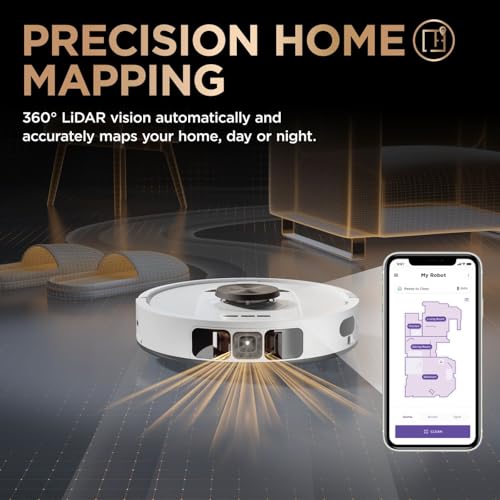
This robot vacuum uses LiDAR as its primary navigation system, which is more capable than the systems in 34.7% of robot vacuums and matched by 60.4% of robot vacuums.
Mapping capability
yes
This robot vacuum maps the floor. 74% of robot vacuums offer this feature.
Real-time mapping
no
This robot vacuum does not update its map in real time, although 68.7% of robot vacuums offer this feature.
Multiple map storage
no
This robot vacuum does not store multiple maps, although 56.6% of robot vacuums offer this feature.
Map editing
no
This robot vacuum does not support map editing, although 64% of robot vacuums offer this feature.
Show more
App control
yes
This robot vacuum supports app control. 5.5% of robot vacuums support app control.
App name
SharkClean
Wi-Fi connectivity
yes
This robot vacuum supports Wi-Fi connectivity. 6.3% of robot vacuums support Wi-Fi connectivity.
Supported Wi-Fi bands
dual-band
Bluetooth connectivity
yes
This robot vacuum supports Bluetooth connectivity. 35.5% of robot vacuums support Bluetooth connectivity.
Show more
Battery capacity
2,900 mAh
This robot vacuum has a battery capacity of 2,900 mAh, which is lower than 57.2% of robot vacuums and equal to 1% of robot vacuums.
Battery type
Li-ion
Battery voltage
14.8 V
Runtime
110 min
This robot vacuum runs for 110 min per charge, which is shorter than 77.6% of robot vacuums and equal to 5.2% of robot vacuums.
Recharge and resume
yes
This robot vacuum resumes cleaning after charging. 83.1% of robot vacuums offer this feature.
Show more
Shape
round
Height
110 mm
Width
340 mm
Length
364 mm
Weight
3.89 kg
This robot vacuum weighs 3.89 kg, making it heavier than 66.6% of robot vacuums and the same weight as 0.6% of robot vacuums.
Show more

Shark AV2800ZEEUWH vs the average robot vacuum

246810TotalBatteryDesignSmart FeaturesNavigationCleaningMopping
  • Has anti-tangle technology
    This robot vacuum has anti-tangle technology, while the average robot vacuum does not. 42.8% of robot vacuums offer this feature.
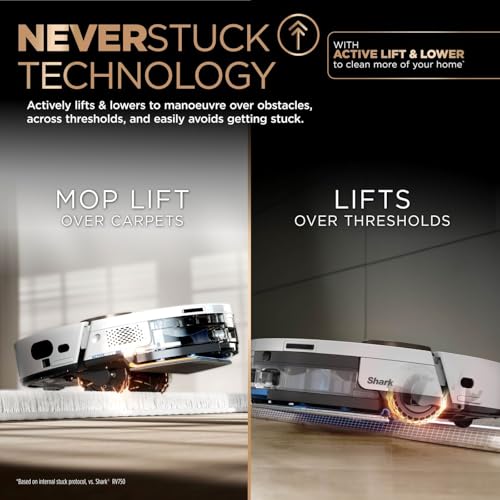
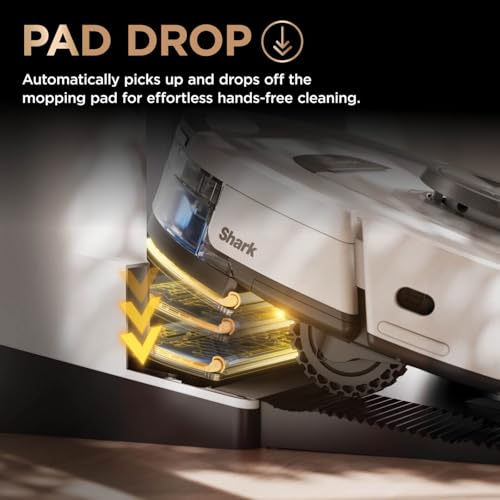
  • Lifts its mop over carpets
    This robot vacuum lifts its mop over carpets, while the average robot vacuum does not lift its mop automatically.
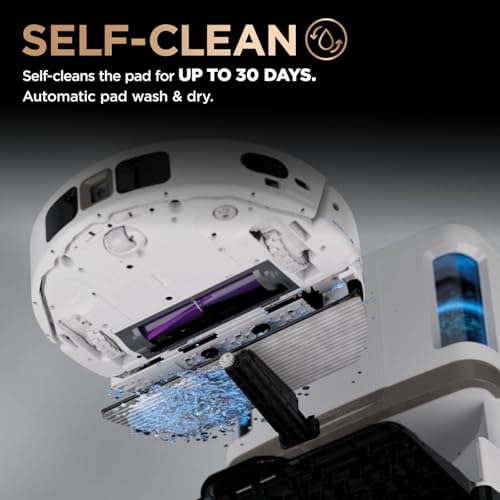
  • Cleans its mop automatically at the dock
    This robot vacuum cleans its mop automatically at the dock, while the average robot vacuum does not clean its mop automatically at the dock.
  • Detects dirtier areas
    This robot vacuum detects dirtier areas, while the average robot vacuum does not detect dirtier areas.
  • Adjusts its cleaning height automatically
    This robot vacuum adjusts its cleaning height automatically, while the average robot vacuum uses a fixed cleaning height.
  • Dries the mop automatically
    This robot vacuum dries its mop automatically at the dock, while the average robot vacuum does not. 18.5% of robot vacuums offer this.
  • Refills its water tank automatically
    This robot vacuum refills its water tank automatically, while the average robot vacuum requires manual water refilling.
  • 0.97 % higher filter efficiency
    This robot vacuum has higher filter efficiency than the average robot vacuum (100 % vs 99 %). The average robot vacuum has a filter efficiency of 99 %.
    99.97 % vs 99 %
  • Supports fast charging
    This robot vacuum supports fast charging, while the average robot vacuum does not support fast charging.
  • 0.5 h shorter charging time
    This robot vacuum takes less time to recharge fully than the average robot vacuum (4 h vs 4.5 h). The average robot vacuum takes 4.5 h.
    4 h vs 4.5 h
  • Newer model
    This robot vacuum was released in 2024, later than the average robot vacuum in 2023. The average release year for robot vacuums is 2023.
    2024 vs 2023
  • 5 mm higher threshold clearance
    This robot vacuum can cross higher thresholds than the average robot vacuum (25 mm vs 20 mm). The average robot vacuum can cross thresholds up to 20 mm high.
    25 mm vs 20 mm
  • Has anti-tangle technology
    This robot vacuum has anti-tangle technology, while the average robot vacuum does not. 42.8% of robot vacuums offer this feature.
  • Detects dirtier areas
    This robot vacuum detects dirtier areas, while the average robot vacuum does not detect dirtier areas.
  • Adjusts its cleaning height automatically
    This robot vacuum adjusts its cleaning height automatically, while the average robot vacuum uses a fixed cleaning height.
  • 0.97 % higher filter efficiency
    This robot vacuum has higher filter efficiency than the average robot vacuum (100 % vs 99 %). The average robot vacuum has a filter efficiency of 99 %.
    99.97 % vs 99 %
  • 1 more suction power levels
    This robot vacuum offers more suction power levels than the average robot vacuum (5 vs 4). The average robot vacuum offers 4 suction power levels.
    5 vs 4
  • Lifts its mop over carpets
    This robot vacuum lifts its mop over carpets, while the average robot vacuum does not lift its mop automatically.
  • Cleans its mop automatically at the dock
    This robot vacuum cleans its mop automatically at the dock, while the average robot vacuum does not clean its mop automatically at the dock.
  • Dries the mop automatically
    This robot vacuum dries its mop automatically at the dock, while the average robot vacuum does not. 18.5% of robot vacuums offer this.
  • Refills its water tank automatically
    This robot vacuum refills its water tank automatically, while the average robot vacuum requires manual water refilling.
  • Vibrating mop
    This robot vacuum has a vibrating mop, while the average robot vacuum does not. 11.3% of robot vacuums have a vibrating mop.
  • Better mopping system
    This robot vacuum uses vibrating pad for mopping, while the average robot vacuum uses static pad.
    vibrating pad vs static pad
  • Supports cleaning solution
    This robot vacuum supports cleaning solution for mopping, while the average robot vacuum does not. 44.8% of robot vacuums support this.
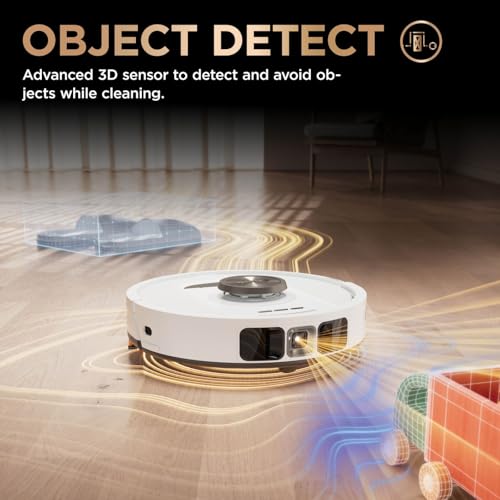
  • More basic obstacle avoidance
    This robot vacuum uses LiDAR for obstacle avoidance, while the average robot vacuum uses hybrid.
    LiDAR vs hybrid
  • 1 fewer cleaning modes
    This robot vacuum offers fewer cleaning modes than the average robot vacuum (3 vs 4). The average robot vacuum offers 4 cleaning modes.
    3 vs 4
  • Does not support map editing
    This robot vacuum does not support map editing, while the average robot vacuum lets you edit maps.
  • Does not store multiple maps
    This robot vacuum does not store multiple maps, while the average robot vacuum stores multiple maps.
  • Does not update its map in real time
    This robot vacuum does not update its map in real time, while the average robot vacuum updates its map in real time.
  • 2,300 mL less clean water capacity
    This robot vacuum has a smaller base station clean water tank than the average robot vacuum (1,700 mL vs 4,000 mL). The average base station clean water tank holds 4,000 mL.
    1,700 mL vs 4,000 mL
  • 2,550 mL less dirty water capacity
    This robot vacuum has a smaller base station dirty water tank than the average robot vacuum (950 mL vs 3,500 mL). The average base station dirty water tank holds 3,500 mL.
    950 mL vs 3,500 mL
  • Does not show its location in real time
    This robot vacuum does not show its location in real time, while the average robot vacuum shows its location in real time.
  • 3.04x more expensive
    Shark AV2800ZEEUWH is more expensive than the average robot vacuum (£790 vs £260).
    £790 vs £260
  • 20% lower user score
    User score
    6.7/ 10
    ✕
    What it is
    A rating that combines user reviews and the total number of reviews received by the robot vacuum
    When it matters
    When you want to know how a robot vacuum handles daily tasks and how reliable it remains over time according to user feedback.
    Score distribution
    ▼
    ▼
    <55-66-77-88-99-10
    Shark AV2800ZEEUWH
    the average robot vacuum
    Shark AV2800ZEEUWH has a lower user score than the average robot vacuum (6.67 vs 8.000).
    6.67 vs 8
  • 7.5% worse value for money
    Shark AV2800ZEEUWH has worse value for money than the average robot vacuum (7.06 vs 7.6).
    7.06 vs 7.59
  • 40 min shorter runtime
    This robot vacuum runs for less time per charge than the average robot vacuum (110 min vs 150 min). The average robot vacuum runs for 150 min.
    110 min vs 150 min
  • 300 mAh smaller battery capacity
    This robot vacuum has a smaller battery capacity than the average robot vacuum (2,900 mAh vs 3,200 mAh). The average robot vacuum has a battery capacity of 3,200 mAh.
    2,900 mAh vs 3,200 mAh
  • 9% heavier
    This robot vacuum is heavier than the average robot vacuum (3.9 kg vs 3.57 kg). The average robot vacuum weighs 3.57 kg.
    3.89 kg vs 3.57 kg
  • 3.36 kg heavier base station
    This robot vacuum has a heavier base station than the average robot vacuum (7.7 kg vs 4.3 kg). The average robot vacuum's base station weighs 4.3 kg.
    7.66 kg vs 4.3 kg
  • More basic obstacle avoidance
    This robot vacuum uses LiDAR for obstacle avoidance, while the average robot vacuum uses hybrid.
    LiDAR vs hybrid
  • Does not support map editing
    This robot vacuum does not support map editing, while the average robot vacuum lets you edit maps.
  • Does not store multiple maps
    This robot vacuum does not store multiple maps, while the average robot vacuum stores multiple maps.
  • Does not update its map in real time
    This robot vacuum does not update its map in real time, while the average robot vacuum updates its map in real time.
  • Does not show its location in real time
    This robot vacuum does not show its location in real time, while the average robot vacuum shows its location in real time.
  • 1 fewer cleaning modes
    This robot vacuum offers fewer cleaning modes than the average robot vacuum (3 vs 4). The average robot vacuum offers 4 cleaning modes.
    3 vs 4
  • 33 mm narrower main brush
    This robot vacuum has a narrower main brush than the average robot vacuum (145 mm vs 178 mm). The average robot vacuum has a main brush 178 mm wide.
    145 mm vs 178 mm
  • 100 mL smaller dustbin
    This robot vacuum has a smaller onboard dustbin than the average robot vacuum (300 mL vs 400 mL). The average robot vacuum has a dustbin capacity of 400 mL.
    300 mL vs 400 mL
  • Does not include a cleaning tool
    This robot vacuum does not include a cleaning tool, while the average robot vacuum includes a cleaning tool.
  • Non-washable dustbin
    This robot vacuum does not have a washable dustbin, while the average robot vacuum does. 83.6% of robot vacuums have a washable dustbin.
  • 2,300 mL less clean water capacity
    This robot vacuum has a smaller base station clean water tank than the average robot vacuum (1,700 mL vs 4,000 mL). The average base station clean water tank holds 4,000 mL.
    1,700 mL vs 4,000 mL
  • 2,550 mL less dirty water capacity
    This robot vacuum has a smaller base station dirty water tank than the average robot vacuum (950 mL vs 3,500 mL). The average base station dirty water tank holds 3,500 mL.
    950 mL vs 3,500 mL

Video reviews

Hands-on testing, unboxing, and real-world video evaluations

Expert reviews

In-depth analysis and verdict from leading tech publications

W
wired.com
15/09/2024
Summary of the review
V
vacuumwars.com
20/01/2025
Summary of the review
T
trustedreviews.com
15/11/2024
Summary of the review
E
etm-testmagazin.de
06/01/2025
Summary of the review
C
chip.de
06/11/2025
Summary of the review
L
lesnumeriques.com
20/12/2024
Summary of the review
N
nomadeurbain.fr
03/03/2026
Summary of the review
O
ouest-france.fr
19/06/2025
Summary of the review
P
phonandroid.com
30/01/2025
Summary of the review

Third-party reviews

Based on ratings from across the web.
Reviews last updated: July 2026 · How we calculate this

What customers like about Shark AV2800ZEEUWH

  • NeverStuck technology lets it lift its chassis to cross door thresholds easily and avoid getting stuck.
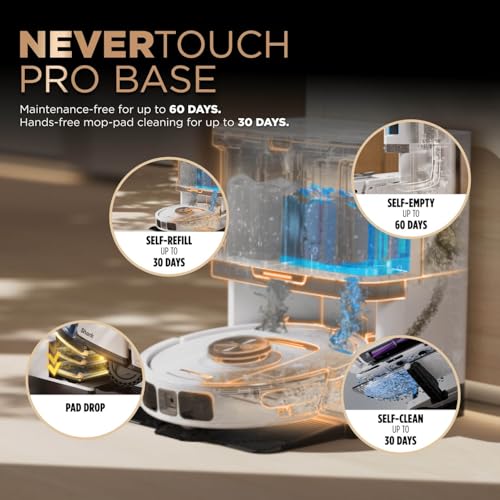
  • The convenient self-sufficient base handles auto-emptying, water refilling and mop cleaning for several days.
  • Excellent ability to clean beneath low furniture and in hard-to-reach spaces.
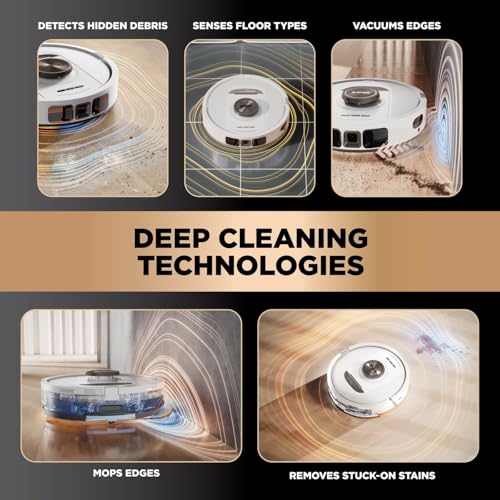
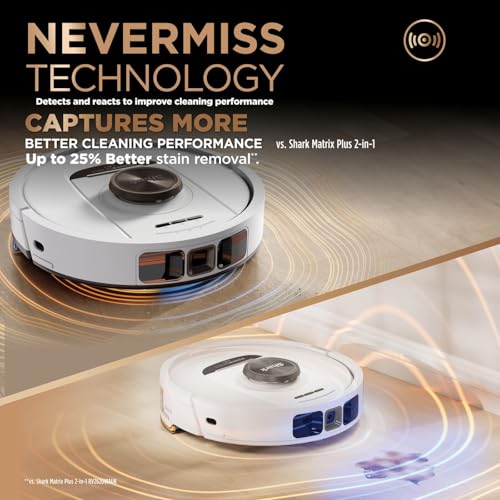
  • Effective cleaning, helped by automatic floor and dirt detection.

What customers don't like about Shark AV2800ZEEUWH

  • The mobile app could be improved, with limited options for easily editing maps or adjusting suction power.
  • It cannot map multiple floors, which is restrictive in multi-level homes.
  • The robot may sometimes need several attempts to cross very high door thresholds.
  • Battery life is a little short for very large spaces compared with other models on the market.

Verdict

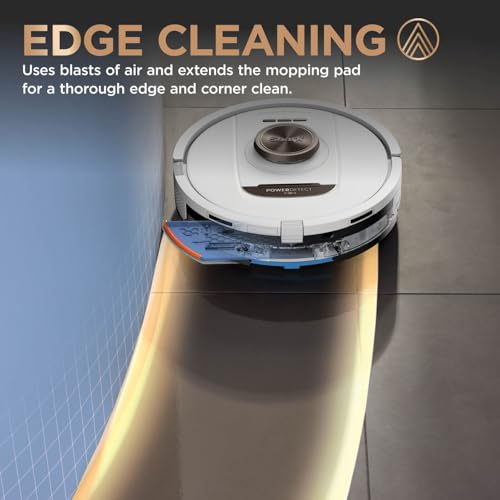
The Shark PowerDetect NeverTouch Pro 2-in-1 Robot Vacuum and Mop (AV2800ZEEUWH) is an advanced, 650-watt white hybrid cleaner featuring 360° LiDAR vision navigation and NeverStuck technology to actively lift over thresholds. Its automated NeverTouch Pro base provides true hands-free maintenance, self-emptying dry debris for up to 60 days into a 2-litre bagless dock, self-refilling its internal 0.3-litre water tank for up to 30 days, and automatically washing and hot-air drying the mopping pad. Key advantages include an Anti-Hair Wrap brush roll, five targeted PowerDetect sensors (Dirt, Edge, Floor, Stain, and Wet Edge) that dynamically boost suction and extend the mop pad to corners, and an Anti-Allergen Complete Seal with Anti-Odour technology. On the downside, the system exhibits a relatively short battery runtime of up to 100 minutes, takes 4 hours to fully recharge, relies on limited SharkClean smartphone app functionalities, and struggles to thoroughly lift deeply embedded fine debris or pet hair from thick carpets.

Compare Shark AV2800ZEEUWH with other robot vacuums

1Product to compare no. 1
VS
2Product to compare no. 2
VS
3Product to compare no. 3 (optional)

Graphic comparison of Shark AV2800ZEEUWH and other robot vacuums

No results found