Scored using Projectors Methodology v3.0
Projectors Methodology v3.0
Mathematical & Unbiased Scoring
Products in this category are scored under Frontum Projectors Methodology v3.0: the technical score from the specifications is the base, and independent expert and video reviews (up to ±0.5 points), owner opinions (up to ±0.3) and best-of lists (up to +0.3) move it up or down.
Explore Projectors Methodology v3.0

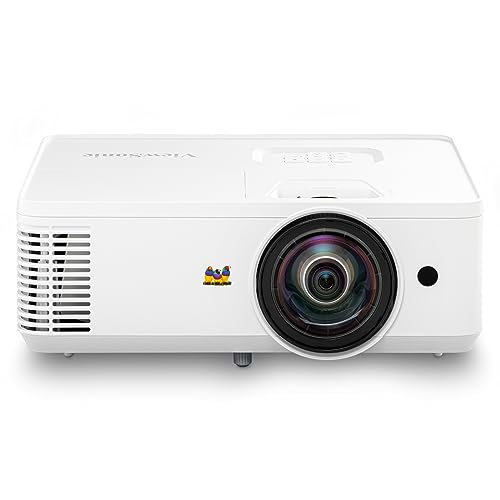
ViewSonic PA503S review: 86 specs compared

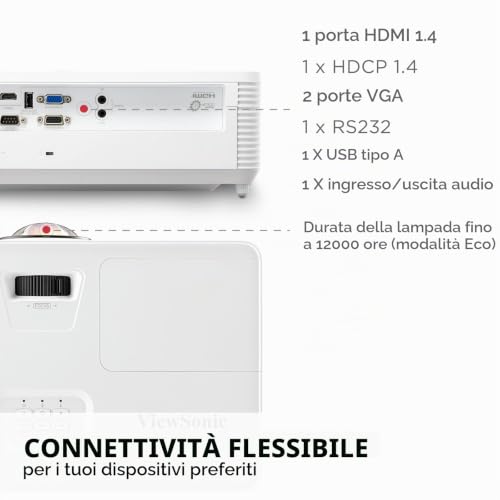
Avg. price:~£280Native panel resolution:800x600ANSI lumens:4000Throw ratio:1.96-2.15:1Lamp life:5000 hours

ViewSonic PA503S Review: Compare 86 technical specifications and 2 expert and video reviews to see how this product ranks in the Projectors category and whether it is worth buying.
ViewSonic PA503S
6.7/10

Overall score

Score
6.7/ 10
✕
What it is
Our main score for this model, 1–10. It combines specs, best-of lists, expert reviews and owners.
How we count it
Parts: Technical score 35%, List score 30%, Reviews score 25%, Sentiment score 10%
Marks: Each part gets a mark out of 10. For reviews, lists and owners, a typical model in this category gets about 8 and the best one gets 10.
No data yet: A part with no data shows "?". It counts as the mark of a weaker model in this category (4 in 5 models with data score higher). This way, models with reviews, lists and owners usually come out ahead.
Score distribution
â–¼
<55-66-77-88-99-10
Score components

35%

6.2

Technical score

30%

?

List scoreNot enough data yet, so we use 7.5, the mark of a weaker model in this category

25%

6.2

Reviews score

10%

?

Sentiment scoreNot enough data yet, so we use 6.8, the mark of a weaker model in this category

â–¼Worse than 79% of projectors
7.4

Value for money

Value for money
7.4/ 10
✕
What it is
An indicator that combines the projector's overall rating with its cost.
When it matters
When you are looking for a projector with a good balance between quality and price.
Score distribution
â–¼
<55-66-77-88-99-10
Score components

70%

6.7

Overall score

30%

9.0

Price

â–²Better than 69%
6.2

Technical score

Technical score
6.2/ 10
✕
What it is
How good the specs are compared with the other models in this category, 1–10.
How we count it
Areas: We rate the specs in each area against the other models in this category.
Weighting: The areas that matter most to buyers count more. The shares are shown under Score components.
Share: The technical score is 35% of the overall score.
Score distribution
â–¼
<55-66-77-88-99-10
Score components

42%

7.1

Image Quality

22%

6.2

Projection & Lens

12%

5.6

HDMI & Gaming

10%

5.7

Audio & Features

8%

4.0

Connectivity

6%

5.1

Design & Power

â–¼Worse than 63%
6.2

Reviews score

Reviews score
6.2/ 10
✕
What it is
Average grade from independent test sites, magazines and video reviewers, 1–10.
How we count it
Grades: Each review's own score is converted to 1–10; without one, we grade the review ourselves. Big test sites count more, short reviews half as much as full tests. A video review counts half.
Score: The average grade is 80% of the review mark; the number of reviews is the other 20% (1 review = 5, the typical number in this category = 8, the most-reviewed model = 10).
Enough data: With few reviews, the average grade is pulled toward the typical grade of this category. No reviews yet: 7.8 for now.
Share: Reviews count 25% of the overall score.
Score distribution
â–¼
<55-66-77-88-99-10

6.2

Mark 7.9 is below the typical mark 8.2 of this category, so it cannot lift the score above the technical score

80%

8.3

Average grade

20%

6.1

Popularity

Grades by review (2)
2 video reviews, each counting half as much as a written test. Reviews count 25% of the overall score.
User ratings collected online are not part of this score.
â–¼Worse than 78%
?

List score

List score
7.5/ 10
✕
What it is
How often independent test sites, magazines and video reviewers put this model in their best-of lists for this category.
How we count it
Points: The model in the most lists of this category gets 10; the others get 8 to 10 in proportion. In no list yet: 7.5. Lists count 30% of the overall score.
Enough data: Every list counts, even a single one. With fewer than 5 best-of lists in the category, this part is left out.
Lists with this model (0)
Not in any best-of list yet, so this part counts as 7.5. Models in a list get 8 to 10.
Not in any best-of list yet
  • viewsonic-pa503s
  • viewsonic-pa503s
  • viewsonic-pa503s
  • viewsonic-pa503s
  • viewsonic-pa503s
  • viewsonic-pa503s
  • viewsonic-pa503s
  • viewsonic-pa503s
viewsonic-pa503s
viewsonic-pa503s
viewsonic-pa503s
viewsonic-pa503s
viewsonic-pa503s
viewsonic-pa503s
viewsonic-pa503s
viewsonic-pa503s
Where to buy
*As an Amazon Associate, we earn from qualifying purchases.
Best rankings
Available: ranking among products currently available (including other versions of this product).All: ranking among all products in the database.
Loading...
Loading category ranking...

Technical Specifications of projector ViewSonic PA503S

Technical score
Technical score
6.2/ 10
✕
What it is
How good the specs are compared with the other models in this category, 1–10.
How we count it
Areas: We rate the specs in each area against the other models in this category.
Weighting: The areas that matter most to buyers count more. The shares are shown under Score components.
Share: The technical score is 35% of the overall score.
Score distribution
â–¼
<55-66-77-88-99-10
Score components:

42%

7.1

Image Quality

22%

6.2

Projection & Lens

12%

5.6

HDMI & Gaming

10%

5.7

Audio & Features

8%

4.0

Connectivity

6%

5.1

Design & Power

6.2
Reviews score
6.2
List score
?
Value for money
Value for money
7.4/ 10
✕
What it is
An indicator that combines the projector's overall rating with its cost.
When it matters
When you are looking for a projector with a good balance between quality and price.
Score distribution
â–¼
<55-66-77-88-99-10
Score components:

70%

6.7

Overall score

30%

9.0

Price

7.4
ANSI lumens
4,000
This projector reaches 4,000 ANSI lumens, brighter than 83.9% of projectors and equal to 6.6% of projectors.
Contrast ratio
22,000:1
This projector has a contrast ratio of 22000:1, higher than 63.8% of projectors and equal to 1.1% of projectors.
Native panel resolution
800x600
This projector uses a native resolution of 800x600, lower than 97.7% of projectors and equal to 1.4% of projectors.
Output resolution
800x600
This projector supports output resolution up to 800x600, lower than 97.9% of projectors and equal to 1.4% of projectors.
Projection technology
DLP
Show more
Throw ratio
1.96-2.15:1
Min throw distance
1.19 m
This projector needs a minimum throw distance of 1.19 m, longer than 61.7% of projectors and equal to 0.3% of projectors.
Max projection size
300 inch
This projector supports projection sizes up to 300 inch, larger than 51.5% of projectors and equal to 38% of projectors.
Zoom ratio
1.1
This projector offers a zoom ratio of 1.1, narrower than 82.4% of projectors and equal to 16.1% of projectors.
Motorized zoom
no
This projector does not have motorised zoom. 14.8% of projectors offer this.
Show more
Input lag
37 ms
This projector has input lag of 37 ms, higher than 65.6% of projectors and equal to 2.3% of projectors.
Auto low latency mode (ALLM)
no
This projector does not switch to low-latency mode automatically. 16.1% of projectors offer this.
Variable refresh rate (VRR)
no
This projector does not support variable refresh rate. 1.8% of projectors offer this.
HDMI version
1.4
This projector supports HDMI 1.4, older than 54% of projectors and equal to 35.7% of projectors.
Max HDMI bandwidth
10.2 Gbps
This projector supports HDMI bandwidth up to 10.2 Gbps, lower than 51.2% of projectors and equal to 46.5% of projectors.
Show more
N. of HDMI ports
1
This projector has 1 HDMI port/s, fewer than 54.2% of projectors and equal to 42.9% of projectors.
Wi-Fi connectivity
no
This projector does not connect to Wi-Fi networks. 53.4% of projectors offer this.
Wi-Fi version
N/A
Bluetooth connectivity
no
This projector does not support Bluetooth. 50.7% of projectors offer this.
Bluetooth version
N/A
Show more
Smart TV features
no
This projector does not have built-in smart TV features. 43.9% of projectors offer this.
Operating system
none
Android OS
no
This projector does not run Android OS. 19.1% of projectors run Android OS.
Dedicated smartphone app
no
This projector does not come with a dedicated smartphone app. 36.8% of projectors come with a dedicated smartphone app.
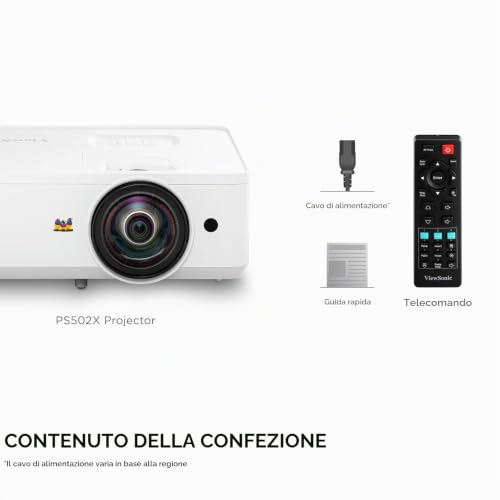
Remote control
yes
This projector includes a remote control. 1.5% of projectors offer this.
Show more
Light source type
lamp
This projector uses lamp light source technology, less advanced than 66.5% of projectors and equal to 33.5% of projectors.
Laser light source
no
This projector does not have a laser light source. 26.8% of projectors offer this.
Lamp life
5,000 hours
This projector offers lamp life of 5,000 hours, longer than 70.6% of projectors and equal to 5% of projectors.
Lamp life (eco mode)
15,000 hours
This projector offers eco-mode lamp life of 15,000 hours, longer than 60.9% of projectors and equal to 1.5% of projectors.
Operating power consumption
260 W
This projector uses 260 W of power, more than 56.9% of projectors and equal to 1.9% of projectors.
Show more

ViewSonic PA503S vs the average projector

246810TotalImage QualityProjection & LensHDMI & GamingConnectivityAudio & FeaturesDesign & Power
  • 81.8% brighter image
    This projector has higher ANSI lumens than the average projector (4,000 vs 2,200). The average projector has 2,200 ANSI lumens.
    4,000 vs 2,200
  • Supports auto keystone correction
    ViewSonic PA503S corrects keystone distortion automatically, while the average projector does not. 36.9% of projectors offer this.
  • 10 degrees more vertical correction
    This projector offers more vertical keystone correction than the average projector (40 degrees vs 30 degrees). The average projector offers vertical keystone correction of 30 degrees.
    40 degrees vs 30 degrees
  • 41.2% higher refresh rate
    This projector has a higher refresh rate than the average projector (120 Hz vs 85 Hz). The average projector has 85 Hz of refresh rate.
    120 Hz vs 85 Hz
  • Higher contrast ratio
    This projector has a higher contrast ratio than the average projector (22000:1 vs 10000:1). The average projector has 10000:1 of contrast ratio.
    22,000:1 vs 10,000:1
  • 1 more audio input ports
    This projector has more audio input ports than the average projector (1 vs 0). The average projector has 0 audio input ports.
    1 vs 0
  • 50 inch larger image size
    This projector has a higher projection size than the average projector (300 inch vs 250 inch). The average projector has 250 inch of projection size.
    300 inch vs 250 inch
  • Wider color gamut
    This projector has a higher color gamut coverage than the average projector (120% Rec.709 % vs 99% Rec.709 %). The average projector has 99% Rec.709 % of color gamut coverage.
    120% Rec.709 % vs 99% Rec.709 %
  • 81.8% brighter image
    This projector has higher ANSI lumens than the average projector (4,000 vs 2,200). The average projector has 2,200 ANSI lumens.
    4,000 vs 2,200
  • Higher contrast ratio
    This projector has a higher contrast ratio than the average projector (22000:1 vs 10000:1). The average projector has 10000:1 of contrast ratio.
    22,000:1 vs 10,000:1
  • 41.2% higher refresh rate
    This projector has a higher refresh rate than the average projector (120 Hz vs 85 Hz). The average projector has 85 Hz of refresh rate.
    120 Hz vs 85 Hz
  • Wider color gamut
    This projector has a higher color gamut coverage than the average projector (120% Rec.709 % vs 99% Rec.709 %). The average projector has 99% Rec.709 % of color gamut coverage.
    120% Rec.709 % vs 99% Rec.709 %
  • 0.08 inch larger DMD chip
    This projector has a higher DMD chip size than the average projector (0.6 inch vs 0.47 inch). The average projector has 0.47 inch of DMD chip size.
    0.55 inch vs 0.47 inch
  • Supports auto keystone correction
    ViewSonic PA503S corrects keystone distortion automatically, while the average projector does not. 36.9% of projectors offer this.
  • 10 degrees more vertical correction
    This projector offers more vertical keystone correction than the average projector (40 degrees vs 30 degrees). The average projector offers vertical keystone correction of 30 degrees.
    40 degrees vs 30 degrees
  • 50 inch larger image size
    This projector has a higher projection size than the average projector (300 inch vs 250 inch). The average projector has 250 inch of projection size.
    300 inch vs 250 inch
  • VGA input included
    This projector supports VGA input, while the average projector does not. 44.1% of projectors support VGA input.
  • 1 more audio input ports
    This projector has more audio input ports than the average projector (1 vs 0). The average projector has 0 audio input ports.
    1 vs 0
  • Lower output resolution
    This projector supports a lower output resolution than the average projector (800x600 vs 1920x1080). The average projector outputs at 1920x1080 resolution.
    800x600 vs 1920x1080
  • Low native resolution
    This projector has a lower native panel resolution than the average projector (800x600 vs 1920x1080). The average projector has a native panel resolution of 1920x1080.
    800x600 vs 1920x1080
  • Basic light source
    This projector has Basic light source than the average projector (lamp vs laser). The average projector uses a laser light source.
    lamp vs laser
  • 1 fewer HDMI ports
    This projector has fewer HDMI ports than the average projector (1 vs 2). The average projector has 2 HDMI ports.
    1 vs 2
  • 43.3% lower HDMI bandwidth
    This projector has a lower HDMI bandwidth than the average projector (10.2 Gbps vs 18 Gbps). The average projector has 18 Gbps of HDMI bandwidth.
    10.2 Gbps vs 18 Gbps
  • No Wi-Fi connectivity
    This projector does not connect to Wi-Fi networks, while the average projector does. 53.4% of projectors offer this.
  • No Bluetooth connectivity
    This projector does not support Bluetooth, while the average projector does. 50.6% of projectors offer this.
  • Older HDMI version
    This projector has Old HDMI standard than the average projector (1.4 vs 2). The average projector supports HDMI 2.0.
    1.4 vs 2.0
  • 16.2% lower review score
    Reviews score
    6.2/ 10
    ✕
    What it is
    Average grade from independent test sites, magazines and video reviewers, 1–10.
    How we count it
    Grades: Each review's own score is converted to 1–10; without one, we grade the review ourselves. Big test sites count more, short reviews half as much as full tests. A video review counts half.
    Score: The average grade is 80% of the review mark; the number of reviews is the other 20% (1 review = 5, the typical number in this category = 8, the most-reviewed model = 10).
    Enough data: With few reviews, the average grade is pulled toward the typical grade of this category. No reviews yet: 7.8 for now.
    Share: Reviews count 25% of the overall score.
    Score distribution
    â–¼
    <55-66-77-88-99-10

    6.2

    Mark 7.9 is below the typical mark 8.2 of this category, so it cannot lift the score above the technical score

    80%

    8.3

    Average grade

    20%

    6.1

    Popularity

    Grades by review (2)
    2 video reviews, each counting half as much as a written test. Reviews count 25% of the overall score.
    User ratings collected online are not part of this score.
    6.2 vs 7.4
  • Lower output resolution
    This projector supports a lower output resolution than the average projector (800x600 vs 1920x1080). The average projector outputs at 1920x1080 resolution.
    800x600 vs 1920x1080
  • Low native resolution
    This projector has a lower native panel resolution than the average projector (800x600 vs 1920x1080). The average projector has a native panel resolution of 1920x1080.
    800x600 vs 1920x1080
  • 4 earlier release
    This projector was released earlier than the average projector (2017 vs 2021). The average projector was released in 2021.
    2,017 vs 2,021
  • 0.2 2x narrower zoom range
    This projector has a lower zoom ratio than the average projector (1.1 vs 1.3). The average projector has 1.3 of zoom ratio.
    1.1 vs 1.3
  • 0.18 m longer throw distance
    This projector has a higher throw distance than the average projector (1.2 m vs 1 m). The average projector has 1.0055 m of throw distance.
    1.19 m vs 1.0055 m
  • 43.3% lower HDMI bandwidth
    This projector has a lower HDMI bandwidth than the average projector (10.2 Gbps vs 18 Gbps). The average projector has 18 Gbps of HDMI bandwidth.
    10.2 Gbps vs 18 Gbps
  • Older HDMI version
    This projector has Old HDMI standard than the average projector (1.4 vs 2). The average projector supports HDMI 2.0.
    1.4 vs 2.0
  • More outdated HDCP support
    This projector supports an older HDCP version than the average projector (1.4 vs 2.2).
    1.4 vs 2.2
  • 10 ms higher input lag
    This projector has a higher input lag than the average projector (37 ms vs 27 ms). The average projector has 27 ms of input lag.
    37 ms vs 27 ms
  • 1 fewer HDMI ports
    This projector has fewer HDMI ports than the average projector (1 vs 2). The average projector has 2 HDMI ports.
    1 vs 2
  • No Wi-Fi connectivity
    This projector does not connect to Wi-Fi networks, while the average projector does. 53.4% of projectors offer this.
  • No Bluetooth connectivity
    This projector does not support Bluetooth, while the average projector does. 50.6% of projectors offer this.
  • 80% weaker audio output
    This projector has a lower audio output power than the average projector (2 W vs 10 W). The average projector has 10 W of audio output power.
    2 W vs 10 W
  • Basic light source
    This projector has Basic light source than the average projector (lamp vs laser). The average projector uses a laser light source.
    lamp vs laser
  • 15,000 hours shorter lamp life
    This projector has a lower lamp life than the average projector (5,000 hours vs 20,000 hours). The average projector has 20,000 hours of lamp life.
    5,000 hours vs 20,000 hours
  • 5,000 hours shorter eco lamp life
    This projector has a lower lamp life in eco mode than the average projector (15,000 hours vs 20,000 hours). The average projector has 20,000 hours of lamp life in eco mode.
    15,000 hours vs 20,000 hours
  • 68 mm thicker body
    This projector is thicker than the average projector (218 mm vs 150 mm). The average projector has a thickness of 150 mm.
    218 mm vs 150 mm

Video reviews

Hands-on testing, unboxing, and real-world video evaluations

7.0
Netbridge Tech
≈ estimated
13/09/2025
Hands-on review · picture, sound and menu tests
Verdict
ViewSonic PA503S is an entry-level projector that suits offices and schools, but home theatre use needs external speakers.
9.0
THE NEXT CHAPTER PROJECT 2027 SCREENS
≈ estimated
05/02/2022
Installation and daily use · permanent ceiling setup
Verdict
ViewSonic PA503S is a low-resolution projector that handles daily use well for its low price.
Hands-on video, no verdict
Brand video
Not graded
Brand video

Third-party reviews

What customers like about ViewSonic PA503S

  • 4000 lumens stay visible with the lights on.
  • A picture up to 300 inch gives a large image.
  • The 22000:1 contrast ratio adds depth to the picture.
  • 10-bit color gives smoother shades.
  • Eco mode is quiet at 27 dB.
  • A sleep timer switches the projector off on its own.

What customers don't like about ViewSonic PA503S

  • The zoom is only 1.1, so you must place it with care.
  • The 2 W speaker is too quiet to use on its own.
  • The 800x600 resolution is basic for films and streaming.
  • The lamp is rated for 5000 hours, which is short for heavy use.
  • There is no Wi-Fi, so every source needs a cable.

Verdict

The ViewSonic PA503S is rated at 4000 ANSI lumens. That is enough for a lit classroom or a family room with the curtains open, and the image can grow to 300 inch on a big wall. The picture is 800x600, but it stays bright and easy to read for slides and simple video. It works with ceiling mounting, and eco mode keeps the noise at 27 dB, which is quiet enough for a meeting. The 2 W speaker is thin, so plan on separate speakers. The zoom is only 1.1, so the spot where you place it matters. There is no Wi-Fi, so you connect a laptop or player through the single HDMI port. It suits a teacher or small office that wants a bright projector on a budget and does not need sharp images.

Compare ViewSonic PA503S with other products in the Projectors category

1Product to compare no. 1
VS
2Product to compare no. 2
VS
3Product to compare no. 3 (optional)

Graphic comparison of ViewSonic PA503S and other products in the Projectors category

No results found