Scored using Projectors Methodology v1.0
Projectors Methodology v1.0
Mathematical & Unbiased Scoring
Products in this category are scored under Frontum Projectors Methodology v1.0: technical specifications plus authentic consumer ratings, with 0% commercial bias.
Explore Projectors Methodology v1.0

Hisense Vidda C5 Review | 84 Data compared

Avg. price:~£2,770Native panel resolution:3840x2160ANSI lumens:?Throw ratio:0.84-2:1Lamp life:25000 hours

Hisense Vidda C5 Review: Compare 84 technical specifications and user reviews to see how this product ranks in the Projectors category and whether it is worth buying.
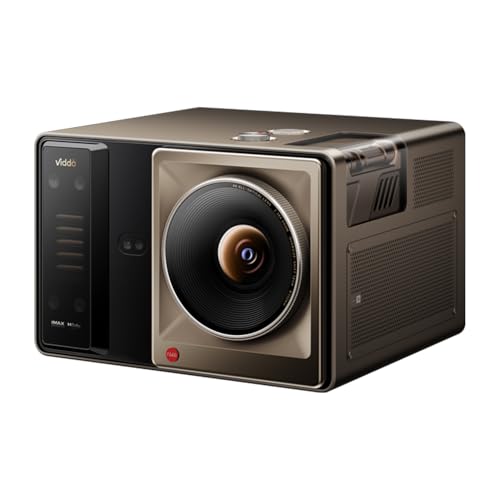
Hisense Vidda C5
8.9/10

Overall score

Score
8.9/ 10
✕
What it is
An overall evaluation of the projector's quality, based on technical analyses and user reviews.
When it matters
When you need a quick reference to identify the best projectors on the market.
Score distribution
â–¼
<55-66-77-88-99-10
Score components

90%

8.9

Technical score

10%

?

User score

★Better than 99% of projectors
6.5

Value for money

Value for money
6.5/ 10
✕
What it is
An indicator that combines the projector's overall rating with its cost.
When it matters
When you are looking for a projector with a good balance between quality and price.
Score distribution
â–¼
<55-66-77-88-99-10
Score components

70%

8.9

Overall score

30%

1.0

Price

â–¼Worse than 53%
8.9

Technical score

Technical score
8.9/ 10
✕
What it is
An assessment of technical performance for products in the Projectors category across these key areas: Image Quality, Projection & Lens, HDMI & Gaming, Connectivity, Audio & Features, Design & Power.
When it matters
When you want to compare projectors based on technical performance and available features.
Score distribution
â–¼
<55-66-77-88-99-10
Score components

42%

8.9

Image Quality

22%

8.4

Projection & Lens

12%

9.0

HDMI & Gaming

10%

9.3

Audio & Features

8%

9.7

Connectivity

6%

8.3

Design & Power

★Better than 99%
?

User score

User score
8.0/ 10
✕
What it is
A rating that combines user reviews and the total number of reviews received by the projector.
When it matters
When you want to know how a projector performs in real use and how reliable it remains over time according to user feedback.
Score distribution
â–¼
<55-66-77-88-99-10
Score components

70%

?

User ratings

30%

?

Number of reviews

  • hisense-vidda-c5
  • hisense-vidda-c5
  • hisense-vidda-c5
  • hisense-vidda-c5
  • hisense-vidda-c5
  • hisense-vidda-c5
  • hisense-vidda-c5
  • hisense-vidda-c5
  • hisense-vidda-c5
hisense-vidda-c5
hisense-vidda-c5
hisense-vidda-c5
hisense-vidda-c5
hisense-vidda-c5
hisense-vidda-c5
hisense-vidda-c5
hisense-vidda-c5
hisense-vidda-c5
Where to buy
    N/A~ £2,770
Best rankings
Available: ranking among products currently available (including other versions of this product).All: ranking among all products in the database.
Loading...
Loading category ranking...

Technical Specifications of projector Hisense Vidda C5

Technical score
Technical score
8.9/ 10
✕
What it is
An assessment of technical performance for products in the Projectors category across these key areas: Image Quality, Projection & Lens, HDMI & Gaming, Connectivity, Audio & Features, Design & Power.
When it matters
When you want to compare projectors based on technical performance and available features.
Score distribution
â–¼
<55-66-77-88-99-10
Score components:

42%

8.9

Image Quality

22%

8.4

Projection & Lens

12%

9.0

HDMI & Gaming

10%

9.3

Audio & Features

8%

9.7

Connectivity

6%

8.3

Design & Power

8.9
User score
User score
8.0/ 10
✕
What it is
A rating that combines user reviews and the total number of reviews received by the projector.
When it matters
When you want to know how a projector performs in real use and how reliable it remains over time according to user feedback.
Score distribution
â–¼
<55-66-77-88-99-10
Score components

70%

?

User ratings

30%

?

Number of reviews

?
Popularity
Popularity
1.0/ 10
✕
What it is
An indicator based on the number of reviews received by the projector.
When it matters
When you prefer to buy a product chosen and reviewed by many other consumers.
Score distribution
â–¼
<55-66-77-88-99-10
Popularity:
Hisense Vidda C5 has a popularity score of 1 point, which is lower than 64.5% of projectors.
1.0
Value for money
Value for money
6.5/ 10
✕
What it is
An indicator that combines the projector's overall rating with its cost.
When it matters
When you are looking for a projector with a good balance between quality and price.
Score distribution
â–¼
<55-66-77-88-99-10
Score components:

70%

8.9

Overall score

30%

1.0

Price

6.5
ANSI lumens
?
Contrast ratio
8,000:1
This projector has a contrast ratio of 8000:1, lower than 56.2% of projectors and equal to 0.7% of projectors.
Native contrast ratio.
Native panel resolution
3840x2160
This projector uses a native resolution of 3840x2160, higher than 91.2% of projectors and equal to 4% of projectors.
Output Resolution
3840x2160
This projector supports output resolution up to 3840x2160, higher than 69.1% of projectors and equal to 26.1% of projectors.
Projection technology
DLP
Show more
Throw ratio
0.84-2:1
Min throw distance
1.9 m
This projector needs a minimum throw distance of 1.9 m, longer than 95.5% of projectors.
Max projection size
300 inch
This projector supports projection sizes up to 300 inch, larger than 51.9% of projectors and equal to 37.9% of projectors.
Zoom ratio
2.38
This projector offers a zoom ratio of 2.38, wider than 99.8% of projectors and equal to 0.2% of projectors.
Motorized zoom
yes
This projector has motorized zoom. 83.8% of projectors have motorized zoom.
Show more
Input lag
?
Auto low latency mode (ALLM)
yes
This projector supports ALLM. 82.9% of projectors support ALLM.
Variable refresh rate (VRR)
yes
This projector supports VRR. 98.5% of projectors support VRR.
HDMI version
2.1
This projector supports HDMI 2.1, more modern than 82.3% of projectors and equal to 17.7% of projectors.
Max HDMI bandwidth
?
Show more
N. of HDMI ports
2
This projector has 2 HDMI port/s, more than 45% of projectors and equal to 47.7% of projectors.
Wi-Fi connectivity
yes
This projector supports Wi-Fi. 47.2% of projectors support Wi-Fi.
Wi-Fi version
Wi-Fi 7 (802.11be)
This projector supports Wi-Fi 7 (802.11be), more modern than 99.7% of projectors and equal to 0.4% of projectors.
Bluetooth connectivity
yes
This projector supports Bluetooth. 49.6% of projectors support Bluetooth.
Bluetooth version
5.4
This projector supports Bluetooth 5.4, more modern than 98.1% of projectors and equal to 1.9% of projectors.
Show more
Smart TV features
yes
This projector has smart TV features. 56.4% of projectors have smart TV features.
Operating system
Android
Android OS
yes
This projector runs Android OS. 81.3% of projectors run Android OS.
Dedicated smartphone app
?
Remote control
yes
This projector includes a remote control. 1.6% of projectors include a remote control.
Show more
Light source type
laser
This projector uses laser light source technology, more advanced than 74% of projectors and equal to 26% of projectors.
Tri-color laser.
Laser Light Source
yes
This projector uses a laser light source. 72% of projectors use a laser light source.
Lamp life
25,000 hours
This projector offers lamp life of 25,000 hours, shorter than 62.1% of projectors and equal to 6.8% of projectors.
Lamp life (eco mode)
?
Operating power consumption
?
Show more

Hisense Vidda C5 vs the average projector

246810TotalImage QualityProjection & LensHDMI & GamingConnectivityAudio & FeaturesDesign & Power
  • Wider color gamut
    This projector has a higher color gamut coverage than the average projector (110% BT.2020 % vs 99% Rec.709 %). The average projector has 99% Rec.709 % of color gamut coverage.
    110% BT.2,020 % vs 99% Rec.709 %
  • 1.08 2x wider zoom range
    This projector has a higher zoom ratio than the average projector (2.4 vs 1.3). The average projector has 1.3 of zoom ratio.
    2.38 vs 1.3
  • High native resolution
    This projector has a higher native panel resolution than the average projector (3840x2160 vs 1920x1080). The average projector has a native panel resolution of 1920x1080.
    3840x2160 vs 1920x1080
  • Higher output resolution
    This projector supports a higher output resolution than the average projector (3840x2160 vs 1920x1080). The average projector outputs at 1920x1080 resolution.
    3840x2160 vs 1920x1080
  • Supports Dolby Vision
    This projector supports Dolby Vision, while the average projector does not. 7.3% of projectors support Dolby Vision.
  • 70 % more vertical lens shift
    This projector has more vertical lens shift than the average projector (130 % vs 60 %). The average projector has 60 % vertical lens shift.
    130 % vs 60 %
  • 15 degrees greater vertical keystone correction
    This projector offers more vertical keystone correction than the average projector (45 degrees degrees vs 30 degrees degrees). The average projector offers 30 degrees degrees of vertical keystone correction.
    45 degrees vs 30 degrees
  • Advanced focus control
    This projector offers Advanced focus control than the average projector (auto-focus vs manual). The average projector uses manual focus control.
    auto-focus vs manual
  • Wider color gamut
    This projector has a higher color gamut coverage than the average projector (110% BT.2020 % vs 99% Rec.709 %). The average projector has 99% Rec.709 % of color gamut coverage.
    110% BT.2,020 % vs 99% Rec.709 %
  • High native resolution
    This projector has a higher native panel resolution than the average projector (3840x2160 vs 1920x1080). The average projector has a native panel resolution of 1920x1080.
    3840x2160 vs 1920x1080
  • Higher output resolution
    This projector supports a higher output resolution than the average projector (3840x2160 vs 1920x1080). The average projector outputs at 1920x1080 resolution.
    3840x2160 vs 1920x1080
  • Supports Dolby Vision
    This projector supports Dolby Vision, while the average projector does not. 7.3% of projectors support Dolby Vision.
  • 2.82x higher refresh rate
    This projector has a higher refresh rate than the average projector (240 Hz vs 85 Hz). The average projector has 85 Hz of refresh rate.
    At 1080p.
    240 Hz vs 85 Hz
  • Supports HDR10+
    This projector supports HDR10+, while the average projector does not. 15.7% of projectors support HDR10+.
  • Supports pixel shifting
    This projector supports pixel shifting, while the average projector does not. 28.4% of projectors support pixel shifting.
    Via e-shift.
  • Supports HLG
    This projector supports HLG, while the average projector does not. 42.7% of projectors support HLG.
  • 1.08 2x wider zoom range
    This projector has a higher zoom ratio than the average projector (2.4 vs 1.3). The average projector has 1.3 of zoom ratio.
    2.38 vs 1.3
  • 70 % more vertical lens shift
    This projector has more vertical lens shift than the average projector (130 % vs 60 %). The average projector has 60 % vertical lens shift.
    130 % vs 60 %
  • 15 degrees greater vertical keystone correction
    This projector offers more vertical keystone correction than the average projector (45 degrees degrees vs 30 degrees degrees). The average projector offers 30 degrees degrees of vertical keystone correction.
    45 degrees vs 30 degrees
  • Advanced focus control
    This projector offers Advanced focus control than the average projector (auto-focus vs manual). The average projector uses manual focus control.
    auto-focus vs manual
  • 16 % more horizontal lens shift
    This projector has more horizontal lens shift than the average projector (46 % vs 30 %). The average projector has 30 % horizontal lens shift.
    46 % vs 30 %
  • 16 degrees greater horizontal keystone correction
    This projector offers more horizontal keystone correction than the average projector (46 degrees degrees vs 30 degrees degrees). The average projector offers 30 degrees degrees of horizontal keystone correction.
    46 degrees vs 30 degrees
  • Has motorized zoom
    This projector has motorized zoom, while the average projector does not. 16.3% of projectors have motorized zoom.
  • 53.5 inch larger image size
    This projector has a higher projection size than the average projector (300 inch vs 246.5 inch). The average projector has 246.5 inch of projection size.
    300 inch vs 246.5 inch
  • Motorized focus
    This projector supports motorized focus, while the average projector does not. 47.2% of projectors support motorized focus.
  • Supports VRR
    This projector supports VRR, while the average projector does not. 1.6% of projectors support VRR.
  • Supports ALLM
    This projector supports ALLM, while the average projector does not. 17.2% of projectors support ALLM.
  • Supports frame interpolation
    This projector supports frame interpolation, while the average projector does not. 37.1% of projectors support frame interpolation.
  • Modern HDMI standard
    This projector offers Modern HDMI standard than the average projector (2.1 vs 2). The average projector supports HDMI 2.0.
    2.1 vs 2.0
  • Supports HDMI ARC
    This projector supports HDMI ARC, while the average projector does not. 36% of projectors support HDMI ARC.
    Via eARC.
  • Built-in Chromecast
    This projector supports built-in Chromecast, while the average projector does not. 26% of projectors support built-in Chromecast.
  • Includes S/PDIF output
    This projector has an S/PDIF output, while the average projector does not. 17.2% of projectors have an S/PDIF output.
  • Modern Wi-Fi standard
    This projector supports a newer Wi-Fi standard than the average projector (Wi-Fi 7 (802.11be) vs Wi-Fi 4 (802.11n)). The average projector supports Wi-Fi Wi-Fi 4 (802.11n).
    Wi-Fi 7 (802.11be) vs Wi-Fi 4 (802.11n)
  • Supports AirPlay
    This projector supports AirPlay, while the average projector does not. 40% of projectors support AirPlay.
  • 1 more RJ45 ports
    This projector has more RJ45 ports than the average projector (1 vs 0). The average projector has 0 RJ45 ports.
    1 vs 0
  • Modern USB standard
    This projector supports a newer USB standard than the average projector (USB 3.2 Gen 1 vs USB 2). The average projector supports USB USB 2.0.
    USB 3.2 Gen 1 vs USB 2.0
  • Supports Miracast
    This projector supports Miracast, while the average projector does not. 45.1% of projectors support Miracast.
  • 3.1x stronger audio output
    This projector has a higher audio output power than the average projector (31 W vs 10 W). The average projector has 10 W of audio output power.
    31 W vs 10 W
  • Built-in smart TV features
    This projector has built-in smart TV features, while the average projector does not. 43.7% of projectors have built-in smart TV features.
  • Supports Dolby Atmos
    This projector supports Dolby Atmos, while the average projector does not. 14.9% of projectors support Dolby Atmos.
  • Built-in stereo speakers
    This projector has stereo speakers, while the average projector does not. 48.9% of projectors have stereo speakers.
    2 x 8W JBL speaker.
  • Supports voice commands
    This projector supports voice commands, while the average projector does not. 36.3% of projectors support voice commands.
    Voice remote included.
  • Android OS built-in
    This projector features Android OS, while the average projector does not. 18.8% of projectors feature Android OS.
  • Uses laser light source
    This projector uses a laser light source, while the average projector does not. 28.1% of projectors use a laser light source.
  • 5,000 hours longer lamp life
    This projector has a higher lamp life than the average projector (25,000 hours vs 20,000 hours). The average projector has 20,000 hours of lamp life.
    25,000 hours vs 20,000 hours
  • 2 dB quieter eco mode
    This projector has a lower audible noise in eco mode than the average projector (26 dB vs 28 dB). The average projector has 28 dB of audible noise in eco mode.
    26 dB vs 28 dB
  • 0.88 m longer throw distance
    This projector has a higher throw distance than the average projector (1.9 m vs 1 m). The average projector has 1.025 m of throw distance.
    1.9 m vs 1.025 m
  • Limited HDMI format
    This projector supports a less capable max HDMI input format than the average projector (4K/60Hz vs 4K/120Hz). The average projector supports a max HDMI input format of 4K/120Hz.
    4K/60Hz vs 4K/120Hz
  • 3.45x heavier weight
    This projector is heavier than the average projector (10.7 kg vs 3.1 kg). The average projector weighs 3.1 kg.
    10.7 kg vs 3.1 kg
  • 3.6x more expensive
    Hisense Vidda C5 is more expensive than the average projector (£2,770 vs £770).
    £2,770 vs £770
  • 4.87x less popular
    Hisense Vidda C5 has a lower popularity than the average projector (1 vs 4.9).
    1 vs 4.87
  • 86 mm taller body
    This projector is taller than the average projector (213 mm vs 127 mm). The average projector has a height of 127 mm.
    213 mm vs 127 mm
  • 128 mm thicker body
    This projector is thicker than the average projector (273 mm vs 145 mm). The average projector has a thickness of 145 mm.
    273 mm vs 145 mm
  • Lower contrast ratio
    This projector has a lower contrast ratio than the average projector (8000:1 vs 10000:1). The average projector has 10000:1 of contrast ratio.
    Native contrast ratio.
    8,000:1 vs 10,000:1
  • 3.6x more expensive
    Hisense Vidda C5 is more expensive than the average projector (£2,770 vs £770).
    £2,770 vs £770
  • 4.87x less popular
    Hisense Vidda C5 has a lower popularity than the average projector (1 vs 4.9).
    1 vs 4.87
  • Lower contrast ratio
    This projector has a lower contrast ratio than the average projector (8000:1 vs 10000:1). The average projector has 10000:1 of contrast ratio.
    Native contrast ratio.
    8,000:1 vs 10,000:1
  • 0.88 m longer throw distance
    This projector has a higher throw distance than the average projector (1.9 m vs 1 m). The average projector has 1.025 m of throw distance.
    1.9 m vs 1.025 m
  • Limited HDMI format
    This projector supports a less capable max HDMI input format than the average projector (4K/60Hz vs 4K/120Hz). The average projector supports a max HDMI input format of 4K/120Hz.
    4K/60Hz vs 4K/120Hz
  • 3.45x heavier weight
    This projector is heavier than the average projector (10.7 kg vs 3.1 kg). The average projector weighs 3.1 kg.
    10.7 kg vs 3.1 kg
  • 86 mm taller body
    This projector is taller than the average projector (213 mm vs 127 mm). The average projector has a height of 127 mm.
    213 mm vs 127 mm
  • 128 mm thicker body
    This projector is thicker than the average projector (273 mm vs 145 mm). The average projector has a thickness of 145 mm.
    273 mm vs 145 mm

Video reviews

Hands-on testing, unboxing, and real-world video evaluations

Shop video
Overview video
Overview video

Expert reviews

In-depth analysis and verdict from leading tech publications
I
it.heimkinowelten.de
05/05/2025
Summary of the review

Third-party reviews

What customers like about Hisense Vidda C5

  • Exceptional brightness (up to 6800 CVIA lumens) suitable for daylight use
  • High native contrast ratio of 8000:1 for deep blacks
  • Extensive setup flexibility with a 2.38x lossless optical zoom and motorized lens shift
  • Silent operation even at high brightness levels due to advanced liquid cooling
  • Premium build quality with a unibody metal chassis
  • Fast boot times and responsive smart features with 8GB RAM and 1TB storage

What customers don't like about Hisense Vidda C5

  • Noticeable Rainbow Effect (RBE) reported by some users, particularly in Cinema mode
  • Currently restricted to the Chinese market, requiring imports and dealing with Chinese menus
  • Potential quality control issues reported, such as image haze or haloing on early units
  • Significant price increase over previous models like the Hisense C2 Ultra
  • CVIA brightness standard is not internationally recognized, making comparisons difficult

Verdict

The Hisense Vidda C5 Boundless Master is a flagship 4K tri-color laser projector featuring the industry's first 0.47-inch 3rd Generation SST Architecture DMD chip and a powerful Alpha Dual MCL laser engine that delivers a remarkable 6,800 CVIA lumens of brightness. It offers a native 8,000:1 contrast ratio and covers 110% of the BT.2020 color gamut, supported by premium formats like Dolby Vision, IMAX Enhanced, and HDR10+. Key pros include its versatile 2.38x lossless optical zoom (0.84–2.0:1 throw ratio), ±130% vertical and ±46% horizontal lens shift, an advanced liquid cooling system for near-silent operation, and a high-performance JBL 2.1 speaker system with a 15W subwoofer. On the hardware side, it is equipped with a MediaTek MT9681S processor, 8GB of RAM, and a massive 1TB of internal storage for smooth 240Hz gaming at 1080p. Main cons include its initial availability being limited to the Chinese market (often requiring a separate streaming stick for global apps), the lack of 3D support, and some user reports of visible rainbow effects (RBE) in certain cinema modes.

Compare Hisense Vidda C5 with other products in the Projectors category

1Product to compare no. 1
VS
2Product to compare no. 2
VS
3Product to compare no. 3 (optional)

Graphic comparison of Hisense Vidda C5 and other products in the Projectors category

No results found