Scored using Projectors Methodology v3.0
Projectors Methodology v3.0
Mathematical & Unbiased Scoring
Products in this category are scored under Frontum Projectors Methodology v3.0: the technical score from the specifications is the base, and independent expert and video reviews (up to ±0.5 points), owner opinions (up to ±0.3) and best-of lists (up to +0.3) move it up or down.
Explore Projectors Methodology v3.0

BenQ W1080ST review: 86 specs compared

Avg. price:~£290Native panel resolution:1920x1080ANSI lumens:2000Throw ratio:0.69-0.83:1Lamp life:3500 hours

BenQ W1080ST Review: Compare 86 technical specifications and 14 expert and video reviews to see how this product ranks in the Projectors category and whether it is worth buying.
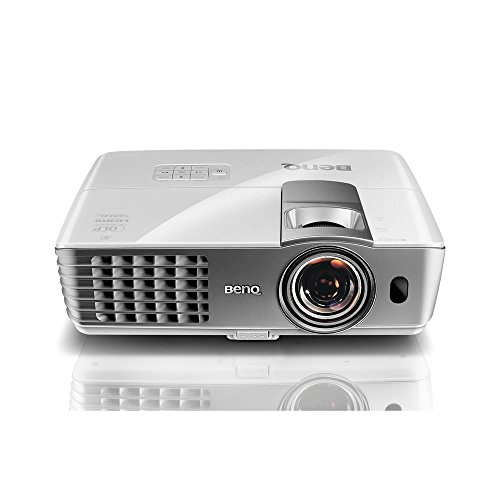
BenQ W1080ST
7.0/10

Overall score

Score
7.0/ 10
✕
What it is
Our main score for this model, 1–10. It combines specs, best-of lists, expert reviews and owners.
How we count it
Parts: Technical score 35%, List score 30%, Reviews score 25%, Sentiment score 10%
Marks: Each part gets a mark out of 10. For reviews, lists and owners, a typical model in this category gets about 8 and the best one gets 10.
No data yet: A part with no data shows "?". It counts as the mark of a weaker model in this category (4 in 5 models with data score higher). This way, models with reviews, lists and owners usually come out ahead.
Score distribution
â–¼
<55-66-77-88-99-10
Score components

35%

5.8

Technical score

30%

?

List scoreNot enough data yet, so we use 7.5, the mark of a weaker model in this category

25%

8.4

Reviews score

10%

5.8

Sentiment score

â–¼Worse than 62% of projectors
7.6

Value for money

Value for money
7.6/ 10
✕
What it is
An indicator that combines the projector's overall rating with its cost.
When it matters
When you are looking for a projector with a good balance between quality and price.
Score distribution
â–¼
<55-66-77-88-99-10
Score components

70%

7.0

Overall score

30%

9.0

Price

â–²Better than 78%
5.8

Technical score

Technical score
5.8/ 10
✕
What it is
How good the specs are compared with the other models in this category, 1–10.
How we count it
Areas: We rate the specs in each area against the other models in this category.
Weighting: The areas that matter most to buyers count more. The shares are shown under Score components.
Share: The technical score is 35% of the overall score.
Score distribution
â–¼
<55-66-77-88-99-10
Score components

42%

6.7

Image Quality

22%

5.1

Projection & Lens

12%

5.3

HDMI & Gaming

10%

5.7

Audio & Features

8%

5.2

Connectivity

6%

4.0

Design & Power

â–¼Worse than 81%
8.4

Reviews score

Reviews score
8.4/ 10
✕
What it is
Average grade from independent test sites, magazines and video reviewers, 1–10.
How we count it
Grades: Each review's own score is converted to 1–10; without one, we grade the review ourselves. Big test sites count more, short reviews half as much as full tests. A video review counts half.
Score: The average grade is 80% of the review mark; the number of reviews is the other 20% (1 review = 5, the typical number in this category = 8, the most-reviewed model = 10).
Enough data: With few reviews, the average grade is pulled toward the typical grade of this category. No reviews yet: 7.8 for now.
Share: Reviews count 25% of the overall score.
Score distribution
â–¼
<55-66-77-88-99-10

80%

8.4

Average grade

20%

8.7

Popularity

Grades by review (14)
13 reviews: 10 with a printed score, 3 estimated from the review. 1 video review, counting half as much as a written test. Reviews count 25% of the overall score.
User ratings collected online are not part of this score.
â–²Better than 63%
?

List score

List score
7.5/ 10
✕
What it is
How often independent test sites, magazines and video reviewers put this model in their best-of lists for this category.
How we count it
Points: The model in the most lists of this category gets 10; the others get 8 to 10 in proportion. In no list yet: 7.5. Lists count 30% of the overall score.
Enough data: Every list counts, even a single one. With fewer than 5 best-of lists in the category, this part is left out.
Lists with this model (0)
Not in any best-of list yet, so this part counts as 7.5. Models in a list get 8 to 10.
Not in any best-of list yet
  • benq-w1080st
benq-w1080st
Where to buy
*As an Amazon Associate, we earn from qualifying purchases.
Best rankings
Available: ranking among products currently available (including other versions of this product).All: ranking among all products in the database.

What reviewers say about the BenQ W1080ST

Based on 10 · 1

Reviewers love the short throw for big pictures in small rooms, but dislike the 3D glasses and noisy fan.
Praised
Mixed views
Criticised
Pick a topic to see who said what

What owners say about the BenQ W1080ST

Based on 90 owners sharing their experience in online comments

30%positive4%mixed66%negative

Owners value the sharp picture and repair guides, but dust, fan, lamp, and power failures make reliability a major frustration.

What owners dislike

  • Owners say the projector stays dead with only the red power light after reassembly, often because a cable, pin or connector was not seated properly.11
  • Owners say a fan drops to low speed or stops after cleaning or swapping, so the projector overheats and shuts down, and they cannot tell which fan is which.11
  • Owners say the projector shuts off after a few minutes of use, with the lamp or temperature warning showing, even after cleaning the fans and sensors.9
  • Owners say the lamp stays dark or goes out after a lamp swap, sometimes after the old lamp shattered inside, with the lamp error light coming on.8
  • Owners say colours flicker, turn purple or go black and white after about 20 minutes of use, and a cleaned colour wheel sensor did not always fix it.8
  • Owners say white dust spots show on dark screens after compressed-air cleaning, and they could not always reach the dust on the lens behind the colour wheel.7
  • Owners say a thin white flat cable or connector on the colour wheel or lamp breaks or pulls out during reassembly, and replacement parts are hard to find.5
  • Owners say the colour wheel stops spinning or needs constant resyncing, and a broken white connector on the colour wheel can be the cause.4
  • Owners say the picture shows vertical lines, horizontal bars or a blank grainy screen after reassembly, with no menu or signal.4
  • Owners say a bright or dark patch sits in one corner of the image after a lamp or chip change, often from the lamp housing sitting tilted or unevenly fixed.3

Points mentioned by at least 3 owners, most mentioned first.

Loading...
Loading category ranking...

Technical Specifications of projector BenQ W1080ST

Technical score
Technical score
5.8/ 10
✕
What it is
How good the specs are compared with the other models in this category, 1–10.
How we count it
Areas: We rate the specs in each area against the other models in this category.
Weighting: The areas that matter most to buyers count more. The shares are shown under Score components.
Share: The technical score is 35% of the overall score.
Score distribution
â–¼
<55-66-77-88-99-10
Score components:

42%

6.7

Image Quality

22%

5.1

Projection & Lens

12%

5.3

HDMI & Gaming

10%

5.7

Audio & Features

8%

5.2

Connectivity

6%

4.0

Design & Power

5.8
Reviews score
8.4
List score
?
Value for money
Value for money
7.6/ 10
✕
What it is
An indicator that combines the projector's overall rating with its cost.
When it matters
When you are looking for a projector with a good balance between quality and price.
Score distribution
â–¼
<55-66-77-88-99-10
Score components:

70%

7.0

Overall score

30%

9.0

Price

7.6
ANSI lumens
2000
This projector reaches 2000 ANSI lumens, dimmer than 54% of projectors and equal to 5% of projectors.
Contrast ratio
10,000:1
This projector has a contrast ratio of 10000:1, lower than 50.1% of projectors and equal to 7.4% of projectors.
Native panel resolution
1920x1080
This projector uses a native resolution of 1920x1080, higher than 27% of projectors and equal to 59.2% of projectors.
Output resolution
1920x1080
This projector supports output resolution up to 1920x1080, higher than 25.9% of projectors and equal to 42.3% of projectors.
Projection technology
DLP
Show more
What reviewers say
Throw ratio
0.69-0.83:1
Min throw distance
0.46 m
This projector needs a minimum throw distance of 0.46 m, shorter than 90.9% of projectors and equal to 0.4% of projectors.
Max projection size
300 inch
This projector supports projection sizes up to 300 inch, larger than 51.5% of projectors and equal to 38% of projectors.
Zoom ratio
1.2
This projector offers a zoom ratio of 1.2, narrower than 59.8% of projectors and equal to 21.6% of projectors.
Motorized zoom
no
This projector does not have motorised zoom. 14.8% of projectors offer this.
Show more
What reviewers say
Input lag
24 ms
This projector has input lag of 24 ms, lower than 54.9% of projectors and equal to 0.2% of projectors.
In 1080P.
Auto low latency mode (ALLM)
no
This projector does not switch to low-latency mode automatically. 16.1% of projectors offer this.
Variable refresh rate (VRR)
no
This projector does not support variable refresh rate. 1.8% of projectors offer this.
HDMI version
1.4
This projector supports HDMI 1.4, older than 54% of projectors and equal to 35.7% of projectors.
Max HDMI bandwidth
10.2 Gbps
This projector supports HDMI bandwidth up to 10.2 Gbps, lower than 51.2% of projectors and equal to 46.5% of projectors.
Show more
N. of HDMI ports
2
This projector has 2 HDMI port/s, more than 45.9% of projectors and equal to 47.3% of projectors.
Wi-Fi connectivity
no
This projector does not connect to Wi-Fi networks. 53.4% of projectors offer this.
Wi-Fi version
N/A
Bluetooth connectivity
no
This projector does not support Bluetooth. 50.7% of projectors offer this.
Bluetooth version
N/A
Show more
Smart TV features
no
This projector does not have built-in smart TV features. 43.9% of projectors offer this.
Operating system
none
Android OS
no
This projector does not run Android OS. 19.1% of projectors run Android OS.
Dedicated smartphone app
no
This projector does not come with a dedicated smartphone app. 36.8% of projectors come with a dedicated smartphone app.
Remote control
yes
This projector includes a remote control. 1.5% of projectors offer this.
Show more
Light source type
lamp
This projector uses lamp light source technology, less advanced than 66.5% of projectors and equal to 33.5% of projectors.
Laser light source
no
This projector does not have a laser light source. 26.8% of projectors offer this.
Lamp life
3,500 hours
This projector offers lamp life of 3,500 hours, longer than 88.5% of projectors and equal to 3.3% of projectors.
Lamp life (eco mode)
6,000 hours
This projector offers eco-mode lamp life of 6,000 hours, longer than 78.8% of projectors and equal to 7.3% of projectors.
Operating power consumption
353 W
This projector uses 353 W of power, more than 86% of projectors and equal to 0.2% of projectors.
Typical power draw.
Show more
What reviewers say

BenQ W1080ST vs the average projector

246810TotalImage QualityProjection & LensHDMI & GamingConnectivityAudio & FeaturesDesign & Power
  • 3 more audio input ports
    This projector has more audio input ports than the average projector (3 vs 0). The average projector has 0 audio input ports.
    Includes RCA stereo input.
    3 vs 0
  • 0.55 m shorter throw distance
    This projector has a lower throw distance than the average projector (0.5 m vs 1 m). The average projector has 1.0055 m of throw distance.
    0.46 m vs 1.0055 m
  • 0.18 inch larger DMD chip
    This projector has a higher DMD chip size than the average projector (0.7 inch vs 0.47 inch). The average projector has 0.47 inch of DMD chip size.
    0.65 inch vs 0.47 inch
  • 41.2% higher refresh rate
    This projector has a higher refresh rate than the average projector (120 Hz vs 85 Hz). The average projector has 85 Hz of refresh rate.
    120 Hz vs 85 Hz
  • 50 inch larger image size
    This projector has a higher projection size than the average projector (300 inch vs 250 inch). The average projector has 250 inch of projection size.
    300 inch vs 250 inch
  • 13.5% higher review score
    Reviews score
    8.4/ 10
    ✕
    What it is
    Average grade from independent test sites, magazines and video reviewers, 1–10.
    How we count it
    Grades: Each review's own score is converted to 1–10; without one, we grade the review ourselves. Big test sites count more, short reviews half as much as full tests. A video review counts half.
    Score: The average grade is 80% of the review mark; the number of reviews is the other 20% (1 review = 5, the typical number in this category = 8, the most-reviewed model = 10).
    Enough data: With few reviews, the average grade is pulled toward the typical grade of this category. No reviews yet: 7.8 for now.
    Share: Reviews count 25% of the overall score.
    Score distribution
    â–¼
    <55-66-77-88-99-10

    80%

    8.4

    Average grade

    20%

    8.7

    Popularity

    Grades by review (14)
    13 reviews: 10 with a printed score, 3 estimated from the review. 1 video review, counting half as much as a written test. Reviews count 25% of the overall score.
    User ratings collected online are not part of this score.
    8.4 vs 7.4
  • VGA input included
    This projector supports VGA input, while the average projector does not. 44.1% of projectors support VGA input.
  • 13.5% higher review score
    Reviews score
    8.4/ 10
    ✕
    What it is
    Average grade from independent test sites, magazines and video reviewers, 1–10.
    How we count it
    Grades: Each review's own score is converted to 1–10; without one, we grade the review ourselves. Big test sites count more, short reviews half as much as full tests. A video review counts half.
    Score: The average grade is 80% of the review mark; the number of reviews is the other 20% (1 review = 5, the typical number in this category = 8, the most-reviewed model = 10).
    Enough data: With few reviews, the average grade is pulled toward the typical grade of this category. No reviews yet: 7.8 for now.
    Share: Reviews count 25% of the overall score.
    Score distribution
    â–¼
    <55-66-77-88-99-10

    80%

    8.4

    Average grade

    20%

    8.7

    Popularity

    Grades by review (14)
    13 reviews: 10 with a printed score, 3 estimated from the review. 1 video review, counting half as much as a written test. Reviews count 25% of the overall score.
    User ratings collected online are not part of this score.
    8.4 vs 7.4
  • 0.18 inch larger DMD chip
    This projector has a higher DMD chip size than the average projector (0.7 inch vs 0.47 inch). The average projector has 0.47 inch of DMD chip size.
    0.65 inch vs 0.47 inch
  • 41.2% higher refresh rate
    This projector has a higher refresh rate than the average projector (120 Hz vs 85 Hz). The average projector has 85 Hz of refresh rate.
    120 Hz vs 85 Hz
  • 0.55 m shorter throw distance
    This projector has a lower throw distance than the average projector (0.5 m vs 1 m). The average projector has 1.0055 m of throw distance.
    0.46 m vs 1.0055 m
  • 50 inch larger image size
    This projector has a higher projection size than the average projector (300 inch vs 250 inch). The average projector has 250 inch of projection size.
    300 inch vs 250 inch
  • VGA input included
    This projector supports VGA input, while the average projector does not. 44.1% of projectors support VGA input.
  • 3 more audio input ports
    This projector has more audio input ports than the average projector (3 vs 0). The average projector has 0 audio input ports.
    Includes RCA stereo input.
    3 vs 0
  • Limited HDMI format
    This projector supports a less capable max HDMI input format than the average projector (1080p/60Hz vs 4K/120Hz). The average projector supports a max HDMI input format of 4K/120Hz.
    1080p/60Hz vs 4K/120Hz
  • Basic light source
    This projector has Basic light source than the average projector (lamp vs laser). The average projector uses a laser light source.
    lamp vs laser
  • No HDR10 support
    This projector does not support HDR10, while the average projector does. 57.6% of projectors support HDR10.
  • 43.3% lower HDMI bandwidth
    This projector has a lower HDMI bandwidth than the average projector (10.2 Gbps vs 18 Gbps). The average projector has 18 Gbps of HDMI bandwidth.
    10.2 Gbps vs 18 Gbps
  • No Wi-Fi connectivity
    This projector does not connect to Wi-Fi networks, while the average projector does. 53.4% of projectors offer this.
  • No Bluetooth connectivity
    This projector does not support Bluetooth, while the average projector does. 50.6% of projectors offer this.
  • Older HDMI version
    This projector has Old HDMI standard than the average projector (1.4 vs 2). The average projector supports HDMI 2.
    1.4 vs 2
  • 16,500 hours shorter lamp life
    This projector has a lower lamp life than the average projector (3,500 hours vs 20,000 hours). The average projector has 20,000 hours of lamp life.
    3,500 hours vs 20,000 hours
  • 22.7% lower sentiment score
    5.8 vs 7.5
  • No HDR10 support
    This projector does not support HDR10, while the average projector does. 57.6% of projectors support HDR10.
  • 8 earlier release
    This projector was released earlier than the average projector (2013 vs 2021). The average projector was released in 2021.
    February 2013
    2013 vs 2021
  • 9.1% dimmer image
    This projector has lower ANSI lumens than the average projector (2000 vs 2,200). The average projector has 2,200 ANSI lumens.
    2,000 vs 2,200
  • 10 degrees less vertical correction
    This projector offers less vertical keystone correction than the average projector (20 degrees vs 30 degrees). The average projector offers vertical keystone correction of 30 degrees.
    20 degrees vs 30 degrees
  • 0.1 2x narrower zoom range
    This projector has a lower zoom ratio than the average projector (1.2 vs 1.3). The average projector has 1.3 of zoom ratio.
    1.2 vs 1.3
  • Limited HDMI format
    This projector supports a less capable max HDMI input format than the average projector (1080p/60Hz vs 4K/120Hz). The average projector supports a max HDMI input format of 4K/120Hz.
    1080p/60Hz vs 4K/120Hz
  • 43.3% lower HDMI bandwidth
    This projector has a lower HDMI bandwidth than the average projector (10.2 Gbps vs 18 Gbps). The average projector has 18 Gbps of HDMI bandwidth.
    10.2 Gbps vs 18 Gbps
  • Older HDMI version
    This projector has Old HDMI standard than the average projector (1.4 vs 2). The average projector supports HDMI 2.
    1.4 vs 2
  • More outdated HDCP support
    This projector supports an older HDCP version than the average projector (1.4 vs 2.2).
    1.4 vs 2.2
  • No Wi-Fi connectivity
    This projector does not connect to Wi-Fi networks, while the average projector does. 53.4% of projectors offer this.
  • No Bluetooth connectivity
    This projector does not support Bluetooth, while the average projector does. 50.6% of projectors offer this.
  • No sleep timer
    This projector does not have a sleep timer, while the average projector does. 82.4% of projectors have one.
  • Basic light source
    This projector has Basic light source than the average projector (lamp vs laser). The average projector uses a laser light source.
    lamp vs laser
  • 16,500 hours shorter lamp life
    This projector has a lower lamp life than the average projector (3,500 hours vs 20,000 hours). The average projector has 20,000 hours of lamp life.
    3,500 hours vs 20,000 hours
  • 14,000 hours shorter eco lamp life
    This projector has a lower lamp life in eco mode than the average projector (6,000 hours vs 20,000 hours). The average projector has 20,000 hours of lamp life in eco mode.
    6,000 hours vs 20,000 hours
  • 123 W higher power use
    This projector uses more power than the average projector (353 W vs 230 W). The average projector uses 230 W of power.
    Typical power draw.
    353 W vs 230 W
  • 2 dB louder operation
    This projector has a higher audible noise than the average projector (33 dB vs 31 dB). The average projector has 31 dB of audible noise.
    33 dB vs 31 dB
  • 2 dB louder eco mode
    This projector has a higher audible noise in eco mode than the average projector (30 dB vs 28 dB). The average projector has 28 dB of audible noise in eco mode.
    30 dB vs 28 dB

Video reviews

Hands-on testing, unboxing, and real-world video evaluations

8.0
TechVideo
≈ estimated
27/10/2013
Hands-on review · brightness, fan noise, 3D glasses, office use
Verdict
BenQ W1080ST is a bright, quiet short-throw Full HD projector with 3D, though its glasses are pricey and the sound is average.
Overview video

Expert reviews

In-depth analysis and verdict from leading tech publications

9.0
trustedreviews.com
✓ explicit
21/03/2013
Hands-on review · Short-throw home projector
Verdict
The BenQ W1080ST is a very good value short-throw projector with strong contrast and shadow detail, though it lacks vertical shift and its remote is not backlit.
7.0
pcmag.com
✓ explicit
04/04/2013
Lab test · Short-throw 3D projector
Verdict
The BenQ W1080ST is a bright short-throw 3D projector with good colour quality, though rainbow streaks show easily and some computers may not connect over HDMI.
9.0
projectorreviews.com
≈ estimated
16/06/2013
Hands-on review · Short-throw home projector
Verdict
The BenQ W1080ST is a bright, easy-to-calibrate short-throw projector with excellent shadow detail, but its blacks cannot match ultra-high-contrast rivals.
8.0
whathifi.com
✓ explicit
13/11/2013
Hands-on review · Short-throw
Verdict
The BenQ W1080ST is a sharp, bright short-throw projector for small rooms, though its colours look a little too vivid and 3D glasses are sold separately.
8.0
avforums.com
✓ explicit
06/03/2014
Lab test · Short-throw DLP
Verdict
The BenQ W1080ST is a short-throw DLP projector that handles big, bright images and 3D well, but its blacks and shadow detail fall short.
7.4
cnet.com
✓ explicit
12/03/2014
Hands-on test · Short-throw projector
Verdict
The BenQ W1080ST is a short-throw projector that fills a 120-inch screen from 75 inches away, but its lack of lens shift makes setup fussy.
6.0
expertreviews.co.uk
✓ explicit
14/06/2014
Hands-on review · Short-throw DLP
Verdict
The BenQ W1080ST is a 3D-ready short-throw projector that gives big images in small rooms, but fast camera pans look jerky in films.
9.0
godisageek.com
≈ estimated
05/12/2014
Hands-on review · Small-room projector
Verdict
The BenQ W1080ST is a compact short-throw projector that throws up to a 65-inch picture from 1 m, with deep blacks and rich colour, and suits a first projector.
9.0
hifitest.de
✓ explicit
03/12/2013
Single test · Short-throw Full HD
Verdict
The BenQ W1080ST is a short-throw projector with native Full HD resolution that fills a 2 m picture from 1.4 m, though its fan is audible.
10
lite-magazin.de
✓ explicit
04/09/2013
Hands-on test · Short-throw 3D projector
Verdict
The BenQ W1080ST is a short-throw projector that throws a 2 metre picture from 1.38 metres, with flicker-free 3D, but its blacks look greyish.
10
lesnumeriques.com
✓ explicit
27/01/2014
Lab test · Short-throw projector
Verdict
The BenQ W1080ST is a short-throw version of the W1070 that suits small rooms and gamers, though its fan is noisy and its remote is hard to use.
9.0
picoprojecteur.top
≈ estimated
07/07/2018
Hands-on test · 3D DLP projector
Verdict
The BenQ W1080ST+ is a Full HD DLP projector with excellent 3D and a slightly brighter lamp, but its fan is audible and it lacks motion smoothing.
8.0
gadgetgear.nl
✓ explicit
01/03/2016
Hands-on review · Short-throw 3D
Verdict
The BenQ W1080ST+ throws a 100-inch Full HD picture from 1.5 metres, sharp and easy to set up, though 3D glasses are sold separately.

Third-party reviews

What customers like about BenQ W1080ST

  • Short-throw lens allows for large images from very short distances, ideal for small rooms or coffee table placement
  • High brightness (2,000 lumens) makes it suitable for rooms with some ambient light
  • Excellent 3D performance with virtually no crosstalk or ghosting
  • Sharp 1080p image quality with vibrant and accurate out-of-the-box colors
  • Low input lag makes it highly recommended for gaming
  • Compact and lightweight design for easy portability and storage

What customers don't like about BenQ W1080ST

  • Black levels are decent for the price but can appear as dark grey in very dark rooms
  • No 3D glasses included in the box; they must be purchased separately at a significant cost
  • Lack of vertical or horizontal lens shift makes initial physical alignment critical
  • Some users report audible fan and color wheel noise, especially in full power mode
  • Potential for 'rainbow effect' artifacts due to its single-chip DLP design
  • The remote control lacks a backlight, making it difficult to use in darkened environments

Verdict

The BenQ W1080ST is a native Full HD (1920x1080) DLP projector designed for small spaces, featuring a 0.69–0.83 short-throw ratio that can produce a 65-inch image from just one metre away. Key specifications include 2,000 ANSI lumens of brightness, a 10,000:1 contrast ratio, and a lamp life ranging from 3,500 hours in normal mode to 6,000 hours in SmartEco mode. Its primary strengths are its exceptional color accuracy (ISF certified), low input lag of approximately 24ms for gaming, and full 3D support via HDMI 1.4a. Notable drawbacks include the lack of vertical lens shift, the absence of a backlit remote, and the potential for rainbow artifacts common to single-chip DLP systems.

Compare BenQ W1080ST with other products in the Projectors category

1Product to compare no. 1
VS
2Product to compare no. 2
VS
3Product to compare no. 3 (optional)

Graphic comparison of BenQ W1080ST and other products in the Projectors category

No results found