Lenovo 300 Wireless Review | 78 Data compared

Avg. price:~£9Connectivity:wirelessMaximum polling rate:125 HzMaximum DPI:1000 DPIWeight:52 g

Lenovo 300 Wireless Review: Compare 78 technical specifications and user reviews to see how this product ranks in the Mice category and whether it is worth buying.

5.3

Overall score

Score
5.3/ 10
✕
What it is
An overall evaluation of the mouse's quality, based on technical analyses and user reviews.
When it matters
When you need a quick reference to identify the best mice on the market.
Score distribution
â–¼
<55-66-77-88-99-10
Score components

80%

4.4

Technical Score

20%

9.1

User score

â–¼Worse than 75% of mice
4.4

Technical Score

Technical score
4.4/ 10
✕
What it is
An assessment of technical performance for products in the Mice category across these key areas: Performance & Sensor, Connectivity, Battery & Charging, Controls, Design, Features.
When it matters
When you want to compare mice based on technical performance and available features.
Score distribution
â–¼
<55-66-77-88-99-10
Score components

36%

3.4

Performance & Sensor

22%

1.4

Controls

16%

9.0

Design

14%

2.8

Features

7%

9.6

Connectivity

5%

6.6

Battery & Charging

â–¼Worse than 85% of mice
9.1

User score

User score
9.1/ 10
✕
What it is
A rating that combines user reviews and the total number of reviews received by the mouse.
When it matters
When you want to understand how a mouse performs in daily use or gaming and how reliable it is in terms of comfort, button feel, tracking accuracy, and long-term durability.
Score distribution
â–¼
<55-66-77-88-99-10
Score components

70%

8.7

User ratings

30%

10

Number of reviews

Based on 24,650 buyer reviews from online shops.
How we calculate this
User ratings – average star rating across all shop listings, weighted by how many reviews each has, on a 1–10 scale.
Number of reviews – how many buyer reviews the product has, on a logarithmic scale; the 8% most-reviewed models in the category get 10.
★Better than 90% of mice
  • lenovo-300-wireless
  • lenovo-300-wireless
  • lenovo-300-wireless
  • lenovo-300-wireless
  • lenovo-300-wireless
  • lenovo-300-wireless
  • lenovo-300-wireless
lenovo-300-wireless
lenovo-300-wireless
lenovo-300-wireless
lenovo-300-wireless
lenovo-300-wireless
lenovo-300-wireless
lenovo-300-wireless

Best prices

*As an Amazon Associate, we earn from qualifying purchases.

Best rankings

Available: ranking among products currently available (including other versions of this product).All: ranking among all products in the database.
Loading...
Loading category ranking...

Verdict

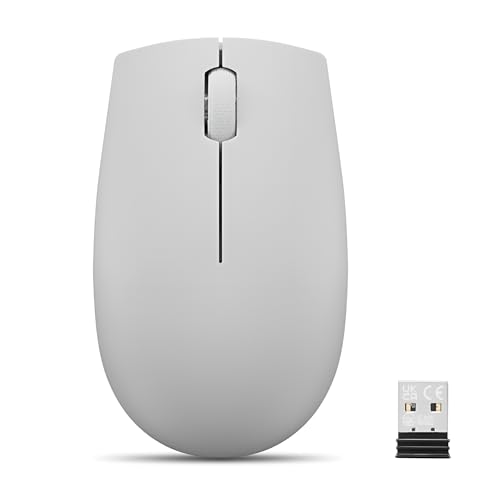
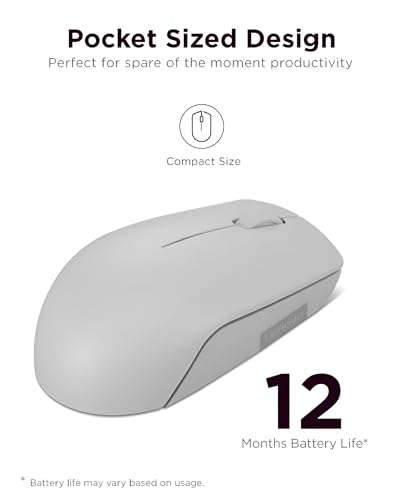
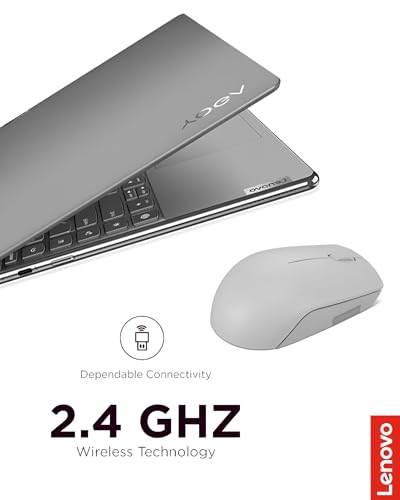
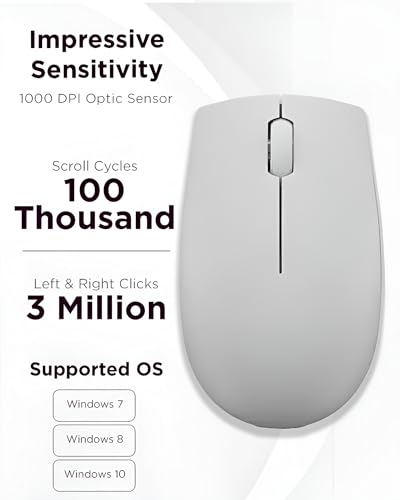
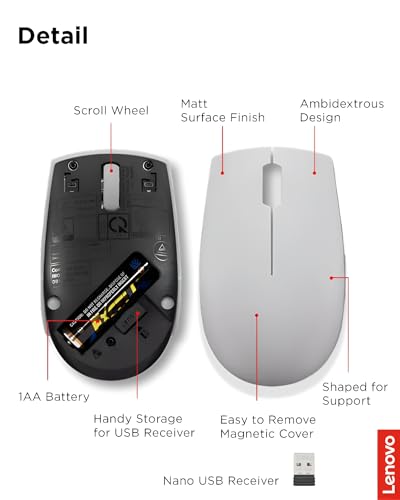
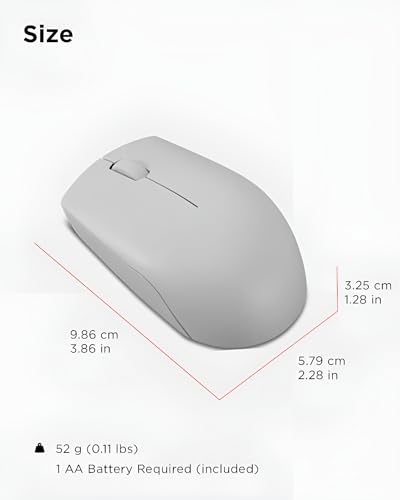
The Lenovo 300 Wireless Compact Mouse is an ambidextrous peripheral featuring a 1000 DPI optical sensor and 2.4 GHz wireless connectivity via a Nano USB-A receiver with up to a 10-metre range. Designed for portability, it weighs approximately 56g and measures 98mm x 56mm x 32mm, making it ideal for travel. Its main characteristics include a 3-button layout (left, right, and scroll click) and an impressive 12-month battery life powered by a single AA battery. Key pros include its plug-and-play simplicity, lightweight design, and long-lasting energy efficiency, though potential cons include its small size, which may feel uncomfortable for users with larger hands, and its fixed DPI setting which lacks customisation for advanced tasks.

Technical Specifications of mouse Lenovo 300 Wireless

Technical Score
Technical score
4.4/ 10
✕
What it is
An assessment of technical performance for products in the Mice category across these key areas: Performance & Sensor, Connectivity, Battery & Charging, Controls, Design, Features.
When it matters
When you want to compare mice based on technical performance and available features.
Score distribution
â–¼
<55-66-77-88-99-10
Score components:

36%

3.4

Performance & Sensor

22%

1.4

Controls

16%

9.0

Design

14%

2.8

Features

7%

9.6

Connectivity

5%

6.6

Battery & Charging

4.4
Lenovo 300 Wireless has a technical score of 4.4 points, which is lower than that of 85.4% of products in this category.
User score
User score
9.1/ 10
✕
What it is
A rating that combines user reviews and the total number of reviews received by the mouse.
When it matters
When you want to understand how a mouse performs in daily use or gaming and how reliable it is in terms of comfort, button feel, tracking accuracy, and long-term durability.
Score distribution
â–¼
<55-66-77-88-99-10
Score components

70%

8.7

User ratings

30%

10

Number of reviews

Based on 24,650 buyer reviews from online shops.
How we calculate this
User ratings – average star rating across all shop listings, weighted by how many reviews each has, on a 1–10 scale.
Number of reviews – how many buyer reviews the product has, on a logarithmic scale; the 8% most-reviewed models in the category get 10.
9.1
Lenovo 300 Wireless has a user score of 9.12 points, which is higher than that of 89.6% of products in this category.
Popularity
Popularity
10.0/ 10
✕
What it is
An indicator based on the number of reviews received by the mouse.
When it matters
When you prefer a mouse that has already been chosen and reviewed by many other users.
Score distribution
â–¼
<55-66-77-88-99-10
Popularity:
Lenovo 300 Wireless has a popularity score of 10 points, which is higher than that of 91.5% of products in this category.
10
Lenovo 300 Wireless has a popularity score of 10 points, which is higher than that of 91.5% of products in this category.
Ratio quality/price
Value for money
6.7/ 10
✕
What it is
An indicator that combines the mouse's overall rating with its cost.
When it matters
When you are looking for a mouse that offers a strong balance of performance, features, and price.
Score distribution
â–¼
<55-66-77-88-99-10
Score components:

60%

5.3

Overall score

40%

10

Price

6.7
Lenovo 300 Wireless has a value-for-money score of 6.7 points, which is lower than that of 73.6% of products in this category.
Brand name
Lenovo
Maximum polling rate
125 Hz
Maximum polling rate
125 Hz
This mouse has a maximum polling rate of 125 Hz, which is lower than 75.8% of mice and equal to 23.9% of mice.
Wired polling rate
N/A
2.4 GHz polling rate
125 Hz
2.4 GHz polling rate
125 Hz
This mouse has a 2.4 GHz polling rate of 125 Hz, which is lower than 71.1% of mice and equal to 28.8% of mice.
Bluetooth polling rate
0 Hz
Bluetooth polling rate
0 Hz
This mouse has a Bluetooth polling rate of 0 Hz, which is lower than 36% of mice and equal to 64% of mice.
2.4GHz only.
Show more
Connectivity
wireless
Connectivity
wireless
This mouse supports wireless connectivity, which is more versatile than 35% of mice and equal to 21.7% of mice.
connection modes: 2.4 GHz.
Bluetooth support
no
Bluetooth support
no
This mouse does not support Bluetooth. 35.6% of mice support Bluetooth.
Bluetooth version
N/A
Proprietary 2.4 GHz support
yes
Proprietary 2.4 GHz support
yes
This mouse supports proprietary 2.4 GHz wireless. 38.8% of mice support proprietary 2.4 GHz wireless.
Receiver included
yes
Receiver included
yes
This mouse includes a receiver. 37.8% of mice include a receiver.
Show more
Battery life
N/A
Battery capacity
N/A
Battery form factor
AA
Rechargeable battery
no
Rechargeable battery
no
This mouse does not use a rechargeable battery. 46% of mice use a rechargeable battery.
Removable battery
yes
Removable battery
yes
This mouse uses a removable battery. 77.8% of mice use a removable battery.
Show more
N. of buttons
3
N. of buttons
3
This mouse has 3 buttons, which is less than 91% of mice and equal to 8.5% of mice.
N. of side buttons
0
N. of side buttons
0
This mouse has 0 side buttons, which is less than 85.3% of mice and equal to 14.7% of mice.
N. of programmable buttons
0
N. of programmable buttons
0
This mouse has 0 programmable buttons, which is less than 83.4% of mice and equal to 16.7% of mice.
DPI switching button
no
DPI switching button
no
This mouse does not include a DPI switching button. 85.4% of mice include a DPI switching button.
Profile switching button
no
Profile switching button
no
This mouse does not include a profile switching button. 16% of mice include a profile switching button.
Show more
Orientation
ambidextrous
Weight
52 g
Weight
52 g
This mouse weighs 52 g, which makes it lighter than 89.8% of mice and equal to 0.9% of mice.
Extra weights
0 g
Extra weights
0 g
This mouse comes with 0 g extra weights, which is less than 4.6% of mice and equal to 95.4% of mice.
Cable length
N/A
Cable type
N/A
Show more
Onboard memory profiles
0
Onboard memory profiles
0
This mouse supports 0 onboard memory profiles, which is less than 52.2% of mice and equal to 47.8% of mice.
Onboard memory size
0 KB
Onboard memory size
0 KB
This mouse has an onboard memory size of 0 KB, which is smaller than 12.6% of mice and equal to 87.4% of mice.
no onboard memory.
Software name
N/A
Firmware upgradable
?
Suitable for gaming
no
Suitable for gaming
no
This mouse is not suitable for gaming. 76.2% of mice are suitable for gaming.

Lenovo 300 Wireless vs the average mouse

246810TotalPerformance & SensorConnectivityBattery & ChargingControlsDesignFeatures
  • 36.6% lower mouse weight
    Weight
    52 g
    This mouse weighs 52 g, while the average mouse weighs 82 g.
    52 g vs 82 g
  • Removable battery
    Removable battery
    yes
    This mouse uses a removable battery, while the average mouse does not. 22.3% of mice use a removable battery.
  • 3.89x cheaper
    Lenovo 300 Wireless is cheaper than the average mouse (£9 vs £35).
    £9 vs £35
  • 14% higher user score
    User score
    9.1/ 10
    ✕
    What it is
    A rating that combines user reviews and the total number of reviews received by the mouse.
    When it matters
    When you want to understand how a mouse performs in daily use or gaming and how reliable it is in terms of comfort, button feel, tracking accuracy, and long-term durability.
    Score distribution
    â–¼
    â–¼
    <55-66-77-88-99-10
    Lenovo 300 Wireless
    the average mouse
    Lenovo 300 Wireless has a higher user score than the average mouse (9.12 vs 8.000).
    9.12 vs 8
  • 56.6% more popular
    Lenovo 300 Wireless is more popular than the average mouse (10 vs 6.4).
    10 vs 6.38
  • 10 mm narrower mouse width
    Width
    56 mm
    This mouse is 56 mm wide, while the average mouse is 66 mm wide.
    56 mm vs 66 mm
  • 7.2 mm lower mouse height
    Height
    32.5 mm
    This mouse is 32.5 mm tall, while the average mouse is 39.7 mm tall.
    32.5 mm vs 39.7 mm
  • Receiver storage inside mouse
    Receiver storage in mouse
    yes
    This mouse has receiver storage inside the mouse, while the average mouse does not. 45.9% of mice have receiver storage inside the mouse.
  • 3.89x cheaper
    Lenovo 300 Wireless is cheaper than the average mouse (£9 vs £35).
    £9 vs £35
  • 14% higher user score
    User score
    9.1/ 10
    ✕
    What it is
    A rating that combines user reviews and the total number of reviews received by the mouse.
    When it matters
    When you want to understand how a mouse performs in daily use or gaming and how reliable it is in terms of comfort, button feel, tracking accuracy, and long-term durability.
    Score distribution
    â–¼
    â–¼
    <55-66-77-88-99-10
    Lenovo 300 Wireless
    the average mouse
    Lenovo 300 Wireless has a higher user score than the average mouse (9.12 vs 8.000).
    9.12 vs 8
  • 56.6% more popular
    Lenovo 300 Wireless is more popular than the average mouse (10 vs 6.4).
    10 vs 6.38
  • Receiver storage inside mouse
    Receiver storage in mouse
    yes
    This mouse has receiver storage inside the mouse, while the average mouse does not. 45.9% of mice have receiver storage inside the mouse.
  • Removable battery
    Removable battery
    yes
    This mouse uses a removable battery, while the average mouse does not. 22.3% of mice use a removable battery.
  • 36.6% lower mouse weight
    Weight
    52 g
    This mouse weighs 52 g, while the average mouse weighs 82 g.
    52 g vs 82 g
  • 7.2 mm lower mouse height
    Height
    32.5 mm
    This mouse is 32.5 mm tall, while the average mouse is 39.7 mm tall.
    32.5 mm vs 39.7 mm
  • 10 mm narrower mouse width
    Width
    56 mm
    This mouse is 56 mm wide, while the average mouse is 66 mm wide.
    56 mm vs 66 mm
  • 6 fewer programmable buttons
    N. of programmable buttons
    0
    This mouse has 0 programmable buttons, while the average mouse has 6 programmable buttons.
    0 vs 6
  • 87.5% lower maximum polling rate
    Maximum polling rate
    125 Hz
    This mouse has a maximum polling rate of 125 Hz, while the average mouse has a maximum polling rate of 1000 Hz.
    125 Hz vs 1,000 Hz
  • 20 million clicks shorter switch lifespan
    Switch durability
    10 million clicks
    This mouse has a switch durability of 10 million clicks, while the average mouse has a switch durability of 30 million clicks.
    10 million clicks vs 30 million clicks
  • 90% lower maximum DPI
    Maximum DPI
    1,000 DPI
    This mouse has a maximum DPI of 1000 DPI, while the average mouse has a maximum DPI of 10000 DPI.
    1,000 DPI vs 10,000 DPI
  • 1 fewer onboard profiles
    Onboard memory profiles
    0
    This mouse supports 0 onboard memory profiles, while the average mouse supports 1 onboard memory profiles.
    0 vs 1
  • No adjustable DPI
    Adjustable DPI
    no
    This mouse does not support adjustable DPI, while the average mouse does. 93.9% of mice support adjustable DPI.
  • 87.5% lower 2.4 GHz polling rate
    2.4 GHz polling rate
    125 Hz
    This mouse has a 2.4 GHz polling rate of 125 Hz, while the average mouse has a 2.4 GHz polling rate of 1000 Hz.
    125 Hz vs 1,000 Hz
  • Not suitable for gaming
    Suitable for gaming
    no
    This mouse is not suitable for gaming, while the average mouse is. 76.1% of mice are suitable for gaming.
  • 8.9% worse value for money
    Lenovo 300 Wireless has worse value for money than the average mouse (6.72 vs 7.3).
    6.72 vs 7.31
  • 87.5% lower maximum polling rate
    Maximum polling rate
    125 Hz
    This mouse has a maximum polling rate of 125 Hz, while the average mouse has a maximum polling rate of 1000 Hz.
    125 Hz vs 1,000 Hz
  • 90% lower maximum DPI
    Maximum DPI
    1,000 DPI
    This mouse has a maximum DPI of 1000 DPI, while the average mouse has a maximum DPI of 10000 DPI.
    1,000 DPI vs 10,000 DPI
  • No adjustable DPI
    Adjustable DPI
    no
    This mouse does not support adjustable DPI, while the average mouse does. 93.9% of mice support adjustable DPI.
  • 87.5% lower 2.4 GHz polling rate
    2.4 GHz polling rate
    125 Hz
    This mouse has a 2.4 GHz polling rate of 125 Hz, while the average mouse has a 2.4 GHz polling rate of 1000 Hz.
    125 Hz vs 1,000 Hz
  • 800 DPI higher minimum setting
    Minimum DPI
    1,000 DPI
    This mouse has a minimum DPI of 1000 DPI, while the average mouse has a minimum DPI of 200 DPI.
    1,000 DPI vs 200 DPI
  • No angle snapping support
    Angle snapping
    no
    This mouse does not support angle snapping, while the average mouse does. 54.4% of mice support angle snapping.
  • 6 fewer programmable buttons
    N. of programmable buttons
    0
    This mouse has 0 programmable buttons, while the average mouse has 6 programmable buttons.
    0 vs 6
  • 20 million clicks shorter switch lifespan
    Switch durability
    10 million clicks
    This mouse has a switch durability of 10 million clicks, while the average mouse has a switch durability of 30 million clicks.
    10 million clicks vs 30 million clicks
  • No DPI switching button
    DPI switching button
    no
    This mouse does not include a DPI switching button, while the average mouse does. 85.3% of mice include a DPI switching button.
  • 2 fewer side buttons
    N. of side buttons
    0
    This mouse has 0 side buttons, while the average mouse has 2 side buttons.
    0 vs 2
  • 3 fewer buttons
    N. of buttons
    3
    This mouse has 3 buttons, while the average mouse has 6 buttons.
    3 vs 6
  • No RGB lighting
    RGB lighting
    no
    This mouse does not have RGB lighting, while the average mouse does. 56.3% of mice have RGB lighting.
  • 4 older release date
    Release date
    2017
    This mouse has a release date of 2017, while the average mouse has a release date of 2021.
    June 2017
    2017 vs 2021
  • 1 fewer onboard profiles
    Onboard memory profiles
    0
    This mouse supports 0 onboard memory profiles, while the average mouse supports 1 onboard memory profiles.
    0 vs 1
  • Not suitable for gaming
    Suitable for gaming
    no
    This mouse is not suitable for gaming, while the average mouse is. 76.1% of mice are suitable for gaming.

Graphic comparison of Lenovo 300 Wireless and other products in the Mice category

No results found

Third-party reviews

Based on 24,650 buyer reviews from online shops.
Reviews last updated: May 2026 · How we calculate this

What customers like about Lenovo 300 Wireless?

  • Excellent value for money and highly affordable
  • Compact and portable design, ideal for travel
  • Long-lasting battery life (up to 12 months on a single AA)
  • Simple plug-and-play setup via nano USB receiver
  • Lightweight and comfortable for users with smaller hands
  • Tracks smoothly on various surfaces, including white backgrounds

What customers dislike about Lenovo 300 Wireless?

  • Loud and audible clicking noise that may be distracting in quiet spaces
  • Small size can feel uncomfortable or 'too low' for users with large hands
  • Lacks advanced features like DPI switching or programmable side buttons
  • Build quality can feel slightly flimsy or 'cheap' compared to premium models
  • Occasional reports of lag or glitchy tracking in some environments
  • Scroll wheel may develop issues over extended periods of use

Video reviews

Hands-on testing, unboxing, and real-world video evaluations

Compare Lenovo 300 Wireless with other products in the Mice category

1Product to compare no. 1
VS
2Product to compare no. 2
VS
3Product to compare no. 3 (optional)