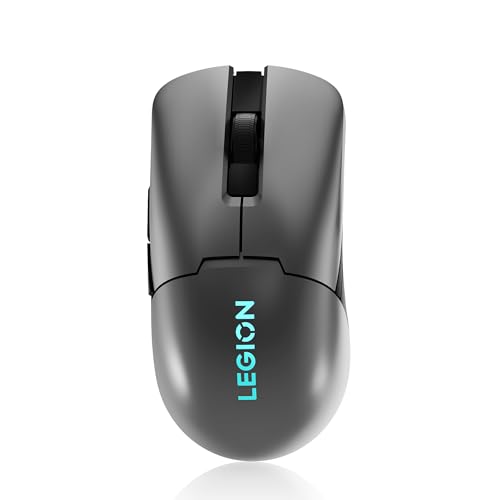

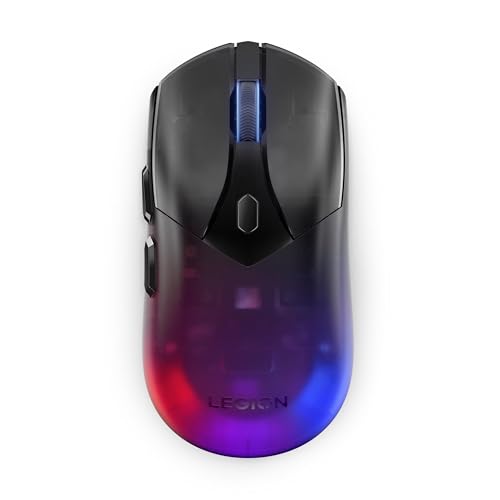
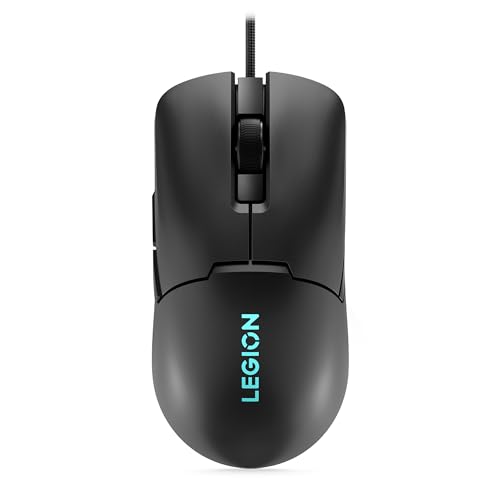
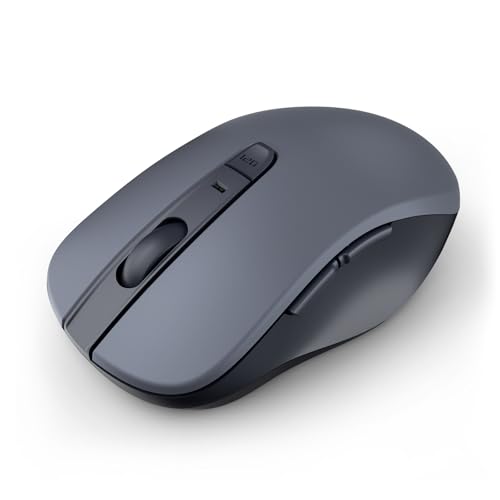
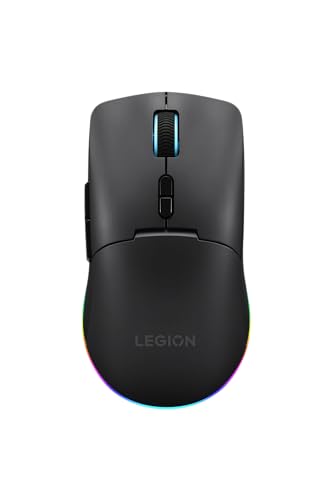
Are Lenovo mice good?
Lenovo mice have an average overall score of 5.5, ranking #37 among all mouse brands, and an average user rating of 9.3, placing them at #6 by user reviews.
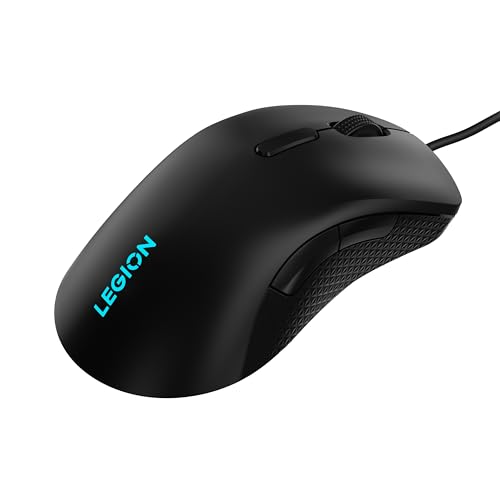
Lenovo mice are generally good if you want practical low-cost office hardware or an affordable Legion gaming mouse without moving far up the price ladder. Lenovo spans about 10-£60, from simple 1,000-1,600 DPI office mice to Legion models that reach 19,000-26,000 DPI, 1,000 Hz polling, and lighter 53-73 g wireless gaming shapes.
The main strength is that Lenovo stays easy to understand. The office branch covers wireless everyday use, ThinkPad-style silent options, Yoga travel designs, and long battery life, while the Legion branch handles gaming with cleaner performance steps than the basic office catalog. That gives the brand a useful split between work and play without forcing premium pricing.
The tradeoff is that Lenovo is not a deep enthusiast mouse brand. The gaming range is much smaller than what specialized rivals offer, most office mice stay in the basic-spec tier, and the brand does not push into the extreme flagship end with 4,000-8,000 Hz gaming options or a wide premium shape ecosystem.
The following chart ranks different mouse brands by their overall score.
[horizontal-chart-10006215032922910990025366955646244765042673557078]
What are the main advantages of Lenovo mice?
The main advantages of Lenovo mice are as follows.
- Very accessible pricing: Lenovo's mouse range runs roughly from £9 to £60, which keeps the brand firmly in the affordable segment. That makes Lenovo easy to consider if you want a usable mouse without paying flagship prices.
- Clear split between office and Legion gaming models: Lenovo does not force one style across the whole catalog. The office branch focuses on low-noise wireless everyday use, while Legion handles the gaming side with stronger sensors and 1,000 Hz polling.
- Strong battery life on the office side: Many Lenovo office mice are built for long stretches of work and travel use before you need to think about charging or battery replacement. That is a meaningful advantage if you want a simple low-maintenance desk mouse.
- Lightweight gaming options in the Legion branch: Lenovo's better Legion mice are not all heavy budget gaming designs. Models such as the Legion M6x Pro and M6x sit around 53 g, while the M600s branch stays around 73 g, giving Lenovo some genuinely agile gaming choices.
- Easy-to-read product families: Lenovo's naming is simpler than many gaming-heavy brands. Legion covers gaming, ThinkPad and Yoga cover more business or travel-oriented use, and the numbered wireless mice handle simple everyday tasks.
- Useful ambidextrous coverage: A large part of the Lenovo lineup uses ambidextrous shapes, especially in the office and Legion wireless branches. That helps if you want a straightforward shape rather than a strongly sculpted right-handed shell.
What are the main disadvantages of Lenovo mice?
The main disadvantages of Lenovo mice are as follows.
- Limited premium ceiling: Lenovo does not push very far into the high-end enthusiast mouse market. The current top end stops around £60, 19,000-26,000 DPI, and 1,000 Hz polling, which is modest compared with brands that offer bigger flagship ranges.
- Office branch is mostly basic: Many Lenovo mice stay at 1,000-1,600 DPI, 3 buttons, and 125 Hz polling. Those mice can work perfectly well for everyday use, but they are not technically ambitious.
- Smaller gaming ecosystem: The Legion branch is useful, but it is still relatively narrow. If you want many shapes, ultra-premium wireless options, higher polling-rate tiers, or a long list of specialized gaming models, Lenovo gives you less choice than major gaming brands.
- Some heavier legacy-style designs remain: Models such as the Legion M200 RGB at 150 g and the Legion M410 at 100 g show that not all Lenovo gaming mice follow the modern lightweight trend. Buyers who care most about speed and low fatigue need to choose selectively.
- Fewer button-rich specialized mice: Lenovo has some 6-8 button gaming models, but it does not give you a broad MMO-style or macro-heavy lineup. That limits the brand if you want highly specialized control layouts.
- Simpler office branch differentiation: Lenovo has several numbered wireless mice and a few business-oriented designs, but many of them are separated more by small comfort or connection differences than by big capability jumps. That can make part of the office catalog feel generic.

Who makes Lenovo mice?
Lenovo mice are made by Lenovo Group, the Chinese technology company headquartered in Beijing and Morrisville, North Carolina. Lenovo is best known for PCs, ThinkPad business hardware, Legion gaming products, tablets, and broader workplace technology, so its mice are part of a much larger computing ecosystem rather than a stand-alone peripheral-only brand.
That background shapes the mouse lineup directly. Lenovo uses business-oriented sub-brands such as ThinkPad and Yoga for office or travel use, while Legion handles the gaming branch. In practice, Lenovo mice are designed to complement the company's laptops, desktops, and gaming systems rather than to serve as a pure specialist mouse catalog.
What are the main Lenovo mouse series?
The main Lenovo mouse series are as follows.
- Legion series: Legion is Lenovo's gaming branch and the core of the brand's higher-spec mouse lineup. It includes models such as the M200, M300, M300s, M410, M5, M5 Pro, M6x, M6x Pro, and M600s, covering everything from 2,400 DPI entry gaming mice to 19,000-26,000 DPI upper-tier models.
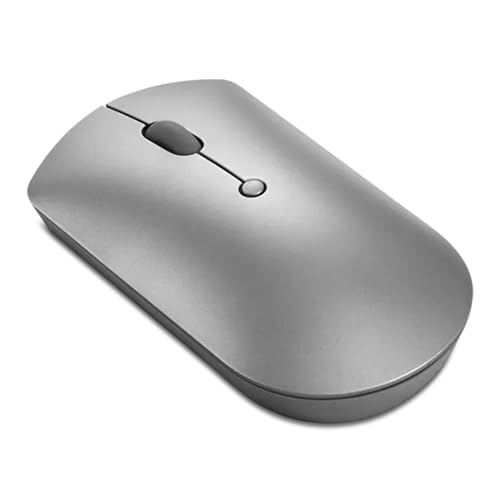
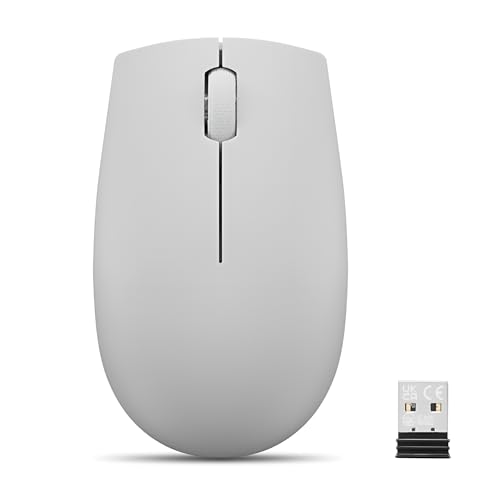
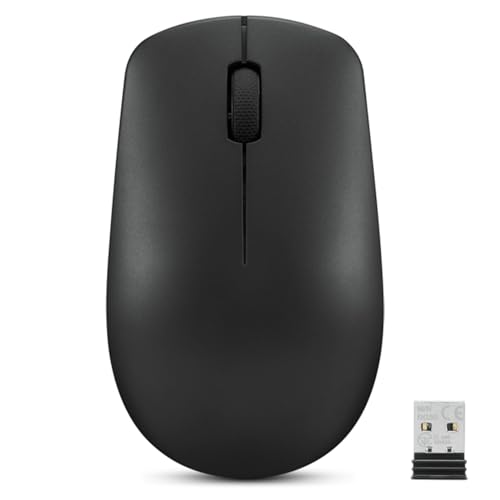
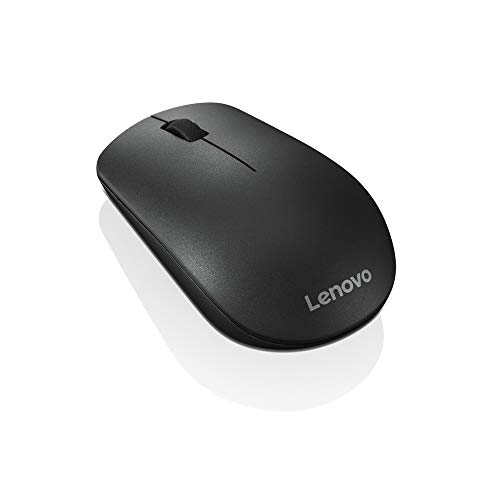
- Numbered wireless series: Models such as the 150 Wireless, 300 Wireless, 400 Wireless, 530 Wireless, and 600 represent Lenovo's mainstream office and everyday-use branch. These mice focus on simple wireless use, long battery life, and very accessible pricing more than on gaming performance.
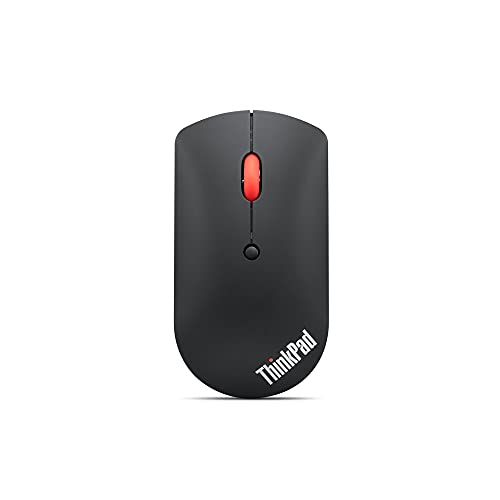
- ThinkPad branch: The ThinkPad Bluetooth Silent Mouse represents Lenovo's business-oriented direction, with a quieter and more office-friendly setup. This is the better fit if you want a mouse for work, meetings, or portable business use rather than for gaming.
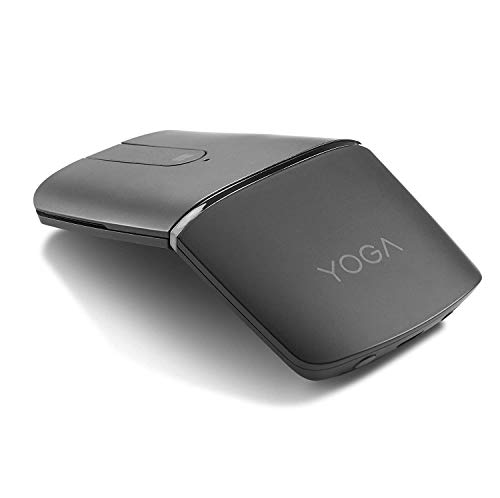
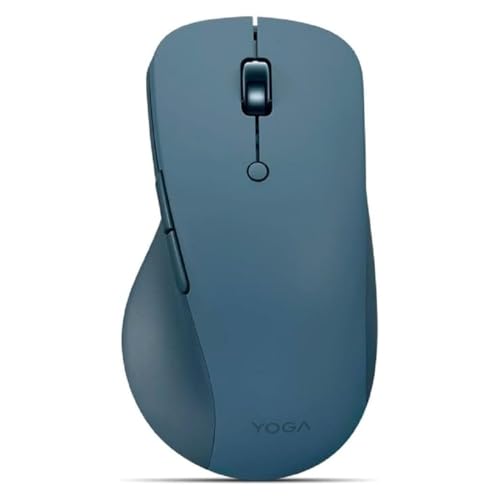
- Yoga branch: Yoga Mouse and Yoga Pro Mouse sit closer to travel, versatility, and design-oriented use. These models make more sense if you want portability and a cleaner everyday-use form factor than if you want a gaming-first mouse.
- Other office and regional models: WL310, Xiaoxin M3, and similar models extend the budget office side with slightly different shapes, button counts, or regional positioning. They matter mainly as low-cost functional choices rather than as premium flagships.
So the practical split is simple: Legion covers gaming, the numbered wireless mice cover mainstream everyday use, and ThinkPad or Yoga handle more business and travel-oriented needs.
How much do Lenovo mice cost?
Lenovo mice usually cost about 10-£60, so the brand stays firmly in the low-cost to lower-midrange part of the market. Most buyers will find Lenovo split into three practical bands: about 10-£17 for basic office and simple gaming mice, about 30-£35 for the core everyday and midrange Legion models, and about 60-£60 for the better Legion wireless gaming tier.
That price spread matches the hardware closely. The cheapest Lenovo mice are mostly basic wireless or simple gaming models with lower DPI and slower polling, the middle adds better office flexibility and mainstream gaming hardware, and the top end is where the lighter 19,000-26,000 DPI Legion wireless mice appear.
So Lenovo pricing is easy to read and easy to access. It is a good brand if you want practical value first, but it does not really operate in the premium flagship space. Buyers looking for a straightforward affordable mouse catalog will usually find Lenovo simpler than brands with a much wider luxury tier.
This chart visualizes Lenovo mouse prices.
[vertical-chart-08710748093431054645153027279846468155903519244983]
How do Lenovo mice compare with Logitech models?
Lenovo mice usually compare with Logitech models as the simpler, cheaper, and more office-centered brand, while Logitech covers a much larger range from basic office mice to premium productivity and gaming flagships. Lenovo is stronger when you want a low-cost office mouse or an affordable Legion gaming model, whereas Logitech is usually easier to shop if you want more shapes, more high-end tiers, or a broader all-around ecosystem.
Lenovo spans about 10-£60, with 1,000-26,000 DPI, 52-150 g weights, and polling rates from 125 Hz up to 1,000 Hz. Logitech stretches much further, from about £9 to over £850, with roughly 1,000-44,000 DPI, lighter minimum weights, broader premium coverage, and much more depth across office and gaming. Lenovo is more compact and value-focused, while Logitech covers far more use cases at both the low and high ends.
So the better brand depends on what matters most to you. Lenovo makes more sense if you want a budget-friendly mouse without much complexity, while Logitech is usually the better fit if you want more variety, more flagship options, or a more complete long-term mouse ecosystem.
What should you consider while choosing the best Lenovo mouse?
The main technical criteria for the best Lenovo mouse are as follows.
- Product branch: Lenovo is not one smooth ladder, so separate the ordinary office and travel mice from the Legion gaming side before doing anything else. If 1,000-4,000 DPI and 125 Hz already sound sufficient for your workload, stay with the office branch; if you actually want 19,000-26,000 DPI and 1,000 Hz gaming hardware, then Legion is the part of the lineup worth reading seriously.
- Sensor and response tier: Lenovo's spread from 1,000 DPI basics to 26,000 DPI Legion models and from 125 Hz up to 1,000 Hz creates a hard technical divide. Buy the office side for everyday navigation, laptop use, and long battery life; move to Legion only when cleaner tracking at speed and gaming-grade response are part of the brief rather than a nice-sounding extra.
- Weight split: The range covers about 52-150 g, which already tells you a lot about the branch. The lighter 53-73 g zone is where the quicker Legion gaming designs live, while roughly 85-150 g is the fuller office and older gaming side, so weight is a useful early check if you care about movement speed.
- Battery and connection behavior: Lenovo's office mice usually aim for long low-maintenance runtime, while Legion models trade some of that endurance for stronger sensors and faster response. If you want a desk mouse you rarely have to think about, the office side is easier to justify; if you are happy to accept shorter runtime for gaming hardware, that is where Legion starts to make more sense.
- Shell and controls: Lenovo's ordinary mice are usually simpler office bodies, while Legion adds more gaming-shaped shells and richer control layouts. That means the better question is not whether the brand is good in general, but whether you need a straightforward office tool or a mouse that is trying to behave like a gaming peripheral.
- Price bands: Lenovo divides fairly clearly into roughly 10-20 EUR, 30-40 EUR, and 60-70 EUR tiers. The lowest band is basic office or entry-level gear, the middle is the practical value zone, and the upper band is where the better Legion wireless models begin to appear, so pay upward only when you are intentionally crossing into that stronger branch.