Scored using Headphones Methodology v1.0
Headphones Methodology v1.0
Mathematical & Unbiased Scoring
Products in this category are scored under Frontum Headphones Methodology v1.0: technical specifications plus authentic consumer ratings, with 0% commercial bias.
Explore Headphones Methodology v1.0

Ludos Clamor Review | 93 Data compared

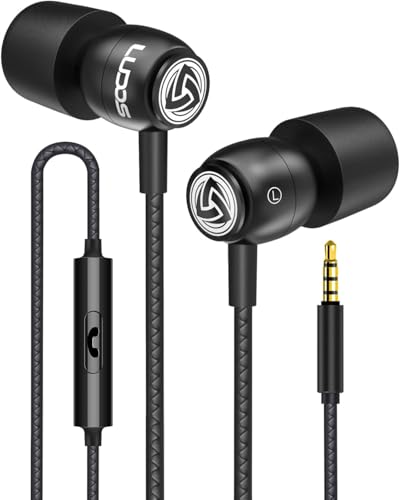
Avg. price:~£20Form factor:in-earConnectivity:wiredBattery life:N/A hoursActive noise cancellation (ANC):no

Ludos Clamor Review: Compare 93 technical specifications and user reviews to see how this product ranks in the Headphones category and whether it is worth buying.

Ludos Clamor
6.2/10

Overall score

Score
6.2/ 10
✕
What it is
An overall evaluation of the headphones' quality, based on technical analyses and user reviews.
When it matters
When you need a quick reference to identify the best headphones on the market.
Score distribution
â–¼
<55-66-77-88-99-10
Score components

80%

5.5

Technical score

20%

9.0

User score

â–¼Worse than 52% of headphones
7.3

Value for money

Value for money
7.3/ 10
✕
What it is
An indicator that combines the headphones' overall rating with their cost.
When it matters
When you are looking for headphones that offer a strong balance of performance, features, and price.
Score distribution
â–¼
<55-66-77-88-99-10
Score components

70%

6.2

Overall score

30%

10

Price

â–¼Worse than 51%
5.5

Technical score

Technical score
5.5/ 10
✕
What it is
An assessment of technical performance for products in the Headphones category across these key areas: Sound, Calls & Controls, Connectivity, Features, Battery, Design.
When it matters
When you want to compare headphones based on technical performance and available features.
Score distribution
â–¼
<55-66-77-88-99-10
Score components

52%

5.6

Sound

20%

4.4

Features

10%

7.2

Design

8%

4.6

Connectivity

6%

4.9

Battery

4%

6.4

Calls & Controls

â–¼Worse than 77%
9.0

User score

User score
9.0/ 10
✕
What it is
A rating that combines user reviews and the total number of reviews received by the headphones.
When it matters
When you want to understand how headphones perform in real listening and how reliable they are in terms of comfort, audio quality, battery life, and long-term use.
Score distribution
â–¼
<55-66-77-88-99-10
Score components

70%

8.6

User ratings

30%

10

Number of reviews

Based on ratings from across the web.
★Better than 92%
  • ludos-clamor
  • ludos-clamor
  • ludos-clamor
  • ludos-clamor
  • ludos-clamor
  • ludos-clamor
  • ludos-clamor
  • ludos-clamor
  • ludos-clamor
ludos-clamor
ludos-clamor
ludos-clamor
ludos-clamor
ludos-clamor
ludos-clamor
ludos-clamor
ludos-clamor
ludos-clamor
Where to buy
*As an Amazon Associate, we earn from qualifying purchases.
Best rankings
Available: ranking among products currently available (including other versions of this product).All: ranking among all products in the database.
Loading...
Loading category ranking...

Technical Specifications of pair of headphones Ludos Clamor

Technical score
Technical score
5.5/ 10
✕
What it is
An assessment of technical performance for products in the Headphones category across these key areas: Sound, Calls & Controls, Connectivity, Features, Battery, Design.
When it matters
When you want to compare headphones based on technical performance and available features.
Score distribution
â–¼
<55-66-77-88-99-10
Score components:

52%

5.6

Sound

20%

4.4

Features

10%

7.2

Design

8%

4.6

Connectivity

6%

4.9

Battery

4%

6.4

Calls & Controls

5.5
User score
User score
9.0/ 10
✕
What it is
A rating that combines user reviews and the total number of reviews received by the headphones.
When it matters
When you want to understand how headphones perform in real listening and how reliable they are in terms of comfort, audio quality, battery life, and long-term use.
Score distribution
â–¼
<55-66-77-88-99-10
Score components

70%

8.6

User ratings

30%

10

Number of reviews

Based on ratings from across the web.
9.0
Popularity
Popularity
10/ 10
✕
What it is
An indicator based on the number of reviews received by the headphones.
When it matters
When you prefer headphones that have already been chosen and reviewed by many other users.
Score distribution
â–¼
<55-66-77-88-99-10
Popularity:
Ludos Clamor has a popularity score of 10 points, which is higher than that of 91.9% of products in this category.
10
Value for money
Value for money
7.3/ 10
✕
What it is
An indicator that combines the headphones' overall rating with their cost.
When it matters
When you are looking for headphones that offer a strong balance of performance, features, and price.
Score distribution
â–¼
<55-66-77-88-99-10
Score components:

70%

6.2

Overall score

30%

10

Price

7.3
Active noise cancellation (ANC)
no
This pair of headphones does not support active noise cancellation. 27.5% of headphones support active noise cancellation.
Driver type
dynamic
Driver size
12 mm
This pair of headphones uses a driver size of 12 mm, smaller driver size than 86.5% of headphones and equal to 0.5% of headphones.
Number of drivers
1
This pair of headphones uses 1 drivers, fewer drivers than 4% of headphones and equal to 96% of headphones.
Lowest frequency
20 Hz
This pair of headphones reaches a lowest frequency of 20 Hz, higher lowest frequency than 50.8% of headphones and equal to 47.3% of headphones.
Show more
Noise-canceling microphone
no
This pair of headphones does not support a noise-canceling microphone. 39% of headphones support noise-canceling microphones.
Can be used as a headset
yes
This pair of headphones is headset-ready, 84.8% is not. 15.2% of headphones can be used as headsets.
Number of microphones
1
This pair of headphones has 1 microphones, more microphones than 26.9% of headphones and equal to 50.9% of headphones.
Boom microphone
no
This pair of headphones does not include a boom microphone. 13.5% of headphones have a boom microphone.
Microphone SNR
?
Show more
Connectivity
wired
This pair of headphones supports wired connectivity, less flexible connectivity than 49.2% of headphones and equal to 50.8% of headphones.
Bluetooth version
N/A
Maximum Bluetooth range
N/A
Audio latency
N/A
Multipoint support
no
This pair of headphones does not support multipoint. 30.6% of headphones support multipoint.
Show more
Ambient sound mode
no
This pair of headphones does not offer ambient sound mode. 24.9% of headphones support ambient sound mode.
EQ support
no
This pair of headphones does not support EQ customization. 23.2% of headphones support EQ.
Companion app
no
This pair of headphones does not work with a companion app. 21.6% of headphones support companion apps.
Adjustable ANC levels
N/A
Voice assistant support
yes
This pair of headphones supports voice assistants. 39.2% of headphones support voice assistants.
Show more
Battery life
N/A
Battery life with ANC
N/A
Charging time
N/A
Quick charge
no
This pair of headphones does not support quick charging. 33.1% of headphones support quick charge.
Battery capacity
N/A
Show more
Brand name
Ludos
Form factor
in-ear
Weight
16 g
This pair of headphones weighs 16 g, lighter than 87.7% of headphones and equal to 0.8% of headphones.
Acoustic design
closed-back
Clamp force
N/A
Show more

Ludos Clamor vs the average pair of headphones

246810TotalDesignSoundBatteryConnectivityCalls & ControlsFeatures
  • 92.7% lower weight
    This pair of headphones is lighter than the average pair of headphones (16 g vs 218 g). The average pair of headphones weighs 218 g.
    16 g vs 218 g
  • Direct 3.5 mm plug
    This pair of headphones includes a direct 3.5 mm plug, the average pair of headphones does not. 39.8% of headphones have a 3.5 mm male connector.
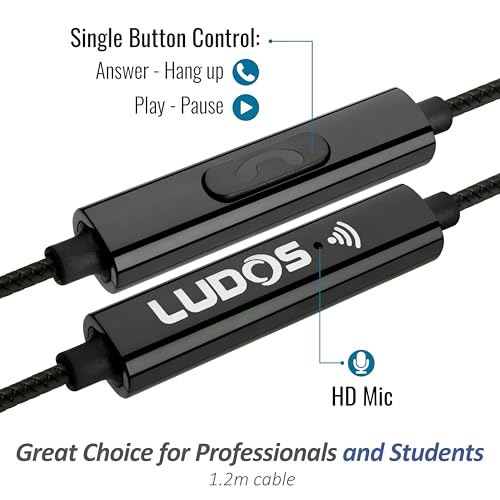
  • In-line controls
    This pair of headphones includes in-line controls, the average pair of headphones does not. 36.6% of headphones support in-line controls.
  • 0.2 % lower distortion
    This pair of headphones has a lower total harmonic distortion than the average pair of headphones (0.1 % vs 0.3 %). The average headphones have total harmonic distortion of 0.3 %.
    0.1 % vs 0.3 %
  • USB-C charging
    This pair of headphones uses USB-C charging, the average pair of headphones does not. 29.5% of headphones use USB Type-C.
  • 4.5x cheaper
    Ludos Clamor is cheaper than the average pair of headphones (£20 vs £90).
    £20 vs £90
  • 70.4% more popular
    Ludos Clamor is more popular than the average pair of headphones (10 vs 5.9).
    10 vs 5.87
  • 12.3% higher user score
    User score
    9.0/ 10
    ✕
    What it is
    A rating that combines user reviews and the total number of reviews received by the headphones.
    When it matters
    When you want to understand how headphones perform in real listening and how reliable they are in terms of comfort, audio quality, battery life, and long-term use.
    Score distribution
    â–¼
    â–¼
    <55-66-77-88-99-10
    Ludos Clamor
    the average pair of headphones
    Ludos Clamor has a higher user score than the average pair of headphones (8.99 vs 8).
    8.99 vs 8
  • 92.7% lower weight
    This pair of headphones is lighter than the average pair of headphones (16 g vs 218 g). The average pair of headphones weighs 218 g.
    16 g vs 218 g
  • 0.2 % lower distortion
    This pair of headphones has a lower total harmonic distortion than the average pair of headphones (0.1 % vs 0.3 %). The average headphones have total harmonic distortion of 0.3 %.
    0.1 % vs 0.3 %
  • USB-C charging
    This pair of headphones uses USB-C charging, the average pair of headphones does not. 29.5% of headphones use USB Type-C.
  • Direct 3.5 mm plug
    This pair of headphones includes a direct 3.5 mm plug, the average pair of headphones does not. 39.8% of headphones have a 3.5 mm male connector.
  • In-line controls
    This pair of headphones includes in-line controls, the average pair of headphones does not. 36.6% of headphones support in-line controls.
  • 28 mm smaller driver size
    This pair of headphones has smaller driver size than the average pair of headphones (12 mm vs 40 mm). The average headphones use a driver size of 40 mm.
    12 mm vs 40 mm
  • Non-replaceable earpads
    This pair of headphones has non-replaceable earpads, while the average pair of headphones has replaceable ones. 75.6% of headphones have replaceable earpads.
  • 10 dB/mW lower sensitivity
    This pair of headphones has a lower sensitivity than the average pair of headphones (92 dB/mW vs 102 dB/mW). The average headphones have sensitivity of 102 dB/mW.
    92 dB/mW vs 102 dB/mW
  • Fixed cable
    This pair of headphones has a fixed cable, while the average pair of headphones has a detachable one. 62% of headphones have a detachable cable.
  • 2 Hz weaker bass extension
    This pair of headphones has a higher lowest frequency than the average pair of headphones (20 Hz vs 18 Hz). The average headphones reach a lowest frequency of 18 Hz.
    20 Hz vs 18 Hz
  • No battery indicator
    This pair of headphones does not show battery level clearly, while the average pair of headphones does. 56.3% of headphones have a battery level indicator.
  • No neodymium magnet
    This pair of headphones does not use neodymium magnets, the average pair of headphones does. 81.9% of headphones use neodymium magnets.
  • 11 dB SPL lower sound pressure level
    This pair of headphones has a lower sound pressure level than the average pair of headphones (92 dB SPL vs 103 dB SPL). The average headphones reach a sound pressure level of 103 dB SPL.
    92 dB SPL vs 103 dB SPL
  • Non-replaceable earpads
    This pair of headphones has non-replaceable earpads, while the average pair of headphones has replaceable ones. 75.6% of headphones have replaceable earpads.
  • Fixed cable
    This pair of headphones has a fixed cable, while the average pair of headphones has a detachable one. 62% of headphones have a detachable cable.
  • 28 mm smaller driver size
    This pair of headphones has smaller driver size than the average pair of headphones (12 mm vs 40 mm). The average headphones use a driver size of 40 mm.
    12 mm vs 40 mm
  • 10 dB/mW lower sensitivity
    This pair of headphones has a lower sensitivity than the average pair of headphones (92 dB/mW vs 102 dB/mW). The average headphones have sensitivity of 102 dB/mW.
    92 dB/mW vs 102 dB/mW
  • 2 Hz weaker bass extension
    This pair of headphones has a higher lowest frequency than the average pair of headphones (20 Hz vs 18 Hz). The average headphones reach a lowest frequency of 18 Hz.
    20 Hz vs 18 Hz
  • No neodymium magnet
    This pair of headphones does not use neodymium magnets, the average pair of headphones does. 81.9% of headphones use neodymium magnets.
  • 11 dB SPL lower sound pressure level
    This pair of headphones has a lower sound pressure level than the average pair of headphones (92 dB SPL vs 103 dB SPL). The average headphones reach a sound pressure level of 103 dB SPL.
    92 dB SPL vs 103 dB SPL
  • 11 dB lower max SPL
    This pair of headphones has a lower max SPL than the average pair of headphones (99 dB vs 110 dB). The average headphones reach a max SPL of 110 dB.
    99 dB vs 110 dB
  • 95% lower input power handling
    This pair of headphones has a lower max input power than the average pair of headphones (5 mW vs 100 mW). The average headphones handle max input power of 100 mW.
    5 mW vs 100 mW
  • No battery indicator
    This pair of headphones does not show battery level clearly, while the average pair of headphones does. 56.3% of headphones have a battery level indicator.

Video reviews

Hands-on testing, unboxing, and real-world video evaluations

9.0
C Butler
≈ estimated
19/04/2020
Hands-on review · controls, sound and build tests
Verdict
Ludos Clamor is very good for the money, with solid build and sound for a budget pair.
8.0
Jim O Brien Tech techbuzzireland
≈ estimated
13/12/2019
Hands-on review · unboxing, build and sound tests
Verdict
Ludos Clamor is not the loudest or most premium option, but a good deal for the price and a fine gift.
8.0
CoolFox
≈ estimated
10/04/2020
Unboxing and short review · sound and fit impressions
Verdict
Ludos Clamor is a decent wired earbud, though the mids run strong and the fit is off.
Not graded

Expert reviews

In-depth analysis and verdict from leading tech publications

techbuzzireland.com
13/12/2019
Hands-on test · Wired earbuds
Verdict
The Ludos Clamor is a sturdy, well-isolating wired earbud that is good for the price, but its bass is modest and it isn't for audiophiles.
play-experience.com
25/01/2020
Hands-on test · Budget in-ear earphones
Verdict
The Ludos Clamor is a basic in-ear with clean sound for the money, but its uneven highs and bass keep it from standing out.

Third-party reviews

Based on ratings from across the web.
Reviews last updated: November 2026 · How we calculate this

What customers like about Ludos Clamor

  • Excellent value for money and affordable pricing
  • Comfortable fit with included memory foam ear tips
  • High build quality featuring a metal construction and durable cables
  • Good sound quality with clear vocals and decent bass for the price
  • Comprehensive accessory package, including a metal storage tin and carry bag
  • Effective passive noise isolation due to the suction effect of foam tips
  • Tactile and easy-to-use in-line controls for calls and music

What customers don't like about Ludos Clamor

  • Reports of durability issues where one earbud or volume control stops working over time
  • The memory foam tips may not fit all ear sizes and can occasionally fall out
  • Bass levels may be insufficient for audiophiles or certain music genres
  • Lack of active noise cancellation (ANC) features
  • Some users find the 3.5mm jack outdated for newer devices without an adapter
  • The 'left' and 'right' markings on the earbuds can be difficult to see

Verdict

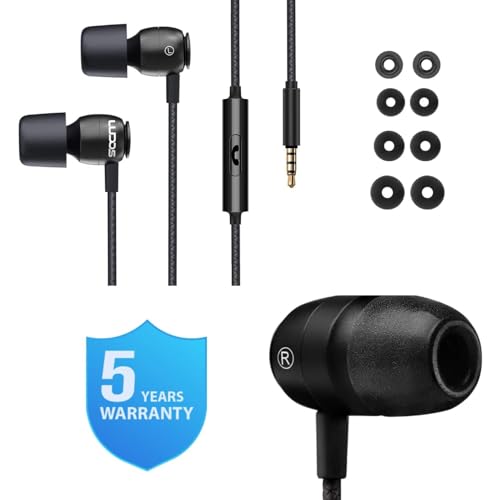
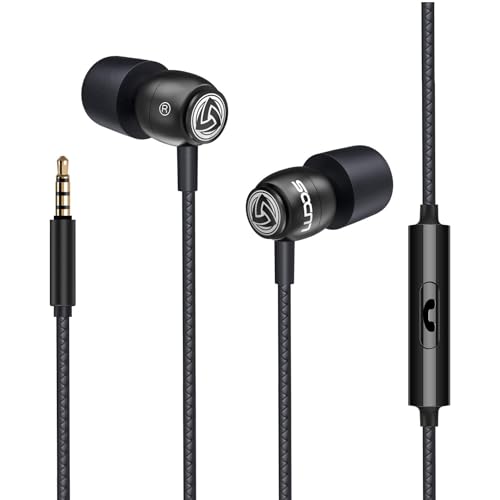
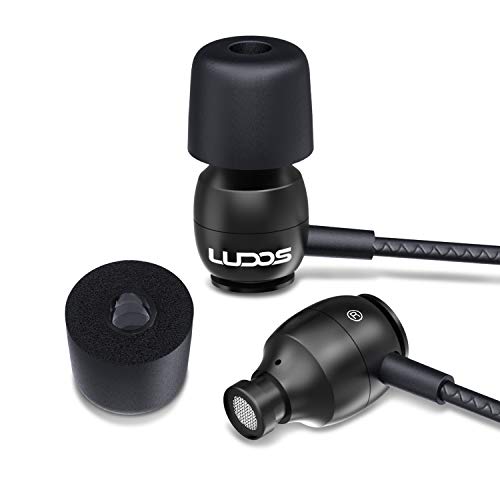
The LUDOS Clamor is a wired in-ear headphone featuring 12mm dynamic drivers, a frequency response of 20Hz–20kHz, 32Ω impedance, and a sensitivity of approximately 92dB–97dB. Its main characteristics include a durable metallic enclosure and a 1.3m tangle-free braided cable equipped with an inline microphone and volume slider for universal compatibility via a 3.5mm gold-plated jack. The primary pros are its superior comfort provided by high-wear-resistant memory foam tips, deep immersive bass, and a comprehensive accessory package that includes a metal carrying case and extra silicone tips. Conversely, available cons include the lack of active noise cancellation, a design that can become 'muddy' during complex audio tracks at high volumes, and potential difficulty in seeing the small left/right ear indicators.

Compare Ludos Clamor with other products in the Headphones category

1Product to compare no. 1
VS
2Product to compare no. 2
VS
3Product to compare no. 3 (optional)

Graphic comparison of Ludos Clamor and other products in the Headphones category

No results found