Scored using Drones Methodology v2.0
Drones Methodology v2.0
Mathematical & Unbiased Scoring
Products in this category are scored under Frontumo Drones Methodology v2.0: technical specifications plus grades from 1,012 independent expert reviews and 2,618 video reviews, with 0% commercial bias.
Explore Drones Methodology v2.0

Wipkviey T28 Review | 97 Data compared

Avg. price:~£35Max flight time:15 minVideo resolution:1080pMax transmission distance:0.5 km

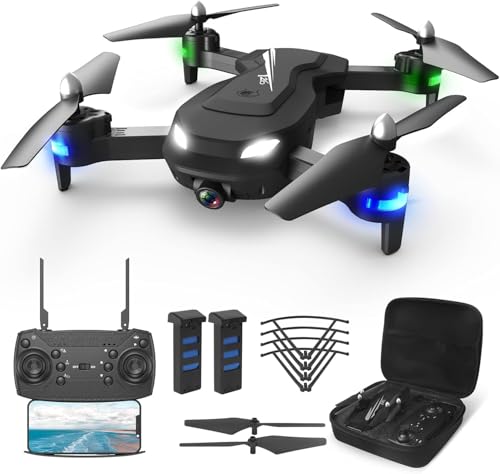
Wipkviey T28 Review: Compare 97 technical specifications and 1 expert and video reviews to see how this product ranks in the Drones category and whether it is worth buying.

5.8

Overall score

Score
5.8/ 10
✕
What it is
An overall evaluation of the drone's quality, based on technical analyses and grades from independent expert reviews.
When it matters
When you need a quick reference to identify the best drones on the market.
Score distribution
▼
<55-66-77-88-99-10
Score components

85%

5.6

Technical score

15%

7.0

Review score ( 0 · 1)

Review score 15% · 7.0 · based on 1 video
1 video counts as 0.3 of the 4 needed; the rest counts as 7/10. Every model in this category gets the same split: reviews 15%, technical score 85%. A video or a short review counts less than a full test.
▼Worse than 69% of drones
5.6

Technical score

Technical score
5.6/ 10
✕
What it is
An assessment of the drone's technical performance, covering key areas such as flight performance, camera quality, transmission, safety features, battery life, and design.
When it matters
When you want to compare drones based on technical performance and available features.
Score distribution
▼
<55-66-77-88-99-10
Score components

26%

5.4

Flight

24%

5.6

Camera

20%

4.8

Safety

16%

5.9

Connectivity

14%

6.5

Battery & Design

▼Worse than 67% of drones
7.0

Review score

Review score
7.0/ 10
✕
What it is
Average grade from independent test sites, magazines and video reviewers, 1–10.
How we count it
Grades: Each review's own score is converted to 1–10; without one, we grade the review ourselves.
Weighting: Big test sites count more, short reviews half as much as full tests. A video review counts half.
Share: Reviews are 15% of the overall score for every model in this category; each of the 4 needed reviews that is missing counts as 7/10.
Score distribution
▼
<55-66-77-88-99-10
Grades by review (1)
1 video review, counting half as much as a written test. Share in the overall score: 15%, the same for every model in this category.
Video reviews 1

6.3%

7.0

DIY GUIDES

estimated from the review
Shop star ratings are not part of this score.
▼Worse than 93% of drones
  • wipkviey-t28
wipkviey-t28

Best prices

*As an Amazon Associate, we earn from qualifying purchases.

Best rankings

Available: ranking among products currently available (including other versions of this product).All: ranking among all products in the database.
Loading...
Loading category ranking...

Technical Specifications of drone Wipkviey T28

Technical score
Technical score
5.6/ 10
✕
What it is
An assessment of the drone's technical performance, covering key areas such as flight performance, camera quality, transmission, safety features, battery life, and design.
When it matters
When you want to compare drones based on technical performance and available features.
Score distribution
▼
<55-66-77-88-99-10
Score components:

26%

5.4

Flight

24%

5.6

Camera

20%

4.8

Safety

16%

5.9

Connectivity

14%

6.5

Battery & Design

5.6
Review score
Review score
7.0/ 10
✕
What it is
Average grade from independent test sites, magazines and video reviewers, 1–10.
How we count it
Grades: Each review's own score is converted to 1–10; without one, we grade the review ourselves.
Weighting: Big test sites count more, short reviews half as much as full tests. A video review counts half.
Share: Reviews are 15% of the overall score for every model in this category; each of the 4 needed reviews that is missing counts as 7/10.
Score distribution
▼
<55-66-77-88-99-10
Grades by review (1)
1 video review, counting half as much as a written test. Share in the overall score: 15%, the same for every model in this category.
Video reviews 1

6.3%

7.0

DIY GUIDES

estimated from the review
Shop star ratings are not part of this score.
7.0
Popularity
Popularity
7.3/ 10
✕
What it is
An indicator based on the number of reviews received by the drone.
When it matters
When you prefer to choose a drone reviewed and selected by many other buyers.
Score distribution
▼
<55-66-77-88-99-10
Popularity:
Wipkviey T28 has a popularity score of 7.3 points, which is higher than that of 60.9% of products in this category.
7.3
Value for money
Value for money
7.0/ 10
✕
What it is
An indicator that combines the drone's overall rating with its cost.
When it matters
When you are looking for a drone with a good balance between flight quality, camera features, and price.
Score distribution
▼
<55-66-77-88-99-10
Score components:

60%

5.8

Overall score

40%

10

Price

7.0
Max flight time
15 min
Max flight time
15 min
This drone has a max flight time of 15 min, shorter than 64% of drones and equal to 8% of drones.
Max flight distance
0.5 km
Max flight distance
0.5 km
This drone has a max flight distance of 0.5 km, shorter-range than 59.7% of drones and equal to 3.9% of drones.
Limited by the controller range.
Max flight speed
?
Max wind resistance
?
Max service ceiling (ASL)
?
Show more
Video resolution
1080p
Video resolution
1080p
This drone records video at 1080p, lower than 71.8% of drones and equal to 11.9% of drones.
4K camera
no
4K camera
no
This drone does not support 4K video. 54.6% of drones support 4K video.
Sensor size
?
Main camera megapixels
2.07 MP
Main camera megapixels
2.07 MP
This drone has a main camera resolution of 2.07 MP, lower than 81.3% of drones and equal to 3.3% of drones.
Max movie bitrate
?
Show more
Obstacle detection
no
Obstacle detection
no
This drone does not support obstacle detection. 31% of drones support obstacle detection.
Return to Home (RTH)
?
GPS
no
GPS
no
This drone does not support GPS. 65.2% of drones support GPS.
GNSS systems supported
none
GNSS systems supported
none
This drone supports none GNSS systems, which are less comprehensive than those of 65.8% and the same as those of 34.2%.
Obstacle sensing directions
omnidirectional
Obstacle sensing directions
omnidirectional
This drone senses obstacles in omnidirectional directions, which is more comprehensive than that of 83.4% and the same as that of 16.6%.
Show more
Max transmission distance
0.5 km
Max transmission distance
0.5 km
This drone has a max transmission distance of 0.5 km, shorter-range than 57.1% of drones and equal to 3.1% of drones.
Transmission latency
?
Video transmission system
Wi-Fi
Video transmission system
Wi-Fi
This drone uses Wi-Fi for video transmission, which is more advanced than the system used by 8.2% and the same as that used by 47.7%.
Live view quality
1080p@25 fps
Live view quality
1080p@25 fps
This drone offers live view quality of 1080p@25 fps, higher-quality than 50% of drones and equal to 10.4% of drones.
Remote control
yes
Remote control
yes
This drone has a handheld remote controller. 5% of drones offer this.
Show more
Battery capacity
1,200 mAh
Battery capacity
1,200 mAh
This drone has a battery capacity of 1,200 mAh, smaller than 72% of drones and equal to 4.2% of drones.
Battery energy
4.44 Wh
Battery energy
4.44 Wh
This drone has battery energy of 4.44 Wh, lower than 82.4% of drones and equal to 4.1% of drones.
Charging time
120 min
Charging time
120 min
This drone charges in 120 min, slower than 65% of drones and equal to 11.3% of drones.
Weight
122 g
Weight
122 g
This drone weighs 122 g, lighter than 82.5% of drones and equal to 0.5% of drones.
Removable battery
yes
Removable battery
yes
This drone has a removable battery. 0.5% of drones have a removable battery.
Show more

Wipkviey T28 vs the average drone

246810TotalFlightCameraSafetyConnectivityBattery & Design
  • 50.4% lower weight
    Weight
    122 g
    This drone is lighter than the average drone (122 g vs 246 g). The average drone weighs 246 g.
    122 g vs 246 g
  • Includes propeller guards
    Propeller guards
    yes
    This drone has propeller guards, while the average drone does not. 33.3% of drones offer them.
  • 171 mm narrower width
    Width
    70 mm
    This drone is narrower than the average drone (70 mm vs 241 mm). The average drone width is 241 mm.
    70 mm vs 241 mm
  • Supports smartphone control
    Smartphone control
    yes
    This drone supports smartphone control, while the average drone does not.
  • 95 mm shorter body length
    Length
    180 mm
    This drone is shorter than the average drone (180 mm vs 275 mm). The average drone is 275 mm long.
    180 mm vs 275 mm
  • 5.71x cheaper
    Wipkviey T28 is cheaper than the average drone (£35 vs £200).
    £35 vs £200
  • 5.71x cheaper
    Wipkviey T28 is cheaper than the average drone (£35 vs £200).
    £35 vs £200
  • Includes propeller guards
    Propeller guards
    yes
    This drone has propeller guards, while the average drone does not. 33.3% of drones offer them.
  • Supports smartphone control
    Smartphone control
    yes
    This drone supports smartphone control, while the average drone does not.
  • 50.4% lower weight
    Weight
    122 g
    This drone is lighter than the average drone (122 g vs 246 g). The average drone weighs 246 g.
    122 g vs 246 g
  • 171 mm narrower width
    Width
    70 mm
    This drone is narrower than the average drone (70 mm vs 241 mm). The average drone width is 241 mm.
    70 mm vs 241 mm
  • 95 mm shorter body length
    Length
    180 mm
    This drone is shorter than the average drone (180 mm vs 275 mm). The average drone is 275 mm long.
    180 mm vs 275 mm
  • Lower video resolution
    Video resolution
    1080p
    This drone offers lower video resolution than the average drone (1080p vs 4K/100 fps). The average drone offers a video resolution of 4K/100 fps.
    1080p vs 4K/100 fps
  • Fewer GNSS systems
    GNSS systems supported
    none
    This drone supports none GNSS systems, while the average drone supports GPS, GLONASS, Galileo, BeiDou.
    none vs GPS, GLONASS, Galileo, BeiDou
  • More basic transmission system
    Video transmission system
    Wi-Fi
    This drone uses Wi-Fi for video transmission, while the average drone uses SkyLink 2.0.
    Wi-Fi vs SkyLink 2.0
  • No subject tracking
    Subject tracking
    no
    This drone cannot track subjects, while the average drone can.
  • No GPS
    GPS
    no
    This drone does not have GPS, while the average drone does.
  • No POI mode
    POI mode
    no
    This drone does not support POI mode, while the average drone does.
  • Fewer frequency bands
    Operating frequency bands
    2.4 GHz
    This drone supports 2.4 GHz operating frequency bands, while the average drone supports 2.4 GHz, 5.8 GHz.
    2.4 GHz vs 2.4 GHz, 5.8 GHz
  • Narrower tilt range
    Camera tilt range
    manual only °
    This drone has a narrower tilt range than the average drone (manual only ° vs -90 to 20 °).
    manual only ° vs -90 to 20 °
  • 5 min shorter flight time
    Max flight time
    15 min
    This drone offers shorter max flight time than the average drone (15 min vs 20 min). The average drone offers 20 min of max flight time.
    15 min vs 20 min
  • Simpler motor design
    Motor type
    brushed
    This drone uses brushed motors, while the average drone uses brushless motors.
    brushed vs brushless
  • 0.5 km shorter flight distance
    Max flight distance
    0.5 km
    This drone has a shorter max flight distance than the average drone (0.5 km vs 1 km). The average drone can fly up to 1 km.
    Limited by the controller range.
    0.5 km vs 1 km
  • Lower video resolution
    Video resolution
    1080p
    This drone offers lower video resolution than the average drone (1080p vs 4K/100 fps). The average drone offers a video resolution of 4K/100 fps.
    1080p vs 4K/100 fps
  • Narrower tilt range
    Camera tilt range
    manual only °
    This drone has a narrower tilt range than the average drone (manual only ° vs -90 to 20 °).
    manual only ° vs -90 to 20 °
  • Fewer photo format options
    Photo formats supported
    JPEG
    This drone supports JPEG photo formats, while the average drone supports JPEG, DNG (RAW).
    JPEG vs JPEG, DNG (RAW)
  • Lower photo resolution
    Photo resolution
    1920 x 1080 px
    This drone offers lower photo resolution than the average drone (1920x1080 px vs 4096x3072 px). The average drone offers a photo resolution of 4096x3072 px.
    1920x1080 px vs 4096x3072 px
  • More basic stabilization
    Image stabilization type
    None (Fixed)
    This drone uses None (Fixed) image stabilization, while the average drone uses EIS (Digital).
    None (Fixed) vs EIS (Digital)
  • No memory card slot
    Memory card slot
    no
    This drone does not have a memory card slot, while the average drone does.
  • 9.93 MP less camera resolution
    Main camera megapixels
    2.07 MP
    This drone has fewer main camera megapixels than the average drone (2.1 MP vs 12 MP). The average drone has 12 MP on the main camera.
    2.07 MP vs 12 MP
  • No 4K video
    4K camera
    no
    This drone does not support 4K video, while the average drone does.
  • 128 GB lower memory card limit
    Max external memory supported
    0 GB
    This drone supports less external storage than the average drone (0 GB vs 128 GB). The average drone supports up to 128 GB of external storage.
    0 GB vs 128 GB
  • Fewer GNSS systems
    GNSS systems supported
    none
    This drone supports none GNSS systems, while the average drone supports GPS, GLONASS, Galileo, BeiDou.
    none vs GPS, GLONASS, Galileo, BeiDou
  • No subject tracking
    Subject tracking
    no
    This drone cannot track subjects, while the average drone can.
  • No GPS
    GPS
    no
    This drone does not have GPS, while the average drone does.
  • No POI mode
    POI mode
    no
    This drone does not support POI mode, while the average drone does.
  • No compass
    Compass
    no
    This drone does not have a compass, while the average drone does.
  • 2 fewer flight modes
    N. of intelligent flight modes
    2
    This drone offers fewer intelligent flight modes than the average drone (2 vs 4). The average drone offers 4 intelligent flight modes.
    Cruise Control, Waypoint Flight
    2 vs 4
  • No beginner mode
    Beginner mode
    no
    This drone does not support beginner mode, while the average drone does.
  • 51% higher takeoff weight
    Max takeoff weight
    122 g
    This drone has a higher max takeoff weight than the average drone (122 g vs 249 g). The average drone has a max takeoff weight of 249 g.
    122 g vs 249 g
  • More basic transmission system
    Video transmission system
    Wi-Fi
    This drone uses Wi-Fi for video transmission, while the average drone uses SkyLink 2.0.
    Wi-Fi vs SkyLink 2.0
  • Fewer frequency bands
    Operating frequency bands
    2.4 GHz
    This drone supports 2.4 GHz operating frequency bands, while the average drone supports 2.4 GHz, 5.8 GHz.
    2.4 GHz vs 2.4 GHz, 5.8 GHz
  • More basic controller
    Controller model
    TY-T28
    This drone uses the TY-T28 controller, while the average drone uses LiteRadio 4 SE.
    TY-T28 vs LiteRadio 4 SE
  • 0.5 km shorter transmission range
    Max transmission distance
    0.5 km
    This drone has a shorter max transmission distance than the average drone (0.5 km vs 1 km). The average drone reaches 1 km of transmission distance.
    0.5 km vs 1 km
  • 1,000 mAh less battery capacity
    Battery capacity
    1,200 mAh
    This drone has a smaller battery capacity than the average drone (1200 mAh vs 2200 mAh). The average drone battery has a capacity of 2200 mAh.
    1,200 mAh vs 2,200 mAh
  • 12.74 Wh less battery energy
    Battery energy
    4.44 Wh
    This drone has lower battery energy than the average drone (4.4 Wh vs 17.18 Wh). The average drone battery has 17.18 Wh of energy.
    4.44 Wh vs 17.18 Wh
  • 30 min longer charging time
    Charging time
    120 min
    This drone charges more slowly than the average drone (120 min vs 90 min). The average drone charges in 90 min.
    120 min vs 90 min

Video reviews

Hands-on testing, unboxing, and real-world video evaluations

7.0
DIY GUIDES
≈ estimated
15/01/2026
Short review · general impressions of flying and camera
Verdict
Wipkviey T28 is worth it for beginners and casual flyers, but not for serious aerial videographers.

Third-party reviews

What we like about Wipkviey T28

  • Beginner-friendly with easy one-key takeoff and landing functions.
  • Very affordable and offers good value for its low price point.
  • Includes two rechargeable batteries, which can provide a total of 24–30 minutes of flight time.
  • Lightweight (approx. 122g) and foldable design, making it highly portable and exempt from certain registration requirements.
  • Fun features for kids and families, such as 360-degree flips and gesture-controlled selfies.
  • Comes with protective propeller guards to prevent damage during crashes.

What we don't like about Wipkviey T28

  • Poor camera quality that many users find grainy, laggy, or lower resolution than advertised.
  • Flight stability is heavily affected by even light winds due to its lightweight build.
  • Frequent reports of reliability issues, including motors failing or propellers spinning unevenly shortly after purchase.
  • Mixed experiences with battery life, with some users reporting significantly shorter flight times than the 15 minutes per battery stated.
  • Difficulty syncing the drone with the remote controller or mobile app during setup.
  • Risk of 'fly-aways' where the drone stops responding to controls and disappears.

Verdict

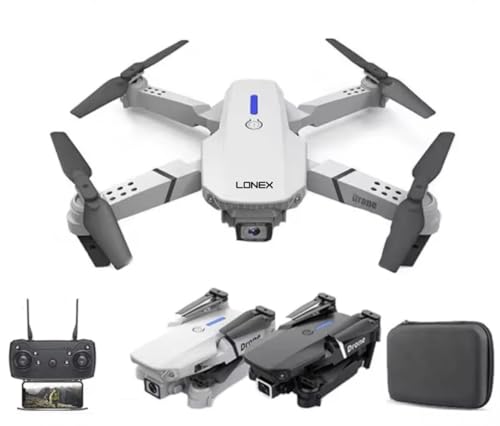
The Wipkviey T28 is a foldable mini drone designed primarily for beginners and kids, featuring a 90° adjustable 1080P HD (or up to 4K in some variants) camera with FPV real-time transmission via Wi-Fi. Weighing approximately 122g to 180g, it offers flight-friendly characteristics like altitude hold, one-key takeoff/landing, and three speed modes, alongside fun features such as 360° flips and gesture-controlled photography. Main pros include its lightweight design—which typically exempts it from pilot registration requirements—and an extended total flight time of 24–30 minutes using two included modular batteries. However, some users have noted cons such as poor stability in even slight winds, occasional motor malfunctions, and camera quality that may not always meet professional expectations.

Compare Wipkviey T28 with other drones

1Product to compare no. 1
VS
2Product to compare no. 2
VS
3Product to compare no. 3 (optional)

Graphic comparison of Wipkviey T28 and other drones

No results found