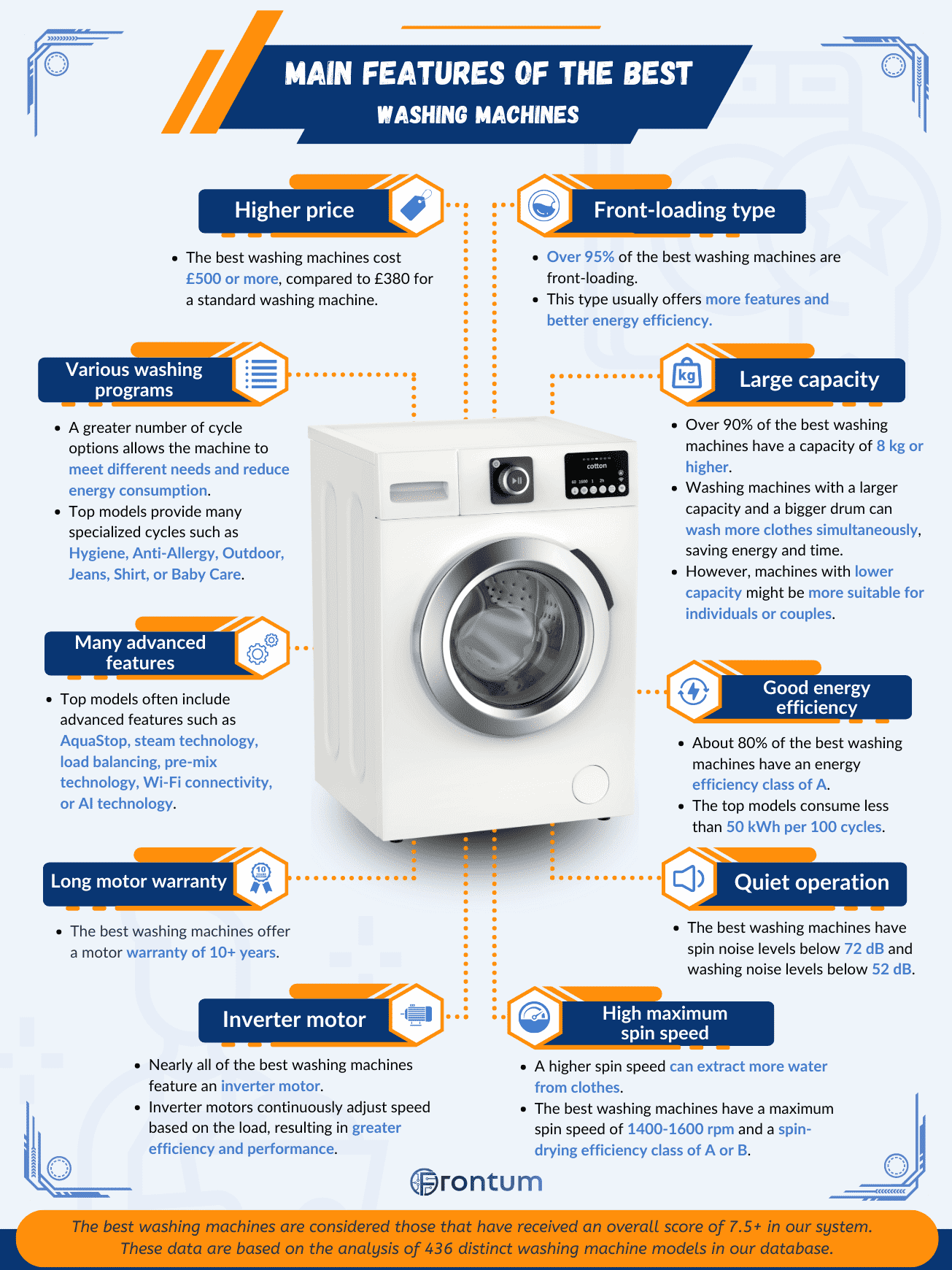
The best washing machines, with an overall score of 8 or higher, have an average cost of £540 (about £160 more than the market average of £380). A moderate positive correlation of 0.43 has been observed between price and overall score, indicating that higher-rated models tend to cost more, often due to the inclusion of advanced technologies such as inverter motors, steam systems, Wi-Fi connectivity, and artificial intelligence. However, it is possible to find cheaper models that offer comparable or even superior performance to more expensive ones.
Despite the higher price, the best washing machines offer a superior quality-price ratio, with a score of 7.8 points.
The following chart illustrates the distribution of washing machine prices:
[vertical-chart-26851916]
Into what price categories can washing machines be divided?
Washing machines can be divided into three main price categories as follows:
- 1. Budget (under £350, ideal for those seeking an affordable option)
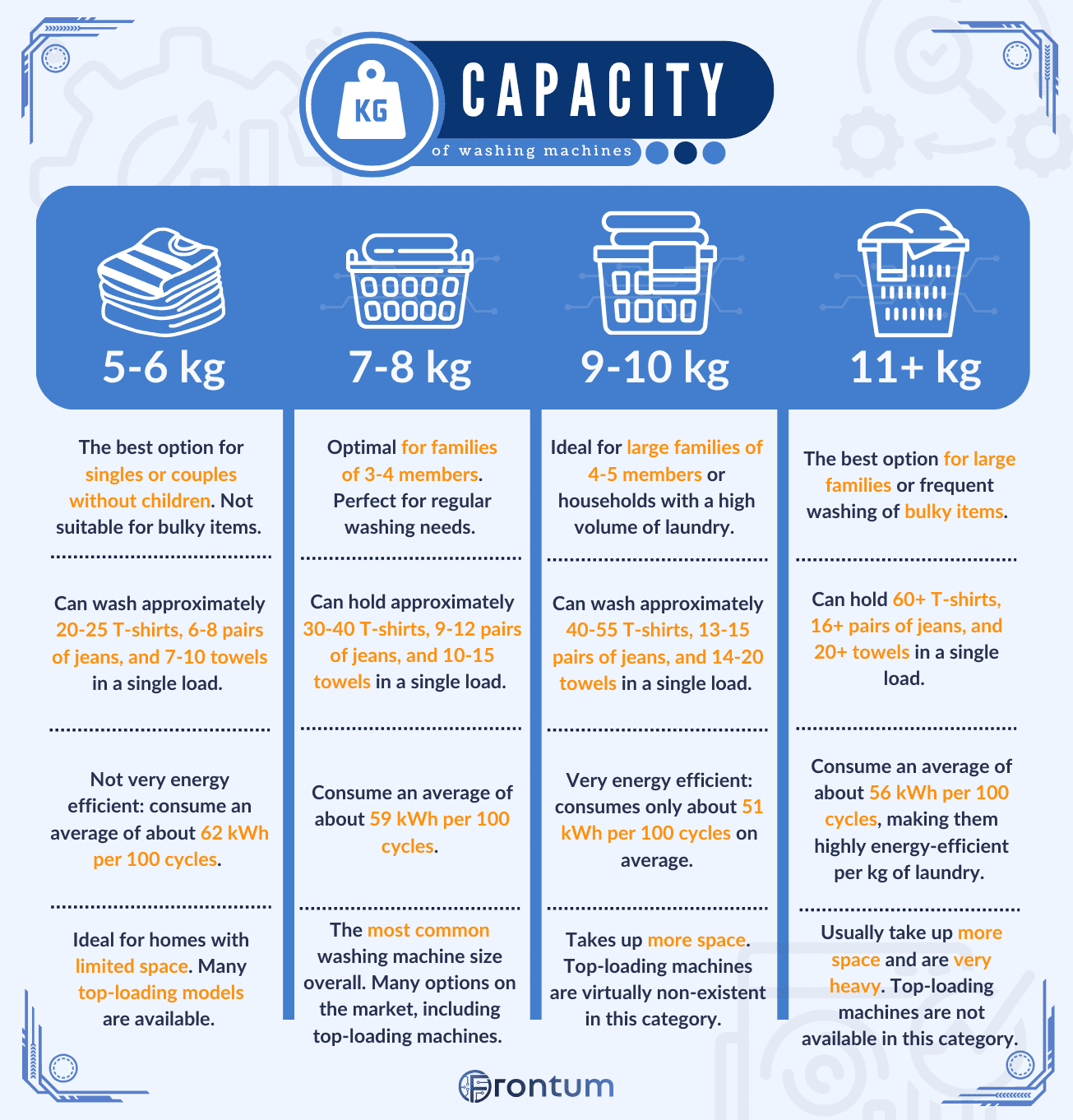
Washing machines under £350 account for about 35% of the market and provide a good balance between quality and price, with an average quality-price ratio score of 7.2 compared to the market average of 7.3. However, they have some limitations: capacity is generally between 5 and 7 kg, and only 41% of models reach 1400 rpm, making them less effective at water extraction. They also tend to be noisier, with average noise levels of 76 dB during spinning and 58 dB during washing, due to less advanced materials and insulation. Only 48% of these machines have an inverter motor, compared to 74% of the market average, resulting in higher noise and energy consumption.
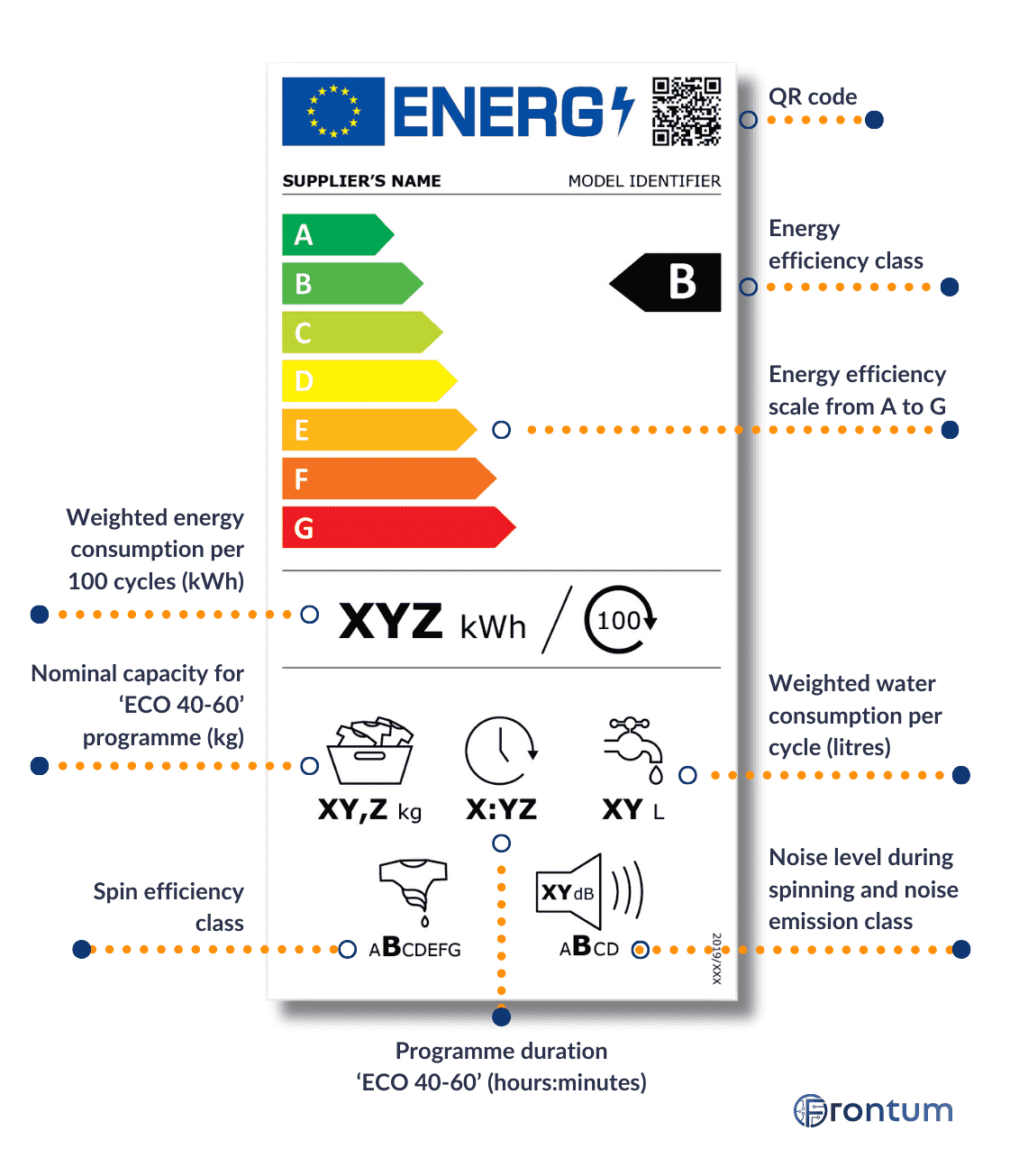
From an energy efficiency perspective, only 17% of budget washing machines fall into class A, compared to 39% of the total market. On average, these machines consume 69 kWh per 100 cycles, while the general market average is 55 kWh per 100 cycles.
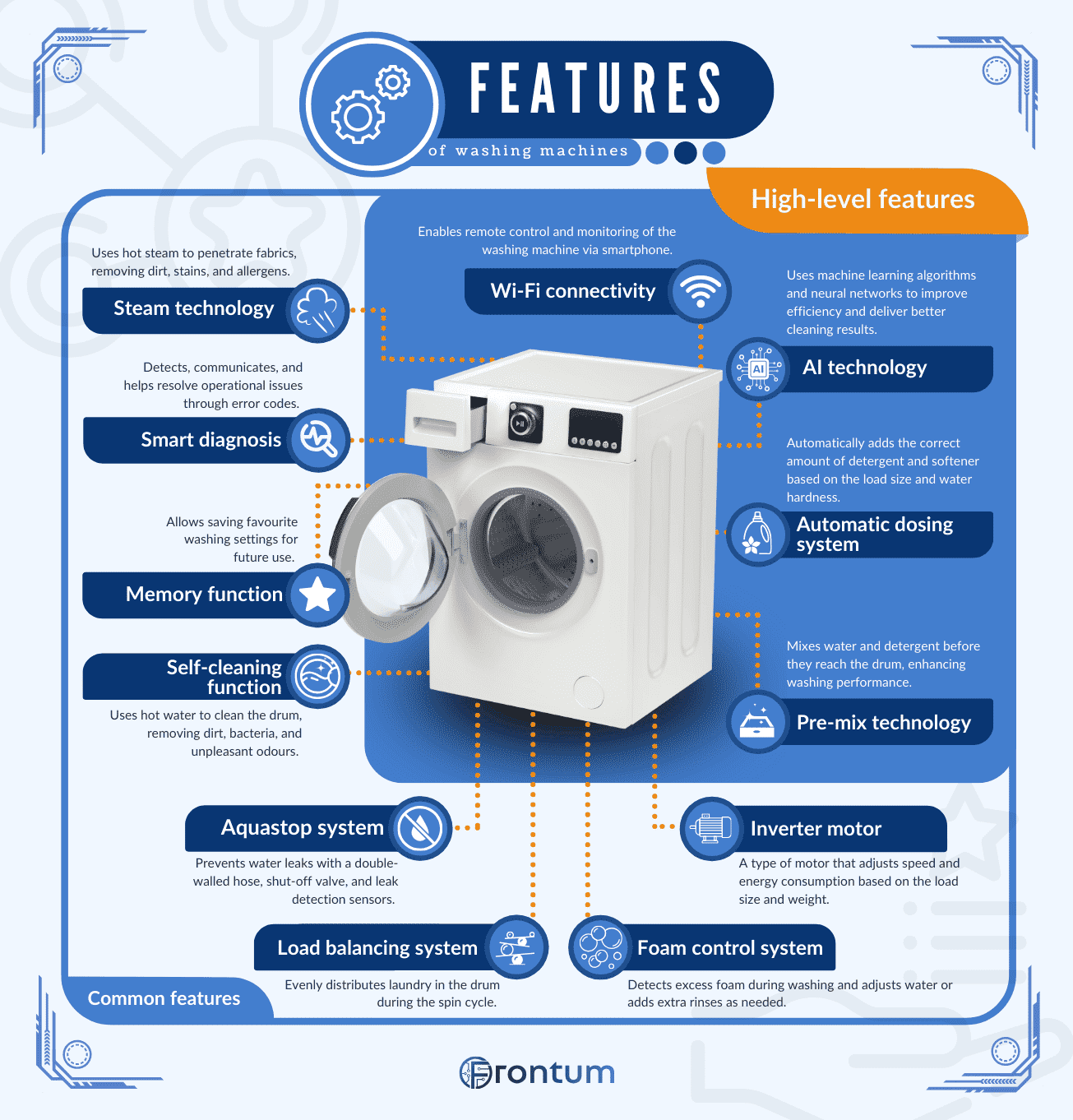
In terms of features, budget washing machines have fewer options than average, with about 8 features compared to the 10 typical of more expensive models. They often lack advanced technologies like steam (present in only 34% of models), AquaStop system (19%), pre-mix technology (13%), quick function (23%), anti-crease function (53%), and more sophisticated systems such as automatic dosing (<3%), automatic drawer cleaning (<3%), and AI technology (<3%). Wi-Fi connectivity is also limited, with only 7% of budget models equipped.
Despite these limitations, budget models include essential features like load balancing, automatic laundry detection, delayed start, and pause-and-add functionality.
- 2. Mid-range (£350 to £500, offering a good balance between price and performance)
Mid-range washing machines, representing 36% of the market, have a larger capacity, typically between 7 and 9 kg. About 68% of models reach 1400 rpm, ensuring good water extraction. Energy consumption is reduced to 56 kWh per 100 cycles, with 44% of models in class A and 17% in class B. Thanks to better materials and insulation, they are also quieter, with noise levels of 75 dB during spinning and 53 dB during washing. Additionally, 80% of mid-range models have an inverter motor.
Mid-range models feature a greater number of functions, averaging 10. They generally include all the common features found in budget models, along with a higher presence of advanced options such as steam technology (present in 63% of models), quick function (50%), anti-crease function (73%), AquaStop system (31%), Wi-Fi connectivity (19%), AI technology (12%), and pre-mix technology (24%). These models provide a better balance of functionality and price compared to budget machines.
- 3. High-end (£500 and above, for those seeking superior performance and advanced technologies)
High-end washing machines, accounting for 29% of the market, have capacities ranging from 9 to 11 kg and deliver excellent water extraction performance, with 74% of models reaching 1400 rpm and 9% reaching 1600 rpm. These models are very quiet, with noise levels of 72 dB during spinning, thanks to the use of high-quality materials and the presence of inverter motors in 94% of models.
The most expensive washing machines are highly energy-efficient, consuming an average of just 51 kWh per 100 cycles. 55% of these machines belong to energy class A and 20% to class B.
High-end washing machines offer an average of 12 advanced technologies, including steam technology (71%), AquaStop system (43%), Wi-Fi connectivity (42%), AI technology (23%), automatic drawer cleaning (25%), automatic dosing system (18%), and pre-mix technology (37%). These features make them particularly suitable for those seeking superior performance and cutting-edge functions.
Which are the most affordable washing machine brands?
The most affordable washing machine brands are as follows.
- Comfee Average price: £245Average overall score: 5.4 points
- Daya Average price: £260Average overall score: 6 points
- SanGiorgio Average price: £290Average overall score: 6.1 points
The cheapest washing machines are as follows.
- Indesit EWC 61051 W Price: £210Overall score: 5.04
- Whirlpool FFS P8 IT FreshCare Price: £210Overall score: 5.9
- SIA SWM6100W Price: £220Overall score: 4.27
Which are the most expensive washing machine brands?
The most expensive washing machine brands are as follows.
- Miele Average price: £1180Average overall score: 8.7 points
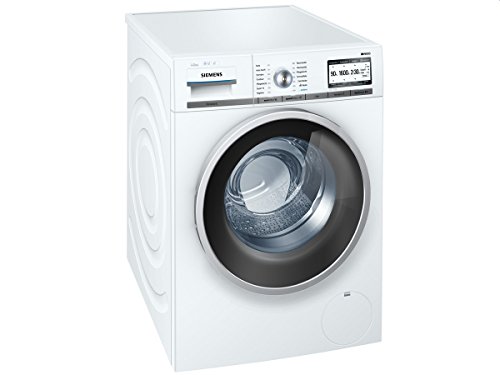
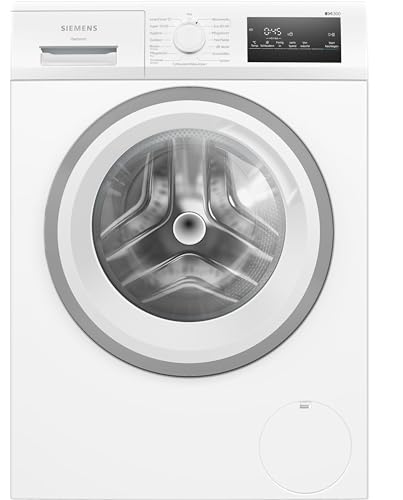
- Siemens Average price: £750Average overall score: 8.5 points
- AEG Average price: £590Average overall score: 8.3 points
The following chart shows the ranking of washing machine brands by price:
[horizontal-chart-77756655]
Note: Only brands with at least 6 products in our database were considered.