Products in this category are scored under Frontumo Washing machines Methodology v2.0: technical specifications plus grades from 80 independent expert reviews and 72 video reviews, with 0% commercial bias.
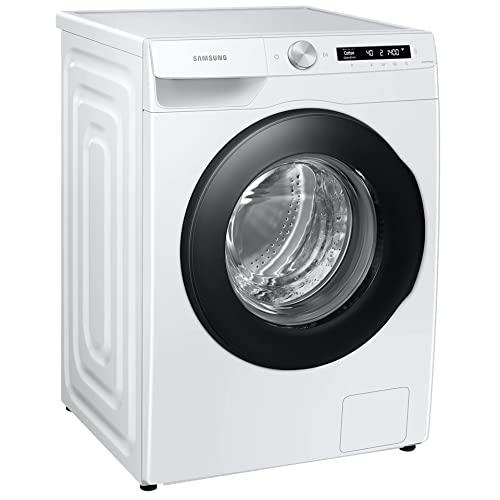
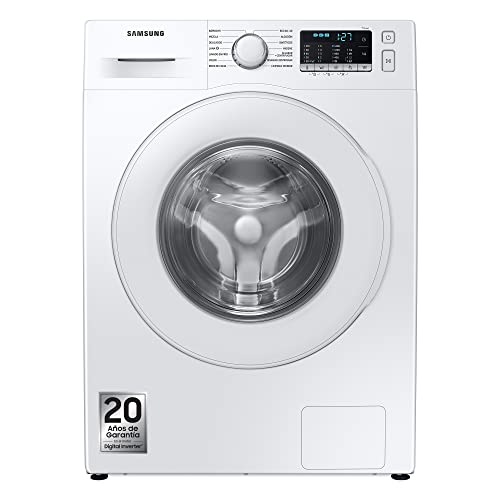
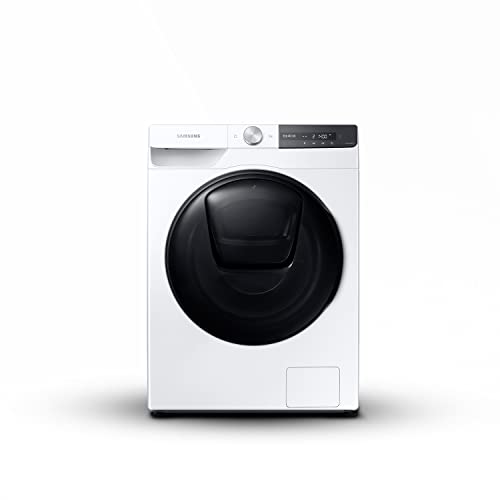
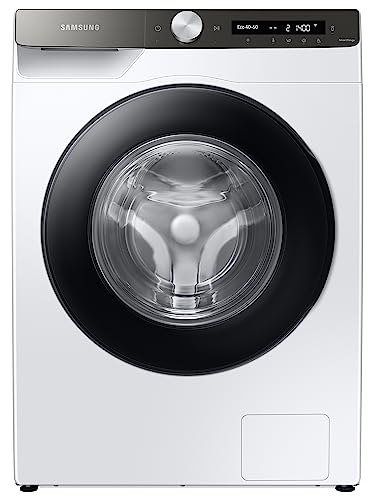
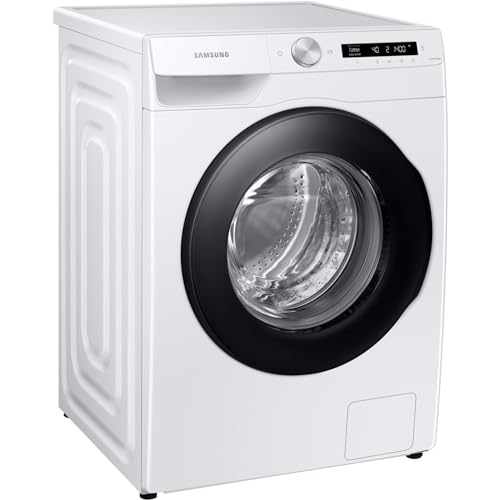
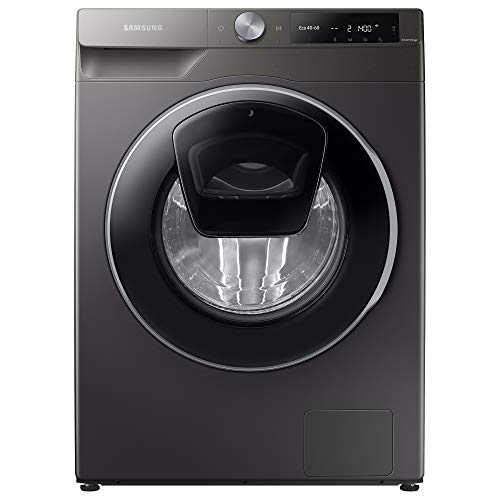
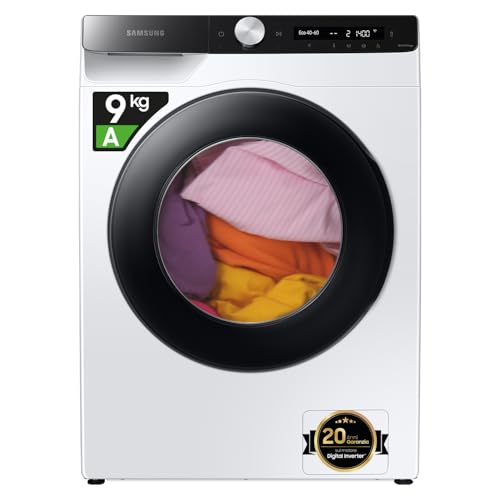
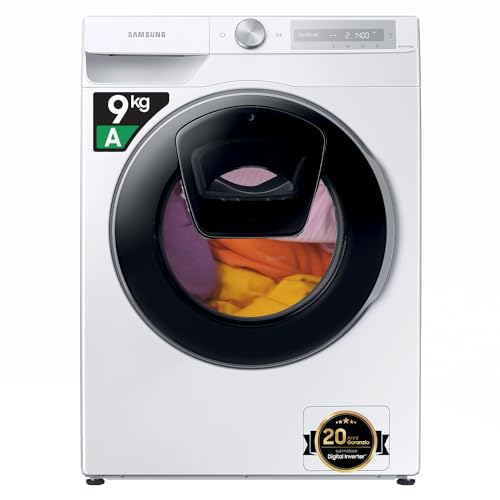
The Samsung WW90T554DAW/S3 WW5500T is a high-end washing machine with a 9 kg capacity and 1400 RPM spin speed. This A-rated...Read more
1
2
3
Next page
Samsung washing machines: which one should you buy?
Audited using multi-parameter algorithmic scoring, verified specs, and grades from independent expert reviews.
Overall Winner
The best Samsung washing machine overall is Samsung WW90T504AAW/S2 WW5100T, with an overall score of 8.65 points, a capacity of 9 kg, a spin noise level of 72 dB, a maximum spin speed of 1400 RPM, and a price of around £920.
The Samsung WW90T504AAW/S2 WW5100T is a technologically advanced 9 kg washing machine with an A-rated energy efficiency, consuming just 49 kWh per 100 cycles. The machine features comprehensive AI technology that personalizes washing cycles, monitors energy usage, and provides maintenance alerts through the SmartThings app.
Best value alternative:Samsung WW90CGC04DTEET WW5000C, with an overall score of 8.35 points, a capacity of 9 kg, and a price of around £350.
Best Value
The best value for money Samsung washing machine is Samsung WW90CGC04DTEET WW5000C, with an overall score of 8.35 points, a value-for-money score of 8.35 points, a capacity of 9 kg, and a price of around £350. It also spins at up to 1400 RPM and runs at 72 dB during the spin.
Runner-up:Samsung WW80CGC04DAEET WW5000C, with an overall score of 8.35 points, a capacity of 8 kg, and a price of around £370.
Quietest
The quietest Samsung washing machine is Samsung WW80T534AAX/S2 WW5300T, with an overall score of 8.46 points, a spin noise level of 72 dB, a capacity of 8 kg, and a price of around £830.
The Samsung WW80T534AAX/S2 WW5300T is a technologically advanced washing machine that incorporates artificial intelligence systems for a personalised washing experience. The motor is guaranteed for 20 years, and the machine includes 22 different washing programs.
Best value alternative:Samsung WW90CGC04DTEET WW5000C, with an overall score of 8.35 points, a spin noise level of 72 dB, a capacity of 9 kg, and a price of around £350.
The best 7 kg Samsung washing machine is Samsung WW71TA049AE/EG WW5000T, with an overall score of 7.93 points and a price of around £470.
Harnessing Samsung's proven cleaning engineering, the WW71TA049AE/EG WW5000T front-loading washing machine combines dependable performance with thorough fiber care. Its sixty-one-liter drum accommodates seven kilograms of garments, powered by a brushless Digital Inverter motor backed by a twenty-year warranty.
Runner-up: Samsung WW70TA049AX WW5000T, with an overall score of 7.93 points and a price of around £750.
The best 9 kg Samsung washing machine is Samsung WW90T504AAW/S2 WW5100T, with an overall score of 8.65 points and a price of around £920. It also spins at up to 1400 RPM and runs at 72 dB during the spin.
The best cheap Samsung washing machine is Samsung WW90CGC04DTEET WW5000C, with an overall score of 8.35 points, a capacity of 9 kg, and a price of around £350.
The Samsung WW90CGC04DTEET WW5000C combines technology and sustainability in a 9 kg washing machine with Class A energy efficiency. Artificial intelligence manages four key functions: personalized control, advanced communication, energy management, and habit learning.
Runner-up: Samsung WW70TA026AE WW5000T, with an overall score of 7.69 points, a capacity of 7 kg, and a price of around £340.
The best energy efficient Samsung washing machine is Samsung WW90T504AAW/S2 WW5100T, with an overall score of 8.65 points, Class A energy efficiency, an energy consumption of 49 kWh/100 cycles, a capacity of 9 kg, and a price of around £920. It also spins at up to 1400 RPM and runs at 72 dB during the spin.
Best value alternative:Samsung WW90CGC04DTEET WW5000C, with an overall score of 8.35 points, energy use of 44 kWh/100 cycles, a capacity of 9 kg, and a price of around £350.
The best slim Samsung washing machine is Samsung WW8NK62E0RW WW5000T, with an overall score of 7.13 points, a depth of 45.6 cm, a capacity of 8 kg, and a price of around £400.
The Samsung WW8NK62E0RW WW5000T (8 kg) stands out for its innovative EcoBubble technology, which creates powerful foam by mixing air, water, and detergent for effective low-temperature washing. Its Digital Inverter motor, backed by a 20-year warranty, ensures reliable performance.
Runner-up: Samsung WW60A3120WE/ET WW5000T, with an overall score of 7.01 points, a depth of 40 cm, a capacity of 6 kg, and a price of around £550.
The best 8 kg Samsung washing machine is Samsung WW80T534AAX/S2 WW5300T, with an overall score of 8.46 points and a price of around £830. It also spins at up to 1400 RPM and runs at 72 dB during the spin.
The best 11 kg Samsung washing machine is Samsung WW11BB744DGES3 WW7000T, with an overall score of 8.5 points and a price of around £700.
The Samsung WW11BB744DGES3 WW7000T is a high-end washing machine with an 11 kg capacity and energy class A. This intelligent model integrates various AI functions to customise wash cycles based on user habits.
Runner-up: Samsung WW11BB534DAES3, with an overall score of 8.5 points and a price of around £620.
What defines the best Samsung washing machines?
Buying Criteria
Essential hardware benchmarks & engineering standards for this category.
In general, the best Samsung washing machines take 8 to 9 kg and carry energy class A or B at about 44–55 kWh per 100 cycles, with inverter motors that spin at 1,400 rpm. All top models connect to an app over Wi-Fi. Bubble technology mixes detergent with air and water before the wash, so it works well at 20–40 °C, and water use is 48–50 litres.
The top Samsung models wash at about 53 dB and spin at 72 dB, offer steam programmes and 14 to 24 programmes, and some dose detergent automatically. A quick 15-minute wash suits lightly soiled clothes. Hygiene steam programmes remove most bacteria and allergens, and some doors have a small hatch for adding items mid-cycle. Each is 60 cm wide, 85 cm high and 55 cm deep.
Are Samsung washing machines good?
Brand Quality
Samsung washing machines offer excellent performance and rank #1 among all washing machine brands, with an overall score of 8.7. Samsung produces some of the best washing machines on the market.
Samsung washing machines are certainly among the best on the market, achieving a significantly higher overall average score compared to brands such as Candy, Hotpoint Ariston, Whirlpool, or Indesit.
(These rankings consider 24 brands, each with at least 6 products in the database.)
The following table ranks the best washing machine brands based on their overall score.
What are the main advantages of Samsung washing machines?
Samsung washing machines offer the following advantages over other brands.
Greater popularity: Samsung models have an average popularity score of 1 points, compared to the market average of 1 points.
Higher capacity: The average capacity of Samsung washing machines is 9 kg, while the market average is 8 kg.
Larger drum volume: Samsung washing machines have an average drum volume of 61 litres, compared to the market average of 58 litres.
Lower energy consumption: Samsung washing machines consume an average of 53 kWh per 100 cycles, slightly less than the market average of 55 kWh.
Lower minimum spin speed: The 98% of Samsung washing machines can reach a minimum spin speed of 400 rpm, ideal for delicate fabrics (about 33% of washing machines on the market do not reach such low speeds).
Quieter operation: Samsung washing machines reduce spin noise by about 3 dB compared to the market average (72 dB vs 75 dB) and have a superior noise emission class (Class A compared to the market average of Class B).
Specialised wash cycles: Most Samsung models include Hygiene, Less Microfibre, and Baby Care cycles.
Many washing functions: Features such as Easy Iron anti-crease, rinse hold, extra rinse, pre-wash, intensive wash, silent mode, and Bubble Soak are common in Samsung washing machines.
Advanced features: Almost all Samsung models include the StayClean drawer, smart diagnosis (Smart Check or Home Care Wizard), laundry detection system, overflow protection, Pause & Add function, and delay start. Many models also integrate pre-mix technology and steam technology. The most advanced Samsung washing machines may feature Auto Dispense automatic dosing or the AquaStop system.
Durable inverter motor: All Samsung washing machines use Digital Inverter technology, with a motor warranty ranging from 10 to 20 years.
Smart connectivity: Most Samsung models are equipped with Wi-Fi connectivity and AI technology (AI Control, AI Communication, AI Energy Mode, AI Pattern), features that are rare in other brands.
Innovative drum design: The 96% of Samsung washing machines features the Diamond Drum, designed to be gentle on fabrics and prevent clothes from snagging.
What are the main disadvantages of Samsung washing machines?
Samsung washing machines have the following disadvantages compared to other brands.
Higher cost: Samsung washing machines cost £180 more than the market average (£560 vs £380) and have a slightly worse quality-price ratio compared to most other brands.
Higher water consumption: Samsung washing machines consume an average of 4 litres more water per cycle than the market average (50 L vs 46 L per cycle).
Limited quick cycles: Samsung washing machines usually have only 1–2 quick cycles under an hour, whereas other brands often have 2–3 quick cycles.
Absence of some specialised cycles: Samsung washing machines do not include Duvet and Anti-Allergy cycles, and less than half offer an Outdoor/Sport cycle.
Limited washing functions: Only a few Samsung washing machines have a quick function (QuickDrive), and none include the Water+/Acqua+ function (to add more water).
Lack of advanced systems: Few Samsung washing machines feature a foam control system or load balancing system, both of which are common in other brands.
Who manufactures Samsung washing machines?
Manufacturer
Samsung washing machines are manufactured by Samsung Electronics, a subsidiary of the Samsung Group, one of the largest conglomerates in the world. Founded in 1938 as a trading company, Samsung has grown into various sectors, including electronics, shipbuilding, and construction. Samsung Electronics, established in 1969, handles consumer electronics production, including washing machines.
Samsung washing machines are produced in various parts of the world, with the main production sites located in South Korea, where Samsung's headquarters are also based.
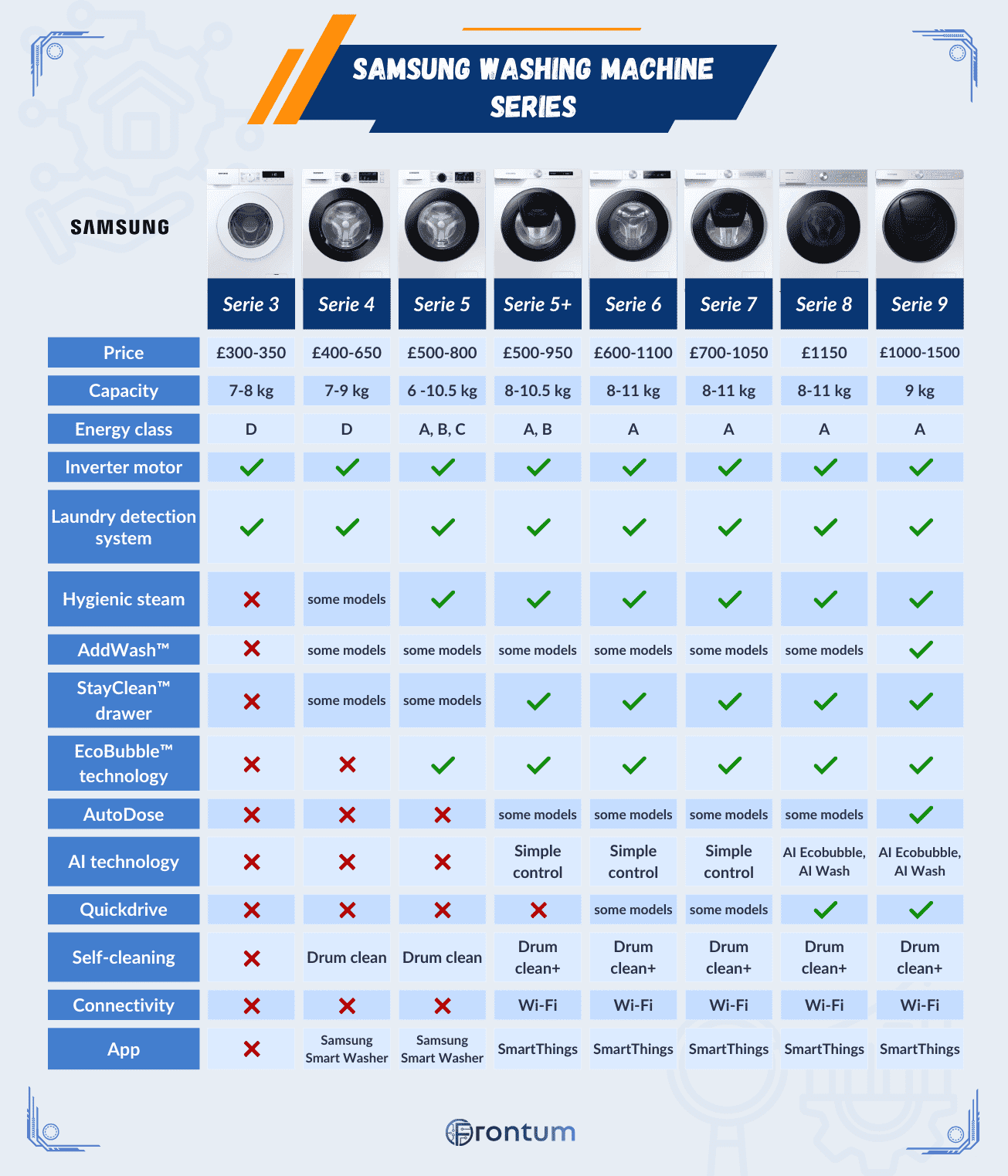
What are the different series of Samsung washing machines?
The different series of Samsung washing machines are as follows.
Series 3 WW3000T: Offers basic functions like laundry detection and inverter motor but lacks advanced features such as AquaStop system, extra rinse, Hygiene or Anti-Allergy cycles, steam technology, and self-cleaning function. Energy class is D, with capacities ranging from 7 to 8 kg. Features 14 washing programs and costs approximately £300–350.
Series 4 WW4000T / WW4500T: Includes all features of Series 3 and adds features such as Hygiene Steam in some models. Some models also offer smart diagnosis, automatic drawer cleaning, AquaStop system, extra rinse, stain removal, and self-cleaning function. Some models feature Pause & Add but still lack Wi-Fi and anti-crease functions. Energy class remains D, with capacities from 7 to 9 kg and typically 12 washing programs. Prices range from £400 to £650.
Series 5 WW5000T: Expands on Series 4 by adding features such as EcoBubble™ technology and anti-crease function. Energy classes range from A to C, capacities from 6 to 10.5 kg, and generally 14 washing programs. Prices usually range from £500 to £800.
Series 5+ WW5100T/WW5300T/WW5500T: Includes all features of Series 5 and adds Wi-Fi connectivity, AI technology, and AutoDose technology in some models. Energy class upgrades to A or B, capacities range from 8 to 10.5 kg, and up to 22 washing programs are available. Touch display with language settings is introduced. Prices range from £500 to £950.
Series 6 WW6000T / WW6500T: Includes all features of Series 5+ and improves self-cleaning with Drum Clean+ function. Introduces QuickDrive technology in some models, Super Speed program, and energy class A. Capacities range from 8 to 11 kg and include 22 washing programs. Prices range from £600 to £1,100.
Series 7 WW7000T / WW7500T: All features of Series 6, with some models adding QuickDrive function. Energy class remains A, with capacities from 8 to 11 kg and 22 washing programs. Prices generally range from £700 to £1,050.
Series 8 WW8000T / WW8500T: Builds on Series 7 and adds AI EcoBubble and AI Wash, which use AI technology for more efficient washing. Also includes Auto Optimal Wash+ system. The series maintains energy class A, capacities from 8 to 11 kg, and offers 22–23 washing programs. Prices are around £1,150.
Series 9 WW9000T: Includes all features of Series 8 and all models feature AddWash, QuickDrive, and AutoDose technologies. Energy class is A, with a capacity of 9 kg and 23 washing programs. Prices generally range from £1,000 to £1,500.
What is the warranty period for Samsung washing machines?
Samsung washing machines come with a standard 2-year warranty, extendable up to 5 years through the CAREvolution program, with the following options.
1 year for €49
2 years for €89
3 years for €129
For models produced between January 2012 and June 2022, Quiet Drive and Digital Inverter motors are covered by a 10-year warranty. However, from the third year onwards, labour and service costs are the customer's responsibility.
Models purchased from July 2022 onwards, regardless of the production date, offer a 20-year motor warranty. However, labour and service costs are also the customer's responsibility from the third year onwards.
How much do Samsung washing machines cost?
Price Guide
Samsung washing machines are priced between £300 and £1,500, with an average price of approximately £530. This places them at #20 in the price ranking among 24 brands. For comparison, the average price of a washing machine across all brands is 420£.
The most affordable Samsung models belong to Series 3 and 4, priced between £300 and £650. Mid-range options, including Series 5, 5+, and 6, go up to £950. High-end Samsung models, from Series 7, 8, and 9, are priced between £1,100 and £1,500.
The distribution of Samsung washing machine costs is shown in the following chart.
[vertical-chart-48561636]
In terms of quality-price ratio, Samsung ranks #5 among 24 brands, with an average score of 8 points.
Note: Brands with fewer than 6 products in the database were not included in the ranking.
The most affordable Samsung washing machines are as follows.
What should you consider when choosing the best Samsung washing machine?
Key Factors
To choose the best Samsung washing machine, consider capacity and drum volume, energy consumption, water usage per cycle, spin efficiency, noise levels during washing and spinning, motor type, number of washing programs, and available functions.
What capacities are available for Samsung washing machines?
Samsung washing machines have capacities ranging from 6 to 11 kg, with some special models offering up to 18 kg. The most common capacities are 9 kg(47% of Samsung washing machines) and 8 kg(30%).
The following chart illustrates how capacities vary among Samsung washing machines.
[pie-chart-19073242]
Most Samsung models have a drum volume of 61 litres, slightly larger than the market average of 58 litres. They occupy approximately 0.28 cubic metres of space, in line with the market average. Depth ranges from 40 to 63.5 cm, indicating the availability of slim models, some with a depth of just 40 cm. The width is generally 60 cm, a standard market size.
What is the energy efficiency of Samsung washing machines?
Samsung washing machines are energy-efficient, with most models falling into classes A to E. The 53% of Samsung washing machines are in class A, 25% in class B, 5% in class C, 15% in class D, and 2% in class E. There are no Samsung models in classes F and G.
Comparing Samsung series: Series 3 and 4 models are in energy class D; Series 5 ranges from A to C; Series 5+ falls into classes A and B; and Series 6, 7, 8, and 9 models are exclusively in class A.
The distribution of energy classes among Samsung washing machines is shown in the following chart.
[pie-chart-12842697]
Energy consumption for Samsung washing machines ranges from 44 to 83 kWh per 100 cycles, with an average of 53 kWh, placing Samsung in 7th place out of 22 brands. The average washing machine on the market consumes about 53 kWh per 100 cycles. (Class A machines consume less than 49 kWh per 100 cycles, while class B machines consume less than 55 kWh; consumption also varies by capacity.)
Water consumption for Samsung washing machines ranges from 43 to 54 litres per cycle, with an average of 50 litres, ranking 17th out of 22 brands for water usage (from lowest to highest).
The following list presents Samsung washing machines with the lowest energy consumption.
What is the spin efficiency of Samsung washing machines?
The spin efficiency of Samsung washing machines falls into classes A to C, with class B being the most common. Specifically, 95% of Samsung washing machines are in class B, 4% in class A, and 2% in class C. Spin efficiency class indicates the amount of moisture left in clothes after spinning, closely tied to maximum spin speed.
The following chart shows the distribution of Samsung washing machines by spin efficiency classes.
[pie-chart-76264668]
Samsung washing machines have maximum spin speeds between 1100 and 1400 rpm. Most models (91%) reach 1400 rpm, while 1200 rpm models are less common (7%). In comparison, 60% of washing machines on the market reach 1400 rpm, and 22% reach 1200 rpm.
If you frequently wash delicate fabrics, consider the minimum spin speed. Lower spin speeds better protect delicate fabrics during washing. Samsung washing machines offer minimum speeds between 400 and 800 rpm, with around 90% of models offering a minimum of 400 rpm.
How noisy are Samsung washing machines?
Samsung washing machines have spin noise levels ranging from 72 to 74 dB, with 72 dB being the most common. This places Samsung 6th out of 22 brands in noise rankings.
Samsung washing machines are quieter than most others (the average noise level during spinning is 75 dB). Spinning is the noisiest phase of washing, so noise level during this phase is the most relevant for evaluating overall machine noise.
Samsung washing machines fall into noise emission classes A or B. The 96% of models are in class A (spin noise level below 73 dB), while the 4% are in class B (spin noise level between 73 and 76 dB).
Most Samsung washing machines feature anti-vibration design. You can see it in the image below.
The following chart shows the distribution of spin noise levels among Samsung washing machines.
[vertical-chart-12536104]
The washing noise level of most Samsung washing machines is 53 dB (similar to the market average). While less relevant than spin noise, washing noise still contributes to the overall noise level.
The quietest Samsung washing machines are as follows.
The video below provides a short overview of the Samsung WW80T534DAEAS7 washing machine, where you can observe noise levels during each washing phase (washing, rinsing, spinning).
How many washing programs do Samsung washing machines offer?
Samsung washing machines from Series 3, 4, and 5 typically include between 12 and 14 washing programs, while those in Series 5+ to 9 offer between 20 and 23 programs. Common washing programs include Eco 40-60, Cotton, Synthetics, Hygiene Steam, Quick Wash 15', Mixed Fabrics, Delicates, Intensive Cold, Wool, Colours, Duvets, Outdoor, Shirts, Towels, Baby Care, Cloudy Day, Activewear, Denim, and Silent Wash.
The distribution of washing programs among Samsung washing machines is shown in the following chart.
[vertical-chart-58562128]
In more advanced models, such as those in Series 8 and 9, the AI Wash cycle is available. This cycle uses four sensors to optimize the amount of water and detergent based on the weight and soil level of the laundry. It can also adjust detergent or rinse time if needed. Some Series 5 models include the Less Microfiber cycle, developed with Ocean Wise Plastics Lab and Patagonia, to reduce microfiber release by up to 54%.
Samsung washing machines do not feature a Duvet cycle (present in 46% of washing machines in general) or an Allergen cycle (present in 68% of washing machines). Only 49% of Samsung models include an Outdoor cycle (compared to 67% of the market). The ECO cycle duration ranges from 198 to 240 minutes, with an average of 228 minutes (10 minutes longer than the market average).
Samsung washing machines usually have a quick cycle under an hour (Quick 15'), and from Series 6 onward, the Super Speed cycle is added.
Samsung washing machines offer the following functions to adjust washing cycles.
Easy Iron (available from Series 5 and later): reduces wrinkles by spinning garments at a lower speed.
Extra Rinse: adds an additional rinse at the end of the wash cycle. Some Series 5 models allow up to 5 extra rinses.
QuickDrive (available from Series 7 and later): reduces the total time of the selected wash cycle.
Prewash: prepares heavily soiled garments before the main wash cycle.
Bubble Soak (available from Series 5 and later): a 30-minute prewash that uses EcoBubble technology (mixing detergent, water, and air to create bubbles that penetrate fabrics and remove tough stains).
Intensive Wash (available in all series): extends the cycle for a deeper clean of heavily soiled laundry.
Silent Wash: reduces noise during the cycle.
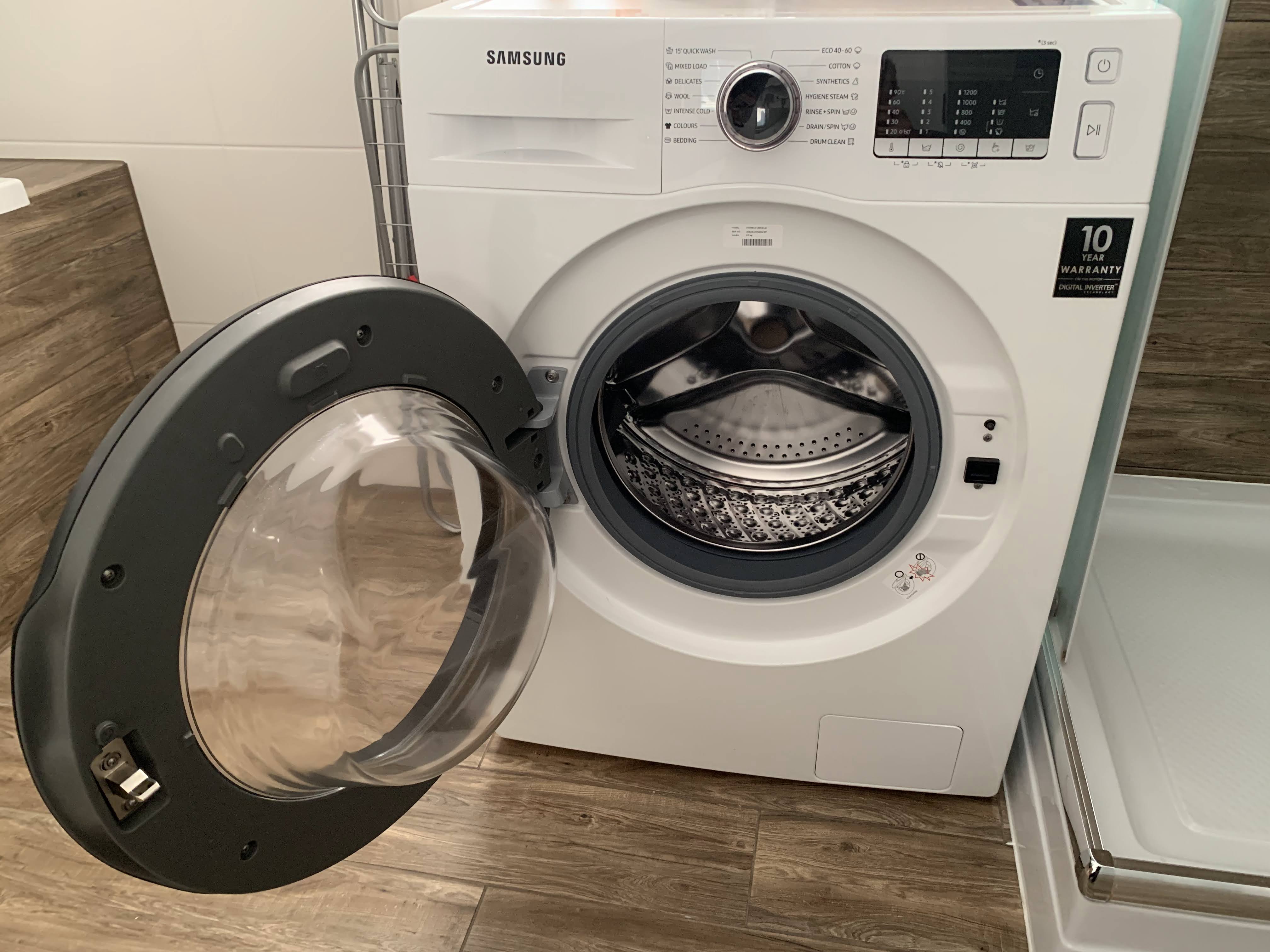
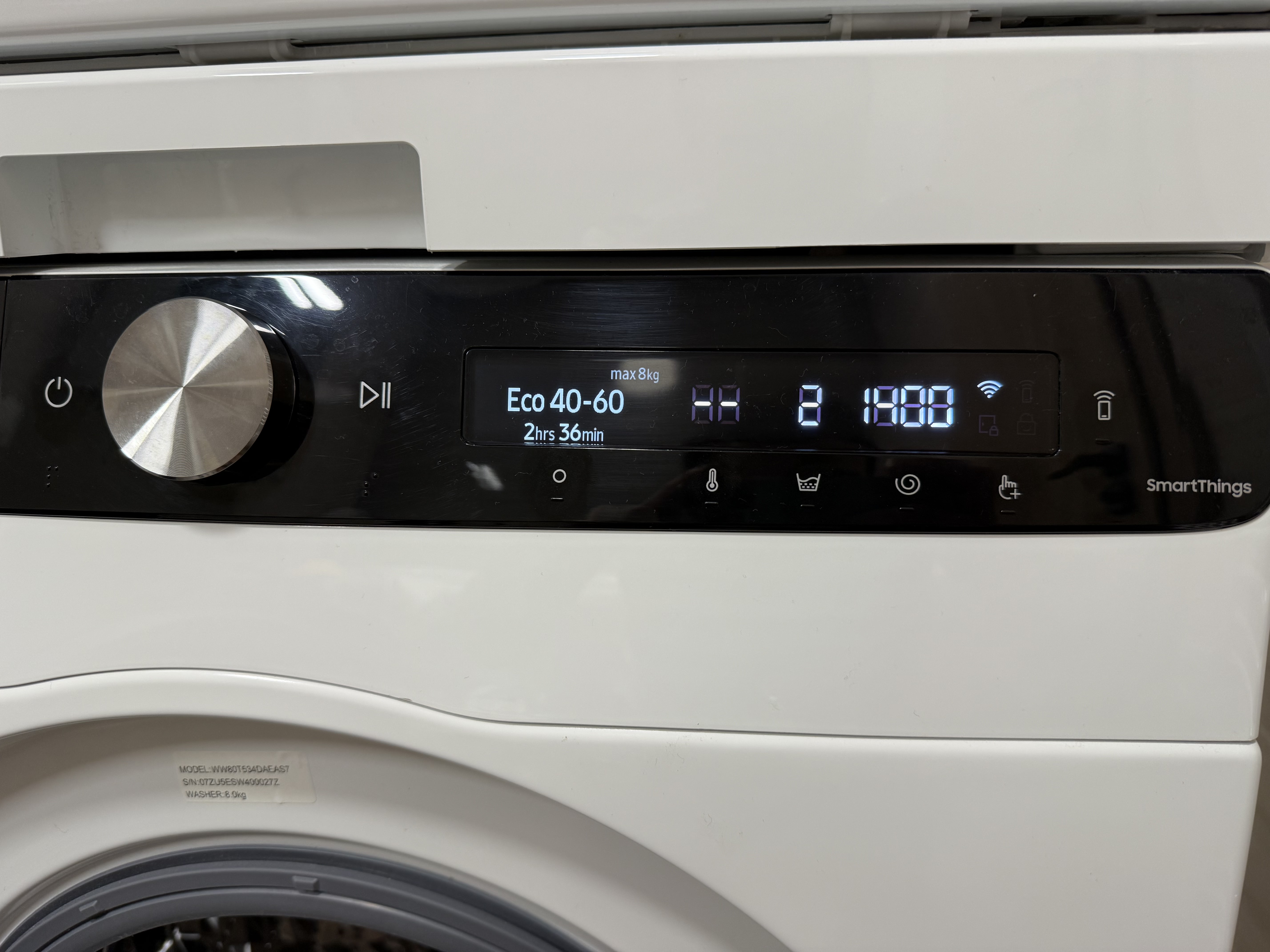
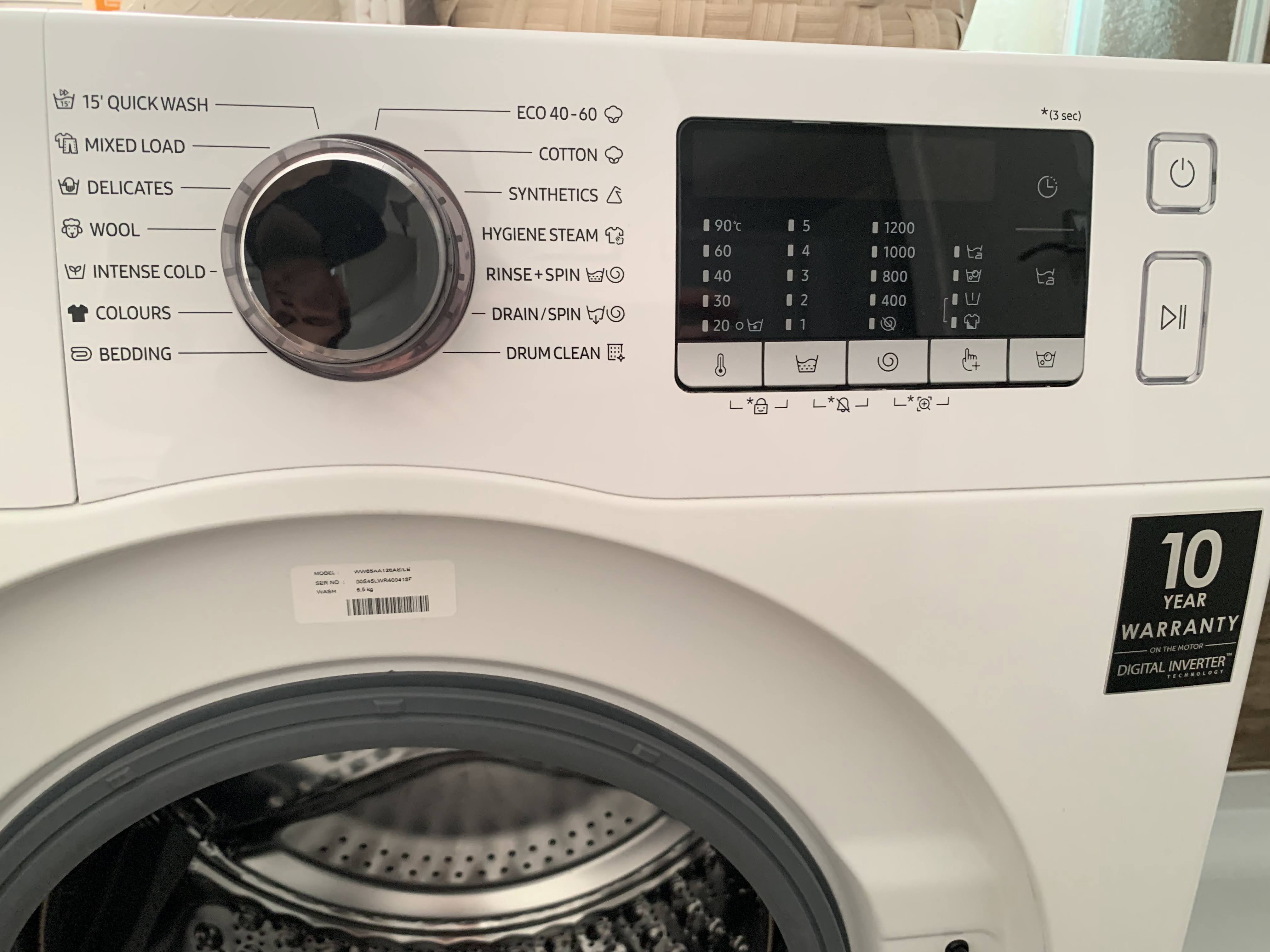
Below are images showing the washing settings panels during program selection. The first image is from the Samsung WW80T534DAEAS7 (Series 5+), while the second is from the Samsung WW65AA126AE/LE model.
What are the common features of Samsung washing machines?
Samsung washing machines include between 7 and 18 features, with an average of 14 (compared to the market average of 10).
The distribution of features among Samsung washing machines is represented in the following chart.
[vertical-chart-19966982]
The most common features in Samsung washing machines are as follows.
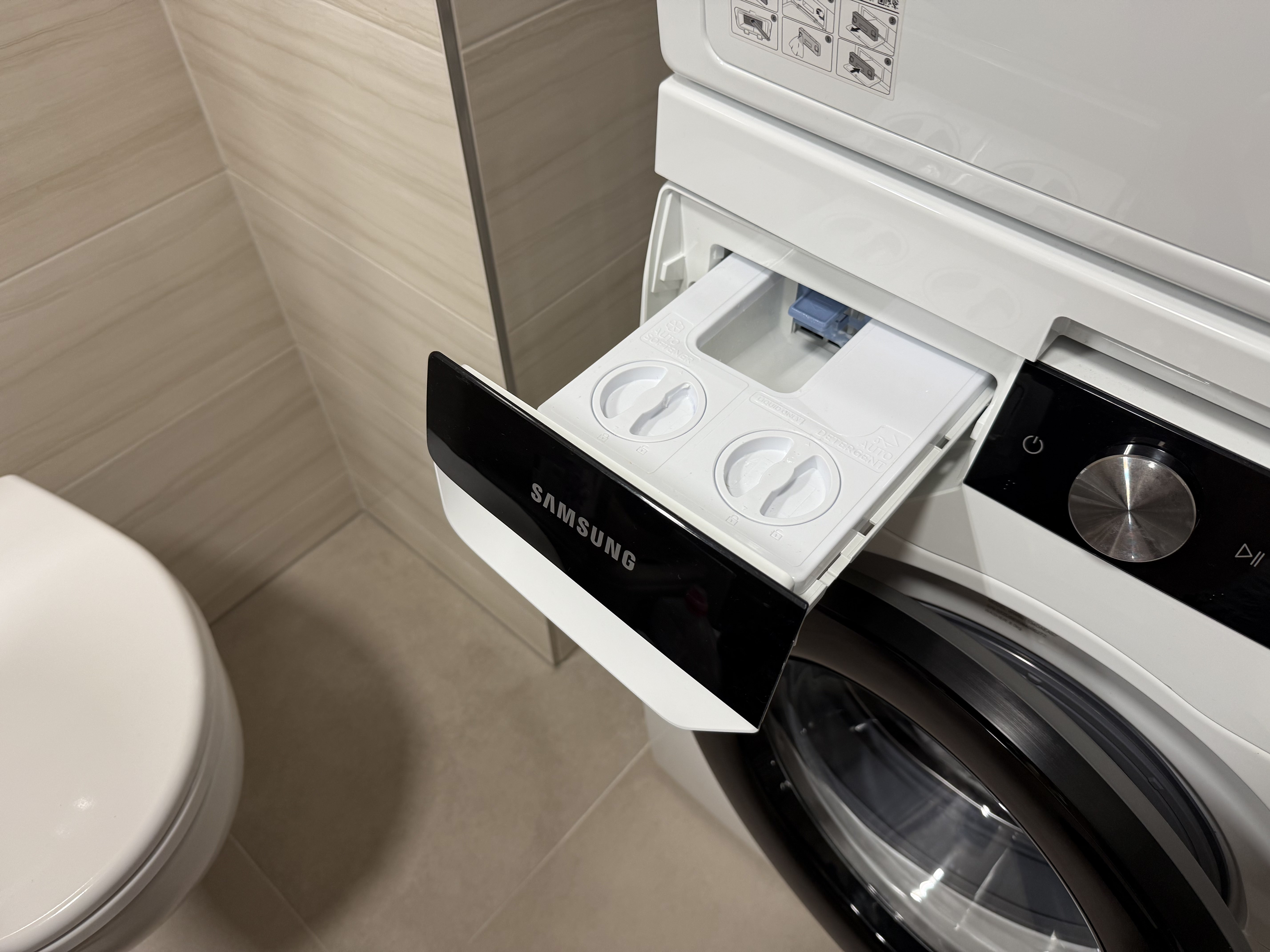
StayClean™ Drawer (93% of Samsung models, excluding Series 3): the detergent drawer cleans itself automatically with a strong water jet. Only 12% of washing machines on the market have this feature.
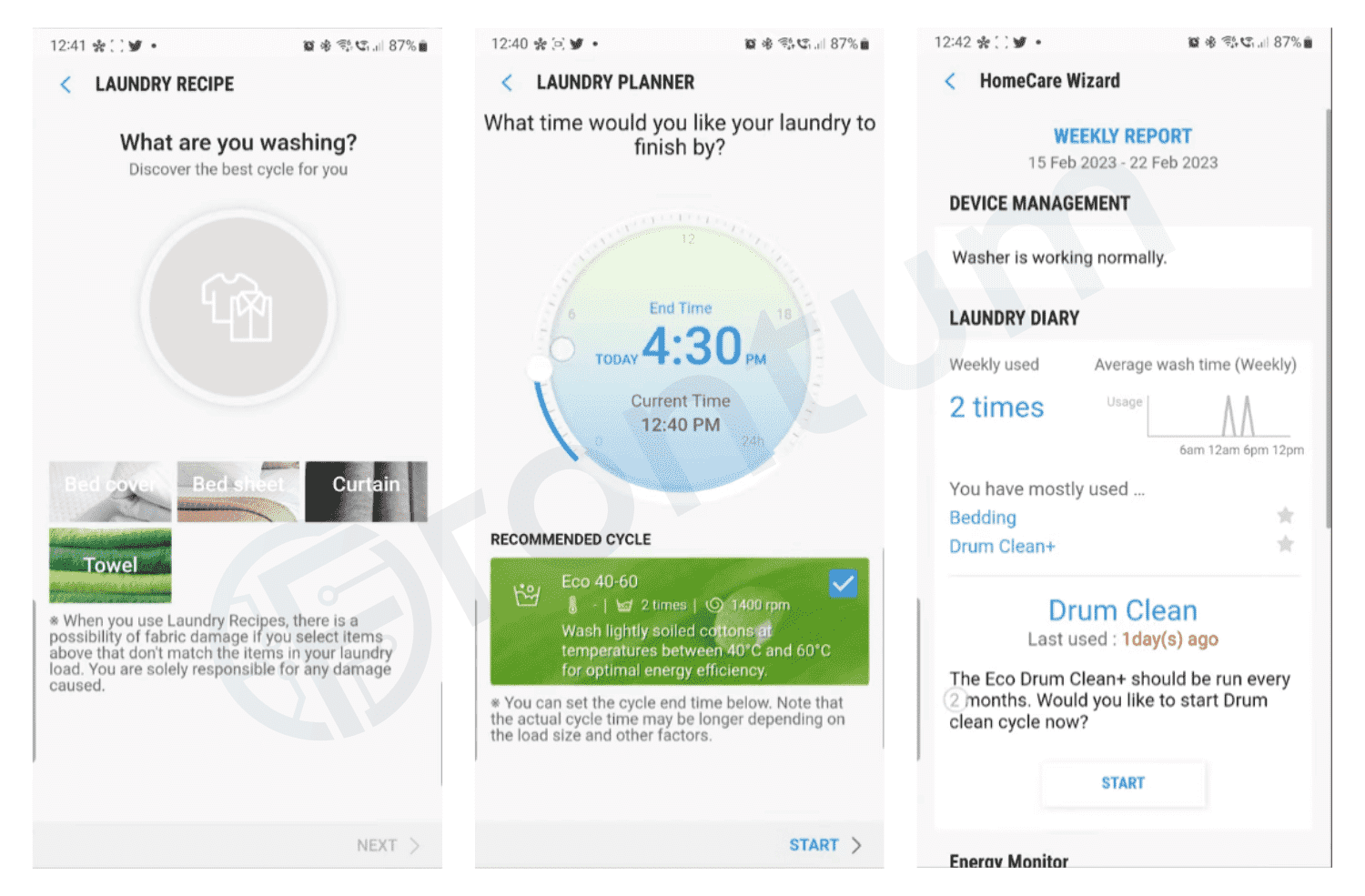
Smart Diagnosis (96% of Samsung models): Smart Check (available in Series 4 and 5 via the Samsung Smart Washer app, allowing users to diagnose and resolve issues by scanning a code displayed on the washing machine) or Home Care Wizard (available in Series 5+ and later via the SmartThings app, an AI-based diagnostic tool).
Drum Clean/Drum Clean+ (all Samsung models): washing machines in Series 3–5+ include the Drum Clean program, while Drum Clean+ is available from Series 6 onward for enhanced effectiveness. This program heats water to approximately 60-70°C to thoroughly clean the drum, eliminating bacteria, dirt, and residues from the drum and door rubber seal.
Pause & Add: allows you to add garments or detergent during the wash. Some Series 4 and later models feature a double door for easier access (AddWash).
Delay Start: enables scheduling a delayed start of up to 19 hours in Series 3–5, while in Series 5+ to 9, you can schedule a delayed finish of up to 24 hours. The displayed time shows when the wash will be completed.
Laundry Detection System: sensors detect the load weight to determine the optimal amount of water and detergent required.
Overflow Protection: monitors the water level in the drum and automatically removes excess water if necessary.
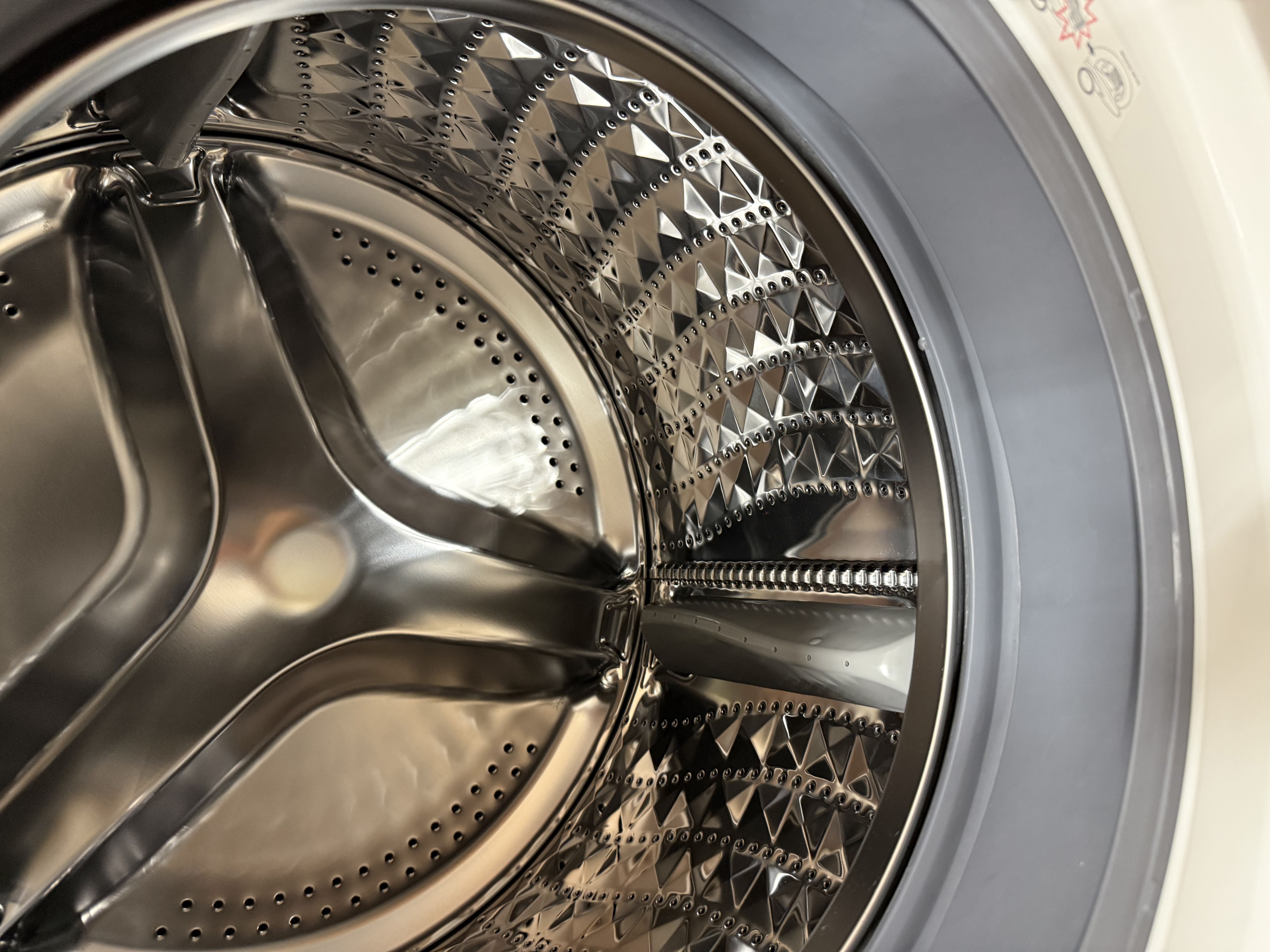
Below are images showing the StayClean drawer and drum design of the Samsung WW80T534DAEAS7 (Series 5+), which we tested.
All Samsung washing machines are equipped with a Digital Inverter motor, which uses solid magnets to ensure quieter, more efficient, and longer-lasting operation, with a warranty ranging from 10 to 20 years. By comparison, 74% of all washing machines on the market feature an inverter motor.
Almost all Samsung washing machines (96%) come with a Diamond Drum, designed with diamond-shaped grooves to be gentle on fabrics and prevent clothes from snagging. Some high-capacity models use SpaceMax technology, which increases internal space (11 kg capacity in a standard 600 mm cabinet).
Other common features of Samsung washing machines include the following.
Pre-Mixing Technology (78% of Samsung models; 24% of all washing machines): EcoBubble™ technology mixes air, water, and detergent to create bubbles that clean clothes at lower temperatures, reducing energy consumption. Series 8 and 9 models feature AI EcoBubble, which removes 24% more dirt at lower temperatures.
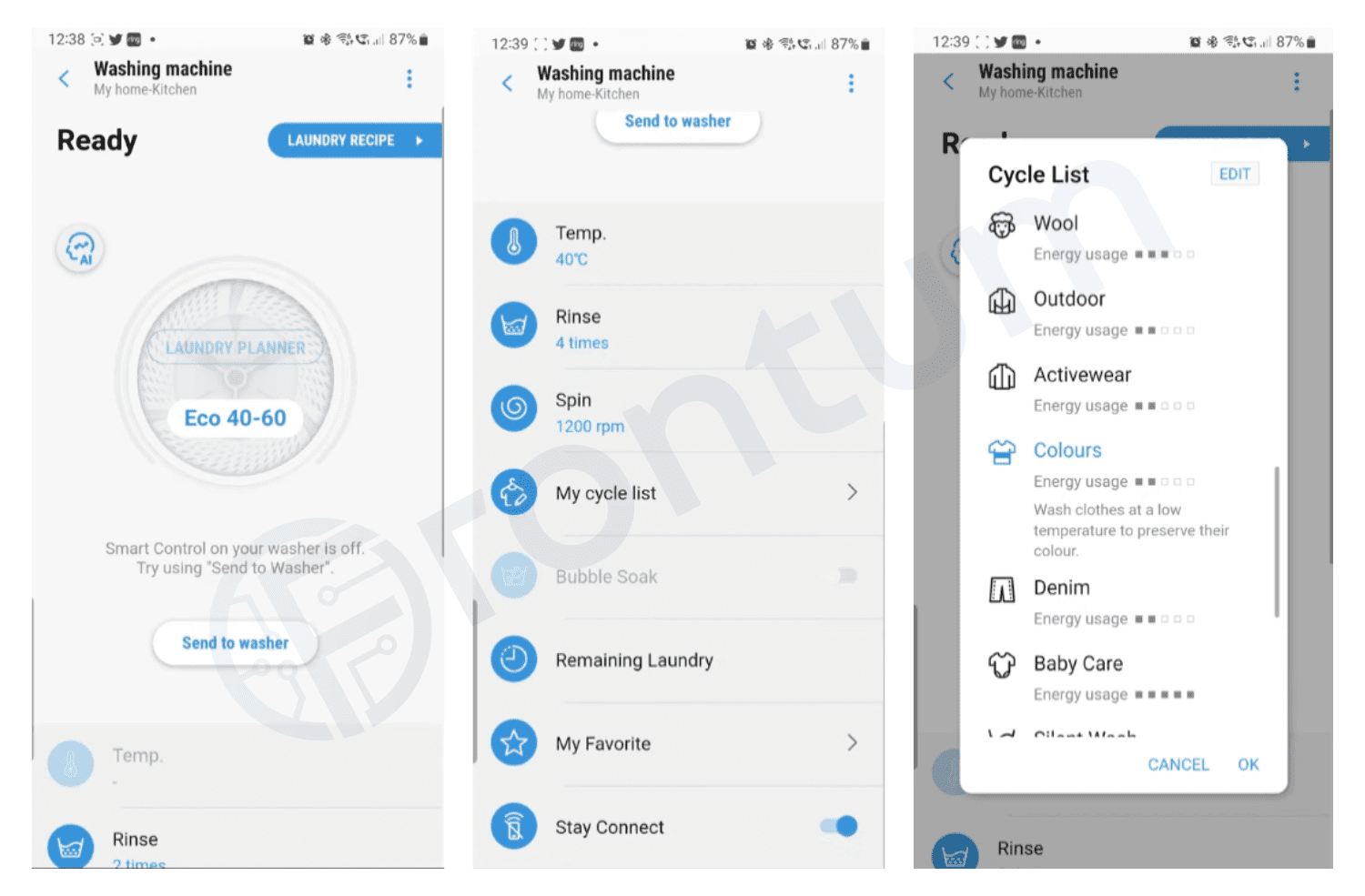
Wi-Fi Connectivity (51% of Samsung models; 23% of all washing machines): the SmartThings app allows users to remotely control, schedule, and monitor the washing machine, receive notifications, and access personalized wash cycles.
My Cycles: enables users to add or remove cycles to create a personalized list of washing programs. Available in Series 5+ and later washing machines.
Steam Technology (89% of Samsung models; 57% of all washing machines): the Hygiene Steam program uses steam to sanitize and clean clothes more effectively.
Aqua Stop System (39% of Samsung models; 32% of all washing machines): prevents leaks and water damage.
The video below demonstrates how the SmartThings app can manage the Samsung washing machine via Wi-Fi, including program selection and settings.
Samsung washing machines are also known for integrating artificial intelligence (currently, 48% of models use AI technology). The following AI technologies are present in Samsung washing machines.
AI Control: customizes washing by remembering user habits, suggesting cycles, and displaying real-time information.
AI Communication: notifies users about cycle progress, suggests maintenance actions, and helps resolve errors.
AI Energy Mode: monitors the washing machine's energy consumption and estimated bill, optimizing cycles with cold water and longer durations if activated.
AI Pattern: learns the most frequently used wash cycles and settings, then displays preferred options in order of usage frequency.
Some advanced Samsung models include the Auto Dispense system (dispenses the exact amount of detergent and softener based on the weight and soil level of the laundry), a load balancing system with VRT Plus™ technology (uses a 3D sensor to maintain drum balance, reducing noise and vibration even with heavy loads or high spin speeds), Smart Link (synchronizes the washing machine and dryer), and Volt Control (protects against voltage fluctuations).
However, only a small percentage (7%) of Samsung models feature a foam control system, which is common in other brands.
The Samsung washing machines with the highest number of features are as follows.
Front-load or top-load: Which type of Samsung washing machine is better?
Most Samsung washing machines are front-load models, with very few top-load options available. If you prefer a top-load washing machine, consider other brands.