Scored using Vacuum Cleaners Methodology v3.0
Vacuum Cleaners Methodology v3.0
Mathematical & Unbiased Scoring
Products in this category are scored under Frontum Vacuum Cleaners Methodology v3.0: the technical score from the specifications is the base, and independent expert and video reviews (up to ±0.5 points), owner opinions (up to ±0.3) and best-of lists (up to +0.3) move it up or down.
Explore Vacuum Cleaners Methodology v3.0

Philips 3000 Series Bagged review: 53 specs compared

Avg. price:~£130Suction power (AW):?Battery runtime:N/A minutesCapacity:3 LWeight:4.8 kg

Philips 3000 Series Bagged Review: Compare 53 technical specifications and 2 expert reviews to see how this product ranks in the Vacuum Cleaners category and whether it is worth buying.
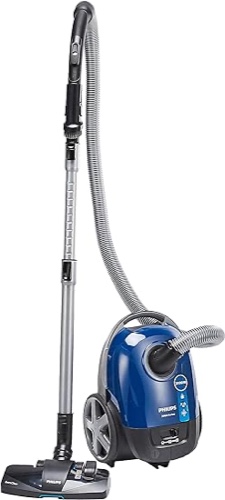
Philips 3000 Series Bagged
6.7/10

Overall score

Score
6.7/ 10
✕
What it is
Our main score for this model, 1–10. It combines specs, expert reviews, best-of lists and owners.
How we count it
Parts: Technical score 50%, Reviews score 25%, List score 20%, Sentiment score 5%
Marks: Each part gets a mark out of 10. For reviews, lists and owners, a typical model in this category gets about 8 and the best one gets 10.
No data yet: A part with no data shows "?". It counts as the mark of a weaker model in this category (4 in 5 models with data score higher). This way, models with reviews, lists and owners usually come out ahead.
Score distribution
▼
<55-66-77-88-99-10
Score components

50%

6.0

Technical score

25%

7.4

Reviews score

20%

?

List scoreNot enough data yet, so we use 7.5, the mark of a weaker model in this category

5%

?

Sentiment scoreNot enough data yet, so we use 6.0, the mark of a weaker model in this category

▼Worse than 85% of vacuum cleaners
7.6

Value for money

Value for money
7.6/ 10
✕
What it is
An indicator that combines the vacuum cleaner's overall score with its price.
When it matters
When you are looking for a vacuum cleaner with a good balance between quality and price.
Score distribution
▼
<55-66-77-88-99-10
Score components

70%

6.7

Overall score

30%

9.8

Price

▼Worse than 87%
6.0

Technical score

Technical score
6.0/ 10
✕
What it is
How good the specs are compared with the other models in this category, 1–10.
How we count it
Areas: We rate the specs in each area against the other models in this category.
Weighting: The areas that matter most to buyers count more. The shares are shown under Score components.
Share: The technical score is 50% of the overall score.
Score distribution
▼
<55-66-77-88-99-10
Score components

28%

6.2

Performance

22%

3.9

Battery

18%

8.7

Filtration

14%

7.1

Attachments

10%

5.5

Design

8%

4.0

Smart features

▼Worse than 83%
7.4

Reviews score

Reviews score
7.4/ 10
✕
What it is
Average grade from independent test sites, magazines and video reviewers, 1–10.
How we count it
Grades: Each review's own score is converted to 1–10; without one, we grade the review ourselves. Big test sites count more, short reviews half as much as full tests. A video review counts half.
Score: The average grade is 80% of the review mark; the number of reviews is the other 20% (1 review = 5, the typical number in this category = 8, the most-reviewed model = 10).
Enough data: With few reviews, the average grade is pulled toward the typical grade of this category. No reviews yet: 7.4 for now.
Share: Reviews count 25% of the overall score.
Score distribution
▼
<55-66-77-88-99-10

80%

8.0

Average grade

20%

6.9

Popularity

Grades by review (2)
2 reviews: 1 with a printed score, 1 estimated from the review. Reviews count 25% of the overall score.
User ratings collected online are not part of this score.
▼Worse than 86%
?

List score

List score
7.5/ 10
✕
What it is
How often independent test sites, magazines and video reviewers put this model in their best-of lists for this category.
How we count it
Points: The model in the most lists of this category gets 10; the others get 8 to 10 in proportion. In no list yet: 7.5. Lists count 20% of the overall score.
Enough data: Every list counts, even a single one. With fewer than 5 best-of lists in the category, this part is left out.
Lists with this model (0)
Not in any best-of list yet, so this part counts as 7.5. Models in a list get 8 to 10.
Not in any best-of list yet
  • philips-3000-series-vacuum-cleaner-with-bag
philips-3000-series-vacuum-cleaner-with-bag
Where to buy
    N/A~ £130
Best rankings
Available: ranking among products currently available (including other versions of this product).All: ranking among all products in the database.
Loading...
Loading category ranking...

Technical Specifications of vacuum cleaner Philips 3000 Series Bagged

Technical score
Technical score
6.0/ 10
✕
What it is
How good the specs are compared with the other models in this category, 1–10.
How we count it
Areas: We rate the specs in each area against the other models in this category.
Weighting: The areas that matter most to buyers count more. The shares are shown under Score components.
Share: The technical score is 50% of the overall score.
Score distribution
▼
<55-66-77-88-99-10
Score components:

28%

6.2

Performance

22%

3.9

Battery

18%

8.7

Filtration

14%

7.1

Attachments

10%

5.5

Design

8%

4.0

Smart features

6.0
Reviews score
7.4
List score
?
Value for money
Value for money
7.6/ 10
✕
What it is
An indicator that combines the vacuum cleaner's overall score with its price.
When it matters
When you are looking for a vacuum cleaner with a good balance between quality and price.
Score distribution
▼
<55-66-77-88-99-10
Score components:

70%

6.7

Overall score

30%

9.8

Price

7.6
Suction power (AW)
?
Suction power (kPa)
20 kPa
This vacuum cleaner has a suction pressure of 20 kPa, which is higher than that of 49.3% of vacuum cleaners and equal to that of 8% of vacuum cleaners.
Airflow
?
Motor type
ac
Power consumption
900 W
This vacuum cleaner draws 900 W, which is higher than the power consumption of 89% of vacuum cleaners and equal to that of 5.5% of vacuum cleaners.
Show more
Cordless
no
This vacuum cleaner does not work cordlessly. 49.5% of vacuum cleaners offer cordless operation.
Battery runtime
N/A
Charging time
N/A
Battery capacity
N/A
Battery voltage
N/A
Show more
Filter class
hepa 13
This vacuum cleaner uses filter class hepa 13, which is more advanced than the class used by 80.4% of vacuum cleaners and the same as the class used by 18% of vacuum cleaners.
Minimum overall efficiency
99.95%
This vacuum cleaner reaches 99.95% minimum overall efficiency, which is higher than that of 32% of vacuum cleaners and equal to that of 26.9% of vacuum cleaners.
Suitable for allergy sufferers
yes
This vacuum cleaner is suitable for allergy sufferers. 82.4% of vacuum cleaners are allergy-friendly.
Capacity
3 L
This vacuum cleaner has a dust capacity of 3 L, which is larger than that of 80.6% of vacuum cleaners and equal to that of 4.1% of vacuum cleaners.
Bagless
no
This vacuum cleaner does not use a bagless design. 78.6% of vacuum cleaners use this setup.
Show more
Main brush type
classic
Roller type
none
Anti-tangle brush
no
This vacuum cleaner does not include an anti-tangle brush. 25.7% of vacuum cleaners include this feature.
Mini motorized brush
no
This vacuum cleaner does not include a mini motorized brush. 26.9% of vacuum cleaners include this attachment.
Suitable for pet owners
yes
This vacuum cleaner is suitable for pet owners. 72% of vacuum cleaners handle pet hair well.
Show more
Vacuum type
canister
Weight
4.8 kg
This vacuum cleaner weighs 4.8 kg, which is greater than the weight of 69% of vacuum cleaners and equal to that of 0.2% of vacuum cleaners.
2-in-1 design
no
This vacuum cleaner does not offer a 2-in-1 design. 53% of vacuum cleaners offer this flexible format.
Self-standing
no
This vacuum cleaner does not stand on its own. 18.9% of vacuum cleaners offer this convenience.
Adjustable tube height
yes
This vacuum cleaner includes adjustable tube height. 47.4% of vacuum cleaners offer this ergonomic feature.
Show more
Auto suction adjustment
no
This vacuum cleaner does not support automatic suction adjustment. 19.9% of vacuum cleaners support this feature.
Dust particle sensor
no
This vacuum cleaner does not include a dust particle sensor. 8% of vacuum cleaners include this feature.
LED display
no
This vacuum cleaner does not include an LED display. 25.9% of vacuum cleaners include this interface feature.
Nozzle light
no
This vacuum cleaner does not include a nozzle light. 43.4% of vacuum cleaners include this visibility feature.
Mopping support
no
This vacuum cleaner does not support mopping. 3.7% of vacuum cleaners support this multi-function feature.

Philips 3000 Series Bagged vs the average vacuum cleaner

246810TotalPerformanceBatteryFiltrationAttachmentsDesignSmart features
  • Higher filter class
    This vacuum cleaner uses a better filter class than the average vacuum cleaner (hepa 13 vs hepa).
    hepa 13 vs hepa
  • Includes full bin indicator
    This vacuum cleaner includes a full bin indicator, the average vacuum cleaner does not.
  • 2 L larger dust container
    This vacuum cleaner has a larger dust capacity than the average vacuum cleaner (3 L vs 1 L).
    3 L vs 1 L
  • 849 mm shorter body
    This vacuum cleaner is shorter than the average vacuum cleaner (251 mm vs 1,100 mm).
    251 mm vs 1,100 mm
  • Adjustable tube height
    This vacuum cleaner has adjustable tube height, the average vacuum cleaner does not.
  • No handheld conversion
    This vacuum cleaner does not have a 2-in-1 design, the average vacuum cleaner does.
  • No bagless design
    This vacuum cleaner does not use a bagless design, the average vacuum cleaner does.
  • No cyclonic technology
    This vacuum cleaner does not use cyclonic technology, the average vacuum cleaner does.
  • No washable filter
    This vacuum cleaner does not include a washable filter, the average vacuum cleaner does.
  • Louder operation
    This vacuum cleaner is noisier than the average vacuum cleaner (79-79 dB vs 77-77 dB).
    79-79 dB vs 77-77 dB
  • 300 W higher power consumption
    This vacuum cleaner draws more power than the average vacuum cleaner (900 W vs 600 W).
    900 W vs 600 W
  • 32.6% higher weight
    This vacuum cleaner is heavier than the average vacuum cleaner (4.8 kg vs 3.62 kg).
    4.8 kg vs 3.62 kg
  • 1 fewer power levels
    This vacuum cleaner offers fewer speed levels than the average vacuum cleaner (1 vs 2).
    1 vs 2
  • 2.2% worse value for money
    Philips 3000 Series Bagged offers worse value for money than the average vacuum cleaner (7.61 vs 7.8).
    7.61 vs 7.78
  • 5.1% lower review score
    Reviews score
    7.4/ 10
    ✕
    What it is
    Average grade from independent test sites, magazines and video reviewers, 1–10.
    How we count it
    Grades: Each review's own score is converted to 1–10; without one, we grade the review ourselves. Big test sites count more, short reviews half as much as full tests. A video review counts half.
    Score: The average grade is 80% of the review mark; the number of reviews is the other 20% (1 review = 5, the typical number in this category = 8, the most-reviewed model = 10).
    Enough data: With few reviews, the average grade is pulled toward the typical grade of this category. No reviews yet: 7.4 for now.
    Share: Reviews count 25% of the overall score.
    Score distribution
    ▼
    <55-66-77-88-99-10

    80%

    8.0

    Average grade

    20%

    6.9

    Popularity

    Grades by review (2)
    2 reviews: 1 with a printed score, 1 estimated from the review. Reviews count 25% of the overall score.
    User ratings collected online are not part of this score.
    7.4 vs 7.8
  • No cyclonic technology
    This vacuum cleaner does not use cyclonic technology, the average vacuum cleaner does.
  • Louder operation
    This vacuum cleaner is noisier than the average vacuum cleaner (79-79 dB vs 77-77 dB).
    79-79 dB vs 77-77 dB
  • 300 W higher power consumption
    This vacuum cleaner draws more power than the average vacuum cleaner (900 W vs 600 W).
    900 W vs 600 W
  • 1 fewer power levels
    This vacuum cleaner offers fewer speed levels than the average vacuum cleaner (1 vs 2).
    1 vs 2
  • 0.5 m shorter power cord
    This vacuum cleaner has a shorter power cord than the average vacuum cleaner (6 m vs 6.5 m).
    6 m vs 6.5 m
  • No bagless design
    This vacuum cleaner does not use a bagless design, the average vacuum cleaner does.
  • No washable filter
    This vacuum cleaner does not include a washable filter, the average vacuum cleaner does.
  • No handheld conversion
    This vacuum cleaner does not have a 2-in-1 design, the average vacuum cleaner does.
  • 32.6% higher weight
    This vacuum cleaner is heavier than the average vacuum cleaner (4.8 kg vs 3.62 kg).
    4.8 kg vs 3.62 kg
  • 135 mm deeper body
    This vacuum cleaner is deeper than the average vacuum cleaner (400 mm vs 265 mm).
    400 mm vs 265 mm
  • 17 mm wider body
    This vacuum cleaner is wider than the average vacuum cleaner (282 mm vs 265 mm).
    282 mm vs 265 mm

Video reviews

Hands-on testing, unboxing, and real-world video evaluations
Not graded

Third-party reviews

What customers like about Philips 3000 Series Bagged

  • Strong and consistent suction power on hard floors and low-pile carpets
  • Compact, lightweight, and easy to carry or store
  • Long 9-meter operating radius allows cleaning multiple rooms without changing sockets
  • Excellent built-in allergy filtration system (H13 filter captures fine dust and pet hair)
  • Convenient brush integrated directly into the handle for quick dusting
  • Great overall value and performance for the price point

What customers don't like about Philips 3000 Series Bagged

  • Operating noise level is relatively loud (around 77–79 decibels)
  • Main floor nozzle tends to push larger particles or debris forward rather than sucking them up immediately
  • The flexible hose is somewhat short, which can cause the vacuum to bump into the user's ankles
  • Lightweight build makes the main body prone to tipping over easily when pulled too hard
  • Stiff or mechanical suction control sliders on the handle feel less premium
  • Struggles on deep-pile carpets due to the intense suction making the nozzle seal too tightly and hard to push

Verdict

The Philips 3000 Series bagged vacuum cleaner is a compact, mains-powered canister vacuum equipped with a high-efficiency 900W motor, AirflowMax technology to sustain high performance, and an ECARF-certified Allergy H13 filter system that captures 99.9% of fine dust. Major pros include its large 3-litre dust capacity utilizing an s-bag Classic Long Performance dust bag, a generous 9-metre operating radius with a 6-metre power cord, and versatile cleaning tools like the TriActive nozzle and an integrated soft brush built into the handle for effortless maneuverability. However, notable cons include a relatively loud noise level of up to 79 dB and a structural weight of 4.6 to 4.8 kg, which some users find heavy or bulky to maneuver.

Compare Philips 3000 Series Bagged with other vacuum cleaners

1Product to compare no. 1
VS
2Product to compare no. 2
VS
3Product to compare no. 3 (optional)

Graphic comparison of Philips 3000 Series Bagged and other vacuum cleaners

No results found