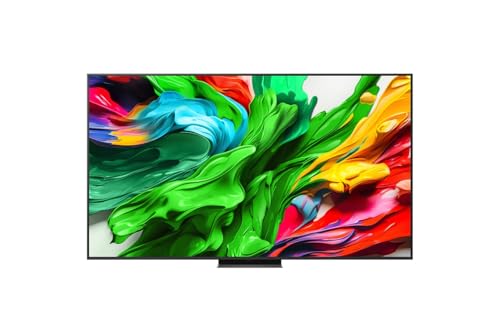
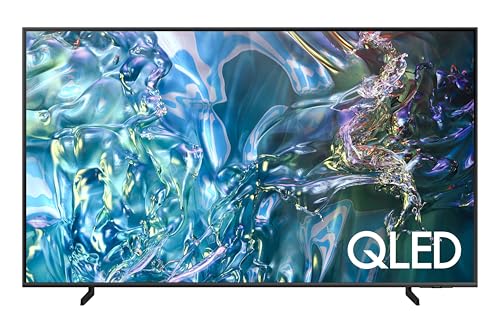
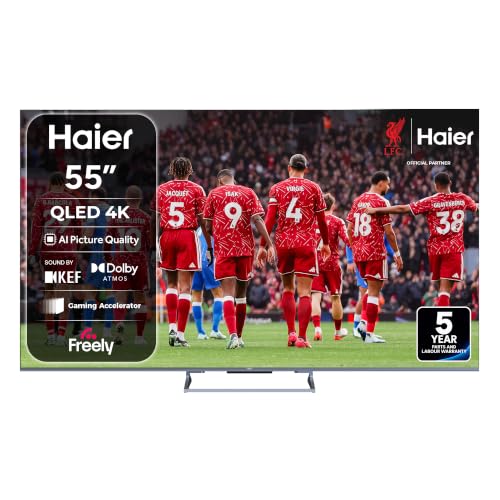
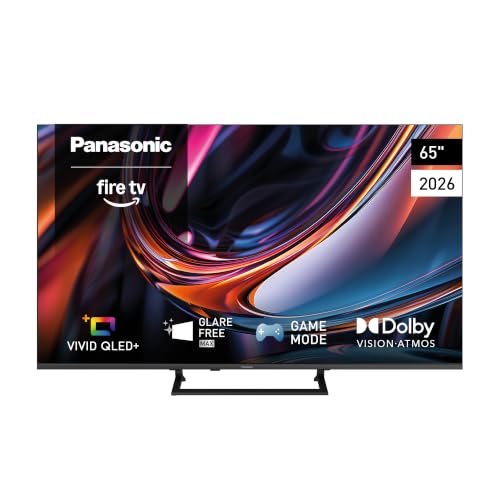
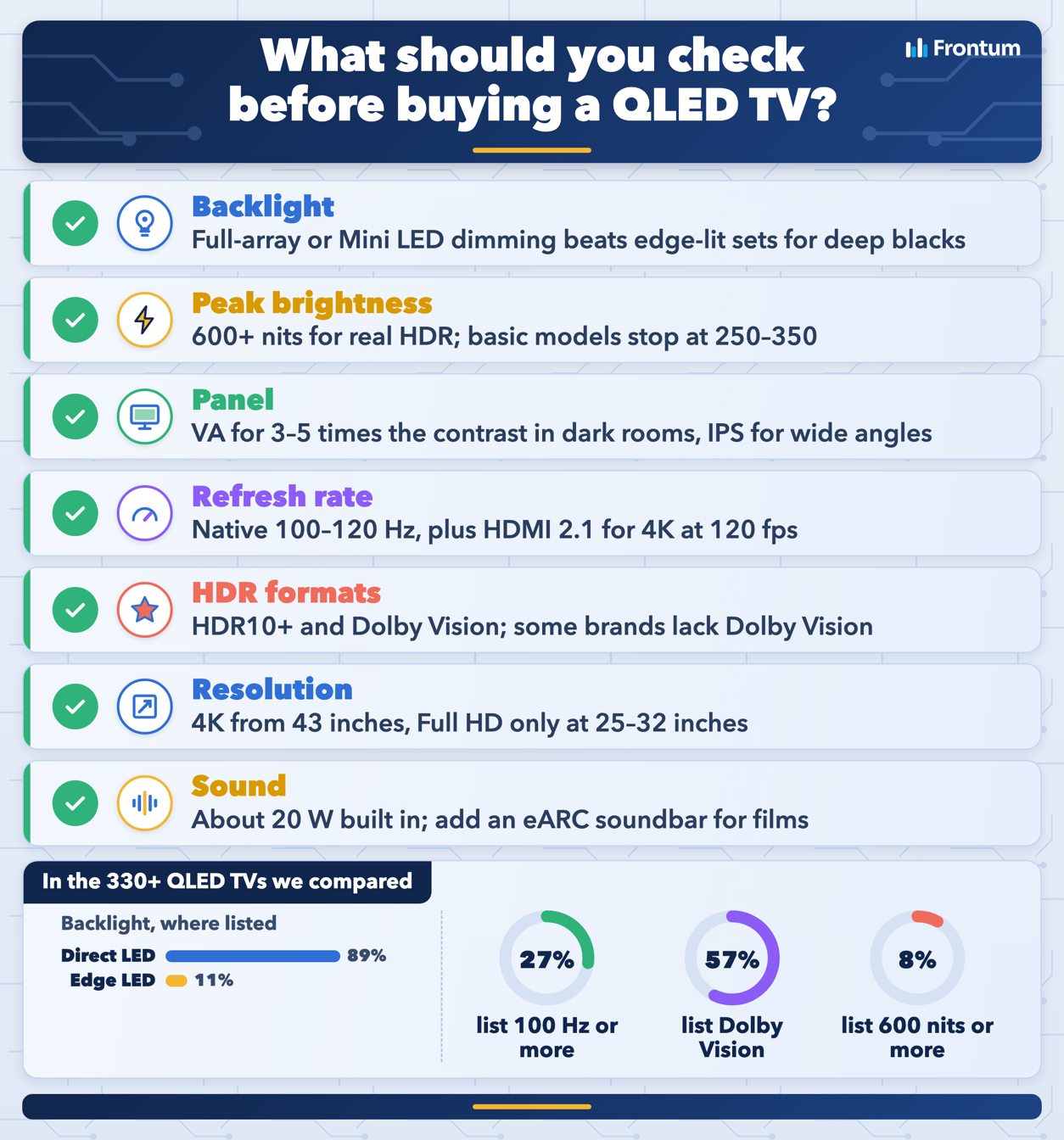
A QLED TV is better than an OLED TV in bright rooms and for static content, while OLED is better for contrast in the dark. The difference comes from how each makes light. QLED shines a backlight through an LCD layer, and a little light always leaks into black areas. OLED switches each pixel off completely and shows true black next to a bright highlight.
Brightness favours QLED. Good models sustain bright scenes across the whole screen, and Mini LED versions hit 1,500 nits or more. OLED reaches strong peaks only in small highlights and drops to 200–300 nits on a full white screen. Contrast favours OLED. A VA-panel QLED manages about 3,000–5,000:1 natively, and local dimming lifts it further but leaves faint halos around subtitles.
Motion and viewing angles go to OLED as well. Its pixels switch in under 0.1 ms, against 5–10 ms on a typical VA panel, so fast pans look crisper. Colour and contrast hold up from the side, while a VA-based QLED fades beyond about 30°. QLED answers with durability: quantum dots do not burn in, so static logos and HUDs are harmless.
Pick a QLED if your room gets direct sun, you leave news or games on for hours, or you want 75 inches or more on a mid-range budget. An OLED is the better buy if you watch films with the lights off and your family spreads across a wide sofa. A Mini LED QLED sits in between, with deep blacks from hundreds of zones at a lower price than an OLED of the same size.