
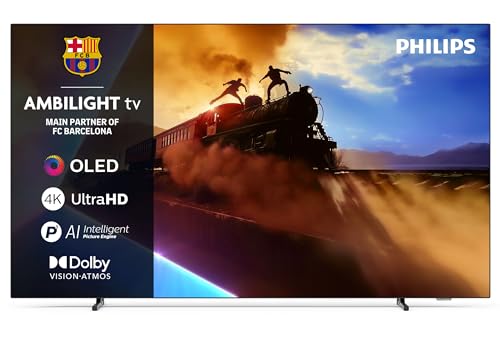
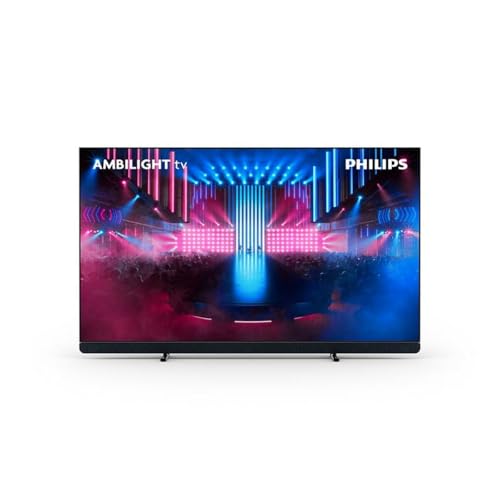
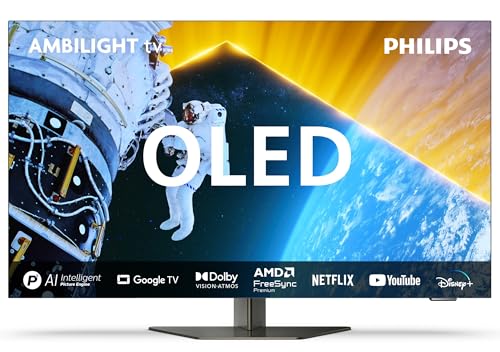
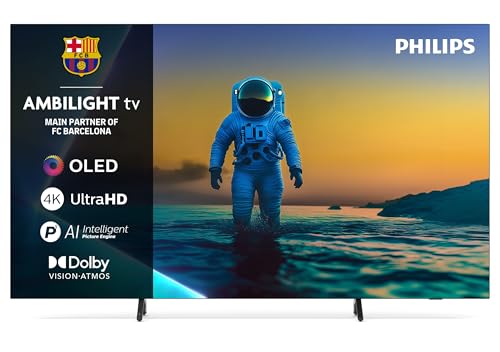


Are Philips TVs good?
Philips TVs have an average overall score of 8.3, ranking #2 among all TV brands.
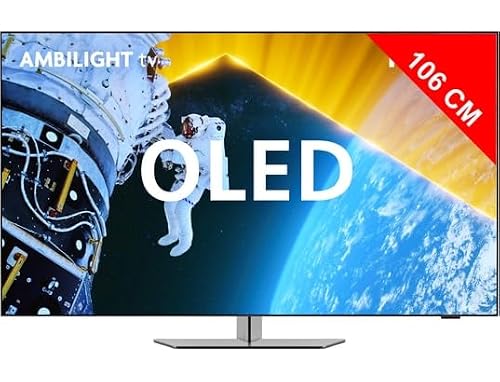
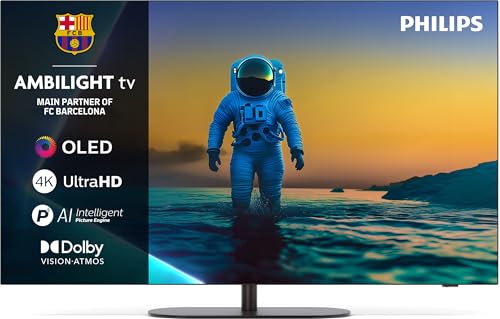
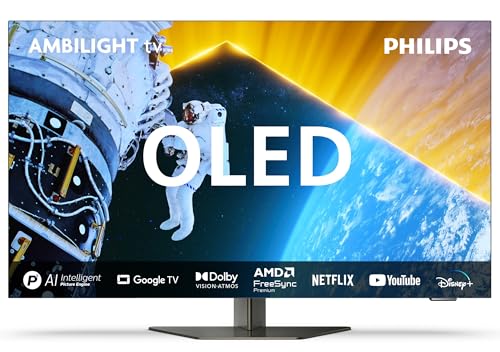
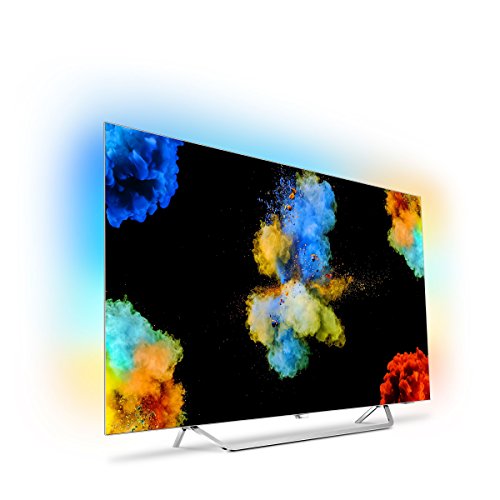
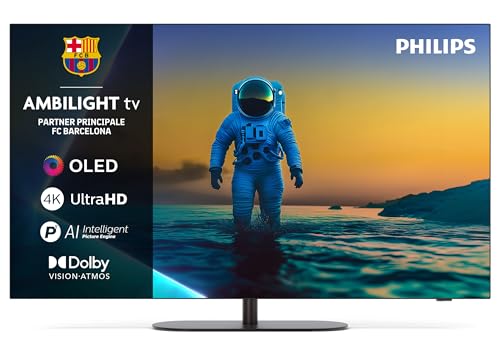
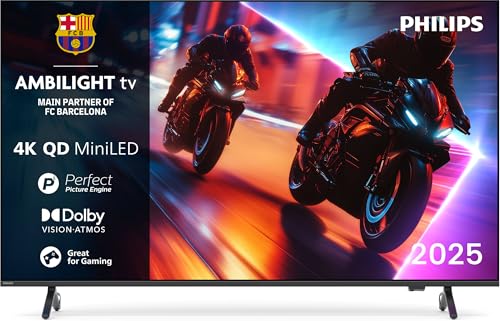
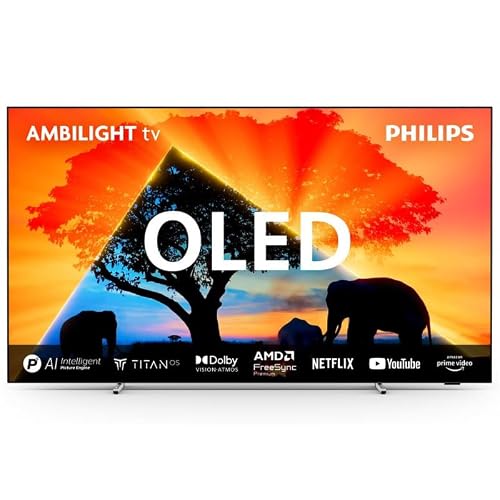
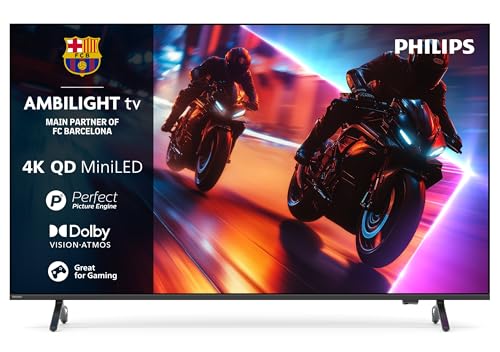
Philips is best known for Ambilight and for a natural, film-like picture. The OLED range covers 42 to 77 inches, and the OLED910 adds an 80 W Bowers & Wilkins sound system on top of four-sided Ambilight. Mini LED sets such as the MLED910 and MLED920 reach about 1,000 nits for HDR in brighter rooms. Mid-range and upper models support both Dolby Vision and HDR10+.
The weak spot is the entry range. Small HD sets at 24–32 inches manage only about 200 nits and 6–12 W of sound, and they look dim next to rivals. These cheapest lines also skip Ambilight, the feature most people choose the brand for.
(Note: A total of 23 brands were evaluated in the comparison in the first paragraph. Only those with at least 6 TV models in our database were included.)
The chart below ranks TV brands by average overall score.
[horizontal-chart-12523077739936695688099635610845944800213591056259]What are the main advantages of Philips TVs?
The main advantages of Philips TVs are the following:
- Ambilight: The PUS8500 and OLED810 light the wall behind the screen in matching colour. The glow makes a 55-inch picture feel larger and softens contrast for your eyes at night.
- Every HDR format: Sets like the PUS7810 and PQS8501 support Dolby Vision and HDR10+. Netflix, Disney+ and Prime Video titles all play with dynamic metadata.
- Small OLEDs: The OLED809 and OLED811 come in 42 and 48 inches. You get OLED contrast for a bedroom, a desk or a small flat.
- Strong sound: The MLED910 has 40 W and the OLED810 70 W, well above the 20 W of typical budget sets. Speech stays clear without a soundbar.
- Gaming support: The OLED810 runs at up to 144 Hz with VRR and low input lag. PC and console games look smooth at 4K.
- Natural processing: The P5 processor in the OLED760 and MLED920 keeps skin tones natural and upscales HD sources cleanly. Filmmaker Mode shows films close to the studio master with one click.
What are the main disadvantages of Philips TVs?
The main disadvantages of Philips TVs are as follows:
- Dim entry sets: The PHS5500 and PHS6000 manage about 200 nits at HD resolution. HDR content looks flat and the picture fades in a sunny room.
- No Ambilight at the bottom: Budget lines like the PFS6050 and PHS6050 skip Ambilight completely. You pay for the Philips name without its signature feature.
- Smaller app store: Some cheaper lines such as the PUS7009 run Titan OS instead of Google TV. Niche apps and some regional streaming services are missing.
- Mini LED halos: The MLED810 has fewer dimming zones than the MLED910. Bright subtitles on a black background show a faint glow around them.
- Size limits: OLED models such as the OLED770 stop at 77 inches, and the Mini LED MLED910 tops out at 85. Rivals offer 98-inch screens for big home-cinema walls.