Scored using Tablets Methodology v1.0
Tablets Methodology v1.0
Mathematical & Unbiased Scoring
Products in this category are evaluated mathematically under Frontumo Tablets Methodology v1.0 using verified laboratory benchmarks, technical specifications, and authentic consumer ratings with 0% commercial bias.
Explore Tablets Methodology v1.0

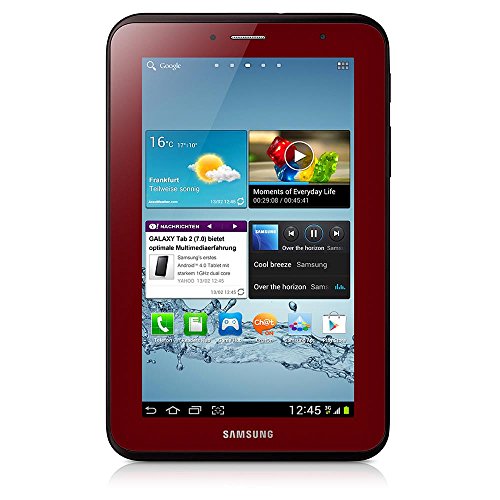
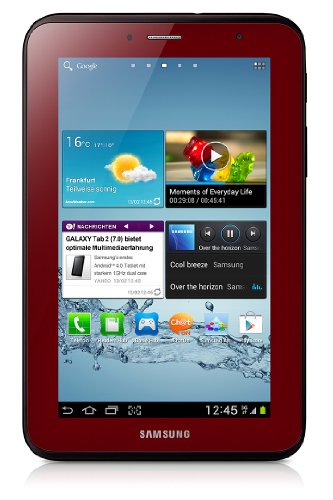
Samsung Galaxy Tab 2 7 0 P3100 3G (1GB + 8GB) Review | 168 Data compared

Avg. price:~£290RAM capacity:1 GBInternal storage:8 GBScreen size:7 inchesChipset:TI OMAP 4430

Samsung Galaxy Tab 2 7 0 P3100 3G (1GB + 8GB) Review: Compare 168 technical specifications and user reviews to see how this product ranks in the Tablets category and whether it is worth buying.

4.9

Overall score

Score
4.9/ 10
✕
What it is
An overall evaluation of the smartphone's quality, based on technical analyses and user reviews.
When it matters
When you need a quick reference to identify the best Tablets on the market.
Score distribution
â–¼
<55-66-77-88-99-10
Score components

90%

4.6

Technical score

10%

8.1

User score

â–¼Worse than 94% of tablets
4.6

Technical score

Technical score
4.6/ 10
✕
What it is
An assessment of the smartphone's technical performance, covering eight key areas: performance & hardware, software, camera, connectivity, display, battery, audio, and design.
When it matters
When you want to compare Tablets based on technical performance and available features.
Score distribution
â–¼
<55-66-77-88-99-10
Score components

22%

4.1

Performance

20%

4.0

Display

16%

4.9

Camera

14%

3.2

Battery

12%

5.7

Connectivity

8%

6.0

Software & Features

5%

6.4

Design

3%

4.8

Audio & Multimedia

â–¼Worse than 98% of tablets
8.1

User score

User score
8.1/ 10
✕
What it is
A rating that combines user reviews and the total number of reviews received by the smartphone
When it matters
When you want to know how a smartphone handles daily tasks and how reliable it remains over time according to user feedback.
Score distribution
â–¼
<55-66-77-88-99-10
Score components

70%

8.2

User ratings

30%

7.9

Number of reviews

Based on 353 buyer reviews from online shops.
How we calculate this
User ratings – average star rating across all shop listings, weighted by how many reviews each has, on a 1–10 scale.
Number of reviews – how many buyer reviews the product has, on a logarithmic scale; the 8% most-reviewed models in the category get 10.
â–²Better than 73% of tablets
  • samsung-galaxy-tab-2-7-0-p3100-8gb-1gb-8gb-3g
  • samsung-galaxy-tab-2-7-0-p3100-8gb-1gb-8gb-3g
samsung-galaxy-tab-2-7-0-p3100-8gb-1gb-8gb-3g

Best prices

*As an Amazon Associate, we earn from qualifying purchases.

Best rankings

Available: ranking among products currently available (including other versions of this product).All: ranking among all products in the database.
Available versions:
Loading...
Loading category ranking...

Technical Specifications of tablet Samsung Galaxy Tab 2 7 0 P3100 3G (1GB + 8GB)

Technical score
Technical score
4.6/ 10
✕
What it is
An assessment of the smartphone's technical performance, covering eight key areas: performance & hardware, software, camera, connectivity, display, battery, audio, and design.
When it matters
When you want to compare Tablets based on technical performance and available features.
Score distribution
â–¼
<55-66-77-88-99-10
Score components:

22%

4.1

Performance

20%

4.0

Display

16%

4.9

Camera

14%

3.2

Battery

12%

5.7

Connectivity

8%

6.0

Software & Features

5%

6.4

Design

3%

4.8

Audio & Multimedia

4.6
User score
User score
8.1/ 10
✕
What it is
A rating that combines user reviews and the total number of reviews received by the smartphone
When it matters
When you want to know how a smartphone handles daily tasks and how reliable it remains over time according to user feedback.
Score distribution
â–¼
<55-66-77-88-99-10
Score components

70%

8.2

User ratings

30%

7.9

Number of reviews

Based on 353 buyer reviews from online shops.
How we calculate this
User ratings – average star rating across all shop listings, weighted by how many reviews each has, on a 1–10 scale.
Number of reviews – how many buyer reviews the product has, on a logarithmic scale; the 8% most-reviewed models in the category get 10.
8.1
Popularity
Popularity
7.9/ 10
✕
What it is
An indicator based on the number of reviews received by the smartphone.
When it matters
When you prefer to purchase a product chosen and reviewed by many other consumers.
Score distribution
â–¼
<55-66-77-88-99-10
Popularity:
Samsung Galaxy Tab 2 7 0 P3100 3G (1GB + 8GB) has a user popularity of 7.9 points, which is lower than 77.5% of Tablets.
7.9
Value for money
Value for money
6.1/ 10
✕
What it is
An indicator that combines the smartphone's overall rating with its cost.
When it matters
When you are looking for a smartphone with a good balance between quality and price.
Score distribution
â–¼
<55-66-77-88-99-10
Score components:

60%

4.9

Overall score

40%

9.0

Price

6.1
RAM capacity
1 GB
RAM capacity
1 GB
This tablet has a RAM capacity of 1 GB which is smaller than the RAM capacity of 77.8% of tablets and equal to that of 19.3% of tablets.
Process node
45 nm
Process node
45 nm
This tablet is built on a 45 nm process node, which is larger than the node size used in 94.9% of tablets and equal to the node used in 4.4% of tablets.
Internal storage
8 GB
Internal storage
8 GB
This tablet has an internal storage capacity of 8 GB which is smaller than the storage of 93.5% of tablets and equal to that of 4.9% of tablets.
Geekbench 6 single-core benchmark score
?
Chipset
TI OMAP 4430
Chipset
TI OMAP 4430
This tablet uses the TI OMAP 4430 chipset, which is less advanced than the chipsets in 68.4% of tablets and equal to those in 2.1% of tablets.
Show more
Screen resolution
1024×600
Screen resolution
1024×600
This tablet has a screen resolution of 1024×600 which is lower than that of 92.8% of tablets and equal to that of 6.2% of tablets.
Refresh rate
60 Hz
Refresh rate
60 Hz
This tablet supports a refresh rate of 60 Hz which is equal to that in 73.8% of tablets.
Display type
IPS LCD
Display type
IPS LCD
This tablet uses a IPS LCD display type. 17% of tablets use this display technology.
Pixel density
170 ppi
Pixel density
170 ppi
This tablet has a pixel density of 170 ppi which is lower than that of 76.5% of tablets and equal to that of 4.8% of tablets.
Display glass type
?
Show more
Optical image stabilization
no
Optical image stabilization
no
This tablet does not support optical image stabilization. 0.4% of tablets include OIS.
Main camera megapixels
3.15 MP
Main camera megapixels
3.15 MP
This tablet has a main camera resolution of 3.15 MP which is lower than that of 89.8% of tablets and equal to that of 2.6% of tablets.
Front camera megapixels
0.3 MP
Front camera megapixels
0.3 MP
This tablet has a front camera resolution of 0.3 MP which is lower than in 93% of tablets and equal to that in 7% of tablets.
Main camera aperture
f/2.6
Main camera aperture
f/2.6
This tablet has a main camera aperture of f/2.6 which is narrower than that of 87.5% of tablets and equal to that of 2% of tablets.
Optical zoom
1xxx
Optical zoom
1xx
This tablet supports 1xx optical zoom which is higher than in 18.4% of tablets and equal to that in 80.7% of tablets.
Show more
Battery capacity
4,000 mAh
Battery capacity
4,000 mAh
This tablet has a battery capacity of 4,000 mAh which is smaller than the batteries in 84.6% of tablets and equal to those in 4.5% of tablets.
Charging speed
10 W
Charging speed
10 W
This tablet supports charging speeds of 10 W which is slower than in 61% of tablets and equal to speeds in 33.2% of tablets.
Battery life
8 hours
Battery life
8 hours
This tablet has a battery life of 8 hours, which is shorter than that of 72.2% of tablets and equal to that of 11.9% of tablets.
Wireless charging
no
Wireless charging
no
This tablet does not support wireless charging. 1.5% of tablets support wireless charging.
Fast charging
no
Fast charging
no
This tablet does not support fast charging. 49.7% of tablets support fast charging.
Show more
LTE support
no
LTE support
no
This tablet does not support LTE. 63.3% of tablets include LTE connectivity.
Wi-Fi connectivity
yes
Wi-Fi connectivity
yes
This tablet supports Wi-Fi connectivity. 0.2% of tablets offer Wi-Fi support.
GPS
yes
GPS
yes
This tablet supports GPS. 17.3% of tablets include GPS functionality.
5G connectivity
no
5G connectivity
no
This tablet does not support 5G connectivity. 11.1% of tablets support 5G.
NFC
no
NFC
no
This tablet does not support NFC. 10.9% of tablets support NFC.
Show more
Operating system
Android
Operating system
Android
This tablet uses the Android operating system, which is more advanced than the one used by 23.3%.
Update support duration
short
Update support duration
short
This tablet offers short update support, which is shorter than the support period of 52.7% of tablets and equal to that of 47.3% of tablets.
Direct OS updates
yes
Direct OS updates
yes
This tablet receives direct OS updates. 20.3% of tablets receive direct updates.
On-device AI
no
On-device AI
no
This tablet does not support on-device AI. 28.3% of tablets support this capability.
App tracking protection
no
App tracking protection
no
This tablet does not include app tracking protection. 28.3% of tablets include app tracking protection.
Show more
IP rating
not rated
IP rating
not rated
This tablet has an IP rating of not rated which is lower than that of 16.3% of tablets and equal to that of 83.7% of tablets.
Weight
345 g
Weight
345 g
This tablet weighs 345 g which is lighter than 82.2% of tablets and equal to the weight of 0.5% of tablets.
Backlit keyboard
no
Backlit keyboard
no
This tablet does not support a backlit keyboard. 9.8% of tablets support backlit keyboards.
Keyboard accessory
yes
Keyboard accessory
yes
This tablet supports a keyboard accessory. 15.8% of tablets support this option.
Pen latency
N/A
Show more
Number of microphones
1
Number of microphones
1
This tablet includes 1 microphones, which is more than in 0.2% of tablets and equal to the number in 54.8% of tablets.
aptX Adaptive
no
aptX Adaptive
no
This tablet does not support aptX Adaptive. 6.9% of tablets offer this codec.
Dolby Atmos support
no
Dolby Atmos support
no
This tablet does not support Dolby Atmos. 31.5% of tablets support Dolby Atmos.
N. of speakers
2
N. of speakers
2
This tablet includes 2 speakers, which is more than in 9.8% of tablets and equal to the number in 60.9% of tablets.
FM radio
no
FM radio
no
This tablet does not include an FM radio. 19% of tablets offer FM radio functionality.
Show more

Samsung Galaxy Tab 2 7 0 P3100 3G (1GB + 8GB) vs the average tablet

246810TotalPerformanceDisplayCameraBatteryConnectivitySoftware & FeaturesDesignAudio & Multimedia
  • 29.6% lighter
    Weight
    345 g
    This tablet is lighter than the average tablet (345 g vs 490 g). The average tablet weighs 490 g.
    345 g vs 490 g
  • More capable chipset
    Chipset
    TI OMAP 4430
    This tablet uses the TI OMAP 4430 chipset, while the average tablet uses MediaTek MT8169A.
    TI OMAP 4,430 vs MediaTek MT8169A
  • 52.9 mm narrower
    Width
    122.4 mm
    This tablet is narrower than the average tablet (122.4 mm vs 175.3 mm). The average tablet is 175.3 mm wide.
    122.4 mm vs 175.3 mm
  • 4 points higher iFixit repairability score
    Repairability score (iFixit)
    8 points
    This tablet has a higher repairability score than the average tablet (8 points vs 4 points). The average tablet repairability score is 4 points.
    8 points vs 4 points
  • More capable chipset
    Chipset
    TI OMAP 4430
    This tablet uses the TI OMAP 4430 chipset, while the average tablet uses MediaTek MT8169A.
    TI OMAP 4,430 vs MediaTek MT8169A
  • 29.6% lighter
    Weight
    345 g
    This tablet is lighter than the average tablet (345 g vs 490 g). The average tablet weighs 490 g.
    345 g vs 490 g
  • 52.9 mm narrower
    Width
    122.4 mm
    This tablet is narrower than the average tablet (122.4 mm vs 175.3 mm). The average tablet is 175.3 mm wide.
    122.4 mm vs 175.3 mm
  • 4 points higher iFixit repairability score
    Repairability score (iFixit)
    8 points
    This tablet has a higher repairability score than the average tablet (8 points vs 4 points). The average tablet repairability score is 4 points.
    8 points vs 4 points
  • 4.7 MP lower front camera megapixels
    Front camera megapixels
    0.3 MP
    This tablet has less front camera megapixels than the average tablet (0.3 MP vs 5 MP). The average tablet has 5 MP front camera resolution.
    0.3 MP vs 5 MP
  • No USB Type-C
    USB Type-C
    no
    This tablet lacks a USB Type-C port, the average tablet includes one. 53.4% of tablets use USB Type-C.
  • 3 GB less RAM
    RAM capacity
    1 GB
    This tablet has less RAM capacity than the average tablet (1 GB vs 4 GB). The average tablet has 4 GB of RAM.
    1 GB vs 4 GB
  • 50% lower CPU speed
    CPU speed
    1 GHz
    This tablet has a lower CPU speed than the average tablet (1 GHz vs 2 GHz). The average tablet has CPU speed of 2 GHz.
    1 GHz vs 2 GHz
  • Lower screen resolution
    Screen resolution
    1024×600
    This tablet has a lower screen resolution than the average tablet (1024×600 vs 1920×1200). The average tablet has a resolution of 1920×1200.
    1024×600 vs 1920×1200
  • 4.85 MP lower main camera megapixels
    Main camera megapixels
    3.15 MP
    This tablet has a lower-resolution main camera than the average tablet (3.2 MP vs 8 MP). The average tablet has a 8 MP main camera.
    3.15 MP vs 8 MP
  • Shorter update support
    Update support duration
    short
    This tablet offers shorter update support than the average tablet (short vs medium). The average tablet gets medium of update support.
    short vs medium
  • 39.2% smaller battery capacity
    Battery capacity
    4,000 mAh
    This tablet has a lower battery capacity than the average tablet (4000 mAh vs 6580 mAh). The average tablet battery has capacity of 6580 mAh.
    4,000 mAh vs 6,580 mAh
  • 15.7% worse value for money
    Samsung Galaxy Tab 2 7 0 P3100 3G (1GB + 8GB) has worse value for money than the average tablet (6.14 vs 7.1).
    6.14 vs 7.1
  • 3 GB less RAM
    RAM capacity
    1 GB
    This tablet has less RAM capacity than the average tablet (1 GB vs 4 GB). The average tablet has 4 GB of RAM.
    1 GB vs 4 GB
  • 50% lower CPU speed
    CPU speed
    1 GHz
    This tablet has a lower CPU speed than the average tablet (1 GHz vs 2 GHz). The average tablet has CPU speed of 2 GHz.
    1 GHz vs 2 GHz
  • 3.21x larger process node
    Process node
    45 nm
    This tablet uses a larger process node than the average tablet (45 nm vs 14 nm). The average tablet uses a process node of 14 nm.
    45 nm vs 14 nm
  • 4 fewer CPU threads
    CPU threads
    2
    This tablet has less CPU threads than the average tablet (2 vs 6). The average tablet has 6 CPU threads.
    2 vs 6
  • 87.5% less storage
    Internal storage
    8 GB
    This tablet has less internal storage than the average tablet (8 GB vs 64 GB). The average tablet provides 64 GB of internal storage.
    8 GB vs 64 GB
  • Worse GPU
    GPU model
    PowerVR SGX540
    This tablet uses the PowerVR SGX540 GPU, while the average tablet uses the stronger Mali-G51. GPU choice is one of the main performance differences between tablets.
    PowerVR SGX540 vs Mali-G51
  • No big.LITTLE architecture
    big.LITTLE Architecture
    no
    This tablet does not use a big.LITTLE architecture, the average tablet does. 51.3% of tablets use a big.LITTLE architecture.
  • 57% lower memory bandwidth
    Memory bandwidth
    6.4 GB/s
    This tablet has a lower memory bandwidth than the average tablet (6.4 GB/s vs 14.9 GB/s). The average tablet has memory bandwidth of 14.9 GB/s.
    6.4 GB/s vs 14.9 GB/s
  • Older DDR memory version
    DDR memory version
    LPDDR2
    This tablet uses an older DDR memory version than the average tablet (LPDDR2 vs LPDDR3). The average tablet uses DDR version LPDDR3.
    LPDDR2 vs LPDDR3
  • 2 fewer GPU execution units
    GPU execution units
    2
    This tablet has less GPU execution units than the average tablet (2 vs 4). The average tablet has 4 GPU execution units.
    2 vs 4
  • 16.9% slower GPU clock
    GPU frequency
    540 MHz
    This tablet has a lower GPU frequency than the average tablet (540 MHz vs 650 MHz). The average tablet has GPU frequency of 650 MHz.
    540 MHz vs 650 MHz
  • Lower screen resolution
    Screen resolution
    1024×600
    This tablet has a lower screen resolution than the average tablet (1024×600 vs 1920×1200). The average tablet has a resolution of 1920×1200.
    1024×600 vs 1920×1200
  • 3.1 inches smaller screen size
    Screen size
    7 inches
    This tablet has a lower screen size than the average tablet (7 inches vs 10.1 inches). The average tablet has screen size of 10.1 inches.
    7 inches vs 10.1 inches
  • 24.1% lower pixel density
    Pixel density
    170 ppi
    This tablet has a lower pixel density than the average tablet (170 ppi vs 224 ppi). The average tablet has pixel density of 224 ppi.
    170 ppi vs 224 ppi
  • 51 nits lower peak brightness
    Peak brightness
    350 nits
    This tablet has a lower peak brightness than the average tablet (350 nits vs 401 nits). The average tablet reaches 401 nits peak brightness.
    350 nits vs 401 nits
  • 60 nits lower typical brightness
    Typical brightness
    340 nits
    This tablet has a lower typical brightness than the average tablet (340 nits vs 400 nits). The average tablet reaches 400 nits typical brightness.
    340 nits vs 400 nits
  • 51 ppi lower screen sharpness
    Screen sharpness
    170 ppi
    This tablet has a lower screen sharpness than the average tablet (170 ppi vs 221 ppi). The average tablet has screen sharpness of 221 ppi.
    170 ppi vs 221 ppi
  • Lower contrast ratio
    Contrast ratio
    941:1
    This tablet has a lower contrast ratio than the average tablet (941:1 vs 1015:1). The average tablet has a contrast ratio of 1015:1.
    941:1 vs 1,015:1
  • 50% lower touch sampling rate
    Touch sampling rate
    60 Hz
    This tablet has a lower touch sampling rate than the average tablet (60 Hz vs 120 Hz). The average tablet has touch sampling rate of 120 Hz.
    60 Hz vs 120 Hz
  • 4.7 MP lower front camera megapixels
    Front camera megapixels
    0.3 MP
    This tablet has less front camera megapixels than the average tablet (0.3 MP vs 5 MP). The average tablet has 5 MP front camera resolution.
    0.3 MP vs 5 MP
  • 4.85 MP lower main camera megapixels
    Main camera megapixels
    3.15 MP
    This tablet has a lower-resolution main camera than the average tablet (3.2 MP vs 8 MP). The average tablet has a 8 MP main camera.
    3.15 MP vs 8 MP
  • No continuous video AF
    Continuous autofocus in video
    no
    This tablet does not support continuous video AF, the average tablet does. 57.7% of tablets support continuous video autofocus.
  • Worse main-camera video
    Video recording (main camera)
    720 x 30 fps
    This tablet supports worse main-camera video recording than the average tablet (720x30 fps vs 1080x30 fps). The average tablet supports 1080x30 fps main-camera video recording.
    720x30 fps vs 1080x30 fps
  • No manual exposure control
    Manual exposure
    no
    This tablet does not offer manual exposure control, the average tablet does. 63.6% of tablets have manual exposure.
  • No burst mode
    Serial shot / Burst mode
    no
    This tablet does not support burst mode, the average tablet does. 60.5% of tablets support burst mode.
  • Narrower main camera aperture
    Main camera aperture
    f/2.6
    This tablet has a worse main camera aperture than the average tablet (f/2.6 vs f/2.2). The average tablet uses f/2.2 main camera aperture.
    f/2.6 vs f/2.2
  • No BSI sensor
    BSI sensor
    no
    This tablet lacks a BSI sensor, the average tablet has one. 52.6% of tablets use BSI sensors for better low-light shots.
  • No timelapse video
    Timelapse video
    no
    This tablet does not support timelapse video, the average tablet does. 57.5% of tablets include timelapse modes.
  • 39.2% smaller battery capacity
    Battery capacity
    4,000 mAh
    This tablet has a lower battery capacity than the average tablet (4000 mAh vs 6580 mAh). The average tablet battery has capacity of 6580 mAh.
    4,000 mAh vs 6,580 mAh
  • 2 hours shorter battery life
    Battery life
    8 hours
    This tablet offers shorter battery life than the average tablet (8 hours vs 10 hours). The average tablet offers 10 hours of battery life.
    8 hours vs 10 hours
  • 44.4% slower charging speed
    Charging speed
    10 W
    This tablet supports slower charging than the average tablet (10 W vs 18 W). The average tablet supports charging speed of 18 W.
    10 W vs 18 W
  • No USB Type-C
    USB Type-C
    no
    This tablet lacks a USB Type-C port, the average tablet includes one. 53.4% of tablets use USB Type-C.
  • No LTE support
    LTE support
    no
    This tablet does not support LTE, the average tablet does. 63.2% of tablets support LTE.
  • Older Bluetooth version
    Bluetooth version
    3.0
    This tablet uses an older Bluetooth version than the average tablet (3 vs 5). The average tablet uses Bluetooth 5.0.
    3.0 vs 5.0
  • Older Wi-Fi version
    Wi-Fi version
    Wi-Fi 4 (802.11n)
    This tablet uses an older Wi-Fi version than the average tablet (Wi-Fi 4 (802.11n) vs Wi-Fi 5 (802.11ac)). The average tablet uses Wi-Fi Wi-Fi 5 (802.11ac).
    Wi-Fi 4 (802.11n) vs Wi-Fi 5 (802.11ac)
  • Fewer Wi-Fi bands
    Wi-Fi bands
    2.4GHz
    This tablet supports fewer Wi-Fi bands than the average tablet (2.4GHz vs 2.4GHz/5GHz). The average tablet supports 2.4GHz/5GHz Wi-Fi bands.
    2.4GHz vs 2.4GHz/5GHz
  • No HDMI output
    HDMI output
    no
    This tablet does not have an HDMI output, the average tablet does. 50.1% of tablets support HDMI output.
    via MHL adapter
  • No face recognition
    Face recognition
    no
    This tablet does not have face recognition, the average tablet does. 56% of tablets support face recognition.
  • Shorter update support
    Update support duration
    short
    This tablet offers shorter update support than the average tablet (short vs medium). The average tablet gets medium of update support.
    short vs medium
  • No split-screen
    Split-screen support
    no
    This tablet does not support split-screen, the average tablet does. 72.4% of tablets support split-screen.
  • No picture-in-picture mode
    Picture-in-picture
    no
    This tablet does not support picture-in-picture, the average tablet does. 61% of tablets support picture-in-picture.
  • No camera/mic privacy toggles
    Camera/mic privacy
    no
    This tablet lacks camera and microphone privacy toggles, the average tablet includes them. 56.2% of tablets offer these toggles.
  • No multi-user mode
    User score
    8.1/ 10
    ✕
    What it is
    A rating that combines user reviews and the total number of reviews received by the smartphone
    When it matters
    When you want to know how a smartphone handles daily tasks and how reliable it remains over time according to user feedback.
    Score distribution
    â–¼
    â–¼
    <55-66-77-88-99-10
    Samsung Galaxy Tab 2 7 0 P3100 3G
    the average tablet
    Samsung Galaxy Tab 2 7 0 P3100 3G (1GB + 8GB) does not support multi-user mode, the average tablet does. 73.6% of tablets allow multiple user profiles.
  • No full-page screenshots
    Full-page screenshots
    no
    This tablet does not support full-page screenshots, the average tablet does. 52.5% of tablets support full-page screenshots.
  • No location privacy controls
    Location privacy
    no
    This tablet does not offer location privacy controls, the average tablet does. 76.5% of tablets include location privacy features.
  • No dark mode
    Dark mode
    no
    This tablet does not support dark mode, the average tablet does. 57.2% of tablets have dark mode.
  • No offline voice recognition
    Offline voice recognition
    no
    This tablet does not support offline voice recognition, the average tablet does. 76.1% of tablets support offline voice recognition.
  • 2.5 mm thicker
    Thickness
    10.5 mm
    This tablet is thicker than the average tablet (10.5 mm vs 8 mm). The average tablet is 8.0 mm thick.
    10.5 mm vs 8.0 mm
  • 7 older release date
    Release date
    2012
    This tablet is an older model than the average tablet (2012 vs 2019).
    April 2012
    2012 vs 2019

Video reviews

Hands-on testing, unboxing, and real-world video evaluations

Expert reviews

In-depth analysis and verdict from leading tech publications

H
hothardware.com
14/06/2012
Summary of the review
C
cnet.com
27/08/2012
Summary of the review
P
pcworld.com
23/04/2012
Summary of the review
M
mobiletechreview.com
07/05/2012
Summary of the review
T
techradar.com
31/05/2012
Summary of the review
L
liliputing.com
13/05/2012
Summary of the review
S
sammobile.com
13/08/2012
Summary of the review
T
themobileindian.com
06/09/2012
Summary of the review
C
connect.de
04/09/2012
Summary of the review
H
hifitest.de
18/10/2012
Summary of the review
C
computerbild.de
23/04/2013
Summary of the review
C
chip.de
25/07/2013
Summary of the review
P
pcwelt.de
27/07/2012
Summary of the review
C
computerwoche.de
25/09/2012
Summary of the review
C
chip.de
20/06/2012
Summary of the review
M
margxt.fr
28/12/2020
Summary of the review
F
frandroid.com
29/07/2013
Summary of the review
L
lesnumeriques.com
23/05/2012
Summary of the review
F
frandroid.com
22/07/2013
Summary of the review
X
xataka.com
25/09/2012
Summary of the review
N
notebookcheck.nl
21/03/2012
Summary of the review
T
tweakers.net
09/08/2012
Summary of the review
P
portablegear.nl
01/05/2012
Summary of the review
S
sammobile.com
13/08/2012
Summary of the review

Third-party reviews

Based on 353 buyer reviews from online shops.
Reviews last updated: May 2026 · How we calculate this
Based on 351 buyer reviews from online shops.
Reviews last updated: May 2026 · How we calculate this

What we like about Samsung Galaxy Tab 2 7 0 P3100 3G (1GB + 8GB)

  • Integrated 3G connectivity allows for mobile data and voice calls/SMS
  • Compact and lightweight 7-inch form factor makes it highly portable and easy to hold
  • Expandable storage via microSD slot (up to 32GB)
  • Includes useful extras like an IR blaster for remote control functionality and GPS
  • Smooth 1080p video playback and decent stereo speaker volume
  • Access to the full Google Play Store ecosystem compared to contemporary budget rivals

What we don't like about Samsung Galaxy Tab 2 7 0 P3100 3G (1GB + 8GB)

  • Dual-core 1GHz processor can feel sluggish or 'jerky' during heavy multitasking or 3D gaming
  • Display resolution (1024x600) is lower than competitors, leading to less sharp text and images
  • Poor outdoor visibility due to high screen reflectivity and low peak brightness
  • Cameras lack essential features like autofocus and flash, resulting in noisy low-light photos
  • Battery life is mediocre, especially with high brightness or heavy 3G/Wi-Fi usage
  • The 30-pin proprietary charging port requires specific cables rather than standard micro-USB

Verdict

The Samsung Galaxy Tab 2 7.0 P3100 is a highly portable 7-inch tablet featuring a 1024 x 600 PLS LCD display and 3G HSPA+ connectivity for mobile data and voice calls. It is powered by a 1.0 GHz dual-core TI OMAP 4430 processor with 1GB of RAM and 8GB of internal storage, which can be expanded by up to 32GB via a microSD slot. Key advantages include its compact, lightweight 345g design, built-in GPS/GLONASS, and a 4,000 mAh battery that provides reliable runtime for daily tasks. However, it suffers from aging hardware that struggles with graphics-intensive modern apps, a low-resolution display compared to newer standards, and a lack of camera flash for its 3.15MP rear lens.

Compare Samsung Galaxy Tab 2 7 0 P3100 3G (1GB + 8GB) with other tablets

1Product to compare no. 1
VS
2Product to compare no. 2
VS
3Product to compare no. 3 (optional)

Graphic comparison of Samsung Galaxy Tab 2 7 0 P3100 3G (1GB + 8GB) and other tablets

No results found