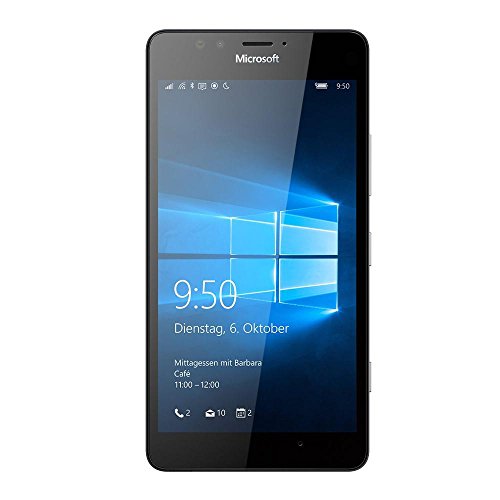
Microsoft Lumia 950 (3GB + 32GB) review. Compare 197 technical specifications and user reviews to see how this product ranks in the Smartphones category and whether it is worth buying.
Overall score
What it is: An overall evaluation of the smartphone's quality, based on technical analyses and user reviews.
When it matters: When you need a quick reference to identify the best smartphones on the market.
Score components:
90.0%
Technical Score
10.0%
User score
Technical Score
What it is: An assessment of the smartphone's technical performance, covering eight key areas: performance & hardware, software, camera, connectivity, display, battery, audio, and design.
When it matters: When you want to compare smartphones based on technical performance and available features.
Score components:
25.0%
Performance & Hardware
18.0%
Camera
15.0%
Display
15.0%
Battery
10.0%
Software
10.0%
Connectivity
4.0%
Audio
3.0%
Design
User score
What it is: A rating that combines user reviews and the total number of reviews received by the smartphone
When it matters: When you want to know how a smartphone handles daily tasks and how reliable it remains over time according to user feedback.
Score components:
70.0%
User reviews
30.0%
Popularity
Available: ranking among products currently available (including other versions of this product).
All: ranking among all products in the database.
#1 in Best 5-Inch Smartphones
#60 in Best Compact Smartphones
#277 in Best Mid-Range Smartphones
#836 in Best NFC Smartphones
#919 in Best AI Smartphones
#922 in Best Smartphones
#1165 in Best Value Smartphones
What it is: An assessment of the smartphone's technical performance, covering eight key areas: performance & hardware, software, camera, connectivity, display, battery, audio, and design.
When it matters: When you want to compare smartphones based on technical performance and available features.
Score components:
25.0%
Performance & Hardware
18.0%
Camera
15.0%
Display
15.0%
Battery
10.0%
Software
10.0%
Connectivity
4.0%
Audio
3.0%
Design
What it is: A rating that combines user reviews and the total number of reviews received by the smartphone
When it matters: When you want to know how a smartphone handles daily tasks and how reliable it remains over time according to user feedback.
Score components:
70.0%
User reviews
30.0%
Popularity
What it is: An indicator that combines the smartphone's overall rating with its cost.
When it matters: When you are looking for a smartphone with a good balance between quality and price.
Score components:
60.0%
Overall score
40.0%
Price
Importance: LOW
Importance: HIGH
Importance: HIGH
Good value: >12 GB
Importance: MEDIUM
Good value: >256 GB
Importance: MEDIUM
Good value: >3.2 GHz
Importance: LOW
Importance: MEDIUM
Good value: >1500
Importance: LOW
Good value: >4000
Importance: LOW
Good value: 8+
Importance: LOW
Importance: LOW
Good value: >950 MHz
Importance: LOW
Good value: >700
Importance: LOW
Good value: >1000
Importance: LOW
Good value: >2500
Importance: MEDIUM
Good value: >6000
Importance: LOW
Good value: >8000
Importance: MEDIUM
Good value: >12000
Importance: LOW
Good value: >5000
Importance: LOW
Good value: >1800
Importance: LOW
Good value: >3200 MHz
Importance: LOW
Good value: 5
Importance: LOW
Good value: > 50 GB/s
Importance: LOW
Good value: 4
Importance: LOW
Good value: >16 GB
Importance: MEDIUM
Good value: <6 nm
Importance: MEDIUM
Good value: >9 W
Importance: LOW
Importance: LOW
Good value: >8192 KB
Importance: LOW
Good value: >2048 KB
Importance: LOW
Good value: >512 KB
Importance: LOW
Good value: >100000 million
Importance: LOW
Good value: 3.3
Importance: LOW
Good value: 3.2
Importance: LOW
Good value: 2.0/3.0
Importance: LOW
Importance: LOW
Importance: LOW
Importance: MEDIUM
Importance: LOW
Importance: LOW
Importance: LOW
Importance: LOW
Importance: LOW
Importance: LOW
Importance: LOW
Importance: LOW
Importance: LOW
Importance: LOW
Importance: LOW
Importance: LOW
Importance: LOW
Importance: LOW
Importance: LOW
Importance: LOW
Importance: LOW
Importance: LOW
Importance: LOW
Importance: LOW
Importance: LOW
Importance: LOW
Importance: LOW
Importance: LOW
Importance: LOW
Importance: LOW
Importance: LOW
Importance: LOW
Importance: LOW
Importance: LOW
Importance: LOW
Importance: LOW
Importance: LOW
Importance: MEDIUM
Good value: >50 MP
Importance: MEDIUM
Importance: HIGH
Good value: >60
Importance: LOW
Good value: ≥1.2 µm
Importance: MEDIUM
Good value: >2.5x
Importance: MEDIUM
Importance: LOW
Importance: LOW
Importance: LOW
Importance: LOW
Good value: ≥2
Importance: LOW
Importance: LOW
Importance: LOW
Importance: LOW
Good value: >16 MP
Importance: LOW
Importance: LOW
Importance: LOW
Importance: LOW
Importance: MEDIUM
Importance: LOW
Importance: LOW
Importance: LOW
Importance: LOW
Importance: LOW
Importance: LOW
Importance: LOW
Importance: LOW
Importance: LOW
Importance: LOW
Importance: LOW
Importance: LOW
Importance: LOW
Importance: LOW
Importance: LOW
Importance: LOW
Importance: LOW
Importance: LOW
Importance: LOW
Importance: LOW
Importance: LOW
Good value: >130
Importance: LOW
Good value: >120
Importance: LOW
Good value: ≥2
Importance: LOW
Importance: LOW
Importance: LOW
Importance: LOW
Importance: LOW
Importance: LOW
Good value: >5.2
Importance: LOW
Importance: LOW
Importance: LOW
Importance: LOW
Good value: 3.1/3.2
Importance: LOW
Importance: LOW
Importance: LOW
Good value: ≥2
Importance: LOW
Importance: LOW
Importance: LOW
Importance: LOW
Importance: LOW
Importance: LOW
Importance: LOW
Importance: LOW
Importance: LOW
Importance: LOW
Importance: LOW
Importance: LOW
Importance: LOW
Importance: LOW
Importance: LOW
Importance: LOW
Good value: ≥6.6 inches
Importance: MEDIUM
Importance: LOW
Good value: >400 ppi
Importance: MEDIUM
Importance: MEDIUM
Good value: ≥120 Hz
Importance: LOW
Importance: LOW
Good value: >300 Hz
Importance: LOW
Good value: >800 nits
Importance: LOW
Good value: >1300 nits
Importance: LOW
Good value: >1000 nits
Importance: LOW
Importance: LOW
Importance: LOW
Importance: LOW
Importance: LOW
Importance: LOW
Importance: LOW
Importance: LOW
Importance: HIGH
Good value: >5000 mAh
Importance: MEDIUM
Good value: >60 W
Importance: LOW
Importance: LOW
Good value: <45 min
Importance: LOW
Importance: LOW
Good value: >40 W
Importance: LOW
Importance: LOW
Good value: >10 W
Importance: LOW
Importance: LOW
Importance: MEDIUM
Importance: LOW
Good value: >800
Importance: LOW
Importance: LOW
Importance: LOW
Importance: LOW
Importance: LOW
Good value: ≥3
Importance: LOW
Importance: LOW
Importance: LOW
Importance: LOW
Importance: LOW
Importance: LOW
Importance: LOW
Good value: <162 mm
Importance: LOW
Good value: <75 mm
Importance: LOW
Good value: <8 mm
Importance: LOW
Good value: <190 g
Importance: LOW
Good value: <98cm³
Importance: LOW
Importance: LOW
Importance: LOW
Importance: LOW
Importance: LOW
Importance: LOW
Good value: ≥1.5 m
Importance: LOW
Importance: LOW
Good value: >8
Importance: LOW
Importance: LOW
Importance: MEDIUM
Importance: LOW
Importance: LOW
Good value: >400 ppi
Importance: MEDIUM
Importance: LOW
Good value: ≥1.2 µm
Importance: LOW
Good value: ≥3
Importance: LOW
Good value: ≥2
Importance: LOW
Importance: HIGH
Importance: MEDIUM
Importance: MEDIUM
Good value: >256 GB
Importance: MEDIUM
Importance: LOW
Importance: MEDIUM
Good value: <6 nm
Importance: LOW
Good value: >950 MHz
Importance: HIGH
Good value: >12 GB
(Reviews last updated: August 2026)
The Microsoft Lumia 950 serves as a powerful Windows 10 Mobile flagship, featuring a 5.2-inch QHD AMOLED display and a high-end 20-megapixel PureView camera, though it suffers from a bland, plastic design. Key advantages include the innovative Continuum feature for desktop-like usage, a removable battery, expandable storage, and Windows Hello iris scanning. However, significant drawbacks are the lack of third-party apps, often referred to as the "app gap," and sometimes buggy software, limiting its appeal primarily to Windows enthusiasts.
The Microsoft Lumia 950 serves as a technically capable, though design-deficient, debut for Windows 10 Mobile, featuring a highly-rated 20-megapixel PureView camera and a sharp 5.2-inch AMOLED display. Its key pros include innovative features like Continuum, which enables a desktop-like experience, and Windows Hello iris scanning, making it a strong, niche tool for productivity. However, the device is criticized for its plain, plastic, and uninspired build quality, which falls short of premium competitors. Further cons include average battery life and sometimes buggy, inconsistent software at launch, which hinder the overall user experience. The primary limitation, however, remains the significant "app gap" in the Windows Store, making it difficult for the average user to find popular apps. Ultimately, the Lumia 950 excels in imaging and software innovation but lacks the design polish and app ecosystem necessary for mainstream success. CNET
The Netzwelt review characterizes the Microsoft Lumia 950 as a high-end device with impressive hardware, including a standout 20-megapixel PureView camera and a sharp 5.2-inch Quad HD AMOLED display. Key, innovative features such as Continuum for desktop-like functionality and Windows Hello biometric unlocking are highlighted as significant pros, powered by a capable Snapdragon 808 processor. However, the experience is severely hampered by a limited app ecosystem, a plain plastic design, and just average battery life.
The Focus.de review characterizes the Microsoft Lumia 950 as a device pairing advanced software features with an uninspired design, highlighting the brilliant 5.2-inch AMOLED display and the 20-megapixel PureView camera. Key strengths include Continuum for PC-like functionality and Windows Hello iris scanning, though the device is held back by a cheap-feeling plastic build and a lackluster Windows 10 Mobile app ecosystem. Ultimately deemed a "mixed bag" for enthusiasts rather than a top-tier flagship, the review finds that while performance is capable, the underwhelming design and software limitations make it a hard recommendation for average users.
In a January 2016 review, Spiegel Online characterizes the Microsoft Lumia 950 as an ambitious device aiming to bridge the gap between smartphones and desktop computers, primarily through its Continuum feature. This capability allows users to connect the phone to a monitor for a PC-like workspace, which is touted as a major advantage for mobile productivity, though the device is held back by limited app availability and an underwhelming polycarbonate design.
The Heise review characterizes the Microsoft Lumia 950 as a high-end device that struggles with identity, blending top-tier specs like a 5.2-inch QHD AMOLED display and Snapdragon 808 processor with a "plain" plastic design that lacks premium feel. Key strengths include a highly capable 20-megapixel PureView camera, excellent low-light performance, and innovative features such as Windows Continuum for a desktop experience and Windows Hello iris scanning. However, the experience is severely limited by the "app gap" in Windows 10 Mobile,, inconsistent software performance, and a rather pedestrian plastic construction, making it a niche device recommended primarily for Windows enthusiasts.
is a productivity-focused flagship, distinguished as one of the first devices Mobile and the Continuum feature, which allows for a desktop-like experience. The device -inch QHD AMOLED -megapixel PureView camera, both considered standout features for visual quality. Yahoo News Singapore +3However, the hardware is often characterized by a "bland," matte polycarbonate shell that lacks a premium feel compared to competitors. Positive functional aspects include a removable battery and expandable storage via microSD, but the phone is noted for running warm and featuring an occasionally unreliable Windows Hello iris scanner. YouTube +5The most significant limitation is the "app gap," with a lack of major third-party applications compared to iOS and Android, ultimately limiting the device's appeal. Despite a sophisticated, unified software experience, the device is better suited for devoted Windows enthusiasts than general users. A review is available at CNET www.cnet.com/reviews/ -review/.
Europe 1's review of the Microsoft Lumia 950 highlights it as the first flagship to showcase Windows 10 Mobile, featuring Continuum for desktop-like functionality. While the OS is fluid, it suffers from a significant app gap. The device boasts a vibrant 5.2-inch Quad HD display, a high-quality 20-megapixel camera with excellent low-light performance, and innovative Iris scanning via Windows Hello. Conversely, the review criticizes the uninspired, plastic design, average battery life, and lack of premium feel compared to competitors.
The Microsoft Lumia 950 features a 5.2-inch Quad HD AMOLED display, a capable 20-megapixel PureView camera, and practical USB-C fast charging with a removable battery. However, the device is held back by a lackluster polycarbonate design and a sparse app ecosystem. While features like Continuum offer a unique desktop experience, persistent software bugs and a lack of apps limit its appeal, according to analysis from Top-for-Phone.
The Journal du Geek review describes the Microsoft Lumia 950 as a powerful, feature-rich device hindered by a lackluster design and a shallow app ecosystem. Despite running the promising Windows 10 Mobile, the phone is housed in a "generic" plastic shell that fails to match the premium feel of competing flagship devices. Key strengths highlight a superior 20-megapixel PureView camera with optical image stabilization and a vivid 5.2-inch Quad HD AMOLED display. Additionally, the device offers innovative features like Continuum for PC-like functionality, a removable battery, and USB-C connectivity. Conversely, the review notes significant drawbacks, most notably the "app gap" where the Windows Store lacks essential third-party applications.
The Microsoft Lumia 950 serves as a high-end showcase for Windows 10 Mobile, featuring a vibrant 5.2-inch AMOLED display and a 20-megapixel PureView camera capable of detailed photography. While the Snapdragon 808 processor and 3GB of RAM offer smooth performance, the device is criticized for a "plasticky" design that feels less premium than competitors. Key advantages include a removable battery and microSD expansion, alongside the innovative USB Type-C based Continuum feature. However, the "app gap" remains a significant drawback, with the Windows Store lacking support compared to iOS and Android. Technical issues like web browsing inconsistencies with Microsoft Edge and limited 64-bit optimization are also noted. The review concludes that the Lumia 950 is best suited for dedicated Windows enthusiasts rather than mainstream users.
The Microsoft Lumia 950 features a standout 5.2-inch AMOLED display and a high-performing 20-megapixel camera, yet it is let down by a cheap-feeling polycarbonate design. While offering functional advantages like a removable battery, microSD expansion, and the innovative Windows 10 Continuum feature, the device suffers from inconsistent performance, including a slow iris scanner. Ultimately, the severe lack of third-party apps and average battery life hinder the device, making it hard to recommend despite its impressive hardware specs. Les Numériques
The Microsoft Lumia 950 is presented as a powerful, specialized device highlighting Windows 10 Mobile features, boasting a top-tier 20-megapixel PureView camera, a sharp 5.2-inch Quad HD AMOLED display, and practical additions like a removable battery, microSD card slot, and USB-C fast charging. Key innovations include the Continuum feature for desktop-like functionality and Windows Hello iris scanning, though the device is heavily criticized for its plain, plastic design that feels inferior to premium competitors. Despite its strong hardware, the experience is hindered by software bugs, a limited app ecosystem, and inconsistent battery life. The Lumia 950 serves as a capable, niche option for loyal Windows users rather than a mass-market rival to iOS or Android.
The Microsoft Lumia 950 review from ComputerHoy highlights a device with high-end internal components, including a Snapdragon 808 processor and a top-tier 20-megapixel PureView camera. Key advantages include a sharp 5.2-inch Quad HD AMOLED display, the innovative Continuum feature for desktop functionality, and a removable battery with microSD expansion. However, the device is criticized for a bland polycarbonate design and the significant "app gap" in the Windows 10 Mobile ecosystem, which limits its competitive appeal.
The Microsoft Lumia 950, analyzed by Xataka, is a device of contrasts featuring top-tier specifications like a 5.2-inch AMOLED QHD screen, a 20-megapixel PureView camera, and a practical plastic body with a removable battery, microSD expansion, and Dual SIM support. Its, pros are centered on this hardware versatility and camera quality, while the "discreet" design, lack of a fingerprint reader, and slow iris scanning (Windows Hello) are noted as significant drawbacks. The device's potential is heavily limited by the immature Windows 10 Mobile ecosystem, which suffers from a critical lack of third-party apps and inconsistent performance. Despite the innovative Continuum feature, the review concludes the phone is primarily for enthusiasts rather than the general public.
The Gizmodo review of the Lumia 950 highlights a device featuring innovative concepts like Continuum and a superior 20-megapixel PureView camera, yet it suffers from a bland, plastic design and significant software instability. While praising the 5.2-inch QHD AMOLED display and practical inclusions such as a removable battery, microSD expansion, and Windows Hello, the review notes these are overshadowed by the persistent "app gap" and a buggy Windows 10 Mobile experience. Ultimately, the review concludes that despite brilliant ideas, the hardware feels uninspiring and the software remains a work in progress.
Xataka’s review highlights the Lumia 950 as a powerful device with a 5.2-inch Quad HD display and Snapdragon 808 processor, yet it fails to feel like a premium flagship due to its bland, polycarbonate build. The phone excels with its 20-megapixel PureView camera and offers practical user features like a removable battery, microSD expansion, and dual SIM support. However, significant drawbacks include short battery life, a weak app ecosystem in Windows 10 Mobile, and a buggy experience with the touted Continuum feature.
The review from Multiplayer.it presents the Microsoft Lumia 950 and 950 XL as high-spec flagships that prioritize functional power over aesthetic flair, featuring sharp Quad HD AMOLED displays and robust internal hardware within a practical polycarbonate shell. The review highlights the inclusion of a dedicated camera button and a removable back for battery and storage expansion as significant design advantages, though it notes that the overall build lacks the 'premium' feel of contemporary metal-and-glass competitors. The final verdict is tempered by the persistent 'app gap' in the Windows Store, which remains a significant hurdle for users coming from iOS or Android. While the hardware is solid and the integration with the Windows ecosystem is seamless, the review points out that the software still feels unfinished, with occasional system crashes and limited third-party support, ultimately recommending the Lumia 950 and 950 XL primarily for Windows die-hards who value productivity and high-quality photography.
The Wired.it review positions the Microsoft Lumia 950 as a "Janus-faced" flagship aiming to merge mobile and desktop experiences via Windows 10 Mobile and the Continuum feature. Despite its potential, the software feels like a work in progress, and the design is deemed underwhelming compared to competitors. Key pros include an excellent 20-megapixel PureView camera, a sharp Quad HD AMOLED display, and practical, removable storage/battery, but these are balanced against cons like a plastic build, unreliable Windows Hello, and a limited app ecosystem.
The Microsoft Lumia 950 is a high-performance, productivity-focused smartphone designed to bridge the gap between mobile and desktop using Windows 10 Mobile. Key strengths include an excellent 20-megapixel PureView camera, a crisp 5.2-inch Quad HD AMOLED display, and practical features like USB-C, a removable battery, and expandable storage. Innovation, particularly via Continuum and Windows Hello iris scanning, attempts to redefine mobile computing, though these features can be cumbersome or inconsistent. However, the device is significantly hindered by an uninspired plastic design that feels less premium than competitors, alongside a persistent lack of third-party apps in the Windows Store. Furthermore, users may encounter occasional software bugs, overheating, and a somewhat disappointing, Ultimately, the Lumia 950 is a device with top-tier specifications that is unfortunately held back by its ecosystem. While its camera and screen are outstanding, the overall experience is recommended primarily for dedicated Windows fans rather than the
The SmartWorld review of the Microsoft Lumia 950 highlights a device with high-end specs, including a stellar 5.2-inch Quad HD AMOLED display and a 20-megapixel PureView camera, though it is hindered by an uninspiring, functional matte plastic design. While the camera provides exceptional low-light performance, the overall experience is hampered by a limited app ecosystem and occasional software bugs. Key advantages include the practical inclusion of a removable battery, microSD slot, and the innovative Continuum feature for desktop-like functionality, yet the phone struggles with heat management and offers less premium build quality than competitors.
In his review, Andrea Galeazzi describes the Microsoft Lumia 950 as a device with a functional, uninspired, matte plastic design featuring an excellent 5.2-inch 2K AMOLED display with a customizable 'Glance Screen'. The Snapdragon 808 processor and 3GB of RAM provide a fluid Windows 10 Mobile experience, which is noted for its intuitive, one-handed usability. The camera is highlighted as a major pro, delivering high-quality photos, excellent night shots, and stable 4K video, supported by strong telephonic performance and effective Windows Hello iris recognition. The 3000mAh battery is sufficient for a full day of use, complemented by fast charging via USB Type-C. Cons include an immature software ecosystem with limited third-party app functionality and a steep €599 launch price for a developing platform. While praising the phone's hardware, Galeazzi suggests the device is best suited for Windows enthusiasts and those prioritizing camera/telephony over app variety.
The Microsoft Lumia 950 and 950 XL are characterized by Tweakers as a "love letter to fans," featuring exceptional AMOLED Quad HD displays, a high-quality 20-megapixel PureView camera, and practical,, user-friendly options like removable batteries and microSD storage. However, the devices suffer from a significant "app gap," an unpolished Windows 10 Mobile OS, a plasticky design, and inconsistent, slow performance from the Windows Hello iris scanner. Despite boasting high-end processing power and innovative features like Continuum, these phones are ultimately limited by their software ecosystem and mediocre battery life, making them a final, high-end,, niche option rather than a mainstream competitor.
The Microsoft Lumia 950 serves as a high-end, feature-rich flagship aimed at Windows fans, boasting a superb 20MP PureView camera, excellent QHD AMOLED display, and practical features like a removable battery and microSD slot. The device features innovative tools such as Continuum for desktop functionality and Windows Hello, though it is held back by a bland plastic design that feels less premium than 2015 competitors. Despite its strong hardware, the review notes significant drawbacks, including subpar battery life and a persistent, limiting app gap in the Windows 10 Mobile ecosystem. While the Dual Sim variant offers effective implementation, the overall experience is tailored more for enthusiasts than a general audience.
The Microsoft Lumia 950, as reviewed on Tweakers, is positioned as a premier, albeit niche, device for Windows 10 Mobile enthusiasts, featuring a standout 5.2-inch WQHD AMOLED display and a 20MP PureView camera with a physical shutter button. Key functional highlights include the innovative Windows Hello iris scanner, the potential of the Continuum desktop experience, a removable battery, and USB Type-C fast charging. However, the device is hindered by a plasticky build lacking premium feel, a limited third-party app ecosystem (the "app gap"), and only average battery life, according to the review.
The Techzine review of the Microsoft Lumia 950 XL positions it as a hardware-focused device with a standout Quad HD display and a 20-megapixel PureView camera. While featuring innovative productivity tools like Continuum and Windows Hello, the phone's overall experience is hindered by a plasticky, uninspired design. Despite having a powerful Snapdragon 810 processor, the device is plagued by software bugs, random crashes, and inconsistent performance within the Windows 10 Mobile ecosystem. The review notes that the Iris scanner is less reliable than fingerprint sensors, and the device suffers from mediocre battery life and occasional overheating. The primary barrier for the Lumia 950 XL is the "app gap," limiting its appeal to power users rather than general consumers. Ultimately, the review concludes that the handset feels like a work in progress rather than a finished premium product.

Compare