Scored using Routers Methodology v3.0
Routers Methodology v3.0
Mathematical & Unbiased Scoring
Products in this category are scored under Frontum Routers Methodology v3.0: the technical score from the specifications is the base, and independent expert and video reviews (up to ±0.5 points), owner opinions (up to ±0.3) and best-of lists (up to +0.3) move it up or down.
Explore Routers Methodology v3.0

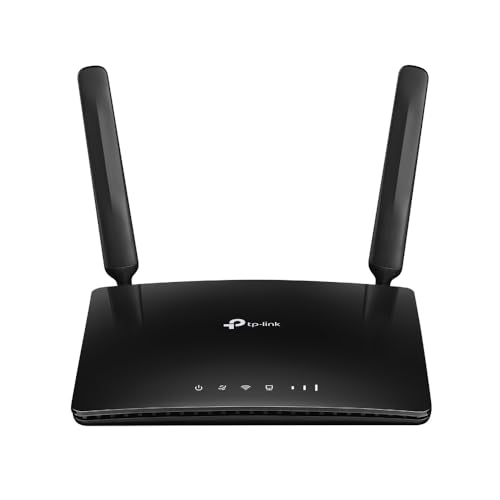
TP-Link Archer MR202 review: 77 specs compared

Avg. price:~£55Wi-Fi version:Wi-Fi 5 (802.11ac)Wi-Fi speed:750 MbpsLAN port speeds:100 MbpsMesh Wi-Fi:yes

TP-Link Archer MR202 Review: Compare 77 technical specifications and 1 expert and video reviews to see how this product ranks in the Routers category and whether it is worth buying.
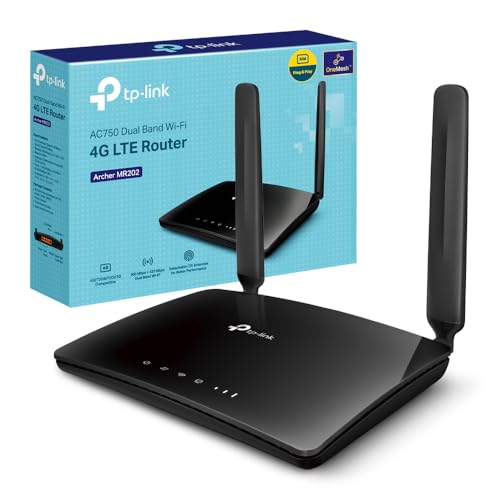
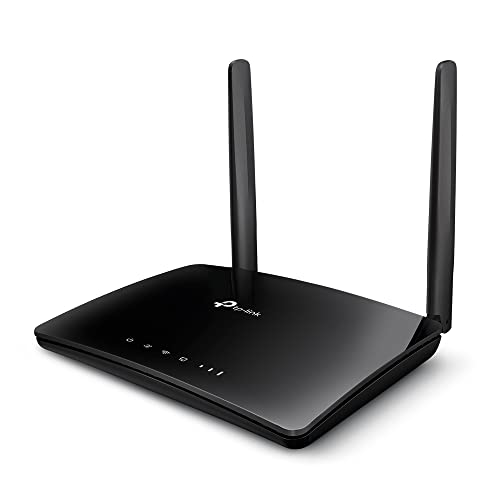
TP-Link Archer MR202
7.3/10

Overall score

Score
7.3/ 10
✕
What it is
Our main score for this model, 1–10. It combines specs, expert reviews, best-of lists and owners.
How we count it
Parts: Technical score 40%, Reviews score 25%, List score 25%, Sentiment score 10%
Marks: Each part gets a mark out of 10. For reviews, lists and owners, a typical model in this category gets about 8 and the best one gets 10.
No data yet: A part with no data shows "?". It counts as the mark of a weaker model in this category (4 in 5 models with data score higher). This way, models with reviews, lists and owners usually come out ahead.
Score distribution
â–¼
<55-66-77-88-99-10
Score components

40%

7.3

Technical score

25%

7.3

Reviews score

25%

?

List scoreNot enough data yet, so we use 7.5, the mark of a weaker model in this category

10%

?

Sentiment scoreNot enough data yet, so we use 6.9, the mark of a weaker model in this category

â–¼Worse than 53% of routers
8.1

Value for money

Value for money
8.1/ 10
✕
What it is
An indicator that combines the router's overall rating with its cost.
When it matters
When you are looking for a router with a good balance between network performance, features, and price.
Score distribution
â–¼
<55-66-77-88-99-10
Score components

70%

7.3

Overall score

30%

10

Price

â–¼Worse than 54%
7.3

Technical score

Technical score
7.3/ 10
✕
What it is
How good the specs are compared with the other models in this category, 1–10.
How we count it
Areas: We rate the specs in each area against the other models in this category.
Weighting: The areas that matter most to buyers count more. The shares are shown under Score components.
Share: The technical score is 40% of the overall score.
Score distribution
â–¼
<55-66-77-88-99-10
Score components

26%

6.4

Wireless

20%

5.1

Ports

18%

9.4

Networking

14%

8.8

Security

12%

8.1

Hardware

10%

7.5

Management

â–²Better than 59%
7.3

Reviews score

Reviews score
7.3/ 10
✕
What it is
Average grade from independent test sites, magazines and video reviewers, 1–10.
How we count it
Grades: Each review's own score is converted to 1–10; without one, we grade the review ourselves. Big test sites count more, short reviews half as much as full tests. A video review counts half.
Score: The average grade is 80% of the review mark; the number of reviews is the other 20% (1 review = 5, the typical number in this category = 8, the most-reviewed model = 10).
Enough data: With few reviews, the average grade is pulled toward the typical grade of this category. No reviews yet: 7.7 for now.
Share: Reviews count 25% of the overall score.
Score distribution
â–¼
<55-66-77-88-99-10

7.3

Mark 7.7 is below the typical mark 8.1 of this category, so it cannot lift the score above the technical score

80%

8.4

Average grade

20%

5.0

Popularity

Grades by review (1)
1 video review, counting half as much as a written test. Reviews count 25% of the overall score.
User ratings collected online are not part of this score.
â–¼Worse than 67%
?

List score

List score
7.5/ 10
✕
What it is
How often independent test sites, magazines and video reviewers put this model in their best-of lists for this category.
How we count it
Points: The model in the most lists of this category gets 10; the others get 8 to 10 in proportion. In no list yet: 7.5. Lists count 25% of the overall score.
Enough data: Every list counts, even a single one. With fewer than 5 best-of lists in the category, this part is left out.
Lists with this model (0)
Not in any best-of list yet, so this part counts as 7.5. Models in a list get 8 to 10.
Not in any best-of list yet
  • tp-link-archer-mr202
  • tp-link-archer-mr202
  • tp-link-archer-mr202
  • tp-link-archer-mr202
  • tp-link-archer-mr202
  • tp-link-archer-mr202
  • tp-link-archer-mr202
  • tp-link-archer-mr202
  • tp-link-archer-mr202
tp-link-archer-mr202
Where to buy
*As an Amazon Associate, we earn from qualifying purchases.
Best rankings
Available: ranking among products currently available (including other versions of this product).All: ranking among all products in the database.
Loading...
Loading category ranking...

Routers model ranking

Ranked #210 of 524 models in Routers (Overall score)

Technical Specifications of router TP-Link Archer MR202

Technical score
Technical score
7.3/ 10
✕
What it is
How good the specs are compared with the other models in this category, 1–10.
How we count it
Areas: We rate the specs in each area against the other models in this category.
Weighting: The areas that matter most to buyers count more. The shares are shown under Score components.
Share: The technical score is 40% of the overall score.
Score distribution
â–¼
<55-66-77-88-99-10
Score components:

26%

6.4

Wireless

20%

5.1

Ports

18%

9.4

Networking

14%

8.8

Security

12%

8.1

Hardware

10%

7.5

Management

7.3
Reviews score
7.3
List score
?
Value for money
Value for money
8.1/ 10
✕
What it is
An indicator that combines the router's overall rating with its cost.
When it matters
When you are looking for a router with a good balance between network performance, features, and price.
Score distribution
â–¼
<55-66-77-88-99-10
Score components:

70%

7.3

Overall score

30%

10

Price

8.1
Brand name
TP-Link
Wi-Fi version
Wi-Fi 5 (802.11ac)
This router uses Wi-Fi 5 (802.11ac), which is more advanced than 35.2% of routers and equal to 23.1% of routers.
Wi-Fi bands
2.4 GHz + 5 GHz
This router supports 2.4 GHz + 5 GHz Wi-Fi bands, which are more versatile than 24.2% of routers and equal to 65.6% of routers.
Wi-Fi speed
750 Mbps
This router delivers 750 Mbps Wi-Fi speed, which is lower than 66.5% of routers and equal to 2.7% of routers.
Channel widths supported
20 MHz + 40 MHz + 80 MHz
This router supports 20 MHz + 40 MHz + 80 MHz channel width options, which is more than 36.5% of routers and the same as 29.9% of routers.
Show more
Wi-Fi security protocols
WPA/WPA2, WEP
This router supports WPA/WPA2, WEP Wi-Fi security protocols, which are less advanced than 96.5% of routers and equal to 1.6% of routers.
DoS protection
yes
This router includes DoS protection. 9.8% of routers include DoS protection.
SPI intrusion protection
yes
This router includes SPI-based intrusion protection. 4.7% of routers include SPI-based intrusion protection.
MAC address filtering
yes
This router supports MAC address filtering. 1.7% of routers include MAC address filtering.
URL filter
yes
This router supports URL filtering. 2.6% of routers include URL filtering.
Show more
IPv6 support
yes
This router supports IPv6. 8.8% of routers are IPv6-ready.
Dynamic routing
no
This router does not support dynamic routing. 46.2% of routers support dynamic routing.
Inter-VLAN routing
?
VLAN tagging
yes
This router supports VLAN tagging. 33.6% of routers include VLAN tagging.
QoS
yes
This router includes QoS controls. 2.4% of routers include QoS controls.
Show more
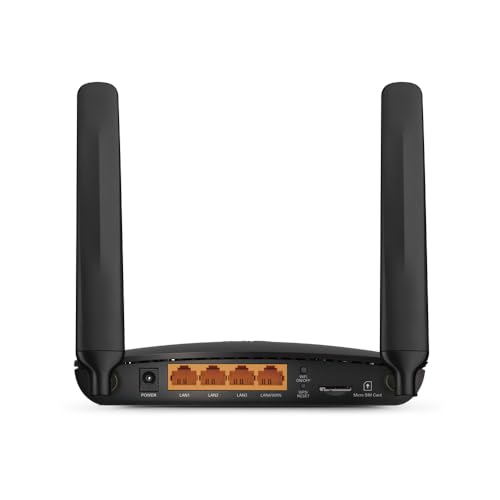
N. of LAN ports
3
This router has 3 LAN ports, which is fewer than 66% of routers and the same as 18.2% of routers.
LAN port speeds
100 Mbps
This router offers 100 Mbps on its LAN ports, which is slower than 74.5% of routers and on par with 25.1% of routers.
N. of WAN ports
1
This router has 1 WAN ports, which is more than 0.8% of routers and the same as 89.4% of routers.
N. of USB ports
0
This router has 0 USB ports, which is fewer than 60.1% of routers and the same as 39.9% of routers.
Power over Ethernet (PoE)
no
This router does not support Power over Ethernet (PoE). 1.7% of routers can be powered over Ethernet.
Show more
Management interface
Web UI, App
This router uses Web UI, App for management, which is more advanced than 29.7% of routers and equal to 60.9% of routers.
Firmware upgrade method
Web UI, App, Automatic
This router supports Web UI, App, Automatic firmware update methods, which are more convenient than 71.9% of routers and equal to 27.2% of routers.
Traffic monitoring
yes
This router includes traffic monitoring. 13.9% of routers include traffic monitoring.
Guest Wi-Fi network
yes
This router offers a guest Wi‑Fi network. 7.3% of routers offer a guest Wi‑Fi network.
Captive portal
no
This router does not offer captive portal features. 22.4% of routers offer captive portal features.
Show more
CPU clock speed
?
RAM capacity
?
Internal storage
?
Hardware acceleration
yes
This router offers hardware acceleration. 24.9% of routers offer hardware acceleration.
N. of external antennas
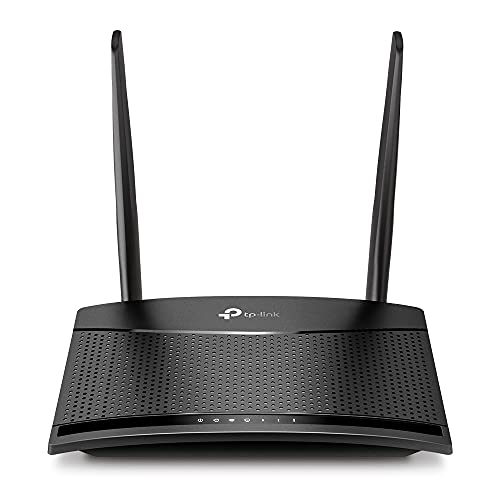
2
This router has 2 external antennas, which is more than 41.2% of routers and the same as 16.5% of routers.
Show more

TP-Link Archer MR202 vs the average router

246810TotalWirelessSecurityNetworkingPortsManagementHardware
  • Supports mesh Wi-Fi
    This router supports mesh Wi-Fi, while the average router does not. 45.2% of routers support mesh Wi-Fi.
  • Supports automatic failover
    This router offers automatic failover, while the average router does not. 31.2% of routers offer automatic failover.
  • Newer cellular modem
    This router uses a 4G cellular modem, while the average router uses none (external modem required).
    4G vs none (external modem required)
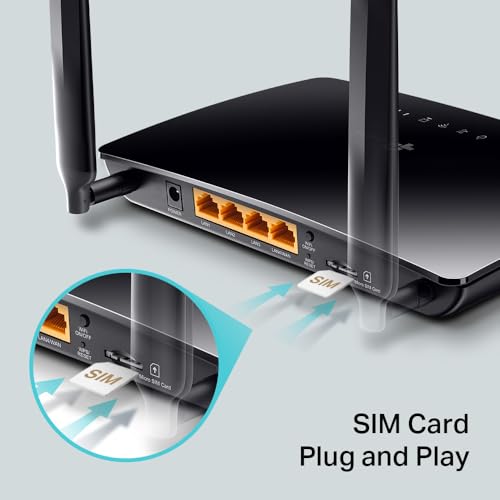
  • Includes SIM slot
    This router has a SIM slot, while the average router does not. 11.5% of routers have a SIM slot.
  • More advanced integrated modem
    This router uses a 4G integrated modem, while the average router uses none (external modem required).
    4G vs none (external modem required)
  • Removable antennas
    This router has removable antennas, while the average router does not. 27.8% of routers have removable antennas.
  • 4 years newer release date
    This router was released more recently than the average router (2023 vs 2019). The average router release year is 2019.
    2023 vs 2019
  • Supports mesh Wi-Fi
    This router supports mesh Wi-Fi, while the average router does not. 45.2% of routers support mesh Wi-Fi.
  • Supports automatic failover
    This router offers automatic failover, while the average router does not. 31.2% of routers offer automatic failover.
  • Newer cellular modem
    This router uses a 4G cellular modem, while the average router uses none (external modem required).
    4G vs none (external modem required)
  • Includes SIM slot
    This router has a SIM slot, while the average router does not. 11.5% of routers have a SIM slot.
  • More advanced integrated modem
    This router uses a 4G integrated modem, while the average router uses none (external modem required).
    4G vs none (external modem required)
  • Removable antennas
    This router has removable antennas, while the average router does not. 27.8% of routers have removable antennas.
  • 4 years newer release date
    This router was released more recently than the average router (2023 vs 2019). The average router release year is 2019.
    2023 vs 2019
  • Slower LAN ports
    This router has a lower LAN port speed than the average router (100 Mbps vs 1 Gbps). The average router has a LAN port speed of 1 Gbps.
    100 Mbps vs 1 Gbps
  • 1 fewer LAN ports
    This router has fewer LAN ports than the average router (3 vs 4). The average router has 4 LAN ports.
    3 vs 4
  • 1 fewer USB ports
    This router has fewer USB ports than the average router (0 vs 1). The average router has 1 USB ports.
    0 vs 1
  • 57.1% slower Wi-Fi speed
    This router has a lower Wi-Fi speed than the average router (750 Mbps vs 1,750 Mbps). The average router reaches Wi-Fi speed of 1,750 Mbps.
    750 Mbps vs 1,750 Mbps
  • No DLNA support
    This router does not support DLNA, while the average router does. 50.4% of routers support DLNA.
  • Less capable NAS services
    This router includes none NAS services, while the average router includes SMB, media server.
    none vs SMB, media server
  • 5.2% lower review score
    Reviews score
    7.3/ 10
    ✕
    What it is
    Average grade from independent test sites, magazines and video reviewers, 1–10.
    How we count it
    Grades: Each review's own score is converted to 1–10; without one, we grade the review ourselves. Big test sites count more, short reviews half as much as full tests. A video review counts half.
    Score: The average grade is 80% of the review mark; the number of reviews is the other 20% (1 review = 5, the typical number in this category = 8, the most-reviewed model = 10).
    Enough data: With few reviews, the average grade is pulled toward the typical grade of this category. No reviews yet: 7.7 for now.
    Share: Reviews count 25% of the overall score.
    Score distribution
    â–¼
    <55-66-77-88-99-10

    7.3

    Mark 7.7 is below the typical mark 8.1 of this category, so it cannot lift the score above the technical score

    80%

    8.4

    Average grade

    20%

    5.0

    Popularity

    Grades by review (1)
    1 video review, counting half as much as a written test. Reviews count 25% of the overall score.
    User ratings collected online are not part of this score.
    7.3 vs 7.7
  • 70.5 mm thicker design
    This router is thicker than the average router (124.5 mm vs 54 mm). The average router is 54 mm thick.
    124.5 mm vs 54 mm
  • 5.2% lower review score
    Reviews score
    7.3/ 10
    ✕
    What it is
    Average grade from independent test sites, magazines and video reviewers, 1–10.
    How we count it
    Grades: Each review's own score is converted to 1–10; without one, we grade the review ourselves. Big test sites count more, short reviews half as much as full tests. A video review counts half.
    Score: The average grade is 80% of the review mark; the number of reviews is the other 20% (1 review = 5, the typical number in this category = 8, the most-reviewed model = 10).
    Enough data: With few reviews, the average grade is pulled toward the typical grade of this category. No reviews yet: 7.7 for now.
    Share: Reviews count 25% of the overall score.
    Score distribution
    â–¼
    <55-66-77-88-99-10

    7.3

    Mark 7.7 is below the typical mark 8.1 of this category, so it cannot lift the score above the technical score

    80%

    8.4

    Average grade

    20%

    5.0

    Popularity

    Grades by review (1)
    1 video review, counting half as much as a written test. Reviews count 25% of the overall score.
    User ratings collected online are not part of this score.
    7.3 vs 7.7
  • 57.1% slower Wi-Fi speed
    This router has a lower Wi-Fi speed than the average router (750 Mbps vs 1,750 Mbps). The average router reaches Wi-Fi speed of 1,750 Mbps.
    750 Mbps vs 1,750 Mbps
  • Narrower DFS range
    This router has fewer supported DFS channels than the average router (52-64 + 100-140 vs 52-64 + 100-144). The average router supports 52-64 + 100-144 DFS channels.
    52-64 + 100-140 vs 52-64 + 100-144
  • Weaker Wi-Fi security
    This router supports the Wi-Fi security protocols WPA/WPA2, WEP, while the average router supports WPA2, WPA/WPA2, WEP.
    WPA/WPA2, WEP vs WPA2, WPA/WPA2, WEP
  • Slower LAN ports
    This router has a lower LAN port speed than the average router (100 Mbps vs 1 Gbps). The average router has a LAN port speed of 1 Gbps.
    100 Mbps vs 1 Gbps
  • 1 fewer LAN ports
    This router has fewer LAN ports than the average router (3 vs 4). The average router has 4 LAN ports.
    3 vs 4
  • 1 fewer USB ports
    This router has fewer USB ports than the average router (0 vs 1). The average router has 1 USB ports.
    0 vs 1
  • No DLNA support
    This router does not support DLNA, while the average router does. 50.4% of routers support DLNA.
  • Less capable NAS services
    This router includes none NAS services, while the average router includes SMB, media server.
    none vs SMB, media server
  • 70.5 mm thicker design
    This router is thicker than the average router (124.5 mm vs 54 mm). The average router is 54 mm thick.
    124.5 mm vs 54 mm

Video reviews

Hands-on testing, unboxing, and real-world video evaluations

9.0
Mis Compras Online
≈ estimated
01/08/2025
Hands-on review · setup and multi-device use
Verdict
TP-Link Archer MR202 is very easy to set up, and the dual-band model is worth the price difference over single-band.

Third-party reviews

What customers like about TP-Link Archer MR202

  • AC750 dual-band Wi-Fi 5 with 2.4 GHz and 5 GHz networks
  • Four Ethernet ports for consoles, TV box or PC
  • Two SMA sockets for replacement 4G antennas
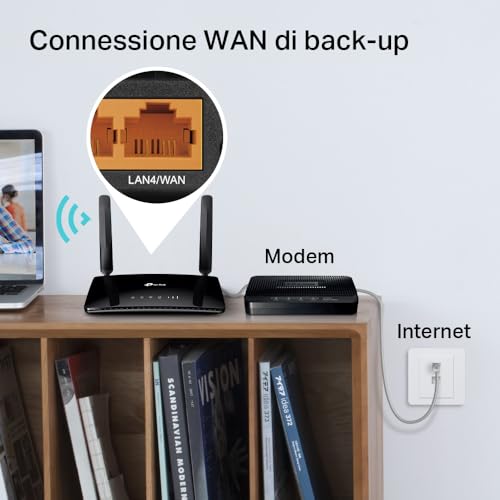
  • WAN port allows a cable or DSL line with SIM backup
  • VPN server and guest network included
  • Budget price for a dual-band 4G router

What customers don't like about TP-Link Archer MR202

  • All Ethernet ports limited to 100 Mbps
  • Cat4 modem caps mobile speed at 150 Mbps
  • No USB port
  • Not compatible with Orange Home Flybox subscriptions
  • Combined Wi-Fi speed only 750 Mbps

Verdict

The Archer MR202 gives budget buyers a 4G router with dual-band AC750 Wi-Fi. Its Cat4 modem reaches 150 Mbps, while the Wi-Fi side offers 2.4 GHz and 5 GHz networks with 750 Mbps combined. Two SMA sockets accept replacement 4G antennas, and the unit has four Ethernet ports for consoles, a TV box or a PC. Those ports are 100 Mbps only, so they limit fast wired transfers. One of them can be used as WAN, which lets a cable or DSL line act as the main connection with the SIM as backup. A VPN server and guest network are available, and the Tether app handles setup. There is no USB port, and the listing warns that it does not work with Orange Home Flybox subscriptions. It fits homes with weak DSL.

Compare TP-Link Archer MR202 with other routers

1Product to compare no. 1
VS
2Product to compare no. 2
VS
3Product to compare no. 3 (optional)

Graphic comparison of TP-Link Archer MR202 and other routers

No results found