Scored using Robot Vacuums Methodology v1.0
Robot Vacuums Methodology v1.0
Mathematical & Unbiased Scoring
Products in this category are scored under Frontum Robot Vacuums Methodology v1.0: technical specifications plus authentic consumer ratings, with 0% commercial bias.
Explore Robot Vacuums Methodology v1.0

Neato Robotics D8 review: 118 specs compared

Avg. price:~ÂŁ180Max suction power:2000 PaRuntime:100 minDustbin capacity:700 mLMax threshold height:16 mm

Neato Robotics D8 Review: Compare 118 technical specifications and user reviews to see how this product ranks in the Robot Vacuums category and whether it is worth buying.
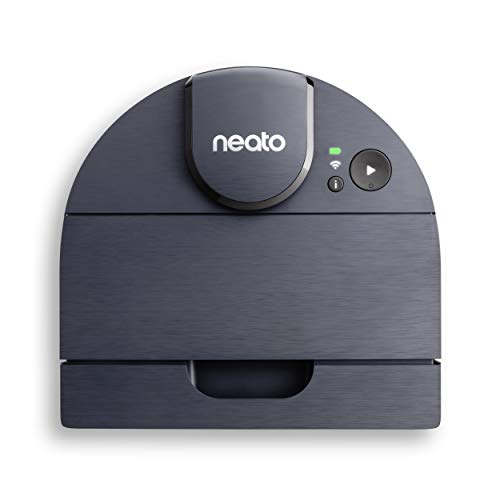
Neato Robotics D8
5.6/10

Overall score

Score
5.6/ 10
âś•
What it is
An overall evaluation of the robot vacuum's quality, based on technical analyses and user reviews.
When it matters
When you need a quick reference to identify the best robot vacuums on the market.
Score distribution
â–Ľ
<55-66-77-88-99-10
Score components

80%

5.8

Technical score

20%

4.8

User score

â–ĽWorse than 91% of robot vacuums
6.8

Value for money

Value for money
6.8/ 10
âś•
What it is
An indicator that combines the robot vacuum's overall rating with its cost.
When it matters
When you are looking for a robot vacuum with a good balance between quality and price.
Score distribution
â–Ľ
<55-66-77-88-99-10
Score components

70%

5.6

Overall score

30%

9.6

Price

â–ĽWorse than 88%
5.8

Technical score

Technical score
5.8/ 10
âś•
What it is
An assessment of robot-vacuum performance across cleaning, navigation, mopping, battery life, filtration, brush design, smart features, and dimensions.
When it matters
When you want to compare robot vacuums based on technical performance and available features.
Score distribution
â–Ľ
<55-66-77-88-99-10
Score components

30%

5.8

Cleaning

23%

6.3

Navigation

18%

4.0

Mopping

12%

6.0

Battery

10%

8.0

Smart Features

7%

5.2

Design

â–ĽWorse than 80%
4.8

User score

User score
4.8/ 10
âś•
What it is
A rating that combines user reviews and the total number of reviews received by the robot vacuum
When it matters
When you want to know how a robot vacuum handles daily tasks and how reliable it remains over time according to user feedback.
Score distribution
â–Ľ
<55-66-77-88-99-10
Score components

70%

5.4

User ratings

30%

3.4

Number of reviews

Based on ratings from across the web.
â–ĽWorse than 99%
  • neato-robotics-d8
  • neato-robotics-d8
  • neato-robotics-d8
  • neato-robotics-d8
  • neato-robotics-d8
  • neato-robotics-d8
  • neato-robotics-d8
  • neato-robotics-d8
  • neato-robotics-d8
  • neato-robotics-d8
  • neato-robotics-d8
  • neato-robotics-d8
  • neato-robotics-d8
  • neato-robotics-d8
neato-robotics-d8
neato-robotics-d8
neato-robotics-d8
neato-robotics-d8
neato-robotics-d8
neato-robotics-d8
neato-robotics-d8
neato-robotics-d8
neato-robotics-d8
neato-robotics-d8
neato-robotics-d8
neato-robotics-d8
neato-robotics-d8
neato-robotics-d8
Where to buy
    N/A~ ÂŁ180
Best rankings
Available: ranking among products currently available (including other versions of this product).All: ranking among all products in the database.
Loading...
Loading category ranking...

Technical Specifications of robot vacuum Neato Robotics D8

Technical score
Technical score
5.8/ 10
âś•
What it is
An assessment of robot-vacuum performance across cleaning, navigation, mopping, battery life, filtration, brush design, smart features, and dimensions.
When it matters
When you want to compare robot vacuums based on technical performance and available features.
Score distribution
â–Ľ
<55-66-77-88-99-10
Score components:

30%

5.8

Cleaning

23%

6.3

Navigation

18%

4.0

Mopping

12%

6.0

Battery

10%

8.0

Smart Features

7%

5.2

Design

5.8
User score
User score
4.8/ 10
âś•
What it is
A rating that combines user reviews and the total number of reviews received by the robot vacuum
When it matters
When you want to know how a robot vacuum handles daily tasks and how reliable it remains over time according to user feedback.
Score distribution
â–Ľ
<55-66-77-88-99-10
Score components

70%

5.4

User ratings

30%

3.4

Number of reviews

Based on ratings from across the web.
4.8
Popularity
Popularity
3.4/ 10
âś•
What it is
An indicator based on the number of reviews received by the robot vacuum.
When it matters
When you prefer to purchase a product chosen and reviewed by many other consumers.
Score distribution
â–Ľ
<55-66-77-88-99-10
Popularity:
Neato Robotics D8 has a popularity index of 3.4, lower than that of 67.5% of robot vacuums and equal to that of 0.2% of robot vacuums.
3.4
Value for money
Value for money
6.8/ 10
âś•
What it is
An indicator that combines the robot vacuum's overall rating with its cost.
When it matters
When you are looking for a robot vacuum with a good balance between quality and price.
Score distribution
â–Ľ
<55-66-77-88-99-10
Score components:

70%

5.6

Overall score

30%

9.6

Price

6.8
Max suction power
2000 Pa
This robot vacuum has a maximum suction pressure of 2000 Pa, which is lower than 77.8% of robot vacuums and equal to 8.4% of robot vacuums.
N. of suction power levels
2
This robot vacuum has 2 suction power levels, which is fewer than 86.1% of robot vacuums offer and the same number as 5.9% of robot vacuums offer.
Motor type
brushless
This robot vacuum uses a brushless motor, a type that is generally more efficient than those used by 2.7% of robot vacuums and also used by 97.3% of robot vacuums.
Power
32 W
Cleaning modes
2
This robot vacuum offers 2 cleaning modes, which is fewer than 89.9% of robot vacuums offer and the same number as 10.1% of robot vacuums offer.
Show more
Mopping capability
no
This robot vacuum cannot mop floors, although 79% of robot vacuums offer this feature.
Mopping system type
none
This robot vacuum uses none for mopping. This system is less effective than those on 79.8% of robot vacuums and as effective as those on 20.2% of robot vacuums.
Mop pad type
none
Mop pad material
none
Mop pressure
N/A
Show more
Primary navigation technology
LiDAR
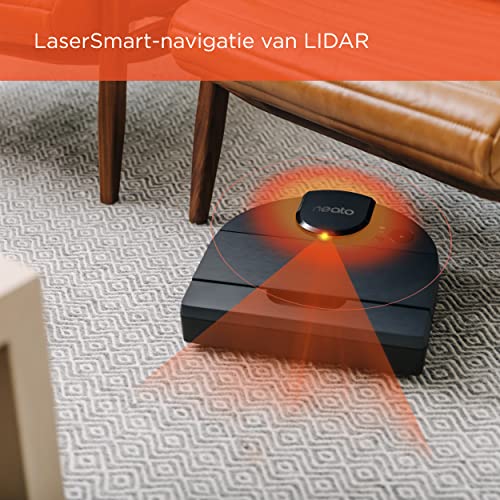
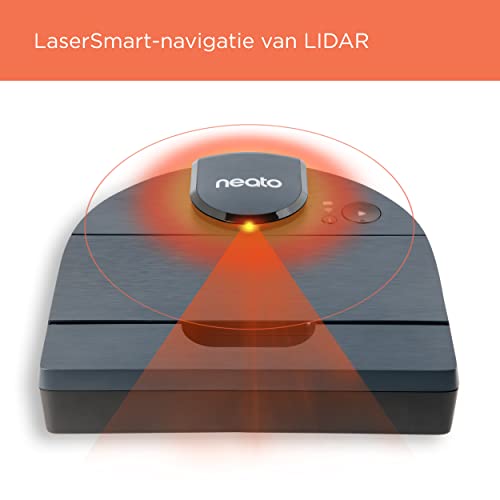
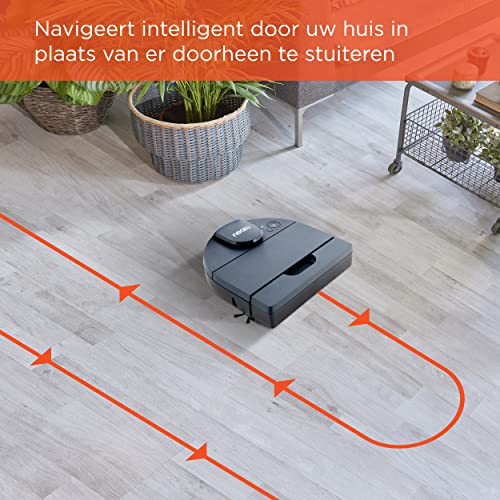
This robot vacuum uses LiDAR as its primary navigation system, which is more capable than the systems in 34.7% of robot vacuums and matched by 60.4% of robot vacuums.
Mapping capability
yes
This robot vacuum maps the floor. 74% of robot vacuums offer this feature.
Real-time mapping
no
This robot vacuum does not update its map in real time, although 68.7% of robot vacuums offer this feature.
Multiple map storage
yes
This robot vacuum stores multiple maps. 56.4% of robot vacuums offer this feature.
Map editing
no
This robot vacuum does not support map editing, although 64% of robot vacuums offer this feature.
Show more
App control
yes
This robot vacuum supports app control. 5.5% of robot vacuums support app control.
App name
MyNeato
Wi-Fi connectivity
yes
This robot vacuum supports Wi-Fi connectivity. 6.3% of robot vacuums support Wi-Fi connectivity.
Supported Wi-Fi bands
dual-band
Bluetooth connectivity
yes
This robot vacuum supports Bluetooth connectivity. 35.5% of robot vacuums support Bluetooth connectivity.
Show more
Battery capacity
6,200 mAh
This robot vacuum has a battery capacity of 6,200 mAh, which is higher than 94.1% of robot vacuums and equal to 0.2% of robot vacuums.
Battery type
Li-ion
Battery voltage
14.4 V
Runtime
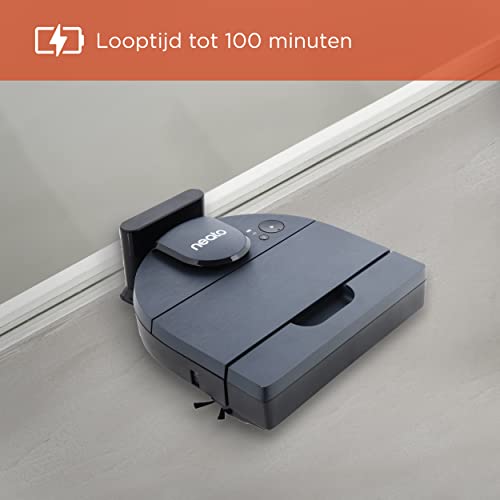
100 min
This robot vacuum runs for 100 min per charge, which is shorter than 83% of robot vacuums and equal to 6.5% of robot vacuums.
Recharge and resume
yes
This robot vacuum resumes cleaning after charging. 83.1% of robot vacuums offer this feature.
Show more
Shape
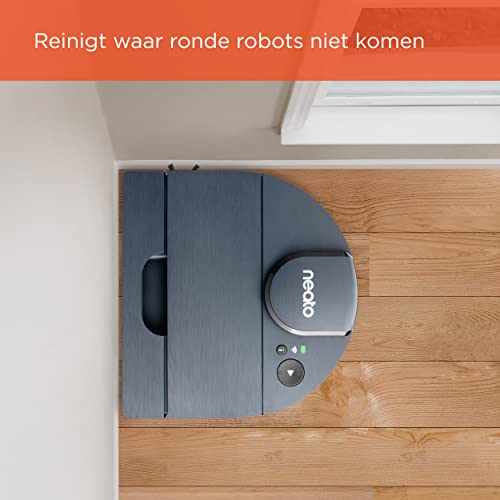
D-shaped
Height
100 mm
Width
330 mm
Length
340 mm
Weight
3.7 kg
This robot vacuum weighs 3.7 kg, making it heavier than 56% of robot vacuums and the same weight as 4.4% of robot vacuums.
Show more

Neato Robotics D8 vs the average robot vacuum

246810TotalBatteryDesignSmart FeaturesNavigationCleaningMopping
  • 3,000 mAh greater battery capacity
    This robot vacuum has a greater battery capacity than the average robot vacuum (6,200 mAh vs 3,200 mAh). The average robot vacuum has a battery capacity of 3,200 mAh.
    6,200 mAh vs 3,200 mAh
  • 300 mL larger dustbin
    This robot vacuum has a larger onboard dustbin than the average robot vacuum (700 mL vs 400 mL). The average robot vacuum has a dustbin capacity of 400 mL.
    700 mL vs 400 mL
  • Detects dirtier areas
    This robot vacuum detects dirtier areas, while the average robot vacuum does not detect dirtier areas.
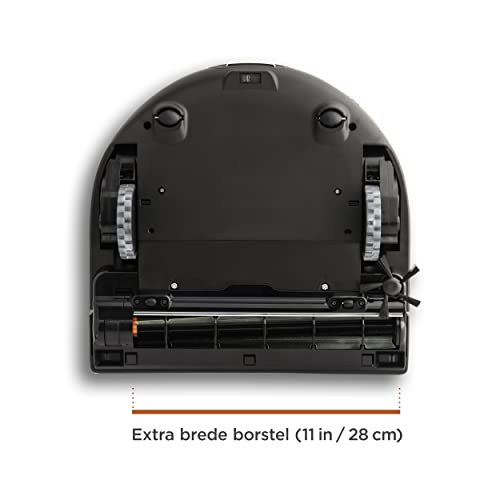
  • 102 mm wider main brush
    This robot vacuum has a wider main brush than the average robot vacuum (280 mm vs 178 mm). The average robot vacuum has a main brush 178 mm wide.
    280 mm vs 178 mm
  • 1.5 h shorter charging time
    This robot vacuum takes less time to recharge fully than the average robot vacuum (3 h vs 4.5 h). The average robot vacuum takes 4.5 h.
    3 h vs 4.5 h
  • 0.5 m longer power cord
    This robot vacuum has a longer power cord than the average robot vacuum (2 m vs 1.5 m). The average robot vacuum's power cord is 1.5 m long.
    2 m vs 1.5 m
  • Supports fast charging
    This robot vacuum supports fast charging, while the average robot vacuum does not support fast charging.
  • Dispenses cleaning solution automatically
    This robot vacuum dispenses cleaning solution automatically, while the average robot vacuum does not. 26.4% of robot vacuums offer this.
  • 3,000 mAh greater battery capacity
    This robot vacuum has a greater battery capacity than the average robot vacuum (6,200 mAh vs 3,200 mAh). The average robot vacuum has a battery capacity of 3,200 mAh.
    6,200 mAh vs 3,200 mAh
  • 1.5 h shorter charging time
    This robot vacuum takes less time to recharge fully than the average robot vacuum (3 h vs 4.5 h). The average robot vacuum takes 4.5 h.
    3 h vs 4.5 h
  • Supports fast charging
    This robot vacuum supports fast charging, while the average robot vacuum does not support fast charging.
  • 0.5 m longer power cord
    This robot vacuum has a longer power cord than the average robot vacuum (2 m vs 1.5 m). The average robot vacuum's power cord is 1.5 m long.
    2 m vs 1.5 m
  • 3.68 kg lighter base station
    This robot vacuum has a lighter base station than the average robot vacuum (0.6 kg vs 4.3 kg). The average robot vacuum's base station weighs 4.3 kg.
    0.62 kg vs 4.3 kg
  • 300 mL larger dustbin
    This robot vacuum has a larger onboard dustbin than the average robot vacuum (700 mL vs 400 mL). The average robot vacuum has a dustbin capacity of 400 mL.
    700 mL vs 400 mL
  • Detects dirtier areas
    This robot vacuum detects dirtier areas, while the average robot vacuum does not detect dirtier areas.
  • 102 mm wider main brush
    This robot vacuum has a wider main brush than the average robot vacuum (280 mm vs 178 mm). The average robot vacuum has a main brush 178 mm wide.
    280 mm vs 178 mm
  • Dispenses cleaning solution automatically
    This robot vacuum dispenses cleaning solution automatically, while the average robot vacuum does not. 26.4% of robot vacuums offer this.
  • More basic obstacle avoidance
    This robot vacuum uses LiDAR for obstacle avoidance, while the average robot vacuum uses hybrid.
    LiDAR vs hybrid
  • 2 fewer cleaning modes
    This robot vacuum offers fewer cleaning modes than the average robot vacuum (2 vs 4). The average robot vacuum offers 4 cleaning modes.
    2 vs 4
  • 2 fewer suction power levels
    This robot vacuum offers fewer suction power levels than the average robot vacuum (2 vs 4). The average robot vacuum offers 4 suction power levels.
    2 vs 4
  • 2,000 Pa weaker maximum suction
    This robot vacuum has weaker maximum suction than the average robot vacuum (2000 Pa vs 4,000 Pa). The average robot vacuum has a maximum suction pressure of 4,000 Pa.
    2,000 Pa vs 4,000 Pa
  • No no-mop zones
    This robot vacuum does not support no-mop zones, while the average robot vacuum does. 53.1% of robot vacuums support this feature.
  • Does not have a floating main brush
    This robot vacuum does not have a floating main brush, while the average robot vacuum has a floating main brush.
  • Does not support map editing
    This robot vacuum does not support map editing, while the average robot vacuum lets you edit maps.
  • Does not recognize individual rooms
    This robot vacuum does not recognize individual rooms, while the average robot vacuum recognizes individual rooms.
  • 66.9% lower user score
    User score
    4.8/ 10
    âś•
    What it is
    A rating that combines user reviews and the total number of reviews received by the robot vacuum
    When it matters
    When you want to know how a robot vacuum handles daily tasks and how reliable it remains over time according to user feedback.
    Score distribution
    â–Ľ
    â–Ľ
    <55-66-77-88-99-10
    Neato Robotics D8
    the average robot vacuum
    Neato Robotics D8 has a lower user score than the average robot vacuum (4.79 vs 8.000).
    4.79 vs 8
  • 11.8% worse value for money
    Neato Robotics D8 has worse value for money than the average robot vacuum (6.78 vs 7.6).
    6.78 vs 7.59
  • 93.3% less popular
    Neato Robotics D8 is less popular than the average robot vacuum (3.38 vs 6.5).
    3.38 vs 6.53
  • 50 min shorter runtime
    This robot vacuum runs for less time per charge than the average robot vacuum (100 min vs 150 min). The average robot vacuum runs for 150 min.
    100 min vs 150 min
  • 110 m² smaller cleaning area
    This robot vacuum has a smaller maximum cleaning area than the average robot vacuum (70 m² vs 180 m²). The average robot vacuum has a maximum cleaning area of 180 m².
    70 m² vs 180 m²
  • Older model
    This robot vacuum was released in 2020, earlier than the average robot vacuum in 2023. The average release year for robot vacuums is 2023.
    2020 vs 2023
  • 5 dB louder
    This robot vacuum has a higher reported cleaning noise level than the average robot vacuum (70 dB vs 65 dB). The average robot vacuum has a reported noise level of 65 dB.
    70 dB vs 65 dB
  • 3.6% heavier
    This robot vacuum is heavier than the average robot vacuum (3.7 kg vs 3.57 kg). The average robot vacuum weighs 3.57 kg.
    3.7 kg vs 3.57 kg
  • No voice prompts
    This robot vacuum does not provide voice prompts, while the average robot vacuum does. 76.3% of robot vacuums offer these.
  • No cloud connectivity
    This robot vacuum does not support cloud connectivity, while the average robot vacuum does. 90.7% of robot vacuums support cloud connectivity.
  • More basic obstacle avoidance
    This robot vacuum uses LiDAR for obstacle avoidance, while the average robot vacuum uses hybrid.
    LiDAR vs hybrid
  • No no-mop zones
    This robot vacuum does not support no-mop zones, while the average robot vacuum does. 53.1% of robot vacuums support this feature.
  • Does not support map editing
    This robot vacuum does not support map editing, while the average robot vacuum lets you edit maps.
  • Does not recognize individual rooms
    This robot vacuum does not recognize individual rooms, while the average robot vacuum recognizes individual rooms.
  • Does not update its map in real time
    This robot vacuum does not update its map in real time, while the average robot vacuum updates its map in real time.
  • 4 mm lower threshold clearance
    This robot vacuum can only cross lower thresholds than the average robot vacuum (16 mm vs 20 mm). The average robot vacuum can cross thresholds up to 20 mm high.
    16 mm vs 20 mm
  • Does not show its location in real time
    This robot vacuum does not show its location in real time, while the average robot vacuum shows its location in real time.
  • 2 fewer cleaning modes
    This robot vacuum offers fewer cleaning modes than the average robot vacuum (2 vs 4). The average robot vacuum offers 4 cleaning modes.
    2 vs 4
  • 2 fewer suction power levels
    This robot vacuum offers fewer suction power levels than the average robot vacuum (2 vs 4). The average robot vacuum offers 4 suction power levels.
    2 vs 4
  • 2,000 Pa weaker maximum suction
    This robot vacuum has weaker maximum suction than the average robot vacuum (2000 Pa vs 4,000 Pa). The average robot vacuum has a maximum suction pressure of 4,000 Pa.
    2,000 Pa vs 4,000 Pa
  • Does not have a floating main brush
    This robot vacuum does not have a floating main brush, while the average robot vacuum has a floating main brush.
  • Non-washable filter
    This robot vacuum does not have a washable filter, while the average robot vacuum does. 72.5% of robot vacuums have a washable filter.
  • More basic filter
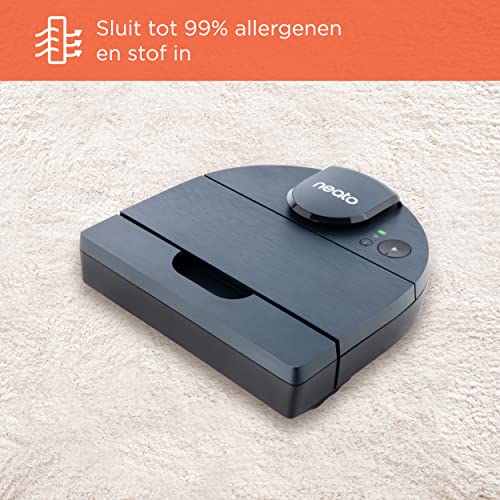
    This robot vacuum uses a EPA 11 filter, while the average robot vacuum uses HEPA.
    EPA 11 vs HEPA
  • Does not support spot cleaning
    This robot vacuum does not support spot cleaning, while the average robot vacuum supports spot cleaning.
  • Non-washable dustbin
    This robot vacuum does not have a washable dustbin, while the average robot vacuum does. 83.6% of robot vacuums have a washable dustbin.
  • Cannot mop floors
    This robot vacuum cannot mop floors, while the average robot vacuum can mop floors.
  • No water flow control
    This robot vacuum does not support water flow control, while the average robot vacuum does. 70% of robot vacuums support water flow control.
  • Less capable mopping system
    This robot vacuum uses none for mopping, while the average robot vacuum uses static pad.
    none vs static pad
  • 3 fewer water flow levels
    This robot vacuum offers fewer water flow levels than the average robot vacuum (0 vs 3). The average number of water flow levels is 3.
    0 vs 3

Video reviews

Hands-on testing, unboxing, and real-world video evaluations

Expert reviews

In-depth analysis and verdict from leading tech publications
R
rtings.com
19/05/2021
Summary of the review
P
pcmag.com
26/05/2021
Summary of the review
A
au.pcmag.com
27/05/2021
Summary of the review
S
senses.se
16/05/2022
Summary of the review
R
reviewed.com
10/05/2022
Summary of the review
T
testhut.com
20/04/2023
Summary of the review
C
consumerreports.org
No Date
Summary of the review
T
techradar.com
10/01/2022
Summary of the review
M
mashable.com
28/03/2022
Summary of the review
U
uk.pcmag.com
26/05/2021
Summary of the review
M
me.pcmag.com
26/05/2021
Summary of the review
E
etm-testmagazin.de
27/05/2021
Summary of the review
C
connect.de
18/08/2021
Summary of the review
F
faz.net
15/07/2021
Summary of the review
S
smarthomeassistent.de
02/03/2022
Summary of the review
S
smarthomeassistent.de
02/03/2022
Summary of the review
C
clubic.com
19/08/2021
Summary of the review
M
meilleurs-aspirateurs-robots.fr
2026
Summary of the review
T
test-achats.be
2021
Summary of the review
S
smartworld.it
23/06/2021
Summary of the review

Third-party reviews

Based on ratings from across the web.
Reviews last updated: July 2026 · How we calculate this

What customers like about Neato Robotics D8

  • Large 700ml dust bin reduces frequency of emptying
  • Signature D-shape design effectively cleans edges and corners
  • Strong suction and airflow (23-24 CFM) on high power mode
  • Effective pick up of pet hair and fine debris on hard floors
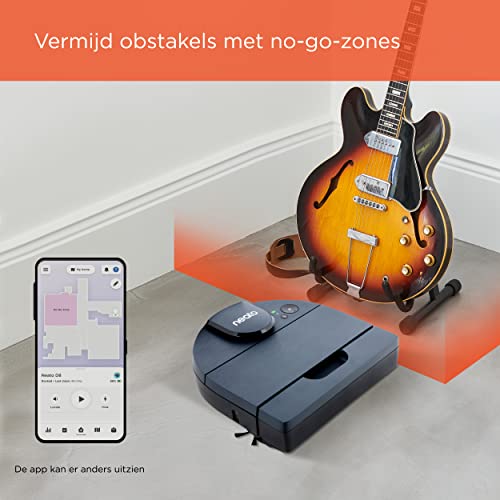
  • Accurate, customisable mapping with no-go zones via app
  • Wide main brush roll covers more area quickly

What customers don't like about Neato Robotics D8

  • Poor navigation causing it to get stuck frequently in tight spaces
  • Frequent errors leading to terminated cleaning runs early
  • Loud operation (up to 81dB)
  • Clunky dustbin removal mechanism requires lifting the top panel
  • Struggles with higher thresholds (only clears about 1cm)
  • Significant hair tangling around the brush roll
  • Limited battery life compared to other models in its price range

Verdict

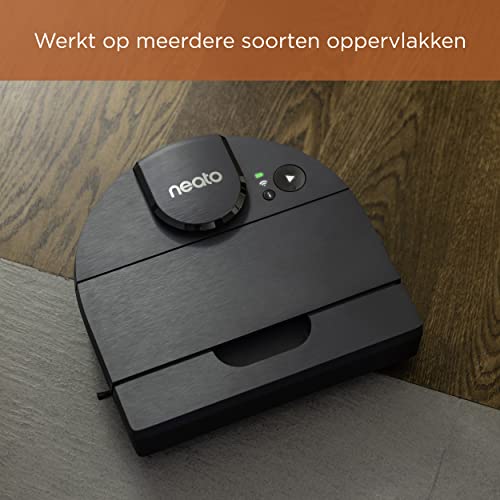
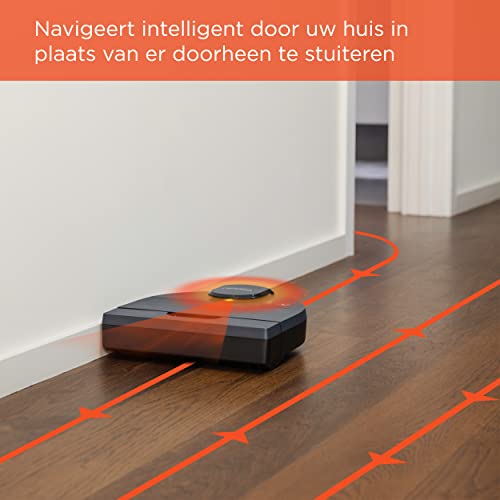
The Neato Robotics D8 is a D-shaped robot vacuum featuring LaserSmart LiDAR navigation, 2000 Pa suction power, and a large 0.7-liter dustbin. Key advantages include an extra-wide brush that cleans close to walls, a True HEPA filter, and up to 100 minutes of battery life powered by a 2100 mAh lithium-ion battery. However, significant drawbacks include frequent software connectivity issues, sluggish navigation, a high price point relative to missing premium features like auto-empty docks or mopping capabilities, and the brand's eventual discontinuation.

Compare Neato Robotics D8 with other robot vacuums

1Product to compare no. 1
VS
2Product to compare no. 2
VS
3Product to compare no. 3 (optional)

Graphic comparison of Neato Robotics D8 and other robot vacuums

No results found