Scored using Projectors Methodology v1.0
Projectors Methodology v1.0
Mathematical & Unbiased Scoring
Products in this category are scored under Frontum Projectors Methodology v1.0: technical specifications plus authentic consumer ratings, with 0% commercial bias.
Explore Projectors Methodology v1.0

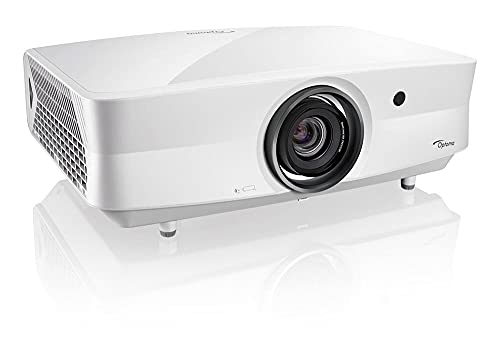
Optoma ZU720T Review | 84 Data compared

Avg. price:~£4,100Native panel resolution:1920x1200ANSI lumens:7500Throw ratio:1.4-2.5:1Lamp life:20000 hours

Optoma ZU720T Review: Compare 84 technical specifications and user reviews to see how this product ranks in the Projectors category and whether it is worth buying.
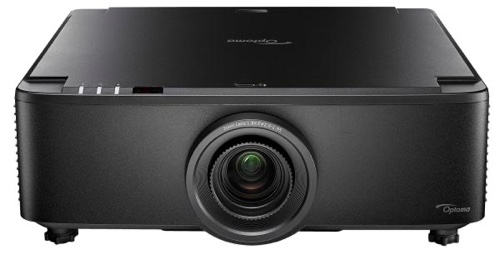
Optoma ZU720T
7.3/10

Overall score

Score
7.3/ 10
✕
What it is
An overall evaluation of the projector's quality, based on technical analyses and user reviews.
When it matters
When you need a quick reference to identify the best projectors on the market.
Score distribution
â–¼
<55-66-77-88-99-10
Score components

90%

7.3

Technical score

10%

?

User score

â–²Better than 76% of projectors
5.4

Value for money

Value for money
5.4/ 10
✕
What it is
An indicator that combines the projector's overall rating with its cost.
When it matters
When you are looking for a projector with a good balance between quality and price.
Score distribution
â–¼
<55-66-77-88-99-10
Score components

70%

7.3

Overall score

30%

1.0

Price

â–¼Worse than 86%
7.3

Technical score

Technical score
7.3/ 10
✕
What it is
An assessment of technical performance for products in the Projectors category across these key areas: Image Quality, Projection & Lens, HDMI & Gaming, Connectivity, Audio & Features, Design & Power.
When it matters
When you want to compare projectors based on technical performance and available features.
Score distribution
â–¼
<55-66-77-88-99-10
Score components

42%

8.0

Image Quality

22%

6.4

Projection & Lens

12%

6.8

HDMI & Gaming

10%

7.9

Audio & Features

8%

5.9

Connectivity

6%

7.8

Design & Power

â–²Better than 78%
?

User score

User score
8.0/ 10
✕
What it is
A rating that combines user reviews and the total number of reviews received by the projector.
When it matters
When you want to know how a projector performs in real use and how reliable it remains over time according to user feedback.
Score distribution
â–¼
<55-66-77-88-99-10
Score components

70%

?

User ratings

30%

?

Number of reviews

  • optoma-zu720t
optoma-zu720t
Where to buy
*As an Amazon Associate, we earn from qualifying purchases.
Best rankings
Available: ranking among products currently available (including other versions of this product).All: ranking among all products in the database.
Loading...
Loading category ranking...

Technical Specifications of projector Optoma ZU720T

Technical score
Technical score
7.3/ 10
✕
What it is
An assessment of technical performance for products in the Projectors category across these key areas: Image Quality, Projection & Lens, HDMI & Gaming, Connectivity, Audio & Features, Design & Power.
When it matters
When you want to compare projectors based on technical performance and available features.
Score distribution
â–¼
<55-66-77-88-99-10
Score components:

42%

8.0

Image Quality

22%

6.4

Projection & Lens

12%

6.8

HDMI & Gaming

10%

7.9

Audio & Features

8%

5.9

Connectivity

6%

7.8

Design & Power

7.3
User score
User score
8.0/ 10
✕
What it is
A rating that combines user reviews and the total number of reviews received by the projector.
When it matters
When you want to know how a projector performs in real use and how reliable it remains over time according to user feedback.
Score distribution
â–¼
<55-66-77-88-99-10
Score components

70%

?

User ratings

30%

?

Number of reviews

?
Popularity
Popularity
1.0/ 10
✕
What it is
An indicator based on the number of reviews received by the projector.
When it matters
When you prefer to buy a product chosen and reviewed by many other consumers.
Score distribution
â–¼
<55-66-77-88-99-10
Popularity:
Optoma ZU720T has a popularity score of 1 point, which is lower than 64.5% of projectors.
1.0
Value for money
Value for money
5.4/ 10
✕
What it is
An indicator that combines the projector's overall rating with its cost.
When it matters
When you are looking for a projector with a good balance between quality and price.
Score distribution
â–¼
<55-66-77-88-99-10
Score components:

70%

7.3

Overall score

30%

1.0

Price

5.4
ANSI lumens
7,500
This projector reaches 7,500 ANSI lumens, brighter than 99% of projectors and equal to 0.3% of projectors.
Contrast ratio
2000:1
This projector has a contrast ratio of 2000:1, lower than 71.1% of projectors and equal to 7.6% of projectors.
Full on/off contrast ratio.
Native panel resolution
1920x1200
This projector uses a native resolution of 1920x1200, higher than 85.9% of projectors and equal to 3% of projectors.
Output Resolution
1920x1200
This projector supports output resolution up to 1920x1200, higher than 66% of projectors and equal to 3% of projectors.
Projection technology
DLP
Show more
Throw ratio
1.4-2.5:1
Min throw distance
1.2 m
This projector needs a minimum throw distance of 1.2 m, longer than 61.2% of projectors and equal to 8.1% of projectors.
Max projection size
300 inch
This projector supports projection sizes up to 300 inch, larger than 51.9% of projectors and equal to 37.9% of projectors.
Zoom ratio
1.8
This projector offers a zoom ratio of 1.8, wider than 81.2% of projectors and equal to 1.2% of projectors.
Motorized zoom
no
This projector does not have motorized zoom. 16.3% of projectors have motorized zoom.
Show more
Input lag
?
Auto low latency mode (ALLM)
no
This projector does not support ALLM. 17.2% of projectors support ALLM.
Variable refresh rate (VRR)
no
This projector does not support VRR. 1.6% of projectors support VRR.
HDMI version
2
This projector supports HDMI 2, more modern than 45.3% of projectors and equal to 36.8% of projectors.
Different HDMI ports use 2 and 1.4.
Max HDMI bandwidth
18 Gbps
This projector supports HDMI bandwidth up to 18 Gbps, higher than 47.7% of projectors and equal to 40.1% of projectors.
Different HDMI ports reach 18 and 10.2 Gbps.
Show more
N. of HDMI ports
?
Wi-Fi connectivity
no
This projector does not support Wi-Fi. 52.9% of projectors support Wi-Fi.
Wi-Fi version
N/A
Bluetooth connectivity
no
This projector does not support Bluetooth. 50.5% of projectors support Bluetooth.
Bluetooth version
N/A
Show more
Smart TV features
no
This projector does not have smart TV features. 43.8% of projectors have smart TV features.
Operating system
Android
Android OS
yes
This projector runs Android OS. 81.3% of projectors run Android OS.
Dedicated smartphone app
?
Remote control
yes
This projector includes a remote control. 1.6% of projectors include a remote control.
Show more
Light source type
laser
This projector uses laser light source technology, more advanced than 74% of projectors and equal to 26% of projectors.
Laser phosphor.
Laser Light Source
yes
This projector uses a laser light source. 72% of projectors use a laser light source.
Lamp life
20,000 hours
This projector offers lamp life of 20,000 hours, shorter than 34.4% of projectors and equal to 27.6% of projectors.
Eco mode rating.
Lamp life (eco mode)
30,000 hours
This projector offers eco-mode lamp life of 30,000 hours, shorter than 62.5% of projectors and equal to 33.2% of projectors.
Operating power consumption
530 W
This projector uses 530 W of power, more than 98.4% of projectors and equal to 0.3% of projectors.
Typical power draw.
Show more

Optoma ZU720T vs the average projector

246810TotalImage QualityProjection & LensHDMI & GamingConnectivityAudio & FeaturesDesign & Power
  • 3.41x brighter image
    This projector has higher ANSI lumens than the average projector (7,500 vs 2,200). The average projector has 2,200 ANSI lumens.
    7,500 vs 2,200
  • High native resolution
    This projector has a higher native panel resolution than the average projector (1920x1200 vs 1920x1080). The average projector has a native panel resolution of 1920x1080.
    1920x1200 vs 1920x1080
  • 0.5 2x wider zoom range
    This projector has a higher zoom ratio than the average projector (1.8 vs 1.3). The average projector has 1.3 of zoom ratio.
    1.8 vs 1.3
  • Higher output resolution
    This projector supports a higher output resolution than the average projector (1920x1200 vs 1920x1080). The average projector outputs at 1920x1080 resolution.
    1920x1200 vs 1920x1080
  • 0.2 inch larger DMD chip
    This projector has a higher DMD chip size than the average projector (0.7 inch vs 0.47 inch). The average projector has 0.47 inch of DMD chip size.
    0.67 inch vs 0.47 inch
  • 2 more USB ports
    This projector has more USB ports than the average projector (3 vs 1). The average projector has 1 USB ports.
    3 vs 1
  • Built-in stereo speakers
    This projector has stereo speakers, while the average projector does not. 48.9% of projectors have stereo speakers.
  • Includes S/PDIF output
    This projector has an S/PDIF output, while the average projector does not. 17.2% of projectors have an S/PDIF output.
  • 3.41x brighter image
    This projector has higher ANSI lumens than the average projector (7,500 vs 2,200). The average projector has 2,200 ANSI lumens.
    7,500 vs 2,200
  • High native resolution
    This projector has a higher native panel resolution than the average projector (1920x1200 vs 1920x1080). The average projector has a native panel resolution of 1920x1080.
    1920x1200 vs 1920x1080
  • Higher output resolution
    This projector supports a higher output resolution than the average projector (1920x1200 vs 1920x1080). The average projector outputs at 1920x1080 resolution.
    1920x1200 vs 1920x1080
  • 0.2 inch larger DMD chip
    This projector has a higher DMD chip size than the average projector (0.7 inch vs 0.47 inch). The average projector has 0.47 inch of DMD chip size.
    0.67 inch vs 0.47 inch
  • Supports HLG
    This projector supports HLG, while the average projector does not. 42.7% of projectors support HLG.
  • 0.5 2x wider zoom range
    This projector has a higher zoom ratio than the average projector (1.8 vs 1.3). The average projector has 1.3 of zoom ratio.
    1.8 vs 1.3
  • 53.5 inch larger image size
    This projector has a higher projection size than the average projector (300 inch vs 246.5 inch). The average projector has 246.5 inch of projection size.
    300 inch vs 246.5 inch
  • 2 more USB ports
    This projector has more USB ports than the average projector (3 vs 1). The average projector has 1 USB ports.
    3 vs 1
  • Includes S/PDIF output
    This projector has an S/PDIF output, while the average projector does not. 17.2% of projectors have an S/PDIF output.
  • 1 more RJ45 ports
    This projector has more RJ45 ports than the average projector (1 vs 0). The average projector has 0 RJ45 ports.
    1 vs 0
  • Includes VGA
    This projector includes VGA input, while the average projector does not. 45.3% of projectors include VGA input.
  • Built-in stereo speakers
    This projector has stereo speakers, while the average projector does not. 48.9% of projectors have stereo speakers.
  • 2x stronger audio output
    This projector has a higher audio output power than the average projector (20 W vs 10 W). The average projector has 10 W of audio output power.
    20 W vs 10 W
  • 1 more audio input ports
    This projector has more audio input ports than the average projector (1 vs 0). The average projector has 0 audio input ports.
    1 vs 0
  • Android OS built-in
    This projector features Android OS, while the average projector does not. 18.8% of projectors feature Android OS.
  • Uses laser light source
    This projector uses a laser light source, while the average projector does not. 28.1% of projectors use a laser light source.
  • 10,000 hours longer eco lamp life
    This projector has a higher lamp life in eco mode than the average projector (30,000 hours vs 20,000 hours). The average projector has 20,000 hours of lamp life in eco mode.
    Eco mode rating.
    30,000 hours vs 20,000 hours
  • 1 dB quieter operation
    This projector has a lower audible noise than the average projector (29 dB vs 30 dB). The average projector has 30 dB of audible noise.
    Eco mode figure.
    29 dB vs 30 dB
  • Lower contrast ratio
    This projector has a lower contrast ratio than the average projector (2000:1 vs 10000:1). The average projector has 10000:1 of contrast ratio.
    Full on/off contrast ratio.
    2,000:1 vs 10,000:1
  • No Wi-Fi support
    This projector does not support Wi-Fi, while the average projector does. 52.9% of projectors support Wi-Fi.
  • No Bluetooth support
    This projector does not support Bluetooth, while the average projector does. 50.5% of projectors support Bluetooth.
  • Limited HDMI format
    This projector supports a less capable max HDMI input format than the average projector (4K/60Hz vs 4K/120Hz). The average projector supports a max HDMI input format of 4K/120Hz.
    4K/60Hz vs 4K/120Hz
  • 4.1x heavier weight
    This projector is heavier than the average projector (12.7 kg vs 3.1 kg). The average projector weighs 3.1 kg.
    12.7 kg vs 3.1 kg
  • 0.18 m longer throw distance
    This projector has a higher throw distance than the average projector (1.2 m vs 1 m). The average projector has 1.025 m of throw distance.
    1.2 m vs 1.025 m
  • 295 W higher power use
    This projector uses more power than the average projector (530 W vs 235 W). The average projector uses 235 W of power.
    Typical power draw.
    530 W vs 235 W
  • 5.32x more expensive
    Optoma ZU720T is more expensive than the average projector (£4,100 vs £770).
    £4,100 vs £770
  • 5.32x more expensive
    Optoma ZU720T is more expensive than the average projector (£4,100 vs £770).
    £4,100 vs £770
  • 4.87x less popular
    Optoma ZU720T has a lower popularity than the average projector (1 vs 4.9).
    1 vs 4.87
  • 20.4% worse value for money
    Optoma ZU720T has a lower value-for-money score than the average projector (5.4 vs 6.5).
    5.4 vs 6.51
  • Lower contrast ratio
    This projector has a lower contrast ratio than the average projector (2000:1 vs 10000:1). The average projector has 10000:1 of contrast ratio.
    Full on/off contrast ratio.
    2,000:1 vs 10,000:1
  • 0.18 m longer throw distance
    This projector has a higher throw distance than the average projector (1.2 m vs 1 m). The average projector has 1.025 m of throw distance.
    1.2 m vs 1.025 m
  • 5 % less horizontal lens shift
    This projector has fewer horizontal lens shift than the average projector (25 % vs 30 %). The average projector has 30 % horizontal lens shift.
    25 % vs 30 %
  • 5 % less vertical lens shift
    This projector has fewer vertical lens shift than the average projector (55 % vs 60 %). The average projector has 60 % vertical lens shift.
    55 % vs 60 %
  • Limited HDMI format
    This projector supports a less capable max HDMI input format than the average projector (4K/60Hz vs 4K/120Hz). The average projector supports a max HDMI input format of 4K/120Hz.
    4K/60Hz vs 4K/120Hz
  • No Wi-Fi support
    This projector does not support Wi-Fi, while the average projector does. 52.9% of projectors support Wi-Fi.
  • No Bluetooth support
    This projector does not support Bluetooth, while the average projector does. 50.5% of projectors support Bluetooth.
  • 4.1x heavier weight
    This projector is heavier than the average projector (12.7 kg vs 3.1 kg). The average projector weighs 3.1 kg.
    12.7 kg vs 3.1 kg
  • 295 W higher power use
    This projector uses more power than the average projector (530 W vs 235 W). The average projector uses 235 W of power.
    Typical power draw.
    530 W vs 235 W
  • 184 mm wider body
    This projector is wider than the average projector (484 mm vs 300 mm). The average projector has a width of 300 mm.
    484 mm vs 300 mm
  • 51.5 mm taller body
    This projector is taller than the average projector (178.5 mm vs 127 mm). The average projector has a height of 127 mm.
    178.5 mm vs 127 mm

Video reviews

Hands-on testing, unboxing, and real-world video evaluations

Shop video

Expert reviews

In-depth analysis and verdict from leading tech publications

projectorcentral.com
16/11/2020
Hands-on review · Venue laser projector
Verdict
The Optoma ZU720T is a 7,500-lumen laser projector for schools and churches, bright enough for sunny rooms, but its blue Bright mode washes out skin tones.

Third-party reviews

What customers like about Optoma ZU720T

  • Exceptional brightness, often exceeding the 7,500-lumen specification in 'Bright' mode
  • High cost-efficiency due to the world's first fixed-lens design in its brightness class
  • Flexible installation with 1.8x manual zoom and full horizontal/vertical motorized lens shift
  • Impressive 30,000-hour laser light source life in Eco mode for low maintenance
  • Compact and lightweight chassis compared to similar 7,000+ lumen professional models
  • Quiet operation with advanced cooling that keeps fan noise around 31dB to 39dB
  • Comprehensive connectivity including HDBaseT, HDMI, and built-in edge-blending/warping

What customers don't like about Optoma ZU720T

  • Integrated lens is non-detachable, limiting flexibility for specialized long or short-throw needs
  • Lack of built-in Wi-Fi or Bluetooth connectivity out of the box
  • Remote control is shared with other models and contains several non-functional buttons
  • Color brightness (3,800 lumens) is significantly lower than white brightness (7,890 lumens)
  • No traditional dedicated Eco mode for brightness; requires manual adjustment of settings
  • Higher power consumption (over 500W) compared to lower-lumen professional units

Verdict

The Optoma ZU720T is a professional-grade WUXGA (1920 x 1200) laser projector featuring a high brightness of 7,500 lumens and a 1,000,000:1 dynamic contrast ratio. Key characteristics include a fixed lens design with a wide 1.8x manual zoom, 4K/HDR10 compatibility, and a DuraCore laser light source rated for up to 30,000 hours of maintenance-free operation. Its main pros are high installation flexibility—offered via full motorized lens shift (±55% vertical, ±25% horizontal), 360-degree/portrait orientation, and built-in edge-blending—alongside quiet operation at 27dB in Eco mode and HDBaseT support for simplified cabling. However, common cons include the lack of built-in Wi-Fi or Bluetooth connectivity, and the fixed lens design, which, while cost-effective, limits the ability to swap lenses for specific short or long-throw environments.

Compare Optoma ZU720T with other products in the Projectors category

1Product to compare no. 1
VS
2Product to compare no. 2
VS
3Product to compare no. 3 (optional)

Graphic comparison of Optoma ZU720T and other products in the Projectors category

No results found