Scored using Projectors Methodology v1.0
Projectors Methodology v1.0
Mathematical & Unbiased Scoring
Products in this category are scored under Frontum Projectors Methodology v1.0: technical specifications plus authentic consumer ratings, with 0% commercial bias.
Explore Projectors Methodology v1.0

Optoma ZK507 W Review | 84 Data compared

Avg. price:~£4,130Native panel resolution:3840x2160ANSI lumens:5000Throw ratio:1.39-2.22:1Lamp life:20000 hours

Optoma ZK507 W Review: Compare 84 technical specifications and user reviews to see how this product ranks in the Projectors category and whether it is worth buying.
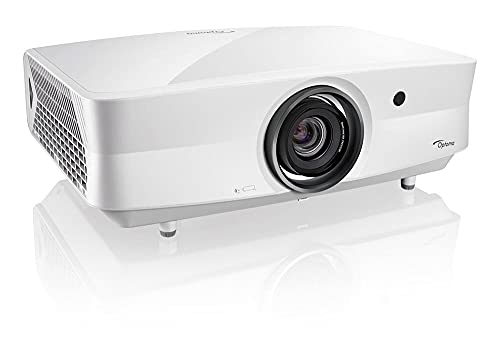
Optoma ZK507 W
7.1/10

Overall score

Score
7.1/ 10
✕
What it is
An overall evaluation of the projector's quality, based on technical analyses and user reviews.
When it matters
When you need a quick reference to identify the best projectors on the market.
Score distribution
â–¼
<55-66-77-88-99-10
Score components

90%

7.4

Technical score

10%

4.2

User score

â–²Better than 70% of projectors
5.2

Value for money

Value for money
5.2/ 10
✕
What it is
An indicator that combines the projector's overall rating with its cost.
When it matters
When you are looking for a projector with a good balance between quality and price.
Score distribution
â–¼
<55-66-77-88-99-10
Score components

70%

7.1

Overall score

30%

1.0

Price

â–¼Worse than 89%
7.4

Technical score

Technical score
7.4/ 10
✕
What it is
An assessment of technical performance for products in the Projectors category across these key areas: Image Quality, Projection & Lens, HDMI & Gaming, Connectivity, Audio & Features, Design & Power.
When it matters
When you want to compare projectors based on technical performance and available features.
Score distribution
â–¼
<55-66-77-88-99-10
Score components

42%

8.8

Image Quality

22%

5.7

Projection & Lens

12%

6.3

HDMI & Gaming

10%

6.8

Audio & Features

8%

6.8

Connectivity

6%

7.4

Design & Power

â–²Better than 80%
4.2

User score

User score
4.2/ 10
✕
What it is
A rating that combines user reviews and the total number of reviews received by the projector.
When it matters
When you want to know how a projector performs in real use and how reliable it remains over time according to user feedback.
Score distribution
â–¼
<55-66-77-88-99-10
Score components

70%

4.7

User ratings

30%

3.0

Number of reviews

Based on ratings from across the web.
â–¼Worse than 99%
  • optoma-zk507-w
  • optoma-zk507-w
optoma-zk507-w
optoma-zk507-w
Where to buy
*As an Amazon Associate, we earn from qualifying purchases.
Best rankings
Available: ranking among products currently available (including other versions of this product).All: ranking among all products in the database.
Loading...
Loading category ranking...

Technical Specifications of projector Optoma ZK507 W

Technical score
Technical score
7.4/ 10
✕
What it is
An assessment of technical performance for products in the Projectors category across these key areas: Image Quality, Projection & Lens, HDMI & Gaming, Connectivity, Audio & Features, Design & Power.
When it matters
When you want to compare projectors based on technical performance and available features.
Score distribution
â–¼
<55-66-77-88-99-10
Score components:

42%

8.8

Image Quality

22%

5.7

Projection & Lens

12%

6.3

HDMI & Gaming

10%

6.8

Audio & Features

8%

6.8

Connectivity

6%

7.4

Design & Power

7.4
User score
User score
4.2/ 10
✕
What it is
A rating that combines user reviews and the total number of reviews received by the projector.
When it matters
When you want to know how a projector performs in real use and how reliable it remains over time according to user feedback.
Score distribution
â–¼
<55-66-77-88-99-10
Score components

70%

4.7

User ratings

30%

3.0

Number of reviews

Based on ratings from across the web.
4.2
Popularity
Popularity
3.0/ 10
✕
What it is
An indicator based on the number of reviews received by the projector.
When it matters
When you prefer to buy a product chosen and reviewed by many other consumers.
Score distribution
â–¼
<55-66-77-88-99-10
Popularity:
Optoma ZK507 W has a popularity score of 3 points, which is lower than 57.8% of projectors.
3.0
Value for money
Value for money
5.2/ 10
✕
What it is
An indicator that combines the projector's overall rating with its cost.
When it matters
When you are looking for a projector with a good balance between quality and price.
Score distribution
â–¼
<55-66-77-88-99-10
Score components:

70%

7.1

Overall score

30%

1.0

Price

5.2
ANSI lumens
5,000
This projector reaches 5,000 ANSI lumens, brighter than 92.9% of projectors and equal to 2.5% of projectors.
Contrast ratio
?
Native panel resolution
3840x2160
This projector uses a native resolution of 3840x2160, higher than 91.2% of projectors and equal to 4% of projectors.
Output Resolution
3840x2160
This projector supports output resolution up to 3840x2160, higher than 69.1% of projectors and equal to 26.1% of projectors.
Projection technology
DLP
Show more
Throw ratio
1.39-2.22:1
Min throw distance
1.3 m
This projector needs a minimum throw distance of 1.3 m, longer than 72.4% of projectors and equal to 3.3% of projectors.
Max projection size
302 inch
This projector supports projection sizes up to 302 inch, larger than 91.4% of projectors and equal to 1.9% of projectors.
Zoom ratio
1.6
This projector offers a zoom ratio of 1.6, wider than 58.4% of projectors and equal to 18.6% of projectors.
Motorized zoom
yes
This projector has motorized zoom. 83.8% of projectors have motorized zoom.
Show more
Input lag
80 ms
This projector has input lag of 80 ms, higher than 92.8% of projectors and equal to 0.7% of projectors.
In 4K.
Auto low latency mode (ALLM)
no
This projector does not support ALLM. 17.2% of projectors support ALLM.
Variable refresh rate (VRR)
no
This projector does not support VRR. 1.6% of projectors support VRR.
HDMI version
2
This projector supports HDMI 2, more modern than 45.3% of projectors and equal to 36.8% of projectors.
Different HDMI ports use 2 and 1.4.
Max HDMI bandwidth
18 Gbps
This projector supports HDMI bandwidth up to 18 Gbps, higher than 47.7% of projectors and equal to 40.1% of projectors.
Different HDMI ports reach 18 and 10.2 Gbps.
Show more
N. of HDMI ports
2
This projector has 2 HDMI port/s, more than 45% of projectors and equal to 47.7% of projectors.
Wi-Fi connectivity
no
This projector does not support Wi-Fi. 52.9% of projectors support Wi-Fi.
Wi-Fi version
N/A
Bluetooth connectivity
no
This projector does not support Bluetooth. 50.5% of projectors support Bluetooth.
Bluetooth version
N/A
Show more
Smart TV features
no
This projector does not have smart TV features. 43.8% of projectors have smart TV features.
Operating system
none
Android OS
no
This projector does not run Android OS. 18.8% of projectors run Android OS.
Dedicated smartphone app
no
This projector does not come with a dedicated smartphone app. 35.2% of projectors come with a dedicated smartphone app.
Remote control
yes
This projector includes a remote control. 1.6% of projectors include a remote control.
Show more
Light source type
laser
This projector uses laser light source technology, more advanced than 74% of projectors and equal to 26% of projectors.
Laser Light Source
yes
This projector uses a laser light source. 72% of projectors use a laser light source.
Lamp life
20,000 hours
This projector offers lamp life of 20,000 hours, shorter than 34.4% of projectors and equal to 27.6% of projectors.
Laser light source life.
Lamp life (eco mode)
30,000 hours
This projector offers eco-mode lamp life of 30,000 hours, shorter than 62.5% of projectors and equal to 33.2% of projectors.
Operating power consumption
274 W
This projector uses 274 W of power, more than 59.6% of projectors.
Show more

Optoma ZK507 W vs the average projector

246810TotalImage QualityProjection & LensHDMI & GamingConnectivityAudio & FeaturesDesign & Power
  • 2.27x brighter image
    This projector has higher ANSI lumens than the average projector (5,000 vs 2,200). The average projector has 2,200 ANSI lumens.
    5,000 vs 2,200
  • High native resolution
    This projector has a higher native panel resolution than the average projector (3840x2160 vs 1920x1080). The average projector has a native panel resolution of 1920x1080.
    3840x2160 vs 1920x1080
  • Higher output resolution
    This projector supports a higher output resolution than the average projector (3840x2160 vs 1920x1080). The average projector outputs at 1920x1080 resolution.
    3840x2160 vs 1920x1080
  • 55.5 inch larger image size
    This projector has a higher projection size than the average projector (302 inch vs 246.5 inch). The average projector has 246.5 inch of projection size.
    302 inch vs 246.5 inch
  • Supports pixel shifting
    This projector supports pixel shifting, while the average projector does not. 28.4% of projectors support pixel shifting.
    Via XPR technology.
  • Wider color gamut
    This projector has a higher color gamut coverage than the average projector (75% DCI-P3 % vs 99% Rec.709 %). The average projector has 99% Rec.709 % of color gamut coverage.
    75% DCI-P3 % vs 99% Rec.709 %
  • 0.19 inch larger DMD chip
    This projector has a higher DMD chip size than the average projector (0.7 inch vs 0.47 inch). The average projector has 0.47 inch of DMD chip size.
    0.66 inch vs 0.47 inch
  • Has motorized zoom
    This projector has motorized zoom, while the average projector does not. 16.3% of projectors have motorized zoom.
  • 2.27x brighter image
    This projector has higher ANSI lumens than the average projector (5,000 vs 2,200). The average projector has 2,200 ANSI lumens.
    5,000 vs 2,200
  • High native resolution
    This projector has a higher native panel resolution than the average projector (3840x2160 vs 1920x1080). The average projector has a native panel resolution of 1920x1080.
    3840x2160 vs 1920x1080
  • Higher output resolution
    This projector supports a higher output resolution than the average projector (3840x2160 vs 1920x1080). The average projector outputs at 1920x1080 resolution.
    3840x2160 vs 1920x1080
  • Supports pixel shifting
    This projector supports pixel shifting, while the average projector does not. 28.4% of projectors support pixel shifting.
    Via XPR technology.
  • Wider color gamut
    This projector has a higher color gamut coverage than the average projector (75% DCI-P3 % vs 99% Rec.709 %). The average projector has 99% Rec.709 % of color gamut coverage.
    75% DCI-P3 % vs 99% Rec.709 %
  • 0.19 inch larger DMD chip
    This projector has a higher DMD chip size than the average projector (0.7 inch vs 0.47 inch). The average projector has 0.47 inch of DMD chip size.
    0.66 inch vs 0.47 inch
  • 41.2% higher refresh rate
    This projector has a higher refresh rate than the average projector (120 Hz vs 85 Hz). The average projector has 85 Hz of refresh rate.
    At 1080p.
    120 Hz vs 85 Hz
  • Supports HLG
    This projector supports HLG, while the average projector does not. 42.7% of projectors support HLG.
  • 55.5 inch larger image size
    This projector has a higher projection size than the average projector (302 inch vs 246.5 inch). The average projector has 246.5 inch of projection size.
    302 inch vs 246.5 inch
  • Has motorized zoom
    This projector has motorized zoom, while the average projector does not. 16.3% of projectors have motorized zoom.
  • 0.3 2x wider zoom range
    This projector has a higher zoom ratio than the average projector (1.6 vs 1.3). The average projector has 1.3 of zoom ratio.
    1.6 vs 1.3
  • Supports frame interpolation
    This projector supports frame interpolation, while the average projector does not. 37.1% of projectors support frame interpolation.
    Via PureMotion.
  • Includes S/PDIF output
    This projector has an S/PDIF output, while the average projector does not. 17.2% of projectors have an S/PDIF output.
  • 1 more RJ45 ports
    This projector has more RJ45 ports than the average projector (1 vs 0). The average projector has 0 RJ45 ports.
    1 vs 0
  • 1 more USB ports
    This projector has more USB ports than the average projector (2 vs 1). The average projector has 1 USB ports.
    2 vs 1
  • Includes VGA
    This projector includes VGA input, while the average projector does not. 45.3% of projectors include VGA input.
  • Built-in stereo speakers
    This projector has stereo speakers, while the average projector does not. 48.9% of projectors have stereo speakers.
  • 1 more audio input ports
    This projector has more audio input ports than the average projector (1 vs 0). The average projector has 0 audio input ports.
    1 vs 0
  • Uses laser light source
    This projector uses a laser light source, while the average projector does not. 28.1% of projectors use a laser light source.
  • 10,000 hours longer eco lamp life
    This projector has a higher lamp life in eco mode than the average projector (30,000 hours vs 20,000 hours). The average projector has 20,000 hours of lamp life in eco mode.
    Laser light source life.
    30,000 hours vs 20,000 hours
  • 53 ms higher input lag
    This projector has a higher input lag than the average projector (80 ms vs 27 ms). The average projector has 27 ms of input lag.
    In 4K.
    80 ms vs 27 ms
  • No Wi-Fi support
    This projector does not support Wi-Fi, while the average projector does. 52.9% of projectors support Wi-Fi.
  • No Bluetooth support
    This projector does not support Bluetooth, while the average projector does. 50.5% of projectors support Bluetooth.
  • 45 % less vertical lens shift
    This projector has fewer vertical lens shift than the average projector (15 % vs 60 %). The average projector has 60 % vertical lens shift.
    15 % vs 60 %
  • Limited HDMI format
    This projector supports a less capable max HDMI input format than the average projector (4K/60Hz vs 4K/120Hz). The average projector supports a max HDMI input format of 4K/120Hz.
    4K/60Hz vs 4K/120Hz
  • 0.28 m longer throw distance
    This projector has a higher throw distance than the average projector (1.3 m vs 1 m). The average projector has 1.025 m of throw distance.
    1.3 m vs 1.025 m
  • 3.4x heavier weight
    This projector is heavier than the average projector (10.5 kg vs 3.1 kg). The average projector weighs 3.1 kg.
    10.54 kg vs 3.1 kg
  • 5.36x more expensive
    Optoma ZK507 W is more expensive than the average projector (£4,130 vs £770).
    £4,130 vs £770
  • 5.36x more expensive
    Optoma ZK507 W is more expensive than the average projector (£4,130 vs £770).
    £4,130 vs £770
  • 89.8% lower user score
    User score
    4.2/ 10
    ✕
    What it is
    A rating that combines user reviews and the total number of reviews received by the projector.
    When it matters
    When you want to know how a projector performs in real use and how reliable it remains over time according to user feedback.
    Score distribution
    â–¼
    â–¼
    <55-66-77-88-99-10
    Optoma ZK507 W
    the average projector
    Optoma ZK507 W has a lower user score than the average projector (4.22 vs 8.000).
    4.22 vs 8
  • 24% worse value for money
    Optoma ZK507 W has a lower value-for-money score than the average projector (5.24 vs 6.5).
    5.24 vs 6.51
  • 45 % less vertical lens shift
    This projector has fewer vertical lens shift than the average projector (15 % vs 60 %). The average projector has 60 % vertical lens shift.
    15 % vs 60 %
  • 0.28 m longer throw distance
    This projector has a higher throw distance than the average projector (1.3 m vs 1 m). The average projector has 1.025 m of throw distance.
    1.3 m vs 1.025 m
  • 53 ms higher input lag
    This projector has a higher input lag than the average projector (80 ms vs 27 ms). The average projector has 27 ms of input lag.
    In 4K.
    80 ms vs 27 ms
  • Limited HDMI format
    This projector supports a less capable max HDMI input format than the average projector (4K/60Hz vs 4K/120Hz). The average projector supports a max HDMI input format of 4K/120Hz.
    4K/60Hz vs 4K/120Hz
  • No Wi-Fi support
    This projector does not support Wi-Fi, while the average projector does. 52.9% of projectors support Wi-Fi.
  • No Bluetooth support
    This projector does not support Bluetooth, while the average projector does. 50.5% of projectors support Bluetooth.
  • 3.4x heavier weight
    This projector is heavier than the average projector (10.5 kg vs 3.1 kg). The average projector weighs 3.1 kg.
    10.54 kg vs 3.1 kg
  • 2 dB louder operation
    This projector has a higher audible noise than the average projector (32 dB vs 30 dB). The average projector has 30 dB of audible noise.
    32 dB vs 30 dB
  • 2 dB louder eco mode
    This projector has a higher audible noise in eco mode than the average projector (30 dB vs 28 dB). The average projector has 28 dB of audible noise in eco mode.
    30 dB vs 28 dB
  • 198 mm wider body
    This projector is wider than the average projector (498 mm vs 300 mm). The average projector has a width of 300 mm.
    498 mm vs 300 mm

Third-party reviews

Based on ratings from across the web.
Reviews last updated: October 2026 · How we calculate this

What customers like about Optoma ZK507 W

  • Super-sharp native 4K visuals that provide a significant upgrade over pixel-shifting alternatives for data and presentations.
  • Very high 5,000-lumen brightness, making it suitable for use in rooms with significant ambient light.
  • Long-lasting laser light source with a 20,000-hour maintenance-free lifespan.
  • Strong contrast performance and HDR compatibility for more realistic images and deeper black levels.
  • Comprehensive remote control options over Ethernet (Telnet, Crestron, PJLink) and optional 4K wireless support.
  • Quiet operation compared to other laser projectors in its brightness class (30-32 dB).

What customers don't like about Optoma ZK507 W

  • Lacks horizontal lens shift, which limits flexibility for off-centre installations.
  • Manual lens adjustments (zoom and focus) can be difficult to manage if the projector is mounted in a hard-to-reach location.
  • Color accuracy is not considered 'stellar' for high-end home cinema use without significant calibration.
  • Input lag is relatively high (approx. 84ms at 4K), making it less ideal for fast-paced gaming.
  • Contrast is optimized for video sources; black levels may appear less impressive when connected to a PC for home theater use.
  • One of the HDMI ports is version 1.4, which does not support 4K at 60Hz.

Verdict

The Optoma ZK507-W is a high-performance 4K UHD (3840 x 2160) laser projector designed for professional installations, featuring a bright 5,000 ANSI lumens output and a dynamic contrast ratio of 300,000:1. Its core characteristics include a maintenance-free DuraCore laser light source with a lifespan of up to 30,000 hours in Eco mode, HDR10 and HLG compatibility, and a robust IP5X-certified airtight optical engine for 24/7 reliability. Key pros include its exceptional image sharpness from a native 4K DLP chip, flexible installation via a 1.6x manual zoom and vertical lens shift, and specialized modes like PureMotion frame interpolation and DICOM simulation for medical training. However, notable cons include the lack of horizontal lens shift, entirely manual lens adjustments (zoom/focus), and an average input lag of approximately 80ms, which may be suboptimal for high-speed gaming.

Compare Optoma ZK507 W with other products in the Projectors category

1Product to compare no. 1
VS
2Product to compare no. 2
VS
3Product to compare no. 3 (optional)

Graphic comparison of Optoma ZK507 W and other products in the Projectors category

No results found