Scored using Motherboards Methodology v1.0
Motherboards Methodology v1.0
Mathematical & Unbiased Scoring
Products in this category are scored under Frontum Motherboards Methodology v1.0: technical specifications plus authentic consumer ratings, with 0% commercial bias.
Explore Motherboards Methodology v1.0

GIGABYTE B660 AORUS Master Review | 107 Data compared

Avg. price:~£210CPU socket:LGA 1700Chipset:Intel B660Form factor:ATX

GIGABYTE B660 AORUS Master Review: Compare 107 technical specifications and user reviews to see how this product ranks in the Motherboards category and whether it is worth buying.
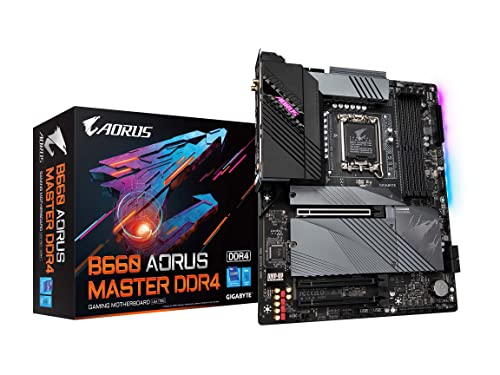
GIGABYTE B660 AORUS Master
8.1/10

Overall score

Score
8.1/ 10
✕
What it is
An overall evaluation of the motherboard's quality, based on technical analyses and user reviews.
When it matters
When you need a quick reference to identify the best motherboards on the market.
Score distribution
â–¼
<55-66-77-88-99-10
Score components

90%

8.0

Technical score

10%

8.7

User score

â–²Better than 77% of motherboards
8.5

Value for money

Value for money
8.5/ 10
✕
What it is
An indicator that combines the motherboard's overall rating with its cost.
When it matters
When you are looking for a motherboard that offers a strong balance of features, performance, and price.
Score distribution
â–¼
<55-66-77-88-99-10
Score components

70%

8.1

Overall score

30%

9.4

Price

â–²Better than 80%
8.0

Technical score

Technical score
8.0/ 10
✕
What it is
An assessment of technical performance for products in the Motherboards category across these key areas: Platform & Features, Memory, Storage, Expansion, Ports & USB, Network, Audio, Power & Cooling.
When it matters
When you want to compare motherboards based on technical performance and available features.
Score distribution
â–¼
<55-66-77-88-99-10
Score components

19%

7.1

Memory

16%

9.0

Platform & Features

16%

7.6

Storage

15%

9.0

Network

13%

7.3

Ports & USB

8%

6.6

Expansion

8%

8.9

Power & Cooling

5%

9.3

Audio

â–²Better than 77%
8.7

User score

User score
8.7/ 10
✕
What it is
A rating that combines user reviews and the total number of reviews received by the motherboard.
When it matters
When you want to understand how a motherboard performs in real-world builds and how reliable it is in terms of stability, BIOS usability, connectivity, and long-term ownership.
Score distribution
â–¼
<55-66-77-88-99-10
Score components

70%

9.2

User ratings

30%

7.5

Number of reviews

Based on ratings from across the web.
â–²Better than 79%
  • gigabyte-b660-aorus-master
  • gigabyte-b660-aorus-master
  • gigabyte-b660-aorus-master
  • gigabyte-b660-aorus-master
  • gigabyte-b660-aorus-master
  • gigabyte-b660-aorus-master
  • gigabyte-b660-aorus-master
gigabyte-b660-aorus-master
Best prices
*As an Amazon Associate, we earn from qualifying purchases.
Best rankings
Available: ranking among products currently available (including other versions of this product).All: ranking among all products in the database.
Loading...
Loading category ranking...

Technical Specifications of motherboard GIGABYTE B660 AORUS Master

Technical score
Technical score
8.0/ 10
✕
What it is
An assessment of technical performance for products in the Motherboards category across these key areas: Platform & Features, Memory, Storage, Expansion, Ports & USB, Network, Audio, Power & Cooling.
When it matters
When you want to compare motherboards based on technical performance and available features.
Score distribution
â–¼
<55-66-77-88-99-10
Score components:

19%

7.1

Memory

16%

9.0

Platform & Features

16%

7.6

Storage

15%

9.0

Network

13%

7.3

Ports & USB

8%

6.6

Expansion

8%

8.9

Power & Cooling

5%

9.3

Audio

8.0
User score
User score
8.7/ 10
✕
What it is
A rating that combines user reviews and the total number of reviews received by the motherboard.
When it matters
When you want to understand how a motherboard performs in real-world builds and how reliable it is in terms of stability, BIOS usability, connectivity, and long-term ownership.
Score distribution
â–¼
<55-66-77-88-99-10
Score components

70%

9.2

User ratings

30%

7.5

Number of reviews

Based on ratings from across the web.
8.7
Popularity
Popularity
7.5/ 10
✕
What it is
An indicator based on the number of reviews received by the motherboard.
When it matters
When you prefer a motherboard that has already been bought and reviewed by many other users.
Score distribution
â–¼
<55-66-77-88-99-10
Popularity:
GIGABYTE B660 AORUS Master has a popularity score of 7.5 points, which is higher than that of 66% of products in this category.
7.5
Value for money
Value for money
8.5/ 10
✕
What it is
An indicator that combines the motherboard's overall rating with its cost.
When it matters
When you are looking for a motherboard that offers a strong balance of features, performance, and price.
Score distribution
â–¼
<55-66-77-88-99-10
Score components:

70%

8.1

Overall score

30%

9.4

Price

8.5
Brand name
Gigabyte
CPU socket
LGA 1700
This motherboard uses the LGA 1700 CPU socket, which is more advanced than that of 55% of motherboards and equal to that of 22.6% of motherboards.
CPU platform
Intel
This motherboard is built for the Intel CPU platform, which is more versatile than that of 31.6% of motherboards and equal to that of 68.4% of motherboards.
Chipset
Intel B660
This motherboard uses the Intel B660 chipset, which is more advanced than that of 57.7% of motherboards and equal to that of 2.8% of motherboards.
Form factor
ATX
This motherboard has the ATX form factor, which is more versatile than that of 47.8% of motherboards and equal to that of 52.2% of motherboards.
Show more
DDR memory version
DDR4
This motherboard uses DDR4 memory, which is newer than that of 13.5% of motherboards and equal to that of 50.8% of motherboards.
Memory slots
4
This motherboard has 4 Memory slots, which is more than 21.5% of motherboards and equal to 72.5% of motherboards.
Maximum memory capacity
128 GB
This motherboard supports up to 128 GB of memory, which is more than 40.4% of motherboards and equal to 31.9% of motherboards.
Memory channels
2
This motherboard supports 2 memory channels, which is more than 0.2% of motherboards and equal to 92.6% of motherboards.
Maximum RAM speed
6,000 MT/s
This motherboard supports memory speeds up to 6,000 MT/s, which is higher than that of 71.4% of motherboards and equal to that of 0.9% of motherboards.
Show more
N. of M.2 sockets
3
This motherboard has 3 M.2 sockets, which is more than 65.2% of motherboards and equal to 18.8% of motherboards.
M.2 slot interface per slot
2x PCIe 4.0 x4/x2, 1x PCIe 3.0 x4/x2
This motherboard offers 2x PCIe 4.0x4/x2, 1x PCIe 3.0x4/x2 for M.2 slot interfaces, which is faster than that of 72.5% of motherboards.
N. of SATA 3 connectors
4
This motherboard has 4 SATA 3 connectors, which is more than 5.6% of motherboards and equal to 46.2% of motherboards.
Supported RAID levels
0/1/5/10
This motherboard supports RAID levels 0/1/5/10, which is broader than 32% of motherboards and equal to 68% of motherboards.
NVMe RAID support
no
This motherboard does not support NVMe RAID. 59.8% of motherboards support this feature.
Show more
N. of PCIe 5.0 x16 slots
0
This motherboard has 0 PCIe 5.0x16 slots, which is fewer than 31.5% of motherboards and equal to 68.5% of motherboards.
N. of PCIe 4.0 x16 slots
1
This motherboard has 1 PCIe 4.0x16 slots, which is more than 55.5% of motherboards and equal to 35.4% of motherboards.
N. of PCIe 3.0 x16 slots
2
This motherboard has 2 PCIe 3.0x16 slots, which is more than 67.3% of motherboards and equal to 15.4% of motherboards.
runs at x4 mode
PCIe slot electrical configuration
x16/x4/x1
This motherboard uses x16/x4/x1 for PCIe slot electrical configuration, which is more flexible than that of 77.7% of motherboards and equal to that of 5.9% of motherboards.
PCIe bifurcation support
yes
This motherboard supports PCIe bifurcation. 40.4% of motherboards support this feature.
x8/x16.
Show more
Total USB ports (rear I/O)
10
This motherboard has 10 USB ports (rear I/O), which is more than 75.5% of motherboards and equal to 15.5% of motherboards.
Total USB ports (including headers)
17
This motherboard has 17 USB ports (including headers), which is more than 71.3% of motherboards and equal to 10.4% of motherboards.
Total USB-C ports (rear I/O)
1
This motherboard has 1 USB-C ports (rear I/O), which is more than 35.5% of motherboards and equal to 48.7% of motherboards.
Total USB-C ports (including headers)
2
This motherboard has 2 USB-C ports (including headers), which is more than 51.7% of motherboards and equal to 32.9% of motherboards.
N. of USB 3.2 Gen2x2 ports (USB-C)
1
This motherboard has 1 USB 3.2 Gen2x2 ports (USB-C), which is more than 81.7% of motherboards and equal to 18% of motherboards.
Show more
LAN speed
2.5 Gbps
This motherboard supports LAN speeds up to 2.5 Gbps, which is higher than that of 49.3% of motherboards and equal to that of 41.4% of motherboards.
LAN controller
?
N. of RJ45 ports
1
This motherboard has 1 RJ45 ports, which is fewer than 14.4% of motherboards and equal to 85.6% of motherboards.
Wi-Fi connectivity
yes
This motherboard supports Wi-Fi connectivity. 50% of motherboards support this feature.
Wi-Fi version
Wi-Fi 6 (802.11ax)
This motherboard supports Wi-Fi 6 (802.11ax), which is newer than that of 60.5% of motherboards and equal to that of 11.6% of motherboards.
Show more
Audio codec
Realtek ALC1220-VB
This motherboard uses the Realtek ALC1220-VB audio codec, which is more advanced than that of 80.2% of motherboards and equal to that of 4% of motherboards.
Audio channels
7.1
This motherboard offers 7.1 audio channels, which is more than 4.9% of motherboards and equal to 95.1% of motherboards.
Audio SNR
120 dB
This motherboard has an audio SNR of 120 dB, which is higher than that of 56% of motherboards and equal to that of 40.5% of motherboards.
Headphone amp support
yes
This motherboard supports a headphone amp. 40.8% of motherboards support this feature.
supports up to 600Ω.
N. of 3.5mm audio jacks
5
This motherboard has 5 3.5mm audio jacks, which is more than 49.6% of motherboards and equal to 37% of motherboards.
Show more
VRM phases
16
This motherboard has 16 VRM phases, which is more than 79.6% of motherboards and equal to 3.4% of motherboards.
N. of CPU power connectors
2
This motherboard has 2 CPU power connectors, which is more than 54.6% of motherboards and equal to 45.1% of motherboards.
N. of fan headers
8
This motherboard has 8 fan headers, which is more than 82.2% of motherboards and equal to 15% of motherboards.
Pump header
yes
This motherboard has a pump header. 21.9% of motherboards include this feature.
Pump header max current
2 A
This motherboard supports up to 2 A on the pump header, which is higher than that of 45.4% of motherboards and equal to that of 32.4% of motherboards.
Show more

GIGABYTE B660 AORUS Master vs the average motherboard

246810TotalPlatform & FeaturesMemoryStorageExpansionPorts & USBNetworkAudioPower & Cooling
  • 1 more USB 3.2 Gen2x2 USB-C ports
    This motherboard has more USB 3.2 Gen2x2 USB-C ports than the average motherboard (1 vs 0). The average motherboard has 0 USB 3.2 Gen2x2 USB-C port/s.
    1 vs 0
  • 2 more rear USB ports
    This motherboard has more rear USB ports than the average motherboard (10 vs 8). The average motherboard has 8 rear USB port/s.
    10 vs 8
  • Newer CPU socket
    This motherboard has newer CPU socket than the average motherboard (LGA 1700 vs LGA 1151). The average motherboard uses LGA 1151 CPU socket.
    LGA 1,700 vs LGA 1,151
  • 1 more M.2 sockets
    This motherboard has more M.2 sockets than the average motherboard (3 vs 2). The average motherboard has 2 M.2 socket/s.
    3 vs 2
  • Better audio codec
    This motherboard has better audio codec than the average motherboard (Realtek ALC1220-VB vs Realtek ALC897). The average motherboard uses Realtek ALC897 audio codec.
    Realtek ALC1220-VB vs Realtek ALC897
  • 1 more CPU power connectors
    This motherboard has more CPU power connectors than the average motherboard (2 vs 1). The average motherboard has 1 CPU power connectors.
    2 vs 1
  • Integrated I/O shield
    This motherboard has an integrated I/O shield, while the average motherboard does not. 46% of motherboards include an integrated I/O shield.
  • More VRM phases
    This motherboard has more VRM phases than the average motherboard (16 vs 10). The average motherboard has 10 VRM phase/s.
    16 vs 10
  • 8.9% higher user score
    User score
    8.7/ 10
    ✕
    What it is
    A rating that combines user reviews and the total number of reviews received by the motherboard.
    When it matters
    When you want to understand how a motherboard performs in real-world builds and how reliable it is in terms of stability, BIOS usability, connectivity, and long-term ownership.
    Score distribution
    â–¼
    â–¼
    <55-66-77-88-99-10
    GIGABYTE B660 AORUS Master
    the average motherboard
    GIGABYTE B660 AORUS Master has a higher user score than the average motherboard (8.71 vs 8.000).
    8.71 vs 8
  • 14.4% better value for money
    GIGABYTE B660 AORUS Master has better value for money than the average motherboard (8.48 vs 7.4).
    8.48 vs 7.41
  • Newer CPU socket
    This motherboard has newer CPU socket than the average motherboard (LGA 1700 vs LGA 1151). The average motherboard uses LGA 1151 CPU socket.
    LGA 1,700 vs LGA 1,151
  • Integrated I/O shield
    This motherboard has an integrated I/O shield, while the average motherboard does not. 46% of motherboards include an integrated I/O shield.
  • Includes dual BIOS
    This motherboard has dual BIOS, while the average motherboard does not. 23% of motherboards include dual BIOS.
  • Includes onboard reset button
    This motherboard has an onboard reset button, while the average motherboard does not. 27.6% of motherboards include an onboard reset button.
    Onboard reset button.
  • 26.8% higher maximum RAM speed
    This motherboard has a higher maximum RAM speed than the average motherboard (6000 MT/s vs 4733 MT/s). The average motherboard supports RAM speed of 4733 MT/s.
    6,000 MT/s vs 4,733 MT/s
  • 1 more M.2 sockets
    This motherboard has more M.2 sockets than the average motherboard (3 vs 2). The average motherboard has 2 M.2 socket/s.
    3 vs 2
  • 1 more PCIe 4.0x16 slots
    This motherboard has more PCIe 4.0x16 slots than the average motherboard (1 vs 0). The average motherboard has 0 PCIe 4.0x16 slot/s.
    1 vs 0
  • 1 more PCIe x4 slots
    This motherboard has more PCIe x4 slots than the average motherboard (1 vs 0). The average motherboard has 0 PCIe x4 slot/s.
    1 vs 0
  • More flexible PCIe lane configuration
    This motherboard has more flexible PCIe lane configuration than the average motherboard (x16/x4/x1 vs x16/x0/x4, x8/x8/x4). The average motherboard uses x16/x0/x4, x8/x8/x4 PCIe slot lane configuration.
    x16/x4/x1 vs x16/x0/x4, x8/x8/x4
  • 1 more USB 3.2 Gen2x2 USB-C ports
    This motherboard has more USB 3.2 Gen2x2 USB-C ports than the average motherboard (1 vs 0). The average motherboard has 0 USB 3.2 Gen2x2 USB-C port/s.
    1 vs 0
  • 2 more rear USB ports
    This motherboard has more rear USB ports than the average motherboard (10 vs 8). The average motherboard has 8 rear USB port/s.
    10 vs 8
  • 2 more USB4 or Thunderbolt headers
    This motherboard has more USB4 or Thunderbolt headers than the average motherboard (2 vs 0). The average motherboard has 0 USB4 or Thunderbolt header/s.
    two internal headers
    2 vs 0
  • 2 more total USB connections
    This motherboard has more total USB connections than the average motherboard (17 vs 15). The average motherboard has 15 total USB connections.
    17 vs 15
  • 1 more USB 3.2 Gen2 headers
    This motherboard has more USB 3.2 Gen2 headers than the average motherboard (1 vs 0). The average motherboard has 0 USB 3.2 Gen2 header/s.
    1 vs 0
  • 1 more total USB-C connections
    This motherboard has more total USB-C connections than the average motherboard (2 vs 1). The average motherboard has 1 total USB-C connections.
    2 vs 1
  • 2 more USB 2.0 ports
    This motherboard has more USB 2.0 ports than the average motherboard (4 vs 2). The average motherboard has 2 USB 2.0 port/s.
    4 vs 2
  • Supports Bluetooth
    This motherboard supports Bluetooth, while the average motherboard does not. 48.9% of motherboards support Bluetooth.
  • Newer Wi-Fi standard
    This motherboard has newer Wi-Fi standard than the average motherboard (Wi-Fi 6 (802.11ax) vs Wi-Fi 5 (802.11ac)). The average motherboard supports Wi-Fi 5 (802.11ac) Wi-Fi.
    Wi-Fi 6 (802.11ax) vs Wi-Fi 5 (802.11ac)
  • Better audio codec
    This motherboard has better audio codec than the average motherboard (Realtek ALC1220-VB vs Realtek ALC897). The average motherboard uses Realtek ALC897 audio codec.
    Realtek ALC1220-VB vs Realtek ALC897
  • 5 dB higher audio SNR
    This motherboard has a higher audio SNR than the average motherboard (120 dB vs 115 dB). The average motherboard has audio SNR of 115 dB.
    120 dB vs 115 dB
  • 1 more CPU power connectors
    This motherboard has more CPU power connectors than the average motherboard (2 vs 1). The average motherboard has 1 CPU power connectors.
    2 vs 1
  • More VRM phases
    This motherboard has more VRM phases than the average motherboard (16 vs 10). The average motherboard has 10 VRM phase/s.
    16 vs 10
  • 2.5 more fan headers
    This motherboard has more fan headers than the average motherboard (8 vs 5.5). The average motherboard has 5.5 fan header/s.
    8 vs 5.5
  • 1 more RGB headers
    This motherboard has more RGB headers than the average motherboard (2 vs 1). The average motherboard has 1 RGB header/s.
    2 vs 1
  • More basic motherboard chipset
    This motherboard has more basic motherboard chipset than the average motherboard (Intel B660 vs Intel B860). The average motherboard uses Intel B860 chipset.
    Intel B660 vs Intel B860
  • No NVMe RAID support
    This motherboard does not support NVMe RAID, while the average motherboard does. 59.8% of motherboards support NVMe RAID.
  • Slower M.2 slot interfaces
    This motherboard has slower M.2 slot interfaces than the average motherboard (2x PCIe 4x4/x2, 1x PCIe 3x4/x2 vs 1x PCIe 5x4, 2x PCIe 4x4). The average motherboard uses 1x PCIe 5.0x4, 2x PCIe 4.0x4 M.2 slot interfaces.
    2x PCIe 4.0x4/x2, 1x PCIe 3.0x4/x2 vs 1x PCIe 5.0x4, 2x PCIe 4.0x4
  • No automatic overclocking
    This motherboard does not support automatic overclocking, while the average motherboard does. 74.2% of motherboards support automatic overclocking.
    memory auto-OC only
  • 1 fewer PS/2 ports
    This motherboard has fewer PS/2 ports than the average motherboard (0 vs 1). The average motherboard has 1 PS/2 port/s.
    0 vs 1
  • Older Bluetooth version
    This motherboard has older Bluetooth version than the average motherboard (5.2 vs 5.4). The average motherboard supports Bluetooth 5.4.
    5.2 vs 5.4
  • 31.3% more expensive
    GIGABYTE B660 AORUS Master is more expensive than the average motherboard (£210 vs £160).
    £210 vs £160
  • 31.3% more expensive
    GIGABYTE B660 AORUS Master is more expensive than the average motherboard (£210 vs £160).
    £210 vs £160
  • More basic motherboard chipset
    This motherboard has more basic motherboard chipset than the average motherboard (Intel B660 vs Intel B860). The average motherboard uses Intel B860 chipset.
    Intel B660 vs Intel B860
  • No automatic overclocking
    This motherboard does not support automatic overclocking, while the average motherboard does. 74.2% of motherboards support automatic overclocking.
    memory auto-OC only
  • No NVMe RAID support
    This motherboard does not support NVMe RAID, while the average motherboard does. 59.8% of motherboards support NVMe RAID.
  • Slower M.2 slot interfaces
    This motherboard has slower M.2 slot interfaces than the average motherboard (2x PCIe 4x4/x2, 1x PCIe 3x4/x2 vs 1x PCIe 5x4, 2x PCIe 4x4). The average motherboard uses 1x PCIe 5.0x4, 2x PCIe 4.0x4 M.2 slot interfaces.
    2x PCIe 4.0x4/x2, 1x PCIe 3.0x4/x2 vs 1x PCIe 5.0x4, 2x PCIe 4.0x4
  • 1 fewer PS/2 ports
    This motherboard has fewer PS/2 ports than the average motherboard (0 vs 1). The average motherboard has 1 PS/2 port/s.
    0 vs 1
  • Older Bluetooth version
    This motherboard has older Bluetooth version than the average motherboard (5.2 vs 5.4). The average motherboard supports Bluetooth 5.4.
    5.2 vs 5.4

Video reviews

Hands-on testing, unboxing, and real-world video evaluations

Third-party reviews

Based on ratings from across the web.
Reviews last updated: May 2026 · How we calculate this

What we like about GIGABYTE B660 AORUS Master

  • Premium build quality with a clean, aesthetically pleasing design and pre-installed I/O shield
  • Excellent connectivity featuring 10 rear USB ports, including a fast 20Gbps Type-C port
  • Robust 16-phase power delivery (VRM) that stays cool even under heavy workloads
  • Great thermal management with large, effective heatsinks for MOSFETs and M.2 drives
  • High-end features like Wi-Fi 6, 2.5 GbE LAN, and a flagship-level audio codec (ALC1220-VB)
  • Abundant fan headers (8 total) providing great flexibility for water cooling and custom fan curves

What we don't like about GIGABYTE B660 AORUS Master

  • Higher price point compared to many other B660 mainstream motherboards
  • Limited storage expansion with only 4 SATA ports instead of the standard 6 found on similar boards
  • Lack of CPU overclocking support (inherent to the B660 chipset)
  • Missing PCIe 5.0 support, which may affect future-proofing for next-gen hardware
  • Potential issues with Intel I225-V network chip stability reported by some users
  • Software and BIOS update process can be cumbersome or requires sequential updates

Verdict

The Gigabyte B660 Aorus Master is a premium ATX motherboard for Intel's 12th and 13th Gen processors, featuring a robust 16+1+1 phase digital VRM design with 60A DrMOS to ensure stable power delivery under heavy loads. It offers extensive connectivity including Intel Wi-Fi 6, 2.5GbE LAN, and a high-speed USB 3.2 Gen 2x2 Type-C port, while supporting either DDR5 (up to 6000MHz OC) or DDR4 (up to 5333MHz OC) depending on the specific model variant. Key pros include its superior thermal solution with fully covered MOSFET heatsinks, three M.2 slots with thermal guards, and high-end ALC1220-VB audio with WIMA capacitors. However, it lacks PCIe 5.0 support, which may limit future-proofing, and the B660 chipset does not support manual CPU overclocking.

Compare GIGABYTE B660 AORUS Master with other products in the Motherboards category

1Product to compare no. 1
VS
2Product to compare no. 2
VS
3Product to compare no. 3 (optional)

Graphic comparison of GIGABYTE B660 AORUS Master and other products in the Motherboards category

No results found