Scored using Motherboards Methodology v3.0
Motherboards Methodology v3.0
Mathematical & Unbiased Scoring
Products in this category are scored under Frontum Motherboards Methodology v3.0: the technical score from the specifications is the base, and independent expert and video reviews (up to ±0.5 points), owner opinions (up to ±0.3) and best-of lists (up to +0.3) move it up or down.
Explore Motherboards Methodology v3.0

ASUS 970 Pro Gaming/Aura review: 109 specs compared

Avg. price:~£110CPU socket:AM3+Chipset:AMD 970Form factor:ATX

ASUS 970 Pro Gaming/Aura Review: Compare 109 technical specifications and 7 expert and video reviews to see how this product ranks in the Motherboards category and whether it is worth buying.
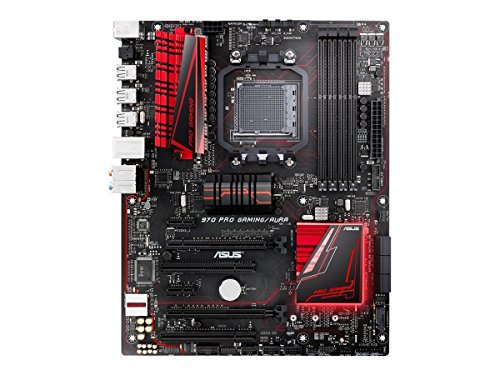
ASUS 970 Pro Gaming/Aura
6.9/10

Overall score

Score
6.9/ 10
✕
What it is
Our main score for this model, 1–10. It combines specs, expert reviews, best-of lists, owners and ratings from across the web.
How we count it
Parts: Technical score 40%, Reviews score 20%, List score 20%, Sentiment score 10%, User score 10%
Marks: Each part gets a mark out of 10. For reviews, lists and owners, a typical model in this category gets about 8 and the best one gets 10.
No data yet: A part with no data shows "?". It counts as the mark of a weaker model in this category (4 in 5 models with data score higher). This way, models with reviews, lists and owners usually come out ahead.
Score distribution
â–¼
<55-66-77-88-99-10
Score components

40%

4.6

Technical score

20%

8.6

Reviews score

20%

?

List scoreNot enough data yet, so we use 7.5, the mark of a weaker model in this category

10%

9.4

Sentiment score

10%

8.9

User score

â–¼Worse than 54% of motherboards
7.8

Value for money

Value for money
7.8/ 10
✕
What it is
An indicator that combines the motherboard's overall rating with its cost.
When it matters
When you are looking for a motherboard that offers a strong balance of features, performance, and price.
Score distribution
â–¼
<55-66-77-88-99-10
Score components

70%

6.9

Overall score

30%

9.9

Price

â–²Better than 53%
4.6

Technical score

Technical score
4.6/ 10
✕
What it is
How good the specs are compared with the other models in this category, 1–10.
How we count it
Areas: We rate the specs in each area against the other models in this category.
Weighting: The areas that matter most to buyers count more. The shares are shown under Score components.
Share: The technical score is 40% of the overall score.
Score distribution
â–¼
<55-66-77-88-99-10
Score components

19%

3.9

Memory

16%

5.5

Platform

16%

4.1

Storage

15%

3.1

Network

13%

4.2

Ports

8%

4.4

Expansion

8%

5.9

Power & Cooling

5%

8.7

Audio

â–¼Worse than 84%
8.6

Reviews score

Reviews score
8.6/ 10
✕
What it is
Average grade from independent test sites, magazines and video reviewers, 1–10.
How we count it
Grades: Each review's own score is converted to 1–10; without one, we grade the review ourselves. Big test sites count more, short reviews half as much as full tests. A video review counts half.
Score: The average grade is 80% of the review mark; the number of reviews is the other 20% (1 review = 5, the typical number in this category = 8, the most-reviewed model = 10).
Enough data: With few reviews, the average grade is pulled toward the typical grade of this category. No reviews yet: 7.8 for now.
Share: Reviews count 20% of the overall score.
Score distribution
â–¼
<55-66-77-88-99-10

80%

8.5

Average grade

20%

8.8

Popularity

Grades by review (7)
5 reviews: 2 with a printed score, 3 estimated from the review. 2 video reviews, each counting half as much as a written test. Reviews count 20% of the overall score.
Ratings from across the web count in the User score, not in this score.
â–²Better than 78%
8.9

User score

User score
8.9/ 10
✕
What it is
How happy buyers are with this model, based on ratings from across the web.
How we count it
Enough data: A model needs at least 1 rating from across the web. Without one, it counts as 7.9, the mark of a weaker rated model in this category.
Share: User score counts 10% of the overall score.
Score distribution
â–¼
<55-66-77-88-99-10

70%

8.8

Rating

30%

9.3

Popularity

â–²Better than 74%
?

List score

List score
7.5/ 10
✕
What it is
How often independent test sites, magazines and video reviewers put this model in their best-of lists for this category.
How we count it
Points: The model in the most lists of this category gets 10; the others get 8 to 10 in proportion. In no list yet: 7.5. Lists count 20% of the overall score.
Enough data: Every list counts, even a single one. With fewer than 5 best-of lists in the category, this part is left out.
Lists with this model (0)
Not in any best-of list yet, so this part counts as 7.5. Models in a list get 8 to 10.
Not in any best-of list yet
  • asus-970-pro-gaming-aura
  • asus-970-pro-gaming-aura
asus-970-pro-gaming-aura
Where to buy
*As an Amazon Associate, we earn from qualifying purchases.
Best rankings
Available: ranking among products currently available (including other versions of this product).All: ranking among all products in the database.

What reviewers say about the ASUS 970 Pro Gaming/Aura

Based on 5 · 2

Reviewers praise strong overclocking, multi-GPU support and solid power delivery, but criticize slower PCIe speeds and a dated feature set.
Praised
Criticised
Pick a topic to see who said what
Loading...
Loading category ranking...

Technical Specifications of motherboard ASUS 970 Pro Gaming/Aura

Technical score
Technical score
4.6/ 10
✕
What it is
How good the specs are compared with the other models in this category, 1–10.
How we count it
Areas: We rate the specs in each area against the other models in this category.
Weighting: The areas that matter most to buyers count more. The shares are shown under Score components.
Share: The technical score is 40% of the overall score.
Score distribution
â–¼
<55-66-77-88-99-10
Score components:

19%

3.9

Memory

16%

5.5

Platform

16%

4.1

Storage

15%

3.1

Network

13%

4.2

Ports

8%

4.4

Expansion

8%

5.9

Power & Cooling

5%

8.7

Audio

4.6
Reviews score
8.6
User score
8.9
List score
?
Value for money
Value for money
7.8/ 10
✕
What it is
An indicator that combines the motherboard's overall rating with its cost.
When it matters
When you are looking for a motherboard that offers a strong balance of features, performance, and price.
Score distribution
â–¼
<55-66-77-88-99-10
Score components:

70%

6.9

Overall score

30%

9.9

Price

7.8
CPU socket
AM3+
This motherboard uses AM3+, which is less up-to-date than 96.7% of Motherboards and the same as 0.7% of Motherboards.
CPU platform
AMD
Chipset
AMD 970
This motherboard uses AMD 970, which is less capable than 91% of Motherboards and as capable as 0.1% of Motherboards.
Form factor
ATX
Integrated graphics support
no
This motherboard does not support integrated graphics. 89.9% of motherboards support this feature.
Show more
What reviewers say
DDR memory version
DDR3
This motherboard uses DDR3, which is less modern than 86.9% of Motherboards and the same as 13.2% of Motherboards.
Memory slots
4
This motherboard has 4 Memory slots, which is more than 21.9% of motherboards and equal to 72% of motherboards.
Maximum memory capacity
32 GB
This motherboard supports up to 32 GB of memory, which is less than 87% of motherboards and equal to 11.1% of motherboards.
Memory channels
2
Maximum RAM speed
2,133 MT/s
This motherboard supports memory speeds up to 2,133 MT/s, which is lower than that of 87.2% of motherboards and equal to that of 4.3% of motherboards.
Show more
N. of M.2 sockets
1
This motherboard has 1 M.2 sockets, which is fewer than 69.5% of motherboards and equal to 18.9% of motherboards.
M.2 slot interface per slot
1x PCIe 2.0 x4/SATA
This motherboard offers M.2 slots: 1x PCIe 2.0x4/SATA, which is slower than 85% of Motherboards and the same as 0.4% of Motherboards.
N. of SATA 3 connectors
6
This motherboard has 6 SATA 3 connectors, which is more than 53.5% of motherboards and equal to 31.2% of motherboards.
Supported RAID levels
0/1/5/10
This motherboard RAID support: 0/1/5/10, which is more flexible than 32.5% of Motherboards and the same as 67.5% of Motherboards.
NVMe RAID support
no
This motherboard does not support NVMe RAID. 59.9% of motherboards support this feature.
Show more
What reviewers say
N. of PCIe 5.0 x16 slots
0
This motherboard has 0 PCIe 5.0x16 slots, which is fewer than 31.6% of motherboards and equal to 68.4% of motherboards.
N. of PCIe 4.0 x16 slots
0
This motherboard has 0 PCIe 4.0x16 slots, which is fewer than 44.8% of motherboards and equal to 55.2% of motherboards.
N. of PCIe 3.0 x16 slots
0
This motherboard has 0 PCIe 3.0x16 slots, which is fewer than 59.6% of motherboards and equal to 40.4% of motherboards.
PCIe slot electrical configuration
x16/x0, x8/x8
This motherboard splits its PCIe lanes as x16/x0, x8/x8, which is less generous than 76.4% of Motherboards and the same as 2.9% of Motherboards.
PCIe bifurcation support
yes
This motherboard supports PCIe bifurcation. 40.3% of motherboards support this feature.
Show more
What reviewers say
Total USB ports (rear I/O)
10
This motherboard has 10 USB ports (rear I/O), which is more than 75.7% of motherboards and equal to 15.4% of motherboards.
Total USB ports (including headers)
18
This motherboard has 18 USB ports (including headers), which is more than 81.8% of motherboards and equal to 5.2% of motherboards.
Total USB-C ports (rear I/O)
0
This motherboard has 0 USB-C ports (rear I/O), which is fewer than 64.2% of motherboards and equal to 35.8% of motherboards.
Total USB-C ports (including headers)
0
This motherboard has 0 USB-C ports (including headers), which is fewer than 69.5% of motherboards and equal to 30.5% of motherboards.
N. of USB 3.2 Gen2x2 ports (USB-C)
0
This motherboard has 0 USB 3.2 Gen2x2 ports (USB-C), which is fewer than 18% of motherboards and equal to 82% of motherboards.
10Gbps excluded.
Show more
LAN speed
1 Gbps
This motherboard supports LAN speeds up to 1 Gbps, which is lower than that of 51.1% of motherboards and equal to that of 48.9% of motherboards.
LAN controller
Intel I211-AT
This motherboard has a Intel I211-AT LAN controller, which is faster than 50.6% of Motherboards and equal to 2.3% of Motherboards.
N. of RJ45 ports
1
This motherboard has 1 RJ45 ports, which is fewer than 14.4% of motherboards and equal to 85.6% of motherboards.
Wi-Fi connectivity
no
This motherboard does not support Wi-Fi connectivity. 50.1% of motherboards support this feature.
Wi-Fi version
N/A
Show more
Audio codec
Realtek ALC1150
This motherboard uses Realtek ALC1150, which is higher-end than 53% of Motherboards and the same as 9.1% of Motherboards.
Audio channels
7.1
This motherboard offers 7.1 audio channels, which is more than 4.7% of motherboards and equal to 95.3% of motherboards.
Audio SNR
115 dB
This motherboard has an audio SNR of 115 dB, which is higher than that of 47.7% of motherboards and equal to that of 7.6% of motherboards.
Headphone amp support
yes
This motherboard supports a headphone amp. 41.2% of motherboards support this feature.
supports up to 300Ω.
N. of 3.5mm audio jacks
6
This motherboard has 6 3.5mm audio jacks, which is more than 87% of motherboards and equal to 13% of motherboards.
Show more
VRM phases
7+1
This motherboard has 7+1 VRM phases, which is fewer than 77.1% of motherboards and equal to 0.2% of motherboards.
N. of CPU power connectors
1
This motherboard has 1 CPU power connectors, which is fewer than 45.2% of motherboards and equal to 54.9% of motherboards.
N. of fan headers
6
This motherboard has 6 fan headers, which is more than 50% of motherboards and equal to 22.3% of motherboards.
Pump header
yes
This motherboard has a pump header. 22.1% of motherboards include this feature.
Pump header max current
1 A
This motherboard supports up to 1 A on the pump header, which is lower than that of 56.5% of motherboards and equal to that of 19.6% of motherboards.
Show more
What reviewers say

ASUS 970 Pro Gaming/Aura vs the average motherboard

246810TotalPlatformMemoryStorageExpansionPortsNetworkAudioPower & Cooling
  • 2 more rear USB ports
    This motherboard has more rear USB ports than the average motherboard (10 vs 8). The average motherboard has 8 rear USB port/s.
    10 vs 8
  • 2 more PCI slots
    This motherboard has more PCI slots than the average motherboard (2 vs 0). The average motherboard has 0 PCI slot/s.
    2 vs 0
  • 3 more total USB connections
    This motherboard has more total USB connections than the average motherboard (18 vs 15). The average motherboard has 15 total USB connections.
    18 vs 15
  • 2 more PCIe 2.0x16 slots
    This motherboard has more PCIe 2.0x16 slots than the average motherboard (2 vs 0). The average motherboard has 0 PCIe 2.0x16 slot/s.
    2 vs 0
  • More capable LAN controller
    This motherboard has a faster LAN controller than the average motherboard (Intel I211-AT vs Killer + Intel + Realtek).
    Intel I211-AT vs Killer + Intel + Realtek
  • 3 more 3.5mm audio jacks
    This motherboard has more 3.5mm audio jacks than the average motherboard (6 vs 3). The average motherboard has 3 3.5mm audio jacks.
    6 vs 3
  • 17.8% higher review score
    Reviews score
    8.6/ 10
    ✕
    What it is
    Average grade from independent test sites, magazines and video reviewers, 1–10.
    How we count it
    Grades: Each review's own score is converted to 1–10; without one, we grade the review ourselves. Big test sites count more, short reviews half as much as full tests. A video review counts half.
    Score: The average grade is 80% of the review mark; the number of reviews is the other 20% (1 review = 5, the typical number in this category = 8, the most-reviewed model = 10).
    Enough data: With few reviews, the average grade is pulled toward the typical grade of this category. No reviews yet: 7.8 for now.
    Share: Reviews count 20% of the overall score.
    Score distribution
    â–¼
    <55-66-77-88-99-10

    80%

    8.5

    Average grade

    20%

    8.8

    Popularity

    Grades by review (7)
    5 reviews: 2 with a printed score, 3 estimated from the review. 2 video reviews, each counting half as much as a written test. Reviews count 20% of the overall score.
    Ratings from across the web count in the User score, not in this score.
    8.6 vs 7.3
  • More capable onboard audio
    This motherboard has a higher-end audio codec than the average motherboard (Realtek ALC1150 vs Realtek ALC897).
    Realtek ALC1150 vs Realtek ALC897
  • 17.8% higher review score
    Reviews score
    8.6/ 10
    ✕
    What it is
    Average grade from independent test sites, magazines and video reviewers, 1–10.
    How we count it
    Grades: Each review's own score is converted to 1–10; without one, we grade the review ourselves. Big test sites count more, short reviews half as much as full tests. A video review counts half.
    Score: The average grade is 80% of the review mark; the number of reviews is the other 20% (1 review = 5, the typical number in this category = 8, the most-reviewed model = 10).
    Enough data: With few reviews, the average grade is pulled toward the typical grade of this category. No reviews yet: 7.8 for now.
    Share: Reviews count 20% of the overall score.
    Score distribution
    â–¼
    <55-66-77-88-99-10

    80%

    8.5

    Average grade

    20%

    8.8

    Popularity

    Grades by review (7)
    5 reviews: 2 with a printed score, 3 estimated from the review. 2 video reviews, each counting half as much as a written test. Reviews count 20% of the overall score.
    Ratings from across the web count in the User score, not in this score.
    8.6 vs 7.3
  • 25.3% higher sentiment score
    9.4 vs 7.5
  • 20.3% higher user score
    User score
    8.9/ 10
    ✕
    What it is
    How happy buyers are with this model, based on ratings from across the web.
    How we count it
    Enough data: A model needs at least 1 rating from across the web. Without one, it counts as 7.9, the mark of a weaker rated model in this category.
    Share: User score counts 10% of the overall score.
    Score distribution
    â–¼
    <55-66-77-88-99-10

    70%

    8.8

    Rating

    30%

    9.3

    Popularity

    8.9 vs 7.4
  • 2 more SATA 3 connectors
    This motherboard has more SATA 3 connectors than the average motherboard (6 vs 4). The average motherboard has 4 SATA 3 connectors.
    6 vs 4
  • 2 more PCI slots
    This motherboard has more PCI slots than the average motherboard (2 vs 0). The average motherboard has 0 PCI slot/s.
    2 vs 0
  • 2 more PCIe 2.0x16 slots
    This motherboard has more PCIe 2.0x16 slots than the average motherboard (2 vs 0). The average motherboard has 0 PCIe 2.0x16 slot/s.
    2 vs 0
  • 1 more PCIe x1 slots
    This motherboard has more PCIe x1 slots than the average motherboard (2 vs 1). The average motherboard has 1 PCIe x1 slot/s.
    2 vs 1
  • 2 more rear USB ports
    This motherboard has more rear USB ports than the average motherboard (10 vs 8). The average motherboard has 8 rear USB port/s.
    10 vs 8
  • 3 more total USB connections
    This motherboard has more total USB connections than the average motherboard (18 vs 15). The average motherboard has 15 total USB connections.
    18 vs 15
  • 1 more USB 2.0 headers
    This motherboard has more USB 2.0 headers than the average motherboard (3 vs 2). The average motherboard has 2 USB 2.0 header/s.
    3 vs 2
  • More capable LAN controller
    This motherboard has a faster LAN controller than the average motherboard (Intel I211-AT vs Killer + Intel + Realtek).
    Intel I211-AT vs Killer + Intel + Realtek
  • 3 more 3.5mm audio jacks
    This motherboard has more 3.5mm audio jacks than the average motherboard (6 vs 3). The average motherboard has 3 3.5mm audio jacks.
    6 vs 3
  • More capable onboard audio
    This motherboard has a higher-end audio codec than the average motherboard (Realtek ALC1150 vs Realtek ALC897).
    Realtek ALC1150 vs Realtek ALC897
  • Includes onboard RGB lighting
    This motherboard has onboard RGB lighting, while the average motherboard does not. 50% of motherboards include onboard RGB lighting.
    integrated Aura Sync lighting
  • More basic chipset
    This motherboard uses a more basic chipset than the average motherboard (AMD 970 vs Intel B860).
    AMD 970 vs Intel B860
  • 60% lower LAN speed
    This motherboard has a lower LAN speed than the average motherboard (1 Gbps vs 2.5 Gbps). The average motherboard offers LAN speed of 2.5 Gbps.
    1 Gbps vs 2.5 Gbps
  • Slower NVMe storage slots
    This motherboard has slower M.2 slots than the average motherboard (1x PCIe 2x4/SATA vs 1x PCIe 5x4, 2x PCIe 4x4).
    1x PCIe 2.0x4/SATA vs 1x PCIe 5.0x4, 2x PCIe 4.0x4
  • 75% less maximum memory capacity
    This motherboard has fewer maximum memory capacity than the average motherboard (32 GB vs 128 GB). The average motherboard supports 128 GB of memory.
    32 GB vs 128 GB
  • No NVMe RAID support
    This motherboard does not support NVMe RAID, while the average motherboard does. 59.9% of motherboards support NVMe RAID.
  • More dated memory type
    This motherboard uses a more dated memory type than the average motherboard (DDR3 vs DDR4).
    DDR3 vs DDR4
  • No Wi-Fi connectivity
    This motherboard does not support Wi-Fi connectivity, while the average motherboard does. 50.1% of motherboards support Wi-Fi connectivity.
  • No BIOS flashback support
    This motherboard does not support BIOS flashback, while the average motherboard does. 51.3% of motherboards support BIOS flashback.
  • More basic chipset
    This motherboard uses a more basic chipset than the average motherboard (AMD 970 vs Intel B860).
    AMD 970 vs Intel B860
  • No BIOS flashback support
    This motherboard does not support BIOS flashback, while the average motherboard does. 51.3% of motherboards support BIOS flashback.
  • No integrated graphics support
    This motherboard does not support integrated graphics, while the average motherboard does. 89.8% of motherboards support integrated graphics.
  • More dated socket
    This motherboard uses a more dated socket than the average motherboard (AM3+ vs LGA 1151).
    AM3+ vs LGA 1,151
  • Not ready for Windows 11
    This motherboard is not ready for Windows 11, while the average motherboard is. 77.4% of motherboards are ready for Windows 11.
  • Narrower Windows support
    This motherboard supports a narrower range of Windows versions than the average motherboard (Windows 10, Windows 8.1, Windows 8, Windows 7 vs Windows 11, Windows 10).
    Windows 10, Windows 8.1, Windows 8, Windows 7 vs Windows 11, Windows 10
  • 75% less maximum memory capacity
    This motherboard has fewer maximum memory capacity than the average motherboard (32 GB vs 128 GB). The average motherboard supports 128 GB of memory.
    32 GB vs 128 GB
  • More dated memory type
    This motherboard uses a more dated memory type than the average motherboard (DDR3 vs DDR4).
    DDR3 vs DDR4
  • 54.6% lower maximum RAM speed
    This motherboard has a lower maximum RAM speed than the average motherboard (2,133 MT/s vs 4,699.5 MT/s). The average motherboard supports RAM speed of 4,699.5 MT/s.
    2,133 MT/s vs 4,699.5 MT/s
  • 57.3% lower overclocked RAM speed
    This motherboard has a lower overclocked RAM speed than the average motherboard (2,133 MT/s vs 5,000 MT/s). The average motherboard supports overclocked RAM speed of 5,000 MT/s.
    2,133 MT/s vs 5,000 MT/s
  • Slower NVMe storage slots
    This motherboard has slower M.2 slots than the average motherboard (1x PCIe 2x4/SATA vs 1x PCIe 5x4, 2x PCIe 4x4).
    1x PCIe 2.0x4/SATA vs 1x PCIe 5.0x4, 2x PCIe 4.0x4
  • No NVMe RAID support
    This motherboard does not support NVMe RAID, while the average motherboard does. 59.9% of motherboards support NVMe RAID.
  • 1 fewer M.2 sockets
    This motherboard has fewer M.2 sockets than the average motherboard (1 vs 2). The average motherboard has 2 M.2 socket/s.
    1 vs 2
  • Less generous lane split
    This motherboard splits its PCIe lanes less generously than the average motherboard (x16/x0, x8/x8 vs x16/x0/x4, x8/x8/x4).
    x16/x0, x8/x8 vs x16/x0/x4, x8/x8/x4
  • 1 fewer PCIe 3.0x16 slots
    This motherboard has fewer PCIe 3.0x16 slots than the average motherboard (0 vs 1). The average motherboard has 1 PCIe 3.0x16 slot/s.
    0 vs 1
  • 4 fewer USB 3.2 Gen1 ports
    This motherboard has fewer USB 3.2 Gen1 ports than the average motherboard (0 vs 4). The average motherboard has 4 USB 3.2 Gen1 port/s.
    0 vs 4
  • 1 fewer rear USB-C ports
    This motherboard has fewer rear USB-C ports than the average motherboard (0 vs 1). The average motherboard has 1 rear USB-C port/s.
    0 vs 1
  • 1 fewer USB 3.2 Gen2 ports
    This motherboard has fewer USB 3.2 Gen2 ports than the average motherboard (0 vs 1). The average motherboard has 1 USB 3.2 Gen2 port/s.
    0 vs 1
  • 1 fewer DisplayPort outputs
    This motherboard has fewer DisplayPort outputs than the average motherboard (0 vs 1). The average motherboard has 1 DisplayPort outputs.
    no onboard video outputs
    0 vs 1
  • 1 fewer total USB-C connections
    This motherboard has fewer total USB-C connections than the average motherboard (0 vs 1). The average motherboard has 1 total USB-C connections.
    0 vs 1
  • 60% lower LAN speed
    This motherboard has a lower LAN speed than the average motherboard (1 Gbps vs 2.5 Gbps). The average motherboard offers LAN speed of 2.5 Gbps.
    1 Gbps vs 2.5 Gbps
  • No Wi-Fi connectivity
    This motherboard does not support Wi-Fi connectivity, while the average motherboard does. 50.1% of motherboards support Wi-Fi connectivity.
  • No Wi-Fi antenna included
    This motherboard does not include a Wi-Fi antenna, while the average motherboard does. 51.1% of motherboards include a Wi-Fi antenna.
  • 2 fewer ARGB headers
    This motherboard has fewer ARGB headers than the average motherboard (0 vs 2). The average motherboard has 2 ARGB header/s.
    0 vs 2
  • Fewer VRM phases
    This motherboard has fewer VRM phases than the average motherboard (7+1 vs 10). The average motherboard has 10 VRM phase/s.
    7+1 vs 10
  • 1 A lower pump header current limit
    This motherboard has a lower pump header current than the average motherboard (1 A vs 2 A). The average motherboard provides pump header current of 2 A.
    1 A vs 2 A

Video reviews

Hands-on testing, unboxing, and real-world video evaluations

9.0
Actually Hardcore Overclocking
≈ estimated
12/10/2016
First look · VRM and feature analysis
Verdict
ASUS 970 Pro Gaming/Aura is a great board for its price, though Phenom core unlocking is missing.
Hands-on video, no verdict
Not graded

Expert reviews

In-depth analysis and verdict from leading tech publications

8.0
tomshardware.com
≈ estimated
11/05/2016
Hands-on review · Budget AMD board
Verdict
The ASUS 970 Pro Gaming/Aura is a great value on an older AMD chipset, with good overclocking and a familiar BIOS.
9.0
vortez.net
≈ estimated
07/02/2016
Benchmark review · RGB gaming board
Verdict
The ASUS 970 Pro Gaming/Aura is a sensible choice for a modest AM3+ gaming build, with solid build quality and RGB lighting that can show CPU temperature.
9.5
profesionalreview.com
✓ explicit
21/04/2016
Hands-on review · AM3+ gaming board
Verdict
The ASUS 970 Pro Gaming/Aura is a well-cooled AM3+ board with two graphics slots and good value, though its M.2 slot runs at PCIe 2.0 speed.
9.0
geeknetic.es
✓ explicit
02/05/2016
Long-term test · Daily use
Verdict
The ASUS 970 Pro Gaming/Aura is a budget AMD board for mixed work, gaming and server use, with an M.2 slot for NVMe drives but no PCIe 3.0.
9.0
hardwareviews.com
≈ estimated
2 de noviembre de 2016
Lab test · AM3+ gaming board
Verdict
The ASUS 970 Pro Gaming/Aura is an entry-level gaming board for AMD FX chips, with SLI support and M.2 storage, but it has no video outputs.

Third-party reviews

What customers like about ASUS 970 Pro Gaming/Aura

  • High-quality build with high-end components and electrostatic discharge (ESD) protection
  • Excellent overclocking potential with a robust 7+1 phase power design
  • First AMD 970 chipset officially certified for NVIDIA SLI support
  • Includes modern features like an M.2 slot and dual USB 3.1 Type-A ports
  • Customizable Aura RGB LED lighting with various effects
  • Feature-rich and easy-to-use UEFI BIOS software
  • Strong audio performance via SupremeFX technology and high SNR

What customers don't like about ASUS 970 Pro Gaming/Aura

  • VRM heatsinks can run very hot due to their undersized or high-profile design
  • DIMM slots are positioned very close to the CPU socket, potentially interfering with large coolers
  • Limited to PCIe 2.0 speeds, which is a constraint of the aging AM3+ platform
  • RGB lighting is localized to specific areas rather than distributed throughout the board
  • Some users reported the Aura lighting software as minimal or difficult to control for certain zones
  • Lacks onboard graphics, requiring a dedicated GPU for any display output

Verdict

The ASUS 970 Pro Gaming/Aura is an ATX motherboard designed for the AMD AM3+ socket, featuring the AMD 970 chipset and SB950 Southbridge. It supports up to 32GB of Dual-Channel DDR3 memory at overclocked speeds of 2133 MHz and is notably the first 970-chipset board officially certified for both NVIDIA SLI and AMD CrossFireX. Modern connectivity highlights include an NVMe-ready M.2 slot (PCIe 2.0 x4), two USB 3.1 Type-A ports (10Gbps), and Intel I211-AT Gigabit Ethernet. It excels with high-quality SupremeFX audio, customizable Aura RGB lighting, and an 8-phase power design with a dedicated water-pump header. However, it is held back by the aging AM3+ platform's PCIe 2.0 limitations, undersized heatsinks that can lead to high temperatures under heavy load, and a lack of onboard graphics.

Compare ASUS 970 Pro Gaming/Aura with other products in the Motherboards category

1Product to compare no. 1
VS
2Product to compare no. 2
VS
3Product to compare no. 3 (optional)

Graphic comparison of ASUS 970 Pro Gaming/Aura and other products in the Motherboards category

No results found