Scored using Microphones Methodology v1.0
Microphones Methodology v1.0
Mathematical & Unbiased Scoring
Products in this category are evaluated mathematically under Frontumo Microphones Methodology v1.0 using verified laboratory benchmarks, technical specifications, and authentic consumer ratings with 0% commercial bias.
Explore Microphones Methodology v1.0

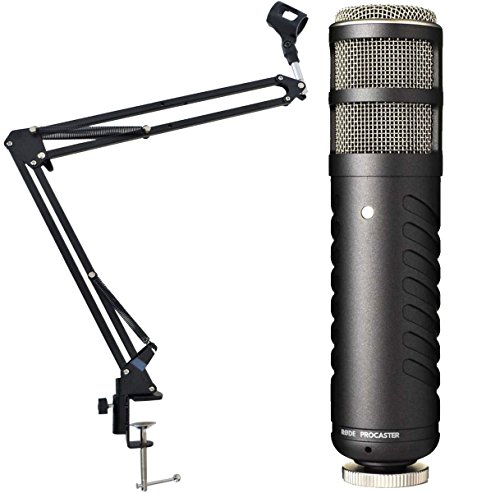
RODE Procaster Review | 76 Data compared

Avg. price:~£150Connection type:XLRTransducer type:dynamicMax SPL:?Supported sample rates:N/A kHzOutput connector type:XLR

RODE Procaster Review: Compare 76 technical specifications and user reviews to see how this product ranks in the Microphones category and whether it is worth buying.

5.7

Overall score

Score
5.7/ 10
✕
What it is
An overall evaluation of the microphone's quality, based on technical analyses and user reviews.
When it matters
When you need a quick reference to identify the best microphones on the market.
Score distribution
▼
<55-66-77-88-99-10
Score components

75%

5.4

Technical score

25%

6.5

User score

▼Worse than 97% of microphones
5.4

Technical score

Technical score
5.4/ 10
✕
What it is
An assessment of technical performance for products in the Microphones category across these key areas: Audio Performance, Connectivity, Recording, Pickup Patterns, Controls & Features, Power, Design, Accessories, Compatibility.
When it matters
When you want to compare microphones based on technical performance and available features.
Score distribution
▼
<55-66-77-88-99-10
Score components

20%

7.1

Audio Performance

20%

4.0

Recording

16%

3.2

Pickup Patterns

16%

3.9

Controls & Features

10%

7.0

Power

7%

8.6

Compatibility

5%

6.5

Connectivity

3%

5.5

Design

3%

8.3

Accessories

▼Worse than 96% of microphones
6.5

User score

User score
6.5/ 10
✕
What it is
A rating that combines user reviews and the total number of reviews received by the microphone.
When it matters
When you want to know how a microphone performs in real use and how reliable it remains over time according to user feedback.
Score distribution
▼
<55-66-77-88-99-10
Score components

70%

8.0

User ratings

30%

2.9

Number of reviews

Based on 7 buyer reviews from online shops.
How we calculate this
User ratings – average star rating across all shop listings, weighted by how many reviews each has, on a 1–10 scale.
Number of reviews – how many buyer reviews the product has, on a logarithmic scale; the 8% most-reviewed models in the category get 10.
▼Worse than 98% of microphones
  • rode-procaster
  • rode-procaster
  • rode-procaster
  • rode-procaster
  • rode-procaster
rode-procaster
rode-procaster
rode-procaster
rode-procaster
rode-procaster

Best prices

*As an Amazon Associate, we earn from qualifying purchases.

Best rankings

Available: ranking among products currently available (including other versions of this product).All: ranking among all products in the database.
Loading...
Loading category ranking...

Technical Specifications of microphone RODE Procaster

Technical score
Technical score
5.4/ 10
✕
What it is
An assessment of technical performance for products in the Microphones category across these key areas: Audio Performance, Connectivity, Recording, Pickup Patterns, Controls & Features, Power, Design, Accessories, Compatibility.
When it matters
When you want to compare microphones based on technical performance and available features.
Score distribution
▼
<55-66-77-88-99-10
Score components:

20%

7.1

Audio Performance

20%

4.0

Recording

16%

3.2

Pickup Patterns

16%

3.9

Controls & Features

10%

7.0

Power

7%

8.6

Compatibility

5%

6.5

Connectivity

3%

5.5

Design

3%

8.3

Accessories

5.4
User score
User score
6.5/ 10
✕
What it is
A rating that combines user reviews and the total number of reviews received by the microphone.
When it matters
When you want to know how a microphone performs in real use and how reliable it remains over time according to user feedback.
Score distribution
▼
<55-66-77-88-99-10
Score components

70%

8.0

User ratings

30%

2.9

Number of reviews

Based on 7 buyer reviews from online shops.
How we calculate this
User ratings – average star rating across all shop listings, weighted by how many reviews each has, on a 1–10 scale.
Number of reviews – how many buyer reviews the product has, on a logarithmic scale; the 8% most-reviewed models in the category get 10.
6.5
Popularity
Popularity
2.9/ 10
✕
What it is
An indicator based on the number of reviews received by the microphone.
When it matters
When you prefer to buy a product chosen and reviewed by many other consumers.
Score distribution
▼
<55-66-77-88-99-10
Popularity:
RODE Procaster has a popularity score of 2.9 points, which is lower than 66.3% of microphones.
2.9
Value for money
Value for money
6.9/ 10
✕
What it is
An indicator that combines the microphone's overall rating with its cost.
When it matters
When you are looking for a microphone with a good balance between quality and price.
Score distribution
▼
<55-66-77-88-99-10
Score components:

60%

5.7

Overall score

40%

9.7

Price

6.9
Microphone type
studio
Transducer type
dynamic
Diaphragm size
?
Capsule type
single
Sensitivity
-56 dBV/Pa
Show more
Connection type
XLR
Output connector type
XLR
Headphone output
yes
Headphone output
yes
This microphone includes a headphone output. 62.3% of microphones include this output.
3.5 mm audio jack
no
3.5 mm audio jack
no
This microphone does not include a 3.5 mm jack. 63.3% of microphones include this connector.
6.35 mm audio jack connector
no
6.35 mm audio jack connector
no
This microphone does not include a 6.35 mm jack. 2% of microphones include this connector.
Show more
Supported sample rates
N/A
Supported bit depths
N/A
Audio interface sample rate
N/A
Audio interface bit depth
N/A
Signal-to-noise ratio (DAC)
N/A
Show more
N. of polar patterns
1
N. of polar patterns
1
The number of selectable polar patterns offered by this microphone is 1, which is lower than that of 24.6% of microphones and equal to that of 75.4% of microphones.
Cardioid pattern
yes
Cardioid pattern
yes
This microphone supports a cardioid pickup pattern. 91% of microphones support this pattern.
Omnidirectional pattern
no
Omnidirectional pattern
no
This microphone does not support an omnidirectional pickup pattern. 26.1% of microphones support this pattern.
Hypercardioid pattern
no
Hypercardioid pattern
no
This microphone does not support a hypercardioid pickup pattern. 1.5% of microphones support this pattern.
Bidirectional pattern
no
Bidirectional pattern
no
This microphone does not support a bidirectional pickup pattern. 17.1% of microphones support this pattern.
Mute function
no
Mute function
no
This microphone does not include a mute function. 68.3% of microphones include this control.
Onboard gain control
no
Onboard gain control
no
This microphone does not include onboard gain control. 51.3% of microphones include this control.
Volume control levels
0
Volume control levels
0
This microphone offers volume output of 0 which is lower than that of 65.7% of microphones and equal to that of 34.3% of microphones.
Flat DSP mode
no
Flat DSP mode
no
This microphone does not support a flat DSP mode. 25.6% of microphones offer this processing option.
DSP presets
0
DSP presets
0
This microphone offers 0 DSP presets, which is fewer than 16.6% of microphones and equal to 83.4% of microphones.
Show more
Phantom power required
no
Phantom power required
no
This microphone does not require phantom power. 90.5% of microphones also operate without phantom power.
Phantom power voltage
N/A
USB bus-powered
no
USB bus-powered
no
This microphone does not support USB bus power. 86.4% of microphones support USB-powered operation.
Battery life
N/A
Height
214 mm
Height
214 mm
This microphone is 214 mm tall, which is taller than 73.9% of microphones.
Width
53 mm
Width
53 mm
This microphone is 53 mm wide, which is narrower than 64.6% of microphones and equal in width to 0.5% of microphones.
Thickness
53 mm
Thickness
53 mm
This microphone is 53 mm thick, which is thinner than 61.1% of microphones and equal in thickness to 0.5% of microphones.
Weight
745 g
Weight
745 g
This microphone weighs 745 g, which is heavier than 73.6% of microphones.
With included stand.
Body material
stainless steel
Show more
Included accessories
mount adapter; carrying case; ring mount
Shock mount included
yes
Shock mount included
yes
This microphone includes a shock mount. 49.3% of microphones include this accessory.
Integrated internal shock mount.
Pop filter included
yes
Pop filter included
yes
This microphone includes a pop filter. 60.3% of microphones include this accessory.
Windscreen included
no
Windscreen included
no
This microphone does not include a windscreen. 31.8% of microphones include this accessory.
Cable length
N/A
Android compatibility
no
Android compatibility
no
This microphone is not compatible with Android. 66.3% of microphones are compatible with Android.
iOS compatibility
yes
iOS compatibility
yes
This microphone is compatible with iOS. 61.3% of microphones are compatible with iOS.
Windows compatibility
yes
Windows compatibility
yes
This microphone is compatible with Windows. 100% of microphones are compatible with Windows.
Requires audio interface.
macOS compatibility
yes
macOS compatibility
yes
This microphone is compatible with macOS. 99.5% of microphones are compatible with macOS.
Requires audio interface.
Xbox compatibility
no
Xbox compatibility
no
This microphone is not compatible with Xbox. 1.5% of microphones are compatible with Xbox.
Show more

RODE Procaster vs the average microphone

246810TotalAudio PerformanceConnectivityRecordingPickup PatternsControls & FeaturesPowerDesignAccessoriesCompatibility
  • Supports balanced output
    Balanced output
    yes
    This microphone supports balanced output, the average microphone does not.
  • Includes shock mount
    Shock mount included
    yes
    This microphone includes a shock mount, the average microphone does not.
    Integrated internal shock mount.
  • No zero-latency monitoring
    Zero-latency monitoring
    no
    This microphone does not support zero-latency monitoring, the average microphone does.
  • No gain control
    Onboard gain control
    no
    This microphone does not include onboard gain control, the average microphone does.
  • 55 Hz higher low-frequency limit
    Lowest frequency
    75 Hz
    This microphone has a higher low-frequency cutoff than the average microphone (75 Hz vs 20 Hz). By comparison, the average microphone has a low-frequency limit of 20 Hz.
    75 Hz vs 20 Hz
  • No on-device controls
    On-device controls
    no
    This microphone does not place key controls on the device, the average microphone does. 79.5% of microphones place key controls on the device.
  • No mute function
    Mute function
    no
    This microphone does not include a mute function, the average microphone does.
  • No USB bus power
    USB bus-powered
    no
    This microphone does not support USB bus power, the average microphone does.
  • Not compatible with Android
    Android compatibility
    no
    This microphone is not compatible with Android, the average microphone is.
  • 2,000 Hz lower high-frequency limit
    Highest frequency
    18,000 Hz
    This microphone has a lower high-frequency limit than the average microphone (18000 Hz vs 20000 Hz). By comparison, the average microphone has a high-frequency limit of 20000 Hz.
    18,000 Hz vs 20,000 Hz
  • 23.9% lower user score
    User score
    6.5/ 10
    ✕
    What it is
    A rating that combines user reviews and the total number of reviews received by the microphone.
    When it matters
    When you want to know how a microphone performs in real use and how reliable it remains over time according to user feedback.
    Score distribution
    ▼
    ▼
    <55-66-77-88-99-10
    RODE Procaster
    the average microphone
    RODE Procaster has a lower user score than the average microphone (6.48 vs 8.027).
    6.48 vs 8.03
  • 15.4% worse value for money
    RODE Procaster has a lower value-for-money score than the average microphone (6.88 vs 7.9).
    6.88 vs 7.94
  • 2.14x more expensive
    RODE Procaster is more expensive than the average microphone (£150 vs £70).
    £150 vs £70
  • 2.12x less popular
    RODE Procaster has a lower popularity than the average microphone (2.93 vs 6.2).
    2.93 vs 6.22
  • 55 Hz higher low-frequency limit
    Lowest frequency
    75 Hz
    This microphone has a higher low-frequency cutoff than the average microphone (75 Hz vs 20 Hz). By comparison, the average microphone has a low-frequency limit of 20 Hz.
    75 Hz vs 20 Hz
  • 2,000 Hz lower high-frequency limit
    Highest frequency
    18,000 Hz
    This microphone has a lower high-frequency limit than the average microphone (18000 Hz vs 20000 Hz). By comparison, the average microphone has a high-frequency limit of 20000 Hz.
    18,000 Hz vs 20,000 Hz
  • No 3.5 mm jack
    3.5 mm audio jack
    no
    This microphone does not include a 3.5 mm jack, the average microphone does.
  • No zero-latency monitoring
    Zero-latency monitoring
    no
    This microphone does not support zero-latency monitoring, the average microphone does.
  • No gain control
    Onboard gain control
    no
    This microphone does not include onboard gain control, the average microphone does.
  • No on-device controls
    On-device controls
    no
    This microphone does not place key controls on the device, the average microphone does. 79.5% of microphones place key controls on the device.
  • No mute function
    Mute function
    no
    This microphone does not include a mute function, the average microphone does.
  • No USB bus power
    USB bus-powered
    no
    This microphone does not support USB bus power, the average microphone does.
  • 11 older release date
    Release date
    2009
    This microphone is older than the average microphone (2009 vs 2020). The average microphone was released in 2020.
    January 2009.
    2009 vs 2020
  • 34.7% heavier
    Weight
    745 g
    This microphone is heavier than the average microphone (745 g vs 553 g). The average microphone weighs 553 g.
    With included stand.
    745 g vs 553 g
  • 29 mm taller body
    Height
    214 mm
    This microphone is taller than the average microphone (214 mm vs 185 mm). The average microphone has a height of 185 mm.
    214 mm vs 185 mm
  • Not compatible with Android
    Android compatibility
    no
    This microphone is not compatible with Android, the average microphone is.

Video reviews

Hands-on testing, unboxing, and real-world video evaluations

Expert reviews

In-depth analysis and verdict from leading tech publications

M
musicradar.com
01/10/2020
Summary of the review
P
podcastage.com
06/09/2025
Summary of the review
C
chrismichaelharris.com
13/11/2020
Summary of the review
T
thepodcasthost.com
17/12/2018
Summary of the review
M
microphonegeeks.com
25/02/2020
Summary of the review
A
ask.video
16/07/2013
Summary of the review
M
mediaberry.co.uk
23/04/2023
Summary of the review
B
bonedo.de
23/04/2018
Summary of the review
H
heise.de
07/11/2019
Summary of the review
H
homerecording.info
25/02/2025
Summary of the review
F
fr.audiofanzine.com
20/12/2022
Summary of the review
Z
zdnet.fr
25/04/2024
Summary of the review
S
studio-microphone.com
[Sans date]
Summary of the review
F
fr.audiofanzine.com
20/12/2022
Summary of the review
A
ask.video
14/01/2014
Summary of the review
A
audiofader.com
01/05/2019
Summary of the review
M
musicmaker.nl
31/05/2019
Summary of the review
J
jelledrijver.nl
11/12/2018
Summary of the review

Third-party reviews

Based on 7 buyer reviews from online shops.
Reviews last updated: July 2026 · How we calculate this

What we like about RODE Procaster

  • Broadcast-quality, warm vocal tone tailored for speech and podcasting
  • Rugged, all-metal 'tank-like' build quality that feels professional and durable
  • Excellent background noise rejection due to its tight cardioid polar pattern
  • Great value for the price compared to high-end alternatives like the Shure SM7B
  • Includes a 10-year warranty upon registration, providing long-term confidence

What we don't like about RODE Procaster

  • Fairly gain-hungry, requiring a high-quality audio interface or preamp with at least 56-60dB of gain
  • Internal pop filter is often insufficient at stopping plosives, frequently requiring an external windscreen
  • Heavy and bulky design necessitates a sturdy boom arm or high-quality mic stand
  • Susceptible to handling noise if moved or touched during recording without a separate shock mount
  • Limited versatility for non-vocal applications, as it does not perform well on instruments like guitars

Verdict

The Rode Procaster is a professional broadcast-quality dynamic microphone specifically designed for voice applications like podcasting, streaming, and radio. It features an end-address cardioid polar pattern with a frequency range of 75Hz–18kHz, a sensitivity of -56.0dB, and an output impedance of 320 ohms. Its main characteristics include a robust all-metal construction, an internal pop filter for plosive control, and an integrated capsule shock mount to reduce handling noise. The primary pros are its exceptional ambient noise rejection, which is ideal for untreated rooms, its 10-year warranty, and its ability to deliver a rich, warm, and natural tone that rivals more expensive models. However, its notable cons include being quite 'gain-hungry,' often requiring a powerful preamp or gain booster for optimal performance, and its significant weight (745g), which necessitates a sturdy microphone arm or stand.

Compare RODE Procaster with other products in the Microphones category

1Product to compare no. 1
VS
2Product to compare no. 2
VS
3Product to compare no. 3 (optional)

Graphic comparison of RODE Procaster and other products in the Microphones category

No results found