E Yooso E 1010 Wireless Review | 78 Data compared

double-arrow
  • Avg. price in UK: ~£9
  • Avg. price in US: ~$10
  • Connectivity: wireless
  • Maximum polling rate: 250 Hz
  • Maximum DPI: 4800 DPI
  • Weight: 70 g

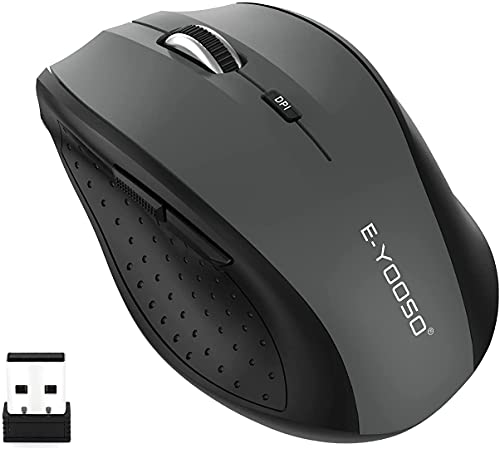
E Yooso E 1010 Wireless review. Compare 78 technical specifications and user reviews to see how it ranks among mice and if it is worth buying.

4.8

Overall score

What it is: An overall evaluation of the mouse's quality, based on technical analyses and user reviews.

When it matters: When you need a quick reference to identify the best mice on the market.

Score components:

80.0%

3.7

Technical Score

20.0%

9.2

User score

Poor
3.7

Technical Score

What it is: An assessment of the mouse's technical performance, covering key areas such as sensor performance, buttons and features, connectivity, battery life, ergonomics, software, and build quality.

When it matters: When you want to compare mice based on technical performance and available features.

Score components:

36.0%

2.2

Performance & Sensor

22.0%

1.8

Controls

16.0%

8.5

Design

14.0%

1.0

Features

7.0%

9.6

Connectivity

5.0%

6.6

Battery & Charging

Poor
9.2

User score

What it is: A rating that combines user reviews and the total number of reviews received by the mouse.

When it matters: When you want to understand how a mouse performs in daily use or gaming and how reliable it is in terms of comfort, button feel, tracking accuracy, and long-term durability.

Score components:

70.0%

8.8

User reviews

30.0%

10

Popularity

User score:
United Kingdom
amazon
4.4
(6817)
amazon
4.4
(594)
amazon
4.3
(191)
amazon
4.4
(182)
amazon
4.4
(167)
amazon
4.2
(36)
United States
Amazon_logo.png
4.4
(8528)
Amazon_logo.png
4.5
(110)
Amazon_logo.png
4.2
(37)

(Reviews last updated: May 2026)

Exceptional
  • 2.0
    Gaming

    Score components:

    28.0%

    1.4

    Maximum polling rate

    24.0%

    1.0

    N. of programmable buttons

    20.0%

    1.0

    Onboard memory profiles

    16.0%

    1.0

    Maximum tracking speed

    12.0%

    8.2

    Weight

  • e-yooso-e-1010-wireless
  • e-yooso-e-1010-wireless
  • e-yooso-e-1010-wireless
  • e-yooso-e-1010-wireless
  • e-yooso-e-1010-wireless
  • e-yooso-e-1010-wireless
  • e-yooso-e-1010-wireless
e-yooso-e-1010-wireless

Best prices in UK

Best rankings

?

Available: ranking among products currently available (including other versions of this product).
All: ranking among all products in the database.

Verdict

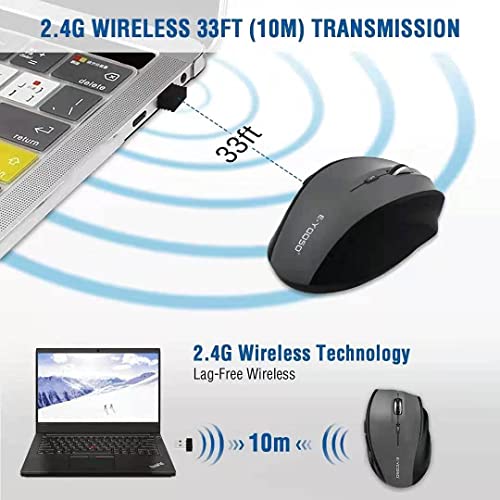
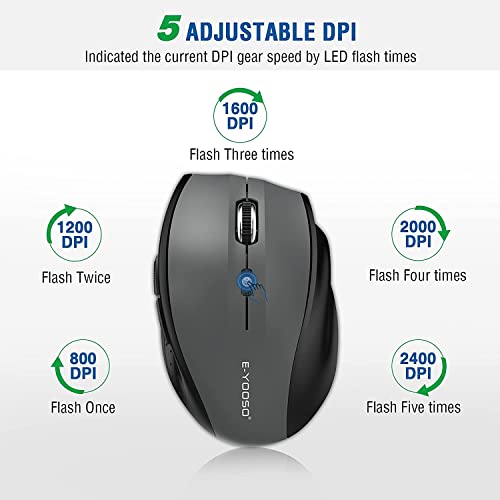
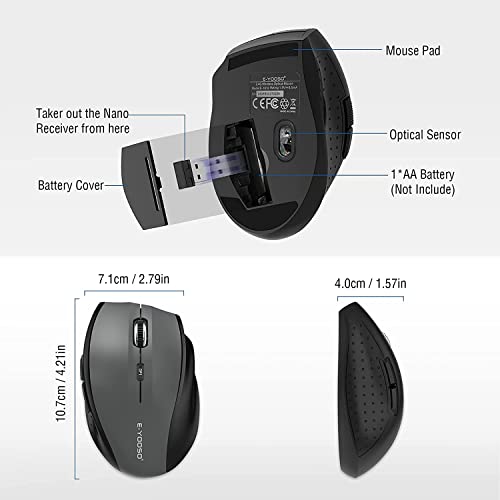
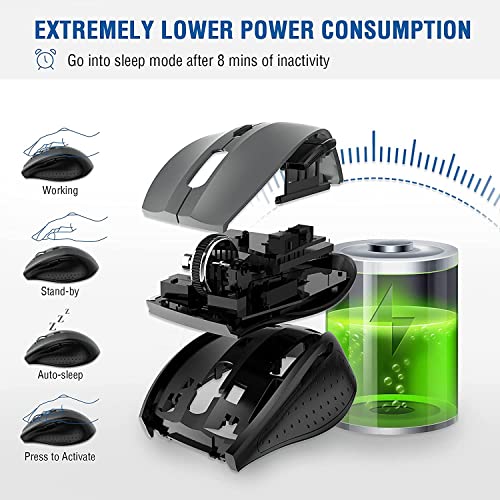
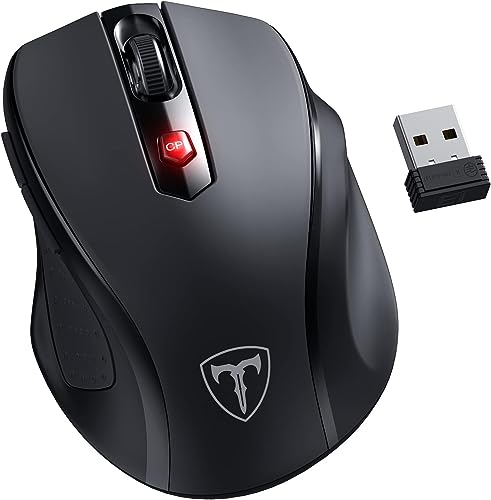
The E-Yooso E-1010 is an ergonomic 2.4GHz wireless mouse designed for productivity and light gaming, featuring a PixArt PAW3212 optical sensor with a maximum polling rate of 250Hz and five adjustable DPI levels ranging from 800 to 4800. Key characteristics include a lightweight 70g build, six buttons including forward/backward side buttons, and a transmission range of up to 10 metres. Its main pros are an exceptional 18-month battery life powered by a single AA battery, an anti-slip/anti-sweat custom material finish, and a smart auto-sleep mode that activates after 8 minutes of inactivity. Cons include the lack of Bluetooth or rechargeable capabilities, side buttons that are non-functional on macOS, and a lack of RGB lighting or advanced software customisation compared to dedicated gaming models.

Technical Specifications of E Yooso E 1010 Wireless

Technical Score

What it is: An assessment of the mouse's technical performance, covering key areas such as sensor performance, buttons and features, connectivity, battery life, ergonomics, software, and build quality.

When it matters: When you want to compare mice based on technical performance and available features.

Score components:

36.0%

2.2

Performance & Sensor

22.0%

1.8

Controls

16.0%

8.5

Design

14.0%

1.0

Features

7.0%

9.6

Connectivity

5.0%

6.6

Battery & Charging

3.7
E Yooso E 1010 Wireless has a technical score of 3.69 points, which is lower than that of 96% of products in this category.
User score

What it is: A rating that combines user reviews and the total number of reviews received by the mouse.

When it matters: When you want to understand how a mouse performs in daily use or gaming and how reliable it is in terms of comfort, button feel, tracking accuracy, and long-term durability.

Score components:

70.0%

8.8

User reviews

30.0%

10

Popularity

User score:
United Kingdom
amazon
4.4
(6817)
amazon
4.4
(594)
amazon
4.3
(191)
amazon
4.4
(182)
amazon
4.4
(167)
amazon
4.2
(36)
United States
Amazon_logo.png
4.4
(8528)
Amazon_logo.png
4.5
(110)
Amazon_logo.png
4.2
(37)

(Reviews last updated: May 2026)

9.2
E Yooso E 1010 Wireless has a user score of 9.16 points, which is higher than that of 76% of products in this category.
Popularity
What it is: An indicator based on the number of reviews received by the mouse.
When it matters: When you prefer a mouse that has already been chosen and reviewed by many other users.
10
E Yooso E 1010 Wireless has a popularity of 10 points, which is higher than 63.3% of products in this category.
Ratio quality/price

What it is: An indicator that combines the mouse's overall rating with its cost.

When it matters: When you are looking for a mouse that offers a strong balance of performance, features, and price.

Score components:

60.0%

4.8

Overall score

40.0%

10

Price

6.3
E Yooso E 1010 Wireless has a quality-to-price ratio of 6.3 points, which is lower than 88.3% of products in this category.
Brand name
What it is: The manufacturer or brand of the product.
When it matters: When you prefer a specific ecosystem, support network, or design philosophy.

Importance: MEDIUM

E
Maximum polling rate
What it is: The maximum number of position reports the mouse can send to the computer each second, measured in Hertz (Hz).
When it matters: When you are chasing the lowest possible input delay for competitive play and want the mouse reporting as often as possible.

Importance: HIGH

Good value: >=1000 Hz

250 Hz
E Yooso E 1010 Wireless has a maximum polling rate of 250 Hz, which is lower than 73.9% of mice and equal to 1.7% of mice.
Wired polling rate
What it is: The polling rate the mouse reaches when it is connected with a cable.
When it matters: When you mainly use the mouse wired and want maximum responsiveness.

Importance: HIGH

Good value: >=1000 Hz

N/A
2.4 GHz polling rate
What it is: The polling rate available when the mouse is used over a 2.4 GHz wireless connection.
When it matters: When you use the 2.4 GHz receiver and want near-wired performance.

Importance: HIGH

Good value: >=1000 Hz

250 Hz
E Yooso E 1010 Wireless has a 2.4 GHz polling rate of 250 Hz, which is lower than 67.9% of mice and equal to 2.9% of mice.
Bluetooth polling rate
What it is: The polling rate available when the mouse is connected through Bluetooth.
When it matters: When you use Bluetooth and want to understand the trade-off in responsiveness.

Importance: LOW

Good value: >=125 Hz

0 Hz
E Yooso E 1010 Wireless has a Bluetooth polling rate of 0 Hz, which is equal to 63% of mice.
2.4GHz only.
Show more
Connectivity
What it is: The mouse's high-level connectivity class: wired only, wireless only, or both wired and wireless.
When it matters: When you need to know at a glance whether the mouse is wired, wireless, or flexible enough to support both.

Importance: HIGH

wireless
E Yooso E 1010 Wireless supports wireless connectivity, which is more versatile than 35% of mice and equal to 21.7% of mice.
connection modes: 2.4 GHz.
Bluetooth support
What it is: Shows whether the mouse can connect over Bluetooth instead of relying only on a wired link or proprietary USB receiver.
When it matters: When you want a dongle-free connection option for laptops, tablets, or devices with limited USB ports.

Importance: MEDIUM

no
E Yooso E 1010 Wireless does not support Bluetooth. 35.6% of mice support Bluetooth.
Bluetooth version
What it is: The Bluetooth standard version supported by the mouse for wireless connectivity and compatibility.
When it matters: When you care about Bluetooth compatibility, efficiency, and connection quality.

Importance: LOW

Good value: >=5.1

N/A
Proprietary 2.4 GHz support
What it is: Shows whether the mouse supports the brand's dedicated 2.4 GHz wireless system rather than relying only on Bluetooth.
When it matters: When you want the brand's fast low-latency wireless mode instead of depending only on Bluetooth performance.

Importance: MEDIUM

yes
E Yooso E 1010 Wireless supports proprietary 2.4 GHz wireless. 38.5% of mice support proprietary 2.4 GHz wireless.
Receiver included
What it is: Shows whether a compatible wireless receiver is included in the box instead of needing to be bought separately.
When it matters: When you expect full wireless use immediately and do not want to buy extra accessories just to get started.

Importance: MEDIUM

yes
E Yooso E 1010 Wireless includes a receiver. 37.7% of mice include a receiver.
Show more
Battery life
What it is: The operating time the mouse can deliver on a full charge or a fresh set of batteries under normal use.
When it matters: When the mouse needs to last through workdays, travel, or repeated gaming sessions without constant charging.

Importance: HIGH

Good value: >400 hours

N/A
Battery capacity
What it is: The amount of energy the built-in battery can store, measured in milliampere-hours (mAh).
When it matters: When you want rough battery context behind the runtime claim instead of judging endurance from marketing hours alone.

Importance: MEDIUM

Good value: >=500 mAh

N/A
Battery form factor
What it is: The battery format used by the mouse, such as AA, AAA, integrated rechargeable cell, or another form.
When it matters: When you care whether the mouse uses easy-to-replace AA or AAA cells or a sealed rechargeable pack.

Importance: LOW

AA
Rechargeable battery
What it is: Shows whether the mouse uses a rechargeable battery instead of relying only on disposable cells.
When it matters: When you prefer topping the mouse up over USB or a dock instead of buying disposable batteries repeatedly.

Importance: HIGH

no
E Yooso E 1010 Wireless does not use a rechargeable battery. 46% of mice use a rechargeable battery.
Removable battery
What it is: Shows whether the battery can be removed and replaced by the user instead of being sealed inside the mouse.
When it matters: When long-term serviceability matters and you would rather replace the battery than replace the whole mouse later.

Importance: LOW

yes
E Yooso E 1010 Wireless uses a removable battery. 77.8% of mice use a removable battery.
Show more
N. of buttons
What it is: The total number of physical buttons available on the mouse body.
When it matters: When you need enough physical controls for shortcuts, MMO binds, browser actions, or productivity commands.

Importance: HIGH

Good value: >=7

6
E Yooso E 1010 Wireless has 6 buttons, which is more than 23.2% of mice and equal to 40.1% of mice.
N. of side buttons
What it is: The number of buttons placed on the side of the mouse, typically for thumb access.
When it matters: When thumb-access buttons matter for browser navigation, MMOs, or productivity shortcuts.

Importance: MEDIUM

Good value: >=2

2
E Yooso E 1010 Wireless has 2 side buttons, which is more than 15.1% of mice and equal to 68.4% of mice.
N. of programmable buttons
What it is: The number of mouse buttons that can be customized or reassigned through software or onboard settings.
When it matters: When remapping flexibility matters and you want more actions moved off the keyboard.

Importance: HIGH

Good value: >=7

0
E Yooso E 1010 Wireless has 0 programmable buttons, which is less than 83.2% of mice and equal to 16.9% of mice.
DPI switching button
What it is: Shows whether the mouse includes a dedicated control for changing DPI levels on the fly.
When it matters: When you want to swap sensitivity instantly for sniping, browsing, editing, or different game genres.

Importance: MEDIUM

yes
E Yooso E 1010 Wireless includes a DPI switching button. 14.7% of mice include a DPI switching button.
Profile switching button
What it is: Shows whether the mouse includes a dedicated control for changing onboard or saved profiles during use.
When it matters: When you switch between saved profiles for different games or work routines.

Importance: LOW

no
E Yooso E 1010 Wireless does not include a profile switching button. 16.8% of mice include a profile switching button.
Show more
Orientation
What it is: The hand orientation the mouse is designed for, such as right-handed, left-handed, or ambidextrous use.
When it matters: When hand comfort matters and you need a shape that fits your grip and dominant hand.

Importance: HIGH

right-handed
Weight
What it is: The overall weight of the mouse itself, which influences portability, comfort, and movement feel.
When it matters: When you care about how light or substantial the mouse feels during long sessions.

Importance: HIGH

Good value: <100 g

70 g
E Yooso E 1010 Wireless weighs 70 g, which makes it lighter than 63.9% of mice and equal to 1% of mice.
Extra weights
What it is: The total weight of removable extra weights included for tuning the balance or feel of the mouse.
When it matters: When you care about tuning balance and overall heft instead of being locked into the stock feel.

Importance: LOW

0 g
E Yooso E 1010 Wireless comes with 0 g of extra weights, which is equal to 95.4% of mice.
Cable length
What it is: The length of the supplied cable used for wired operation or charging, usually measured in meters.
When it matters: When you need enough cable reach across your desk or charging setup.

Importance: LOW

Good value: >=1.8 m

N/A
Cable type
What it is: The construction style of the cable, such as braided, rubber, or paracord, which affects flexibility and durability.
When it matters: When cable drag, flexibility, and durability affect how the mouse feels in use.

Importance: LOW

N/A
Show more
Onboard memory profiles
What it is: The number of user profiles that can be stored directly in the mouse memory for use without reconfiguring software each time.
When it matters: When you use different games, apps, or devices and want settings saved directly on the mouse.

Importance: MEDIUM

Good value: >=3

0
E Yooso E 1010 Wireless supports 0 onboard memory profiles, which is less than 52.5% of mice and equal to 47.5% of mice.
Onboard memory size
What it is: The amount of onboard memory available inside the mouse for storing settings, macros, or profiles.
When it matters: When you store complex macros, settings, or several onboard profiles.

Importance: LOW

Good value: >=512 KB

0 KB
E Yooso E 1010 Wireless has 0 KB of onboard memory, which is equal to 82.6% of mice.
no onboard memory.
Software name
What it is: The name of the official software used to configure the mouse, update firmware, or customize features.
When it matters: When software ecosystem and customization tools influence your buying decision.

Importance: LOW

N/A
Firmware upgradable
What it is: Shows whether the mouse can receive firmware updates for fixes, compatibility improvements, or feature changes.
When it matters: When you want the option for later fixes, stability improvements, or performance tweaks after purchase.

Importance: LOW

no
E Yooso E 1010 Wireless does not support firmware upgrades. 72.9% of mice support firmware upgrades.
Suitable for gaming
What it is: Shows whether the mouse is positioned or tuned around gaming-focused speed, latency, and control features.
When it matters: When fast clicks, low latency, and gaming-oriented features are priorities.

Importance: MEDIUM

no
E Yooso E 1010 Wireless is not suitable for gaming. 75.8% of mice are suitable for gaming.

E Yooso E 1010 Wireless vs the average mouse

  • 15.4% lower mouse weight
    E Yooso E 1010 Wireless weighs 70 g, while the average mouse weighs 82.745 g.
    What it is: The overall weight of the mouse itself, which influences portability, comfort, and movement feel.
    When it matters: When you care about how light or substantial the mouse feels during long sessions.

    Importance: HIGH

    Good value: <100 g

    E Yooso E 1010 Wireless weighs 70 g, while the average mouse weighs 82.745 g.70 g vs 82.745 g
  • Removable battery
    E Yooso E 1010 Wireless uses a removable battery, while the average mouse does not. 22.3% of mice use a removable battery.
    What it is: Shows whether the battery can be removed and replaced by the user instead of being sealed inside the mouse.
    When it matters: When long-term serviceability matters and you would rather replace the battery than replace the whole mouse later.

    Importance: LOW

    E Yooso E 1010 Wireless uses a removable battery, while the average mouse does not. 22.3% of mice use a removable battery.
  • 3.89x cheaper
    E Yooso E 1010 Wireless is cheaper than the average mouse (£9 vs £35).
    E Yooso E 1010 Wireless is cheaper than the average mouse (£9 vs £35).£9 vs £35
  • 78.3 mm shorter mouse length
    E Yooso E 1010 Wireless is 40 mm long, while the average mouse is 118.3 mm long.
    What it is: The overall front-to-back length of the mouse body.
    When it matters: When hand size and grip style are central to comfort and you want to avoid a mouse that feels too short or too stretched out.

    Importance: MEDIUM

    E Yooso E 1010 Wireless is 40 mm long, while the average mouse is 118.3 mm long.40 mm vs 118.3 mm
  • Receiver storage inside mouse
    E Yooso E 1010 Wireless has receiver storage inside the mouse, while the average mouse does not. 45.9% of mice have receiver storage inside the mouse.
    What it is: Shows whether the mouse has an internal compartment for storing the wireless receiver during travel or transport.
    When it matters: When you travel with the mouse and do not want to lose the wireless receiver.

    Importance: LOW

    E Yooso E 1010 Wireless has receiver storage inside the mouse, while the average mouse does not. 45.9% of mice have receiver storage inside the mouse.
  • 14.5% higher user score
    E Yooso E 1010 Wireless has a higher user score than the average mouse (9.16 vs 8.000).
    What it is: A rating that combines user reviews and the total number of reviews received by the mouse.
    When it matters: When you want to understand how a mouse performs in daily use or gaming and how reliable it is in terms of comfort, button feel, tracking accuracy, and long-term durability.
    E Yooso E 1010 Wireless has a higher user score than the average mouse (9.16 vs 8.000).9.16 vs 8
  • Receiver storage inside mouse
    E Yooso E 1010 Wireless has receiver storage inside the mouse, while the average mouse does not. 45.9% of mice have receiver storage inside the mouse.
  • Removable battery
    E Yooso E 1010 Wireless uses a removable battery, while the average mouse does not. 22.3% of mice use a removable battery.
  • 15.4% lower mouse weight
    E Yooso E 1010 Wireless weighs 70 g, while the average mouse weighs 82.745 g.
  • 78.3 mm shorter mouse length
    E Yooso E 1010 Wireless is 40 mm long, while the average mouse is 118.3 mm long.
  • 75% lower maximum polling rate
    E Yooso E 1010 Wireless has a maximum polling rate of 250 Hz, while the average mouse has a maximum polling rate of 1,000 Hz.
  • 92.5% lower tracking speed
    E Yooso E 1010 Wireless has a maximum tracking speed of 30 IPS, while the average mouse has a maximum tracking speed of 400 IPS.
  • 52% lower maximum DPI
    E Yooso E 1010 Wireless has a maximum DPI of 4,800 DPI, while the average mouse has a maximum DPI of 10,000 DPI.
  • 600 DPI higher minimum setting
    E Yooso E 1010 Wireless has a minimum DPI of 800 DPI, while the average mouse has a minimum DPI of 200 DPI.
  • 75% lower 2.4 GHz polling rate
    E Yooso E 1010 Wireless has a 2.4 GHz polling rate of 250 Hz, while the average mouse has a 2.4 GHz polling rate of 1,000 Hz.
  • 75% lower maximum acceleration
    E Yooso E 1010 Wireless has a maximum acceleration of 10 G, while the average mouse has a maximum acceleration of 40 G.
  • No angle snapping support
    E Yooso E 1010 Wireless does not support angle snapping, while the average mouse does. 53.9% of mice support angle snapping.
  • 6 fewer programmable buttons
    E Yooso E 1010 Wireless has 0 programmable buttons, while the average mouse has 6 programmable buttons.
  • 25 million clicks shorter switch lifespan
    E Yooso E 1010 Wireless has a switch durability of 5 million clicks, while the average mouse has a switch durability of 30 million clicks.
  • No RGB lighting
    E Yooso E 1010 Wireless does not have RGB lighting, while the average mouse does. 56.3% of mice have RGB lighting.
  • 5 mm wider mouse width
    E Yooso E 1010 Wireless has a width of 71 mm, while the average mouse has a width of 66 mm.
  • No firmware upgrades
    E Yooso E 1010 Wireless does not support firmware upgrades, while the average mouse does. 72.8% of mice support firmware upgrades.
  • 1 fewer onboard profiles
    E Yooso E 1010 Wireless supports 0 onboard memory profiles, while the average mouse supports 1 onboard memory profiles.
  • Not suitable for gaming
    E Yooso E 1010 Wireless is not suitable for gaming, while the average mouse is. 75.8% of mice are suitable for gaming.
  • 6 fewer programmable buttons
    E Yooso E 1010 Wireless has 0 programmable buttons, while the average mouse has 6 programmable buttons.
    What it is: The number of mouse buttons that can be customized or reassigned through software or onboard settings.
    When it matters: When remapping flexibility matters and you want more actions moved off the keyboard.

    Importance: HIGH

    Good value: >=7

    E Yooso E 1010 Wireless has 0 programmable buttons, while the average mouse has 6 programmable buttons.0 vs 6
  • 25 million clicks shorter switch lifespan
    E Yooso E 1010 Wireless has a switch durability of 5 million clicks, while the average mouse has a switch durability of 30 million clicks.
    What it is: The rated click lifespan of the primary switches, usually expressed in millions of clicks.
    When it matters: When heavy clicking, long-term reliability, and avoiding early switch failure are part of the buying decision.

    Importance: MEDIUM

    Good value: >=70 million clicks

    E Yooso E 1010 Wireless has a switch durability of 5 million clicks, while the average mouse has a switch durability of 30 million clicks.5 million clicks vs 30 million clicks
  • No firmware upgrades
    E Yooso E 1010 Wireless does not support firmware upgrades, while the average mouse does. 72.8% of mice support firmware upgrades.
    What it is: Shows whether the mouse can receive firmware updates for fixes, compatibility improvements, or feature changes.
    When it matters: When you want the option for later fixes, stability improvements, or performance tweaks after purchase.

    Importance: LOW

    E Yooso E 1010 Wireless does not support firmware upgrades, while the average mouse does. 72.8% of mice support firmware upgrades.
  • 92.5% lower tracking speed
    E Yooso E 1010 Wireless has a maximum tracking speed of 30 IPS, while the average mouse has a maximum tracking speed of 400 IPS.
    What it is: The highest movement speed the sensor can track accurately before it starts losing precision, usually expressed in inches per second (IPS).
    When it matters: When you make very fast swipes and do not want the sensor to lose tracking.

    Importance: HIGH

    Good value: >=400 IPS

    E Yooso E 1010 Wireless has a maximum tracking speed of 30 IPS, while the average mouse has a maximum tracking speed of 400 IPS.30 IPS vs 400 IPS
  • 75% lower maximum polling rate
    E Yooso E 1010 Wireless has a maximum polling rate of 250 Hz, while the average mouse has a maximum polling rate of 1,000 Hz.
    What it is: The maximum number of position reports the mouse can send to the computer each second, measured in Hertz (Hz).
    When it matters: When you are chasing the lowest possible input delay for competitive play and want the mouse reporting as often as possible.

    Importance: HIGH

    Good value: >=1000 Hz

    E Yooso E 1010 Wireless has a maximum polling rate of 250 Hz, while the average mouse has a maximum polling rate of 1,000 Hz.250 Hz vs 1000 Hz
  • 1 fewer onboard profiles
    E Yooso E 1010 Wireless supports 0 onboard memory profiles, while the average mouse supports 1 onboard memory profiles.
    What it is: The number of user profiles that can be stored directly in the mouse memory for use without reconfiguring software each time.
    When it matters: When you use different games, apps, or devices and want settings saved directly on the mouse.

    Importance: MEDIUM

    Good value: >=3

    E Yooso E 1010 Wireless supports 0 onboard memory profiles, while the average mouse supports 1 onboard memory profiles.0 vs 1
  • Not suitable for gaming
    E Yooso E 1010 Wireless is not suitable for gaming, while the average mouse is. 75.8% of mice are suitable for gaming.
    What it is: Shows whether the mouse is positioned or tuned around gaming-focused speed, latency, and control features.
    When it matters: When fast clicks, low latency, and gaming-oriented features are priorities.

    Importance: MEDIUM

    E Yooso E 1010 Wireless is not suitable for gaming, while the average mouse is. 75.8% of mice are suitable for gaming.
  • 52% lower maximum DPI
    E Yooso E 1010 Wireless has a maximum DPI of 4,800 DPI, while the average mouse has a maximum DPI of 10,000 DPI.
    What it is: The highest sensitivity setting supported by the mouse sensor, measured in dots per inch (DPI).
    When it matters: When extremely high sensitivity is part of your setup, even if it matters less than sensor quality for most users.

    Importance: HIGH

    Good value: >=18000 DPI

    E Yooso E 1010 Wireless has a maximum DPI of 4,800 DPI, while the average mouse has a maximum DPI of 10,000 DPI.4800 DPI vs 10000 DPI

Graphic comparison of E Yooso E 1010 Wireless and

Attribute category
Attribute
No results found

Third-party reviews

What customers like about E Yooso E 1010 Wireless?

  • Excellent battery life (estimated up to 18 months or 13,140 hours)
  • Comfortable, ergonomic design suitable for long-term use
  • Lightweight and portable, making it easy to carry for laptop use
  • Includes convenient side buttons (forward/backward) for better web navigation
  • Easy 'plug and play' setup with a stable 2.4GHz wireless connection
  • Affordable price point compared to major brand alternatives

What customers dislike about E Yooso E 1010 Wireless?

  • Lacks a dedicated physical DPI switching button
  • Does not feature a rechargeable battery; requires removable batteries
  • Build quality concerns, with some reports of units stopping work after a few weeks
  • Software/drivers can be difficult to find or trigger security warnings on some systems
  • Side buttons are not natively compatible with Mac OS
  • Internal components like the sensor receptor may become misaligned if dropped

Video reviews

Compare E Yooso E 1010 Wireless with

VS
VS

Compare