

Are Smeg immersion blenders good?
Smeg immersion blenders have an average overall score of 7.4, ranking #22 among all immersion blender brands, and an average review score of 8.5, placing them at #8 among brands graded by independent reviewers.
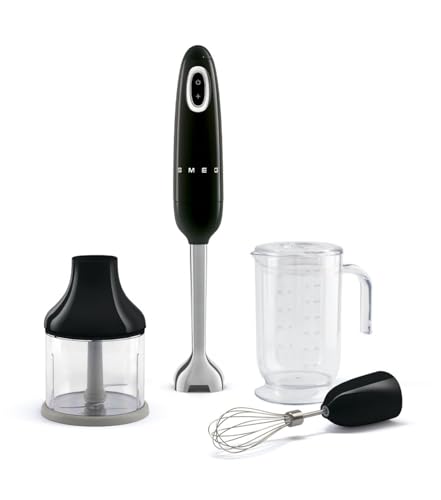
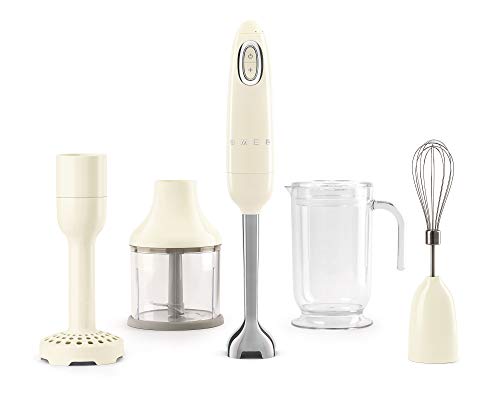
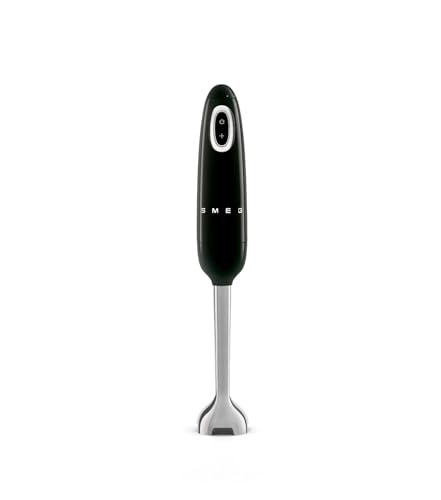
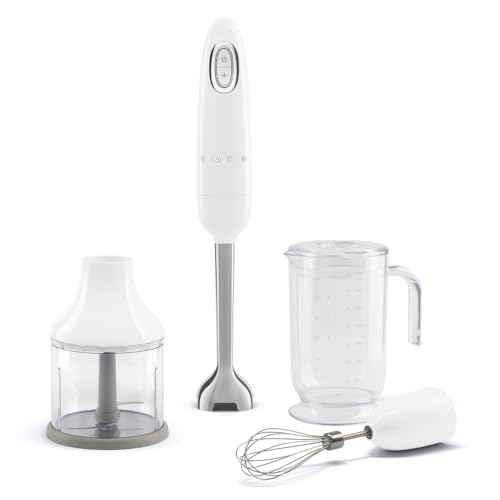
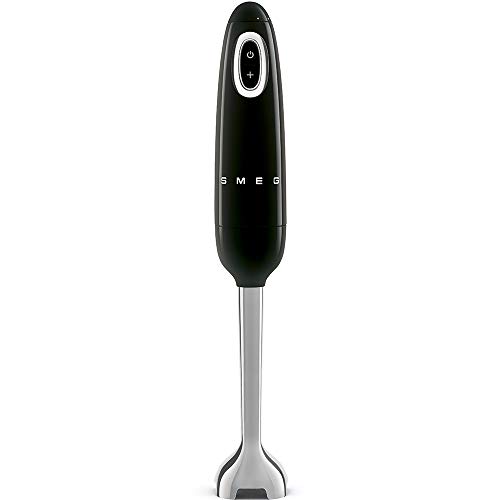
Smeg is known above all for its 50s-style design, and its immersion blenders carry the same rounded body and colour range as its kettles and toasters. Every model uses a 700 W motor with a stainless steel foot. The bare HBF11 comes without accessories, the HBF22 adds a whisk, chopper and masher, and the 50s Retro Hand Blender adds 5 speeds for finer control.
The honest limitation is power for the price. At £80-£130, every model stops at 700 W with a two-blade knife. Mass-market 1000 W blenders with four-blade knives crush ice and frozen fruit faster. With Smeg you pay mainly for the look and the solid build.
(Note: A total of 61 brands were evaluated in the comparison in the first paragraph. Only those with at least 3 immersion blender models in our database were included.)
The chart below ranks immersion blender brands by average overall score.
[horizontal-chart-01236393224515583485153992884091065572451810322944]What are the main advantages of Smeg immersion blenders?
The main advantages of Smeg immersion blenders are as follows:
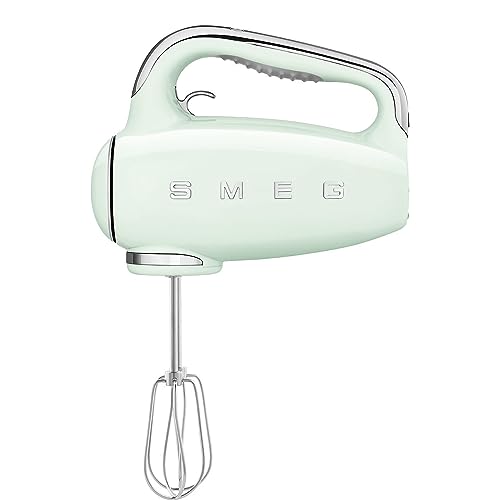
- Distinctive design: The 50s Retro Hand Blender and the HBF01 share the rounded body and pastel colours of Smeg kettles and toasters. They look good left out on the worktop.
- Stainless steel foot: Every model, from the HBF11 to the HBF22, blends with a metal shaft and bell. Hot soup straight from the hob does not stain or warp it.
- Full accessory sets: The HBF02 and HBF22 come with 4 accessories, typically a whisk, a chopper, a masher and a beaker. One box covers purées, cream and chopped herbs.
- Same motor throughout: The cheapest HBF11 uses the same motor as the top 50s Retro Hand Blender. Soups come out just as smooth whichever model you pick.
- Fine speed control: The 50s Retro Hand Blender offers 5 speeds. Low settings keep thin sauces and mayonnaise from splashing.
What are the main disadvantages of Smeg immersion blenders?
The main disadvantages of Smeg immersion blenders are the following:
- Modest power: The HBF01 and HBF11 stop at 700 W. Ice, frozen berries and thick nut butters take noticeably longer than with 1000 W models.
- Two-blade knife: The HBF02 and HBF22 use a two-point blade. It pulls food in less aggressively than four-blade designs, so fibrous ginger or kale leaves small bits.
- Design premium: The 50s Retro Hand Blender sits at the top of the lineup. A good part of its price pays for styling rather than blending power.
- Bare entry models: The HBF01 and HBF11 ship without any accessories. A chopper or whisk means stepping up to the HBF02 or HBF22.
- Coarse speed steps: The HBF22 has just 2 speeds. That is coarse for emulsions, where a slow start keeps the mixture together.