Scored using Fitness trackers Methodology v3.0
Fitness trackers Methodology v3.0
Mathematical & Unbiased Scoring
Products in this category are scored under Frontum Fitness trackers Methodology v3.0: the technical score from the specifications is the base, and independent expert and video reviews (up to ±0.5 points), owner opinions (up to ±0.3) and best-of lists (up to +0.3) move it up or down.
Explore Fitness trackers Methodology v3.0

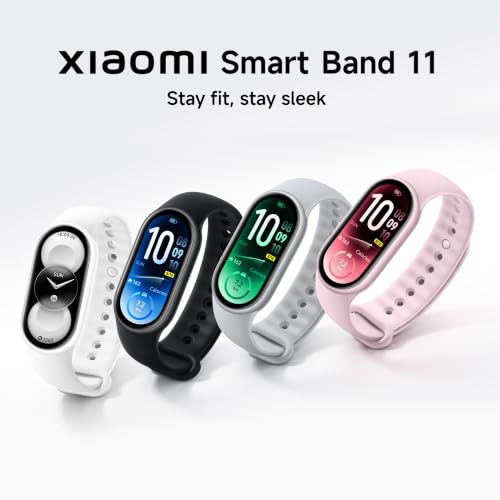
Xiaomi Smart Band 11 review: 163 specs compared

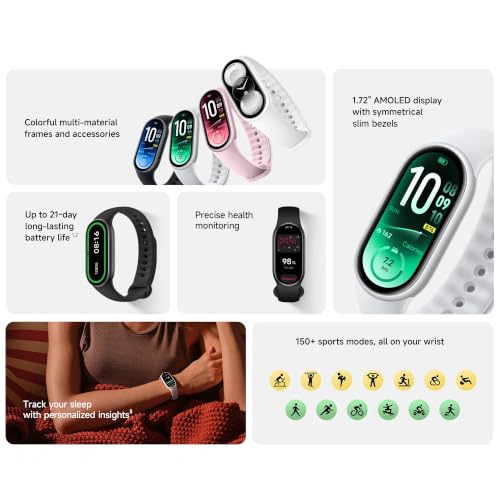
Avg. price:~£55Battery life:21 daysScreen size:1.72 inchHeart rate monitor:yesGPS:noWaterproof depth rating:50 m

Xiaomi Smart Band 11 Review: Compare 168 technical specifications and 9 expert and video reviews to see how this product ranks in the Fitness trackers category and whether it is worth buying.
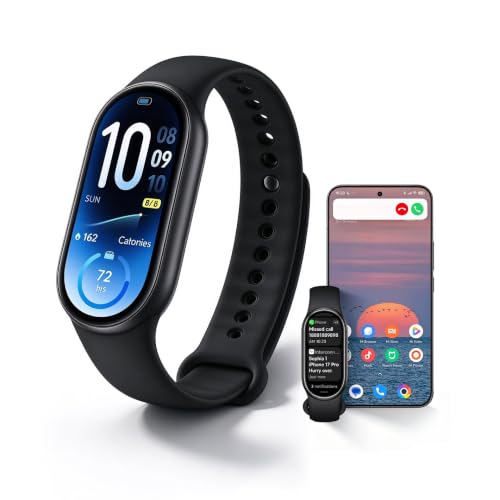
Xiaomi Smart Band 11
8.1/10

Overall score

Score
8.1/ 10
✕
What it is
Our main score for this model, 1–10. It combines specs, best-of lists, expert reviews and owners.
How we count it
Parts: Technical score 35%, List score 30%, Reviews score 25%, Sentiment score 10%
Marks: Each part gets a mark out of 10. For reviews, lists and owners, a typical model in this category gets about 8 and the best one gets 10.
No data yet: A part with no data shows "?". It counts as the mark of a weaker model in this category (4 in 5 models with data score higher). This way, models with reviews, lists and owners usually come out ahead.
Score distribution
▼
<55-66-77-88-99-10
Score components

35%

9.1

Technical score

30%

?

List scoreNot enough data yet, so we use 7.5, the mark of a weaker model in this category

25%

7.9

Reviews score

10%

6.9

Sentiment score

▲Better than 89% of fitness trackers
8.7

Value for money

Value for money
8.7/ 10
✕
What it is
An indicator that combines the fitness tracker's overall rating with its cost.
When it matters
When you are looking for a fitness tracker with a good balance between quality and price.
Score distribution
▼
<55-66-77-88-99-10
Score components

70%

8.1

Overall score

30%

10

Price

▲Better than 88%
9.1

Technical score

Technical score
9.1/ 10
✕
What it is
How good the specs are compared with the other models in this category, 1–10.
How we count it
Areas: We rate the specs in each area against the other models in this category.
Weighting: The areas that matter most to buyers count more. The shares are shown under Score components.
Share: The technical score is 35% of the overall score.
Score distribution
▼
<55-66-77-88-99-10
Score components

20%

9.2

Sports

20%

8.1

Battery

18%

9.5

Health

18%

9.6

Display

8%

9.4

Smart functions

8%

9.5

Wellness

4%

8.0

Connectivity

4%

9.2

Design

★Better than 99%
7.9

Reviews score

Reviews score
7.9/ 10
✕
What it is
Average grade from independent test sites, magazines and video reviewers, 1–10.
How we count it
Grades: Each review's own score is converted to 1–10; without one, we grade the review ourselves. Big test sites count more, short reviews half as much as full tests. A video review counts half.
Score: The average grade is 80% of the review mark; the number of reviews is the other 20% (1 review = 5, the typical number in this category = 8, the most-reviewed model = 10).
Enough data: With few reviews, the average grade is pulled toward the typical grade of this category. No reviews yet: 7.2 for now.
Share: Reviews count 25% of the overall score.
Score distribution
▼
<55-66-77-88-99-10

80%

8.1

Average grade

20%

7.2

Popularity

Grades by review (9)
9 video reviews, each counting half as much as a written test. Reviews count 25% of the overall score.
User ratings collected online are not part of this score.
▲Better than 64%
?

List score

List score
7.5/ 10
✕
What it is
How often independent test sites, magazines and video reviewers put this model in their best-of lists for this category.
How we count it
Points: The model in the most lists of this category gets 10; the others get 8 to 10 in proportion. In no list yet: 7.5. Lists count 30% of the overall score.
Enough data: Every list counts, even a single one. With fewer than 5 best-of lists in the category, this part is left out.
Lists with this model (0)
Not in any best-of list yet, so this part counts as 7.5. Models in a list get 8 to 10.
Not in any best-of list yet
  • xiaomi-smart-band-11
  • xiaomi-smart-band-11
  • xiaomi-smart-band-11
  • xiaomi-smart-band-11
  • xiaomi-smart-band-11
  • xiaomi-smart-band-11
  • xiaomi-smart-band-11
  • xiaomi-smart-band-11
  • xiaomi-smart-band-11
xiaomi-smart-band-11
Best prices
*As an Amazon Associate, we earn from qualifying purchases.
Best rankings
Available: ranking among products currently available (including other versions of this product).All: ranking among all products in the database.
Loading...
Loading category ranking...

Fitness trackers model ranking

Ranked #27 of 238 models in Fitness trackers (Overall score)

Technical Specifications of fitness tracker Xiaomi Smart Band 11

Technical score
Technical score
9.1/ 10
✕
What it is
How good the specs are compared with the other models in this category, 1–10.
How we count it
Areas: We rate the specs in each area against the other models in this category.
Weighting: The areas that matter most to buyers count more. The shares are shown under Score components.
Share: The technical score is 35% of the overall score.
Score distribution
▼
<55-66-77-88-99-10
Score components:

20%

9.2

Sports

20%

8.1

Battery

18%

9.5

Health

18%

9.6

Display

8%

9.4

Smart functions

8%

9.5

Wellness

4%

8.0

Connectivity

4%

9.2

Design

9.1
Reviews score
7.9
List score
?
Value for money
Value for money
8.7/ 10
✕
What it is
An indicator that combines the fitness tracker's overall rating with its cost.
When it matters
When you are looking for a fitness tracker with a good balance between quality and price.
Score distribution
▼
<55-66-77-88-99-10
Score components:

70%

8.1

Overall score

30%

10

Price

8.7
Heart rate monitor
yes
This fitness tracker supports heart rate monitoring. 36.2% of fitness trackers support heart rate monitoring.
Resting heart rate
yes
This fitness tracker supports Resting heart rate. 47.5% of fitness trackers support Resting heart rate.
Fast/slow heart rate alerts
yes
This fitness tracker supports high and low heart rate alerts. 63.9% of fitness trackers support high and low heart rate alerts.
Irregular heart rate alerts
no
This fitness tracker does not support irregular heart rate alerts. 13.7% of fitness trackers support irregular heart rate alerts.
Blood oxygen sensor
yes
This fitness tracker has a blood oxygen sensor. 68.2% of fitness trackers have a blood oxygen sensor.
Show more
What reviewers say
GPS
no
This fitness tracker does not have GPS. 12.7% of fitness trackers have GPS.
Satellite systems supported
N/A
GNSS bands supported
N/A
Galileo support
N/A
Acquires GPS faster
N/A
Show more
Notifications
yes
This fitness tracker supports notifications. 27.8% of fitness trackers support notifications.
Vibrating alerts
yes
This fitness tracker supports vibration alerts. 14.3% of fitness trackers support vibration alerts.
Call control
yes
This fitness tracker supports call controls. 59.7% of fitness trackers support call controls.
Call answering
no
This fitness tracker does not support call answering. 0.9% of fitness trackers support call answering.
Calendar sync
yes
This fitness tracker supports calendar sync. 79.9% of fitness trackers support calendar sync.
Show more
What reviewers say
Activity reports
yes
This fitness tracker supports activity reports. 5% of fitness trackers support activity reports.
Goal setting
yes
This fitness tracker supports goal setting. 2.5% of fitness trackers support goal setting.
Achievements
yes
This fitness tracker supports achievements. 23.8% of fitness trackers support achievements.
Inactivity alerts
yes
This fitness tracker supports inactivity alerts. 21.4% of fitness trackers support inactivity alerts.
Coaching
yes
This fitness tracker supports coaching. 64% of fitness trackers support coaching.
Show more
Bluetooth version
5.4
This fitness tracker supports Bluetooth 5.4 which is newer than in 96.8% of fitness trackers and equal to that in 2.3% of fitness trackers.
Maximum Bluetooth range
?
NFC
no
This fitness tracker does not have NFC. 11.8% of fitness trackers have NFC.
Wi-Fi connectivity
no
This fitness tracker does not support Wi-Fi. 2.5% of fitness trackers support Wi-Fi.
Wi-Fi version
no
This fitness tracker does not support modern Wi-Fi. 0.9% of fitness trackers support modern Wi-Fi.
Show more
What reviewers say
Battery life
21 days
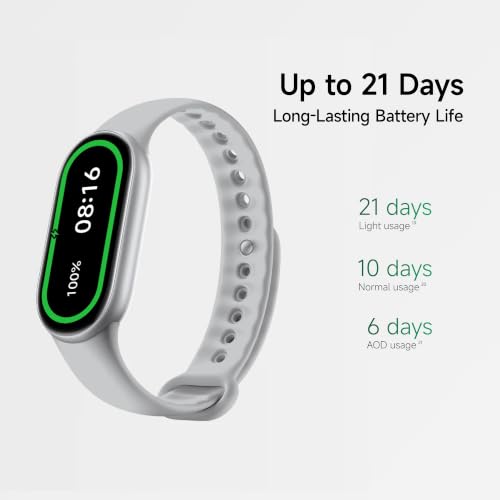
This fitness tracker offers a battery life of 21 days which is longer than that of 82.5% of fitness trackers and equal to that of 2.2% of fitness trackers.
Battery life with GPS on
N/A
Battery life in training mode
?
Power-saving battery life
?
Battery capacity
233 mAh
This fitness tracker has a battery capacity of 233 mAh which is higher than that of 91.2% of fitness trackers and equal to that of 1.2% of fitness trackers.
Show more
What reviewers say
Display
yes
This fitness tracker has a display. 26.3% of fitness trackers have a display.
Screen size
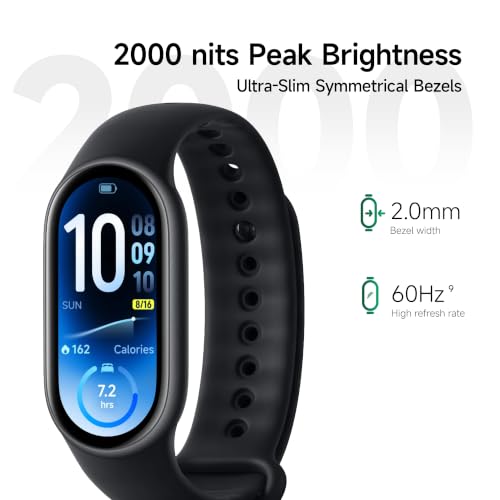
1.72 inch
This fitness tracker has a screen size of 1.72 inch which is larger than that of 94.9% of fitness trackers and equal to that of 0.6% of fitness trackers.
Display type
AMOLED
This fitness tracker uses AMOLED display technology which is more advanced than that of 74.1% of fitness trackers and the same as that of 25.9% of fitness trackers.
Screen resolution
212x 520
This fitness tracker has a screen resolution of 212x520 which is higher than that of 95.9% of fitness trackers and equal to that of 0.5% of fitness trackers.
Pixel density
326 ppi
This fitness tracker has a pixel density of 326 ppi which is higher than that of 82.1% of fitness trackers and equal to that of 12% of fitness trackers.
Show more
What reviewers say
Form factor
wristband
Hybrid design
no
This fitness tracker does not support Hybrid design. 2.1% of fitness trackers support Hybrid design.
Designed for kids
no
This fitness tracker is not designed for kids. 3.3% of fitness trackers are designed for kids.
Replaceable watch band
yes
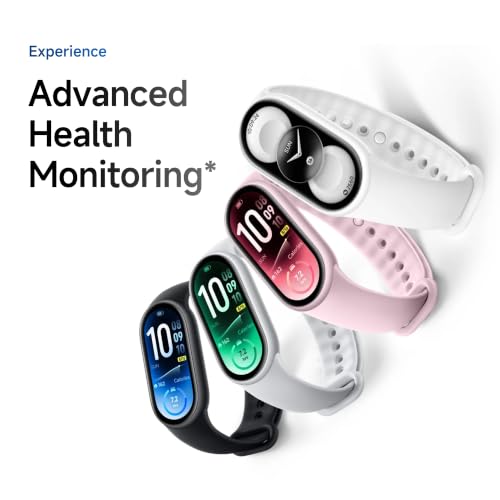
This fitness tracker has a replaceable watch band. 23.4% of fitness trackers have a replaceable watch band.
Band width
?
Show more
What reviewers say

Xiaomi Smart Band 11 vs the average fitness tracker

246810TotalHealthSportsBatteryDisplayConnectivitySmart functionsDesignWellness
  • 3.33x higher screen brightness
    This fitness tracker has a higher screen brightness than the average fitness tracker (1500 nits vs 450 nits). The average fitness tracker has screen brightness of 450 nits.
    1,500 nits vs 450 nits
  • 11 days longer battery life
    This fitness tracker has a higher battery life than the average fitness tracker (21 days vs 10 days). The average fitness tracker has 10 days of battery life.
    21 days vs 10 days
  • 86.4% larger battery capacity
    This fitness tracker has a higher battery capacity than the average fitness tracker (233 mAh vs 125 mAh). The average fitness tracker has 125 mAh of battery capacity.
    233 mAh vs 125 mAh
  • Blood oxygen monitoring
    This fitness tracker has a blood oxygen sensor, while the average fitness tracker does not. 32.1% of fitness trackers have a blood oxygen sensor.
  • Always-on display
    This fitness tracker has an always-on display, while the average fitness tracker does not. 25.6% of fitness trackers have an always-on display.
  • 0.66 inch larger screen size
    This fitness tracker has a higher screen size than the average fitness tracker (1.7 inch vs 1.06 inch). The average fitness tracker has a screen size of 1.06 inch.
    1.72 inch vs 1.06 inch
  • Measures VO2 max
    This fitness tracker supports VO2 max tracking, while the average fitness tracker does not. 23.6% of fitness trackers support VO2 max tracking.
  • Tracks HRV
    This fitness tracker supports HRV tracking, while the average fitness tracker does not. 15.1% of fitness trackers support HRV tracking.
  • 8.2% higher review score
    Reviews score
    7.9/ 10
    ✕
    What it is
    Average grade from independent test sites, magazines and video reviewers, 1–10.
    How we count it
    Grades: Each review's own score is converted to 1–10; without one, we grade the review ourselves. Big test sites count more, short reviews half as much as full tests. A video review counts half.
    Score: The average grade is 80% of the review mark; the number of reviews is the other 20% (1 review = 5, the typical number in this category = 8, the most-reviewed model = 10).
    Enough data: With few reviews, the average grade is pulled toward the typical grade of this category. No reviews yet: 7.2 for now.
    Share: Reviews count 25% of the overall score.
    Score distribution
    ▼
    <55-66-77-88-99-10

    80%

    8.1

    Average grade

    20%

    7.2

    Popularity

    Grades by review (9)
    9 video reviews, each counting half as much as a written test. Reviews count 25% of the overall score.
    User ratings collected online are not part of this score.
    7.9 vs 7.3
  • 7.4% better value for money
    Xiaomi Smart Band 11 has a higher value-for-money score than the average fitness tracker (8.67 vs 8.1).
    8.67 vs 8.07
  • Blood oxygen monitoring
    This fitness tracker has a blood oxygen sensor, while the average fitness tracker does not. 32.1% of fitness trackers have a blood oxygen sensor.
  • Tracks HRV
    This fitness tracker supports HRV tracking, while the average fitness tracker does not. 15.1% of fitness trackers support HRV tracking.
  • Measures VO2 max
    This fitness tracker supports VO2 max tracking, while the average fitness tracker does not. 23.6% of fitness trackers support VO2 max tracking.
  • Heart rate alerts
    This fitness tracker supports high and low heart rate alerts, while the average fitness tracker does not. 36.4% of fitness trackers support high and low heart rate alerts.
  • Tracks respiration rate
    This fitness tracker supports respiratory rate tracking, while the average fitness tracker does not. 16% of fitness trackers support respiratory rate tracking.
  • Continuous SpO₂ monitoring
    This fitness tracker supports continuous SpO₂ monitoring, while the average fitness tracker does not. 16.3% of fitness trackers support continuous SpO₂ monitoring.
  • Tracks menstrual cycle
    This fitness tracker supports menstrual cycle tracking, while the average fitness tracker does not. 45.2% of fitness trackers support menstrual cycle tracking.
  • Period notifications
    This fitness tracker has period notifications, while the average fitness tracker does not. 34.6% of fitness trackers have period notifications.
  • Fertile window notifications
    This fitness tracker displays fertile window notifications, while the average fitness tracker does not. 25.1% of fitness trackers display fertile window notifications.
  • Ovulation prediction
    This fitness tracker predicts ovulation, while the average fitness tracker does not. 44.1% of fitness trackers predict ovulation.
  • Cycle start prediction
    This fitness tracker predicts the start date, while the average fitness tracker does not. 45.8% of fitness trackers predict the start date.
  • 9 years newer release date
    This fitness tracker was released more recently than the average fitness tracker (2026 vs 2017). The average fitness tracker was released in 2017.
    2026 vs 2017
  • Multi-sport mode
    This fitness tracker supports multi-sport mode, while the average fitness tracker does not. 14.5% of fitness trackers support multi-sport mode.
  • Swim stroke counter
    This fitness tracker supports swim stroke counting, while the average fitness tracker does not. 22.3% of fitness trackers support swim stroke counting.
  • Auto pause
    This fitness tracker supports auto pause, while the average fitness tracker does not. 22.4% of fitness trackers support auto pause.
  • Recovery time advisor
    This fitness tracker supports recovery time guidance, while the average fitness tracker does not. 14% of fitness trackers support recovery time guidance.
  • Tracks training load
    This fitness tracker supports training load tracking, while the average fitness tracker does not. 19.9% of fitness trackers support training load tracking.
  • Built-in gyroscope
    This fitness tracker has a gyroscope, while the average fitness tracker does not. 28.7% of fitness trackers have a gyroscope.
  • Built-in compass
    This fitness tracker has a compass, while the average fitness tracker does not. 6.9% of fitness trackers have a compass.
  • 141.5 more exercise modes
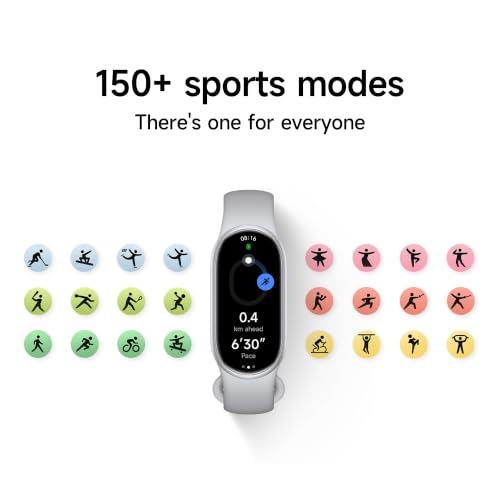
    This fitness tracker has more exercise modes than the average fitness tracker (150 vs 8.5). The average fitness tracker offers 8.5 exercise modes.
    150 vs 8.5
  • 11 days longer battery life
    This fitness tracker has a higher battery life than the average fitness tracker (21 days vs 10 days). The average fitness tracker has 10 days of battery life.
    21 days vs 10 days
  • 86.4% larger battery capacity
    This fitness tracker has a higher battery capacity than the average fitness tracker (233 mAh vs 125 mAh). The average fitness tracker has 125 mAh of battery capacity.
    233 mAh vs 125 mAh
  • Low power mode
    This fitness tracker supports low power mode, while the average fitness tracker does not. 23.2% of fitness trackers support low power mode.
  • 3.33x higher screen brightness
    This fitness tracker has a higher screen brightness than the average fitness tracker (1500 nits vs 450 nits). The average fitness tracker has screen brightness of 450 nits.
    1,500 nits vs 450 nits
  • Always-on display
    This fitness tracker has an always-on display, while the average fitness tracker does not. 25.6% of fitness trackers have an always-on display.
  • 0.66 inch larger screen size
    This fitness tracker has a higher screen size than the average fitness tracker (1.7 inch vs 1.06 inch). The average fitness tracker has a screen size of 1.06 inch.
    1.72 inch vs 1.06 inch
  • Touchscreen
    This fitness tracker has a touchscreen, while the average fitness tracker does not. 46.7% of fitness trackers have a touchscreen.
  • 32% higher pixel density
    This fitness tracker has a higher pixel density than the average fitness tracker (326 ppi vs 247 ppi). The average fitness tracker has a pixel density of 247 ppi.
    326 ppi vs 247 ppi
  • Color display
    This fitness tracker has a color display, while the average fitness tracker does not. 39.1% of fitness trackers have a color display.
  • Ambient light sensor
    This fitness tracker has an ambient light sensor, while the average fitness tracker does not. 16.9% of fitness trackers have an ambient light sensor.
  • Higher screen resolution
    This fitness tracker has a higher screen resolution than the average fitness tracker (212x520 vs 194x368). The average fitness tracker has a screen resolution of 194x368.
    212x520 vs 194x368
  • Modern Bluetooth version
    This fitness tracker supports a newer Bluetooth version than the average fitness tracker (5.4 vs 4.1). The average fitness tracker supports Bluetooth 4.1.
    5.4 vs 4.1
  • Smart alarm
    This fitness tracker supports a smart alarm, while the average fitness tracker does not. 30.8% of fitness trackers support a smart alarm.
  • 3.91x larger internal storage
    This fitness tracker has a higher internal storage than the average fitness tracker (0.3 GB vs 0.1 GB). The average fitness tracker has 0.064 GB of internal storage.
    0.25 GB vs 0.064 GB
  • Passcode protection
    This fitness tracker supports passcode protection, while the average fitness tracker does not. 17.6% of fitness trackers support passcode protection.
  • Call control
    This fitness tracker supports call controls, while the average fitness tracker does not. 40.6% of fitness trackers support call controls.
  • Calendar sync
    This fitness tracker supports calendar sync, while the average fitness tracker does not. 20.4% of fitness trackers support calendar sync.
  • Gesture control
    This fitness tracker supports gesture controls, while the average fitness tracker does not. 39.6% of fitness trackers support gesture controls.
  • Haptic motor type
    This fitness tracker uses a more advanced haptic motor type than the average fitness tracker (LRA vs ERM). The average fitness tracker uses a ERM haptic motor type.
    LRA vs ERM
  • Camera remote control
    This fitness tracker supports camera remote control, while the average fitness tracker does not. 40.6% of fitness trackers support camera remote control.
  • 35.1% lighter
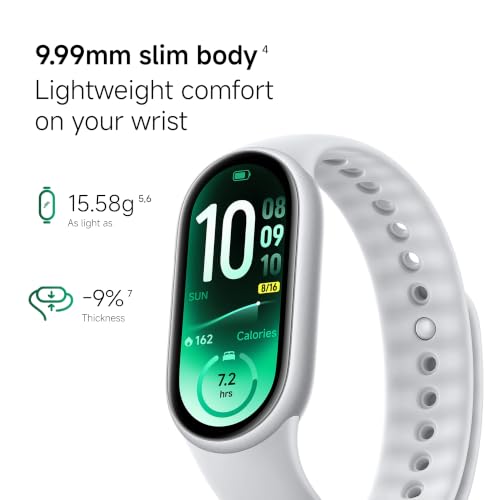
    This fitness tracker is lighter than the average fitness tracker (15.6 g vs 24 g). The average fitness tracker weighs 24 g.
    15.58 g vs 24 g
  • 1.01 mm thinner design
    This fitness tracker is thinner than the average fitness tracker (10 mm vs 11 mm). The average fitness tracker has a thickness of 11 mm.
    9.99 mm vs 11 mm
  • Coaching features
    This fitness tracker supports coaching, while the average fitness tracker does not. 36.3% of fitness trackers support coaching.
  • Third-party app support
    This fitness tracker supports third-party apps, while the average fitness tracker does not. 5.8% of fitness trackers support third-party apps.
  • Points-based system
    This fitness tracker supports a points-based system, while the average fitness tracker does not. 37.2% of fitness trackers support a points-based system.
  • Ads in app
    This fitness tracker shows ads in the app, while the average fitness tracker does not. 50.6% of fitness trackers have an ad-free app.
  • 12.7% lower sentiment score
    6.9 vs 7.9
  • 6.12 mm greater height
    This fitness tracker is taller than the average fitness tracker (47.4 mm vs 41.3 mm). The average fitness tracker has a height of 41.325 mm.
    47.44 mm vs 41.325 mm
  • 12.7% lower sentiment score
    6.9 vs 7.9
  • 6.12 mm greater height
    This fitness tracker is taller than the average fitness tracker (47.4 mm vs 41.3 mm). The average fitness tracker has a height of 41.325 mm.
    47.44 mm vs 41.325 mm
  • Ads in app
    This fitness tracker shows ads in the app, while the average fitness tracker does not. 50.6% of fitness trackers have an ad-free app.

Video reviews

Hands-on testing, unboxing, and real-world video evaluations

9.0
haidanghappy
≈ estimated
01/11/2026
Hands-on review · NFC access cards, interface and sleep tests
Verdict
Xiaomi Smart Band 11 is worth buying for notifications, light workouts and basic health tracking, with minor display and sleep limits.
9.0
SMARTECHPLUS
≈ estimated
22/10/2026
Hands-on review · Apple Watch comparison and feature tour
Verdict
Xiaomi Smart Band 11 is a good alternative for beginners who want health, sleep and sports tracking.
9.0
Michael Elsegood MikeOS
≈ estimated
11/10/2026
Hands-on review · health accuracy vs Apple Watch and battery
Verdict
Xiaomi Smart Band 11 is a strong low-cost pick for accurate health tracking, if you do not need GPS.
8.0
Black MOB 📱
≈ estimated
07/09/2026
Detailed feature review · upgrades and field tests
Verdict
Xiaomi Smart Band 11 is a much more comprehensive update than before, though not every addition is useful.
9.0
TELE TECH
≈ estimated
05/09/2026
Unboxing and review · display, sleep, HyperOS and battery
Verdict
Xiaomi Smart Band 11 is a safe pick for first-time buyers; Band 9 owners should upgrade, and Band 10 owners should upgrade only for the aluminium finish.
8.0
Nikolay Tanev
≈ estimated
20/10/2026
Hands-on review · sensors, HRV, workouts and upgrade advice
Verdict
Xiaomi Smart Band 11 is a good budget first tracker, but Band 9 owners have little reason to upgrade.
8.0
TECHIVO
≈ estimated
08/09/2026
Unboxing and feature tour · sleep data check
Verdict
Xiaomi Smart Band 11 is thinner and lighter with significantly improved functionality, especially for users of both iPhone and Xiaomi.
8.0
Via Tech
≈ estimated
04/09/2026
Unboxing and first impressions · design, screen and feature tour
Verdict
Xiaomi Smart Band 11 feels high quality and premium, with a clearly brighter screen and a new gaming mode, though a longer strap is needed.
Overview video
Overview video
Overview video
Hands-on video, no verdict

What reviewers agree on

Based on 0 · 9

Clean interface, accurate heart rate and neat design win fans, but battery life, calls and notifications disappoint.
Praised
Criticised
Pick a topic to see who said what

Third-party reviews

What we like about Xiaomi Smart Band 11

  • At 15.58 g it is light enough to wear all day.
  • The 1500 nits screen is easy to read outdoors.
  • Continuous SpO₂ monitoring and HRV tracking give fuller health detail.
  • 150 exercise modes cover a wide range of workouts.
  • Sleep reports and menstrual cycle tracking are included.
  • A 5 ATM water rating and a compass add useful extras.

What we don't like about Xiaomi Smart Band 11

  • There is no built-in GPS, so routes depend on the phone.
  • With all features on, the battery falls well short of the rated 21 days.
  • The band cannot answer calls, and it only shows call alerts.
  • The strap is uncomfortable and has to be worn tight.

Verdict

Rated for 21 days, the Xiaomi Smart Band 11 is a light band with a long battery claim. Its 1.72 inch AMOLED screen reaches 1500 nits, so it stays readable in strong sun. At 15.58 g it is light, and it adds continuous SpO₂ monitoring, respiration tracking and HRV data. It also has 150 exercise modes, a compass, third-party app support and an always-on display. Sleep reports, heart rate tracking and menstrual cycle tracking are included. The trade-off is that there is no built-in GPS, and the band only shows call alerts rather than answering them. With all features on, the battery falls well short of 21 days, so expect to trim settings. It suits someone who wants a light, bright band for daily health tracking and does not need GPS for runs.

Compare Xiaomi Smart Band 11 with other products in the Fitness trackers category

1Product to compare no. 1
VS
2Product to compare no. 2
VS
3Product to compare no. 3 (optional)

Graphic comparison of Xiaomi Smart Band 11 and other products in the Fitness trackers category

No results found