Pocketbook Touch Review | 68 Data compared

double-arrow
  • Avg. price in UK: ~£110
  • Avg. price in US: ~$160
  • Screen size: 6 inches
  • Battery life: ?
  • Supported bookstore ecosystem: PocketBook Open Ecosystem

Pocketbook Touch review. Compare 68 technical specifications and user reviews to see how it ranks among ereaders and if it is worth buying.

5.4

Overall score

What it is: An overall evaluation of the eReader's quality, based on technical analyses and user reviews.

When it matters: When you need a quick reference to identify the best eReaders on the market.

Score components:

90.0%

5.4

Technical Score

10.0%

?

User score

Good
5.4

Technical Score

What it is: An assessment of the eReader's technical performance, covering key areas such as display quality, reading features, battery life, format support, ecosystem, and design.

When it matters: When you want to compare eReaders based on technical performance and available features.

Score components:

25.0%

3.9

Display

22.0%

6.9

Reading

18.0%

6.5

Battery

14.0%

3.9

Hardware

12.0%

5.2

Connectivity

9.0%

6.7

Design

Good
?

User score

What it is: A rating that combines user reviews and the total number of reviews received by the eReader.

When it matters: When you want to know how an eReader feels in daily reading and how reliable it is for screen comfort, battery life, and library management according to user feedback.

Score components:

70.0%

?

User reviews

30.0%

?

Popularity

    • No image
    No image

    Best prices in UK

      N/A~ £110

    Best rankings

    ?

    Available: ranking among products currently available (including other versions of this product).
    All: ranking among all products in the database.

    Verdict

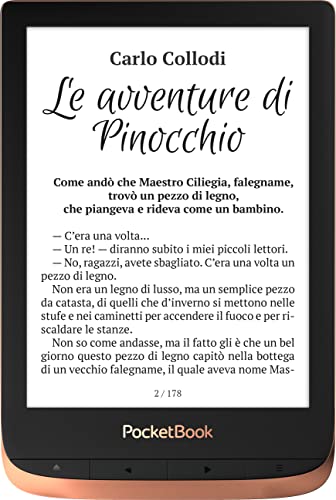
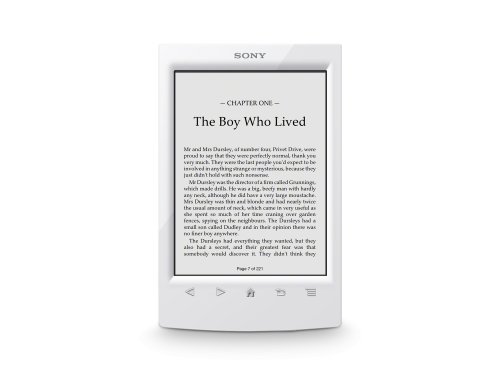
    The PocketBook Touch Lux 5 is a lightweight 6-inch e-reader featuring an E Ink Carta HD display with 212 PPI and intelligent SMARTlight technology that allows users to adjust both brightness and colour temperature. Driven by a dual-core 1 GHz processor and 512MB of RAM, it offers 8GB of internal storage expandable via a microSD slot (up to 32GB) and supports 19 book formats without conversion. Its primary advantages include an ergonomic design weighing just 155g, physical page-turn buttons for one-handed use, and a battery life that lasts up to one month on a single charge. However, some users have noted that the device can feel slow during navigation or library management, and it lacks internal speakers for audio, requiring a separate Bluetooth adapter for such functionality.

    Technical Specifications of eReader Pocketbook Touch

    Technical Score

    What it is: An assessment of the eReader's technical performance, covering key areas such as display quality, reading features, battery life, format support, ecosystem, and design.

    When it matters: When you want to compare eReaders based on technical performance and available features.

    Score components:

    25.0%

    ?

    Display

    22.0%

    ?

    Reading

    18.0%

    ?

    Battery

    14.0%

    ?

    Hardware

    12.0%

    ?

    Connectivity

    9.0%

    ?

    Design

    5.4
    Pocketbook Touch has a technical score of 5.42 points, which is lower than that of 72.1% of products in this category.
    User score

    What it is: A rating that combines user reviews and the total number of reviews received by the eReader.

    When it matters: When you want to know how an eReader feels in daily reading and how reliable it is for screen comfort, battery life, and library management according to user feedback.

    Score components:

    70.0%

    0.0

    User reviews

    30.0%

    1.0

    Popularity

    ?
    Popularity
    What it is: An indicator based on the number of reviews received by the eReader.
    When it matters: When you prefer to choose an eReader reviewed and selected by many other buyers.
    1.0
    Pocketbook Touch has a popularity of 1 points, which is lower than 70.5% of products in this category.
    Ratio quality/price

    What it is: An indicator that combines the eReader's overall rating with its cost.

    When it matters: When you are looking for an eReader with a good balance between reading comfort, features, and price.

    Score components:

    60.0%

    5.4

    Overall score

    40.0%

    9.9

    Price

    6.8
    Pocketbook Touch has a quality-to-price ratio of 6.8 points, which is lower than 69.7% of products in this category.
    Brand name
    What it is: Identifies the company or ecosystem behind the device, which often shapes the store, software approach, and accessory support.
    When it matters: When you are choosing between Kindle, Kobo, Boox, PocketBook, or another ecosystem with different store access and software behavior.

    Importance: MEDIUM

    Pocketbook
    Screen size
    What it is: The diagonal measurement of the reading panel, usually given in inches.
    When it matters: When you are deciding between a small travel reader and a larger page that works better for PDFs, comics, or textbooks.

    Importance: HIGH

    Good value: >=7.8

    6 inches
    Pocketbook Touch has a screen size of 6 inches which is smaller than 57.4% of eReaders on this spec and equal to 40.2% of eReaders.
    Screen resolution
    What it is: The total pixel grid shown on the panel, normally written as width by height.
    When it matters: When small fonts, diagrams, or dense page layouts need to stay readable without constant zooming.

    Importance: HIGH

    600x800 px
    Pocketbook Touch uses a screen resolution of 600x800 px, which is less sharp than that of 83.6% of eReaders and the same as that of 15.6% of eReaders.
    Pixel density
    What it is: The number of pixels packed into each inch of the display, expressed in ppi.
    When it matters: When you want text edges to look cleaner and serif fonts to resemble print more closely.

    Importance: HIGH

    Good value: >=300

    167 ppi
    Pocketbook Touch has a pixel density of 167 ppi which is lower than 77.9% of eReaders on this spec and equal to 10.7% of eReaders.
    E-paper display
    What it is: Uses an electrophoretic panel designed to mimic paper rather than a conventional backlit phone or tablet screen.
    When it matters: When you read for long stretches and want lower glare and less screen-like fatigue than on LCD or OLED devices.

    Importance: LOW

    yes
    Pocketbook Touch uses an e-paper display. 97.6% of eReaders have an e-paper display.
    Show more
    Supported file types
    What it is: Lists which ebook, document, image, or audio formats the reader can open without conversion.
    When it matters: When your library comes from mixed sources instead of one locked bookstore.

    Importance: HIGH

    15
    Pocketbook Touch supports 15 file types which is more than 37% of eReaders on this spec and equal to 20% of eReaders.
    PDF reflow support
    What it is: Can rearrange PDF text into a more readable, screen-sized layout instead of forcing the original fixed page.
    When it matters: When you read A4 documents, articles, or manuals on a smaller eReader screen.

    Importance: HIGH

    yes
    Pocketbook Touch offers PDF reflow. 55.4% of eReaders support PDF reflow.
    Annotation support
    What it is: Allows highlighting, handwritten notes, typed comments, or markup directly inside supported files.
    When it matters: When you study, review academic papers, or want your notes to stay attached to the exact passage.

    Importance: HIGH

    yes
    Pocketbook Touch offers annotation support. 100% of eReaders offer annotation support.
    Dictionary
    What it is: Provides built-in word lookup while you read.
    When it matters: When you read in another language or want quick definitions without leaving the page.

    Importance: MEDIUM

    yes
    Pocketbook Touch includes a built-in dictionary. 99.2% of eReaders include a built-in dictionary.
    Text-to-speech
    What it is: Converts on-screen text into spoken audio using a synthetic voice.
    When it matters: When you want to keep following a book while resting your eyes, walking, or multitasking.

    Importance: MEDIUM

    no
    Pocketbook Touch does not offer text-to-speech. 64.2% of eReaders include text-to-speech.
    Show more
    Battery life
    What it is: Estimates how long the device can keep running between charges under normal reading conditions.
    When it matters: When you travel, commute, or want to finish books for days without thinking about charging.

    Importance: HIGH

    Good value: >=30

    ?
    Battery capacity
    What it is: The amount of energy the battery can store, commonly expressed in mAh.
    When it matters: When you want a rough hardware indicator of how much power reserve the device has.

    Importance: MEDIUM

    Good value: >=2000

    1,100 mAh
    Pocketbook Touch has a battery capacity of 1100 mAh which is lower than 80.8% of eReaders on this spec of eReaders.
    Charging time
    What it is: The approximate time needed to recharge the battery from low to full.
    When it matters: When you often top up shortly before leaving and need the reader ready again quickly.

    Importance: MEDIUM

    Good value: <=3

    3 hours
    Pocketbook Touch takes 3 hours to charge which is slower than 52.9% of eReaders on this spec and equal to 28.9% of eReaders.
    Wireless charging
    What it is: Can recharge on a compatible charging pad without plugging in a cable.
    When it matters: When you prefer drop-and-charge convenience on a desk or bedside stand.

    Importance: LOW

    no
    Pocketbook Touch does not offer wireless charging. 7.3% of eReaders offer wireless charging.
    Internal storage
    What it is: The built-in space available for books, notes, audiobooks, apps, and downloaded documents.
    When it matters: When you keep large libraries offline or store a lot of PDFs and audio locally.

    Importance: HIGH

    Good value: >=32

    2 GB
    Pocketbook Touch offers 2 GB of internal storage which is less than 80.5% of eReaders on this spec and equal to 17.8% of eReaders.
    RAM capacity
    What it is: The amount of working memory used for page rendering, multitasking, and keeping content active in the background.
    When it matters: When you open heavy files, switch between books, or expect the interface to stay snappy.

    Importance: MEDIUM

    Good value: >=2

    0.128 GB
    Pocketbook Touch offers 0.128 GB of RAM which is less than 89.1% of eReaders on this spec and equal to 10.1% of eReaders.
    CPU base clock speed
    What it is: The baseline operating frequency of the main processor under normal load.
    When it matters: When you compare readers for faster menu navigation, indexing, and handling of larger documents.

    Importance: MEDIUM

    2 x 1 GHz
    Pocketbook Touch has a CPU base clock speed of 2x1 GHz, which is faster than that of 50.4% of eReaders and the same as that of 12.4% of eReaders.
    Operating system
    What it is: The software platform that drives the interface, reading apps, and deeper system capabilities.
    When it matters: When you care about app availability, customization, and how flexible the device can become beyond basic reading.

    Importance: HIGH

    PocketBook OS
    Pocketbook Touch runs PocketBook OS, which is less advanced than that of 82.8% of eReaders and the same as that of 17.2% of eReaders.
    Linux 3.0.35
    Memory card slot
    What it is: Accepts removable storage so the library can expand beyond the built-in capacity.
    When it matters: When your collection will outgrow internal storage or you move files between devices manually.

    Importance: MEDIUM

    yes
    Pocketbook Touch has a memory card slot. 43.1% of eReaders have a memory card slot.
    Show more
    Wi-Fi connectivity
    What it is: Connects the reader to wireless networks for book downloads, syncing, updates, and online services.
    When it matters: When you buy books directly on the device or keep your library synced without using a cable.

    Importance: HIGH

    yes
    Pocketbook Touch connects over Wi-Fi. 93.5% of eReaders have Wi-Fi.
    Wi-Fi version
    What it is: Specifies which wireless networking standard is supported, such as Wi-Fi 4, 5, or 6.
    When it matters: When router compatibility, wireless stability, or faster transfers on newer home networks matter to you.

    Importance: LOW

    Wi-Fi 4 (802.11n)
    Pocketbook Touch supports Wi-Fi Wi-Fi 4 (802.11n), which is newer than that of 10.7% of eReaders and the same as that of 46.7% of eReaders.
    Wi-Fi bands supported
    What it is: Shows whether the reader can use 2.4 GHz, 5 GHz, or both wireless bands.
    When it matters: When crowded apartment Wi-Fi or 5 GHz-only setups make band support matter at home or in the office.

    Importance: LOW

    2.4 GHz
    Pocketbook Touch supports 2.4 GHz Wi-Fi bands, which is broader than that of 6.6% of eReaders and the same as that of 50% of eReaders.
    Bluetooth
    What it is: Provides short-range wireless pairing for headphones, speakers, keyboards, page turners, or other accessories.
    When it matters: When you listen to audiobooks, use a remote page turner, or want cable-free accessories around the house.

    Importance: MEDIUM

    no
    Pocketbook Touch does not connect over Bluetooth. 60.2% of eReaders have Bluetooth.
    Bluetooth version
    What it is: Identifies the supported Bluetooth generation, which affects efficiency, codec support, and compatibility.
    When it matters: When you pair newer headphones and want a more stable, lower-power wireless connection.

    Importance: LOW

    Good value: >=5.0

    N/A
    Show more
    Weight
    What it is: The mass of the device, usually measured in grams.
    When it matters: When one-handed comfort matters and you do not want the reader to feel tiring during long sessions.

    Importance: HIGH

    Good value: <=200

    195 g
    Pocketbook Touch weighs 195 g which is lighter than 58.2% of eReaders on this spec and equal to 1.6% of eReaders.
    Thickness
    What it is: The depth of the body from front to back, usually measured in millimetres.
    When it matters: When grip comfort, sleeve fit, or how slim the reader feels in the hand matters to you.

    Importance: MEDIUM

    Good value: <=8

    9.5 mm
    Pocketbook Touch is 9.5 mm thick which is thicker than 75% of eReaders on this spec and equal to 0.8% of eReaders.
    Height
    What it is: The vertical size of the body, usually measured from top to bottom in millimetres.
    When it matters: When you are checking whether the reader will fit a bag, jacket pocket, or small stand.

    Importance: LOW

    Good value: <=160

    175 mm
    Pocketbook Touch is 175 mm tall which is taller than 54.9% of eReaders on this spec and equal to 1.6% of eReaders.
    Width
    What it is: The side-to-side body measurement, usually given in millimetres.
    When it matters: When one-handed reach and how much space the reader takes in a bag or bedside setup matter.

    Importance: LOW

    Good value: <=130

    114.5 mm
    Pocketbook Touch is 114.5 mm wide which is narrower than 76.2% of eReaders on this spec and equal to 0.8% of eReaders.
    Water resistance (splashproof)
    What it is: Can tolerate light splashes, damp hands, or brief accidental contact with water.
    When it matters: When you read by the bath, at the pool, or outdoors where light moisture is realistic.

    Importance: MEDIUM

    no
    Pocketbook Touch does not have water resistance against splashes. 25% of eReaders have water resistance against splashes.
    Show more

    Pocketbook Touch vs the average eReader

    • Includes memory card slot
      Pocketbook Touch includes a memory card slot, while the average eReader does not.
      What it is: Accepts removable storage so the library can expand beyond the built-in capacity.
      When it matters: When your collection will outgrow internal storage or you move files between devices manually.

      Importance: MEDIUM

      Pocketbook Touch includes a memory card slot, while the average eReader does not.
    • Has page-turn buttons
      Pocketbook Touch has page-turn buttons, while the average eReader does not.
      What it is: Adds dedicated physical controls for moving forward or backward without tapping the screen.
      When it matters: When you read one-handed, wear gloves, or want fewer fingerprints on the display.

      Importance: HIGH

      Pocketbook Touch has page-turn buttons, while the average eReader does not.
    • Faster CPU base clock speed
      Pocketbook Touch has a faster CPU base clock speed than the average eReader (2x1 GHz vs 1x1 GHz). The average eReader has a CPU base clock speed of 1x1 GHz.
      What it is: The baseline operating frequency of the main processor under normal load.
      When it matters: When you compare readers for faster menu navigation, indexing, and handling of larger documents.

      Importance: MEDIUM

      Pocketbook Touch has a faster CPU base clock speed than the average eReader (2x1 GHz vs 1x1 GHz). The average eReader has a CPU base clock speed of 1x1 GHz.2x1 GHz vs 1x1 GHz
    • 13.1 mm narrower
      Pocketbook Touch is narrower than the average eReader (114.5 mm vs 127.6 mm). The average eReader width is 127.6 mm.
      What it is: The side-to-side body measurement, usually given in millimetres.
      When it matters: When one-handed reach and how much space the reader takes in a bag or bedside setup matter.

      Importance: LOW

      Good value: <=130

      Pocketbook Touch is narrower than the average eReader (114.5 mm vs 127.6 mm). The average eReader width is 127.6 mm.114.5 mm vs 127.6 mm
    • 54.5% cheaper
      Pocketbook Touch is cheaper than the average eReader (£110 vs £170).
      Pocketbook Touch is cheaper than the average eReader (£110 vs £170).£110 vs £170
    • 8.5% lighter
      Pocketbook Touch is lighter than the average eReader (195 g vs 213 g). The average eReader weighs 213 g.
      What it is: The mass of the device, usually measured in grams.
      When it matters: When one-handed comfort matters and you do not want the reader to feel tiring during long sessions.

      Importance: HIGH

      Good value: <=200

      Pocketbook Touch is lighter than the average eReader (195 g vs 213 g). The average eReader weighs 213 g.195 g vs 213 g
    • Includes memory card slot
      Pocketbook Touch includes a memory card slot, while the average eReader does not.
    • Faster CPU base clock speed
      Pocketbook Touch has a faster CPU base clock speed than the average eReader (2x1 GHz vs 1x1 GHz). The average eReader has a CPU base clock speed of 1x1 GHz.
    • Has page-turn buttons
      Pocketbook Touch has page-turn buttons, while the average eReader does not.
    • 13.1 mm narrower
      Pocketbook Touch is narrower than the average eReader (114.5 mm vs 127.6 mm). The average eReader width is 127.6 mm.
    • 8.5% lighter
      Pocketbook Touch is lighter than the average eReader (195 g vs 213 g). The average eReader weighs 213 g.
    • Less advanced E-Ink technology
      Pocketbook Touch uses Pearl E-Ink technology, while the average eReader uses Carta Plus.
    • No front light
      Pocketbook Touch does not include front light, while the average eReader does.
    • Lower screen resolution
      Pocketbook Touch supports lower screen resolution than the average eReader (600x800 px vs 1072x1448 px). The average eReader supports 1072x1448 px screen resolution.
    • 37% lower pixel density
      Pocketbook Touch has a lower pixel density than the average eReader (167 ppi vs 265 ppi). The average eReader has a pixel density of 265 ppi.
    • No color temperature adjustment
      Pocketbook Touch does not support color temperature adjustment, while the average eReader does.
    • 1 inches smaller screen size
      Pocketbook Touch has a smaller screen than the average eReader (6 inches vs 7 inches). The average eReader screen size is 7 inches.
    • 5 fewer front-light LEDs
      Pocketbook Touch has fewer front-light LEDs than the average eReader (0 vs 5). The average eReader has 5 front-light LEDs.
    • Limited bookstore ecosystem
      Pocketbook Touch uses the PocketBook Open Ecosystem bookstore ecosystem, while the average eReader uses Android Open Ecosystem.
      PocketBook Store or BookLand access is paired with wider Adobe DRM or DRM-free compatibility.
    • No cloud sync
      Pocketbook Touch does not support cloud sync, while the average eReader does.
    • No text-to-speech
      Pocketbook Touch does not support text-to-speech, while the average eReader does.
    • No parental controls
      Pocketbook Touch does not have parental controls, while the average eReader does.
      Supports full device passcode/password via an auto screen lock feature
    • 1 hours longer charging time
      Pocketbook Touch charges more slowly than the average eReader (3 hours vs 2 hours). The average eReader charges in 2 hours.
    • 28.1% smaller battery capacity
      Pocketbook Touch has a smaller battery than the average eReader (1100 mAh vs 1530 mAh). The average eReader battery has a capacity of 1530 mAh.
    • Less advanced operating system
      Pocketbook Touch uses PocketBook OS, a less advanced operating system than Kindle OS on the average eReader.
      Linux 3.0.35
    • 87.5% less storage
      Pocketbook Touch offers less internal storage than the average eReader (2 GB vs 16 GB). The average eReader provides 16 GB of internal storage.
    • 0.38 GB less RAM
      Pocketbook Touch has less RAM than the average eReader (0.1 GB vs 0.512 GB). The average eReader has 0.512 GB of RAM.
    • No USB Type-C
      Pocketbook Touch does not have USB Type-C, while the average eReader does.
    • No Bluetooth
      Pocketbook Touch does not have Bluetooth, while the average eReader does.
    • No Bluetooth audio
      Pocketbook Touch does not support Bluetooth audio, while the average eReader does.
    • 10 year/s older release date
      Pocketbook Touch is older than the average eReader (2011 vs 2021). The average eReader was released in 2021.
    • 1.4 mm thicker
      Pocketbook Touch is thicker than the average eReader (9.5 mm vs 8.1 mm). The average eReader thickness is 8.1 mm.
    • Less advanced E-Ink technology
      Pocketbook Touch uses Pearl E-Ink technology, while the average eReader uses Carta Plus.
      What it is: States which E Ink generation or panel family the device uses, such as Carta or Kaleido.
      When it matters: When you compare newer and older readers for contrast, refresh behavior, or color performance.

      Importance: HIGH

      Pocketbook Touch uses Pearl E-Ink technology, while the average eReader uses Carta Plus.Pearl vs Carta Plus
    • Limited bookstore ecosystem
      Pocketbook Touch uses the PocketBook Open Ecosystem bookstore ecosystem, while the average eReader uses Android Open Ecosystem.
      PocketBook Store or BookLand access is paired with wider Adobe DRM or DRM-free compatibility.
      What it is: Shows which built-in store or content platform the device is tied to for buying or downloading books.
      When it matters: When store selection, regional catalog access, or ecosystem lock-in will shape what you can read most easily.

      Importance: HIGH

      Pocketbook Touch uses the PocketBook Open Ecosystem bookstore ecosystem, while the average eReader uses Android Open Ecosystem.PocketBook Open Ecosystem vs Android Open Ecosystem
    • No front light
      Pocketbook Touch does not include front light, while the average eReader does.
      What it is: Adds built-in illumination that shines across the screen so the page stays readable in dark environments.
      When it matters: When you read in bed, on flights, or anywhere ambient light is too low for an unlit screen.

      Importance: HIGH

      Pocketbook Touch does not include front light, while the average eReader does.
    • Lower screen resolution
      Pocketbook Touch supports lower screen resolution than the average eReader (600x800 px vs 1072x1448 px). The average eReader supports 1072x1448 px screen resolution.
      What it is: The total pixel grid shown on the panel, normally written as width by height.
      When it matters: When small fonts, diagrams, or dense page layouts need to stay readable without constant zooming.

      Importance: HIGH

      Pocketbook Touch supports lower screen resolution than the average eReader (600x800 px vs 1072x1448 px). The average eReader supports 1072x1448 px screen resolution.600x800 px vs 1072x1448 px
    • 37% lower pixel density
      Pocketbook Touch has a lower pixel density than the average eReader (167 ppi vs 265 ppi). The average eReader has a pixel density of 265 ppi.
      What it is: The number of pixels packed into each inch of the display, expressed in ppi.
      When it matters: When you want text edges to look cleaner and serif fonts to resemble print more closely.

      Importance: HIGH

      Good value: >=300

      Pocketbook Touch has a lower pixel density than the average eReader (167 ppi vs 265 ppi). The average eReader has a pixel density of 265 ppi.167 ppi vs 265 ppi
    • No USB Type-C
      Pocketbook Touch does not have USB Type-C, while the average eReader does.
      What it is: Uses the reversible USB-C connector for charging and, on some models, wired data transfer.
      When it matters: When you want one shared cable standard for your reader, phone, and other travel gear.

      Importance: MEDIUM

      Pocketbook Touch does not have USB Type-C, while the average eReader does.
    • No cloud sync
      Pocketbook Touch does not support cloud sync, while the average eReader does.
      What it is: Keeps books, notes, reading position, or documents synchronized with cloud storage or companion apps.
      When it matters: When you switch between devices and want progress and files to follow you automatically.

      Importance: MEDIUM

      Pocketbook Touch does not support cloud sync, while the average eReader does.
    • No Bluetooth audio
      Pocketbook Touch does not support Bluetooth audio, while the average eReader does.
      What it is: Confirms that Bluetooth can be used specifically for wireless audio output, not just for generic accessories.
      When it matters: When you plan to pair earbuds or a speaker for audiobooks or text-to-speech playback.

      Importance: MEDIUM

      Pocketbook Touch does not support Bluetooth audio, while the average eReader does.

    Graphic comparison of Pocketbook Touch and other eReaders

    Attribute category
    Attribute
    No results found

    Third-party reviews

    What customers like about Pocketbook Touch?

    • Extensive format support (supports 19+ book formats including EPUB and PDF without conversion)
    • Physical page-turn buttons providing an ergonomic alternative to touchscreens
    • Open ecosystem allowing easy sideloading via Dropbox, Send-to-PocketBook, and Cloud sync
    • Expandable storage via microSD card slot (available on most Touch Lux models)
    • Lightweight and portable design, often winning awards for ergonomics
    • Excellent battery life, often lasting over a month on a single charge
    • High-quality display features like SMARTlight (adjustable color temperature) on newer models

    What customers dislike about Pocketbook Touch?

    • Fragile screen; multiple users reported display damage from minor pressure or carrying in pockets/bags
    • Slow and outdated web browser experience
    • Underpowered performance when handling complex or image-heavy PDF files
    • Dated user interface (UI) that hasn't seen a major overhaul in years
    • Limited built-in bookstore compared to Amazon Kindle or Kobo ecosystems
    • Inconsistent dictionary quality, often requiring users to sideload better versions
    • Lower pixel density (212 PPI) on entry-level 'Lux' models compared to high-end 300 PPI competitors

    Expert reviews

    D
    digitalreviews.net
    24/06/2013
    Summary of the review
    A
    allesebook.de
    Keine Angabe
    Summary of the review
    M
    mobiflip.de
    24/03/2013
    Summary of the review
    H
    hifitest.de
    25/07/2012
    Summary of the review
    E
    e-leseratte.de
    04/05/2012
    Summary of the review
    L
    liseuses.net
    06/11/2020
    Summary of the review
    L
    liseuses.net
    15/02/2019
    Summary of the review
    L
    lesnumeriques.com
    08/06/2016
    Summary of the review
    L
    lesnumeriques.com
    16/01/2015
    Summary of the review
    L
    lesnumeriques.com
    16/01/2015
    Summary of the review
    L
    lesnumeriques.com
    03/05/2012
    Summary of the review
    F
    forum.lesnumeriques.com
    03/05/2012
    Summary of the review
    E
    ebookreaderitalia.com
    08/12/2012
    Summary of the review
    E
    ereaderinfo.nl
    20/07/2025
    Summary of the review
    E
    ereader.nl
    23/12/2022
    Summary of the review
    C
    consumentenbond.nl
    18/03/2026
    Summary of the review
    C
    consumentenbond.nl
    11/06/2024
    Summary of the review
    G
    gadgetgear.nl
    21/12/2019
    Summary of the review
    P
    portablegear.nl
    15/08/2026
    Summary of the review
    D
    digitalreviews.net
    24/06/2013
    Summary of the review

    Video reviews

    Compare Pocketbook Touch with other eReaders

    VS
    VS

    Compare