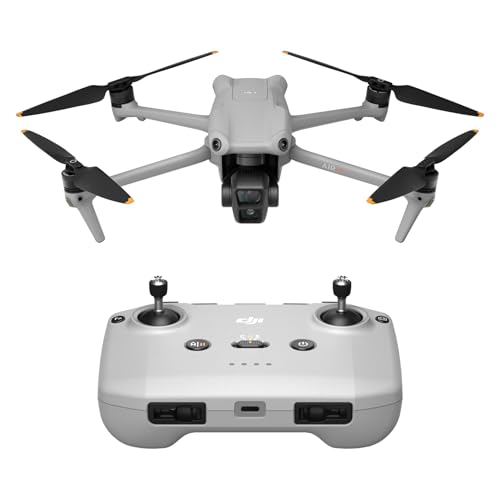
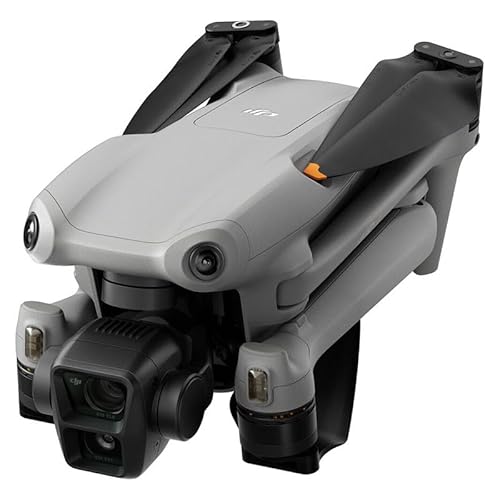
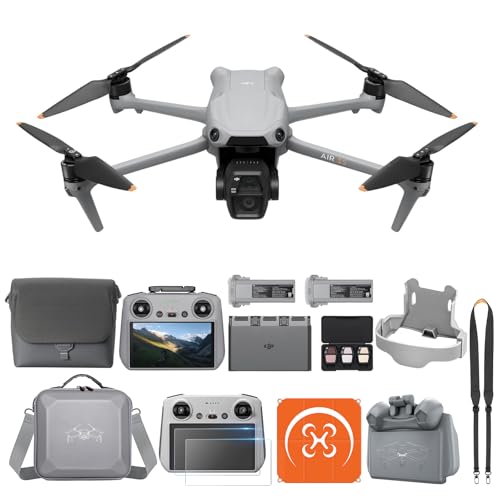
DJI Air 3 Review | 95 Data compared

double-arrow
  • Avg. price in UK: ~£870
  • Avg. price in US: ~$1,100
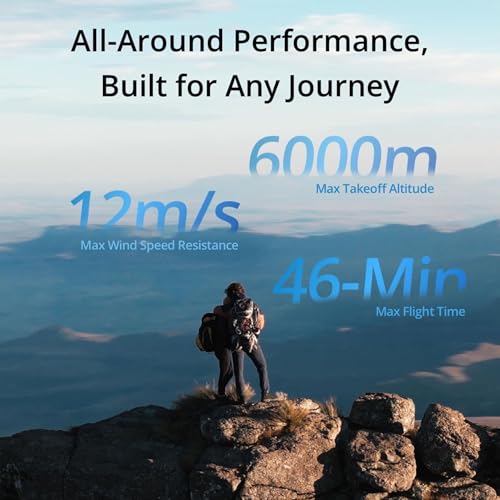
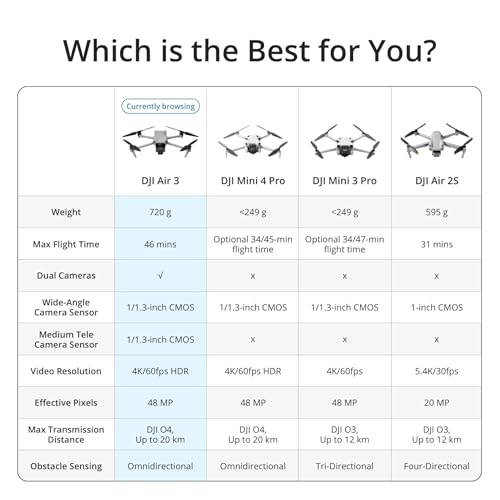
  • Max flight time: 46 min
  • Video resolution: 4K/100 fps
  • Max transmission distance: 20 km

DJI Air 3 review. Compare 95 technical specifications and user reviews to see how it ranks among drones and if it is worth buying.

8.7

Overall score

What it is: An overall evaluation of the drone's quality, based on technical analyses and user reviews.

When it matters: When you need a quick reference to identify the best drones on the market.

Score components:

90.0%

8.9

Technical Score

10.0%

7.5

User score

Excellent
8.9

Technical Score

What it is: An assessment of the drone's technical performance, covering key areas such as flight performance, camera quality, transmission, safety features, battery life, and design.

When it matters: When you want to compare drones based on technical performance and available features.

Score components:

26.0%

10

Flight

24.0%

8.3

Camera

20.0%

8.6

Safety

16.0%

9.0

Connectivity

14.0%

7.9

Battery & Design

Excellent
7.5

User score

What it is: A rating that combines user reviews and the total number of reviews received by the drone.

When it matters: When you want to know how a drone performs in real flights and how reliable it is for stability, video capture, and controls according to user feedback.

Score components:

70.0%

8.4

User reviews

30.0%

5.5

Popularity

User score:
United States
Amazon_logo.png
4.2
(169)

(Reviews last updated: Apr 2026)

Very good
    • dji-air-3
    • dji-air-3
    • dji-air-3
    • dji-air-3
    • dji-air-3
    • dji-air-3
    • dji-air-3
    dji-air-3
    dji-air-3
    dji-air-3
    dji-air-3
    dji-air-3
    dji-air-3
    dji-air-3

    Best prices

      N/A~ £870

    Best rankings

    ?

    Available: ranking among products currently available (including other versions of this product).
    All: ranking among all products in the database.

    Technical Specifications of drone DJI Air 3

    Technical Score

    What it is: An assessment of the drone's technical performance, covering key areas such as flight performance, camera quality, transmission, safety features, battery life, and design.

    When it matters: When you want to compare drones based on technical performance and available features.

    Score components:

    26.0%

    10

    Flight

    24.0%

    8.3

    Camera

    20.0%

    8.6

    Safety

    16.0%

    9.0

    Connectivity

    14.0%

    7.9

    Battery & Design

    8.9
    DJI Air 3 has a technical score of 8.85 points, which is higher than that of 98.1% of products in this category.
    User score

    What it is: A rating that combines user reviews and the total number of reviews received by the drone.

    When it matters: When you want to know how a drone performs in real flights and how reliable it is for stability, video capture, and controls according to user feedback.

    Score components:

    70.0%

    8.4

    User reviews

    30.0%

    5.5

    Popularity

    User score:
    United States
    Amazon_logo.png
    4.2
    (169)

    (Reviews last updated: Apr 2026)

    7.5
    DJI Air 3 has a user score of 7.53 points, which is lower than that of 75.3% of products in this category.
    Popularity
    What it is: An indicator based on the number of reviews received by the drone.
    When it matters: When you prefer to choose a drone reviewed and selected by many other buyers.
    5.5
    DJI Air 3 has a popularity of 5.5 points, which is higher than 73.4% of smartphones.
    Ratio quality/price

    What it is: An indicator that combines the drone's overall rating with its cost.

    When it matters: When you are looking for a drone with a good balance between flight quality, camera features, and price.

    Score components:

    60.0%

    8.7

    Overall score

    40.0%

    5.9

    Price

    7.9
    DJI Air 3 has a quality-to-price ratio of 7.9 points, which is higher than 96.1% of smartphones.
    Brand name
    What it is: The manufacturer or brand of the product.
    When it matters: When you prefer a specific ecosystem, support network, or design philosophy.

    Importance: MEDIUM

    DJI
    Max flight time
    What it is: The quoted endurance shows how long the drone can stay airborne on one battery in ideal conditions.
    When it matters: When you want longer flights from each battery.

    Importance: HIGH

    Good value: >=30

    46 min
    DJI Air 3 has a max flight time of 46 min, longer than 95.3% of drones and equal to 2%.
    Max flight distance
    What it is: The range figure indicates how far the drone can travel while maintaining control and telemetry.
    When it matters: When you plan longer routes and want more range margin.

    Importance: HIGH

    Good value: >=10

    32 km
    DJI Air 3 has a max flight distance of 32 km, farther than 95.9% of drones and equal to 2.1%.
    Max flight speed
    What it is: The maximum horizontal speed defines how quickly the drone can move across a scene.
    When it matters: When you want quicker movement or smoother tracking of fast subjects.

    Importance: MEDIUM

    Good value: >=50

    21 km/h
    DJI Air 3 has a max flight speed of 21 km/h, faster than 86.2% of drones and equal to 8.1%.
    Top speed may be lower in EU/CE-regulated regions.
    Max wind resistance
    What it is: The wind resistance rating shows how much wind speed the drone can handle while staying controllable.
    When it matters: When you fly in windy conditions.

    Importance: HIGH

    Good value: >=10.5

    12 m/s
    DJI Air 3 has max wind resistance of 12 m/s, higher than 70.3% of drones and equal to 18.9%.
    Show more
    Video resolution
    What it is: The listed recording format states maximum capture resolution and frame rate.
    When it matters: When video quality matters for your footage.

    Importance: MEDIUM

    Good value: 4K+

    4K/100 fps
    DJI Air 3 records video at 4K/100 fps, higher than 83.9% of drones and equal to 2.7%.
    4K camera
    What it is: Indicates whether the drone supports 4K or higher video recording.
    When it matters: When you want a drone that can record in 4K or a higher video resolution.

    Importance: LOW

    yes
    DJI Air 3 supports 4K video, and 65.2% of drones do too.
    Sensor size
    What it is: The sensor format value describes the physical light-collecting area.
    When it matters: When you shoot in more difficult lighting.

    Importance: MEDIUM

    Good value: 1 inch or larger

    1/1.3"
    DJI Air 3 has a sensor size of 1/1.3", larger than 63.5% of drones and equal to 10.6%.
    Main camera megapixels
    What it is: The megapixel count states how many millions of pixels the main sensor captures per photo.
    When it matters: When you want more detail for photos or cropping.

    Importance: MEDIUM

    Good value: >=12

    48 MP
    DJI Air 3 has a main camera resolution of 48 MP, higher than 75.8% of drones and equal to 17.7%.
    Max movie bitrate
    What it is: The bitrate indicates how much video data is recorded each second, usually in Mbps.
    When it matters: When video quality matters for your footage.

    Importance: MEDIUM

    Good value: >=100

    150 Mbps
    DJI Air 3 has a max movie bitrate of 150 Mbps, higher than 80.3% of drones and equal to 7%.
    Show more
    Obstacle detection
    What it is: Indicates whether the drone can detect obstacles and warn the pilot or avoid them automatically.
    When it matters: When you fly near trees, buildings, or other obstacles.

    Importance: HIGH

    Good value: Omnidirectional

    yes
    DJI Air 3 includes obstacle detection, and 34.7% of drones offer it.
    Return to Home (RTH)
    What it is: Indicates whether the drone can automatically return to its takeoff point when needed.
    When it matters: When signal drops or the battery gets low.

    Importance: HIGH

    Good value: Smart RTH

    yes
    DJI Air 3 includes return-to-home (RTH), and 74.3% of drones provide it.
    GPS
    What it is: Indicates whether the drone can use GPS positioning for navigation and stabilisation.
    When it matters: When you want steadier flight and more reliable positioning.

    Importance: MEDIUM

    yes
    DJI Air 3 has GPS, and 69% of drones offer GPS navigation.
    GNSS systems supported
    What it is: Lists the satellite navigation systems the drone can use, such as GPS, Galileo, or GLONASS.
    When it matters: When this part of flying or filming matters to you.

    Importance: HIGH

    Good value: GPS+Galileo+GLONASS

    GPS, Galileo, BeiDou
    DJI Air 3 supports GPS, Galileo, BeiDou GNSS systems, which are more comprehensive than those of 59.8% of drones and the same as those of 13.4% of drones.
    Obstacle sensing directions
    What it is: The listed sensing coverage shows which directions the drone can monitor for obstacles.
    When it matters: When you fly near trees, buildings, or other obstacles.

    Importance: HIGH

    Good value: Omnidirectional

    omnidirectional
    DJI Air 3 senses obstacles in omnidirectional directions, which is more comprehensive than that of 82.8% of drones and the same as that of 17.2% of drones.
    Show more
    Max transmission distance
    What it is: The maximum transmission distance indicates the farthest stable control-and-video link under ideal conditions.
    When it matters: When you plan longer routes and want more range margin.

    Importance: HIGH

    Good value: >=10

    20 km
    DJI Air 3 has a max transmission distance of 20 km, farther than 94.8% of drones and equal to 3.3%.
    Maximum range varies by region; CE/SRRC/MIC limits can be lower.
    Transmission latency
    What it is: The transmission latency measures delay between camera capture, pilot view, and control response.
    When it matters: When you want the live view to feel more responsive.

    Importance: MEDIUM

    Good value: <=130

    120 ms
    DJI Air 3 has transmission latency of 120 ms, lower than 64.1% of drones and equal to 26.6%.
    Video transmission system
    What it is: The transmission system value identifies the radio-link technology used for control and live feed.
    When it matters: When video quality matters for your footage.

    Importance: HIGH

    Good value: Digital low-latency

    O4
    DJI Air 3 uses O4 for video transmission, which is more advanced than that of 91.2% of drones and the same as that of 7.4% of drones.
    Live view quality
    What it is: The live-view mode defines resolution and frame rate of the pilot feed.
    When it matters: When video quality matters for your footage.

    Importance: MEDIUM

    Good value: 1080p+

    1,080p@60 fps
    DJI Air 3 offers live view quality of 1080p@60 fps, higher-quality than 77.4% of drones and equal to 14.6%.
    Remote control
    What it is: Indicates whether a dedicated handheld remote controller is included or supported.
    When it matters: When you want easier control and monitoring in the field.

    Importance: LOW

    Good value: Dedicated controller

    yes
    DJI Air 3 includes a remote control, and 96.1% of drones ship with one.
    Show more
    Battery capacity
    What it is: The battery capacity shows how much electric charge the pack can store, commonly in mAh.
    When it matters: When you want longer sessions before changing batteries.

    Importance: HIGH

    Good value: >=3500

    4,241 mAh
    DJI Air 3 has a battery capacity of 4241 mAh, larger than 78.4% of drones and equal to 0%.
    Battery energy
    What it is: The battery energy figure, usually in Wh, describes total available energy in the pack.
    When it matters: When you want longer sessions before changing batteries.

    Importance: LOW

    Good value: >=40

    62.6 Wh
    DJI Air 3 has battery energy of 62.6 Wh, higher than 84% of drones and equal to 0%.
    Charging time
    What it is: The charging time measures how long a depleted battery needs to reach full charge.
    When it matters: When you want shorter turnaround between flights.

    Importance: MEDIUM

    Good value: <=90

    80 min
    DJI Air 3 charges in 80 min, faster than 68% of drones and equal to 4.8%.
    Weight
    What it is: The measured mass of the drone body and flight hardware, usually in grams.
    When it matters: When you want the drone to be easier to carry or pack.

    Importance: LOW

    Good value: <=900

    720 g
    DJI Air 3 weighs 720 g, heavier than 72% of drones and equal to 0%.
    Removable battery
    What it is: Indicates whether the flight battery can be removed and swapped by the user.
    When it matters: When you want to swap batteries quickly between flights.

    Importance: LOW

    yes
    DJI Air 3 has a removable battery, and 99.4% of drones include one.
    Show more

    DJI Air 3 vs the average drone

    • 30 km longer flight distance
      DJI Air 3 has a longer max flight distance than the average drone (32 km vs 2 km). The average drone can fly up to 2 km.
      What it is: The range figure indicates how far the drone can travel while maintaining control and telemetry.
      When it matters: When you plan longer routes and want more range margin.

      Importance: HIGH

      Good value: >=10

      DJI Air 3 has a longer max flight distance than the average drone (32 km vs 2 km). The average drone can fly up to 2 km.32 km vs 2 km
    • 23 min longer flight time
      DJI Air 3 offers longer max flight time than the average drone (46 min vs 23 min). The average drone offers 23 min of max flight time.
      What it is: The quoted endurance shows how long the drone can stay airborne on one battery in ideal conditions.
      When it matters: When you want longer flights from each battery.

      Importance: HIGH

      Good value: >=30

      DJI Air 3 offers longer max flight time than the average drone (46 min vs 23 min). The average drone offers 23 min of max flight time.46 min vs 23 min
    • 18.49 km longer transmission distance
      DJI Air 3 has a longer max transmission distance than the average drone (20 km vs 1,507 km). The average drone reaches 1,507 km of transmission distance.
      Maximum range varies by region; CE/SRRC/MIC limits can be lower.
      What it is: The maximum transmission distance indicates the farthest stable control-and-video link under ideal conditions.
      When it matters: When you plan longer routes and want more range margin.

      Importance: HIGH

      Good value: >=10

      DJI Air 3 has a longer max transmission distance than the average drone (20 km vs 1,507 km). The average drone reaches 1,507 km of transmission distance.20 km vs 1,507 km
    • Obstacle detection included
      DJI Air 3 includes obstacle detection, while the average drone does not.
      What it is: Indicates whether the drone can detect obstacles and warn the pilot or avoid them automatically.
      When it matters: When you fly near trees, buildings, or other obstacles.

      Importance: HIGH

      Good value: Omnidirectional

      DJI Air 3 includes obstacle detection, while the average drone does not.
    • 5 m/s faster ascent speed
      DJI Air 3 climbs faster than the average drone (10 m/s vs 5 m/s). The average drone climbs at 5 m/s.
      What it is: The ascent speed indicates how quickly the drone can gain altitude.
      When it matters: When you want quicker movement or smoother tracking of fast subjects.

      Importance: LOW

      Good value: >=5

      DJI Air 3 climbs faster than the average drone (10 m/s vs 5 m/s). The average drone climbs at 5 m/s.10 m/s vs 5 m/s
    • Low-light mode
      DJI Air 3 includes low-light mode, while the average drone does not.
      What it is: Indicates whether the camera includes a dedicated mode for shooting in darker scenes.
      When it matters: When this part of flying or filming matters to you.

      Importance: LOW

      Good value: Night mode

      DJI Air 3 includes low-light mode, while the average drone does not.
    • 30 km longer flight distance
      DJI Air 3 has a longer max flight distance than the average drone (32 km vs 2 km). The average drone can fly up to 2 km.
    • 23 min longer flight time
      DJI Air 3 offers longer max flight time than the average drone (46 min vs 23 min). The average drone offers 23 min of max flight time.
    • 5 m/s faster ascent speed
      DJI Air 3 climbs faster than the average drone (10 m/s vs 5 m/s). The average drone climbs at 5 m/s.
    • 5 km/h faster flight speed
      DJI Air 3 reaches a higher max flight speed than the average drone (21 km/h vs 16 km/h). The average drone reaches 16 km/h.
    • 6 m/s faster descent speed
      DJI Air 3 descends faster than the average drone (10 m/s vs 4 m/s). The average drone descends at 4 m/s.
    • 2,000 m higher max service ceiling
      DJI Air 3 can fly at a higher max service ceiling than the average drone (6,000 m vs 4,000 m). The average drone reaches 4,000 m.
    • 1.3 m/s higher max wind resistance
      DJI Air 3 handles stronger wind than the average drone (12 m/s vs 10.7 m/s). The average drone handles wind up to 10.7 m/s.
    • Low-light mode
      DJI Air 3 includes low-light mode, while the average drone does not.
    • 50 Mbps faster max movie bitrate
      DJI Air 3 supports a higher max movie bitrate than the average drone (150 Mbps vs 100 Mbps). The average drone supports 100 Mbps.
    • 36 MP higher main camera megapixels
      DJI Air 3 has more main camera megapixels than the average drone (48 MP vs 12 MP). The average drone has 12 MP MP on the main camera.
    • More video codec options
      DJI Air 3 supports H.264/AVC, H.265/HEVC video codecs, while the average drone supports H.264/AVC.
    • Shoots RAW photos
      DJI Air 3 can shoot RAW photos, while the average drone cannot.
    • More video format options
      DJI Air 3 supports MP4, MOV video formats, while the average drone supports MP4.
    • 8 GB higher internal storage
      DJI Air 3 has more internal storage than the average drone (8 GB vs 0 GB). The average drone has 0 GB of internal storage.
    • Slow-motion mode
      DJI Air 3 includes slow-motion mode, while the average drone does not.
    • Higher photo resolution
      DJI Air 3 supports higher photo resolution than the average drone (8,064x 6,048 MP vs 4,000x3,000 MP). The average drone supports 4,000x3,000 MP photo resolution.
    • 2 axis higher gimbal axes
      DJI Air 3 has more gimbal axes than the average drone (3 axis vs 1 axis). The average drone has 1 axis gimbal axes.
    • Better focus system
      DJI Air 3 uses contrast AF (CDAF) for focusing, while the average drone uses fixed focus.
    • HDR mode included
      DJI Air 3 includes HDR mode, while the average drone does not.
    • Higher sensor size
      DJI Air 3 has a larger sensor than the average drone (1/1.3" vs 1/2"). The average drone uses a sensor of 1/2".
    • 6x higher digital zoom
      DJI Air 3 offers more digital zoom than the average drone (9x vs 3x). The average drone offers 3x of digital zoom.
    • Wider tilt range
      DJI Air 3 offers a wider camera tilt range than the average drone (-90 to 60 ° vs -90 to 20 °). The average drone offers a camera tilt range of -90 to 20 °.
    • More advanced manual controls
      DJI Air 3 offers partial manual camera controls, while the average drone offers no.
    • 6,400 ISO higher max iso
      DJI Air 3 reaches a higher max ISO than the average drone (12,800 ISO vs 6,400 ISO). The average drone reaches 6,400 ISO ISO.
    • Burst mode included
      DJI Air 3 includes burst mode, while the average drone does not.
    • Panorama mode included
      DJI Air 3 includes panorama mode, while the average drone does not.
    • 384 GB higher max external memory supported
      DJI Air 3 supports more external storage than the average drone (512 GB vs 128 GB). The average drone supports up to 128 GB of external storage.
    • Obstacle detection included
      DJI Air 3 includes obstacle detection, while the average drone does not.
    • ADS-B In included
      DJI Air 3 includes ADS-B In (AirSense), while the average drone does not.
    • QuickShots supported
      DJI Air 3 supports QuickShots, while the average drone does not.
    • 4 more intelligent flight mode/s
      DJI Air 3 has a higher n. of intelligent flight modes than the average drone (8 vs 4). The average drone value is 4.
    • Remote ID included
      DJI Air 3 includes Remote ID support, while the average drone does not.
    • Favorable EU class
      DJI Air 3 is rated as C1 under the EU drone class system, while the average drone is rated as None.
    • More GNSS systems
      DJI Air 3 supports GPS, Galileo, BeiDou GNSS systems, while the average drone supports GPS, GLONASS, BeiDou.
    • 2.89x lighter weight
      DJI Air 3 has a lower max takeoff weight than the average drone (720 g vs 249 g). The average drone has a max takeoff weight of 249 g.
    • 18.49 km longer transmission distance
      DJI Air 3 has a longer max transmission distance than the average drone (20 km vs 1,507 km). The average drone reaches 1,507 km of transmission distance.
    • Higher live view quality
      DJI Air 3 has better live view quality than the average drone (1,080p@60 fps vs 1,080p@25 fps). The average drone offers live view quality of 1,080p@25 fps.
    • More frequency bands
      DJI Air 3 supports 2.4 GHz, 5.2 GHz, 5.8 GHz operating frequency bands, while the average drone supports 2.4 GHz, 5.8 GHz.
    • 10 ms lower latency
      DJI Air 3 has lower transmission latency than the average drone (120 ms vs 130 ms). The average drone has transmission latency of 130 ms.
    • Supports 4G / LTE
      DJI Air 3 supports 4G / LTE connectivity, while the average drone does not.
    • Better companion app
      DJI Air 3 uses the DJI Fly companion app, while the average drone uses FreeFlight Pro.
    • 45.28 Wh higher battery energy
      DJI Air 3 has higher battery energy than the average drone (62.6 Wh vs 17.32 Wh). The average drone battery has 17.32 Wh of energy.
    • 2,011 mAh higher battery capacity
      DJI Air 3 has a larger battery capacity than the average drone (4,241 mAh vs 2,230 mAh). The average drone battery has a capacity of 2,230 mAh.
    • 10 min shorter charging time
      DJI Air 3 charges faster than the average drone (80 min vs 90 min). The average drone charges in 90 min.
    • 2 year/s newer release date
      DJI Air 3 is newer than the average drone (2,023 vs 2,021). The average drone was released in 2,021.
    • 8 ° narrower field of view
      DJI Air 3 has a narrower field of view than the average drone (82 ° vs 90 °). The average drone has a field of view of 90 °.
    • 2 m/s lower max subject tracking speed
      DJI Air 3 can track subjects at a lower speed than the average drone (12 m/s vs 14 m/s). The average drone tracks subjects at 14 m/s.
    • 10 °C higher min operating temperature
      DJI Air 3 can operate only at a higher minimum temperature than the average drone (-10 °C vs 0 °C). The average drone has a minimum operating temperature of 0 °C.
    • No smartphone control
      DJI Air 3 does not support smartphone remote control, while the average drone does.
    • 2.89x heavier weight
      DJI Air 3 is heavier than the average drone (720 g vs 249 g). The average drone weighs 249 g.
    • 79.5 mm larger width
      DJI Air 3 is wider than the average drone (326 mm vs 246.5 mm). The average drone width is 246.5 mm.
    • 40.8 mm larger height
      DJI Air 3 has a greater height than the average drone (105.8 mm vs 65 mm). The average drone height is 65 mm.
    • No smartphone control
      DJI Air 3 does not support smartphone remote control, while the average drone does.
      What it is: Indicates whether the drone can be controlled directly from a smartphone.
      When it matters: When you want easier control and monitoring in the field.

      Importance: MEDIUM

      DJI Air 3 does not support smartphone remote control, while the average drone does.
    • 2.89x heavier weight
      DJI Air 3 is heavier than the average drone (720 g vs 249 g). The average drone weighs 249 g.
      What it is: The measured mass of the drone body and flight hardware, usually in grams.
      When it matters: When you want the drone to be easier to carry or pack.

      Importance: LOW

      Good value: <=900

      DJI Air 3 is heavier than the average drone (720 g vs 249 g). The average drone weighs 249 g.720 g vs 249 g
    • 79.5 mm larger width
      DJI Air 3 is wider than the average drone (326 mm vs 246.5 mm). The average drone width is 246.5 mm.
      What it is: The physical width describes the drone's side-to-side size: the second W value in its Length x Width x Height (L x W x H) dimensions set.
      When it matters: When you want a clearer picture of the drone's footprint and how much lateral space it needs in use or in a case.

      Importance: LOW

      Good value: <=300

      DJI Air 3 is wider than the average drone (326 mm vs 246.5 mm). The average drone width is 246.5 mm.326 mm vs 246.5 mm
    • 40.8 mm larger height
      DJI Air 3 has a greater height than the average drone (105.8 mm vs 65 mm). The average drone height is 65 mm.
      What it is: The physical height describes the drone's vertical size: the third H value in its Length x Width x Height (L x W x H) dimensions set.
      When it matters: When you care about overall size, packing clearance, or how tall the drone sits in storage or transport.

      Importance: LOW

      Good value: <=120

      DJI Air 3 has a greater height than the average drone (105.8 mm vs 65 mm). The average drone height is 65 mm.105.8 mm vs 65 mm
    • 8 ° narrower field of view
      DJI Air 3 has a narrower field of view than the average drone (82 ° vs 90 °). The average drone has a field of view of 90 °.
      What it is: The field-of-view angle shows how wide the camera can capture in one frame.
      When it matters: When you want a wider or tighter look from the camera.

      Importance: MEDIUM

      Good value: 75-90

      DJI Air 3 has a narrower field of view than the average drone (82 ° vs 90 °). The average drone has a field of view of 90 °.82 ° vs 90 °
    • 3.48x more expensive
      DJI Air 3 is more expensive than the average drone (£870 vs £250).
      DJI Air 3 is more expensive than the average drone (£870 vs £250).£870 vs £250
    • 2 m/s lower max subject tracking speed
      DJI Air 3 can track subjects at a lower speed than the average drone (12 m/s vs 14 m/s). The average drone tracks subjects at 14 m/s.
      What it is: The measured value for max subject tracking speed indicates where this drone sits on that performance scale.
      When it matters: When this part of flying or filming matters to you.

      Importance: MEDIUM

      Good value: >=15

      DJI Air 3 can track subjects at a lower speed than the average drone (12 m/s vs 14 m/s). The average drone tracks subjects at 14 m/s.12 m/s vs 14 m/s
    • 6.2% lower user score
      DJI Air 3 has a lower user score than the average drone (7.53 vs 8,000).
      What it is: A rating that combines user reviews and the total number of reviews received by the drone.
      When it matters: When you want to know how a drone performs in real flights and how reliable it is for stability, video capture, and controls according to user feedback.
      DJI Air 3 has a lower user score than the average drone (7.53 vs 8,000).7.53 vs 8

    Graphic comparison of DJI Air 3 and other drones

    Attribute category
    Attribute
    No results found

    Third-party reviews

    (Reviews last updated: Apr 2026)

    What customers like about DJI Air 3?

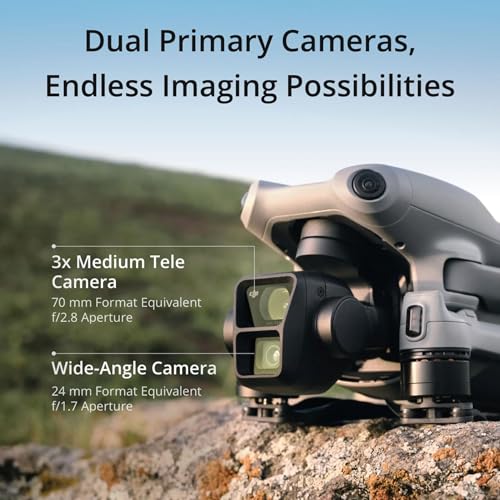
    • Versatile dual-camera system (24mm wide and 70mm medium telephoto) with consistent image quality across both sensors
    • Omnidirectional obstacle sensing and APAS 5.0 provide industry-leading safety and crash prevention
    • Excellent flight stability and wind resistance, even in gusty conditions
    • Significantly improved O4 video transmission system for a more reliable, long-range signal
    • Long real-world battery life, typically yielding 32-40 minutes of actual flight time
    • Innovative charging hub that can consolidate power from three partially used batteries into one
    • Quiet operation compared to previous generations, making it less intrusive in urban settings

    What customers dislike about DJI Air 3?

    • Fixed aperture on both lenses makes the use of ND filters mandatory for proper video exposure control
    • Weighs over 249g, requiring FAA registration and falling into more restrictive regulatory categories in many regions
    • Smaller sensor size (1/1.3-inch) compared to the older Air 2S, which some photographers view as a technical downgrade
    • Vertical shooting is achieved via cropping (2.7K) rather than physical camera rotation like the Mini series
    • Limited internal storage (8GB), making the purchase of a high-speed microSD card essential
    • Minimum focusing distance on the telephoto lens (approx. 2m) is too long for close-up portraits

    Expert reviews

    E
    eftm.com
    16/08/2023

    The EFTM review identifies the DJI Air 3 as a capable mid-range drone featuring a dual-camera system with 1/1.3-inch 48MP sensors, offering 24mm wide-angle and 70mm medium telephoto views for creative, distant shooting. Key advantages include significantly improved stability in high winds compared to the Mini series and an impressive 46-minute maximum flight time, with the Fly More...Read more

    S
    space.com
    25/07/2023

    The DJI Air 3 is positioned as a powerful, mid-range drone featuring a dual-primary camera system with 24mm wide-angle and 70mm medium telephoto lenses, both utilizing a 1/1.3-inch sensor for consistent 48MP image quality. Key advantages include a 46-minute battery life, exceptional flight stability, and enhanced safety via omnidirectional obstacle avoidance. However, the drone...Read more

    T
    techradar.com
    25/07/2023

    The DJI Air 3 bridges the gap between consumer and professional drones, featuring a dual-camera system with 1/1.3-inch sensors on both a 24mm wide-angle and 70mm medium telephoto lens. Capable of 48MP photos and 4K/100fps video, it offers significant versatility, enhanced omnidirectional obstacle sensing, and a 46-minute flight time. Key strengths include improved O4 transmission...Read more

    E
    engadget.com
    25/07/2023

    The DJI Air 3 introduces a dual-primary camera system featuring matching 1/1.3-inch sensors for both the 24mm wide-angle and 70mm telephoto lenses, enabling consistent 4K/60fps HDR video. It significantly upgrades performance with the O4 transmission system, 46-minute flight time, omnidirectional obstacle sensing, and Waypoint Flight capabilities. While praised for its versatility,...Read more

    W
    wired.com
    25/07/2023

    The WIRED review rates the DJI Air 3 a 9/10, highlighting it as a versatile mid-range drone featuring a dual-camera system with 24mm wide-angle and 70mm medium-telephoto lenses, both utilizing 1/1.3-inch CMOS sensors. Key performance pros include a significantly boosted 46-minute battery life and robust omnidirectional obstacle sensors, allowing for confident flying in varied...Read more

    T
    thedronegirl.com
    25/07/2023

    The DJI Air 3 features a dual-primary camera system with 24mm and 70mm lenses, offering 48% better battery life (46-minute flight time) and omnidirectional obstacle sensing. It introduces the O4 transmission system and 2.7K vertical shooting, bridging the gap between the Mini and Mavic series. While highly versatile, it uses smaller 1/1.3-inch sensors with fixed apertures, requiring...Read more

    P
    pcmag.com
    25/07/2023

    The DJI Air 3 is a versatile, mid-range drone featuring a dual-camera system with 24mm wide-angle and 70mm telephoto lenses, both utilizing 1/1.3-inch sensors. Key pros include 4K/60fps HDR video, 46-minute rated battery life (around 40 in real-world testing), and 360-degree obstacle avoidance. It is praised for bringing high-end features to a more portable form factor. However, the...Read more

    M
    maisondudrone.com
    03/08/2023

    The DJI Air 3 features a redesigned, sturdier body with a dual-camera system, utilizing dual 1/1.3-inch sensors (24mm and 70mm) to produce consistent 4K/60fps video. Key pros include improved wind resistance (level 6), superior O4 transmission stability, and 46-minute battery life, though it lacks the 1-inch sensor found on the Air 2S. Safety and flight, bolstered by omnidirectional...Read more

    D
    dcrainmaker.com
    26/07/2023

    The DJI Air 3, featuring improved ActiveTrack 5.0 and a dual-camera system with a 3x telephoto lens, offers enhanced, reliable tracking for athletes in varied environments. Pros include superior obstacle avoidance, a, professional-looking, compressed background, and high-quality 4K/60fps video, while cons involve limitations in high-speed, complex, or low-visibility settings,...Read more

    C
    cined.com
    25/07/2023

    The CineD review highlights the DJI Air 3's dual-camera system, featuring identical 1/1.3-inch 48MP sensors for both the 24mm wide-angle and 70mm medium telephoto lenses, which ensures consistent image quality across focal lengths. Key pros include 4K/100fps video, O4 transmission, omnidirectional sensing, and an extended 46-minute flight time, while cons include fixed apertures...Read more

    F
    fstoppers.com
    25/07/2023

    The DJI Air 3 features an upgraded dual-camera system with identical 48-megapixel sensors, offering both 24mm wide and 70mm medium telephoto lenses, which allows for versatile 4K 10-bit HDR recording. While praised for its 46-minute battery life and O4 transmission range, a noted drawback is the lack of a rotating gimbal, restricting true vertical video to a 2.7K crop. The drone...Read more

    P
    pilotinstitute.com
    06/09/2023

    The DJI Air 3 is positioned as a versatile, mid-tier drone balancing portability with a dual-primary camera system, offering both 24mm wide-angle and 70mm medium telephoto lenses with consistent image quality. Key pros include a 46-minute flight time, O4 transmission, and 360-degree obstacle avoidance, though a notable con is the use of smaller 1/1.3-inch sensors compared to the...Read more

    A
    au.pcmag.com
    24/08/2023

    The PCMag review highlights the DJI Air 3 as a capable mid-sized drone featuring a dual-primary camera system with 24mm and 70mm lenses, supported by 1/1.3-inch sensors for consistent 4K/100fps video. Key advantages include extensive omnidirectional obstacle avoidance, up to 40-45 minutes of real-world flight time, and the robust O4 transmission system. However, the drone is...Read more

    G
    galaxus.de
    22/08/2023

    The DJI Air 3 is characterized as a versatile mid-range drone featuring a 24mm wide-angle and 70mm telephoto lens, both using identical 1/1.3-inch sensors for consistent, high-quality imaging. Key improvements include 46-minute flight time and omnidirectional obstacle avoidance, though the move to smaller sensors means a downgrade in resolution from the Air 2S. While offering strong...Read more

    D
    drohnen.de
    25/07/2023

    The DJI Air 3 bridges the gap between consumer and professional drones, featuring a dual-primary camera system with 1/1.3-inch CMOS sensors on both the wide-angle and 3x medium telephoto lenses. It captures 48MP photos and 4K/100fps video, supporting 10-bit D-Log M and HLG for consistent color, though it lacks the 1-inch sensor of the Air 2S. Key, user-friendly features include O4...Read more

    N
    neukamp.de
    09/08/2023

    The DJI Air 3 features a dual-camera system with 1/1.3-inch CMOS sensors (24mm and 70mm), with the telephoto lens providing a major advantage for capturing new photographic perspectives. The 48-megapixel mode is better integrated, supporting exposure bracketing for improved professional workflows in Adobe Lightroom. Key performance pros include exceptional stability in high wind, a...Read more

    C
    chip.de
    03/08/2023

    The DJI Air 3 is positioned as a versatile "all-rounder" bridging the gap between compact and professional models, featuring a dual-primary camera system with 1/1.3-inch sensors for 48MP photos and 4K HDR video. It boasts a significant 46-minute flight time, enhanced safety via omnidirectional obstacle sensing, and improved O4 transmission. While offering excellent creative...Read more

    D
    drone-zone.de
    25/07/2023

    The Drone-Zone.de review highlights the DJI Air 3 as a versatile mid-range drone featuring a dual-camera system with 24mm and 70mm lenses, utilizing consistent 1/1.3-inch CMOS sensors for 48MP photos and 4K/100fps video. Key advantages include improved flight times of up to 46 minutes and the O4 transmission system, though a significant drawback is the fixed aperture on both lenses...Read more

    C
    computerbild.de
    06/08/2023

    The Computer Bild review highlights the DJI Air 3's innovative dual-primary camera system, featuring identical 1/1.3-inch sensors for both wide-angle and 3x medium telephoto lenses, providing 4K/60fps HDR video. Key advantages include an impressive 46-minute flight time, enhanced O4 transmission, and superior safety via omnidirectional obstacle sensing. However, the review notes...Read more

    M
    major-drone.com
    21 février 2026

    The DJI Air 3 bridges the gap between the Mini and Mavic 3 series, featuring a dual-primary camera system with 1/1.3-inch sensors, offering 24mm wide-angle and 70mm medium telephoto capabilities. Key advantages include a 46-minute flight time, omnidirectional obstacle sensing, and the O4 transmission system. Conversely, the, smaller sensors represent a downgrade in raw quality from...Read more

    M
    maisondudrone.com
    3 août 2023

    The Maison Du Drone review characterizes the DJI Air 3 as a "mini Mavic 3," highlighting its significant upgrade in safety and versatility over the Air 2S with a dual-primary camera system (24mm and 70mm, 1/1.3-inch sensors). Key advantages include 46-minute theoretical flight time, omnidirectional obstacle detection, and the O4 transmission system, though it is heavier and lacks...Read more

    H
    helicomicro.com
    25 juillet 2023

    The Helicomicro review (July 2023) highlights the DJI Air 3 as a significant, mid-range, C1-certified drone featuring a dual-camera system (24mm and 70mm lenses), both utilizing 1/1.3-inch CMOS sensors. Key pros include increased flight time (up to 46 minutes), omnidirectional obstacle sensing, and superior versatility for cinematic shots, alongside the legal advantages of the...Read more

    L
    lesnumeriques.com
    25 juillet 2023

    The DJI Air 3 bridges the gap between the Mini and Mavic series, featuring a dual-camera system with 1/1.3-inch CMOS sensors for both 24mm wide and 70mm medium telephoto, enabling 48MP photos. It introduces the O4 transmission system, allowing for a stable 1080p/60fps live feed over long distances. Key advantages include extensive 46-minute flight time, omnidirectional obstacle...Read more

    F
    frandroid.com
    26 Septembre 2023

    The Frandroid review hails the DJI Air 3 as a significant upgrade to the series, featuring a new dual-camera system with both 24mm wide-angle and 70mm medium telephoto lenses. It highlights superior performance, including APAS 5.0 omnidirectional obstacle avoidance, a 46-minute theoretical battery life, and the stable DJI O4 transmission system, while noting a slight increase in...Read more

    F
    frandroid.com
    09/08/2023

    The DJI Air 3 serves as a versatile mid-range drone, featuring a dual-primary camera system with 1/1.3-inch CMOS sensors on both 24mm and 70mm lenses for consistent imaging. It offers enhanced performance with up to 46 minutes of flight time, the O4 transmission system, and 360-degree obstacle sensing. Key advantages include its stable flight in wind and creative flexibility, though...Read more

    M
    maisondudrone.com
    03 de agosto de 2023

    The Maison Du Drone review describes the DJI Air 3 as a "mini Mavic 3" that offers a significant upgrade with a 720g airframe for improved wind resistance and stability. Key features include a dual-camera system with 24mm and 70mm lenses, both supporting 48MP photos and 4K/60fps HDR video, alongside O4 transmission for better range. Pros highlighted in the analysis include a...Read more

    S
    strawberryfilms.es
    6 de enero de 2026

    The DJI Mavic Air 3 bridges the gap between the Mini and Mavic 3 series with a unique dual-primary camera system, offering 48MP photos and 4K/60fps HDR video from both a wide-angle and a 3x medium telephoto lens. Key advantages include 46-minute flight times, O4 transmission up to 20 km, and omnidirectional obstacle sensing for increased safety. However, limitations include a...Read more

    G
    gamereactor.es
    9 de noviembre de 2023

    The DJI Air 3 bridges the gap between the compact Mini and premium Mavic series, featuring a dual-camera system with 24mm and 70mm lenses that enhances creative versatility. While slightly heavier than the Air 2S, this design allows for a 46-minute flight time, superior wind resistance, and enhanced safety via omnidirectional obstacle avoidance. Key drawbacks include limited...Read more

    M
    maisondudrone.com
    01/10/2023

    The DJI Air 3, analyzed by Maison Du Drone, emerges as a "mini Mavic 3" featuring a dual-primary camera system with 1/1.3-inch CMOS sensors for both wide-angle and 3x telephoto shots. Key performance upgrades include omnidirectional obstacle detection, the O4 transmission system, and an impressive 46-minute maximum flight time. While offering significant versatility, the drone is...Read more

    A
    assicurazione-drone.it
    04/01/2024

    The DJI Air 3 bridges the gap between consumer and professional drones, offering features like a dual-camera system, 46-minute flight time, and omnidirectional obstacle sensing at an intermediate price point [1, 2, 4]. It features1/1.3-inch CMOS sensors for both the 24mm and 70mm cameras, supporting 4K/120fps and the new O4 transmission system, alongside a C1 class rating for...Read more

    T
    techprincess.it
    30/12/2023

    The DJI Air 3 brings professional features to a consumer drone by introducing a dual-primary camera system, combining 24mm and 70mm lenses with identical 1/1.3-inch sensors for consistent imaging. It significantly improves upon predecessors with 46-minute flight times, omnidirectional obstacle sensing, and the O4 transmission system. Key advantages include versatile creative...Read more

    P
    pierluigipatella.com
    08/11/2023

    The DJI Air 3 bridges the gap between consumer and professional drones, featuring a dual-primary camera system with 24mm wide-angle and 70mm medium telephoto lenses. It boasts up to 46 minutes of flight time, omnidirectional obstacle avoidance, and the stable O4 transmission system. While offering superior performance, it uses smaller 1/1.3-inch sensors compared to the Air 2S and...Read more

    D
    dronezine.it
    24/08/2023

    According to the DronEzine review, the DJI Air 3 is positioned as a versatile "compromise" between hobbyist and professional drones, featuring a C1 class marking and a dual-camera system with 1/1.3-inch sensors for 4K/100fps video and 48MP stills. Key pros include 46-minute flight autonomy, an innovative power-transfer charging hub, omnidirectional obstacle sensing, and the stable...Read more

    D
    dji-store.it
    28/07/2023

    The DJI Air 3 bridges the gap between the Mini and Mavic 3 series, offering a "mini Mavic" experience with a dual-camera system featuring 1/1.3-inch 48MP CMOS sensors for both wide and medium telephoto shots. It boasts significant upgrades in flight performance, including up to 46 minutes of flight time, the O4 transmission system for long-range, and, for the first time in the Air...Read more

    T
    thijsschouten.com
    13/02/2026

    The DJI Air 3 is positioned as a versatile, mid-range drone featuring a dual-camera system with 24mm and 70mm lenses using identical 1/1.3-inch sensors, allowing for consistent 48MP photos and 4K/100fps video. While heavier than its predecessor, the design provides improved wind resistance and a robust 35–46 minute flight time, complemented by omnidirectional obstacle sensing, the...Read more

    S
    shoot.be
    17/11/2023

    The DJI Air 3 serves as a versatile, all-round drone featuring a dual-camera system with two 1/1.3-inch CMOS sensors (24mm and 70mm), enabling consistent imagery across wide and medium-telephoto shots. It offers improved performance with 46-minute battery life, O4 transmission, and omnidirectional obstacle sensing, making it a stable, safe option for creators. Key pros include...Read more

    D
    dronewatch.nl
    08/08/2023

    The Dronewatch.nl review highlights the DJI Air 3 as a versatile "all-rounder" featuring a dual-camera system (24mm and 70mm, both 1/1.3-inch sensors) that provides a unique cinematic parallax effect. As the first in the Air series with a C1 label in Europe, it offers enhanced legal flexibility, along with a roughly 40-minute flight time, omnidirectional obstacle detection, and the...Read more

    Video reviews

    Compare DJI Air 3 with other drones

    VS
    VS

    Compare