Scored using Coffee Grinders Methodology v3.0
Coffee Grinders Methodology v3.0
Mathematical & Unbiased Scoring
Products in this category are scored under Frontum Coffee Grinders Methodology v3.0: the technical score from the specifications is the base, and independent expert and video reviews (up to ±0.5 points), owner opinions (up to ±0.3) and best-of lists (up to +0.3) move it up or down.
Explore Coffee Grinders Methodology v3.0

Zassenhaus Kingston Steel review: 43 specs compared

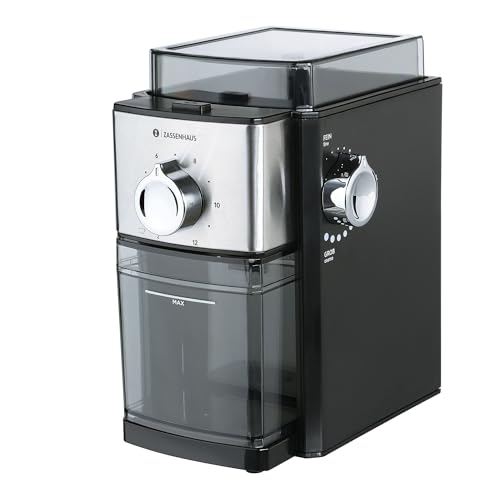
Avg. price:~£80Stepless adjustment:noBean hopper capacity:180 gWeight:1.405 kgDigital display:no

Zassenhaus Kingston Steel Review: Compare 43 technical specifications and 1 expert reviews to see how this product ranks in the Coffee Grinders category and whether it is worth buying.
Zassenhaus Kingston Steel
6.4/10

Overall score

Score
6.4/ 10
✕
What it is
Our main score for this model, 1–10. It combines specs, best-of lists, expert reviews, ratings from across the web and owners.
How we count it
Parts: Technical score 50%, List score 20%, Reviews score 15%, User score 10%, Sentiment score 5%
Marks: Each part gets a mark out of 10. For reviews, lists and owners, a typical model in this category gets about 8 and the best one gets 10.
No data yet: A part with no data shows "?". It counts as the mark of a weaker model in this category (4 in 5 models with data score higher). This way, models with reviews, lists and owners usually come out ahead.
Score distribution
â–¼
<55-66-77-88-99-10
Score components

50%

6.1

Technical score

20%

?

List scoreNot enough data yet, so we use 7.5, the mark of a weaker model in this category

15%

6.1

Reviews score

10%

6.1

User score

5%

?

Sentiment scoreNot enough data yet, so we use 6.1, the mark of a weaker model in this category

â–¼Worse than 69% of coffee grinders
7.4

Value for money

Value for money
7.4/ 10
✕
What it is
An indicator that combines the coffee grinder's overall rating with its price.
When it matters
When you are looking for a coffee grinder with a good balance between quality and price.
Score distribution
â–¼
<55-66-77-88-99-10
Score components

70%

6.4

Overall score

30%

9.8

Price

â–²Better than 53%
6.1

Technical score

Technical score
6.1/ 10
✕
What it is
How good the specs are compared with the other models in this category, 1–10.
How we count it
Areas: We rate the specs in each area against the other models in this category.
Weighting: The areas that matter most to buyers count more. The shares are shown under Score components.
Share: The technical score is 50% of the overall score.
Score distribution
â–¼
<55-66-77-88-99-10
Score components

50%

6.0

Grinding

15%

6.9

Design

15%

4.1

Dosing

10%

5.9

Motor

5%

10

Safety

5%

7.3

Maintenance

â–¼Worse than 56%
6.1

Reviews score

Reviews score
6.1/ 10
✕
What it is
Average grade from independent test sites, magazines and video reviewers, 1–10.
How we count it
Grades: Each review's own score is converted to 1–10; without one, we grade the review ourselves. Big test sites count more, short reviews half as much as full tests. A video review counts half.
Score: The average grade is 80% of the review mark; the number of reviews is the other 20% (1 review = 5, the typical number in this category = 8, the most-reviewed model = 10).
Enough data: With few reviews, the average grade is pulled toward the typical grade of this category. No reviews yet: 7.9 for now.
Share: Reviews count 15% of the overall score.
Score distribution
â–¼
<55-66-77-88-99-10

6.1

Mark 7.9 is below the typical mark 8.2 of this category, so it cannot lift the score above the technical score

80%

8.6

Average grade

20%

5.0

Popularity

Grades by review (1)
1 review, its grade estimated from the review text. Reviews count 15% of the overall score.
Ratings from across the web count in the User score, not in this score.
â–¼Worse than 79%
?

Sentiment score

Sentiment score
6.1/ 10
✕
What it is
How positive owners are about this model in their comments under video reviews and on forums. We read each comment, keep only people who say they own the model, and sort them into positive, mixed or negative.
How we count it
Score: We compare how satisfied this model’s owners are with the other models in this category: the typical model gets 8, the most satisfied tenth 10, the least satisfied 4. This is 80% of the owner mark; the number of owners is the other 20%.
Enough data: A model counts with 10+ owners from 4+ different discussions. With fewer, the owner part changes nothing.
Share: Owners count 5% of the overall score (left out in categories where fewer than 10 models have enough owner comments).
Score distribution
â–¼
<55-66-77-88-99-10
Owners (0)
Not enough owner comments yet (10+ owners from 4+ discussions needed), so the owner part changes nothing.
Our own analysis of online owner opinions, not a rating from any website.
Not enough owner comments yet
6.1

User score

User score
6.1/ 10
✕
What it is
How happy buyers are with this model, based on ratings from across the web.
How we count it
Enough data: A model needs at least 1 rating from across the web. Without one, it counts as 7.8, the mark of a weaker rated model in this category.
Share: User score counts 10% of the overall score.
Score distribution
â–¼
<55-66-77-88-99-10

6.1

Mark 7.6 is below the typical mark 8.4 of this category, so it cannot lift the score above the technical score

70%

7.9

Rating

30%

6.9

Popularity

â–¼Worse than 78%
?

List score

List score
7.5/ 10
✕
What it is
How often independent test sites, magazines and video reviewers put this model in their best-of lists for this category.
How we count it
Points: The model in the most lists of this category gets 10; the others get 8 to 10 in proportion. In no list yet: 7.5. Lists count 20% of the overall score.
Enough data: Every list counts, even a single one. With fewer than 5 best-of lists in the category, this part is left out.
Lists with this model (0)
Not in any best-of list yet, so this part counts as 7.5. Models in a list get 8 to 10.
Not in any best-of list yet
  • zassenhaus-kingston-steel
  • zassenhaus-kingston-steel
  • zassenhaus-kingston-steel
  • zassenhaus-kingston-steel
zassenhaus-kingston-steel
Where to buy
*As an Amazon Associate, we earn from qualifying purchases.
Best rankings
Available: ranking among products currently available (including other versions of this product).All: ranking among all products in the database.
Loading...
Loading category ranking...

Coffee Grinders model ranking

Ranked #139 of 539 models in Coffee Grinders (Overall score)

Technical Specifications of coffee grinder Zassenhaus Kingston Steel

Technical score
Technical score
6.1/ 10
✕
What it is
How good the specs are compared with the other models in this category, 1–10.
How we count it
Areas: We rate the specs in each area against the other models in this category.
Weighting: The areas that matter most to buyers count more. The shares are shown under Score components.
Share: The technical score is 50% of the overall score.
Score distribution
â–¼
<55-66-77-88-99-10
Score components:

50%

6.0

Grinding

15%

6.9

Design

15%

4.1

Dosing

10%

5.9

Motor

5%

10

Safety

5%

7.3

Maintenance

6.1
Reviews score
6.1
Sentiment score
?
User score
6.1
List score
?
Value for money
Value for money
7.4/ 10
✕
What it is
An indicator that combines the coffee grinder's overall rating with its price.
When it matters
When you are looking for a coffee grinder with a good balance between quality and price.
Score distribution
â–¼
<55-66-77-88-99-10
Score components:

70%

6.4

Overall score

30%

9.8

Price

7.4
Operation type
electric
Grinding mechanism
flat burr
Burr diameter
?
Grinding element material
hardened steel
Number of grind settings
17
This coffee grinder has 17 grind settings, which is fewer than 70.8% of coffee grinders and equal to 3.2% of coffee grinders.
Show more
Bean hopper capacity
180 g
This coffee grinder holds 180 g of beans, which is larger than 52.4% of coffee grinders and equal to 0.4% of coffee grinders.
Grounds container capacity
?
Detachable grounds container
yes
This coffee grinder has a detachable grounds container. 41.7% of coffee grinders have one.
Portafilter holder
no
This coffee grinder does not have a portafilter holder. 41% of coffee grinders offer this.
Single dosing
no
This coffee grinder does not support single dosing. 21.9% of coffee grinders offer this.
Show more
Power
150 W
This coffee grinder has a power of 150 W, which is lower than 65.9% of coffee grinders and equal to 18.2% of coffee grinders.
Voltage
220-240 V
Grinding speed
?
Noise level
?
Overheat protection
yes
This coffee grinder has overheat protection. 34.2% of coffee grinders offer this.
Safety lock
yes
This coffee grinder has a safety lock. 44.7% of coffee grinders offer this.
Non-slip base
yes
This coffee grinder has a non-slip base. 18.2% of coffee grinders offer this.
Tool-free burr removal
yes
This coffee grinder lets you remove the burrs without tools. 45.2% of coffee grinders offer this.
Dishwasher-safe parts
no
This coffee grinder does not have dishwasher-safe parts. 12.5% of coffee grinders offer this.
Cleaning brush
yes
This coffee grinder includes a cleaning brush. 56% of coffee grinders offer this.
Main color
black
Vintage design
no
Digital display
no
This coffee grinder does not have a digital display. 31% of coffee grinders offer this.
Body material
stainless steel, plastic
Transparent hopper
yes
This coffee grinder has a transparent hopper. 25.7% of coffee grinders have one.
Show more

Zassenhaus Kingston Steel vs the average coffee grinder

246810TotalGrindingDesignDosingMotorSafetyMaintenance
  • Supports tool-free burr removal
    This coffee grinder removes burrs without tools, while the average coffee grinder does not. 55% of coffee grinders support tool-free burr removal.
  • Supports safety lock
    This coffee grinder has a safety lock, while the average coffee grinder does not. 55.4% of coffee grinders offer this.
  • Has cord storage
    This coffee grinder has cord storage, while the average coffee grinder does not. 27.4% of coffee grinders have it.
  • Includes cleaning brush
    This coffee grinder includes a cleaning brush, while the average coffee grinder does not. 44.2% of coffee grinders include one.
  • 87.5% cheaper
    Zassenhaus Kingston Steel is cheaper than the average coffee grinder (£80 vs £150).
    £80 vs £150
  • 8.6 cm shorter
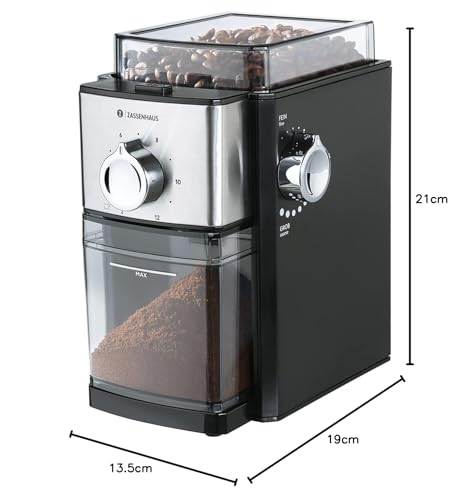
    This coffee grinder is shorter than the average coffee grinder (21 cm vs 29.6 cm). The average coffee grinder is 29.6 cm tall.
    21 cm vs 29.6 cm
  • 23.6% lighter
    This coffee grinder is lighter than the average coffee grinder (1.4 kg vs 1.84 kg). The average coffee grinder weighs 1.84 kg.
    1.405 kg vs 1.84 kg
  • 60 g larger capacity
    This coffee grinder holds more beans than the average coffee grinder (180 g vs 120 g). The average coffee grinder holds 120 g of beans.
    180 g vs 120 g
  • 87.5% cheaper
    Zassenhaus Kingston Steel is cheaper than the average coffee grinder (£80 vs £150).
    £80 vs £150
  • 1% better value for money
    Zassenhaus Kingston Steel has better value for money than the average coffee grinder (7.39 vs 7.3).
    7.39 vs 7.32
  • Has cord storage
    This coffee grinder has cord storage, while the average coffee grinder does not. 27.4% of coffee grinders have it.
  • 8.6 cm shorter
    This coffee grinder is shorter than the average coffee grinder (21 cm vs 29.6 cm). The average coffee grinder is 29.6 cm tall.
    21 cm vs 29.6 cm
  • 23.6% lighter
    This coffee grinder is lighter than the average coffee grinder (1.4 kg vs 1.84 kg). The average coffee grinder weighs 1.84 kg.
    1.405 kg vs 1.84 kg
  • 24.9% smaller
    This coffee grinder has a smaller volume than the average coffee grinder (5,386.5 cm³ vs 7,168.03 cm³). The average coffee grinder has a volume of 7,168.03 cm³.
    5,386.5 cm³ vs 7,168.03 cm³
  • 60 g larger capacity
    This coffee grinder holds more beans than the average coffee grinder (180 g vs 120 g). The average coffee grinder holds 120 g of beans.
    180 g vs 120 g
  • Supports safety lock
    This coffee grinder has a safety lock, while the average coffee grinder does not. 55.4% of coffee grinders offer this.
  • Supports tool-free burr removal
    This coffee grinder removes burrs without tools, while the average coffee grinder does not. 55% of coffee grinders support tool-free burr removal.
  • Includes cleaning brush
    This coffee grinder includes a cleaning brush, while the average coffee grinder does not. 44.2% of coffee grinders include one.
  • 18 fewer grind settings
    This coffee grinder has fewer grind settings than the average coffee grinder (17 vs 35). The average coffee grinder has 35 grind settings.
    17 vs 35
  • 17.6% lower review score
    Reviews score
    6.1/ 10
    ✕
    What it is
    Average grade from independent test sites, magazines and video reviewers, 1–10.
    How we count it
    Grades: Each review's own score is converted to 1–10; without one, we grade the review ourselves. Big test sites count more, short reviews half as much as full tests. A video review counts half.
    Score: The average grade is 80% of the review mark; the number of reviews is the other 20% (1 review = 5, the typical number in this category = 8, the most-reviewed model = 10).
    Enough data: With few reviews, the average grade is pulled toward the typical grade of this category. No reviews yet: 7.9 for now.
    Share: Reviews count 15% of the overall score.
    Score distribution
    â–¼
    <55-66-77-88-99-10

    6.1

    Mark 7.9 is below the typical mark 8.2 of this category, so it cannot lift the score above the technical score

    80%

    8.6

    Average grade

    20%

    5.0

    Popularity

    Grades by review (1)
    1 review, its grade estimated from the review text. Reviews count 15% of the overall score.
    Ratings from across the web count in the User score, not in this score.
    6.1 vs 7.4
  • 50 W lower power
    This coffee grinder is less powerful than the average coffee grinder (150 W vs 200 W). The average coffee grinder is rated at 200 W.
    150 W vs 200 W
  • 17.6% lower user score
    User score
    6.1/ 10
    ✕
    What it is
    How happy buyers are with this model, based on ratings from across the web.
    How we count it
    Enough data: A model needs at least 1 rating from across the web. Without one, it counts as 7.8, the mark of a weaker rated model in this category.
    Share: User score counts 10% of the overall score.
    Score distribution
    â–¼
    <55-66-77-88-99-10

    6.1

    Mark 7.6 is below the typical mark 8.4 of this category, so it cannot lift the score above the technical score

    70%

    7.9

    Rating

    30%

    6.9

    Popularity

    6.1 vs 7.4
  • 2 cm deeper
    This coffee grinder is deeper than the average coffee grinder (19 cm vs 17 cm). The average coffee grinder is 17 cm deep.
    19 cm vs 17 cm
  • 0.5 cm wider
    This coffee grinder is wider than the average coffee grinder (13.5 cm vs 13 cm). The average coffee grinder is 13 cm wide.
    13.5 cm vs 13 cm
  • 17.6% lower review score
    Reviews score
    6.1/ 10
    ✕
    What it is
    Average grade from independent test sites, magazines and video reviewers, 1–10.
    How we count it
    Grades: Each review's own score is converted to 1–10; without one, we grade the review ourselves. Big test sites count more, short reviews half as much as full tests. A video review counts half.
    Score: The average grade is 80% of the review mark; the number of reviews is the other 20% (1 review = 5, the typical number in this category = 8, the most-reviewed model = 10).
    Enough data: With few reviews, the average grade is pulled toward the typical grade of this category. No reviews yet: 7.9 for now.
    Share: Reviews count 15% of the overall score.
    Score distribution
    â–¼
    <55-66-77-88-99-10

    6.1

    Mark 7.9 is below the typical mark 8.2 of this category, so it cannot lift the score above the technical score

    80%

    8.6

    Average grade

    20%

    5.0

    Popularity

    Grades by review (1)
    1 review, its grade estimated from the review text. Reviews count 15% of the overall score.
    Ratings from across the web count in the User score, not in this score.
    6.1 vs 7.4
  • 17.6% lower user score
    User score
    6.1/ 10
    ✕
    What it is
    How happy buyers are with this model, based on ratings from across the web.
    How we count it
    Enough data: A model needs at least 1 rating from across the web. Without one, it counts as 7.8, the mark of a weaker rated model in this category.
    Share: User score counts 10% of the overall score.
    Score distribution
    â–¼
    <55-66-77-88-99-10

    6.1

    Mark 7.6 is below the typical mark 8.4 of this category, so it cannot lift the score above the technical score

    70%

    7.9

    Rating

    30%

    6.9

    Popularity

    6.1 vs 7.4
  • 18 fewer grind settings
    This coffee grinder has fewer grind settings than the average coffee grinder (17 vs 35). The average coffee grinder has 35 grind settings.
    17 vs 35
  • 2 cm deeper
    This coffee grinder is deeper than the average coffee grinder (19 cm vs 17 cm). The average coffee grinder is 17 cm deep.
    19 cm vs 17 cm
  • 0.5 cm wider
    This coffee grinder is wider than the average coffee grinder (13.5 cm vs 13 cm). The average coffee grinder is 13 cm wide.
    13.5 cm vs 13 cm
  • 50 W lower power
    This coffee grinder is less powerful than the average coffee grinder (150 W vs 200 W). The average coffee grinder is rated at 200 W.
    150 W vs 200 W

Expert reviews

In-depth analysis and verdict from leading tech publications

9.0
coffeeness.de
≈ estimated
10/06/2024
Hands-on test · Entry-level electric grinder
Verdict
The Zassenhaus Kingston is a quiet, even-grinding entry grinder for French press and filter coffee, but it cannot make real espresso.

Third-party reviews

What customers like about Zassenhaus Kingston Steel

  • Compact and lightweight design that saves kitchen counter space.
  • Features 17 distinct grinding levels for versatility across different brewing styles.
  • Equipped with an automatic switch-off timer to grind exact amounts for 2 to 12 cups.
  • Removable upper grinding disc and dishwasher-safe collection container make it easy to clean.
  • Toned bean hopper lid offers protection to preserve the coffee aroma.

What customers don't like about Zassenhaus Kingston Steel

  • Casing relies heavily on plastic materials, giving it a somewhat cheap feel.
  • Produces an uneven and poor grind consistency, particularly for specific methods.
  • The finest grind setting remains too coarse for traditional espresso machines or Moka pots.
  • Subject to annoying static build-up on the plastic grinds hopper.
  • Coffee grounds tend to spill onto the base when removing the collection container.

Verdict

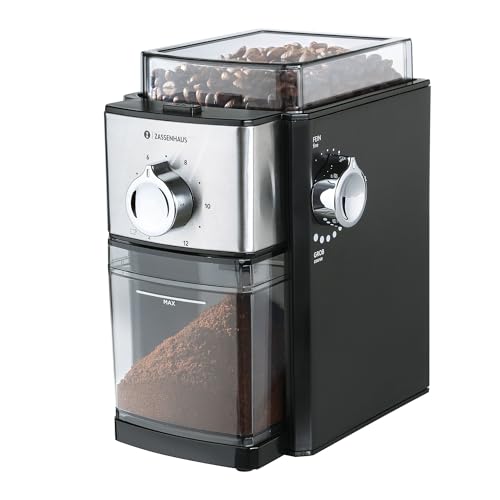
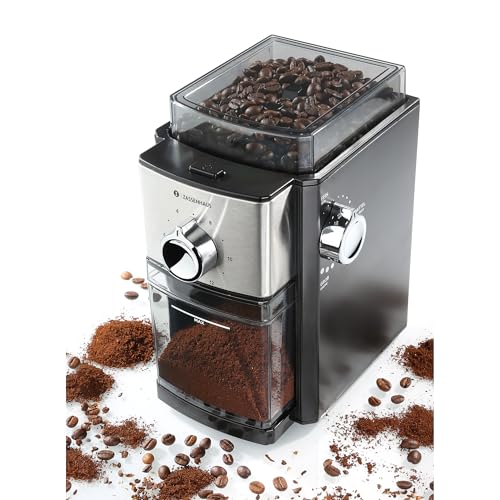
The Zassenhaus Kingston Steel is a compact, 150-watt electric coffee grinder featuring an aroma-preserving disc grinding system made of hardened steel and a durable plastic-and-acrylic housing measuring 19 x 13.5 x 21 cm. Key advantages include a flexible 17-stage grind size adjustment, a 180g bean hopper equipped with a tinted aroma protection lid, an automatic switch-off timer calibrated for 2 to 12 cups, and an easily removable upper grinding disc for quick cleanup with the included brush. However, a potential drawback is that the predominantly plastic and acrylic exterior casing lacks the premium feel of a full stainless steel build.

Compare Zassenhaus Kingston Steel with other coffee grinders

1Product to compare no. 1
VS
2Product to compare no. 2
VS
3Product to compare no. 3 (optional)

Graphic comparison of Zassenhaus Kingston Steel and other coffee grinders

No results found