Scored using Coffee Grinders Methodology v3.0
Coffee Grinders Methodology v3.0
Mathematical & Unbiased Scoring
Products in this category are scored under Frontum Coffee Grinders Methodology v3.0: the technical score from the specifications is the base, and independent expert and video reviews (up to ±0.5 points), owner opinions (up to ±0.3) and best-of lists (up to +0.3) move it up or down.
Explore Coffee Grinders Methodology v3.0

KINGrinder P2 review: 43 specs compared

Avg. price:~£45Stepless adjustment:noBean hopper capacity:20 gWeight:0.33 kgDigital display:no

KINGrinder P2 Review: Compare 43 technical specifications, 5 expert and video reviews and 2 best-of lists to see how this product ranks in the Coffee Grinders category and whether it is worth buying.
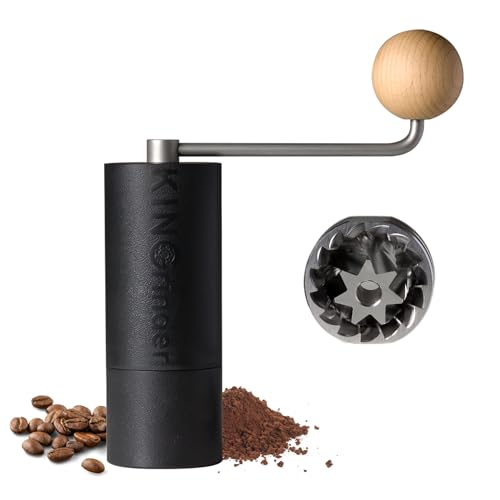
KINGrinder P2
6.8/10

Overall score

Score
6.8/ 10
✕
What it is
Our main score for this model, 1–10. It combines specs, best-of lists, expert reviews, ratings from across the web and owners.
How we count it
Parts: Technical score 55%, List score 20%, Reviews score 10%, User score 10%, Sentiment score 5%
Marks: Each part gets a mark out of 10. For reviews, lists and owners, a typical model in this category gets about 8 and the best one gets 10.
No data yet: A part with no data shows "?". It counts as the mark of a weaker model in this category (4 in 5 models with data score higher). This way, models with reviews, lists and owners usually come out ahead.
Score distribution
▼
<55-66-77-88-99-10
Score components

55%

5.5

Technical score

20%

8.2

List score

10%

8.4

Reviews score

10%

9.0

User score

5%

8.4

Sentiment score

▲Better than 51% of coffee grinders
7.7

Value for money

Value for money
7.7/ 10
✕
What it is
An indicator that combines the coffee grinder's overall rating with its price.
When it matters
When you are looking for a coffee grinder with a good balance between quality and price.
Score distribution
▼
<55-66-77-88-99-10
Score components

70%

6.8

Overall score

30%

9.9

Price

▲Better than 77%
5.5

Technical score

Technical score
5.5/ 10
✕
What it is
How good the specs are compared with the other models in this category, 1–10.
How we count it
Areas: We rate the specs in each area against the other models in this category.
Weighting: The areas that matter most to buyers count more. The shares are shown under Score components.
Share: The technical score is 55% of the overall score.
Score distribution
▼
<55-66-77-88-99-10
Score components

50%

4.1

Grinding

15%

7.8

Design

15%

5.8

Dosing

10%

?

Motor

5%

5.3

Safety

5%

7.3

Maintenance

▼Worse than 67%
8.4

Reviews score

Reviews score
8.4/ 10
✕
What it is
Average grade from independent test sites, magazines and video reviewers, 1–10.
How we count it
Grades: Each review's own score is converted to 1–10; without one, we grade the review ourselves. Big test sites count more, short reviews half as much as full tests. A video review counts half.
Score: The average grade is 80% of the review mark; the number of reviews is the other 20% (1 review = 5, the typical number in this category = 8, the most-reviewed model = 10).
Enough data: With few reviews, the average grade is pulled toward the typical grade of this category. No reviews yet: 7.9 for now.
Share: Reviews count 10% of the overall score.
Score distribution
▼
<55-66-77-88-99-10

80%

8.4

Average grade

20%

8.5

Popularity

Grades by review (5)
5 video reviews, each counting half as much as a written test. Reviews count 10% of the overall score.
Ratings from across the web count in the User score, not in this score.
▲Better than 61%
9.0

User score

User score
9.0/ 10
✕
What it is
How happy buyers are with this model, based on ratings from across the web.
How we count it
Enough data: A model needs at least 1 rating from across the web. Without one, it counts as 7.8, the mark of a weaker rated model in this category.
Share: User score counts 10% of the overall score.
Score distribution
▼
<55-66-77-88-99-10

70%

9.1

Rating

30%

8.8

Popularity

▲Better than 81%
8.2

List score

List score
8.2/ 10
✕
What it is
How often independent test sites, magazines and video reviewers put this model in their best-of lists for this category.
How we count it
Points: The model in the most lists of this category gets 10; the others get 8 to 10 in proportion. In no list yet: 7.5. Lists count 20% of the overall score.
Enough data: Every list counts, even a single one. With fewer than 5 best-of lists in the category, this part is left out.
Lists with this model (2)
List score: in 2 of 46 lists (4%)
★Better than 92%
  • kingrinder-p2
  • kingrinder-p2
  • kingrinder-p2
  • kingrinder-p2
kingrinder-p2
kingrinder-p2
kingrinder-p2
kingrinder-p2
Where to buy
*As an Amazon Associate, we earn from qualifying purchases.
Best rankings
Available: ranking among products currently available (including other versions of this product).All: ranking among all products in the database.

What reviewers say about the KINGrinder P2

Based on 1 · 6

Reviewers praise the burrs, comfortable handle and espresso-ready grind, but several feel the build quality lets it down.
Praised
Criticised
Pick a topic to see who said what

What owners say about the KINGrinder P2

Based on 71 owners sharing their experience in online comments

58%positive21%mixed21%negative

Owners value tasty, affordable coffee and broad brewing options, while confusing espresso setup and shifting grind settings frustrate many.

What owners dislike

  • Espresso shots vary, and some owners find the setting drifts, so shots run fast or under-extracted unless they reset to zero before each grind.8
  • The dial can loosen mid-grind at coarser settings past about 55 clicks; some owners stop it with tape or a toothpick.6
  • Owners find the zero point hard to locate and the click numbers confusing, and one unit arrived with its numbering reversed.5
  • The adjuster spring can feel weak, so opening the setting further may lock up the burrs; some owners add tape to fix the handle fit.4
  • Owners say the plastic body feels toy-like and less solid than metal grinders, especially in the grind assembly.3
  • Grind uniformity can be uneven, with owners noticing many fine particles and inconsistent results, especially for light-roast pour-over.3

Points mentioned by at least 3 owners, most mentioned first.

Loading...
Loading category ranking...

Coffee Grinders model ranking

Ranked #75 of 539 models in Coffee Grinders (Overall score)

Technical Specifications of coffee grinder KINGrinder P2

Technical score
Technical score
5.5/ 10
✕
What it is
How good the specs are compared with the other models in this category, 1–10.
How we count it
Areas: We rate the specs in each area against the other models in this category.
Weighting: The areas that matter most to buyers count more. The shares are shown under Score components.
Share: The technical score is 55% of the overall score.
Score distribution
▼
<55-66-77-88-99-10
Score components:

50%

4.1

Grinding

15%

7.8

Design

15%

5.8

Dosing

10%

?

Motor

5%

5.3

Safety

5%

7.3

Maintenance

5.5
Reviews score
8.4
User score
9.0
List score
8.2
Value for money
Value for money
7.7/ 10
✕
What it is
An indicator that combines the coffee grinder's overall rating with its price.
When it matters
When you are looking for a coffee grinder with a good balance between quality and price.
Score distribution
▼
<55-66-77-88-99-10
Score components:

70%

6.8

Overall score

30%

9.9

Price

7.7
Operation type
manual
Grinding mechanism
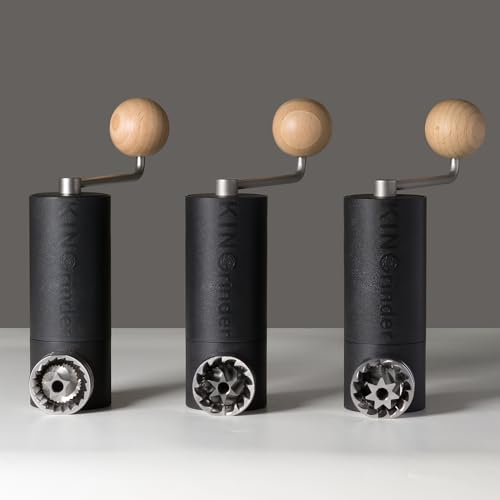
conical burr
Burr diameter
38 mm
This coffee grinder has a 38 mm burr diameter, which is smaller than 85.2% of coffee grinders and equal to 12.7% of coffee grinders.
Grinding element material
stainless steel
Number of grind settings
30
This coffee grinder has 30 grind settings, which is fewer than 56.2% of coffee grinders and equal to 5% of coffee grinders.
Show more
What reviewers say
Bean hopper capacity
20 g
This coffee grinder holds 20 g of beans, which is smaller than 94.8% of coffee grinders and equal to 4.2% of coffee grinders.
Grounds container capacity
20 g
This coffee grinder holds 20 g of grounds, which is smaller than 94.5% of coffee grinders and equal to 3.5% of coffee grinders.
Detachable grounds container
yes
This coffee grinder has a detachable grounds container. 41.7% of coffee grinders have one.
Portafilter holder
no
This coffee grinder does not have a portafilter holder. 41% of coffee grinders offer this.
Single dosing
yes
This coffee grinder supports single dosing. 78.4% of coffee grinders offer this.
Show more
Power
N/A
Voltage
N/A
Grinding speed
N/A
Noise level
?
Overheat protection
no
This coffee grinder does not have overheat protection. 66% of coffee grinders offer this.
Safety lock
N/A
Non-slip base
?
Tool-free burr removal
yes
This coffee grinder lets you remove the burrs without tools. 45.2% of coffee grinders offer this.
Dishwasher-safe parts
no
This coffee grinder does not have dishwasher-safe parts. 12.5% of coffee grinders offer this.
Cleaning brush
yes
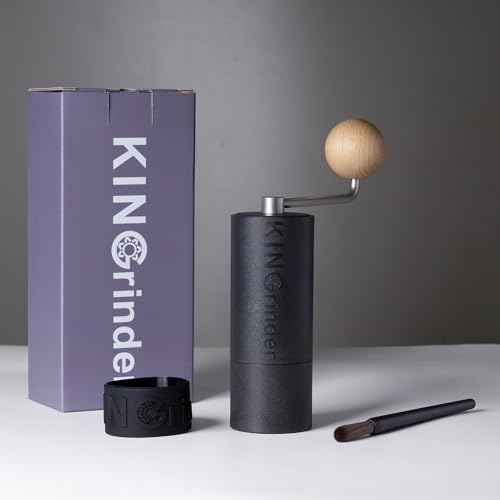
This coffee grinder includes a cleaning brush. 56% of coffee grinders offer this.
Main color
black
Vintage design
no
Digital display
no
This coffee grinder does not have a digital display. 31% of coffee grinders offer this.
Body material
plastic
Transparent hopper
yes
This coffee grinder has a transparent hopper. 25.7% of coffee grinders have one.
Show more
What reviewers say

KINGrinder P2 vs the average coffee grinder

246810TotalGrindingDesignDosingMotorSafetyMaintenance
  • Supports single dosing
    This coffee grinder supports single dosing, while the average coffee grinder does not. 21.8% of coffee grinders offer this.
  • Supports tool-free burr removal
    This coffee grinder removes burrs without tools, while the average coffee grinder does not. 55% of coffee grinders support tool-free burr removal.
  • 82.1% lighter
    This coffee grinder is lighter than the average coffee grinder (0.3 kg vs 1.84 kg). The average coffee grinder weighs 1.84 kg.
    0.33 kg vs 1.84 kg
  • Includes cleaning brush
    This coffee grinder includes a cleaning brush, while the average coffee grinder does not. 44.2% of coffee grinders include one.
  • 12.3% higher list score
    List score
    8.2/ 10
    ✕
    What it is
    How often independent test sites, magazines and video reviewers put this model in their best-of lists for this category.
    How we count it
    Points: The model in the most lists of this category gets 10; the others get 8 to 10 in proportion. In no list yet: 7.5. Lists count 20% of the overall score.
    Enough data: Every list counts, even a single one. With fewer than 5 best-of lists in the category, this part is left out.
    Lists with this model (2)
    List score: in 2 of 46 lists (4%)
    8.2 vs 7.3
  • 21.6% higher user score
    User score
    9.0/ 10
    ✕
    What it is
    How happy buyers are with this model, based on ratings from across the web.
    How we count it
    Enough data: A model needs at least 1 rating from across the web. Without one, it counts as 7.8, the mark of a weaker rated model in this category.
    Share: User score counts 10% of the overall score.
    Score distribution
    ▼
    <55-66-77-88-99-10

    70%

    9.1

    Rating

    30%

    8.8

    Popularity

    9.0 vs 7.4
  • 12 cm shallower
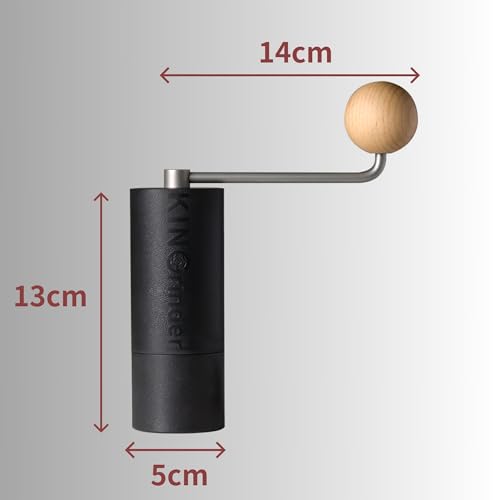
    This coffee grinder is shallower than the average coffee grinder (5 cm vs 17 cm). The average coffee grinder is 17 cm deep.
    5 cm vs 17 cm
  • 16.6 cm shorter
    This coffee grinder is shorter than the average coffee grinder (13 cm vs 29.6 cm). The average coffee grinder is 29.6 cm tall.
    13 cm vs 29.6 cm
  • 12.3% higher list score
    List score
    8.2/ 10
    ✕
    What it is
    How often independent test sites, magazines and video reviewers put this model in their best-of lists for this category.
    How we count it
    Points: The model in the most lists of this category gets 10; the others get 8 to 10 in proportion. In no list yet: 7.5. Lists count 20% of the overall score.
    Enough data: Every list counts, even a single one. With fewer than 5 best-of lists in the category, this part is left out.
    Lists with this model (2)
    List score: in 2 of 46 lists (4%)
    8.2 vs 7.3
  • 21.6% higher user score
    User score
    9.0/ 10
    ✕
    What it is
    How happy buyers are with this model, based on ratings from across the web.
    How we count it
    Enough data: A model needs at least 1 rating from across the web. Without one, it counts as 7.8, the mark of a weaker rated model in this category.
    Share: User score counts 10% of the overall score.
    Score distribution
    ▼
    <55-66-77-88-99-10

    70%

    9.1

    Rating

    30%

    8.8

    Popularity

    9.0 vs 7.4
  • 13.5% higher review score
    Reviews score
    8.4/ 10
    ✕
    What it is
    Average grade from independent test sites, magazines and video reviewers, 1–10.
    How we count it
    Grades: Each review's own score is converted to 1–10; without one, we grade the review ourselves. Big test sites count more, short reviews half as much as full tests. A video review counts half.
    Score: The average grade is 80% of the review mark; the number of reviews is the other 20% (1 review = 5, the typical number in this category = 8, the most-reviewed model = 10).
    Enough data: With few reviews, the average grade is pulled toward the typical grade of this category. No reviews yet: 7.9 for now.
    Share: Reviews count 10% of the overall score.
    Score distribution
    ▼
    <55-66-77-88-99-10

    80%

    8.4

    Average grade

    20%

    8.5

    Popularity

    Grades by review (5)
    5 video reviews, each counting half as much as a written test. Reviews count 10% of the overall score.
    Ratings from across the web count in the User score, not in this score.
    8.4 vs 7.4
  • 6.8% better value for money
    KINGrinder P2 has better value for money than the average coffee grinder (7.74 vs 7.3).
    7.74 vs 7.25
  • 3.33x cheaper
    KINGrinder P2 is cheaper than the average coffee grinder (£45 vs £150).
    £45 vs £150
  • 12.0% higher sentiment score
    8.4 vs 7.5
  • 82.1% lighter
    This coffee grinder is lighter than the average coffee grinder (0.3 kg vs 1.84 kg). The average coffee grinder weighs 1.84 kg.
    0.33 kg vs 1.84 kg
  • 12 cm shallower
    This coffee grinder is shallower than the average coffee grinder (5 cm vs 17 cm). The average coffee grinder is 17 cm deep.
    5 cm vs 17 cm
  • 8 cm narrower
    This coffee grinder is narrower than the average coffee grinder (5 cm vs 13 cm). The average coffee grinder is 13 cm wide.
    5 cm vs 13 cm
  • 16.6 cm shorter
    This coffee grinder is shorter than the average coffee grinder (13 cm vs 29.6 cm). The average coffee grinder is 29.6 cm tall.
    13 cm vs 29.6 cm
  • 95.1% smaller
    This coffee grinder has a smaller volume than the average coffee grinder (350 cm³ vs 7,168.03 cm³). The average coffee grinder has a volume of 7,168.03 cm³.
    350 cm³ vs 7,168.03 cm³
  • Supports single dosing
    This coffee grinder supports single dosing, while the average coffee grinder does not. 21.8% of coffee grinders offer this.
  • Supports tool-free burr removal
    This coffee grinder removes burrs without tools, while the average coffee grinder does not. 55% of coffee grinders support tool-free burr removal.
  • Includes cleaning brush
    This coffee grinder includes a cleaning brush, while the average coffee grinder does not. 44.2% of coffee grinders include one.
  • 25 mm smaller burr diameter
    This coffee grinder has a smaller burr diameter than the average coffee grinder (38 mm vs 63 mm). The average coffee grinder has a 63 mm burr diameter.
    38 mm vs 63 mm
  • No overheat protection
    This coffee grinder does not support overheat protection, while the average coffee grinder does. 65.9% of coffee grinders offer this.
  • 50 g less grounds space
    This coffee grinder holds fewer grounds than the average coffee grinder (20 g vs 70 g). The average coffee grinder holds 70 g of grounds.
    20 g vs 70 g
  • 100 g smaller capacity
    This coffee grinder holds fewer beans than the average coffee grinder (20 g vs 120 g). The average coffee grinder holds 120 g of beans.
    20 g vs 120 g
  • No anti-static design
    This coffee grinder does not have an anti-static design, while the average coffee grinder does. 54.1% of coffee grinders have an anti-static design.
  • 5 fewer grind settings
    This coffee grinder has fewer grind settings than the average coffee grinder (30 vs 35). The average coffee grinder has 35 grind settings.
    30 vs 35
  • 25 mm smaller burr diameter
    This coffee grinder has a smaller burr diameter than the average coffee grinder (38 mm vs 63 mm). The average coffee grinder has a 63 mm burr diameter.
    38 mm vs 63 mm
  • No anti-static design
    This coffee grinder does not have an anti-static design, while the average coffee grinder does. 54.1% of coffee grinders have an anti-static design.
  • 5 fewer grind settings
    This coffee grinder has fewer grind settings than the average coffee grinder (30 vs 35). The average coffee grinder has 35 grind settings.
    30 vs 35
  • 50 g less grounds space
    This coffee grinder holds fewer grounds than the average coffee grinder (20 g vs 70 g). The average coffee grinder holds 70 g of grounds.
    20 g vs 70 g
  • 100 g smaller capacity
    This coffee grinder holds fewer beans than the average coffee grinder (20 g vs 120 g). The average coffee grinder holds 120 g of beans.
    20 g vs 120 g
  • No overheat protection
    This coffee grinder does not support overheat protection, while the average coffee grinder does. 65.9% of coffee grinders offer this.

Video reviews

Hands-on testing, unboxing, and real-world video evaluations

8.0
Espresso Hackers
≈ estimated
29/12/2025
Hands-on review · espresso, pour-over and K6 comparison
Verdict
The KINGrinder P2 isn't for enthusiasts, but it's a good travel grinder and a solid first grinder.
8.0
Brew Coffee Home
≈ estimated
03/09/2024
Hands-on review · pour-over, espresso and K6 comparison
Verdict
The KINGrinder P2 packs a well-made burr into a budget grinder, but its toy-like build and fines hold it back.
9.0
Daryl Bueno
≈ estimated
19/08/2024
Hands-on test · espresso shot with K6 comparison
Verdict
The KINGrinder P2 is a surprisingly capable espresso grinder for the price, and a good deal for budget shoppers.
8.0
Valiversum
≈ estimated
05/04/2025
First look · unboxing and first brew
Verdict
The KINGrinder P2 is a good grinder and an upgrade on cheap hand mills, but too bulky for long travel.
9.0
Daryl Bueno
≈ estimated
19/06/2024
First look · unboxing, measurements and first grind
Verdict
The KINGrinder P2's grind quality is surprisingly good for the price, though the crank handle is awkward.
8.0
Dmitriy Yurchenko
≈ estimated
09/01/2024
Comparison review · P-series burrs, sieve and espresso tests
Verdict
The KINGrinder P2 looks like a new budget benchmark for espresso, though more testing is still needed.
Not graded

Third-party reviews

What customers like about KINGrinder P2

  • Excellent value for money and highly affordable for beginners
  • Lightweight and compact design makes it great for travel
  • Produces an impressively uniform and consistent grind for the price
  • Equipped with high-quality, 7-star stainless steel conical burrs
  • Excels at filter brewing methods like pour-over, AeroPress, French press, and moka pot
  • Easy to disassemble and clean without needing extra tools

What customers don't like about KINGrinder P2

  • Plastic ABS exterior housing feels less robust or durable than metal alternatives
  • Adjustment steps (33 microns) can be too coarse for precise espresso dialing
  • Produces significant static electricity, leading to grounds retention issues
  • Straight handle and smaller burrs require more physical effort and force to grind, especially with hard, light-roast beans
  • Small hopper capacity is generally limited to around 20 grams of coffee

Verdict

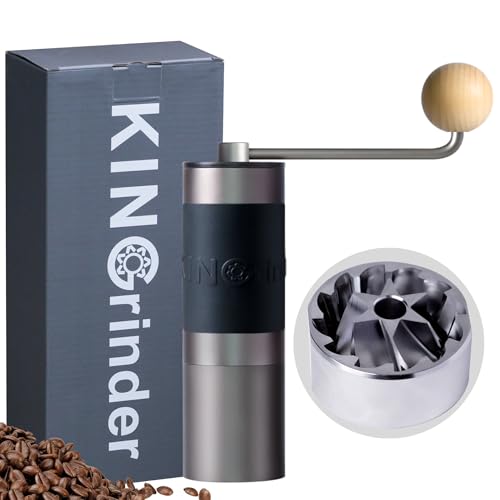
The KINGrinder P2 is an ultra-budget, lightweight manual hand grinder weighing just 330 grams, featuring an ABS plastic body with robust metal internals and a 20-gram bean capacity. Its core highlight is a premium 38mm heptagonal (7-star) SUS420 stainless steel conical burr set, which pairs with an internal click-adjustment dial offering 30 clicks per rotation at 0.0333mm (33.3 microns) per step. Main pros include exceptional grind uniformity and flavor clarity for its entry-level price point, a highly compact and travel-friendly footprint, and the versatile capability to grind across a wide spectrum from coarse French press down to fine espresso. However, notable cons include its static-prone plastic construction that causes grinds to stick to the catch cup, a less ergonomic straight handle that requires significant physical effort to rotate when grinding dense light-roast beans, and overly large macro-adjustment steps that make fine-tuning espresso shot times difficult.

Compare KINGrinder P2 with other coffee grinders

1Product to compare no. 1
VS
2Product to compare no. 2
VS
3Product to compare no. 3 (optional)

Graphic comparison of KINGrinder P2 and other coffee grinders

No results found