Scored using Coffee Grinders Methodology v3.0
Coffee Grinders Methodology v3.0
Mathematical & Unbiased Scoring
Products in this category are scored under Frontum Coffee Grinders Methodology v3.0: the technical score from the specifications is the base, and independent expert and video reviews (up to ±0.5 points), owner opinions (up to ±0.3) and best-of lists (up to +0.3) move it up or down.
Explore Coffee Grinders Methodology v3.0

KINGrinder P0 review: 43 specs compared

Avg. price:~£25Stepless adjustment:noBean hopper capacity:20 gWeight:0.33 kgDigital display:no

KINGrinder P0 Review: Compare 43 technical specifications to see how this product ranks in the Coffee Grinders category and whether it is worth buying.
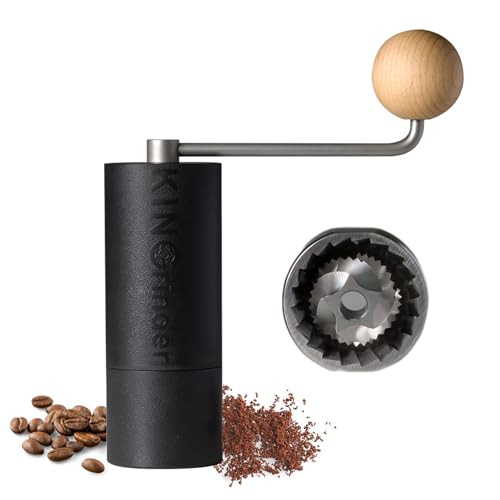
KINGrinder P0
5.6/10

Overall score

Score
5.6/ 10
✕
What it is
Our main score for this model, 1–10. It combines specs, best-of lists, expert reviews, ratings from across the web and owners.
How we count it
Parts: Technical score 55%, List score 20%, Reviews score 10%, User score 10%, Sentiment score 5%
Marks: Each part gets a mark out of 10. For reviews, lists and owners, a typical model in this category gets about 8 and the best one gets 10.
No data yet: A part with no data shows "?". It counts as the mark of a weaker model in this category (4 in 5 models with data score higher). This way, models with reviews, lists and owners usually come out ahead.
Score distribution
â–¼
<55-66-77-88-99-10
Score components

55%

3.9

Technical score

20%

?

List scoreNot enough data yet, so we use 7.5, the mark of a weaker model in this category

10%

?

Reviews scoreNot enough data yet, so we use 7.9, the mark of a weaker model in this category

10%

9.2

User score

5%

?

Sentiment scoreNot enough data yet, so we use 3.9, the mark of a weaker model in this category

â–¼Worse than 88% of coffee grinders
6.9

Value for money

Value for money
6.9/ 10
✕
What it is
An indicator that combines the coffee grinder's overall rating with its price.
When it matters
When you are looking for a coffee grinder with a good balance between quality and price.
Score distribution
â–¼
<55-66-77-88-99-10
Score components

70%

5.6

Overall score

30%

10

Price

â–¼Worse than 75%
3.9

Technical score

Technical score
3.9/ 10
✕
What it is
How good the specs are compared with the other models in this category, 1–10.
How we count it
Areas: We rate the specs in each area against the other models in this category.
Weighting: The areas that matter most to buyers count more. The shares are shown under Score components.
Share: The technical score is 55% of the overall score.
Score distribution
â–¼
<55-66-77-88-99-10
Score components

50%

1.8

Grinding

15%

4.9

Design

15%

5.8

Dosing

10%

?

Motor

5%

5.3

Safety

5%

7.3

Maintenance

â–¼Worse than 95%
?

Reviews score

Reviews score
✕
What it is
Average grade from independent test sites, magazines and video reviewers, 1–10.
How we count it
Grades: Each review's own score is converted to 1–10; without one, we grade the review ourselves. Big test sites count more, short reviews half as much as full tests. A video review counts half.
Score: The average grade is 80% of the review mark; the number of reviews is the other 20% (1 review = 5, the typical number in this category = 8, the most-reviewed model = 10).
Enough data: With few reviews, the average grade is pulled toward the typical grade of this category. No reviews yet: 7.9 for now.
Share: Reviews count 10% of the overall score.
Score distribution
â–¼
<55-66-77-88-99-10
Grades by review (0)
We have not found an independent test of this model yet. Until we do, its review part counts as 7.9.
Ratings from across the web count in the User score, not in this score.
No expert tests yet
9.2

User score

User score
9.2/ 10
✕
What it is
How happy buyers are with this model, based on ratings from across the web.
How we count it
Enough data: A model needs at least 1 rating from across the web. Without one, it counts as 7.8, the mark of a weaker rated model in this category.
Share: User score counts 10% of the overall score.
Score distribution
â–¼
<55-66-77-88-99-10

70%

9.5

Rating

30%

8.6

Popularity

★Better than 91%
?

List score

List score
7.5/ 10
✕
What it is
How often independent test sites, magazines and video reviewers put this model in their best-of lists for this category.
How we count it
Points: The model in the most lists of this category gets 10; the others get 8 to 10 in proportion. In no list yet: 7.5. Lists count 20% of the overall score.
Enough data: Every list counts, even a single one. With fewer than 5 best-of lists in the category, this part is left out.
Lists with this model (0)
Not in any best-of list yet, so this part counts as 7.5. Models in a list get 8 to 10.
Not in any best-of list yet
  • kingrinder-p0
  • kingrinder-p0
  • kingrinder-p0
  • kingrinder-p0
kingrinder-p0
kingrinder-p0
kingrinder-p0
kingrinder-p0
Where to buy
    N/A~ £25
Best rankings
Available: ranking among products currently available (including other versions of this product).All: ranking among all products in the database.
Loading...
Loading category ranking...

Technical Specifications of coffee grinder KINGrinder P0

Technical score
Technical score
3.9/ 10
✕
What it is
How good the specs are compared with the other models in this category, 1–10.
How we count it
Areas: We rate the specs in each area against the other models in this category.
Weighting: The areas that matter most to buyers count more. The shares are shown under Score components.
Share: The technical score is 55% of the overall score.
Score distribution
â–¼
<55-66-77-88-99-10
Score components:

50%

1.8

Grinding

15%

4.9

Design

15%

5.8

Dosing

10%

?

Motor

5%

5.3

Safety

5%

7.3

Maintenance

3.9
Reviews score
7.9
User score
9.2
List score
?
Value for money
Value for money
6.9/ 10
✕
What it is
An indicator that combines the coffee grinder's overall rating with its price.
When it matters
When you are looking for a coffee grinder with a good balance between quality and price.
Score distribution
â–¼
<55-66-77-88-99-10
Score components:

70%

5.6

Overall score

30%

10

Price

6.9
Operation type
manual
Grinding mechanism
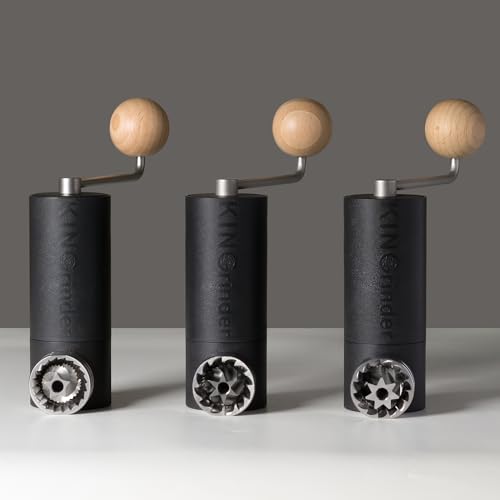
conical burr
Burr diameter
38 mm
This coffee grinder has a 38 mm burr diameter, which is smaller than 85.2% of coffee grinders and equal to 12.7% of coffee grinders.
Grinding element material
stainless steel
Number of grind settings
30
This coffee grinder has 30 grind settings, which is fewer than 56.2% of coffee grinders and equal to 5% of coffee grinders.
Show more
Bean hopper capacity
20 g
This coffee grinder holds 20 g of beans, which is smaller than 94.8% of coffee grinders and equal to 4.2% of coffee grinders.
Grounds container capacity
20 g
This coffee grinder holds 20 g of grounds, which is smaller than 94.5% of coffee grinders and equal to 3.5% of coffee grinders.
Detachable grounds container
yes
This coffee grinder has a detachable grounds container. 41.7% of coffee grinders have one.
Portafilter holder
no
This coffee grinder does not have a portafilter holder. 41% of coffee grinders offer this.
Single dosing
yes
This coffee grinder supports single dosing. 78.4% of coffee grinders offer this.
20-25 g of beans per grind
Show more
Power
N/A
Voltage
N/A
Grinding speed
N/A
Noise level
?
Overheat protection
no
This coffee grinder does not have overheat protection. 66% of coffee grinders offer this.
Safety lock
N/A
Non-slip base
?
Tool-free burr removal
yes
This coffee grinder lets you remove the burrs without tools. 45.2% of coffee grinders offer this.
Dishwasher-safe parts
no
This coffee grinder does not have dishwasher-safe parts. 12.5% of coffee grinders offer this.
Cleaning brush
yes
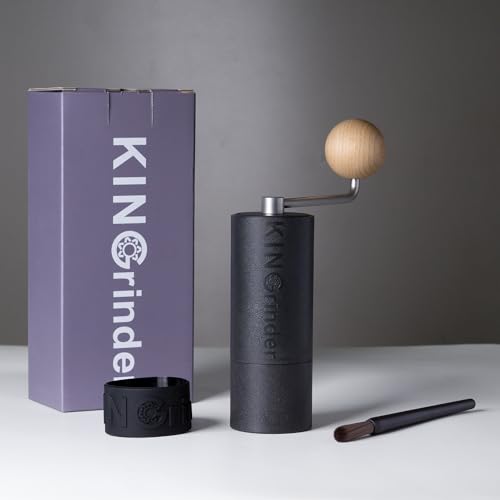
This coffee grinder includes a cleaning brush. 56% of coffee grinders offer this.
Main color
black
Vintage design
no
Digital display
no
This coffee grinder does not have a digital display. 31% of coffee grinders offer this.
Body material
plastic
Transparent hopper
yes
This coffee grinder has a transparent hopper. 25.7% of coffee grinders have one.
Show more

KINGrinder P0 vs the average coffee grinder

246810TotalGrindingDesignDosingMotorSafetyMaintenance
  • Supports single dosing
    This coffee grinder supports single dosing, while the average coffee grinder does not. 21.8% of coffee grinders offer this.
    20-25 g of beans per grind
  • Supports tool-free burr removal
    This coffee grinder removes burrs without tools, while the average coffee grinder does not. 55% of coffee grinders support tool-free burr removal.
  • 82.1% lighter
    This coffee grinder is lighter than the average coffee grinder (0.3 kg vs 1.84 kg). The average coffee grinder weighs 1.84 kg.
    0.33 kg vs 1.84 kg
  • Includes cleaning brush
    This coffee grinder includes a cleaning brush, while the average coffee grinder does not. 44.2% of coffee grinders include one.
  • 24.3% higher user score
    User score
    9.2/ 10
    ✕
    What it is
    How happy buyers are with this model, based on ratings from across the web.
    How we count it
    Enough data: A model needs at least 1 rating from across the web. Without one, it counts as 7.8, the mark of a weaker rated model in this category.
    Share: User score counts 10% of the overall score.
    Score distribution
    â–¼
    <55-66-77-88-99-10

    70%

    9.5

    Rating

    30%

    8.6

    Popularity

    9.2 vs 7.4
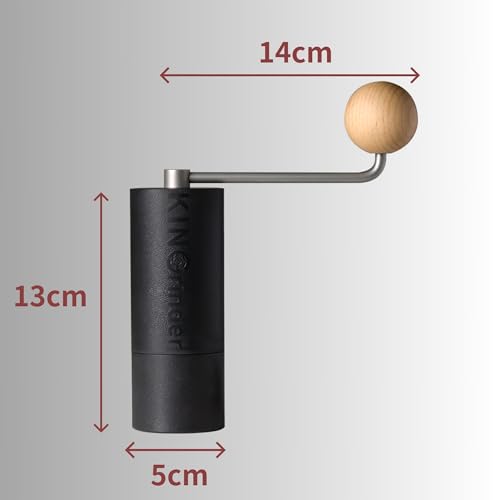
  • 12 cm shallower
    This coffee grinder is shallower than the average coffee grinder (5 cm vs 17 cm). The average coffee grinder is 17 cm deep.
    5 cm vs 17 cm
  • 16.6 cm shorter
    This coffee grinder is shorter than the average coffee grinder (13 cm vs 29.6 cm). The average coffee grinder is 29.6 cm tall.
    13 cm vs 29.6 cm
  • 95.5% smaller
    This coffee grinder has a smaller volume than the average coffee grinder (325 cm³ vs 7,168.03 cm³). The average coffee grinder has a volume of 7,168.03 cm³.
    325 cm³ vs 7,168.03 cm³
  • 24.3% higher user score
    User score
    9.2/ 10
    ✕
    What it is
    How happy buyers are with this model, based on ratings from across the web.
    How we count it
    Enough data: A model needs at least 1 rating from across the web. Without one, it counts as 7.8, the mark of a weaker rated model in this category.
    Share: User score counts 10% of the overall score.
    Score distribution
    â–¼
    <55-66-77-88-99-10

    70%

    9.5

    Rating

    30%

    8.6

    Popularity

    9.2 vs 7.4
  • 6x cheaper
    KINGrinder P0 is cheaper than the average coffee grinder (£25 vs £150).
    £25 vs £150
  • 82.1% lighter
    This coffee grinder is lighter than the average coffee grinder (0.3 kg vs 1.84 kg). The average coffee grinder weighs 1.84 kg.
    0.33 kg vs 1.84 kg
  • 12 cm shallower
    This coffee grinder is shallower than the average coffee grinder (5 cm vs 17 cm). The average coffee grinder is 17 cm deep.
    5 cm vs 17 cm
  • 8 cm narrower
    This coffee grinder is narrower than the average coffee grinder (5 cm vs 13 cm). The average coffee grinder is 13 cm wide.
    5 cm vs 13 cm
  • 16.6 cm shorter
    This coffee grinder is shorter than the average coffee grinder (13 cm vs 29.6 cm). The average coffee grinder is 29.6 cm tall.
    13 cm vs 29.6 cm
  • 95.5% smaller
    This coffee grinder has a smaller volume than the average coffee grinder (325 cm³ vs 7,168.03 cm³). The average coffee grinder has a volume of 7,168.03 cm³.
    325 cm³ vs 7,168.03 cm³
  • Supports single dosing
    This coffee grinder supports single dosing, while the average coffee grinder does not. 21.8% of coffee grinders offer this.
    20-25 g of beans per grind
  • Supports tool-free burr removal
    This coffee grinder removes burrs without tools, while the average coffee grinder does not. 55% of coffee grinders support tool-free burr removal.
  • Includes cleaning brush
    This coffee grinder includes a cleaning brush, while the average coffee grinder does not. 44.2% of coffee grinders include one.
  • 25 mm smaller burr diameter
    This coffee grinder has a smaller burr diameter than the average coffee grinder (38 mm vs 63 mm). The average coffee grinder has a 63 mm burr diameter.
    38 mm vs 63 mm
  • No espresso grinding
    This coffee grinder does not support espresso grinding, while the average coffee grinder does. 78.8% of coffee grinders support espresso grinding.
  • No overheat protection
    This coffee grinder does not support overheat protection, while the average coffee grinder does. 65.9% of coffee grinders offer this.
  • 50 g less grounds space
    This coffee grinder holds fewer grounds than the average coffee grinder (20 g vs 70 g). The average coffee grinder holds 70 g of grounds.
    20 g vs 70 g
  • 100 g smaller capacity
    This coffee grinder holds fewer beans than the average coffee grinder (20 g vs 120 g). The average coffee grinder holds 120 g of beans.
    20 g vs 120 g
  • 5 fewer grind settings
    This coffee grinder has fewer grind settings than the average coffee grinder (30 vs 35). The average coffee grinder has 35 grind settings.
    30 vs 35
  • 5.1% worse value for money
    KINGrinder P0 has worse value for money than the average coffee grinder (6.9 vs 7.3).
    6.9 vs 7.25
  • 5.1% worse value for money
    KINGrinder P0 has worse value for money than the average coffee grinder (6.9 vs 7.3).
    6.9 vs 7.25
  • 25 mm smaller burr diameter
    This coffee grinder has a smaller burr diameter than the average coffee grinder (38 mm vs 63 mm). The average coffee grinder has a 63 mm burr diameter.
    38 mm vs 63 mm
  • No espresso grinding
    This coffee grinder does not support espresso grinding, while the average coffee grinder does. 78.8% of coffee grinders support espresso grinding.
  • 5 fewer grind settings
    This coffee grinder has fewer grind settings than the average coffee grinder (30 vs 35). The average coffee grinder has 35 grind settings.
    30 vs 35
  • 50 g less grounds space
    This coffee grinder holds fewer grounds than the average coffee grinder (20 g vs 70 g). The average coffee grinder holds 70 g of grounds.
    20 g vs 70 g
  • 100 g smaller capacity
    This coffee grinder holds fewer beans than the average coffee grinder (20 g vs 120 g). The average coffee grinder holds 120 g of beans.
    20 g vs 120 g
  • No overheat protection
    This coffee grinder does not support overheat protection, while the average coffee grinder does. 65.9% of coffee grinders offer this.

Video reviews

Hands-on testing, unboxing, and real-world video evaluations
Not graded

Third-party reviews

What customers like about KINGrinder P0

  • Excellent value for money and highly affordable starter option
  • Lightweight and compact design makes it highly portable for travel
  • Stainless steel conical burrs provide surprisingly uniform grind consistency for filter brewing
  • Easy to disassemble and clean without needing specialized tools
  • Includes a helpful silicone grip band to prevent slipping during manual operation
  • Solid interior metal build quality with stable shaft construction despite the exterior material

What customers don't like about KINGrinder P0

  • Cheap-feeling all-plastic exterior body that can flex under pressure
  • Produces a high amount of static causing coffee grounds to cling to the plastic walls
  • Generates a significant amount of micro-fines which can cause bitterness or clog filters
  • Not recommended or optimized for true espresso brewing due to internal step gaps
  • Difficult and slow to grind dense, light roast coffee beans
  • Internal grind adjustment mechanism requires counting clicks and can be tedious
  • Small capacity catch cup that holds less than 20 grams of coffee at a time

Verdict

The KINGrinder P0 is an ultra-budget, lightweight manual coffee grinder weighing 330g with a 20g capacity hopper and an ABS plastic body paired with internal metal structures. It features 38mm 5-spoke conical burrs made of SUS420 stainless steel and an internal adjustment system providing 30 clicks per rotation, yielding a resolution of 0.0333mm per click optimized primarily for pour-over, drip, and filter coffee. Main pros include exceptional grind uniformity for its highly affordable price point, excellent travel portability, and easy tool-free disassembly for quick cleaning. However, notable cons include its entirely plastic outer construction being prone to long-term cracking, a lack of clear visual cues on the internal adjustment dial requiring manual click counting, potential static buildup, and a design unsuited for grinding fine espresso.

Compare KINGrinder P0 with other coffee grinders

1Product to compare no. 1
VS
2Product to compare no. 2
VS
3Product to compare no. 3 (optional)

Graphic comparison of KINGrinder P0 and other coffee grinders

No results found