Scored using Robot Vacuums Methodology v1.0
Robot Vacuums Methodology v1.0
Mathematical & Unbiased Scoring
Products in this category are scored under Frontum Robot Vacuums Methodology v1.0: technical specifications plus authentic consumer ratings, with 0% commercial bias.
Explore Robot Vacuums Methodology v1.0

Proscenic 830T review: 118 specs compared

Avg. price:~ÂŁ330Max suction power:1800 PaRuntime:130 minDustbin capacity:400 mLMax threshold height:20 mm

Proscenic 830T Review: Compare 118 technical specifications and user reviews to see how this product ranks in the Robot Vacuums category and whether it is worth buying.
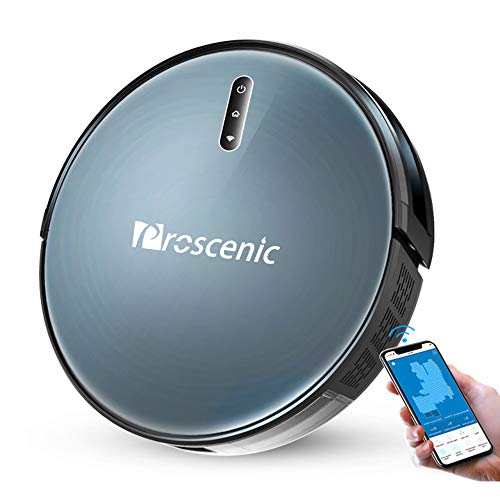
Proscenic 830T
6.5/10

Overall score

Score
6.5/ 10
âś•
What it is
An overall evaluation of the robot vacuum's quality, based on technical analyses and user reviews.
When it matters
When you need a quick reference to identify the best robot vacuums on the market.
Score distribution
â–Ľ
<55-66-77-88-99-10
Score components

80%

6.5

Technical score

20%

?

User score

â–ĽWorse than 69% of robot vacuums
7.1

Value for money

Value for money
7.1/ 10
âś•
What it is
An indicator that combines the robot vacuum's overall rating with its cost.
When it matters
When you are looking for a robot vacuum with a good balance between quality and price.
Score distribution
â–Ľ
<55-66-77-88-99-10
Score components

70%

6.5

Overall score

30%

8.8

Price

â–ĽWorse than 79%
6.5

Technical score

Technical score
6.5/ 10
âś•
What it is
An assessment of robot-vacuum performance across cleaning, navigation, mopping, battery life, filtration, brush design, smart features, and dimensions.
When it matters
When you want to compare robot vacuums based on technical performance and available features.
Score distribution
â–Ľ
<55-66-77-88-99-10
Score components

30%

6.3

Cleaning

23%

7.1

Navigation

18%

6.3

Mopping

12%

4.7

Battery

10%

8.2

Smart Features

7%

5.7

Design

â–ĽWorse than 64%
?

User score

User score
8.0/ 10
âś•
What it is
A rating that combines user reviews and the total number of reviews received by the robot vacuum
When it matters
When you want to know how a robot vacuum handles daily tasks and how reliable it remains over time according to user feedback.
Score distribution
â–Ľ
<55-66-77-88-99-10
Score components

70%

?

User ratings

30%

?

Number of reviews

  • proscenic-830t
  • proscenic-830t
  • proscenic-830t
  • proscenic-830t
  • proscenic-830t
  • proscenic-830t
proscenic-830t
proscenic-830t
proscenic-830t
proscenic-830t
proscenic-830t
proscenic-830t
Where to buy
    N/A~ ÂŁ330
Best rankings
Available: ranking among products currently available (including other versions of this product).All: ranking among all products in the database.
Loading...
Loading category ranking...

Technical Specifications of robot vacuum Proscenic 830T

Technical score
Technical score
6.5/ 10
âś•
What it is
An assessment of robot-vacuum performance across cleaning, navigation, mopping, battery life, filtration, brush design, smart features, and dimensions.
When it matters
When you want to compare robot vacuums based on technical performance and available features.
Score distribution
â–Ľ
<55-66-77-88-99-10
Score components:

30%

6.3

Cleaning

23%

7.1

Navigation

18%

6.3

Mopping

12%

4.7

Battery

10%

8.2

Smart Features

7%

5.7

Design

6.5
User score
User score
8.0/ 10
âś•
What it is
A rating that combines user reviews and the total number of reviews received by the robot vacuum
When it matters
When you want to know how a robot vacuum handles daily tasks and how reliable it remains over time according to user feedback.
Score distribution
â–Ľ
<55-66-77-88-99-10
Score components

70%

?

User ratings

30%

?

Number of reviews

?
Popularity
Popularity
1.0/ 10
âś•
What it is
An indicator based on the number of reviews received by the robot vacuum.
When it matters
When you prefer to purchase a product chosen and reviewed by many other consumers.
Score distribution
â–Ľ
<55-66-77-88-99-10
Popularity:
Proscenic 830T has a popularity index of 1, lower than that of 70.7% of robot vacuums and equal to that of 29.3% of robot vacuums.
1.0
Value for money
Value for money
7.1/ 10
âś•
What it is
An indicator that combines the robot vacuum's overall rating with its cost.
When it matters
When you are looking for a robot vacuum with a good balance between quality and price.
Score distribution
â–Ľ
<55-66-77-88-99-10
Score components:

70%

6.5

Overall score

30%

8.8

Price

7.1
Max suction power
1,800 Pa
This robot vacuum has a maximum suction pressure of 1,800 Pa, which is lower than 86.4% of robot vacuums and equal to 1.5% of robot vacuums.
N. of suction power levels
3
This robot vacuum has 3 suction power levels, which is fewer than 50.5% of robot vacuums offer and the same number as 35.5% of robot vacuums offer.
Motor type
brushless
This robot vacuum uses a brushless motor, a type that is generally more efficient than those used by 2.7% of robot vacuums and also used by 97.3% of robot vacuums.
Power
28 W
Cleaning modes
5
This robot vacuum offers 5 cleaning modes, which is more than 85.9% of robot vacuums offer and the same number as 6.2% of robot vacuums offer.
Show more
Mopping capability
yes
This robot vacuum can mop floors. 78.8% of robot vacuums offer this feature.
Mopping system type
static pad
This robot vacuum uses static pad for mopping. This system is more effective than those on 20.4% of robot vacuums and as effective as those on 46.3% of robot vacuums.
Mop pad type
flat
Mop pad material
microfiber
Mop pressure
?
Show more
Primary navigation technology
LiDAR
This robot vacuum uses LiDAR as its primary navigation system, which is more capable than the systems in 34.7% of robot vacuums and matched by 60.4% of robot vacuums.
Mapping capability
yes
This robot vacuum maps the floor. 74% of robot vacuums offer this feature.
Real-time mapping
yes
This robot vacuum updates its map in real time. 68.5% of robot vacuums offer this feature.
Multiple map storage
yes
This robot vacuum stores multiple maps. 56.4% of robot vacuums offer this feature.
Map editing
no
This robot vacuum does not support map editing, although 64% of robot vacuums offer this feature.
Show more
App control
yes
This robot vacuum supports app control. 5.5% of robot vacuums support app control.
App name
Proscenic
Wi-Fi connectivity
yes
This robot vacuum supports Wi-Fi connectivity. 6.3% of robot vacuums support Wi-Fi connectivity.
Supported Wi-Fi bands
2.4 GHz
Bluetooth connectivity
no
This robot vacuum does not support Bluetooth connectivity. 64.7% of robot vacuums support Bluetooth connectivity.
Show more
Battery capacity
2,500 mAh
This robot vacuum has a battery capacity of 2,500 mAh, which is lower than 86.1% of robot vacuums and equal to 3% of robot vacuums.
Battery type
Li-ion
Battery voltage
14.4 V
Runtime
130 min
This robot vacuum runs for 130 min per charge, which is shorter than 55.5% of robot vacuums and equal to 2% of robot vacuums.
Recharge and resume
yes
This robot vacuum resumes cleaning after charging. 83.1% of robot vacuums offer this feature.
Show more
Shape
round
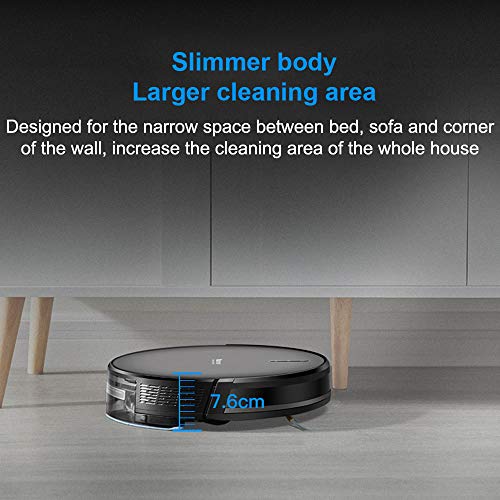
Height
76 mm
Width
330 mm
Length
330 mm
Weight
2.8 kg
This robot vacuum weighs 2.8 kg, making it lighter than 80.9% of robot vacuums and the same weight as 3.5% of robot vacuums.
Show more

Proscenic 830T vs the average robot vacuum

246810TotalBatteryDesignSmart FeaturesNavigationCleaningMopping
  • 1 more side brushes
    This robot vacuum has more side brushes than the average robot vacuum (2 vs 1). The average robot vacuum has 1 side brushes.
    2 vs 1
  • 1 more cleaning modes
    This robot vacuum offers more cleaning modes than the average robot vacuum (5 vs 4). The average robot vacuum offers 4 cleaning modes.
    5 vs 4
  • 110 mL more onboard water capacity
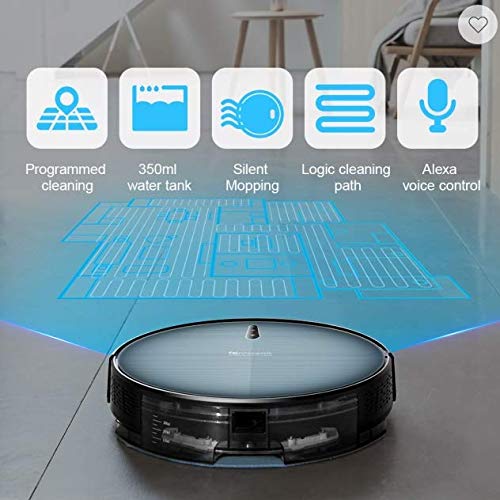
    This robot vacuum has a larger onboard water tank than the average robot vacuum (350 mL vs 240 mL). The average robot vacuum's onboard water tank holds 240 mL.
    350 mL vs 240 mL
  • Supports a handheld remote control
    This robot vacuum supports a handheld remote control, while the average robot vacuum does not. 22.1% of robot vacuums support this.
  • 21.6% lighter
    This robot vacuum is lighter than the average robot vacuum (2.8 kg vs 3.57 kg). The average robot vacuum weighs 3.57 kg.
    2.8 kg vs 3.57 kg
  • 21.6% lighter
    This robot vacuum is lighter than the average robot vacuum (2.8 kg vs 3.57 kg). The average robot vacuum weighs 3.57 kg.
    2.8 kg vs 3.57 kg
  • Supports a handheld remote control
    This robot vacuum supports a handheld remote control, while the average robot vacuum does not. 22.1% of robot vacuums support this.
  • 1 more side brushes
    This robot vacuum has more side brushes than the average robot vacuum (2 vs 1). The average robot vacuum has 1 side brushes.
    2 vs 1
  • 1 more cleaning modes
    This robot vacuum offers more cleaning modes than the average robot vacuum (5 vs 4). The average robot vacuum offers 4 cleaning modes.
    5 vs 4
  • 110 mL more onboard water capacity
    This robot vacuum has a larger onboard water tank than the average robot vacuum (350 mL vs 240 mL). The average robot vacuum's onboard water tank holds 240 mL.
    350 mL vs 240 mL
  • More basic obstacle avoidance
    This robot vacuum uses infrared for obstacle avoidance, while the average robot vacuum uses hybrid.
    infrared vs hybrid
  • 2,200 Pa weaker maximum suction
    This robot vacuum has weaker maximum suction than the average robot vacuum (1,800 Pa vs 4,000 Pa). The average robot vacuum has a maximum suction pressure of 4,000 Pa.
    1,800 Pa vs 4,000 Pa
  • No no-mop zones
    This robot vacuum does not support no-mop zones, while the average robot vacuum does. 53.1% of robot vacuums support this feature.
  • Does not have a floating main brush
    This robot vacuum does not have a floating main brush, while the average robot vacuum has a floating main brush.
  • Does not support map editing
    This robot vacuum does not support map editing, while the average robot vacuum lets you edit maps.
  • Does not recognize individual rooms
    This robot vacuum does not recognize individual rooms, while the average robot vacuum recognizes individual rooms.
  • 1 fewer suction power levels
    This robot vacuum offers fewer suction power levels than the average robot vacuum (3 vs 4). The average robot vacuum offers 4 suction power levels.
    3 vs 4
  • Older model
    This robot vacuum was released in 2019, earlier than the average robot vacuum in 2023. The average release year for robot vacuums is 2023.
    2019 vs 2023
  • 6.53x less popular
    Proscenic 830T is less popular than the average robot vacuum (1 vs 6.5).
    1 vs 6.53
  • 6.1% worse value for money
    Proscenic 830T has worse value for money than the average robot vacuum (7.15 vs 7.6).
    7.15 vs 7.59
  • 700 mAh smaller battery capacity
    This robot vacuum has a smaller battery capacity than the average robot vacuum (2,500 mAh vs 3,200 mAh). The average robot vacuum has a battery capacity of 3,200 mAh.
    2,500 mAh vs 3,200 mAh
  • 20 min shorter runtime
    This robot vacuum runs for less time per charge than the average robot vacuum (130 min vs 150 min). The average robot vacuum runs for 150 min.
    130 min vs 150 min
  • 0.5 h longer charging time
    This robot vacuum takes longer to recharge fully than the average robot vacuum (5 h vs 4.5 h). The average robot vacuum takes 4.5 h.
    5 h vs 4.5 h
  • 30 m² smaller cleaning area
    This robot vacuum has a smaller maximum cleaning area than the average robot vacuum (150 m² vs 180 m²). The average robot vacuum has a maximum cleaning area of 180 m².
    150 m² vs 180 m²
  • Older model
    This robot vacuum was released in 2019, earlier than the average robot vacuum in 2023. The average release year for robot vacuums is 2023.
    2019 vs 2023
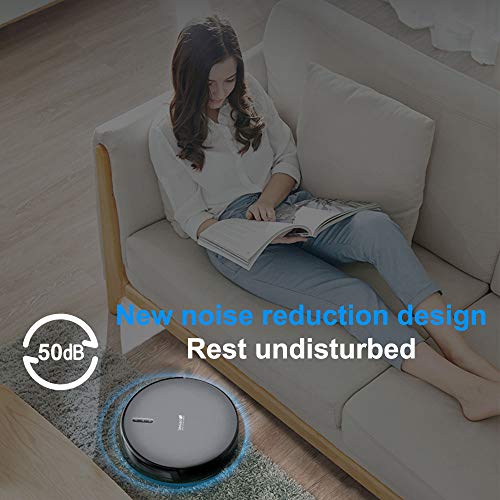
  • 3 dB louder
    This robot vacuum has a higher reported cleaning noise level than the average robot vacuum (68 dB vs 65 dB). The average robot vacuum has a reported noise level of 65 dB.
    68 dB vs 65 dB
  • No maintenance notifications
    This robot vacuum does not provide maintenance notifications, while the average robot vacuum does. 76.8% of robot vacuums offer these.
  • No Bluetooth
    This robot vacuum does not support Bluetooth connectivity, while the average robot vacuum does. 64.6% of robot vacuums support Bluetooth connectivity.
  • More basic obstacle avoidance
    This robot vacuum uses infrared for obstacle avoidance, while the average robot vacuum uses hybrid.
    infrared vs hybrid
  • No no-mop zones
    This robot vacuum does not support no-mop zones, while the average robot vacuum does. 53.1% of robot vacuums support this feature.
  • Does not support map editing
    This robot vacuum does not support map editing, while the average robot vacuum lets you edit maps.
  • Does not recognize individual rooms
    This robot vacuum does not recognize individual rooms, while the average robot vacuum recognizes individual rooms.
  • 2,200 Pa weaker maximum suction
    This robot vacuum has weaker maximum suction than the average robot vacuum (1,800 Pa vs 4,000 Pa). The average robot vacuum has a maximum suction pressure of 4,000 Pa.
    1,800 Pa vs 4,000 Pa
  • Does not have a floating main brush
    This robot vacuum does not have a floating main brush, while the average robot vacuum has a floating main brush.
  • 1 fewer suction power levels
    This robot vacuum offers fewer suction power levels than the average robot vacuum (3 vs 4). The average robot vacuum offers 4 suction power levels.
    3 vs 4
  • 28 mm narrower main brush
    This robot vacuum has a narrower main brush than the average robot vacuum (150 mm vs 178 mm). The average robot vacuum has a main brush 178 mm wide.
    150 mm vs 178 mm
  • More basic filter
    This robot vacuum uses a EPA 11 filter, while the average robot vacuum uses HEPA.
    EPA 11 vs HEPA
  • Non-washable dustbin
    This robot vacuum does not have a washable dustbin, while the average robot vacuum does. 83.6% of robot vacuums have a washable dustbin.

Video reviews

Hands-on testing, unboxing, and real-world video evaluations

Expert reviews

In-depth analysis and verdict from leading tech publications
S
saug-wisch-roboter.de
06/03/2024
Summary of the review
S
staubsauger-berater.de
30/07/2026
Summary of the review
L
lesalexiens.fr
02/07/2019
Summary of the review
H
homelab.be
15/01/2020
Summary of the review
H
homelab.be
02/04/2020
Summary of the review

Third-party reviews

What customers like about Proscenic 830T

  • Excellent value for money.
  • Good suction up to 2,000 Pa and effective cleaning across different floor types.
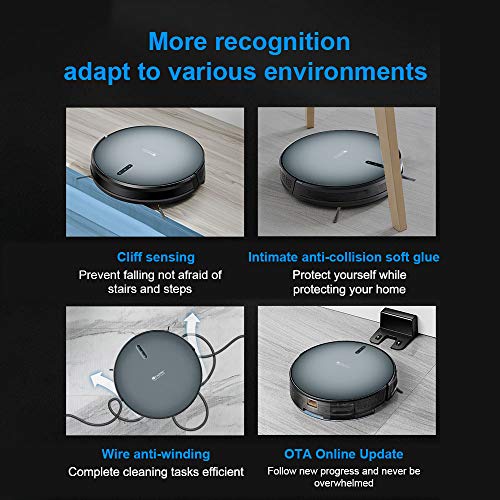
  • Two-in-one operation vacuums and mops simultaneously with an electronically controlled water tank.
  • Supports Alexa and Google Home plus a dedicated scheduling app.
  • Slim design, about 7 cm high, fits easily under beds and furniture.

What customers don't like about Proscenic 830T

  • Random navigation without LiDAR mapping can repeatedly cover the same area.
  • The mop cloth tends not to remove stubborn or dried-on dirt.
  • Occasionally struggles with very thick or fringed carpets.
  • Customer service and warranty repair times have been criticised.
  • Relatively small tanks require frequent emptying and refilling.

Verdict

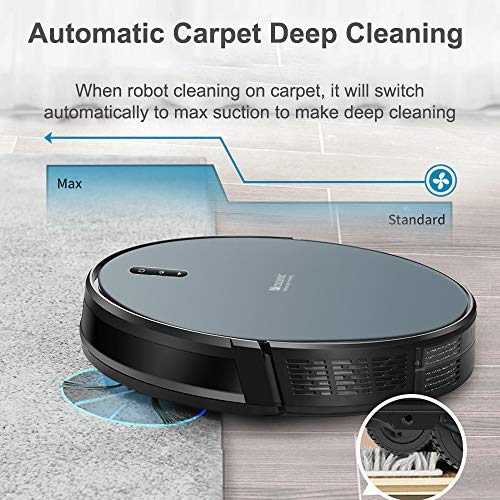
The Proscenic 830T is a 2-in-1 hybrid robot vacuum and mop featuring a 2,000 Pa suction motor, an IPANS 2.0 intelligent navigation system for planned S-wave cleaning paths, and a 350 ml electronically controlled water tank. Key advantages include an ultra-thin 7.6 cm profile that effortlessly glides under low furniture, automated V-boost carpet detection that maximizes suction power on rugs, twin side brushes for thorough corner cleaning, and smart integration via the ProscenicHome app, Alexa, and Google Assistant alongside a 130-minute runtime. However, its notable drawbacks are a lack of advanced LiDAR mapping for setting digital no-go zones directly in the app (requiring physical magnetic boundary strips instead), an absence of washable filters, and a relatively high noise level of 75 dB during maximum operation.

Compare Proscenic 830T with other robot vacuums

1Product to compare no. 1
VS
2Product to compare no. 2
VS
3Product to compare no. 3 (optional)

Graphic comparison of Proscenic 830T and other robot vacuums

No results found