eufy BoostIQ RoboVac 15C Review | 118 Data compared

double-arrow
  • Avg. price in UK: ~£220
  • Avg. price in US: ~$200
  • Max suction power: 1300 Pa
  • Runtime: 100 min
  • Dustbin capacity: 600 mL
  • Max threshold height: 16 mm

eufy BoostIQ RoboVac 15C review. Compare 118 technical specifications and user reviews to see how this product ranks in the Robot Vacuums category and whether it is worth buying.

5.9

Overall score

What it is: An overall evaluation of the robot vacuum's quality, based on technical analyses and user reviews.

When it matters: When you need a quick reference to identify the best robot vacuums on the market.

Score components:

80.0%

5.1

Technical Score

20.0%

9.2

User score

Good
5.1

Technical Score

What it is: An assessment of robot-vacuum performance across cleaning, navigation, mopping, battery life, filtration, brush design, smart features, and dimensions.

When it matters: When you want to compare robot vacuums based on technical performance and available features.

Score components:

30.0%

5.8

Cleaning

23.0%

4.2

Navigation

18.0%

3.9

Mopping

12.0%

2.9

Battery

10.0%

7.5

Smart Features

7.0%

9.4

Design

Good
9.2

User score

What it is: A rating that combines user reviews and the total number of reviews received by the robot vacuum

When it matters: When you want to know how a robot vacuum handles daily tasks and how reliable it remains over time according to user feedback.

Score components:

70.0%

8.8

User reviews

30.0%

10

Popularity

User score:
United States
Amazon_logo.png
4.4
(1898)

(Reviews last updated: July 2026)

Exceptional
  • 4.8
    Mopping

    Score components:

    35.0%

    4.0

    Mopping system type

    25.0%

    4.0

    Mop lifting

    20.0%

    4.0

    Auto water refill

    20.0%

    ?

    Water tank capacity

  • 5.2
    Pet homes

    Score components:

    35.0%

    4.0

    Anti-tangle technology

    30.0%

    1.1

    Max suction power

    20.0%

    10

    Carpet boost

    15.0%

    10

    Dustbin capacity

  • 3.7
    Navigation and mapping

    Score components:

    30.0%

    4.0

    Primary navigation technology

    30.0%

    4.9

    Obstacle avoidance technology

    20.0%

    1.0

    Object recognition

    20.0%

    4.0

    Real-time mapping

  • No image
No image

Best prices in UK

    N/A~ £220

Best rankings

?

Available: ranking among products currently available (including other versions of this product).
All: ranking among all products in the database.

Verdict

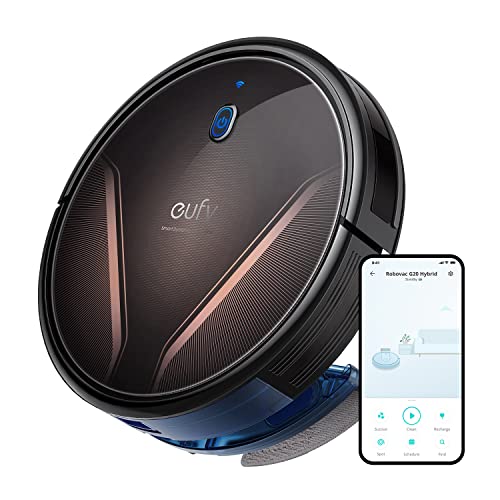
The eufy BoostIQ RoboVac 15C is an ultra-slim, 2.85-inch tall robot vacuum equipped with a 3-point cleaning system, a 0.6-litre dustbin, a 2600mAh battery providing up to 100 minutes of runtime, and 1300Pa of suction power. Key advantages include its compact profile that easily slides under low furniture, quiet operation at roughly 55 decibels, Wi-Fi connectivity supporting the EufyHome app, voice control compatibility with Amazon Alexa and Google Assistant, and proprietary BoostIQ technology that automatically increases suction on medium-pile carpets. However, significant drawbacks include its reliance on bounce-based random navigation rather than smart room mapping, a tendency to occasionally get stuck on high-threshold floor transitions or tangled in loose cables, and a long battery recharge time spanning 5 to 6 hours.

Technical Specifications of robot vacuum eufy BoostIQ RoboVac 15C

Technical Score

What it is: An assessment of robot-vacuum performance across cleaning, navigation, mopping, battery life, filtration, brush design, smart features, and dimensions.

When it matters: When you want to compare robot vacuums based on technical performance and available features.

Score components:

30.0%

5.8

Cleaning

23.0%

4.2

Navigation

18.0%

3.9

Mopping

12.0%

2.9

Battery

10.0%

7.5

Smart Features

7.0%

9.4

Design

5.1
eufy BoostIQ RoboVac 15C has a technical score of 5.13, lower than that of 92.5% of robot vacuums.
User score

What it is: A rating that combines user reviews and the total number of reviews received by the robot vacuum

When it matters: When you want to know how a robot vacuum handles daily tasks and how reliable it remains over time according to user feedback.

Score components:

70.0%

8.8

User reviews

30.0%

10

Popularity

User score:
United States
Amazon_logo.png
4.4
(1898)

(Reviews last updated: July 2026)

9.2
eufy BoostIQ RoboVac 15C has a user score of 9.16, higher than that of 98.2% of robot vacuums and equal to that of 0.6% of robot vacuums.
Popularity
What it is: An indicator based on the number of reviews received by the robot vacuum.
When it matters: When you prefer to purchase a product chosen and reviewed by many other consumers.
10
eufy BoostIQ RoboVac 15C has a popularity of 10 points, which is higher than 68.1% of products in this category.
Ratio quality/price

What it is: An indicator that combines the robot vacuum's overall rating with its cost.

When it matters: When you are looking for a robot vacuum with a good balance between quality and price.

Score components:

60.0%

5.9

Overall score

40.0%

9.4

Price

7.0
eufy BoostIQ RoboVac 15C has a quality-to-price ratio of 7 points, which is lower than 76.6% of products in this category.
Max suction power
What it is: Maximum suction power is the highest pressure the vacuum motor is rated to produce, measured in pascals.
When it matters: Higher figures can help lift embedded debris from carpet, but brush design and airflow also determine real cleaning performance.

Importance: HIGH

1,300 Pa
eufy BoostIQ RoboVac 15C delivers 1,300 Pa of suction power, which is weaker than that of 94.5% of robot vacuums and equal to that of 0.4% of robot vacuums.
N. of suction power levels
What it is: The number of suction levels shows how many power settings can be selected.
When it matters: More levels give finer control over noise, battery use and cleaning strength on different floors.

Importance: MEDIUM

3
eufy BoostIQ RoboVac 15C has a suction-level count of 3, which is lower than that of 50.8% of robot vacuums and the same as that of 35.7% of robot vacuums.
Motor type
What it is: Motor type identifies whether the suction motor uses a brushed or brushless design.
When it matters: Brushless motors generally offer better efficiency and durability, although complete airflow design still determines performance.

Importance: LOW

brushless
eufy BoostIQ RoboVac 15C uses a motor type considered more efficient than those in 2.7% of robot vacuums and matched by 97.3% of robot vacuums.
Power
What it is: Power is the electrical input rating of the robot or its charging system.
When it matters: It describes energy demand, but it should not be treated as a direct measure of suction or floor-cleaning ability.

Importance: LOW

27 W
Cleaning modes
What it is: Cleaning modes are the distinct automatic or targeted cleaning programs available on the robot.
When it matters: A wider choice makes it easier to match cleaning behavior to rooms, spills, edges or quiet periods.

Importance: MEDIUM

4
eufy BoostIQ RoboVac 15C offers 4 cleaning modes, which is more than 38.2% of robot vacuums and as many as 47.5% of robot vacuums.
Show more
Mopping capability
What it is: Mopping capability means the robot can wipe hard floors with a damp pad or active mop system.
When it matters: It is useful for fine dust and light marks, but it does not automatically mean the robot can replace deep manual mopping.

Importance: MEDIUM

no
eufy BoostIQ RoboVac 15C cannot mop floors, while this feature is available on 79.1% of robot vacuums.
Mopping system type
What it is: The mopping system type describes how the robot applies motion and pressure to its mop, such as a static pad, vibrating pad, rotating pads or roller.
When it matters: Active systems generally scrub dried marks better, while pad lifting and dock washing determine how practical they are on mixed floors.

Importance: HIGH

none
eufy BoostIQ RoboVac 15C uses none for mopping, a system that is less effective than those in 79.8% of robot vacuums and matched by 20.2% of robot vacuums.
Mop pad type
What it is: Mop pad type describes the pad shape and attachment used by the mopping system.
When it matters: It affects floor contact, edge reach, replacement availability and whether the pads can be washed easily.

Importance: LOW

none
Mop pad material
What it is: Mop pad material is the fabric or fibre used to wipe and absorb dirt from the floor.
When it matters: It influences absorption, scrubbing action, durability and how easily the pad releases dirt when washed.

Importance: LOW

none
Mop pressure
What it is: Mop pressure is the downward force the mopping system applies to the floor.
When it matters: More controlled pressure can improve removal of dried marks, although pad motion and moisture delivery also matter.

Importance: LOW

?
Show more
Primary navigation technology
What it is: The primary navigation technology is the main sensor system the robot uses to understand its position and plan a route.
When it matters: It affects route efficiency, coverage and how reliably the robot returns to its dock, especially in larger or more complex homes.

Importance: HIGH

random
eufy BoostIQ RoboVac 15C uses random as its primary navigation system, which is less capable than the systems in 96% of robot vacuums and matched by 4% of robot vacuums.
Mapping capability
What it is: Mapping capability lets the robot create a floor plan instead of cleaning only from moment-to-moment sensor reactions.
When it matters: A saved map is important for room selection, no-go zones and predictable coverage.

Importance: MEDIUM

no
eufy BoostIQ RoboVac 15C does not map the floor, while this feature is available on 74.2% of robot vacuums.
Real-time mapping
What it is: Real-time mapping updates the floor plan and the robot's route while a cleaning run is in progress.
When it matters: It helps you follow progress, spot missed areas and see where the robot is if it becomes stuck.

Importance: LOW

no
eufy BoostIQ RoboVac 15C does not update its map in real time, while this feature is available on 68.7% of robot vacuums.
Grounded no from data_scrape2/data_scrape4 (agreement or one clear no/N/A with other source empty/noisy).
Multiple map storage
What it is: Multiple map storage keeps separate floor plans for more than one level or cleaning area.
When it matters: It is useful in multi-storey homes because the robot does not need to rebuild the map each time it changes floors.

Importance: LOW

no
eufy BoostIQ RoboVac 15C does not store multiple maps, while this feature is available on 56.7% of robot vacuums.
Map editing
What it is: Map editing lets you divide, merge, name and adjust rooms in the app.
When it matters: Accurate room boundaries make room-by-room schedules and targeted cleaning easier to use.

Importance: LOW

no
eufy BoostIQ RoboVac 15C does not support map editing, while this feature is available on 64.1% of robot vacuums.
Grounded no from data_scrape2/data_scrape4 (agreement or one clear no/N/A with other source empty/noisy).
Show more
App control
What it is: App control lets you operate and configure the robot from a smartphone application.
When it matters: It is needed for maps, room selection, schedules and many advanced settings on modern robot vacuums.

Importance: LOW

yes
eufy BoostIQ RoboVac 15C supports app control. This feature is available on 94.4% of robot vacuums.
App name
What it is: App name identifies the manufacturer's mobile application used to control the robot.
When it matters: It helps you check phone compatibility, account requirements and user feedback for the correct app before buying.

Importance: LOW

?
Wi-Fi connectivity
What it is: Wi-Fi connectivity links the robot to its app and cloud services through the home network.
When it matters: It enables remote control and updates, but setup quality depends on router compatibility and signal coverage.

Importance: LOW

yes
eufy BoostIQ RoboVac 15C connects to Wi-Fi. This feature is available on 93.7% of robot vacuums.
Supported Wi-Fi bands
What it is: Supported Wi-Fi bands identify the wireless frequencies the robot can use, commonly 2.4 GHz and sometimes 5 GHz.
When it matters: Band support matters during setup because many robot vacuums connect only to a 2.4 GHz network.

Importance: LOW

2.4 GHz
Bluetooth connectivity
What it is: Bluetooth connectivity provides a short-range wireless link, often used during initial setup.
When it matters: It can simplify pairing but usually does not replace Wi-Fi for remote app control.

Importance: LOW

no
eufy BoostIQ RoboVac 15C does not support Bluetooth, while this feature is available on 64.7% of robot vacuums.
Show more
Battery capacity
What it is: Battery capacity is the amount of electrical charge the battery can store, measured in milliamp-hours.
When it matters: More capacity can support longer cleaning runs, but motor power, mopping and navigation also affect actual runtime.

Importance: MEDIUM

2,600 mAh
eufy BoostIQ RoboVac 15C has a battery capacity of 2,600 mAh; it is lower than that of 60.3% of robot vacuums and equal to that of 26.3% of robot vacuums.
Grounded current sources converge on 2600 mAh battery capacity.
Battery type
What it is: Battery type identifies the battery chemistry used by the robot.
When it matters: It affects weight, service life and charging behavior, with lithium-ion now being the common modern design.

Importance: LOW

Li-ion
Battery voltage
What it is: Battery voltage is the nominal electrical voltage of the robot's battery pack.
When it matters: It is mainly useful for checking replacement-battery compatibility and does not by itself indicate runtime.

Importance: LOW

14.4
Runtime
What it is: Runtime is how long the robot is rated to clean on one charge under the stated test mode.
When it matters: Longer runtime matters on large floors, while recharge-and-resume can compensate for a smaller battery.

Importance: MEDIUM

100 min
eufy BoostIQ RoboVac 15C runs for 100 min per charge; this is shorter than 83% of robot vacuums and equal to 6.6% of robot vacuums.
Recharge and resume
What it is: Recharge and resume sends the robot back to charge and then returns it to the unfinished part of the map.
When it matters: It allows large cleaning jobs to finish without manual intervention when one battery charge is not enough.

Importance: LOW

no
eufy BoostIQ RoboVac 15C does not resume cleaning after charging, while this feature is available on 83.3% of robot vacuums.
Show more
Shape
What it is: Shape describes the robot's body outline, most commonly round or D-shaped.
When it matters: Shape influences corner reach and manoeuvring, although brush placement and route planning are equally important.

Importance: LOW

round
Height
What it is: Height is the vertical clearance required by the robot.
When it matters: A lower body can clean under more sofas, beds and cabinets, but measure the furniture gap before relying on it.

Importance: LOW

72 mm
eufy BoostIQ RoboVac 15C is 72 mm tall; this is lower than 95% of robot vacuums and equal to 1.6% of robot vacuums.
Width
What it is: Width is the side-to-side size of the robot.
When it matters: It determines whether the robot can pass between chair legs, furniture and other narrow spaces.

Importance: LOW

326 mm
eufy BoostIQ RoboVac 15C is 326 mm wide; this is narrower than 64.9% of robot vacuums and equal to 0.6% of robot vacuums.
Length
What it is: Length is the front-to-back size of the robot.
When it matters: Together with width and shape, it affects turning space and access around closely placed furniture.

Importance: LOW

326 mm
eufy BoostIQ RoboVac 15C is 326 mm long; this is shorter than 64.6% of robot vacuums and equal to 0.6% of robot vacuums.
Weight
What it is: Weight is the mass of the robot itself, excluding its dock.
When it matters: A lighter robot is easier to carry between floors, while weight has little direct connection to cleaning quality.

Importance: LOW

2.6 kg
eufy BoostIQ RoboVac 15C weighs 2.6 kg; this is less than 87.4% of robot vacuums and equal to 2% of robot vacuums.
Show more

eufy BoostIQ RoboVac 15C vs the average robot vacuum

  • 200 mL larger dustbin
    eufy BoostIQ RoboVac 15C has a dustbin capacity of 600 mL, compared with 400 mL for the average robot vacuum.
    What it is: Dustbin capacity is the amount of dry debris the bin inside the robot can hold.
    When it matters: A larger bin needs emptying less often, which matters in homes with pets unless an auto-empty dock is included.

    Importance: MEDIUM

    eufy BoostIQ RoboVac 15C has a dustbin capacity of 600 mL, compared with 400 mL for the average robot vacuum.600 mL vs 400 mL
  • 1 more side brushes
    The number of side brushes on eufy BoostIQ RoboVac 15C is 2, compared with 1 on the average robot vacuum.
    Uses 2 side brushes.
    What it is: The number of side brushes shows how many spinning brushes sweep debris from edges toward the main intake.
    When it matters: Extra side-brush coverage can help along walls and corners, although speed and control matter more than count alone.

    Importance: LOW

    The number of side brushes on eufy BoostIQ RoboVac 15C is 2, compared with 1 on the average robot vacuum.2 vs 1
  • 10 dB quieter operation
    eufy BoostIQ RoboVac 15C produces 55 dB of noise, compared with 65 dB for the average robot vacuum.
    What it is: Noise level range shows the sound produced across the robot's operating modes.
    When it matters: Lower noise is helpful for cleaning while people work, talk, sleep or remain at home with noise-sensitive pets.

    Importance: LOW

    eufy BoostIQ RoboVac 15C produces 55 dB of noise, compared with 65 dB for the average robot vacuum.55 dB vs 65 dB
  • 22 mm lower profile
    eufy BoostIQ RoboVac 15C is 72 mm tall, compared with 94 mm for the average robot vacuum.
    What it is: Height is the vertical clearance required by the robot.
    When it matters: A lower body can clean under more sofas, beds and cabinets, but measure the furniture gap before relying on it.

    Importance: LOW

    eufy BoostIQ RoboVac 15C is 72 mm tall, compared with 94 mm for the average robot vacuum.72 mm vs 94 mm
  • 0.93 kg lighter robot
    eufy BoostIQ RoboVac 15C weighs 2.6 kg, compared with 3.53 kg for the average robot vacuum.
    What it is: Weight is the mass of the robot itself, excluding its dock.
    When it matters: A lighter robot is easier to carry between floors, while weight has little direct connection to cleaning quality.

    Importance: LOW

    eufy BoostIQ RoboVac 15C weighs 2.6 kg, compared with 3.53 kg for the average robot vacuum.2.6 kg vs 3.53 kg
  • 26.08 cm shorter base station
    eufy BoostIQ RoboVac 15C has a base station that is 8.2 cm tall, compared with 34.3 cm for the average robot vacuum.
    What it is: Base-station height is the vertical size of the dock.
    When it matters: It determines whether the station fits under shelves or counters and whether its tanks can be removed easily.

    Importance: LOW

    eufy BoostIQ RoboVac 15C has a base station that is 8.2 cm tall, compared with 34.3 cm for the average robot vacuum.8.22 cm vs 34.3 cm
  • 0.3 m longer power cord
    eufy BoostIQ RoboVac 15C has a 1.8 m power cord, compared with 1.5 m on the average robot vacuum.
    Sources agree on a 1.8 m power cord.
    What it is: Power-cord length is the distance the dock's cable can reach from a wall outlet.
    When it matters: A longer cord gives more freedom to place the dock with clear approach space.

    Importance: LOW

    eufy BoostIQ RoboVac 15C has a 1.8 m power cord, compared with 1.5 m on the average robot vacuum.1.8 m vs 1.5 m
  • 3.98 kg lighter base station
    eufy BoostIQ RoboVac 15C has a base station that weighs 0.3 kg, compared with 4.3 kg for the average robot vacuum.
    What it is: Base-station weight is the mass of the dock without the robot.
    When it matters: A lighter dock is easier to move, while a heavier station may remain more stable during docking and mop washing.

    Importance: LOW

    eufy BoostIQ RoboVac 15C has a base station that weighs 0.3 kg, compared with 4.3 kg for the average robot vacuum.0.32 kg vs 4.3 kg
  • 10 dB quieter operation
    eufy BoostIQ RoboVac 15C produces 55 dB of noise, compared with 65 dB for the average robot vacuum.
  • 22 mm lower profile
    eufy BoostIQ RoboVac 15C is 72 mm tall, compared with 94 mm for the average robot vacuum.
  • 0.93 kg lighter robot
    eufy BoostIQ RoboVac 15C weighs 2.6 kg, compared with 3.53 kg for the average robot vacuum.
  • 26.08 cm shorter base station
    eufy BoostIQ RoboVac 15C has a base station that is 8.2 cm tall, compared with 34.3 cm for the average robot vacuum.
  • 0.3 m longer power cord
    eufy BoostIQ RoboVac 15C has a 1.8 m power cord, compared with 1.5 m on the average robot vacuum.
  • 3.98 kg lighter base station
    eufy BoostIQ RoboVac 15C has a base station that weighs 0.3 kg, compared with 4.3 kg for the average robot vacuum.
  • 13.26 cm shallower base station
    eufy BoostIQ RoboVac 15C has a base station that is 15.4 cm deep, compared with 28.7 cm for the average robot vacuum.
  • 14 mm shorter body
    eufy BoostIQ RoboVac 15C is 326 mm long, compared with 340 mm for the average robot vacuum.
  • 12.65 mm narrower body
    eufy BoostIQ RoboVac 15C is 326 mm wide, compared with 338.65 mm for the average robot vacuum.
  • 200 mL larger dustbin
    eufy BoostIQ RoboVac 15C has a dustbin capacity of 600 mL, compared with 400 mL for the average robot vacuum.
  • 1 more side brushes
    The number of side brushes on eufy BoostIQ RoboVac 15C is 2, compared with 1 on the average robot vacuum.
  • 50 min shorter runtime
    eufy BoostIQ RoboVac 15C runs for 100 min per charge, compared with 150 min for the average robot vacuum.
  • Does not resume cleaning after charging
    eufy BoostIQ RoboVac 15C does not resume cleaning after charging, while the average robot vacuum resumes cleaning after charging.
  • 60 m² less cleaning coverage
    eufy BoostIQ RoboVac 15C can clean up to 120 m² per charge, compared with 180 m² for the average robot vacuum.
  • 1.5 h slower charging
    eufy BoostIQ RoboVac 15C takes 6 h to charge, compared with 4.5 h for the average robot vacuum.
  • 600 mAh less battery capacity
    eufy BoostIQ RoboVac 15C has a battery capacity of 2,600 mAh, compared with 3,200 mAh for the average robot vacuum.
    Grounded current sources converge on 2600 mAh battery capacity.
  • Does not provide maintenance reminders
    eufy BoostIQ RoboVac 15C does not provide maintenance reminders, while the average robot vacuum provides maintenance reminders.
  • Does not provide cleaning reports
    eufy BoostIQ RoboVac 15C does not provide cleaning reports, while the average robot vacuum provides cleaning reports.
  • Does not provide voice status prompts
    eufy BoostIQ RoboVac 15C does not provide voice status prompts, while the average robot vacuum provides voice status prompts.
    Sources indicate beeps/chimes/indicator alerts rather than spoken voice prompts.
  • Does not support Bluetooth
    eufy BoostIQ RoboVac 15C does not support Bluetooth, while the average robot vacuum connects via Bluetooth.
  • More basic obstacle avoidance
    eufy BoostIQ RoboVac 15C uses infrared obstacle avoidance, while the average robot vacuum uses hybrid.
  • More basic navigation
    eufy BoostIQ RoboVac 15C uses random navigation, while the average robot vacuum uses LiDAR.
  • Does not support no-mop zones
    eufy BoostIQ RoboVac 15C does not support no-mop zones, while the average robot vacuum supports configurable no-mop zones.
  • Does not map the floor
    eufy BoostIQ RoboVac 15C does not map the floor, while the average robot vacuum maps the floor.
  • Does not support map editing
    eufy BoostIQ RoboVac 15C does not support map editing, while the average robot vacuum lets you edit maps.
    Grounded no from data_scrape2/data_scrape4 (agreement or one clear no/N/A with other source empty/noisy).
  • Does not store multiple maps
    eufy BoostIQ RoboVac 15C does not store multiple maps, while the average robot vacuum stores multiple maps.
  • Does not recognize individual rooms
    eufy BoostIQ RoboVac 15C does not recognize individual rooms, while the average robot vacuum recognizes individual rooms.
    Grounded no from fallback raw sources (data_scrape1/data_scrape3) for room recognition because data_scrape2/data_scrape4 were placeholder/empty.
  • Does not update its map in real time
    eufy BoostIQ RoboVac 15C does not update its map in real time, while the average robot vacuum updates its map in real time.
    Grounded no from data_scrape2/data_scrape4 (agreement or one clear no/N/A with other source empty/noisy).
  • 4 mm less threshold clearance
    eufy BoostIQ RoboVac 15C climbs thresholds up to 16 mm, compared with 20 mm for the average robot vacuum.
  • Does not support virtual boundaries
    eufy BoostIQ RoboVac 15C does not support virtual boundaries, while the average robot vacuum supports virtual boundaries.
  • Does not show its location in real time
    eufy BoostIQ RoboVac 15C does not show its location in real time, while the average robot vacuum shows its location in real time.
  • Has no accelerometer
    eufy BoostIQ RoboVac 15C has no accelerometer, while the average robot vacuum has an accelerometer.
  • Has no gyroscope
    eufy BoostIQ RoboVac 15C has no gyroscope, while the average robot vacuum has a gyroscope.
  • 2,700 Pa weaker suction
    eufy BoostIQ RoboVac 15C delivers 1,300 Pa, compared with 4,000 Pa for the average robot vacuum.
  • Does not have a floating main brush
    eufy BoostIQ RoboVac 15C does not have a floating main brush, while the average robot vacuum has a floating main brush.
  • 1 fewer suction levels
    The number of suction levels on eufy BoostIQ RoboVac 15C is 3, compared with 4 on the average robot vacuum.
  • Does not support zone cleaning
    eufy BoostIQ RoboVac 15C does not support zone cleaning, while the average robot vacuum supports zone cleaning.
  • Does not support room-by-room cleaning
    eufy BoostIQ RoboVac 15C does not support room-by-room cleaning, while the average robot vacuum supports room-by-room cleaning.
  • 19.5 mm narrower main brush
    eufy BoostIQ RoboVac 15C uses a main brush measuring 158.5 mm, compared with 178 mm for the average robot vacuum.
    Published replacement-brush measurements vary slightly.
  • Has a non-washable dustbin
    eufy BoostIQ RoboVac 15C has a non-washable dustbin, while the average robot vacuum has a washable dustbin.
  • Cannot mop floors
    eufy BoostIQ RoboVac 15C cannot mop floors, while the average robot vacuum can mop floors.
  • Does not let you adjust the water flow
    eufy BoostIQ RoboVac 15C does not let you adjust the water flow, while the average robot vacuum lets you adjust the water flow.
  • Less capable mopping system
    eufy BoostIQ RoboVac 15C uses none for mopping, while the average robot vacuum uses static pad.
  • 3 fewer water-flow levels
    The number of water-flow levels on eufy BoostIQ RoboVac 15C is 0, compared with 3 on the average robot vacuum.
  • More basic obstacle avoidance
    eufy BoostIQ RoboVac 15C uses infrared obstacle avoidance, while the average robot vacuum uses hybrid.
    What it is: Obstacle avoidance technology uses sensors, cameras, LiDAR or structured light to detect objects and route around them.
    When it matters: More capable systems reduce contact with cables, shoes, pet bowls and other clutter, so the robot needs fewer rescues.

    Importance: HIGH

    eufy BoostIQ RoboVac 15C uses infrared obstacle avoidance, while the average robot vacuum uses hybrid.infrared vs hybrid
  • More basic navigation
    eufy BoostIQ RoboVac 15C uses random navigation, while the average robot vacuum uses LiDAR.
    What it is: The primary navigation technology is the main sensor system the robot uses to understand its position and plan a route.
    When it matters: It affects route efficiency, coverage and how reliably the robot returns to its dock, especially in larger or more complex homes.

    Importance: HIGH

    eufy BoostIQ RoboVac 15C uses random navigation, while the average robot vacuum uses LiDAR.random vs LiDAR
  • 2,700 Pa weaker suction
    eufy BoostIQ RoboVac 15C delivers 1,300 Pa, compared with 4,000 Pa for the average robot vacuum.
    What it is: Maximum suction power is the highest pressure the vacuum motor is rated to produce, measured in pascals.
    When it matters: Higher figures can help lift embedded debris from carpet, but brush design and airflow also determine real cleaning performance.

    Importance: HIGH

    eufy BoostIQ RoboVac 15C delivers 1,300 Pa, compared with 4,000 Pa for the average robot vacuum.1300 Pa vs 4000 Pa
  • Does not support no-mop zones
    eufy BoostIQ RoboVac 15C does not support no-mop zones, while the average robot vacuum supports configurable no-mop zones.
    What it is: No-mop zones are mapped areas that the robot avoids while its mop is attached or wet.
    When it matters: They protect rugs and moisture-sensitive floors when the robot cannot lift its mop high enough.

    Importance: LOW

    eufy BoostIQ RoboVac 15C does not support no-mop zones, while the average robot vacuum supports configurable no-mop zones.
  • Does not have a floating main brush
    eufy BoostIQ RoboVac 15C does not have a floating main brush, while the average robot vacuum has a floating main brush.
    What it is: A floating main brush moves vertically to stay in contact with uneven floors and carpet.
    When it matters: Better floor contact can improve pickup when the robot crosses joints, rugs or changes in floor height.

    Importance: LOW

    eufy BoostIQ RoboVac 15C does not have a floating main brush, while the average robot vacuum has a floating main brush.
  • Does not map the floor
    eufy BoostIQ RoboVac 15C does not map the floor, while the average robot vacuum maps the floor.
    What it is: Mapping capability lets the robot create a floor plan instead of cleaning only from moment-to-moment sensor reactions.
    When it matters: A saved map is important for room selection, no-go zones and predictable coverage.

    Importance: MEDIUM

    eufy BoostIQ RoboVac 15C does not map the floor, while the average robot vacuum maps the floor.
  • Does not support map editing
    eufy BoostIQ RoboVac 15C does not support map editing, while the average robot vacuum lets you edit maps.
    Grounded no from data_scrape2/data_scrape4 (agreement or one clear no/N/A with other source empty/noisy).
    What it is: Map editing lets you divide, merge, name and adjust rooms in the app.
    When it matters: Accurate room boundaries make room-by-room schedules and targeted cleaning easier to use.

    Importance: LOW

    eufy BoostIQ RoboVac 15C does not support map editing, while the average robot vacuum lets you edit maps.
  • Does not store multiple maps
    eufy BoostIQ RoboVac 15C does not store multiple maps, while the average robot vacuum stores multiple maps.
    What it is: Multiple map storage keeps separate floor plans for more than one level or cleaning area.
    When it matters: It is useful in multi-storey homes because the robot does not need to rebuild the map each time it changes floors.

    Importance: LOW

    eufy BoostIQ RoboVac 15C does not store multiple maps, while the average robot vacuum stores multiple maps.

Graphic comparison of eufy BoostIQ RoboVac 15C and other robot vacuums

Attribute category
Attribute
No results found

Third-party reviews

United States

(Reviews last updated: July 2026)

What customers like about eufy BoostIQ RoboVac 15C?

  • Affordable pricing offering a strong balance of price and basic automated functionality.
  • Slim design profile at under 3 inches allowing it to easily clear and clean under low furniture.
  • Impressive battery life providing up to 100 minutes of continuous runtime on standard modes.
  • Very quiet operation that doesn't disrupt daily home activities or conversation.
  • BoostIQ technology seamlessly ramps up suction power automatically when transitioning to carpeted areas.
  • Convenient multiple control options via the Eufy Home companion app, a physical remote control, or smart home voice systems.

What customers dislike about eufy BoostIQ RoboVac 15C?

  • Relies on basic bounce navigation causing an inefficient, repetitive, and random cleaning path instead of layout mapping.
  • Struggles significantly with lifting fine dust and deeply embedded pet hair out of carpeted surfaces.
  • Frequently gets stuck on common household obstacles like floor separators, loose wires, or rug tassels.
  • Lacks virtual no-go boundary creation requiring users to physically block off certain areas or tidy up beforehand.
  • The spinning side brushes can occasionally scatter light debris across bare floors rather than funneling it in.
  • Demands regular maintenance due to hair tangles in the brush roll and requires frequent manual emptying of the dustbin.

Expert reviews

R
rtings.com
19/01/2021
Summary of the review
M
mummyslittlestars.com
25/04/2019
Summary of the review
T
techhive.com
29/07/2019
Summary of the review
T
techradar.com
18/08/2021
Summary of the review
E
expertreviews.co.uk
19/09/2023
Summary of the review
G
gadget-rausch.de
06/02/2019
Summary of the review
S
staubsauger-berater.de
30/07/2026
Summary of the review
I
it-connect.fr
09/09/2019
Summary of the review
V
vonguru.fr
11/09/2020
Summary of the review
T
topesdegama.com
12/03/2020
Summary of the review
S
smartworld.it
20/07/2019
Summary of the review

Video reviews

Compare eufy BoostIQ RoboVac 15C with other robot vacuums

VS
VS

Compare