Scored using Projectors Methodology v1.0
Projectors Methodology v1.0
Mathematical & Unbiased Scoring
Products in this category are scored under Frontum Projectors Methodology v1.0: technical specifications plus authentic consumer ratings, with 0% commercial bias.
Explore Projectors Methodology v1.0

Anker Nebula Cosmos Review | 84 Data compared

Avg. price:~£1,320Native panel resolution:1920x1080ANSI lumens:900Throw ratio:1.2:1Lamp life:30000 hours

Anker Nebula Cosmos Review: Compare 84 technical specifications and user reviews to see how this product ranks in the Projectors category and whether it is worth buying.
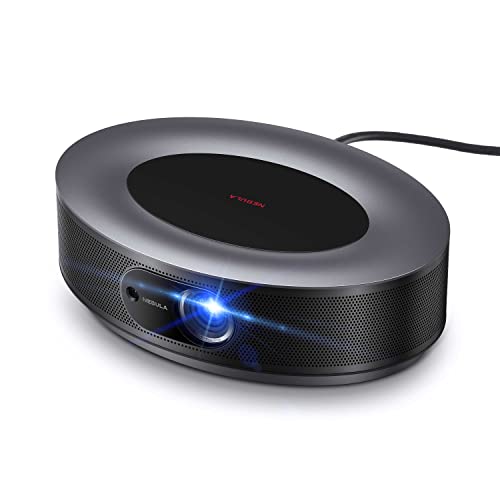
Anker Nebula Cosmos
6.8/10

Overall score

Score
6.8/ 10
✕
What it is
An overall evaluation of the projector's quality, based on technical analyses and user reviews.
When it matters
When you need a quick reference to identify the best projectors on the market.
Score distribution
▼
<55-66-77-88-99-10
Score components

90%

6.6

Technical score

10%

8.7

User score

▲Better than 58% of projectors
5.8

Value for money

Value for money
5.8/ 10
✕
What it is
An indicator that combines the projector's overall rating with its cost.
When it matters
When you are looking for a projector with a good balance between quality and price.
Score distribution
▼
<55-66-77-88-99-10
Score components

70%

6.8

Overall score

30%

3.5

Price

▼Worse than 75%
6.6

Technical score

Technical score
6.6/ 10
✕
What it is
An assessment of technical performance for products in the Projectors category across these key areas: Image Quality, Projection & Lens, HDMI & Gaming, Connectivity, Audio & Features, Design & Power.
When it matters
When you want to compare projectors based on technical performance and available features.
Score distribution
▼
<55-66-77-88-99-10
Score components

42%

6.0

Image Quality

22%

5.7

Projection & Lens

12%

7.1

HDMI & Gaming

10%

8.9

Audio & Features

8%

8.7

Connectivity

6%

6.4

Design & Power

▲Better than 54%
8.7

User score

User score
8.7/ 10
✕
What it is
A rating that combines user reviews and the total number of reviews received by the projector.
When it matters
When you want to know how a projector performs in real use and how reliable it remains over time according to user feedback.
Score distribution
▼
<55-66-77-88-99-10
Score components

70%

8.1

User ratings

30%

10

Number of reviews

Based on ratings from across the web.
▲Better than 84%
  • anker-nebula-cosmos
  • anker-nebula-cosmos
  • anker-nebula-cosmos
  • anker-nebula-cosmos
  • anker-nebula-cosmos
  • anker-nebula-cosmos
  • anker-nebula-cosmos
  • anker-nebula-cosmos
anker-nebula-cosmos
anker-nebula-cosmos
anker-nebula-cosmos
anker-nebula-cosmos
anker-nebula-cosmos
anker-nebula-cosmos
anker-nebula-cosmos
anker-nebula-cosmos
Where to buy
*As an Amazon Associate, we earn from qualifying purchases.
Best rankings
Available: ranking among products currently available (including other versions of this product).All: ranking among all products in the database.

What owners say about the Anker Nebula Cosmos

Based on 38 owners sharing their experience in online comments

58%positive3%mixed39%negative

Owners praise its useful features and family viewing, while dim scenes, poor value and support problems stand out.

What owners dislike

  • Owners say Anker's support stalls, offers only a small discount instead of repairs, and quotes high repair costs after the short warranty.5
  • Owners find movies look very dark, dark scenes barely show detail, and the picture stays dim even at maximum brightness.4
  • Owners say it costs too much for what it delivers, with cheaper projectors giving brighter, better pictures, and some returned it.4
  • Owners say keystone correction is unavailable in game mode, and the projector has no optical zoom or lens shift to adjust the image.3

Points mentioned by at least 3 owners, most mentioned first.

Loading...
Loading category ranking...

Technical Specifications of projector Anker Nebula Cosmos

Technical score
Technical score
6.6/ 10
✕
What it is
An assessment of technical performance for products in the Projectors category across these key areas: Image Quality, Projection & Lens, HDMI & Gaming, Connectivity, Audio & Features, Design & Power.
When it matters
When you want to compare projectors based on technical performance and available features.
Score distribution
▼
<55-66-77-88-99-10
Score components:

42%

6.0

Image Quality

22%

5.7

Projection & Lens

12%

7.1

HDMI & Gaming

10%

8.9

Audio & Features

8%

8.7

Connectivity

6%

6.4

Design & Power

6.6
User score
User score
8.7/ 10
✕
What it is
A rating that combines user reviews and the total number of reviews received by the projector.
When it matters
When you want to know how a projector performs in real use and how reliable it remains over time according to user feedback.
Score distribution
▼
<55-66-77-88-99-10
Score components

70%

8.1

User ratings

30%

10

Number of reviews

Based on ratings from across the web.
8.7
Popularity
Popularity
10/ 10
✕
What it is
An indicator based on the number of reviews received by the projector.
When it matters
When you prefer to buy a product chosen and reviewed by many other consumers.
Score distribution
▼
<55-66-77-88-99-10
Popularity:
Anker Nebula Cosmos has a popularity score of 10 points, which is higher than 89.3% of projectors.
10
Value for money
Value for money
5.8/ 10
✕
What it is
An indicator that combines the projector's overall rating with its cost.
When it matters
When you are looking for a projector with a good balance between quality and price.
Score distribution
▼
<55-66-77-88-99-10
Score components:

70%

6.8

Overall score

30%

3.5

Price

5.8
ANSI lumens
900
This projector reaches 900 ANSI lumens, dimmer than 70.5% of projectors and equal to 0.9% of projectors.
Contrast ratio
1,000:1
This projector has a contrast ratio of 1000:1, lower than 85.5% of projectors and equal to 7.8% of projectors.
Static contrast ratio.
Native panel resolution
1920x1080
This projector uses a native resolution of 1920x1080, higher than 26.2% of projectors and equal to 59.7% of projectors.
Output Resolution
1920x1080
This projector supports output resolution up to 1920x1080, higher than 24.9% of projectors and equal to 41% of projectors.
Projection technology
DLP
Show more
Throw ratio
1.2:1
Min throw distance
1.59 m
This projector needs a minimum throw distance of 1.59 m, longer than 88.2% of projectors and equal to 0.3% of projectors.
Max projection size
120 inch
This projector supports projection sizes up to 120 inch, smaller than 80% of projectors and equal to 11.1% of projectors.
Zoom ratio
N/A
Motorized zoom
no
This projector does not have motorized zoom. 16.3% of projectors have motorized zoom.
Show more
Input lag
31 ms
This projector has input lag of 31 ms, higher than 53.7% of projectors.
In Game Mode.
Auto low latency mode (ALLM)
no
This projector does not support ALLM. 17.2% of projectors support ALLM.
Variable refresh rate (VRR)
no
This projector does not support VRR. 1.6% of projectors support VRR.
HDMI version
?
Max HDMI bandwidth
18 Gbps
This projector supports HDMI bandwidth up to 18 Gbps, higher than 47.7% of projectors and equal to 40.1% of projectors.
Show more
N. of HDMI ports
2
This projector has 2 HDMI port/s, more than 45% of projectors and equal to 47.7% of projectors.
Wi-Fi connectivity
yes
This projector supports Wi-Fi. 47.2% of projectors support Wi-Fi.
Wi-Fi version
Wi-Fi 5 (802.11ac)
This projector supports Wi-Fi 5 (802.11ac), more modern than 55.1% of projectors and equal to 29.4% of projectors.
Bluetooth connectivity
yes
This projector supports Bluetooth. 49.6% of projectors support Bluetooth.
Bluetooth version
4.2
This projector supports Bluetooth 4.2, more modern than 56.1% of projectors and equal to 6.8% of projectors.
Show more
Smart TV features
yes
This projector has smart TV features. 56.4% of projectors have smart TV features.
Operating system
Android 9.0
Android OS
yes
This projector runs Android OS. 81.3% of projectors run Android OS.
Android 9
Dedicated smartphone app
yes
This projector comes with a dedicated smartphone app. 64.9% of projectors come with a dedicated smartphone app.
Nebula Connect app.
Remote control
yes
This projector includes a remote control. 1.6% of projectors include a remote control.
Show more
Light source type
led
This projector uses led light source technology, more advanced than 33.1% of projectors and equal to 39% of projectors.
Laser Light Source
no
This projector does not use a laser light source. 28.1% of projectors use a laser light source.
Lamp life
30,000 hours
This projector offers lamp life of 30,000 hours, shorter than 69.1% of projectors and equal to 25.3% of projectors.
Lamp life (eco mode)
?
Operating power consumption
120 W
This projector uses 120 W of power, less than 65.7% of projectors and equal to 2.3% of projectors.
Normal mode power draw.
Show more

Anker Nebula Cosmos vs the average projector

246810TotalImage QualityProjection & LensHDMI & GamingConnectivityAudio & FeaturesDesign & Power
  • Advanced focus control
    This projector offers Advanced focus control than the average projector (auto-focus vs manual). The average projector uses manual focus control.
    Manual remote fine-tuning available.
    auto-focus vs manual
  • Built-in smart TV features
    This projector has built-in smart TV features, while the average projector does not. 43.7% of projectors have built-in smart TV features.
  • 10 degrees greater vertical keystone correction
    This projector offers more vertical keystone correction than the average projector (40 degrees degrees vs 30 degrees degrees). The average projector offers 30 degrees degrees of vertical keystone correction.
    40 degrees vs 30 degrees
  • Smartphone app support
    This projector supports smartphone app control, while the average projector does not. 35.2% of projectors support smartphone app control.
    Nebula Connect app.
  • Supports frame interpolation
    This projector supports frame interpolation, while the average projector does not. 37.1% of projectors support frame interpolation.
  • Built-in stereo speakers
    This projector has stereo speakers, while the average projector does not. 48.9% of projectors have stereo speakers.
    dual 15W speaker.
  • Built-in Chromecast
    This projector supports built-in Chromecast, while the average projector does not. 26% of projectors support built-in Chromecast.
  • Includes S/PDIF output
    This projector has an S/PDIF output, while the average projector does not. 17.2% of projectors have an S/PDIF output.
    Optical S/PDIF.
  • 2.05x more popular
    Anker Nebula Cosmos has a higher popularity than the average projector (10 vs 4.9).
    10 vs 4.87
  • 8.4% higher user score
    User score
    8.7/ 10
    ✕
    What it is
    A rating that combines user reviews and the total number of reviews received by the projector.
    When it matters
    When you want to know how a projector performs in real use and how reliable it remains over time according to user feedback.
    Score distribution
    ▼
    ▼
    <55-66-77-88-99-10
    Anker Nebula Cosmos
    the average projector
    Anker Nebula Cosmos has a higher user score than the average projector (8.68 vs 8.000).
    8.68 vs 8
  • Supports HLG
    This projector supports HLG, while the average projector does not. 42.7% of projectors support HLG.
  • Wider color gamut
    This projector has a higher color gamut coverage than the average projector (123.3% Rec.709 % vs 99% Rec.709 %). The average projector has 99% Rec.709 % of color gamut coverage.
    123.3% Rec.709 % vs 99% Rec.709 %
  • Advanced focus control
    This projector offers Advanced focus control than the average projector (auto-focus vs manual). The average projector uses manual focus control.
    Manual remote fine-tuning available.
    auto-focus vs manual
  • 10 degrees greater vertical keystone correction
    This projector offers more vertical keystone correction than the average projector (40 degrees degrees vs 30 degrees degrees). The average projector offers 30 degrees degrees of vertical keystone correction.
    40 degrees vs 30 degrees
  • 10 degrees greater horizontal keystone correction
    This projector offers more horizontal keystone correction than the average projector (40 degrees degrees vs 30 degrees degrees). The average projector offers 30 degrees degrees of horizontal keystone correction.
    40 degrees vs 30 degrees
  • Motorized focus
    This projector supports motorized focus, while the average projector does not. 47.2% of projectors support motorized focus.
  • Supports frame interpolation
    This projector supports frame interpolation, while the average projector does not. 37.1% of projectors support frame interpolation.
  • Built-in Chromecast
    This projector supports built-in Chromecast, while the average projector does not. 26% of projectors support built-in Chromecast.
  • Includes S/PDIF output
    This projector has an S/PDIF output, while the average projector does not. 17.2% of projectors have an S/PDIF output.
    Optical S/PDIF.
  • Supports AirPlay
    This projector supports AirPlay, while the average projector does not. 40% of projectors support AirPlay.
    Requires Nebula Cast app.
  • Supports Miracast
    This projector supports Miracast, while the average projector does not. 45.1% of projectors support Miracast.
  • Built-in smart TV features
    This projector has built-in smart TV features, while the average projector does not. 43.7% of projectors have built-in smart TV features.
  • Smartphone app support
    This projector supports smartphone app control, while the average projector does not. 35.2% of projectors support smartphone app control.
    Nebula Connect app.
  • Built-in stereo speakers
    This projector has stereo speakers, while the average projector does not. 48.9% of projectors have stereo speakers.
    dual 15W speaker.
  • Supports voice commands
    This projector supports voice commands, while the average projector does not. 36.3% of projectors support voice commands.
    Google Assistant via remote.
  • 2x stronger audio output
    This projector has a higher audio output power than the average projector (20 W vs 10 W). The average projector has 10 W of audio output power.
    2 x 10W.
    20 W vs 10 W
  • Android OS built-in
    This projector features Android OS, while the average projector does not. 18.8% of projectors feature Android OS.
    Android 9
  • 10,000 hours longer lamp life
    This projector has a higher lamp life than the average projector (30,000 hours vs 20,000 hours). The average projector has 20,000 hours of lamp life.
    30,000 hours vs 20,000 hours
  • 115 W lower power use
    This projector uses less power than the average projector (120 W vs 235 W). The average projector uses 235 W of power.
    Normal mode power draw.
    120 W vs 235 W
  • Lower contrast ratio
    This projector has a lower contrast ratio than the average projector (1000:1 vs 10000:1). The average projector has 10000:1 of contrast ratio.
    Static contrast ratio.
    1,000:1 vs 10,000:1
  • 59.1% dimmer image
    This projector has lower ANSI lumens than the average projector (900 vs 2,200). The average projector has 2,200 ANSI lumens.
    900 vs 2,200
  • 126.5 inch smaller image size
    This projector has a lower projection size than the average projector (120 inch vs 246.5 inch). The average projector has 246.5 inch of projection size.
    120 inch vs 246.5 inch
  • Basic light source
    This projector has Basic light source than the average projector (led vs laser). The average projector uses a laser light source.
    led vs laser
  • 0.57 m longer throw distance
    This projector has a higher throw distance than the average projector (1.6 m vs 1 m). The average projector has 1.025 m of throw distance.
    1.59 m vs 1.025 m
  • 29.4% lower refresh rate
    This projector has a lower refresh rate than the average projector (60 Hz vs 85 Hz). The average projector has 85 Hz of refresh rate.
    60 Hz vs 85 Hz
  • Limited HDMI format
    This projector supports a less capable max HDMI input format than the average projector (4K/60Hz vs 4K/120Hz). The average projector supports a max HDMI input format of 4K/120Hz.
    Higher-resolution input is downscaled to the native image.
    4K/60Hz vs 4K/120Hz
  • 4 dB louder eco mode
    This projector has a higher audible noise in eco mode than the average projector (32 dB vs 28 dB). The average projector has 28 dB of audible noise in eco mode.
    Eco mode figure.
    32 dB vs 28 dB
  • 11.7% worse value for money
    Anker Nebula Cosmos has a lower value-for-money score than the average projector (5.82 vs 6.5).
    5.82 vs 6.51
  • 71.4% more expensive
    Anker Nebula Cosmos is more expensive than the average projector (£1,320 vs £770).
    £1,320 vs £770
  • Lower contrast ratio
    This projector has a lower contrast ratio than the average projector (1000:1 vs 10000:1). The average projector has 10000:1 of contrast ratio.
    Static contrast ratio.
    1,000:1 vs 10,000:1
  • 59.1% dimmer image
    This projector has lower ANSI lumens than the average projector (900 vs 2,200). The average projector has 2,200 ANSI lumens.
    900 vs 2,200
  • 29.4% lower refresh rate
    This projector has a lower refresh rate than the average projector (60 Hz vs 85 Hz). The average projector has 85 Hz of refresh rate.
    60 Hz vs 85 Hz
  • 0.14 inch smaller DMD chip
    This projector has a lower DMD chip size than the average projector (0.3 inch vs 0.47 inch). The average projector has 0.47 inch of DMD chip size.
    0.33 inch vs 0.47 inch
  • 126.5 inch smaller image size
    This projector has a lower projection size than the average projector (120 inch vs 246.5 inch). The average projector has 246.5 inch of projection size.
    120 inch vs 246.5 inch
  • 0.57 m longer throw distance
    This projector has a higher throw distance than the average projector (1.6 m vs 1 m). The average projector has 1.025 m of throw distance.
    1.59 m vs 1.025 m
  • Limited HDMI format
    This projector supports a less capable max HDMI input format than the average projector (4K/60Hz vs 4K/120Hz). The average projector supports a max HDMI input format of 4K/120Hz.
    Higher-resolution input is downscaled to the native image.
    4K/60Hz vs 4K/120Hz
  • No RS-232 control
    This projector does not support RS-232 control, while the average projector does. 52.1% of projectors support RS-232 control.
  • Basic light source
    This projector has Basic light source than the average projector (led vs laser). The average projector uses a laser light source.
    led vs laser
  • 4 dB louder eco mode
    This projector has a higher audible noise in eco mode than the average projector (32 dB vs 28 dB). The average projector has 28 dB of audible noise in eco mode.
    Eco mode figure.
    32 dB vs 28 dB
  • 2 dB louder operation
    This projector has a higher audible noise than the average projector (32 dB vs 30 dB). The average projector has 30 dB of audible noise.
    32 dB vs 30 dB
  • 45.2% heavier weight
    This projector is heavier than the average projector (4.5 kg vs 3.1 kg). The average projector weighs 3.1 kg.
    4.5 kg vs 3.1 kg

Video reviews

Hands-on testing, unboxing, and real-world video evaluations

9.0
Dragon Blogger Technology and Entertainment
≈ estimated
23/08/2022
Hands-on review · setup, picture, sound and app tests
Verdict
Anker Nebula Cosmos is a feature-packed projector we strongly recommend for its picture quality and sound.
9.0
Dragon Blogger Technology and Entertainment
≈ estimated
20/08/2022
Hands-on review · setup, picture, sound and app tests
Verdict
Anker Nebula Cosmos is a feature-packed projector we strongly recommend for its picture quality and sound.
8.0
InsideTech
≈ estimated
02/11/2020
Full review · image, sound, Android TV and quirks
Verdict
Anker Nebula Cosmos is a versatile all-in-one projector that mostly delivers, though fan noise, weak speakers and quirks hold it back.
9.0
JonoRay Tech & Collectibles
≈ estimated
14/08/2020
Hands-on review · noise, ports, picture and sound tests
Verdict
Anker Nebula Cosmos is a very good projector, highly recommended for what it offers, despite fan noise and audio lag.
Hands-on video, no verdict

Expert reviews

In-depth analysis and verdict from leading tech publications

pcmag.com
18/05/2022
Lab test · Room-to-room portable
Verdict
The Anker Nebula Cosmos is a light, oval-shaped room projector with loud sound and sharp autofocus, though its HDR handling is weak.
t3.com
21/04/2022
Hands-on review · Smart projector
Verdict
The Anker Nebula Cosmos is a compact smart projector with loud 360-degree sound and a useful remote app, though it is slow to wake and has no battery.
uk.pcmag.com
18/05/2022
Hands-on test · Room-to-room projector
Verdict
The Anker Nebula Cosmos is a light, oval room-to-room projector with easy Android TV setup and good audio, but it looks washed out in daylight.
computerbild.de
28/12/2020
Hands-on test · Home projector
Verdict
The Anker Nebula Cosmos is a simple, good-looking Full HD projector with decent sound, but its distorted colors and missing Netflix app hurt it.
connect.de
14/08/2020
Hands-on test · Home projector
Verdict
The Anker Nebula Cosmos is a compact Full HD projector with colorful images and strong sound, suited to casual movie nights at home.
C
computerhoy.20minutos.es
22/07/2022
Summary of the review
E
elespanol.com
15/07/2022
Summary of the review
today.it
01/02/2021
Hands-on test · Android TV projector
Verdict
The Anker Nebula Cosmos is a Full HD projector with Android TV and Chromecast that works well in a dark room, though HDR videos look too dark.
iphoneitalia.com
12/10/2022
Hands-on test · HDR home cinema
Verdict
The Anker Nebula Cosmos is a bright home projector whose HDR picture and loud 360-degree sound suit a dark room, though Netflix isn't in its Play Store.

Third-party reviews

Based on ratings from across the web.
Reviews last updated: October 2026 · How we calculate this

What customers like about Anker Nebula Cosmos

  • Impressive picture quality with sharp details and vibrant colors
  • Strong built-in speaker system with immersive audio and good bass
  • Convenient portability features, including an ergonomic built-in handle
  • Fast and reliable automated setup features like autofocus and keystone correction
  • User-friendly smart interface with native support for major apps like Netflix
  • Sufficient brightness for viewing in rooms with some ambient light

What customers don't like about Anker Nebula Cosmos

  • Weak black levels and contrast, causing dark scenes to appear greyish
  • Lack of optical zoom, requiring physical movement of the unit to adjust image size
  • No built-in battery, limiting outdoor use to areas with a power source
  • Noticeable input lag that may affect performance in competitive gaming
  • Software and menu navigation can occasionally feel sluggish or buggy
  • Relatively heavy and bulky compared to other portable projector models

Verdict

The Anker Nebula Cosmos is a smart 1080p home cinema projector featuring 900 ANSI lumens of brightness and a maximum projection size of 120 inches. Key characteristics include native Full HD resolution with HDR10 support, autofocus, and dual 10W speakers delivering 360-degree sound via Dolby Digital Plus. Its main pros are the user-friendly Android TV 9.0 interface with over 3,600 apps, a portable 2kg design with a tripod mount, and consistent stable performance. However, notable cons include the lack of a built-in battery for true outdoor portability, limited black levels that struggle in bright rooms, and the absence of a 3.5mm audio jack for analogue sound output.

Compare Anker Nebula Cosmos with other products in the Projectors category

1Product to compare no. 1
VS
2Product to compare no. 2
VS
3Product to compare no. 3 (optional)

Graphic comparison of Anker Nebula Cosmos and other products in the Projectors category

No results found