Are Yamaha portable speakers good?
Yamaha portable speakers have an average overall score of 6.8, ranking #39 among comparable portable-speaker brands.
Yamaha portable speakers are strongest for balanced music reproduction, dependable stereo design, and MusicCast integration with compatible home-audio products. They suit listeners who want a speaker to fit a room or system rather than a light with a party mode.
Yamaha portable speakers are less suitable when you need IP-rated outdoor protection, very long battery life, RGB effects, or a simple current-only product ladder. Many models are mains powered or use older Bluetooth generations, and the most capable network features require compatible Yamaha equipment.
The following chart compares portable-speaker brands by average overall score.
[horizontal-chart-16826570532110669241166463899741574182283116530753]
What are the main advantages of Yamaha portable speakers?
The main advantages of Yamaha portable speakers are as follows:
- Balanced tuning: Yamaha generally targets clear vocals, controlled bass, and a stable stereo image rather than an exaggerated party profile. This suits acoustic music, radio, and mixed household listening where detail matters.
- MusicCast ecosystem: WX, MusicCast 20/50, and related models can join Yamaha's network-audio ecosystem on supported generations. Multi-room playback and app control are useful when the speaker is part of a larger Yamaha system.
- Musical-instrument expertise: Yamaha's long history in instruments and professional audio informs its emphasis on timing, dynamics, and reliable amplification. The products are designed as music equipment rather than decorative Bluetooth accessories.
- Solid home formats: TSX tabletop systems and WX speakers fit kitchens, offices, and living rooms with stable mains operation. They can deliver more consistent output than small battery speakers that compress heavily at high volume.
- Useful stereo pairing: Many current or compatible models support pairing or network stereo operation. Two matched speakers can give a more convincing image than one small cabinet, provided generations and MusicCast versions are compatible.
What are the main disadvantages of Yamaha portable speakers?
The main disadvantages of Yamaha portable speakers are as follows:
- Few true battery portables: Only a small part of Yamaha's range is designed for bags or long outdoor use. WX, TSX, and MusicCast models are mainly mains powered, so their sound quality does not equal carefree portability.
- Older connectivity: Several products use Bluetooth 2.1 or older charging and network standards. A discounted Yamaha may lack USB-C, modern codecs, multipoint, or current app support.
- Limited weather protection: Most home-oriented Yamaha speakers have no meaningful IP rating. The brand's dependable build does not make an indoor WX or TSX safe beside a pool or in sustained rain.
- Less party emphasis: Yamaha generally omits RGB lighting, karaoke inputs, and extreme bass modes. Choose another range if the goal is a large outdoor event rather than detailed household playback.
- System dependency: MusicCast benefits are strongest when other Yamaha components are already present. Without that ecosystem, a Bluetooth-only Bose, JBL, or Anker model may offer more battery and feature value for less money.
Who makes Yamaha portable speakers?
Yamaha portable speakers are made by Yamaha Corporation, the Japanese company founded in 1887 after Torakusu Yamaha built a reed organ in Hamamatsu. Yamaha later expanded from musical instruments into consumer audio, professional sound, audiovisual equipment, and MusicCast network products.
Yamaha Corporation is headquartered in Hamamatsu, Shizuoka, Japan, and remains an independent public company. Its audio business draws on instrument-making, signal-processing, and professional-sound expertise rather than treating portable speakers as a separate lifestyle-only category.
The current and legacy portable range reflects that heritage. PDX and NX models provide compact Bluetooth playback, while WX, MusicCast, and TSX products are designed to place Yamaha sound into rooms and connected systems. That explains the range's strong stereo focus and its relatively high share of mains-powered models.
What are the main Yamaha portable speaker lines?
The main Yamaha portable-speaker lines are as follows:
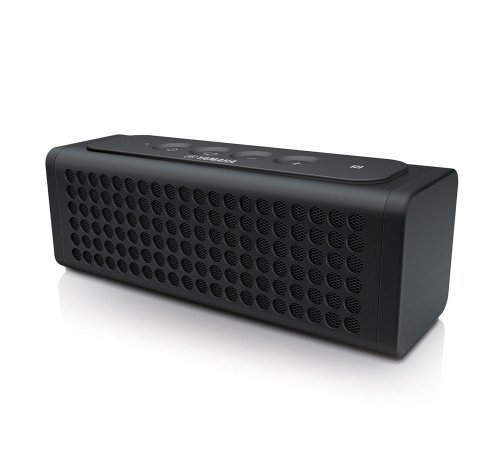
- PDX and NX: PDX-B11 and NX-P100 are the most genuinely portable Bluetooth models in the range. They are compact and easy to move, but older batteries, codecs, and charging arrangements make exact model checks essential.
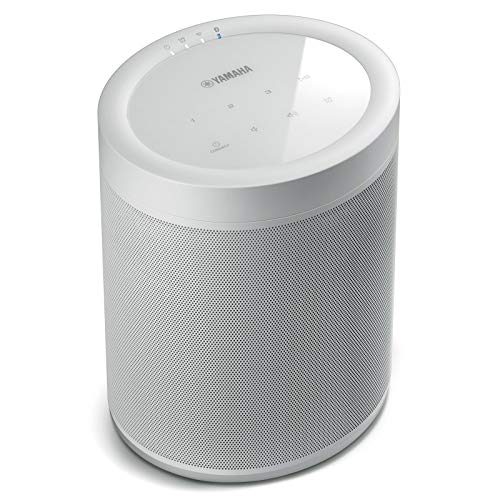
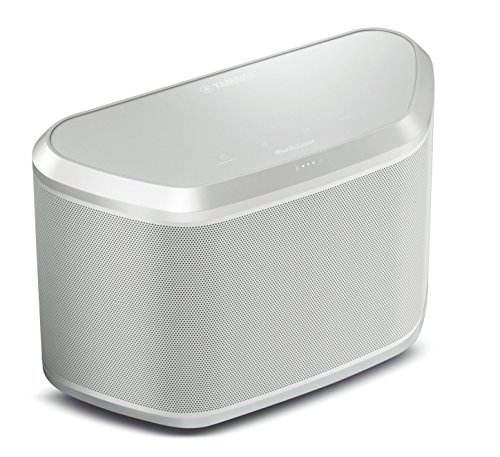
- WX MusicCast: WX-010, WX-030, and MusicCast WX-010 are compact network speakers for rooms and shelves. They suit stereo pairs and multi-room playback better than outdoor travel, and their mains power is part of the design.
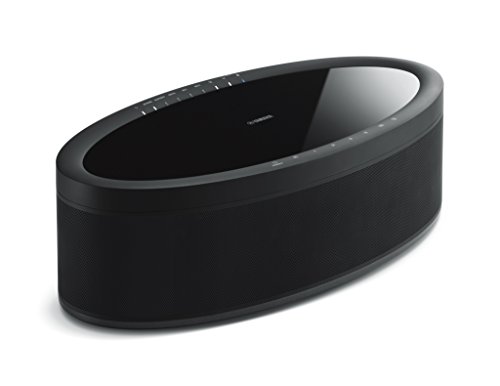
- MusicCast 20 and 50: These are larger connected home speakers with stronger amplifiers and room coverage. MusicCast 20 targets a smaller room or stereo pair, while MusicCast 50 provides a broader, more substantial presentation.
- TSX tabletop systems: TSX-70, TSX-112, and TSX-140 combine speaker playback with tabletop or clock-radio styling. They are useful bedside or kitchen systems, but their size and mains dependence make them poor substitutes for a battery speaker.
- Legacy Bluetooth and home lines: Older PDX, WX, and MusicCast generations remain available at varying prices. Treat them as distinct products because Bluetooth version, app support, firmware, and streaming services can differ sharply.
How much do Yamaha portable speakers cost?
Yamaha portable speakers generally cost about £70-£390. Compact PDX and NX models usually sit around £70-£130, WX MusicCast speakers around £120-£190, and MusicCast 20 or 50 models around £170-£390. TSX tabletop products can range from about £70 to £360 depending on size and generation.
The premium is mainly for cabinet volume, stereo imaging, MusicCast networking, and stable mains-powered output rather than long battery life. Check whether a model includes a usable battery, modern Bluetooth, and current streaming support before paying more for an older network speaker.
How do Yamaha portable speakers compare with Bose models?
Yamaha portable speakers compare with Bose models across the following areas:
- Sound balance: Yamaha usually aims for a precise stereo presentation and controlled bass, while Bose prioritises smooth, room-friendly tuning and strong vocal clarity. Yamaha can reward careful placement; Bose is often easier to enjoy immediately.
- Portability: Bose offers a clearer battery ladder from Micro and Flex to Revolve, Max, and S1 Pro. Yamaha has fewer genuine battery speakers, with many WX and TSX products requiring mains power.
- Home networking: Yamaha MusicCast provides strong integration with Yamaha receivers, soundbars, and stereo components. Bose offers selected smart and multi-room products, but its mainstream SoundLink line is more Bluetooth-centred.
- Outdoor use: Bose has more compact water-resistant models for gardens and travel. Yamaha's home products generally lack IP protection, so a Yamaha speaker should not be taken outdoors unless the exact model says otherwise.
- Buying fit: Choose Yamaha when a room system, stereo imaging, or existing MusicCast equipment matters. Choose Bose for easier carrying, current outdoor protection, voice-focused tuning, and a simpler portable-speaker decision.
What should you consider when choosing the best Yamaha portable speaker?
When choosing the best Yamaha portable speaker, consider the following factors:
- Battery operation and placement: NX-P100 weighs about 500 g and is rated for roughly 8 hours, while PDX-B11 is about 1.5 kg, 9 W, and 8 hours. WX and MusicCast products are mains-powered room speakers: MusicCast 20 is around 2.2 kg/40 W and MusicCast 50 about 4.5 kg/70 W, so they cannot replace a battery model on a trip.
- Sound and stereo presentation: Use the 8-hour battery class of NX-P100 or PDX-B11 for personal listening and short room-to-room moves; MusicCast 20 or 50 provides 40–70 W-class room coverage but needs a socket. Compare vocal clarity, bass extension, placement distance, and whether a model is self-contained or intended as a networked pair.
- Network ecosystem: WX and MusicCast models make sense when they will join a compatible Yamaha receiver, soundbar, or second speaker, while older portable PDX/NX products are simpler Bluetooth or dock-based devices. Confirm MusicCast generation, AirPlay support, streaming services, Wi-Fi band, and firmware status before buying around equipment you already own.
- Bluetooth generation and codecs: Older PDX, NX, and WX releases may use earlier Bluetooth versions, limited codecs, or single-device pairing, while newer MusicCast products can offer broader network alternatives. Check range, AAC support, multipoint, reconnection behaviour, and lip-sync performance with your phone rather than assuming Yamaha branding guarantees current wireless hardware.
- Outdoor use and handling: Most Yamaha WX, MusicCast, and TSX products are designed for dry indoor placement and should not be compared with IP-rated outdoor speakers solely on build quality. If a PDX or NX model will travel, verify its battery, carrying design, operating limits, and explicit water rating; absence of an IP code means rain protection should not be assumed.
- Age, accessories, and support: Prices are roughly £130 for a battery PDX/NX model, £120-£170 for MusicCast 20 or WX speakers, and about £360-£380 for larger MusicCast 50 or TSX systems. Older Yamaha models can be attractive at a discount, but docks, proprietary adapters, batteries, and legacy apps may be difficult to replace. Compare the exact generation with a current Bose, Sonos, or Bluetooth alternative on warranty, charger availability, firmware support, and the features lost before choosing a formerly premium model.