Are Klipsch portable speakers good?
Klipsch portable speakers have an average overall score of 7.2, ranking #22 among comparable portable-speaker brands, and a user rating of 9.2, placing them at #13 based on user reviews.
Klipsch is strongest for lively sound, amplifier-inspired styling, physical knobs, and a coherent step through compact Austin and Heritage Groove models to Nashville, Detroit, and larger Gig systems. Several models add IP protection, USB-C, stereo pairing, or microphone inputs, so the range can cover both personal and party listening.
Klipsch is less suitable if you need Wi-Fi multiroom, the lightest possible cabinet, RGB effects across the range, or the lowest price per watt. Older models and newer releases also differ in charging, app features, and codecs, so confirm the exact specification before assuming a family feature.
The following chart compares portable-speaker brands by average overall score.
[horizontal-chart-16826570532110669241166463899741574182283116530753]
What are the main advantages of Klipsch portable speakers?
The main advantages of Klipsch portable speakers are as follows:
- Distinctive sound and design: Klipsch combines energetic voicing with amplifier-inspired grilles, knobs, and finishes that stand apart from generic plastic speakers.
- Clear model ladder: Austin and Heritage Groove suit compact use, Nashville and Detroit add scale, and Gig models cover louder party playback.
- Outdoor protection: Many current compact and mid-sized models carry IP ratings for splashes, rain, or temporary immersion.
- Useful party features: Selected models provide microphones, stereo pairing, USB-C, and lighting, while retaining straightforward Bluetooth operation.
- Broad listening contexts: The range includes desk, travel, room, patio, and event-oriented formats rather than one repeated cabinet.
What are the main disadvantages of Klipsch portable speakers?
The main disadvantages of Klipsch portable speakers are as follows:
- Premium styling costs more: Klipsch often charges for design, materials, and brand character, so cheaper rivals may offer more watts or battery capacity per euro.
- Uneven feature sets: IP ratings, USB-C, microphone inputs, lighting, codecs, and app support vary sharply by model and generation.
- Large models are heavy: Detroit, Gig, Groove, and KMC cabinets can weigh several kilograms and are portable mainly for moving between locations.
- No unified multiroom platform: Bluetooth is central, and the range does not match Sonos or Denon Home for networked room grouping.
- Battery and accessory details vary: Check charging time, supplied adapter, replacement options, and runtime at realistic volume before buying.
Who makes Klipsch portable speakers?
Klipsch was founded in 1946 by Paul W. Klipsch in Hope, Arkansas, and became known for high-efficiency horn loudspeakers. The portable range is now developed under Premium Audio Company, the audio business historically associated with VOXX International; Gentex completed its acquisition of VOXX in 2025.
Current Klipsch portable speakers are produced through a global supply chain, while engineering, industrial design, brand management, and support are coordinated through the Klipsch/Premium Audio organisation. Country of assembly varies by model.
Use Klipsch's regional support site and the authorised retailer for warranty and firmware information, particularly for older or discontinued models.
What are the main Klipsch portable speaker models?
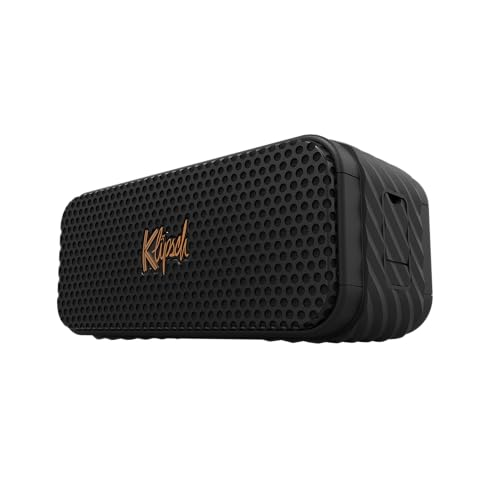
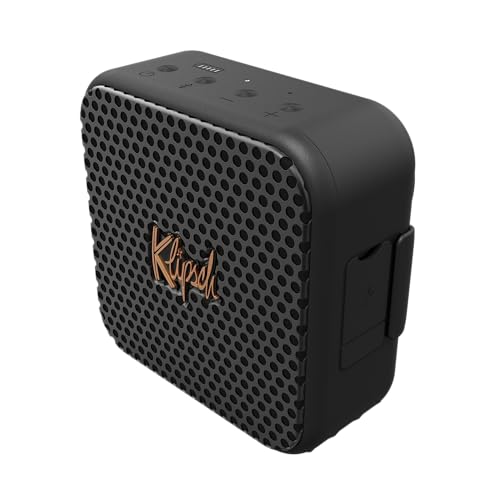
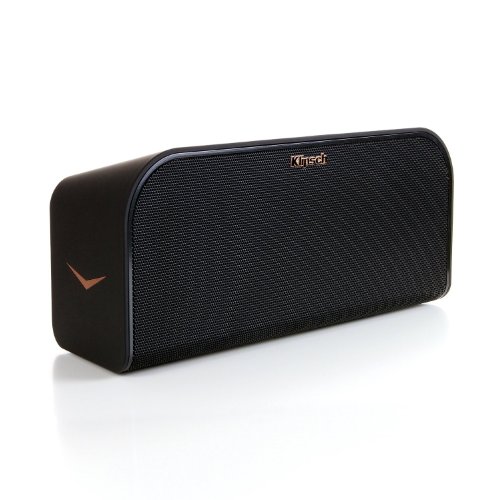
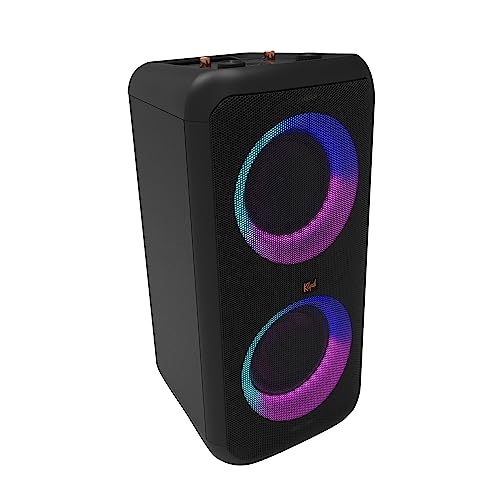
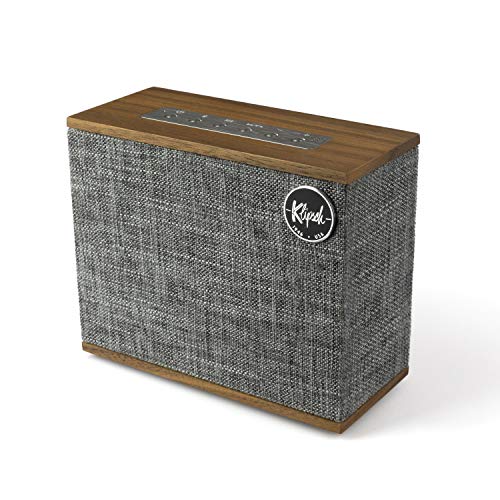
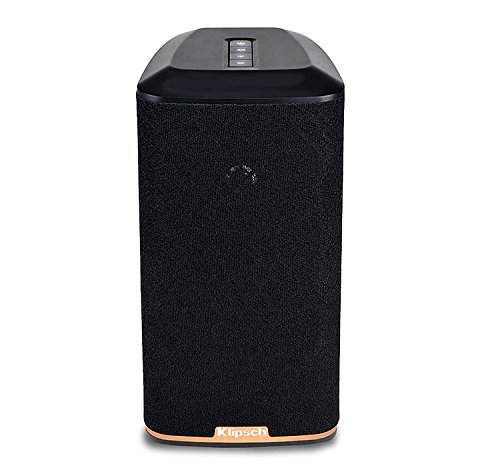
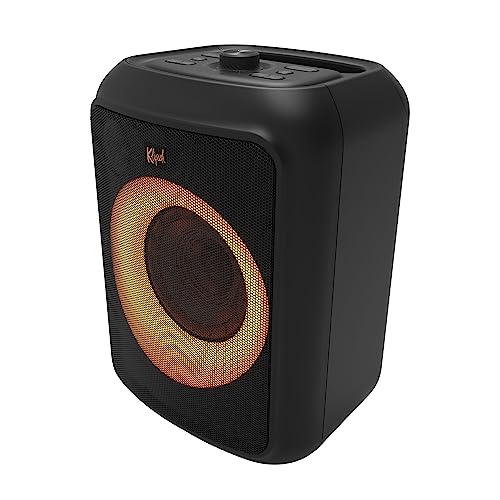
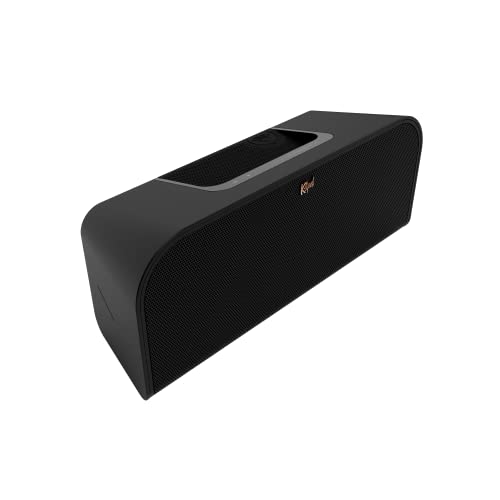
Klipsch's main portable models include Austin for compact everyday carrying, Heritage Groove for a small retro-styled speaker, Nashville for a mid-sized outdoor format, and Gig XL or Gig XXL for louder party playback. The Reference RW1 and iGroove HG add older or specialised designs, while Detroit, Groove, and KMC3 are larger cabinets intended for room-filling sound rather than long walks.
The models differ substantially in weight, output, water protection, battery, inputs, and charging. Compare those fields directly: Austin and Heritage Groove are genuinely portable, while Gig XXL, Groove, and KMC3 need car transport or a fixed party location.
How much do Klipsch portable speakers cost?
Klipsch portable speakers in this comparison cost about £60-£340. Austin is near the entry point, Heritage Groove and Nashville sit around £100-£120, and larger Gig, Detroit, Groove, and KMC models reach roughly £130-£340. Older stock and promotions can change the order.
At the upper end, compare cabinet size, battery, IP rating, microphone inputs, and warranty—not only the Klipsch styling. A cheaper competitor may provide similar output, while Klipsch can justify its price when the design, voicing, and controls are central to your choice.
How do Klipsch portable speakers compare with Marshall models?
Klipsch and Marshall both sell portable speakers with strong visual identities and guitar-amplifier heritage. Klipsch tends to emphasise horn-influenced dynamics, physical controls, and a wider spread from tiny Austin to large party cabinets. Marshall focuses on its amp-inspired look, energetic tuning, and a coherent Willen-to-Tufton progression.
Both brands offer water-resistant compact models, but neither is a full Wi-Fi multiroom platform like Sonos. Compare the exact model for battery, IP rating, USB-C, microphones, app EQ, and stereo linking. Klipsch may appeal more if you want a broader party-size range; Marshall may be easier to shop when its current generation and app features match your needs.
Choose on the individual speaker's sound, weight, and support rather than assuming one badge is universally better.
What should you consider when choosing the best Klipsch portable speaker?
When choosing the best Klipsch portable speaker, consider the following factors:
- Size and output: Austin weighs about 397 g and delivers 10 W, Heritage Groove about 990 g with 8 hours, Nashville about 970 g and 20 W, Detroit about 2.5 kg and 30 W, Gig XL about 4 kg, Gig XXL 8.2 kg/80 W, and KMC3 about 3.5 kg/65 W. Compare actual dimensions, handle design, and clean output because large models are portable for transport, not walking.
- Sound character and coverage: Compact Austin is a 10 W-class personal speaker, Nashville and Detroit sit around 20–30 W, and Gig or KMC models reach roughly 30–80 W. Compare vocal presence, bass compression, and directional versus broad dispersion at your normal volume; amplifier-inspired styling does not make every model sound or project the same way.
- Water protection: Austin, Heritage Groove, Nashville, and selected mid-sized models can provide IP protection, while older or larger Detroit, Groove, and KMC products may be intended for dry use. Check the exact IP code, dust claim, port-cover design, and charging precautions rather than transferring an outdoor rating from one Klipsch family to another.
- Battery and charging: Austin is rated around 12 hours, Heritage Groove about 8 hours, Nashville up to roughly 24 hours, Detroit around 20 hours, Gig XL and Gig XXL about 8 hours, and KMC3 up to roughly 26 hours. Use 8–12 hours as the minimum for a day out and 20–24 hours for a long event, then compare realistic volume, USB-C or adapter requirements, playback while charging, battery age, and whether the claimed output is available away from mains power.
- Inputs, lighting, and pairing: Selected Gig, Detroit, Groove, or KMC models may add microphones, AUX, USB, lighting, or party controls, while Austin and Heritage Groove concentrate on simple Bluetooth music. Verify the exact microphone connector, stereo-pairing mode, app EQ, radio or lighting function, and whether a second unit must be identical before planning an event setup.
- Price, design, and support: Prices run from about £60 for Austin to £100-£120 for Heritage Groove or Nashville, £130-£300 for Gig or Detroit, and roughly £340 for Gig XXL, Groove, or KMC3. Klipsch styling and energetic tuning can justify a premium over a similarly loud JBL, Marshall, Sony, or Soundcore speaker only when the controls and sound suit you. Compare the model generation, warranty, firmware, replacement battery, accessories, and return route because older Reference, iGroove, or KMC listings may not share current support or wireless features.