Are Denon portable speakers good?
Denon portable speakers have an average overall score of 7.2, ranking #23 among comparable portable-speaker brands, and a user rating of 8.7, placing them at #29 based on user reviews.
Denon is strongest when you want mature audio tuning, a choice between compact Envaya and larger home models, and network features such as Wi-Fi, AirPlay, or HEOS grouping on supported generations. Its portable products are generally more understated than party-speaker ranges and can fit naturally into a living room.
Denon is less compelling if RGB lighting, USB-C, extreme battery life, or the lowest price per watt matters. The catalogue mixes older Envaya, Cocoon, HEOS, and Denon Home generations, so app support, waterproofing, battery, and inputs must be checked model by model.
The following chart compares portable-speaker brands by average overall score.
[horizontal-chart-16826570532110669241166463899741574182283116530753]
What are the main advantages of Denon portable speakers?
The main advantages of Denon portable speakers are as follows:
- Refined home listening: Denon generally prioritises balanced, detailed sound and understated cabinets rather than aggressive lighting or party styling.
- Network features: HEOS and Denon Home models can add Wi-Fi, AirPlay, and multiroom control, depending on generation.
- Range breadth: Envaya covers compact battery speakers while Home and HEOS models address larger rooms and fixed indoor placement.
- Outdoor choices: Several Envaya models carry water protection, making them useful near a kitchen, patio, or pool.
- Established audio heritage: Denon has Japanese audio roots extending back more than a century and a substantial product-support history.
What are the main disadvantages of Denon portable speakers?
The main disadvantages of Denon portable speakers are as follows:
- Generational confusion: Envaya, Cocoon, HEOS, and Denon Home names span different eras and connection standards.
- Limited lighting and party focus: The range is not aimed at RGB effects, karaoke-first operation, or maximum outdoor loudness.
- USB-C is uncommon: Many listed models use older charging arrangements, so check the connector and supplied power adapter carefully.
- Uneven portability: Larger Home and HEOS products may be movable around the house but are not practical travel speakers.
- Network dependence: Wi-Fi features require a stable network, app setup, and compatible services; Bluetooth is simpler but less capable.
Who makes Denon portable speakers?
Denon is a Japanese audio brand with roots going back to 1910. Its modern consumer audio products, including Denon Home and HEOS speakers, are part of HARMAN International after HARMAN's 2025 acquisition of Sound United; HARMAN is a Samsung subsidiary.
Denon therefore combines a long Japanese audio identity with current development and distribution within HARMAN's wider consumer-audio organisation. Manufacturing is handled through global supply partners, so country of assembly varies by model.
For warranty or app support, use the current Denon regional site and the seller tied to the exact model generation rather than relying only on the historical brand name.
What are the main Denon portable speaker lines?
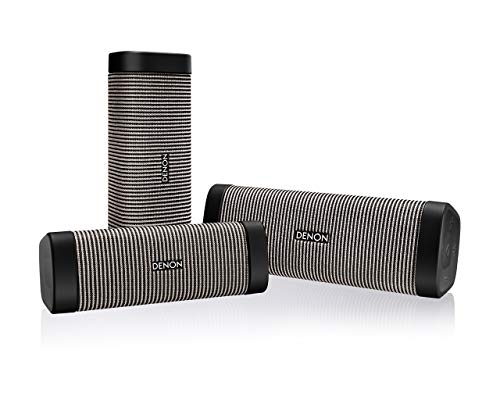
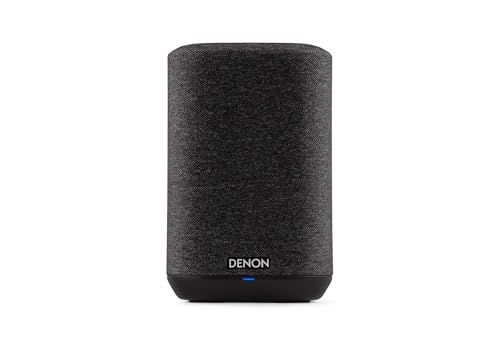
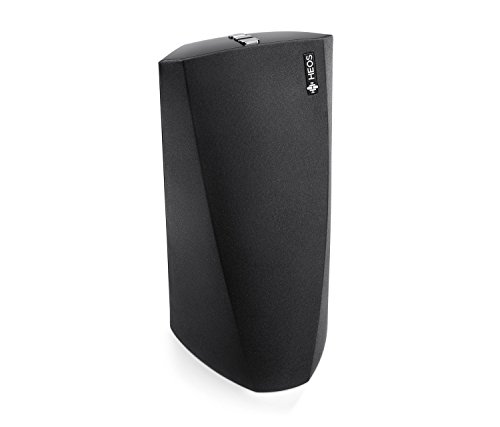
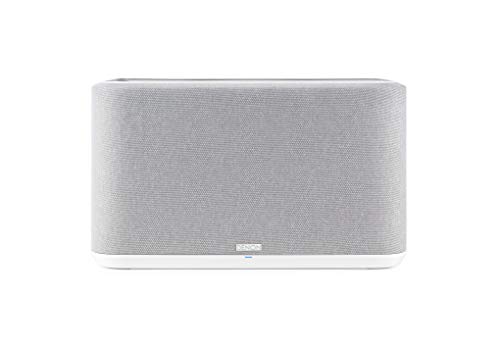
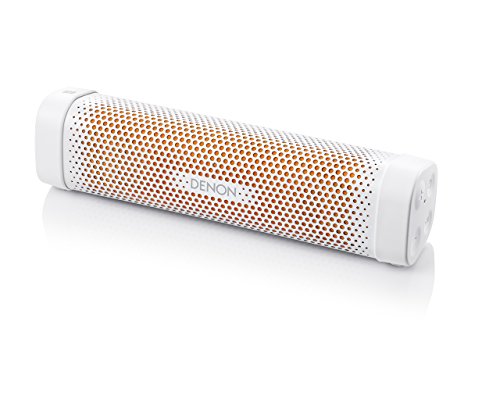
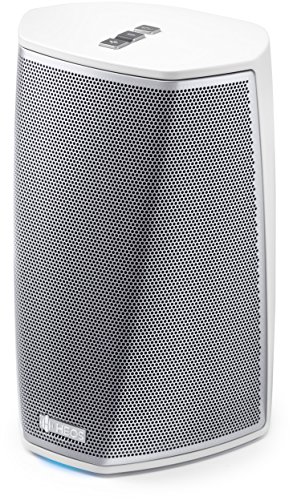
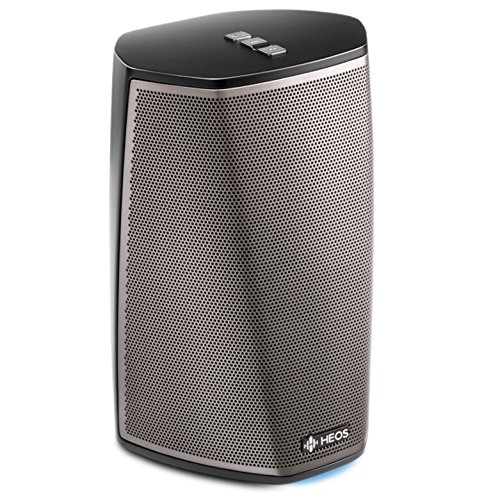
Denon portable speakers fall into several families. Envaya and Envaya Mini are battery-powered Bluetooth models, with selected versions adding water protection and speaker linking. Cocoon models are older all-in-one wireless speakers focused on home placement. HEOS 1, 3, and 7 are network-capable multiroom products from an earlier generation, while Denon Home 150 and Home 350 are the newer networked home line.
The families differ in portability, battery use, Wi-Fi support, voice and app features, and physical scale. Treat the model suffix and generation as essential information: a HEOS 1 HS2 is not identical to an original HEOS 1, and Denon Home products are primarily room speakers rather than rugged outdoor units.
How much do Denon portable speakers cost?
Denon portable speakers in this comparison range from about £110 for a compact Envaya Mini to roughly £520 for a large HEOS 7. Envaya models cluster around £110-£170, while Cocoon, HEOS, and Denon Home products span approximately £170-£410 depending on size and generation.
At the higher end, compare Denon Home and HEOS against Sonos, Bose, and larger Wi-Fi speakers rather than against small battery models. Check whether the listing is new, refurbished, or an older discontinued generation, and confirm app support and the power adapter before paying a premium.
How do Denon portable speakers compare with Sonos models?
Denon and Sonos both offer network-aware home audio, but their portable strengths differ. Denon Envaya models are simpler battery Bluetooth speakers with useful water protection, while Sonos Roam and Move combine portable use with a more unified Sonos app and multiroom experience.
Denon Home and HEOS speakers can provide Wi-Fi, AirPlay, and room grouping on supported generations, often with a more conventional hi-fi presentation. Sonos usually offers clearer product continuity and software guidance, but it may cost more and require the Sonos ecosystem for its best features.
Choose Denon when sound character, a particular input, or an Envaya/HEOS form factor fits your room. Choose Sonos when effortless multiroom control and long-term app consistency are more important than legacy ports or the widest range of physical formats.
What should you consider when choosing the best Denon portable speaker?
When choosing the best Denon portable speaker, consider the following factors:
- Portability and product family: Envaya Mini weighs about 500 g, Envaya is the compact outdoor family, HEOS 1 about 1.4 kg, Denon Home 150 about 1.7 kg, and Home 350 roughly 6.3 kg. Compare battery operation, weight, handles, and placement before treating a larger Home or HEOS cabinet as an upgrade to a compact Envaya.
- Sound and room scale: Envaya Mini and Envaya are rated around 17–30 W, HEOS 1 about 20 W, HEOS 7 around 50 W, and the Cocoon Stream DSD-501 about 100 W. Compare stereo width, dispersion, and clean volume at the listening position because network capability does not automatically mean a larger or better-sounding cabinet.
- Water protection and outdoor use: Several Envaya generations provide water resistance, while Denon Home, HEOS, and Cocoon speakers are generally intended for dry indoor placement. Verify the exact IP rating and charging precautions on Envaya, and do not infer outdoor suitability from the Denon name or a portable-looking handle on a room speaker.
- Wi-Fi, AirPlay, and multiroom: HEOS and Denon Home are the relevant families when Wi-Fi, AirPlay, streaming services, and room grouping matter; Envaya is simpler Bluetooth playback. Compare HEOS and Denon Home app generations, account requirements, voice features, and compatibility with existing receivers or soundbars before buying an older HEOS 1, 3, or 7.
- Generation, inputs, and charging: Envaya, Cocoon, HEOS, and Denon Home products span different eras, so USB-C, AUX, optical, mains, battery, and Bluetooth codec support cannot be assumed from the family name. Check the exact suffix, supplied adapter, firmware support, and whether the product is discontinued before paying a premium for a low-stock listing.
- Price and ownership: Compact Envaya models cost roughly £110-£170, HEOS 1/3 about £200-£300, Denon Home 150 around £170 and Home 350 about £410, while the largest HEOS models can reach £520. Compare price and warranty with Sonos, Bose, and Bluesound alternatives, and confirm battery health, accessories, and regional support for older generations.