Are Blaupunkt portable speakers good?
Blaupunkt portable speakers have an average overall score of 6.7, ranking #47 among comparable portable-speaker brands.
Blaupunkt is strongest when you want a broad, affordable range that spans tiny Atomik speakers, medium Rock and BT models, and larger party cabinets. Water protection, RGB lighting, microphones, FM radio, and stereo pairing appear frequently, making the range flexible for casual outdoor and social use.
Blaupunkt is less consistent than a single-generation premium ecosystem: output, battery, USB-C, input selection, and app support vary by model. Treat the historic German name as a brand identity rather than proof that every current speaker is made in Germany, and check the exact licensee, warranty, and specification before purchase.
The following chart compares portable-speaker brands by average overall score.
[horizontal-chart-16826570532110669241166463899741574182283116530753]
What are the main advantages of Blaupunkt portable speakers?
The main advantages of Blaupunkt portable speakers are as follows:
- Broad price and size range: The catalogue runs from small inexpensive speakers to larger party models, so buyers can scale up without leaving the brand.
- Useful feature coverage: RGB lighting, microphone support, FM radio, USB-C, and stereo pairing are common enough to make model-level comparison worthwhile.
- Outdoor options: Many current models have water protection, including IPX5 or IPX6 designs suited to splashes and outdoor use.
- Accessible pricing: Several models cost around £30-£60, making the brand attractive for secondary rooms, travel, and casual parties.
- Recognisable audio heritage: Blaupunkt has a long German brand history, while current licensees provide a broad consumer-electronics range.
What are the main disadvantages of Blaupunkt portable speakers?
The main disadvantages of Blaupunkt portable speakers are as follows:
- Uneven specifications: Names such as Atomik, BT, and Party do not by themselves tell you the output, battery, ports, or protection level. Read the exact model sheet.
- Limited premium ecosystem: Many models are Bluetooth-first and do not match JBL or Sonos for multiroom software, updates, or cross-generation linking.
- Mixed construction scale: Lightweight low-cost units trade cabinet volume and bass depth for convenience, while large party units become difficult to carry.
- Battery claims vary: Rated hours depend heavily on volume, lighting, bass, and whether the speaker is used as a power bank.
- Licensing can complicate support: Manufacturing and warranty responsibility may sit with a regional Blaupunkt licensee rather than one global speaker division.
Who makes Blaupunkt portable speakers?
Blaupunkt was founded in Germany in 1924 and is now operated through a global licensing model. Since 2022, the Blaupunkt trademark has been owned by Talisman Brands (Luxembourg) S.à r.l., an affiliate of Established Inc.; authorised licensees manufacture, distribute, and support products in their regions.
That means current Blaupunkt portable speakers are not necessarily made by one German factory. Their design, assembly, warranty, and retailer support can vary by licensed product line and market. Check the model documentation and the responsible local licensee when origin or service coverage matters.
What are the main Blaupunkt portable speaker lines?
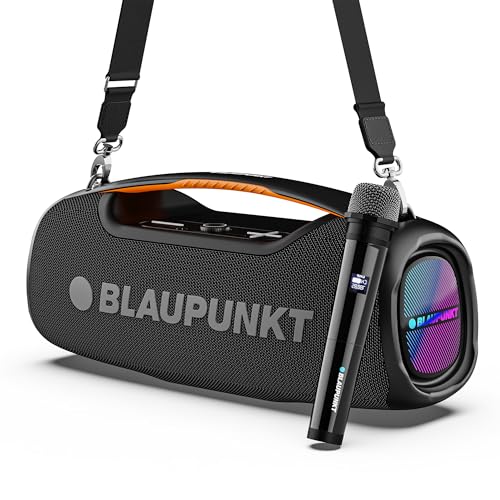
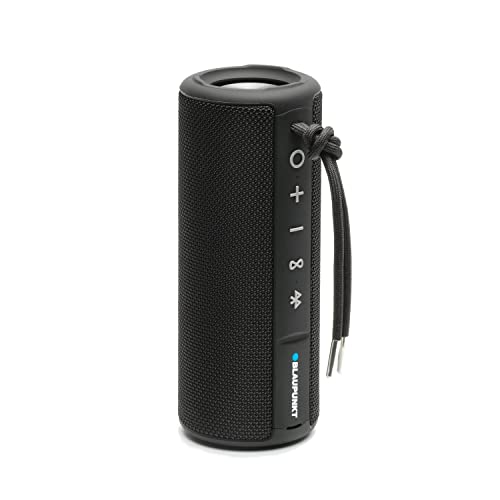
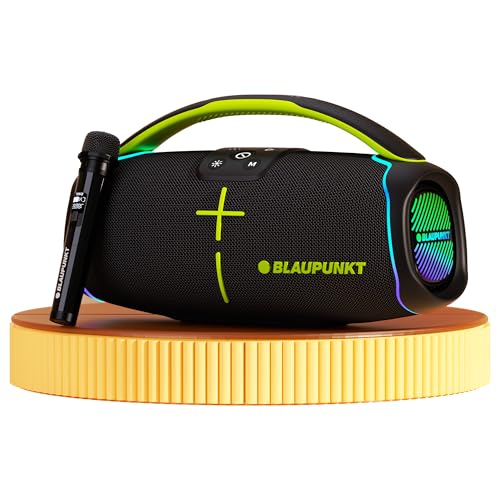
Blaupunkt portable speakers fall into several practical lines. Atomik models cover compact and party-oriented Bluetooth speakers, including small Grab and PS units as well as larger Omg and BB designs. BT models such as BT202 and BT55 focus on straightforward wireless playback with different cabinet sizes and feature mixes.
The Rock Roll PS75 sits in the medium outdoor category, while Knightz is a larger party-style model with more output and physical presence. Model naming is not a reliable substitute for a specification sheet: check output, weight, battery, IP rating, USB-C, microphone inputs, and lighting for the exact unit.
How much do Blaupunkt portable speakers cost?
Blaupunkt portable speakers currently cost roughly £10-£100. Compact Atomik and BT models begin around £10-£30, medium models cluster around £40-£80, and the largest Knightz-style party speaker reaches about £100.
The low entry price is useful for a spare-room, travel, or casual speaker, but compare the exact battery, charging port, and water rating rather than assuming a higher model number is a direct upgrade. At the upper end, include larger JBL, Sony, and Soundcore party speakers in the comparison because their software and support may justify a similar price.
How do Blaupunkt portable speakers compare with JBL models?
Blaupunkt competes with JBL mainly on breadth and price. Its low-cost Atomik and BT models can offer lighting, FM radio, or microphone inputs for less money, while JBL usually provides clearer model continuity, stronger app support, and more predictable speaker-linking behaviour.
For outdoor use, compare the IP rating and battery at the same volume rather than the brand name. JBL has a deeper ladder from compact personal speakers to PartyBox systems; Blaupunkt can be better value when a specific feature is important, but JBL is usually easier to support and upgrade within one ecosystem.
Choose Blaupunkt for feature density and low purchase cost. Choose JBL when dependable app integration, cross-generation guidance, and a well-documented support network matter more than the lowest price.
What should you consider when choosing the best Blaupunkt portable speaker?
When choosing the best Blaupunkt portable speaker, consider the following factors:
- Cabinet line and intended use: Atomik Grab and BT models weigh roughly 0.4–0.6 kg and deliver 10–20 W, PS30/BB or Rock Roll designs range around 1.9–7.5 kg and 30–75 W, and Atomik Knightz is about 5 kg and 100 W. Compare dimensions and weight as well as output, because Blaupunkt family names do not form one consistent upgrade ladder.
- Output and sound coverage: A 10–20 W compact model suits close listening, 30–75 W medium models cover a room or small garden, and 100 W Knightz-class output is for a larger group. Compare clean output, driver layout, and dispersion at the intended distance instead of relying on the model number or peak-watt claim.
- Water protection: Many Atomik, BT, and Rock Roll products offer IPX5 or IPX6 splash and jet protection, while larger party models may prioritise inputs and lighting over sealing. Verify the exact IP code and port covers on the chosen model; an X rating does not confirm dust protection and no cabinet should be charged while wet.
- Battery and charging: Battery claims range from about 6 hours on Rock Roll PS75 to roughly 48 hours on Atomik Knightz; common Grab, BT, PS30, Omg, and BB models sit around 7–18 hours. Use 10–12 hours as a practical day-trip target, then compare USB-C support, charge time, playback while charging, and power-bank use because these features vary even within Atomik products.
- Inputs, radio, and lighting: Selected Atomik and party models add RGB lighting, microphones, FM radio, USB playback, or AUX, while basic BT models concentrate on Bluetooth music. Check every required input and control on the exact product sheet, including microphone type and stereo pairing, rather than transferring the feature list from a similarly named sibling.
- Price, licensee, and support: Low-cost Atomik or BT models can be sensible secondary speakers, while the larger Blaupunkt products should be compared with JBL, Sony, and Soundcore alternatives that may offer stronger apps and linking. Prices run from about £10-£30 for Grab, BT, and PS30 models to roughly £40-£80 for Omg or BB and about £100 for Knightz. Identify the authorised regional licensee, warranty provider, charger plug, return route, and firmware support before treating the historic Blaupunkt name as one uniform global service network.