Scored using Microphones Methodology v1.0
Microphones Methodology v1.0
Mathematical & Unbiased Scoring
Products in this category are evaluated mathematically under Frontumo Microphones Methodology v1.0 using verified laboratory benchmarks, technical specifications, and authentic consumer ratings with 0% commercial bias.
Explore Microphones Methodology v1.0

MAONO A04 Review | 76 Data compared

Avg. price:~£45Connection type:USBTransducer type:electret condenserMax SPL:120 dB SPLSupported sample rates:192 kHzOutput connector type:USB

MAONO A04 Review: Compare 76 technical specifications and user reviews to see how this product ranks in the Microphones category and whether it is worth buying.

6.7

Overall score

Score
6.7/ 10
✕
What it is
An overall evaluation of the microphone's quality, based on technical analyses and user reviews.
When it matters
When you need a quick reference to identify the best microphones on the market.
Score distribution
â–¼
<55-66-77-88-99-10
Score components

75%

5.9

Technical score

25%

9.3

User score

â–¼Worse than 65% of microphones
5.9

Technical score

Technical score
5.9/ 10
✕
What it is
An assessment of technical performance for products in the Microphones category across these key areas: Audio Performance, Connectivity, Recording, Pickup Patterns, Controls & Features, Power, Design, Accessories, Compatibility.
When it matters
When you want to compare microphones based on technical performance and available features.
Score distribution
â–¼
<55-66-77-88-99-10
Score components

20%

5.7

Audio Performance

20%

5.6

Recording

16%

3.2

Pickup Patterns

16%

4.3

Controls & Features

10%

10

Power

7%

10

Compatibility

5%

4.0

Connectivity

3%

7.3

Design

3%

9.7

Accessories

â–¼Worse than 83% of microphones
9.3

User score

User score
9.3/ 10
✕
What it is
A rating that combines user reviews and the total number of reviews received by the microphone.
When it matters
When you want to know how a microphone performs in real use and how reliable it remains over time according to user feedback.
Score distribution
â–¼
<55-66-77-88-99-10
Score components

70%

9.0

User ratings

30%

10

Number of reviews

Based on 32,027 buyer reviews from online shops.
How we calculate this
User ratings – average star rating across all shop listings, weighted by how many reviews each has, on a 1–10 scale.
Number of reviews – how many buyer reviews the product has, on a logarithmic scale; the 8% most-reviewed models in the category get 10.
â–²Better than 89% of microphones
  • maono-a04
  • maono-a04
  • maono-a04
  • maono-a04
  • maono-a04
  • maono-a04
  • maono-a04
maono-a04
maono-a04
maono-a04
maono-a04
maono-a04
maono-a04
maono-a04

Best prices

*As an Amazon Associate, we earn from qualifying purchases.

Best rankings

Available: ranking among products currently available (including other versions of this product).All: ranking among all products in the database.
Loading...
Loading category ranking...

Technical Specifications of microphone MAONO A04

Technical score
Technical score
5.9/ 10
✕
What it is
An assessment of technical performance for products in the Microphones category across these key areas: Audio Performance, Connectivity, Recording, Pickup Patterns, Controls & Features, Power, Design, Accessories, Compatibility.
When it matters
When you want to compare microphones based on technical performance and available features.
Score distribution
â–¼
<55-66-77-88-99-10
Score components:

20%

5.7

Audio Performance

20%

5.6

Recording

16%

3.2

Pickup Patterns

16%

4.3

Controls & Features

10%

10

Power

7%

10

Compatibility

5%

4.0

Connectivity

3%

7.3

Design

3%

9.7

Accessories

5.9
User score
User score
9.3/ 10
✕
What it is
A rating that combines user reviews and the total number of reviews received by the microphone.
When it matters
When you want to know how a microphone performs in real use and how reliable it remains over time according to user feedback.
Score distribution
â–¼
<55-66-77-88-99-10
Score components

70%

9.0

User ratings

30%

10

Number of reviews

Based on 32,027 buyer reviews from online shops.
How we calculate this
User ratings – average star rating across all shop listings, weighted by how many reviews each has, on a 1–10 scale.
Number of reviews – how many buyer reviews the product has, on a logarithmic scale; the 8% most-reviewed models in the category get 10.
9.3
Popularity
Popularity
10.0/ 10
✕
What it is
An indicator based on the number of reviews received by the microphone.
When it matters
When you prefer to buy a product chosen and reviewed by many other consumers.
Score distribution
â–¼
<55-66-77-88-99-10
Popularity:
MAONO A04 has a popularity score of 10 points, which is higher than 90.5% of microphones.
10
Value for money
Value for money
7.7/ 10
✕
What it is
An indicator that combines the microphone's overall rating with its cost.
When it matters
When you are looking for a microphone with a good balance between quality and price.
Score distribution
â–¼
<55-66-77-88-99-10
Score components:

60%

6.7

Overall score

40%

10

Price

7.7
Microphone type
studio
Transducer type
electret condenser
Diaphragm size
16 mm
Capsule type
single
Sensitivity
-38 dBV/Pa
Show more
Connection type
USB
Output connector type
USB
Headphone output
no
Headphone output
no
This microphone does not include a headphone output. 62.8% of microphones include this output.
3.5 mm audio jack
no
3.5 mm audio jack
no
This microphone does not include a 3.5 mm jack. 63.3% of microphones include this connector.
6.35 mm audio jack connector
no
6.35 mm audio jack connector
no
This microphone does not include a 6.35 mm jack. 2% of microphones include this connector.
Show more
Supported sample rates
192 kHz
Supported bit depths
24 bit
Audio interface sample rate
192 kHz
Audio interface sample rate
192 kHz
This microphone supports an interface sample rate of 192 kHz which is higher than that of 83% of microphones and equal to that of 17% of microphones.
Audio interface bit depth
24 bit
Audio interface bit depth
24 bit
This microphone supports an interface bit depth of 24 bit which is higher than that of 42.1% of microphones and equal to that of 56.7% of microphones.
Signal-to-noise ratio (DAC)
N/A
Show more
N. of polar patterns
1
N. of polar patterns
1
The number of selectable polar patterns offered by this microphone is 1, which is lower than that of 24.6% of microphones and equal to that of 75.4% of microphones.
Cardioid pattern
yes
Cardioid pattern
yes
This microphone supports a cardioid pickup pattern. 91% of microphones support this pattern.
Omnidirectional pattern
no
Omnidirectional pattern
no
This microphone does not support an omnidirectional pickup pattern. 26.1% of microphones support this pattern.
Hypercardioid pattern
no
Hypercardioid pattern
no
This microphone does not support a hypercardioid pickup pattern. 1.5% of microphones support this pattern.
Bidirectional pattern
no
Bidirectional pattern
no
This microphone does not support a bidirectional pickup pattern. 17.1% of microphones support this pattern.
Mute function
no
Mute function
no
This microphone does not include a mute function. 68.3% of microphones include this control.
Onboard gain control
no
Onboard gain control
no
This microphone does not include onboard gain control. 51.3% of microphones include this control.
Volume control levels
0
Volume control levels
0
This microphone offers volume output of 0 which is lower than that of 65.7% of microphones and equal to that of 34.3% of microphones.
Flat DSP mode
yes
Flat DSP mode
yes
This microphone supports a flat DSP mode. 25.1% of microphones offer this processing option.
DSP presets
0
DSP presets
0
This microphone offers 0 DSP presets, which is fewer than 16.6% of microphones and equal to 83.4% of microphones.
Show more
Phantom power required
no
Phantom power required
no
This microphone does not require phantom power. 90.5% of microphones also operate without phantom power.
Phantom power voltage
N/A
USB bus-powered
yes
USB bus-powered
yes
This microphone supports USB bus power. 85.9% of microphones support USB-powered operation.
Battery life
N/A
Height
170 mm
Height
170 mm
This microphone is 170 mm tall, which is shorter than 61% of microphones and equal in height to 3.1% of microphones.
Width
52 mm
Width
52 mm
This microphone is 52 mm wide, which is narrower than 65.6% of microphones and equal in width to 6.2% of microphones.
Thickness
52 mm
Thickness
52 mm
This microphone is 52 mm thick, which is thinner than 62.1% of microphones and equal in thickness to 6.8% of microphones.
Weight
?
Body material
metal
Show more
Included accessories
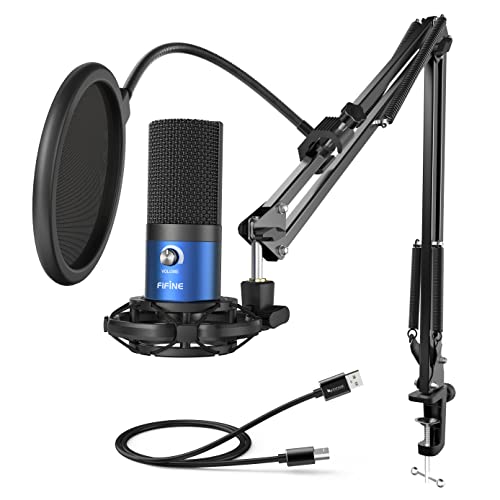
boom arm; desk clamp; shock mount; pop filter; windscreen; cable
Shock mount included
yes
Shock mount included
yes
This microphone includes a shock mount. 49.3% of microphones include this accessory.
Pop filter included
yes
Pop filter included
yes
This microphone includes a pop filter. 60.3% of microphones include this accessory.
Windscreen included
yes
Windscreen included
yes
This microphone includes a windscreen. 31.3% of microphones include this accessory.
Cable length
2.5 m
Cable length
2.5 m
This microphone has a cable length of 2.5 m which is longer than that of 63.1% of microphones and equal to that of 15% of microphones.
Android compatibility
yes
Android compatibility
yes
This microphone is compatible with Android. 65.8% of microphones are compatible with Android.
iOS compatibility
yes
iOS compatibility
yes
This microphone is compatible with iOS. 61.3% of microphones are compatible with iOS.
Windows compatibility
yes
Windows compatibility
yes
This microphone is compatible with Windows. 100% of microphones are compatible with Windows.
macOS compatibility
yes
macOS compatibility
yes
This microphone is compatible with macOS. 99.5% of microphones are compatible with macOS.
Xbox compatibility
no
Xbox compatibility
no
This microphone is not compatible with Xbox. 1.5% of microphones are compatible with Xbox.
Show more

MAONO A04 vs the average microphone

246810TotalAudio PerformanceConnectivityRecordingPickup PatternsControls & FeaturesPowerDesignAccessoriesCompatibility
  • 144 kHz higher interface sample rate
    Audio interface sample rate
    192 kHz
    This microphone supports a higher audio interface sample rate than the average microphone (192 kHz vs 48 kHz). The average microphone audio interface supports 48 kHz.
    192 kHz vs 48 kHz
  • Supports flat DSP mode
    Flat DSP mode
    yes
    This microphone supports a flat DSP mode, the average microphone does not.
  • Includes shock mount
    Shock mount included
    yes
    This microphone includes a shock mount, the average microphone does not.
  • Includes windscreen
    Windscreen included
    yes
    This microphone includes a windscreen, the average microphone does not.
  • 60.7% more popular
    MAONO A04 has a higher popularity than the average microphone (10 vs 6.2).
    10 vs 6.22
  • 15.8% higher user score
    User score
    9.3/ 10
    ✕
    What it is
    A rating that combines user reviews and the total number of reviews received by the microphone.
    When it matters
    When you want to know how a microphone performs in real use and how reliable it remains over time according to user feedback.
    Score distribution
    â–¼
    â–¼
    <55-66-77-88-99-10
    MAONO A04
    the average microphone
    MAONO A04 has a higher user score than the average microphone (9.29 vs 8.027).
    9.29 vs 8.03
  • 144 kHz higher interface sample rate
    Audio interface sample rate
    192 kHz
    This microphone supports a higher audio interface sample rate than the average microphone (192 kHz vs 48 kHz). The average microphone audio interface supports 48 kHz.
    192 kHz vs 48 kHz
  • Supports flat DSP mode
    Flat DSP mode
    yes
    This microphone supports a flat DSP mode, the average microphone does not.
  • Includes shock mount
    Shock mount included
    yes
    This microphone includes a shock mount, the average microphone does not.
  • Includes windscreen
    Windscreen included
    yes
    This microphone includes a windscreen, the average microphone does not.
  • No zero-latency monitoring
    Zero-latency monitoring
    no
    This microphone does not support zero-latency monitoring, the average microphone does.
  • No gain control
    Onboard gain control
    no
    This microphone does not include onboard gain control, the average microphone does.
  • No on-device controls
    On-device controls
    no
    This microphone does not place key controls on the device, the average microphone does. 79.5% of microphones place key controls on the device.
  • No mute function
    Mute function
    no
    This microphone does not include a mute function, the average microphone does.
  • 4,000 Hz lower high-frequency limit
    Highest frequency
    16,000 Hz
    This microphone has a lower high-frequency limit than the average microphone (16000 Hz vs 20000 Hz). By comparison, the average microphone has a high-frequency limit of 20000 Hz.
    16,000 Hz vs 20,000 Hz
  • 11.5 dB lower signal-to-noise ratio
    Signal-to-noise ratio (SNR)
    70 dB
    This microphone has a lower signal-to-noise ratio than the average microphone (70 dB vs 81.5 dB). The average microphone has a signal-to-noise ratio of 81.5 dB.
    70 dB vs 81.5 dB
  • No headphone output
    Headphone output
    no
    This microphone does not include a headphone output, the average microphone does.
  • 10 Hz higher low-frequency limit
    Lowest frequency
    30 Hz
    This microphone has a higher low-frequency cutoff than the average microphone (30 Hz vs 20 Hz). By comparison, the average microphone has a low-frequency limit of 20 Hz.
    30 Hz vs 20 Hz
  • 4,000 Hz lower high-frequency limit
    Highest frequency
    16,000 Hz
    This microphone has a lower high-frequency limit than the average microphone (16000 Hz vs 20000 Hz). By comparison, the average microphone has a high-frequency limit of 20000 Hz.
    16,000 Hz vs 20,000 Hz
  • 11.5 dB lower signal-to-noise ratio
    Signal-to-noise ratio (SNR)
    70 dB
    This microphone has a lower signal-to-noise ratio than the average microphone (70 dB vs 81.5 dB). The average microphone has a signal-to-noise ratio of 81.5 dB.
    70 dB vs 81.5 dB
  • 10 Hz higher low-frequency limit
    Lowest frequency
    30 Hz
    This microphone has a higher low-frequency cutoff than the average microphone (30 Hz vs 20 Hz). By comparison, the average microphone has a low-frequency limit of 20 Hz.
    30 Hz vs 20 Hz
  • 1 dB SPL lower limit
    Max SPL
    120 dB SPL
    This microphone has a lower max SPL than the average microphone (120 dB SPL vs 121 dB SPL). The average microphone handles a max SPL of 121 dB SPL.
    120 dB SPL vs 121 dB SPL
  • No headphone output
    Headphone output
    no
    This microphone does not include a headphone output, the average microphone does.
  • No 3.5 mm jack
    3.5 mm audio jack
    no
    This microphone does not include a 3.5 mm jack, the average microphone does.
  • No zero-latency monitoring
    Zero-latency monitoring
    no
    This microphone does not support zero-latency monitoring, the average microphone does.
  • No gain control
    Onboard gain control
    no
    This microphone does not include onboard gain control, the average microphone does.
  • No on-device controls
    On-device controls
    no
    This microphone does not place key controls on the device, the average microphone does. 79.5% of microphones place key controls on the device.
  • No mute function
    Mute function
    no
    This microphone does not include a mute function, the average microphone does.
  • 2 older release date
    Release date
    2018
    This microphone is older than the average microphone (2018 vs 2020). The average microphone was released in 2020.
    August 2018.
    2018 vs 2020

Video reviews

Hands-on testing, unboxing, and real-world video evaluations

Expert reviews

In-depth analysis and verdict from leading tech publications

I
ign.com
05/04/2023
Summary of the review
T
tdcat.com
18/09/2019
Summary of the review
G
gamerheadset.net
21/07/2020
Summary of the review

Third-party reviews

Based on 32,027 buyer reviews from online shops.
Reviews last updated: July 2026 · How we calculate this

What we like about MAONO A04

  • Exceptional value for money, often described as 'shockingly good' for the price point.
  • Comprehensive all-in-one kit typically includes a boom arm, shock mount, and pop filter.
  • Simple plug-and-play setup via USB that requires no additional drivers or external sound cards.
  • Crisp and clear audio quality that reviewers compare favorably to more expensive mics like the Blue Yeti.
  • Sturdy metal chassis construction for the microphone itself.
  • High-resolution sampling rates (up to 192kHz/24bit) for detailed sound capture.

What we don't like about MAONO A04

  • Ineffective shock mount that often fails to prevent desk vibrations from being picked up.
  • Included boom arm and desk clamp can feel fragile or 'squeaky' and may require careful handling.
  • Highly sensitive to background noise, easily capturing keyboard clicks and mouse sounds.
  • Lacks physical onboard controls such as a gain knob or a dedicated mute button.
  • Prone to heavy distortion from plosives (popping sounds) if used without the included pop filter.
  • No built-in headphone jack for zero-latency monitoring.

Verdict

The Maono A04 is a professional-grade USB condenser microphone kit designed for creators, featuring a 16mm electret transducer and a sound chipset that supports high-resolution 192kHz/24-bit sampling. It utilizes a cardioid polar pattern to isolate the primary sound source and offers a frequency response of 30Hz to 16kHz with a maximum SPL of 120dB. Its main advantages include a comprehensive 'all-in-one' bundle with a boom arm, shock mount, and pop filter, alongside seamless plug-and-play compatibility for Windows and macOS. However, notable drawbacks include the lack of onboard physical controls like a dedicated mute button or gain knob on the standard model, and limited portability due to the bulk of the full mounting kit.

Compare MAONO A04 with other products in the Microphones category

1Product to compare no. 1
VS
2Product to compare no. 2
VS
3Product to compare no. 3 (optional)

Graphic comparison of MAONO A04 and other products in the Microphones category

No results found