Scored using Coffee Grinders Methodology v3.0
Coffee Grinders Methodology v3.0
Mathematical & Unbiased Scoring
Products in this category are scored under Frontum Coffee Grinders Methodology v3.0: the technical score from the specifications is the base, and independent expert and video reviews (up to ±0.5 points), owner opinions (up to ±0.3) and best-of lists (up to +0.3) move it up or down.
Explore Coffee Grinders Methodology v3.0

Zassenhaus Santiago review: 43 specs compared

Avg. price:~£110Stepless adjustment:yesBean hopper capacity:30 gWeight:0.87 kgDigital display:no

Zassenhaus Santiago Review: Compare 43 technical specifications and 1 expert and video reviews to see how this product ranks in the Coffee Grinders category and whether it is worth buying.
Zassenhaus Santiago
7.3/10

Overall score

Score
7.3/ 10
✕
What it is
Our main score for this model, 1–10. It combines specs, best-of lists, expert reviews, ratings from across the web and owners.
How we count it
Parts: Technical score 50%, List score 20%, Reviews score 15%, User score 10%, Sentiment score 5%
Marks: Each part gets a mark out of 10. For reviews, lists and owners, a typical model in this category gets about 8 and the best one gets 10.
No data yet: A part with no data shows "?". It counts as the mark of a weaker model in this category (4 in 5 models with data score higher). This way, models with reviews, lists and owners usually come out ahead.
Score distribution
â–¼
<55-66-77-88-99-10
Score components

50%

7.1

Technical score

20%

?

List scoreNot enough data yet, so we use 7.5, the mark of a weaker model in this category

15%

7.1

Reviews score

10%

8.5

User score

5%

?

Sentiment scoreNot enough data yet, so we use 7.1, the mark of a weaker model in this category

â–²Better than 63% of coffee grinders
8.0

Value for money

Value for money
8.0/ 10
✕
What it is
An indicator that combines the coffee grinder's overall rating with its price.
When it matters
When you are looking for a coffee grinder with a good balance between quality and price.
Score distribution
â–¼
<55-66-77-88-99-10
Score components

70%

7.3

Overall score

30%

9.6

Price

★Better than 93%
7.1

Technical score

Technical score
7.1/ 10
✕
What it is
How good the specs are compared with the other models in this category, 1–10.
How we count it
Areas: We rate the specs in each area against the other models in this category.
Weighting: The areas that matter most to buyers count more. The shares are shown under Score components.
Share: The technical score is 50% of the overall score.
Score distribution
â–¼
<55-66-77-88-99-10
Score components

50%

9.3

Grinding

15%

3.7

Design

15%

5.3

Dosing

10%

?

Motor

5%

4.0

Safety

5%

1.3

Maintenance

â–²Better than 64%
7.1

Reviews score

Reviews score
7.1/ 10
✕
What it is
Average grade from independent test sites, magazines and video reviewers, 1–10.
How we count it
Grades: Each review's own score is converted to 1–10; without one, we grade the review ourselves. Big test sites count more, short reviews half as much as full tests. A video review counts half.
Score: The average grade is 80% of the review mark; the number of reviews is the other 20% (1 review = 5, the typical number in this category = 8, the most-reviewed model = 10).
Enough data: With few reviews, the average grade is pulled toward the typical grade of this category. No reviews yet: 7.9 for now.
Share: Reviews count 15% of the overall score.
Score distribution
â–¼
<55-66-77-88-99-10

7.1

Mark 7.9 is below the typical mark 8.2 of this category, so it cannot lift the score above the technical score

80%

8.6

Average grade

20%

5.0

Popularity

Grades by review (1)
1 video review, counting half as much as a written test. Reviews count 15% of the overall score.
Ratings from across the web count in the User score, not in this score.
â–¼Worse than 67%
?

Sentiment score

Sentiment score
7.1/ 10
✕
What it is
How positive owners are about this model in their comments under video reviews and on forums. We read each comment, keep only people who say they own the model, and sort them into positive, mixed or negative.
How we count it
Score: We compare how satisfied this model’s owners are with the other models in this category: the typical model gets 8, the most satisfied tenth 10, the least satisfied 4. This is 80% of the owner mark; the number of owners is the other 20%.
Enough data: A model counts with 10+ owners from 4+ different discussions. With fewer, the owner part changes nothing.
Share: Owners count 5% of the overall score (left out in categories where fewer than 10 models have enough owner comments).
Score distribution
â–¼
<55-66-77-88-99-10
Owners (4)
Not enough owner comments yet (10+ owners from 4+ discussions needed), so the owner part changes nothing.
Our own analysis of online owner opinions, not a rating from any website.
Not enough owner comments yet
8.5

User score

User score
8.5/ 10
✕
What it is
How happy buyers are with this model, based on ratings from across the web.
How we count it
Enough data: A model needs at least 1 rating from across the web. Without one, it counts as 7.8, the mark of a weaker rated model in this category.
Share: User score counts 10% of the overall score.
Score distribution
â–¼
<55-66-77-88-99-10

70%

8.5

Rating

30%

8.5

Popularity

â–²Better than 53%
?

List score

List score
7.5/ 10
✕
What it is
How often independent test sites, magazines and video reviewers put this model in their best-of lists for this category.
How we count it
Points: The model in the most lists of this category gets 10; the others get 8 to 10 in proportion. In no list yet: 7.5. Lists count 20% of the overall score.
Enough data: Every list counts, even a single one. With fewer than 5 best-of lists in the category, this part is left out.
Lists with this model (0)
Not in any best-of list yet, so this part counts as 7.5. Models in a list get 8 to 10.
Not in any best-of list yet
  • zassenhaus-santiago
  • zassenhaus-santiago
zassenhaus-santiago
zassenhaus-santiago
Where to buy
*As an Amazon Associate, we earn from qualifying purchases.
Best rankings
Available: ranking among products currently available (including other versions of this product).All: ranking among all products in the database.
Loading...
Loading category ranking...

Technical Specifications of coffee grinder Zassenhaus Santiago

Technical score
Technical score
7.1/ 10
✕
What it is
How good the specs are compared with the other models in this category, 1–10.
How we count it
Areas: We rate the specs in each area against the other models in this category.
Weighting: The areas that matter most to buyers count more. The shares are shown under Score components.
Share: The technical score is 50% of the overall score.
Score distribution
â–¼
<55-66-77-88-99-10
Score components:

50%

9.3

Grinding

15%

3.7

Design

15%

5.3

Dosing

10%

?

Motor

5%

4.0

Safety

5%

1.3

Maintenance

7.1
Reviews score
7.1
Sentiment score
?
User score
8.5
List score
?
Value for money
Value for money
8.0/ 10
✕
What it is
An indicator that combines the coffee grinder's overall rating with its price.
When it matters
When you are looking for a coffee grinder with a good balance between quality and price.
Score distribution
â–¼
<55-66-77-88-99-10
Score components:

70%

7.3

Overall score

30%

9.6

Price

8.0
Operation type
manual
Grinding mechanism
conical burr
Burr diameter
?
Grinding element material
steel
Number of grind settings
stepless
Show more
Bean hopper capacity
30 g
This coffee grinder holds 30 g of beans, which is smaller than 85.1% of coffee grinders and equal to 5.4% of coffee grinders.
Grounds container capacity
31 g
This coffee grinder holds 31 g of grounds, which is smaller than 79.8% of coffee grinders.
Detachable grounds container
yes
This coffee grinder has a detachable grounds container. 41.7% of coffee grinders have one.
Portafilter holder
no
This coffee grinder does not have a portafilter holder. 41% of coffee grinders offer this.
Single dosing
?
Show more
Power
N/A
Voltage
N/A
Grinding speed
N/A
Noise level
?
Overheat protection
N/A
Safety lock
N/A
Non-slip base
no
This coffee grinder does not have a non-slip base. 82% of coffee grinders offer this.
Tool-free burr removal
no
This coffee grinder does not let you remove the burrs without tools. 55.2% of coffee grinders offer this.
needs a size 13 wrench to remove the cap nut
Dishwasher-safe parts
no
This coffee grinder does not have dishwasher-safe parts. 12.5% of coffee grinders offer this.
Cleaning brush
no
This coffee grinder does not include a cleaning brush. 44.2% of coffee grinders offer this.
Main color
brown
Vintage design
yes
Digital display
no
This coffee grinder does not have a digital display. 31% of coffee grinders offer this.
Body material
wood
Transparent hopper
no
This coffee grinder does not have a transparent hopper. 74.5% of coffee grinders have one.
Show more

Zassenhaus Santiago vs the average coffee grinder

246810TotalGrindingDesignDosingMotorSafetyMaintenance
  • Supports stepless adjustment
    This coffee grinder supports stepless grind adjustment, while the average coffee grinder does not. 44.2% of coffee grinders have stepless adjustment.
  • 9.3% better value for money
    Zassenhaus Santiago has better value for money than the average coffee grinder (8 vs 7.3).
    8 vs 7.32
  • 52.7% lighter
    This coffee grinder is lighter than the average coffee grinder (0.9 kg vs 1.84 kg). The average coffee grinder weighs 1.84 kg.
    0.87 kg vs 1.84 kg
  • 14.9% higher user score
    User score
    8.5/ 10
    ✕
    What it is
    How happy buyers are with this model, based on ratings from across the web.
    How we count it
    Enough data: A model needs at least 1 rating from across the web. Without one, it counts as 7.8, the mark of a weaker rated model in this category.
    Share: User score counts 10% of the overall score.
    Score distribution
    â–¼
    <55-66-77-88-99-10

    70%

    8.5

    Rating

    30%

    8.5

    Popularity

    8.5 vs 7.4
  • 4 cm narrower
    This coffee grinder is narrower than the average coffee grinder (9 cm vs 13 cm). The average coffee grinder is 13 cm wide.
    9 cm vs 13 cm
  • 9.6 cm shorter
    This coffee grinder is shorter than the average coffee grinder (20 cm vs 29.6 cm). The average coffee grinder is 29.6 cm tall.
    20 cm vs 29.6 cm
  • 64.8% smaller
    This coffee grinder has a smaller volume than the average coffee grinder (2,520 cm³ vs 7,168.03 cm³). The average coffee grinder has a volume of 7,168.03 cm³.
    2,520 cm³ vs 7,168.03 cm³
  • 3 cm shallower
    This coffee grinder is shallower than the average coffee grinder (14 cm vs 17 cm). The average coffee grinder is 17 cm deep.
    14 cm vs 17 cm
  • 9.3% better value for money
    Zassenhaus Santiago has better value for money than the average coffee grinder (8 vs 7.3).
    8 vs 7.32
  • 14.9% higher user score
    User score
    8.5/ 10
    ✕
    What it is
    How happy buyers are with this model, based on ratings from across the web.
    How we count it
    Enough data: A model needs at least 1 rating from across the web. Without one, it counts as 7.8, the mark of a weaker rated model in this category.
    Share: User score counts 10% of the overall score.
    Score distribution
    â–¼
    <55-66-77-88-99-10

    70%

    8.5

    Rating

    30%

    8.5

    Popularity

    8.5 vs 7.4
  • 36.4% cheaper
    Zassenhaus Santiago is cheaper than the average coffee grinder (£110 vs £150).
    £110 vs £150
  • Supports stepless adjustment
    This coffee grinder supports stepless grind adjustment, while the average coffee grinder does not. 44.2% of coffee grinders have stepless adjustment.
  • 52.7% lighter
    This coffee grinder is lighter than the average coffee grinder (0.9 kg vs 1.84 kg). The average coffee grinder weighs 1.84 kg.
    0.87 kg vs 1.84 kg
  • 4 cm narrower
    This coffee grinder is narrower than the average coffee grinder (9 cm vs 13 cm). The average coffee grinder is 13 cm wide.
    9 cm vs 13 cm
  • 9.6 cm shorter
    This coffee grinder is shorter than the average coffee grinder (20 cm vs 29.6 cm). The average coffee grinder is 29.6 cm tall.
    20 cm vs 29.6 cm
  • 64.8% smaller
    This coffee grinder has a smaller volume than the average coffee grinder (2,520 cm³ vs 7,168.03 cm³). The average coffee grinder has a volume of 7,168.03 cm³.
    2,520 cm³ vs 7,168.03 cm³
  • 3 cm shallower
    This coffee grinder is shallower than the average coffee grinder (14 cm vs 17 cm). The average coffee grinder is 17 cm deep.
    14 cm vs 17 cm
  • No transparent hopper
    This coffee grinder does not have a transparent hopper, while the average coffee grinder does. 74.3% of coffee grinders have one.
  • 39 g less grounds space
    This coffee grinder holds fewer grounds than the average coffee grinder (31 g vs 70 g). The average coffee grinder holds 70 g of grounds.
    31 g vs 70 g
  • No non-slip base
    This coffee grinder does not have a non-slip base, while the average coffee grinder does. 81.8% of coffee grinders offer this.
  • 90 g smaller capacity
    This coffee grinder holds fewer beans than the average coffee grinder (30 g vs 120 g). The average coffee grinder holds 120 g of beans.
    30 g vs 120 g
  • No anti-static design
    This coffee grinder does not have an anti-static design, while the average coffee grinder does. 54.1% of coffee grinders have an anti-static design.
  • 4.1% lower review score
    Reviews score
    7.1/ 10
    ✕
    What it is
    Average grade from independent test sites, magazines and video reviewers, 1–10.
    How we count it
    Grades: Each review's own score is converted to 1–10; without one, we grade the review ourselves. Big test sites count more, short reviews half as much as full tests. A video review counts half.
    Score: The average grade is 80% of the review mark; the number of reviews is the other 20% (1 review = 5, the typical number in this category = 8, the most-reviewed model = 10).
    Enough data: With few reviews, the average grade is pulled toward the typical grade of this category. No reviews yet: 7.9 for now.
    Share: Reviews count 15% of the overall score.
    Score distribution
    â–¼
    <55-66-77-88-99-10

    7.1

    Mark 7.9 is below the typical mark 8.2 of this category, so it cannot lift the score above the technical score

    80%

    8.6

    Average grade

    20%

    5.0

    Popularity

    Grades by review (1)
    1 video review, counting half as much as a written test. Reviews count 15% of the overall score.
    Ratings from across the web count in the User score, not in this score.
    7.1 vs 7.4
  • No anti-static design
    This coffee grinder does not have an anti-static design, while the average coffee grinder does. 54.1% of coffee grinders have an anti-static design.
  • No transparent hopper
    This coffee grinder does not have a transparent hopper, while the average coffee grinder does. 74.3% of coffee grinders have one.
  • 39 g less grounds space
    This coffee grinder holds fewer grounds than the average coffee grinder (31 g vs 70 g). The average coffee grinder holds 70 g of grounds.
    31 g vs 70 g
  • 90 g smaller capacity
    This coffee grinder holds fewer beans than the average coffee grinder (30 g vs 120 g). The average coffee grinder holds 120 g of beans.
    30 g vs 120 g
  • No non-slip base
    This coffee grinder does not have a non-slip base, while the average coffee grinder does. 81.8% of coffee grinders offer this.

Video reviews

Hands-on testing, unboxing, and real-world video evaluations

9.0
Andrew Rock Youtube
≈ estimated
13/10/2021
Long-term review · three years of use and grind range
Verdict
Zassenhaus Santiago is a solid pick with a wide, easy-to-adjust range that the reviewer recommends to anyone interested.
Not graded

Third-party reviews

What customers like about Zassenhaus Santiago

  • Excellent for fine grinds like espresso and Turkish coffee
  • Beautiful classic, retro aesthetic and high-quality wooden craftsmanship
  • Durable build quality intended to last a lifetime
  • Stepless grind adjustment mechanism allows for precise tuning
  • Ergonomic curved 'knee mill' design offers good stability when held between the knees

What customers don't like about Zassenhaus Santiago

  • Inconsistent grind quality at coarser settings like French press
  • Setting screw can shift or slip out of place during operation
  • Bulky, boxy shape makes it poorly suited for travel
  • Internal burr alignment can lack perfect centering over time due to wear on internal support components
  • Requires significant physical effort and manual stabilization to operate

Verdict

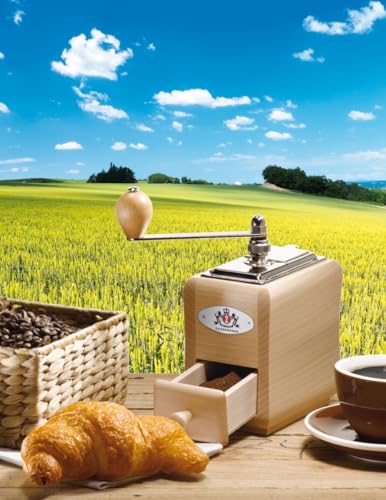
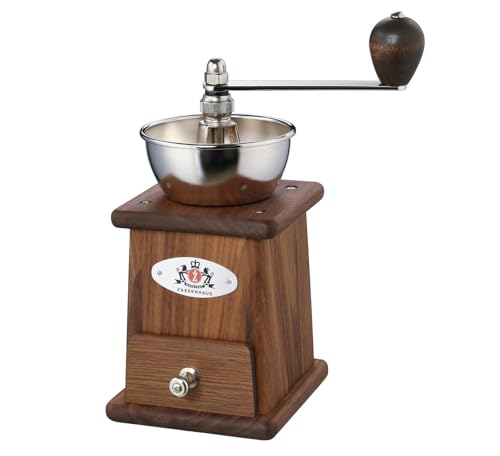
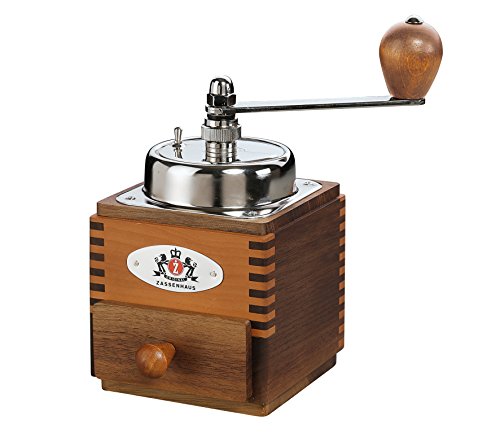
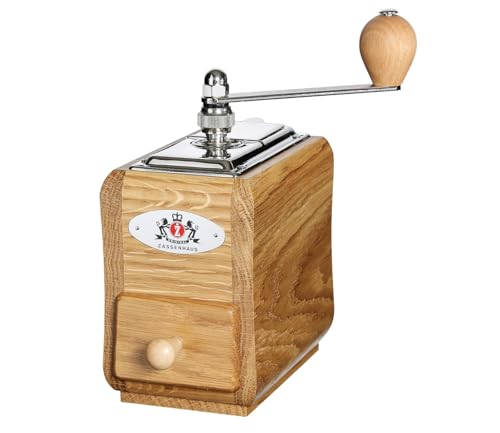
The Zassenhaus Santiago is a traditional, German-engineered manual lap-style coffee mill crafted from premium European beech wood, measuring 14 x 9 x 20 cm and weighing approximately 2.1 pounds. It features a robust, hardened carbon steel conical burr mechanism that ensures zero heat build-up to preserve oil aromas, alongside a step-less thumbscrew adjustment that handles everything from coarse French press to a powder-fine Turkish or espresso grind, collecting up to 30 grams of grounds in its removable front drawer. Its main advantages include superior build quality backed by a 25-year manufacturer's warranty on the mechanism, and an ergonomic curved-side design optimized for stable, comfortable grinding between the knees. However, its bulkier box-like shape makes it less portable than modern cylindrical hand grinders, and some users note that its consistency decreases on very coarse settings.

Compare Zassenhaus Santiago with other coffee grinders

1Product to compare no. 1
VS
2Product to compare no. 2
VS
3Product to compare no. 3 (optional)

Graphic comparison of Zassenhaus Santiago and other coffee grinders

No results found