Scored using Coffee Grinders Methodology v3.0
Coffee Grinders Methodology v3.0
Mathematical & Unbiased Scoring
Products in this category are scored under Frontum Coffee Grinders Methodology v3.0: the technical score from the specifications is the base, and independent expert and video reviews (up to ±0.5 points), owner opinions (up to ±0.3) and best-of lists (up to +0.3) move it up or down.
Explore Coffee Grinders Methodology v3.0

MiiCoffee DF64V review: 43 specs compared

Avg. price:~£530Stepless adjustment:yesBean hopper capacity:30 gWeight:3.9 kgDigital display:yes

MiiCoffee DF64V Review: Compare 43 technical specifications, 6 expert and video reviews and 2 best-of lists to see how this product ranks in the Coffee Grinders category and whether it is worth buying.
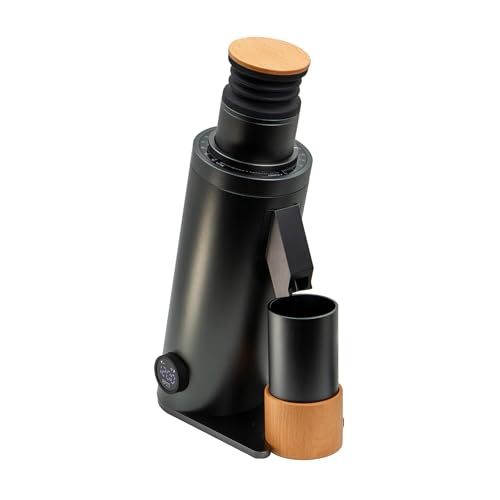
MiiCoffee DF64V
7.9/10

Overall score

Score
7.9/ 10
✕
What it is
Our main score for this model, 1–10. It combines specs, best-of lists, expert reviews, ratings from across the web and owners.
How we count it
Parts: Technical score 55%, List score 20%, Reviews score 10%, User score 10%, Sentiment score 5%
Marks: Each part gets a mark out of 10. For reviews, lists and owners, a typical model in this category gets about 8 and the best one gets 10.
No data yet: A part with no data shows "?". It counts as the mark of a weaker model in this category (4 in 5 models with data score higher). This way, models with reviews, lists and owners usually come out ahead.
Score distribution
▼
<55-66-77-88-99-10
Score components

55%

7.7

Technical score

20%

8.2

List score

10%

8.4

Reviews score

10%

7.5

User score

5%

8.5

Sentiment score

▲Better than 89% of coffee grinders
7.9

Value for money

Value for money
7.9/ 10
✕
What it is
An indicator that combines the coffee grinder's overall rating with its price.
When it matters
When you are looking for a coffee grinder with a good balance between quality and price.
Score distribution
▼
<55-66-77-88-99-10
Score components

70%

7.9

Overall score

30%

8.0

Price

★Better than 91%
7.7

Technical score

Technical score
7.7/ 10
✕
What it is
How good the specs are compared with the other models in this category, 1–10.
How we count it
Areas: We rate the specs in each area against the other models in this category.
Weighting: The areas that matter most to buyers count more. The shares are shown under Score components.
Share: The technical score is 55% of the overall score.
Score distribution
▼
<55-66-77-88-99-10
Score components

50%

8.7

Grinding

15%

7.6

Design

15%

6.0

Dosing

10%

5.9

Motor

5%

7.6

Safety

5%

7.3

Maintenance

▲Better than 83%
8.4

Reviews score

Reviews score
8.4/ 10
✕
What it is
Average grade from independent test sites, magazines and video reviewers, 1–10.
How we count it
Grades: Each review's own score is converted to 1–10; without one, we grade the review ourselves. Big test sites count more, short reviews half as much as full tests. A video review counts half.
Score: The average grade is 80% of the review mark; the number of reviews is the other 20% (1 review = 5, the typical number in this category = 8, the most-reviewed model = 10).
Enough data: With few reviews, the average grade is pulled toward the typical grade of this category. No reviews yet: 7.9 for now.
Share: Reviews count 10% of the overall score.
Score distribution
▼
<55-66-77-88-99-10

80%

8.4

Average grade

20%

8.7

Popularity

Grades by review (6)
1 review, its grade estimated from the review text. 5 video reviews, each counting half as much as a written test. Reviews count 10% of the overall score.
Ratings from across the web count in the User score, not in this score.
▲Better than 61%
7.5

User score

User score
7.5/ 10
✕
What it is
How happy buyers are with this model, based on ratings from across the web.
How we count it
Enough data: A model needs at least 1 rating from across the web. Without one, it counts as 7.8, the mark of a weaker rated model in this category.
Share: User score counts 10% of the overall score.
Score distribution
▼
<55-66-77-88-99-10

70%

7.7

Rating

30%

7.0

Popularity

▼Worse than 55%
8.2

List score

List score
8.2/ 10
✕
What it is
How often independent test sites, magazines and video reviewers put this model in their best-of lists for this category.
How we count it
Points: The model in the most lists of this category gets 10; the others get 8 to 10 in proportion. In no list yet: 7.5. Lists count 20% of the overall score.
Enough data: Every list counts, even a single one. With fewer than 5 best-of lists in the category, this part is left out.
Lists with this model (2)
List score: in 2 of 45 lists (4%)
★Better than 92%
  • df64v
  • df64v
df64v
df64v
Where to buy
*As an Amazon Associate, we earn from qualifying purchases.
Best rankings
Available: ranking among products currently available (including other versions of this product).All: ranking among all products in the database.

What reviewers say about the MiiCoffee DF64V

Based on 1 · 5

Reviewers like the variable speed and grind quality, but agree the motor feels underpowered and the dosing accessories are weak.
Praised
Criticised
Pick a topic to see who said what

What owners say about the MiiCoffee DF64V

Based on 105 owners sharing their experience in online comments

56%positive23%mixed21%negative

Owners praise coffee quality, quiet grinding and RPM control, while stalling, static and messy cleanup remain common frustrations.

What owners dislike

  • Owners say the grinder stalls or jams at low RPM, especially 600–900 RPM with light roasts or filter settings, and that it can also stall on cold starts.14
  • Owners say static builds up strongly, scattering grounds everywhere and clogging the chute unless beans are sprayed or the chute is cleaned after each grind.9
  • Owners say the grind dial can be hard to unscrew, loosens or shifts while grinding at coarser settings, and needs a hex key to fix the indicator ring.9
  • Owners report motors and control boards failing within months, with some units dying after one or a few doses and needing replacement.6
  • Owners say one last bean often stays in the grinder or bounces around after grinding, and it is hard to clear.6
  • Owners say filter coffee tastes flat or lacks sweetness compared with other grinders, and espresso from some beans can taste unbalanced.5
  • Owners say the grinder throws coffee dust around the chute and workspace, so cleanup after each grind takes a lot of effort.5
  • Owners say the display and RPM light stay on whenever the grinder is plugged in, with no way to turn them off.4
  • Owners say the grinder produces too many fines at some settings, especially lower RPM, with one owner noting it improved with use.4
  • Owners say the chute clogs often at around 1100 RPM and at coarser settings, and needs clearing after most uses.3

Points mentioned by at least 3 owners, most mentioned first.

Loading...
Loading category ranking...

Coffee Grinders model ranking

Ranked #4 of 539 models in Coffee Grinders (Overall score)

Technical Specifications of coffee grinder MiiCoffee DF64V

Technical score
Technical score
7.7/ 10
✕
What it is
How good the specs are compared with the other models in this category, 1–10.
How we count it
Areas: We rate the specs in each area against the other models in this category.
Weighting: The areas that matter most to buyers count more. The shares are shown under Score components.
Share: The technical score is 55% of the overall score.
Score distribution
▼
<55-66-77-88-99-10
Score components:

50%

8.7

Grinding

15%

7.6

Design

15%

6.0

Dosing

10%

5.9

Motor

5%

7.6

Safety

5%

7.3

Maintenance

7.7
Reviews score
8.4
User score
7.5
List score
8.2
Value for money
Value for money
7.9/ 10
✕
What it is
An indicator that combines the coffee grinder's overall rating with its price.
When it matters
When you are looking for a coffee grinder with a good balance between quality and price.
Score distribution
▼
<55-66-77-88-99-10
Score components:

70%

7.9

Overall score

30%

8.0

Price

7.9
Operation type
electric
Grinding mechanism
flat burr
Burr diameter
64 mm
This coffee grinder has a 64 mm burr diameter, which is larger than 51.7% of coffee grinders and equal to 13.3% of coffee grinders.
Grinding element material
stainless steel
Number of grind settings
stepless
Show more
What reviewers say
Bean hopper capacity
30 g
This coffee grinder holds 30 g of beans, which is smaller than 85.1% of coffee grinders and equal to 5.4% of coffee grinders.
Grounds container capacity
50 g
This coffee grinder holds 50 g of grounds, which is smaller than 56.5% of coffee grinders and equal to 11% of coffee grinders.
Detachable grounds container
yes
This coffee grinder has a detachable grounds container. 41.7% of coffee grinders have one.
Portafilter holder
no
This coffee grinder does not have a portafilter holder. 41% of coffee grinders offer this.
Single dosing
yes
This coffee grinder supports single dosing. 78.4% of coffee grinders offer this.
Show more
What reviewers say
Power
400 W
This coffee grinder has a power of 400 W, which is higher than 74.3% of coffee grinders and equal to 1.6% of coffee grinders.
Voltage
100-120 V
Grinding speed
600 rpm
Noise level
75 dB
This coffee grinder runs at 75 dB, which is quieter than 45.4% of coffee grinders and equal to 4.8% of coffee grinders.
What reviewers say
Overheat protection
yes
This coffee grinder has overheat protection. 34.2% of coffee grinders offer this.
Safety lock
no
This coffee grinder does not have a safety lock. 55.5% of coffee grinders offer this.
Non-slip base
yes
This coffee grinder has a non-slip base. 18.2% of coffee grinders offer this.
Tool-free burr removal
yes
This coffee grinder lets you remove the burrs without tools. 45.2% of coffee grinders offer this.
Dishwasher-safe parts
no
This coffee grinder does not have dishwasher-safe parts. 12.5% of coffee grinders offer this.
Cleaning brush
yes
This coffee grinder includes a cleaning brush. 56% of coffee grinders offer this.
Main color
?
Vintage design
no
Digital display
yes
This coffee grinder has a digital display. 69.2% of coffee grinders offer this.
Body material
aluminium
Transparent hopper
no
This coffee grinder does not have a transparent hopper. 74.5% of coffee grinders have one.
Show more

MiiCoffee DF64V vs the average coffee grinder

246810TotalGrindingDesignDosingMotorSafetyMaintenance
  • Supports stepless adjustment
    This coffee grinder supports stepless grind adjustment, while the average coffee grinder does not. 44.2% of coffee grinders have stepless adjustment.
  • Supports single dosing
    This coffee grinder supports single dosing, while the average coffee grinder does not. 21.8% of coffee grinders offer this.
  • Supports digital display
    This coffee grinder has a digital display, while the average coffee grinder does not. 31% of coffee grinders have a digital display.
  • Supports tool-free burr removal
    This coffee grinder removes burrs without tools, while the average coffee grinder does not. 55% of coffee grinders support tool-free burr removal.
  • 200 W higher power
    This coffee grinder is more powerful than the average coffee grinder (400 W vs 200 W). The average coffee grinder is rated at 200 W.
    400 W vs 200 W
  • Includes cleaning brush
    This coffee grinder includes a cleaning brush, while the average coffee grinder does not. 44.2% of coffee grinders include one.
  • 12.3% higher list score
    List score
    8.2/ 10
    ✕
    What it is
    How often independent test sites, magazines and video reviewers put this model in their best-of lists for this category.
    How we count it
    Points: The model in the most lists of this category gets 10; the others get 8 to 10 in proportion. In no list yet: 7.5. Lists count 20% of the overall score.
    Enough data: Every list counts, even a single one. With fewer than 5 best-of lists in the category, this part is left out.
    Lists with this model (2)
    List score: in 2 of 45 lists (4%)
    8.2 vs 7.3
  • 1 mm larger burr diameter
    This coffee grinder has a larger burr diameter than the average coffee grinder (64 mm vs 63 mm). The average coffee grinder has a 63 mm burr diameter.
    64 mm vs 63 mm
  • 12.3% higher list score
    List score
    8.2/ 10
    ✕
    What it is
    How often independent test sites, magazines and video reviewers put this model in their best-of lists for this category.
    How we count it
    Points: The model in the most lists of this category gets 10; the others get 8 to 10 in proportion. In no list yet: 7.5. Lists count 20% of the overall score.
    Enough data: Every list counts, even a single one. With fewer than 5 best-of lists in the category, this part is left out.
    Lists with this model (2)
    List score: in 2 of 45 lists (4%)
    8.2 vs 7.3
  • 9.2% better value for money
    MiiCoffee DF64V has better value for money than the average coffee grinder (7.92 vs 7.3).
    7.92 vs 7.25
  • 13.5% higher review score
    Reviews score
    8.4/ 10
    ✕
    What it is
    Average grade from independent test sites, magazines and video reviewers, 1–10.
    How we count it
    Grades: Each review's own score is converted to 1–10; without one, we grade the review ourselves. Big test sites count more, short reviews half as much as full tests. A video review counts half.
    Score: The average grade is 80% of the review mark; the number of reviews is the other 20% (1 review = 5, the typical number in this category = 8, the most-reviewed model = 10).
    Enough data: With few reviews, the average grade is pulled toward the typical grade of this category. No reviews yet: 7.9 for now.
    Share: Reviews count 10% of the overall score.
    Score distribution
    ▼
    <55-66-77-88-99-10

    80%

    8.4

    Average grade

    20%

    8.7

    Popularity

    Grades by review (6)
    1 review, its grade estimated from the review text. 5 video reviews, each counting half as much as a written test. Reviews count 10% of the overall score.
    Ratings from across the web count in the User score, not in this score.
    8.4 vs 7.4
  • 13.3% higher sentiment score
    8.5 vs 7.5
  • 1.4% higher user score
    User score
    7.5/ 10
    ✕
    What it is
    How happy buyers are with this model, based on ratings from across the web.
    How we count it
    Enough data: A model needs at least 1 rating from across the web. Without one, it counts as 7.8, the mark of a weaker rated model in this category.
    Share: User score counts 10% of the overall score.
    Score distribution
    ▼
    <55-66-77-88-99-10

    70%

    7.7

    Rating

    30%

    7.0

    Popularity

    7.5 vs 7.4
  • Supports stepless adjustment
    This coffee grinder supports stepless grind adjustment, while the average coffee grinder does not. 44.2% of coffee grinders have stepless adjustment.
  • 1 mm larger burr diameter
    This coffee grinder has a larger burr diameter than the average coffee grinder (64 mm vs 63 mm). The average coffee grinder has a 63 mm burr diameter.
    64 mm vs 63 mm
  • Supports digital display
    This coffee grinder has a digital display, while the average coffee grinder does not. 31% of coffee grinders have a digital display.
  • 3 cm narrower
    This coffee grinder is narrower than the average coffee grinder (10 cm vs 13 cm). The average coffee grinder is 13 cm wide.
    10 cm vs 13 cm
  • 7.9% smaller
    This coffee grinder has a smaller volume than the average coffee grinder (6,600 cm³ vs 7,168.03 cm³). The average coffee grinder has a volume of 7,168.03 cm³.
    6,600 cm³ vs 7,168.03 cm³
  • Supports single dosing
    This coffee grinder supports single dosing, while the average coffee grinder does not. 21.8% of coffee grinders offer this.
  • 200 W higher power
    This coffee grinder is more powerful than the average coffee grinder (400 W vs 200 W). The average coffee grinder is rated at 200 W.
    400 W vs 200 W
  • Supports tool-free burr removal
    This coffee grinder removes burrs without tools, while the average coffee grinder does not. 55% of coffee grinders support tool-free burr removal.
  • Includes cleaning brush
    This coffee grinder includes a cleaning brush, while the average coffee grinder does not. 44.2% of coffee grinders include one.
  • No transparent hopper
    This coffee grinder does not have a transparent hopper, while the average coffee grinder does. 74.3% of coffee grinders have one.
  • 90 g smaller capacity
    This coffee grinder holds fewer beans than the average coffee grinder (30 g vs 120 g). The average coffee grinder holds 120 g of beans.
    30 g vs 120 g
  • 20 g less grounds space
    This coffee grinder holds fewer grounds than the average coffee grinder (50 g vs 70 g). The average coffee grinder holds 70 g of grounds.
    50 g vs 70 g
  • 2.12x heavier
    This coffee grinder is heavier than the average coffee grinder (3.9 kg vs 1.84 kg). The average coffee grinder weighs 1.84 kg.
    3.9 kg vs 1.84 kg
  • 3.53x more expensive
    MiiCoffee DF64V is more expensive than the average coffee grinder (£530 vs £150).
    £530 vs £150
  • 3 cm deeper
    This coffee grinder is deeper than the average coffee grinder (20 cm vs 17 cm). The average coffee grinder is 17 cm deep.
    20 cm vs 17 cm
  • 3.4 cm taller
    This coffee grinder is taller than the average coffee grinder (33 cm vs 29.6 cm). The average coffee grinder is 29.6 cm tall.
    33 cm vs 29.6 cm
  • 3.53x more expensive
    MiiCoffee DF64V is more expensive than the average coffee grinder (£530 vs £150).
    £530 vs £150
  • No transparent hopper
    This coffee grinder does not have a transparent hopper, while the average coffee grinder does. 74.3% of coffee grinders have one.
  • 2.12x heavier
    This coffee grinder is heavier than the average coffee grinder (3.9 kg vs 1.84 kg). The average coffee grinder weighs 1.84 kg.
    3.9 kg vs 1.84 kg
  • 3 cm deeper
    This coffee grinder is deeper than the average coffee grinder (20 cm vs 17 cm). The average coffee grinder is 17 cm deep.
    20 cm vs 17 cm
  • 3.4 cm taller
    This coffee grinder is taller than the average coffee grinder (33 cm vs 29.6 cm). The average coffee grinder is 29.6 cm tall.
    33 cm vs 29.6 cm
  • 90 g smaller capacity
    This coffee grinder holds fewer beans than the average coffee grinder (30 g vs 120 g). The average coffee grinder holds 120 g of beans.
    30 g vs 120 g
  • 20 g less grounds space
    This coffee grinder holds fewer grounds than the average coffee grinder (50 g vs 70 g). The average coffee grinder holds 70 g of grounds.
    50 g vs 70 g

Video reviews

Hands-on testing, unboxing, and real-world video evaluations

8.0
Brew Coffee Home
≈ estimated
28/01/2024
Hands-on review · espresso and filter tests · drawbacks
Verdict
MiiCoffee DF64V is best suited to espresso; it is good value for its high-end features, though static and noise are drawbacks.
9.5
Toms Grinder Lab
≈ estimated
20/11/2023
Long-term test · six months of daily use
Verdict
MiiCoffee DF64V is probably the best-value premium 64mm flat burr grinder available, with easy burr swapping and a slim footprint.
9.0
Alternative Brewing
≈ estimated
02/06/2023
Pre-shipment review · RPM tests and cleaning walkthrough
Verdict
MiiCoffee DF64V is an exceptional grinder with many strengths, priced well against other variable-speed models, but it has some limitations.
7.0
The Real Sprometheus
≈ estimated
26/05/2023
Hands-on review · performance, downsides and P64 comparison
Verdict
MiiCoffee DF64V is a viable option at its price, though the motor stalls easily and may cause slow dosing and jams.
Shop video
Not graded

Expert reviews

In-depth analysis and verdict from leading tech publications

8.0
coffeechronicler.com
≈ estimated
10/06/2023
Hands-on review · Variable-speed grinder
Verdict
The MiiCoffee DF64V is a solid all-rounder, with variable speed and balanced filter cups that suit experimenters, though it can stall at low RPM.

Third-party reviews

What customers like about MiiCoffee DF64V

  • Highly versatile variable RPM control ranging from 600 to 1800 speeds
  • Extremely compact profile with a small and narrow kitchen footprint
  • Excellent value for money offering high-end features at its price point
  • Very low coffee grind retention especially when using the included bellows
  • Equipped with premium 64mm flat burrs featuring a durable DLC coating
  • Brushless motor performs much quieter compared to standard DF64 models
  • Magnetic removable chute design makes cleaning straightforward and easy
  • High customizability with easy swapping to aftermarket 64mm burrs

What customers don't like about MiiCoffee DF64V

  • Prone to clogging and motor stalling with light roasts at lower RPMs
  • Requires the extra workflow step of using RDT water sprays to manage static
  • Inconvenient workflow since you cannot grind directly into a portafilter easily
  • Disassembling the unit to fix internal clogs can be messy and time-consuming
  • Varying quality control and potential warranty handling risks with unauthorized sellers
  • The physical grind adjustment dial can feel somewhat stiff or difficult to turn
  • Some cheaper material accents like the wood finishes on certain versions

Verdict

The DF64V is a compact single-dose coffee grinder powered by a quiet 300W or 400W brushless DC motor and equipped with 64mm DLC-coated flat burrs that support stepless micrometric adjustments from espresso to coarse grinds. Its standout features include a variable speed control dial ranging from 600 to 1800 RPM with an integrated LCD display, a built-in anti-popcorn funnel, a two-piece magnetic removable chute for easy maintenance, and a plasma generator that ensures ultra-low retention under 0.1 grams. Main advantages include exceptional grind uniformity, highly customizable extraction profiles via adjustable RPM, near-silent operation, and massive upgrade potential using aftermarket 64mm burrs. However, drawbacks include a tendency for the motor to stall at lower RPMs when grinding dense light-roast beans, increased static mess at higher speeds, and the lack of a dedicated portafilter rest which forces a workflow reliant on the included dosing cup.

Compare MiiCoffee DF64V with other coffee grinders

1Product to compare no. 1
VS
2Product to compare no. 2
VS
3Product to compare no. 3 (optional)

Graphic comparison of MiiCoffee DF64V and other coffee grinders

No results found