Xiaomi N300 Review | 63 Data compared

double-arrow
  • Avg. price: ~£9
  • Wi-Fi version: Wi-Fi 4 (802.11n)
  • Wi-Fi speed: 300 Mbps
  • Coverage area: ?

Xiaomi N300 review. Compare 63 technical specifications and user reviews to see how it ranks among wi-fi extenders and if it is worth buying.

4.3

Overall score

What it is: An overall evaluation of the Wi-Fi extender's quality, based on technical analyses and user reviews.

When it matters: When you need a quick reference to spot the best Wi‑Fi extenders overall.

Score components:

80.0%

3.2

Technical Score

20.0%

8.7

User score

Poor
3.2

Technical Score

What it is: An assessment of the Wi-Fi extender's technical performance, covering eight key areas: speed, coverage, signal stability, connectivity, Ethernet features, mesh support, ease of setup, and design.

When it matters: When you want to compare Wi‑Fi extenders based on speed, coverage, ports, and wireless features.

Score components:

40.0%

2.9

Wi-Fi Performance

30.0%

2.4

Network & Security

12.0%

5.6

Setup & Management

10.0%

5.6

Hardware & Deployment

8.0%

1.0

Ports

Poor
8.7

User score

What it is: A rating that combines user reviews and the total number of reviews received by the Wi-Fi extender.

When it matters: When you want to know how a Wi‑Fi extender performs in daily use and how reliably it maintains a stable connection over time according to user feedback.

Score components:

70.0%

8.2

User reviews

30.0%

10

Popularity

User score:
United Kingdom
amazon
4.1
(26010)
amazon
3.9
(253)
amazon
3.9
(235)
amazon
4.3
(169)
United States
Amazon_logo.png
3.9
(253)
Amazon_logo.png
3.9
(235)
Amazon_logo.png
4.2
(170)

(Reviews last updated: June 2026)

Excellent
  • 3.7
    Gaming

    Score components:

    35.0%

    1.0

    Wi-Fi speed

    30.0%

    10

    QoS support

    20.0%

    1.0

    Ethernet backhaul

    15.0%

    1.0

    N. of LAN ports

  • 7.3
    Travel

    Score components:

    45.0%

    9.0

    Weight

    30.0%

    10

    Portable design

    15.0%

    1.0

    Wi-Fi speed

    10.0%

    1.0

    Access Point mode

  • xiaomi-n300
  • xiaomi-n300
  • xiaomi-n300
  • xiaomi-n300
xiaomi-n300
xiaomi-n300
xiaomi-n300
xiaomi-n300

Best prices in UK

Best rankings

?

Available: ranking among products currently available (including other versions of this product).
All: ranking among all products in the database.

Verdict

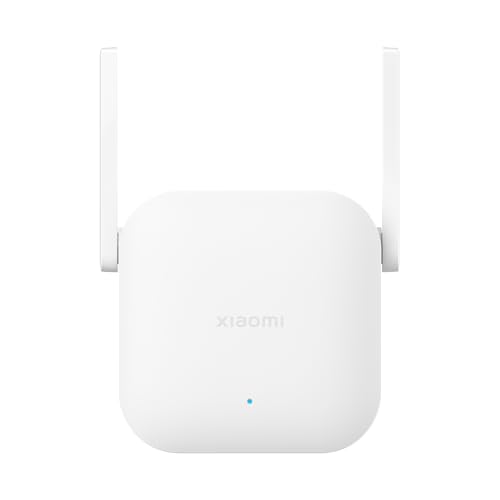
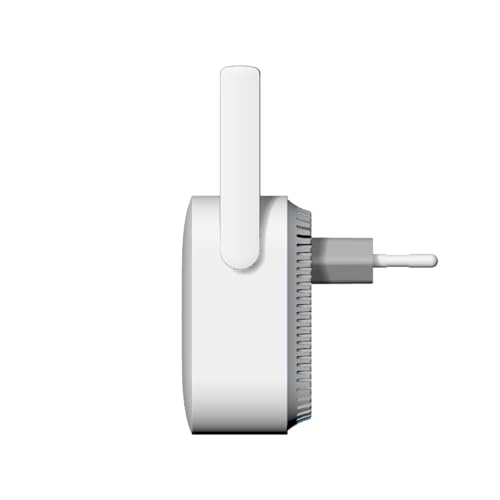
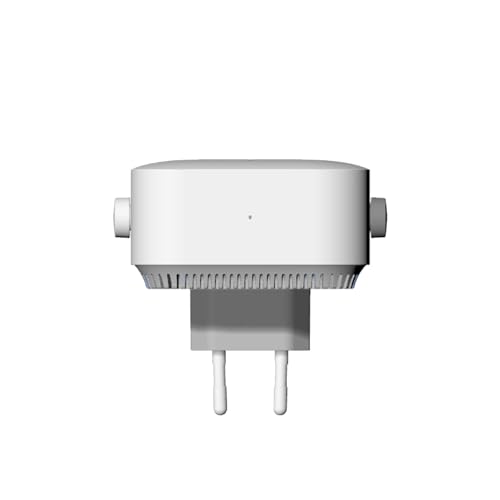
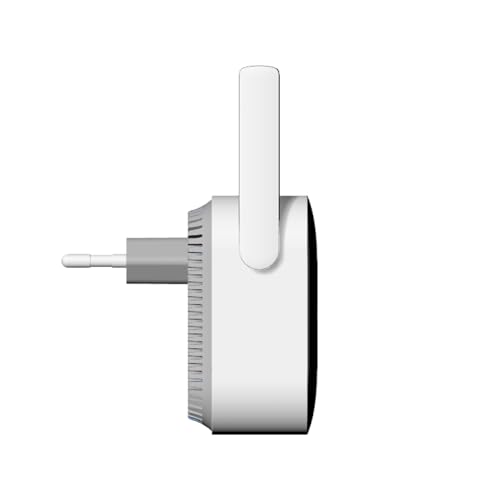
The Xiaomi WiFi Range Extender N300 (Model RD10M) is a compact, single-band 2.4GHz signal booster featuring a 2x2 external antenna system that supports transmission rates of up to 300Mbps under the 802.11n standard. Key characteristics include its wall-plug design with dimensions of 80 x 54 x 70 mm, support for up to 16 simultaneous device connections, and low power consumption of approximately 3.57W. Main pros include its easy setup via the Xiaomi Home app, high portability, and enhanced signal stability provided by its adjustable antennas. However, notable cons include its limitation to the 2.4GHz band without 5GHz support, the lack of an Ethernet port for wired connections, and potentially reduced actual throughput compared to its theoretical maximum speed.

Technical Specifications of Xiaomi N300

Technical Score

What it is: An assessment of the Wi-Fi extender's technical performance, covering eight key areas: speed, coverage, signal stability, connectivity, Ethernet features, mesh support, ease of setup, and design.

When it matters: When you want to compare Wi‑Fi extenders based on speed, coverage, ports, and wireless features.

Score components:

40.0%

2.9

Wi-Fi Performance

30.0%

2.4

Network & Security

12.0%

5.6

Setup & Management

10.0%

5.6

Hardware & Deployment

8.0%

1.0

Ports

3.2
Xiaomi N300 has a technical score of 3.17 points, which is lower than 98% of Wi-Fi extenders.
User score

What it is: A rating that combines user reviews and the total number of reviews received by the Wi-Fi extender.

When it matters: When you want to know how a Wi‑Fi extender performs in daily use and how reliably it maintains a stable connection over time according to user feedback.

Score components:

70.0%

8.2

User reviews

30.0%

10

Popularity

User score:
United Kingdom
amazon
4.1
(26010)
amazon
3.9
(253)
amazon
3.9
(235)
amazon
4.3
(169)
United States
Amazon_logo.png
3.9
(253)
Amazon_logo.png
3.9
(235)
Amazon_logo.png
4.2
(170)

(Reviews last updated: June 2026)

8.7
Xiaomi N300 has a user score of 8.74 points, which is higher than 77.5% of Wi-Fi extenders.
Popularity
What it is: An indicator based on the number of reviews received by the Wi-Fi extender.
When it matters: When you prefer to buy a Wi‑Fi extender that has already been chosen and reviewed by many other users.
10
Xiaomi N300 has a popularity of 10 points, which is higher than 49% of products in this category.
Ratio quality/price

What it is: An indicator that combines the Wi-Fi extender's overall rating with its cost.

When it matters: When you are looking for a Wi‑Fi extender with a good balance between performance and price.

Score components:

60.0%

4.3

Overall score

40.0%

10

Price

6.0
Xiaomi N300 has a quality-to-price ratio of 6 points, which is lower than 97.1% of products in this category.
Wi-Fi version
What it is: The Wi‑Fi generation the extender supports, such as Wi‑Fi 5, Wi‑Fi 6, or Wi‑Fi 6E.
When it matters: When you want the extender to work well with newer routers and support modern wireless features.

Importance: HIGH

Wi-Fi 4 (802.11n)
Xiaomi N300 supports Wi-Fi 4 (802.11n), less advanced than 91.2% of Wi-Fi extenders and equal to 8.8% of Wi-Fi extenders.
Wi-Fi bands
What it is: The wireless frequency bands the extender can use.
When it matters: When your router and devices depend on support for the right Wi‑Fi bands.

Importance: HIGH

Single-band
Xiaomi N300 supports Single-band, less versatile than 90.2% of Wi-Fi extenders and equal to 9.8% of Wi-Fi extenders.
6 GHz band support
What it is: Whether the extender can operate on the 6 GHz band.
When it matters: When you want the extender to work well with newer routers and support modern wireless features.

Importance: LOW

no
Xiaomi N300 does not support the 6 GHz band. 5.9% of Wi-Fi extenders support the 6 GHz band.
Wi-Fi speed
What it is: The combined theoretical maximum wireless speed across the supported bands.
When it matters: When you need better speed and signal strength in rooms that are harder to reach.

Importance: HIGH

300 Mbps
Xiaomi N300 reaches 300 Mbps Wi-Fi speed, slower than 92.2% of Wi-Fi extenders and equal to 7.8% of Wi-Fi extenders.
Max speed 2.4 GHz
What it is: The maximum supported wireless speed on the 2.4 GHz band.
When it matters: When you need better speed and signal strength in rooms that are harder to reach.

Importance: MEDIUM

300 Mbps
Xiaomi N300 reaches 300 Mbps on 2.4 GHz, slower than 61.8% of Wi-Fi extenders and equal to 36.3% of Wi-Fi extenders.
Show more
Ethernet backhaul
What it is: Whether the extender supports Ethernet backhaul through a wired network connection.
When it matters: When you want a more stable link over Ethernet instead of relying only on wireless repeating.

Importance: MEDIUM

no
Xiaomi N300 does not support Ethernet backhaul. 52.2% of Wi-Fi extenders support Ethernet backhaul.
Mesh compatibility
What it is: The mesh systems or ecosystems the extender can work with.
When it matters: When you want smoother roaming and more consistent coverage across your home.

Importance: LOW

N/A
Mesh standard
What it is: The mesh standard or ecosystem the extender uses.
When it matters: When you want smoother roaming and more consistent coverage across your home.

Importance: LOW

?
Roaming feature
What it is: Whether the extender supports seamless roaming between network nodes.
When it matters: When you want smoother roaming and more consistent coverage across your home.

Importance: MEDIUM

no
Xiaomi N300 does not support roaming. 83.3% of Wi-Fi extenders support roaming.
802.11k support
What it is: Whether the extender supports 802.11k for better roaming information between access points.
When it matters: When you want smoother roaming and more consistent coverage across your home.

Importance: LOW

no
Xiaomi N300 does not support 802.11k. 74.1% of Wi-Fi extenders support 802.11k.
Show more
N. of LAN ports
What it is: The number of wired LAN ports on the extender.
When it matters: When you need to connect wired devices such as TVs, consoles, PCs, or switches.

Importance: MEDIUM

0
Xiaomi N300 has 0 LAN port/s, fewer than 92.9% of Wi-Fi extenders and equal to 7.1% of Wi-Fi extenders.
Ethernet port speed
What it is: The maximum Ethernet speed supported by the wired ports.
When it matters: When you connect wired devices and want them to run at full local network speed.

Importance: MEDIUM

0.1 Gbps
Xiaomi N300 offers 0.1 Gbps Ethernet speed, slower than 75.3% of Wi-Fi extenders and equal to 21.8% of Wi-Fi extenders.
N. of USB ports
What it is: The number of USB ports on the extender.
When it matters: When you need to connect wired devices such as TVs, consoles, PCs, or switches.

Importance: LOW

0
Xiaomi N300 has 0 USB port/s, equal to 97.1% of Wi-Fi extenders.
PoE standard
What it is: The Power over Ethernet standard the extender supports, if any.
When it matters: When you want to power the extender over Ethernet instead of using a separate power adapter.

Importance: LOW

N/A
Dedicated smartphone app
What it is: Whether the extender can be managed through a dedicated smartphone app.
When it matters: When you want easier setup, monitoring, and control from your phone.

Importance: MEDIUM

yes
Xiaomi N300 comes with a dedicated smartphone app. 15.2% of Wi-Fi extenders come with a dedicated smartphone app.
Mi Home app.
Web UI management
What it is: Whether the extender offers a web-based interface for setup and management.
When it matters: When you prefer advanced setup and control from a web browser.

Importance: MEDIUM

no
Xiaomi N300 does not have a web management interface. 99% of Wi-Fi extenders have a web management interface.
Automatic firmware updates
What it is: Whether the extender can install firmware updates automatically.
When it matters: When you want security and stability updates without having to manage them manually.

Importance: LOW

no
Xiaomi N300 does not have automatic firmware updates. 48% of Wi-Fi extenders have automatic firmware updates.
LED control
What it is: Whether the extender’s LED indicators can be adjusted or turned off.
When it matters: When the extender sits in a bedroom or another space where bright status lights can be annoying.

Importance: LOW

yes
Xiaomi N300 has LED control. 12.1% of Wi-Fi extenders have LED control.
LED control via Mi Home app.
Buttons present
What it is: The physical buttons available on the extender, such as reset, power, or WPS.
When it matters: When you prefer direct physical controls instead of relying only on software menus.

Importance: LOW

wps, reset
Show more
Mounting type
What it is: The mounting style the extender uses, such as wall-plug or desktop placement.
When it matters: When the extender needs to fit neatly into a tight space, behind furniture, or near an outlet.

Importance: LOW

wall-plug
Portable design
What it is: Whether the extender has a travel-friendly portable design, usually a compact plug-in form factor rather than a larger desktop or fixed-installation unit.
When it matters: When you want an extender that is easy to pack, move between locations, or use temporarily while travelling.

Importance: LOW

yes
Xiaomi N300 has a portable design. 34.3% of Wi-Fi extenders have a portable design.
Derived from compact plug-in form factor.
Height
What it is: The height of the extender body.
When it matters: When the extender needs to fit neatly into a tight space, behind furniture, or near an outlet.

Importance: LOW

80 mm
Xiaomi N300 is 80 mm tall, shorter than 64.7% of Wi-Fi extenders and equal to 4.9% of Wi-Fi extenders.
Width
What it is: The width of the extender body.
When it matters: When the extender needs to fit neatly into a tight space, behind furniture, or near an outlet.

Importance: LOW

70 mm
Xiaomi N300 is 70 mm wide, narrower than 80.4% of Wi-Fi extenders.
Thickness
What it is: The depth or thickness of the extender body.
When it matters: When the extender needs to fit neatly into a tight space, behind furniture, or near an outlet.

Importance: LOW

54 mm
Xiaomi N300 is 54 mm thick, thicker than 69.6% of Wi-Fi extenders and equal to 1% of Wi-Fi extenders.
70 mm appears as another axis.
Show more

Xiaomi N300 vs the average wi-fi extender

  • 5.93 W lower power consumption
    Xiaomi N300 uses less power than the average wi-fi extender (3.6 W vs 9.5 W). The average Wi-Fi extender uses 9.5 W of power.
    What it is: The power the extender typically uses during normal operation.
    When it matters: When you care about energy use, heat output, or running costs.

    Importance: LOW

    Xiaomi N300 uses less power than the average wi-fi extender (3.6 W vs 9.5 W). The average Wi-Fi extender uses 9.5 W of power.3.57 W vs 9.5 W
  • 7.78x cheaper
    Xiaomi N300 is cheaper than the average wi-fi extender (£9 vs £70).
    Xiaomi N300 is cheaper than the average wi-fi extender (£9 vs £70).£9 vs £70
  • 3 newer release date
    Xiaomi N300 was released more recently than the average wi-fi extender (2,023 vs 2,020). The average Wi-Fi extender was released in 2,020.
    December 2023
    What it is: The year this extender model was first released.
    When it matters: When you want a newer platform with longer support and more up-to-date hardware.

    Importance: LOW

    Xiaomi N300 was released more recently than the average wi-fi extender (2,023 vs 2,020). The average Wi-Fi extender was released in 2,020.2023 vs 2020
  • 11.4 mm narrower width
    Xiaomi N300 is narrower than the average wi-fi extender (70 mm vs 81.4 mm). The average Wi-Fi extender has a width of 81.4 mm.
    What it is: The width of the extender body.
    When it matters: When the extender needs to fit neatly into a tight space, behind furniture, or near an outlet.

    Importance: LOW

    Xiaomi N300 is narrower than the average wi-fi extender (70 mm vs 81.4 mm). The average Wi-Fi extender has a width of 81.4 mm.70 mm vs 81.4 mm
  • 5.93 W lower power consumption
    Xiaomi N300 uses less power than the average wi-fi extender (3.6 W vs 9.5 W). The average Wi-Fi extender uses 9.5 W of power.
  • 3 newer release date
    Xiaomi N300 was released more recently than the average wi-fi extender (2,023 vs 2,020). The average Wi-Fi extender was released in 2,020.
  • 11.4 mm narrower width
    Xiaomi N300 is narrower than the average wi-fi extender (70 mm vs 81.4 mm). The average Wi-Fi extender has a width of 81.4 mm.
  • No Mesh Wi-Fi support
    Xiaomi N300 does not support mesh Wi-Fi, while the average wi-fi extender does. 66.7% of Wi-Fi extenders support mesh Wi-Fi.
  • 83.1% slower Wi-Fi speed
    Xiaomi N300 reaches slower Wi-Fi speed than the average wi-fi extender (300 Mbps vs 1,775 Mbps). The average Wi-Fi extender reaches 1,775 Mbps Wi-Fi speed.
  • No MU-MIMO support
    Xiaomi N300 does not support MU-MIMO, while the average wi-fi extender does. 72.5% of Wi-Fi extenders support MU-MIMO.
  • No beamforming support
    Xiaomi N300 does not support beamforming, while the average wi-fi extender does. 83% of Wi-Fi extenders support beamforming.
  • 150 Mbps slower 2.4 GHz speed
    Xiaomi N300 reaches a slower 2.4 GHz speed than the average wi-fi extender (300 Mbps vs 450 Mbps). The average Wi-Fi extender reaches 450 Mbps on 2.4 GHz.
  • No band steering
    Xiaomi N300 does not have band steering, while the average wi-fi extender does. 65.3% of Wi-Fi extenders have band steering.
    Single-band only.
  • 3 dBm weaker transmit power
    Xiaomi N300 has lower transmit power than the average wi-fi extender (20 dBm vs 23 dBm). The average Wi-Fi extender has 23 dBm of transmit power.
  • Limited channel support
    Xiaomi N300 supports narrower channel widths than the average wi-fi extender (40 + 20 vs 80 + 40 + 20). The average Wi-Fi extender supports 80 + 40 + 20 channel widths.
    2.4 GHz widths only.
  • 15 fewer connected devices
    Xiaomi N300 supports fewer connected devices than the average wi-fi extender (16 vs 31). The average Wi-Fi extender supports up to 31 connected devices.
  • No WPS button
    Xiaomi N300 does not have a WPS button, while the average wi-fi extender does. 81.6% of Wi-Fi extenders have a WPS button.
  • No Ethernet backhaul
    Xiaomi N300 does not support Ethernet backhaul, while the average wi-fi extender does. 51.6% of Wi-Fi extenders support Ethernet backhaul.
  • No WPA3 support
    Xiaomi N300 does not support WPA3, while the average wi-fi extender does. 56.7% of Wi-Fi extenders support WPA3.
  • No roaming support
    Xiaomi N300 does not support roaming, while the average wi-fi extender does. 82.5% of Wi-Fi extenders support roaming.
  • No 802.11r support
    Xiaomi N300 does not support 802.11r, while the average wi-fi extender does. 58.3% of Wi-Fi extenders support 802.11r.
  • No 802.11k support
    Xiaomi N300 does not support 802.11k, while the average wi-fi extender does. 73.3% of Wi-Fi extenders support 802.11k.
  • No 802.11v support
    Xiaomi N300 does not support 802.11v, while the average wi-fi extender does. 68.4% of Wi-Fi extenders support 802.11v.
  • No Access Point mode
    Xiaomi N300 does not have Access Point mode, while the average wi-fi extender does. 91.3% of Wi-Fi extenders have Access Point mode.
  • 90% slower Ethernet speed
    Xiaomi N300 offers slower Ethernet speed than the average wi-fi extender (0.1 Gbps vs 1 Gbps). The average Wi-Fi extender offers 1 Gbps Ethernet speed.
  • 1 fewer LAN ports
    Xiaomi N300 has fewer LAN ports than the average wi-fi extender (0 vs 1). The average Wi-Fi extender has 1 LAN port/s.
  • No web interface
    Xiaomi N300 does not have a web management interface, while the average wi-fi extender does. 98.1% of Wi-Fi extenders have a web management interface.
  • 96.9% less RAM
    Xiaomi N300 has less RAM than the average wi-fi extender (8 MB vs 256 MB). The average Wi-Fi extender has 256 MB of RAM.
  • 8 mm thicker
    Xiaomi N300 is thicker than the average wi-fi extender (54 mm vs 46 mm). The average Wi-Fi extender has a thickness of 46 mm.
    70 mm appears as another axis.
  • No Ethernet backhaul
    Xiaomi N300 does not support Ethernet backhaul, while the average wi-fi extender does. 51.6% of Wi-Fi extenders support Ethernet backhaul.
    What it is: Whether the extender supports Ethernet backhaul through a wired network connection.
    When it matters: When you want a more stable link over Ethernet instead of relying only on wireless repeating.

    Importance: MEDIUM

    Xiaomi N300 does not support Ethernet backhaul, while the average wi-fi extender does. 51.6% of Wi-Fi extenders support Ethernet backhaul.
  • No Mesh Wi-Fi support
    Xiaomi N300 does not support mesh Wi-Fi, while the average wi-fi extender does. 66.7% of Wi-Fi extenders support mesh Wi-Fi.
    What it is: Whether the extender can join a mesh Wi‑Fi setup for smoother whole-home coverage.
    When it matters: When you want smoother roaming and more consistent coverage across your home.

    Importance: HIGH

    Xiaomi N300 does not support mesh Wi-Fi, while the average wi-fi extender does. 66.7% of Wi-Fi extenders support mesh Wi-Fi.
  • 83.1% slower Wi-Fi speed
    Xiaomi N300 reaches slower Wi-Fi speed than the average wi-fi extender (300 Mbps vs 1,775 Mbps). The average Wi-Fi extender reaches 1,775 Mbps Wi-Fi speed.
    What it is: The combined theoretical maximum wireless speed across the supported bands.
    When it matters: When you need better speed and signal strength in rooms that are harder to reach.

    Importance: HIGH

    Xiaomi N300 reaches slower Wi-Fi speed than the average wi-fi extender (300 Mbps vs 1,775 Mbps). The average Wi-Fi extender reaches 1,775 Mbps Wi-Fi speed.300 Mbps vs 1775 Mbps
  • No WPA3 support
    Xiaomi N300 does not support WPA3, while the average wi-fi extender does. 56.7% of Wi-Fi extenders support WPA3.
    What it is: Whether the extender supports WPA3 wireless security.
    When it matters: When you want stronger protection for your network and connected devices.

    Importance: MEDIUM

    Xiaomi N300 does not support WPA3, while the average wi-fi extender does. 56.7% of Wi-Fi extenders support WPA3.
  • No MU-MIMO support
    Xiaomi N300 does not support MU-MIMO, while the average wi-fi extender does. 72.5% of Wi-Fi extenders support MU-MIMO.
    What it is: Whether the extender supports MU-MIMO for more efficient simultaneous connections.
    When it matters: When many phones, laptops, TVs, and smart-home devices are online at the same time.

    Importance: MEDIUM

    Xiaomi N300 does not support MU-MIMO, while the average wi-fi extender does. 72.5% of Wi-Fi extenders support MU-MIMO.
  • No roaming support
    Xiaomi N300 does not support roaming, while the average wi-fi extender does. 82.5% of Wi-Fi extenders support roaming.
    What it is: Whether the extender supports seamless roaming between network nodes.
    When it matters: When you want smoother roaming and more consistent coverage across your home.

    Importance: MEDIUM

    Xiaomi N300 does not support roaming, while the average wi-fi extender does. 82.5% of Wi-Fi extenders support roaming.
  • 96.9% less RAM
    Xiaomi N300 has less RAM than the average wi-fi extender (8 MB vs 256 MB). The average Wi-Fi extender has 256 MB of RAM.
    What it is: The amount of RAM available for system operation and multitasking.
    When it matters: When you want the extender to stay responsive and capable over the long term.

    Importance: MEDIUM

    Xiaomi N300 has less RAM than the average wi-fi extender (8 MB vs 256 MB). The average Wi-Fi extender has 256 MB of RAM.8 MB vs 256 MB
  • No 802.11r support
    Xiaomi N300 does not support 802.11r, while the average wi-fi extender does. 58.3% of Wi-Fi extenders support 802.11r.
    What it is: Whether the extender supports 802.11r for faster roaming handoffs.
    When it matters: When you want smoother roaming and more consistent coverage across your home.

    Importance: LOW

    Xiaomi N300 does not support 802.11r, while the average wi-fi extender does. 58.3% of Wi-Fi extenders support 802.11r.

Graphic comparison of Xiaomi N300 and

Attribute category
Attribute
No results found

Third-party reviews

What customers like about Xiaomi N300?

  • Highly affordable and offers excellent value for money
  • Straightforward 'plug and play' setup via the Xiaomi Home app
  • Compact and minimalist design that fits easily into standard wall outlets
  • Dual external antennas significantly improve signal strength in previous 'dead zones'
  • Stable enough to support up to 16 devices simultaneously
  • Low power consumption, typically around 3.5 watts

What customers dislike about Xiaomi N300?

  • Limited to the 2.4GHz frequency band only, with no 5GHz support
  • Maximum real-world speeds are often much lower than the advertised 300Mbps
  • Lacks a physical LAN/Ethernet port for wired connections
  • Does not support modern Wi-Fi standards like Wi-Fi 6 or Mesh networking
  • App setup may require specific region settings (e.g., Singapore) to detect the device in some locations
  • Wide body design can sometimes block adjacent outlets on a power strip

Expert reviews

G
gagadget.com
11/03/2026

The provided review evaluates five Wi-Fi extenders compatible with Spectrum internet to eliminate home dead zones and maintain original bandwidth. The top recommendations include the TP-Link AX3000 (RE715X) as the best overall choice for its Wi-Fi 6 speeds, and the TP-Link AC1900 (RE550) as the editor's choice for affordable dual-band performance. For premium setups, the ASUS...Read more

L
laurentwillen.be
31/12/2020

The reviewed Xiaomi Mi Wifi is an affordable, entry-level wireless range extender tested by Laurent Willen. In terms of pros, its greatest strength is an incredibly low price tag of around €15–€20, making it an accessible solution for basic home networking problems. It delivers on performance by significantly reinforcing signal strength—improving it from a weak -72 dBm to a stable,...Read more

Video reviews

Compare Xiaomi N300 with

VS
VS

Compare