Scored using TVs Methodology v3.0
TVs Methodology v3.0
Mathematical & Unbiased Scoring
Products in this category are scored under Frontum TVs Methodology v3.0: the technical score from the specifications is the base, and independent expert and video reviews (up to ±0.5 points), owner opinions (up to ±0.3) and best-of lists (up to +0.3) move it up or down.
Explore TVs Methodology v3.0

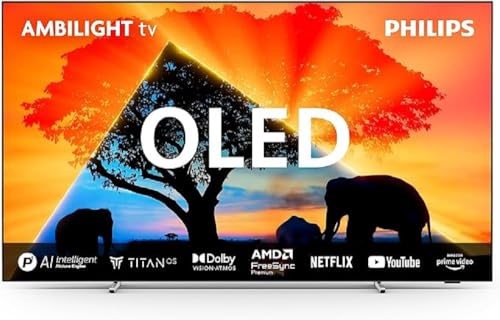
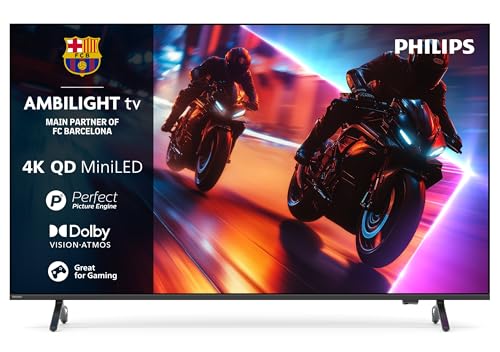
Philips MLED910 75" review: 92 specs compared

Avg. price:~£1,080Display type:Mini LEDResolution:4K (3840 x 2160)Refresh rate:120 HzEU energy label:FN. of HDMI ports:4 ports

Philips MLED910 75" Review: Compare 92 technical specifications to see how this product ranks in the TVs category and whether it is worth buying.
Philips MLED910 75"
8.1/10

Overall score

Score
8.1/ 10
✕
What it is
Our main score for this model, 1–10. It combines specs, best-of lists, expert reviews, ratings from across the web and owners.
How we count it
Parts: Technical score 45%, List score 25%, Reviews score 15%, User score 10%, Sentiment score 5%
Marks: Each part gets a mark out of 10. For reviews, lists and owners, a typical model in this category gets about 8 and the best one gets 10.
No data yet: A part with no data shows "?". It counts as the mark of a weaker model in this category (4 in 5 models with data score higher). This way, models with reviews, lists and owners usually come out ahead.
Score distribution
â–¼
<55-66-77-88-99-10
Score components

45%

8.5

Technical score

25%

?

List scoreNot enough data yet, so we use 7.5, the mark of a weaker model in this category

15%

?

Reviews scoreNot enough data yet, so we use 7.7, the mark of a weaker model in this category

10%

8.2

User score

5%

?

Sentiment scoreNot enough data yet, so we use 8.5, the mark of a weaker model in this category

â–²Better than 88% of TVs
7.1

Value for money

Value for money
7.1/ 10
✕
What it is
An indicator that combines the TV's overall rating with its price.
When it matters
When you are looking for a TV with a good balance between quality and price.
Score distribution
â–¼
<55-66-77-88-99-10
Score components

70%

8.1

Overall score

30%

4.8

Price

â–¼Worse than 85%
8.5

Technical score

Technical score
8.5/ 10
✕
What it is
How good the specs are compared with the other models in this category, 1–10.
How we count it
Areas: We rate the specs in each area against the other models in this category.
Weighting: The areas that matter most to buyers count more. The shares are shown under Score components.
Share: The technical score is 45% of the overall score.
Score distribution
â–¼
<55-66-77-88-99-10
Score components

35%

8.5

Picture

15%

8.9

Smart TV

13%

9.4

Connections

12%

8.9

Gaming

12%

9.2

Sound

7%

4.8

Energy

6%

7.2

Design

★Better than 94%
?

Reviews score

Reviews score
✕
What it is
Average grade from independent test sites, magazines and video reviewers, 1–10.
How we count it
Grades: Each review's own score is converted to 1–10; without one, we grade the review ourselves. Big test sites count more, short reviews half as much as full tests. A video review counts half.
Score: The average grade is 80% of the review mark; the number of reviews is the other 20% (1 review = 5, the typical number in this category = 8, the most-reviewed model = 10).
Enough data: With few reviews, the average grade is pulled toward the typical grade of this category. No reviews yet: 7.7 for now.
Share: Reviews count 15% of the overall score.
Score distribution
â–¼
<55-66-77-88-99-10
Grades by review (0)
We have not found an independent test of this model yet. Until we do, its review part counts as 7.7.
Ratings from across the web count in the User score, not in this score.
No expert tests yet
?

Sentiment score

Sentiment score
8.5/ 10
✕
What it is
How positive owners are about this model in their comments under video reviews and on forums. We read each comment, keep only people who say they own the model, and sort them into positive, mixed or negative.
How we count it
Score: We compare how satisfied this model’s owners are with the other models in this category: the typical model gets 8, the most satisfied tenth 10, the least satisfied 4. This is 80% of the owner mark; the number of owners is the other 20%.
Enough data: A model counts with 10+ owners from 4+ different discussions. With fewer, the owner part changes nothing.
Share: Owners count 5% of the overall score (left out in categories where fewer than 10 models have enough owner comments).
Score distribution
â–¼
<55-66-77-88-99-10
Owners (0)
Not enough owner comments yet (10+ owners from 4+ discussions needed), so the owner part changes nothing.
Our own analysis of online owner opinions, not a rating from any website.
Not enough owner comments yet
8.2

User score

User score
8.2/ 10
✕
What it is
How happy buyers are with this model, based on ratings from across the web.
How we count it
Enough data: A model needs at least 1 rating from across the web. Without one, it counts as 7.8, the mark of a weaker rated model in this category.
Share: User score counts 10% of the overall score.
Score distribution
â–¼
<55-66-77-88-99-10

70%

8.3

Rating

30%

8.0

Popularity

â–¼Worse than 51%
?

List score

List score
7.5/ 10
✕
What it is
How often independent test sites, magazines and video reviewers put this model in their best-of lists for this category.
How we count it
Points: The model in the most lists of this category gets 10; the others get 8 to 10 in proportion. In no list yet: 7.5. Lists count 25% of the overall score.
Enough data: Every list counts, even a single one. With fewer than 5 best-of lists in the category, this part is left out.
Lists with this model (0)
Not in any best-of list yet, so this part counts as 7.5. Models in a list get 8 to 10.
Not in any best-of list yet
  • philips-mled910-75
  • philips-mled910-75
  • philips-mled910-75
philips-mled910-75
philips-mled910-75
philips-mled910-75
Where to buy
*As an Amazon Associate, we earn from qualifying purchases.
Best rankings
Available: ranking among products currently available (including other versions of this product).All: ranking among all products in the database.
Loading...
Loading category ranking...

Technical Specifications of TV Philips MLED910 75"

Technical score
Technical score
8.5/ 10
✕
What it is
How good the specs are compared with the other models in this category, 1–10.
How we count it
Areas: We rate the specs in each area against the other models in this category.
Weighting: The areas that matter most to buyers count more. The shares are shown under Score components.
Share: The technical score is 45% of the overall score.
Score distribution
â–¼
<55-66-77-88-99-10
Score components:

35%

8.5

Picture

15%

8.9

Smart TV

13%

9.4

Connections

12%

8.9

Gaming

12%

9.2

Sound

7%

4.8

Energy

6%

7.2

Design

8.5
Reviews score
7.7
Sentiment score
?
User score
8.2
List score
?
Value for money
Value for money
7.1/ 10
✕
What it is
An indicator that combines the TV's overall rating with its price.
When it matters
When you are looking for a TV with a good balance between quality and price.
Score distribution
â–¼
<55-66-77-88-99-10
Score components:

70%

8.1

Overall score

30%

4.8

Price

7.1
Display type
Mini LED
This TV uses Mini LED display technology, which is more advanced than 73% of TVs and the same as in 16.8% of TVs.
Screen size
75 inches
Resolution
4K (3840x 2160)
This TV has a resolution of 4K (3840x2160), which is sharper than 26.9% of TVs and the same as in 73.1% of TVs.
Pixel density
59 ppi
This TV has a pixel density of 59 ppi, which is lower than 64.9% of TVs and equal to 6.1% of TVs.
Bit depth
?
Show more
Refresh rate
120 Hz
This TV has a refresh rate of 120 Hz, which is higher than 64.8% of TVs and equal to 18.4% of TVs.
N. of HDMI 2.1 ports
4 ports
This TV has HDMI 2.1 inputs totalling 4 ports, which is more than 67.5% of TVs and equal to 32.5% of TVs.
Variable refresh rate (VRR)
yes
This TV supports VRR. 5.6% of TVs offer this.
Auto low latency mode (ALLM)
yes
This TV supports ALLM. 2.4% of TVs offer this.
Input lag
?
Show more
Smart TV
yes
This TV supports smart apps. 2.5% of TVs offer this.
Operating system
Titan OS
Chromecast built-in
?
AirPlay support
yes
This TV supports AirPlay. 4.7% of TVs offer this.
Voice commands
yes
This TV supports voice commands. 5% of TVs offer this.
Show more
N. of HDMI ports
4 ports
This TV has HDMI inputs of 4 ports, which is more than 67.9% of TVs and equal to 31.8% of TVs.
HDMI ARC / eARC
eARC
This TV offers eARC, which is more advanced than the option in 32.3% of TVs and the same as in 67.7% of TVs.
N. of USB ports
2 ports
This TV offers 2 ports for USB devices, which is more than 34.8% of TVs and equal to 58.5% of TVs.
USB version
?
Wi-Fi connectivity
yes
This TV supports Wi-Fi. 1.8% of TVs offer this.
Show more
Audio output power
40 W
This TV has an audio output power of 40 W, which is higher than 80.6% of TVs and equal to 9.6% of TVs.
N. of speakers
?
N. of audio channels
2
Dolby Atmos support
yes
This TV supports Dolby Atmos. 2.8% of TVs offer this.
DTS:X support
yes
This TV supports DTS:X. 7.4% of TVs offer this.
Show more
Thickness
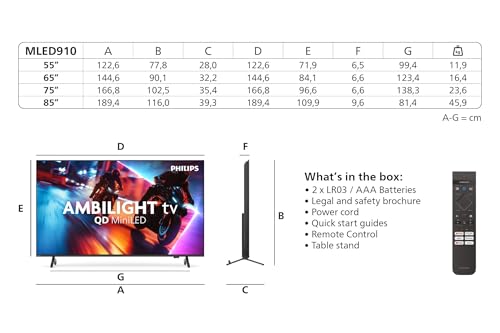
6.6 cm
This TV has a thickness of 6.6 cm, which is thinner than 67.7% of TVs and equal to 1.4% of TVs.
Weight
23 kg
This TV has a weight of 23 kg, which is heavier than 81% of TVs and equal to 0.1% of TVs.
Width
166.8 cm
Height
96.6 cm
VESA mount support
yes
This TV supports VESA wall mounting. 0% of TVs offer this.
Show more
EU energy label
F
This TV has an EU energy label of F, which is less efficient than 55.4% of TVs and the same as 31.1% of TVs.
Operating power consumption
129 W
This TV has an operating power draw of 129 W, which is higher than 85.7% of TVs and equal to 1% of TVs.
Standby power consumption
0.5 W
This TV has a standby power draw of 0.5 W, which is lower than 1% of TVs and equal to 87.8% of TVs.
French repairability index
?

Philips MLED910 75" vs the average TV

246810TotalPictureGamingSmart TVConnectionsSoundDesignEnergy
  • More advanced backlight
    This TV has a more advanced backlight than the average TV (Mini LED vs Edge LED).
    Mini LED vs Edge LED
  • 600 nits higher peak brightness
    This TV has higher peak brightness than the average TV (1,000 nits vs 400 nits). The average TV has a peak brightness of 400 nits.
    1,000 nits vs 400 nits
  • 20 W higher audio output power
    This TV has higher audio output power than the average TV (40 W vs 20 W). The average TV outputs 20 W.
    40 W vs 20 W
  • 1 ports more connections
    This TV has more HDMI inputs than the average TV (4 ports vs 3 ports). The average TV has HDMI inputs of 3 ports.
    4 ports vs 3 ports
  • 60 Hz higher refresh rate
    This TV has a higher refresh rate than the average TV (120 Hz vs 60 Hz). The average TV has a refresh rate of 60 Hz.
    120 Hz vs 60 Hz
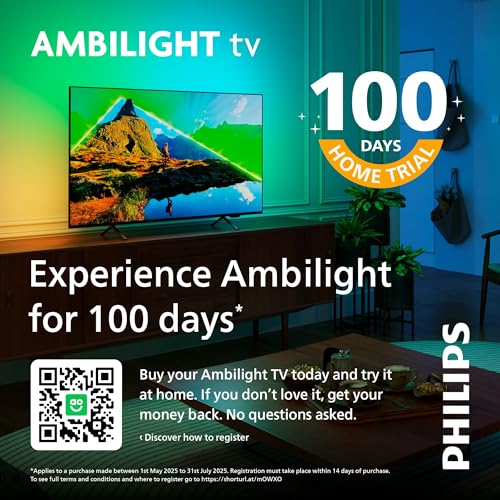
  • Supports Ambilight
    This TV supports Ambilight, while the average TV does not. 7.4% of TVs support Ambilight.
  • 2 ports more HDMI 2.1 inputs
    This TV has more HDMI 2.1 inputs than the average TV (4 ports vs 2 ports). The average TV offers 2 ports.
    4 ports vs 2 ports
  • 0.85 cm thinner body
    This TV has a thinner body than the average TV (6.6 cm vs 7.45 cm). The average TV has a thickness of 7.45 cm.
    6.6 cm vs 7.45 cm
  • More advanced backlight
    This TV has a more advanced backlight than the average TV (Mini LED vs Edge LED).
    Mini LED vs Edge LED
  • 600 nits higher peak brightness
    This TV has higher peak brightness than the average TV (1,000 nits vs 400 nits). The average TV has a peak brightness of 400 nits.
    1,000 nits vs 400 nits
  • Supports Ambilight
    This TV supports Ambilight, while the average TV does not. 7.4% of TVs support Ambilight.
  • 60 Hz higher refresh rate
    This TV has a higher refresh rate than the average TV (120 Hz vs 60 Hz). The average TV has a refresh rate of 60 Hz.
    120 Hz vs 60 Hz
  • 2 ports more HDMI 2.1 inputs
    This TV has more HDMI 2.1 inputs than the average TV (4 ports vs 2 ports). The average TV offers 2 ports.
    4 ports vs 2 ports
  • 1 ports more connections
    This TV has more HDMI inputs than the average TV (4 ports vs 3 ports). The average TV has HDMI inputs of 3 ports.
    4 ports vs 3 ports
  • 20 W higher audio output power
    This TV has higher audio output power than the average TV (40 W vs 20 W). The average TV outputs 20 W.
    40 W vs 20 W
  • 0.85 cm thinner body
    This TV has a thinner body than the average TV (6.6 cm vs 7.45 cm). The average TV has a thickness of 7.45 cm.
    6.6 cm vs 7.45 cm
  • 65 W higher power draw
    This TV has a higher operating power draw than the average TV (129 W vs 64 W). The average TV has an operating power draw of 64 W.
    129 W vs 64 W
  • Less efficient energy label
    This TV has a less efficient EU energy label than the average TV (F vs E).
    F vs E
  • 2.09x heavier
    This TV is heavier than the average TV (23 kg vs 11 kg). The average TV weighs 11 kg.
    23 kg vs 11 kg
  • 2.92x more expensive
    Philips MLED910 75" is more expensive than the average TV (£1,080 vs £370).
    £1,080 vs £370
  • 11.1% worse value for money
    Philips MLED910 75" has worse value for money than the average TV (7.11 vs 7.9).
    7.11 vs 7.9
  • 9 ppi lower pixel density
    This TV has a lower pixel density than the average TV (59 ppi vs 68 ppi). The average TV has a pixel density of 68 ppi.
    59 ppi vs 68 ppi
  • 2.09x heavier
    This TV is heavier than the average TV (23 kg vs 11 kg). The average TV weighs 11 kg.
    23 kg vs 11 kg
  • 65 W higher power draw
    This TV has a higher operating power draw than the average TV (129 W vs 64 W). The average TV has an operating power draw of 64 W.
    129 W vs 64 W
  • Less efficient energy label
    This TV has a less efficient EU energy label than the average TV (F vs E).
    F vs E

Third-party reviews

What customers like about Philips MLED910 75"

  • 1000 nits of peak brightness keeps the picture bright in a room with daylight.
  • Dolby Vision and HDR10+ both work for richer colour and contrast.
  • Four HDMI 2.1 ports and eARC connect a console and a sound bar easily.
  • Dolby Atmos adds depth to the sound when the source supports it.
  • Ambilight glow along the back makes the wall look alive in the dark.
  • Alexa and Google Assistant let you control the TV by voice.

What customers don't like about Philips MLED910 75"

  • At 23 kg it is very heavy, so it needs two people and a strong wall mount.
  • Its 129 W power use adds to running costs.
  • The 59 ppi pixel density leaves fine detail softer up close.
  • The 40 W speakers are thin for a big room without a sound bar.
  • The 120 Hz refresh rate can look less smooth in fast games.

Verdict

At 23 kg, the Philips MLED910 75 inch is not a set to move around the house. It is built for a large living room. Its 1000 nits of peak brightness keep the picture bright even with daylight coming in. Dolby Vision and HDR10+ add richer colour, and 40 W speakers with Dolby Atmos fill the room. Ambilight glow along the back makes the wall look alive when the lights are off. Four HDMI 2.1 ports and eARC let a console and a sound bar connect, and Alexa and Google Assistant both handle voice commands. The trade-off is weight and power: it draws 129 W, and the 120 Hz refresh rate can look less smooth in fast games. It suits a buyer with a big room who does not mind the bulk.

Compare Philips MLED910 75" with other TVs

1Product to compare no. 1
VS
2Product to compare no. 2
VS
3Product to compare no. 3 (optional)

Graphic comparison of Philips MLED910 75" and other TVs

No results found