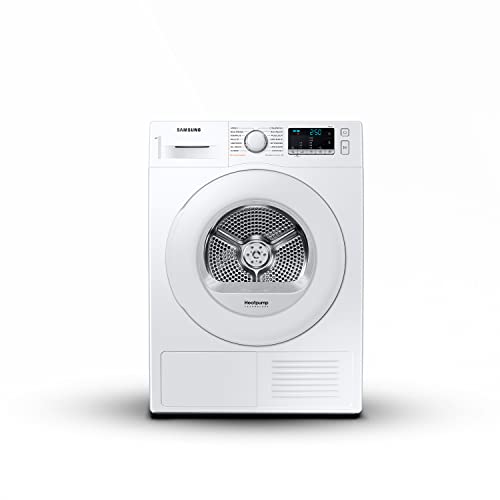
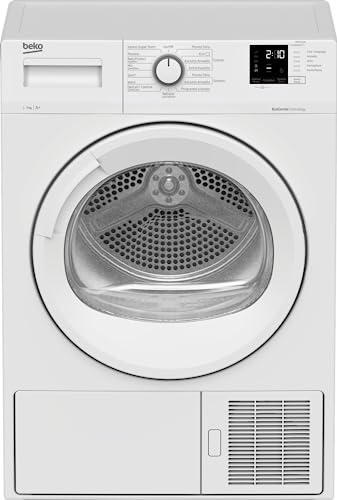
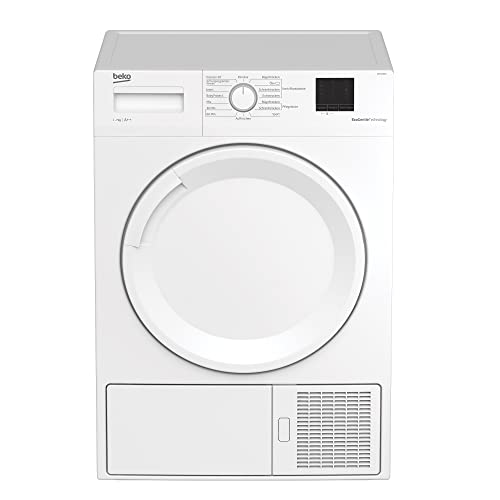
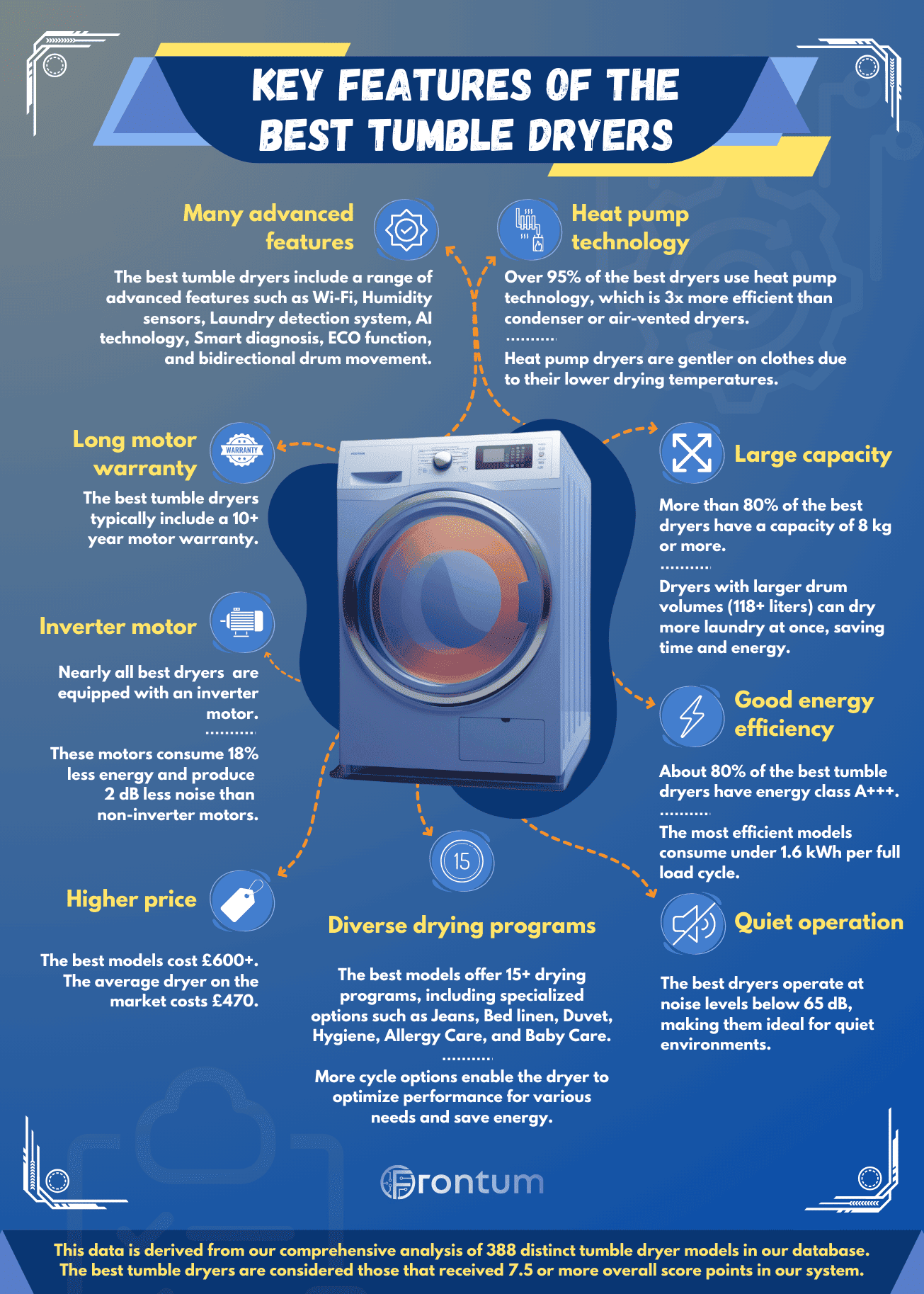
The best dryers cost £600 or more.You pay this price for dryers with advanced features, better build quality, and higher user satisfaction.
The price distribution for dryers is displayed in the following chart.
[vertical-chart-14327415375316308]
To which price categories dryers could be divided?
Tumble dryers fall into the following three price categories:
Bottom range (£430 or less)
About 35% of all tumble dryers are in this category. These dryers come in various capacities, with 8 kg (36%) and 7 kg (21%) being the most common. Some models have higher capacities (9-10 kg), and compact dryers (4 kg or less) are also available.
All three dryer types appear in this price range (40% condenser, 35% heat pump, 25% air vented). Due to the higher number of vented and condenser models, these dryers are less energy-efficient (4.18 kWh per full load cycle, 60% in class B or worse) but lighter (36.5 kg vs. 45.5 kg average) and faster (174 min Eco cycle vs. 195 min average).
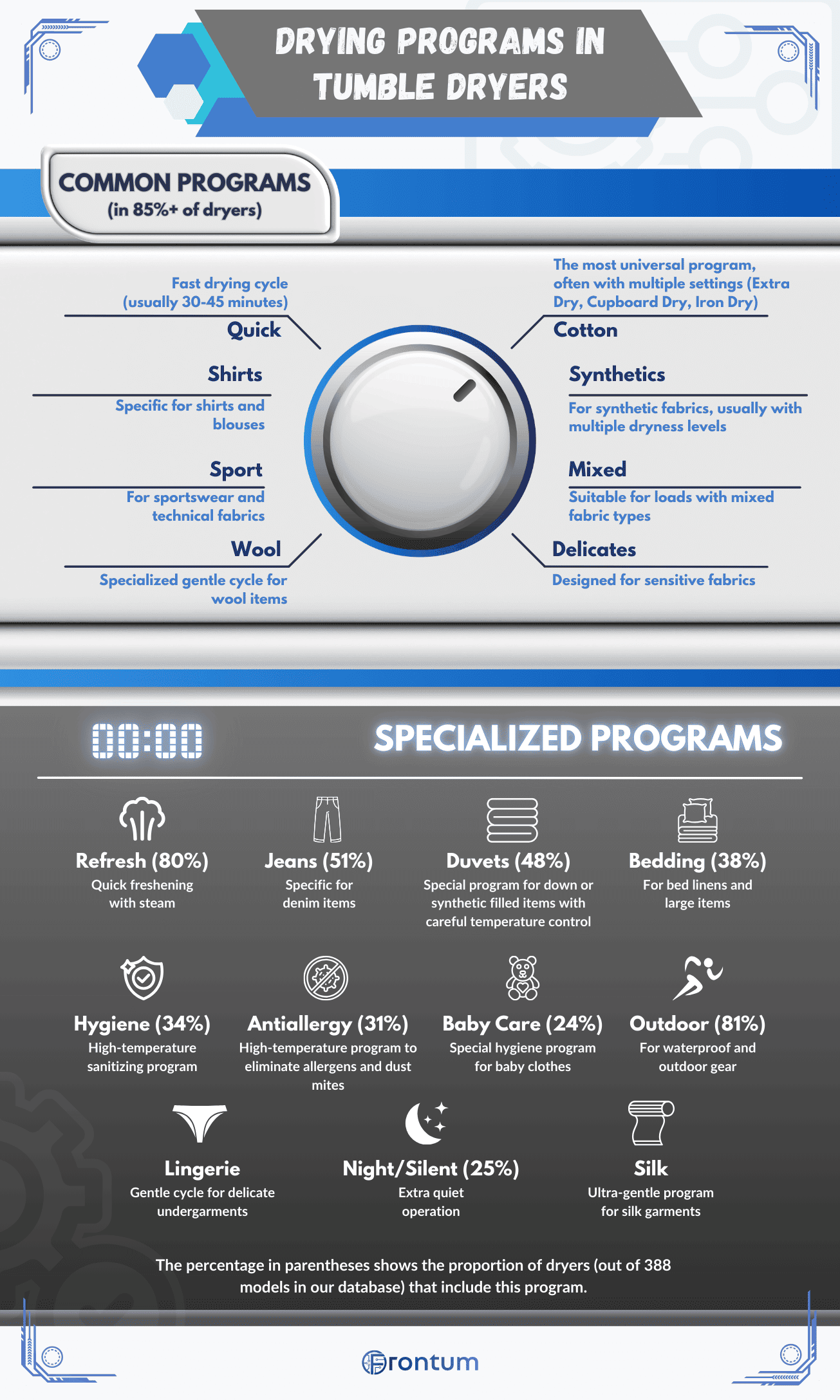
Specialized drying cycles are less common, with Bed Linen (31%), Duvet (30%), and Hygiene (21%) appearing less often. Features such as gentle drying (31%), Silent mode (8%), laundry detection system (37%), ECO indicator (14%), and Wi-Fi (18%) are also limited. However, NFC (22%) appears more frequently than in higher-priced models.
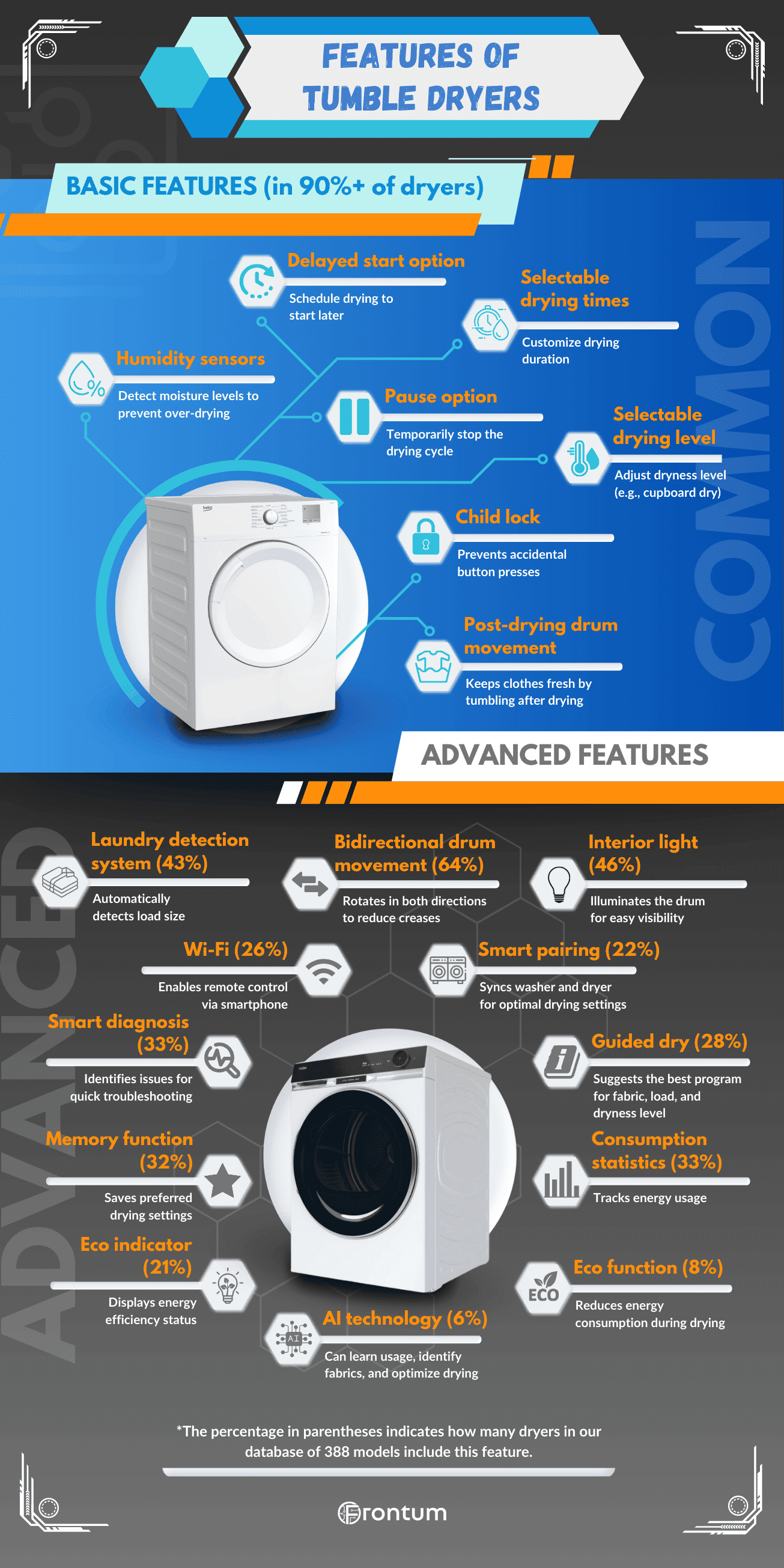
Advanced features like AI technology are almost absent, and only 10% of these dryers have an inverter motor, which affects energy consumption and noise levels. Still, most include humidity sensors, delay start, pause function, bidirectional drum movement, and post-drying movement to reduce creases.
Mid range (£430-£600)
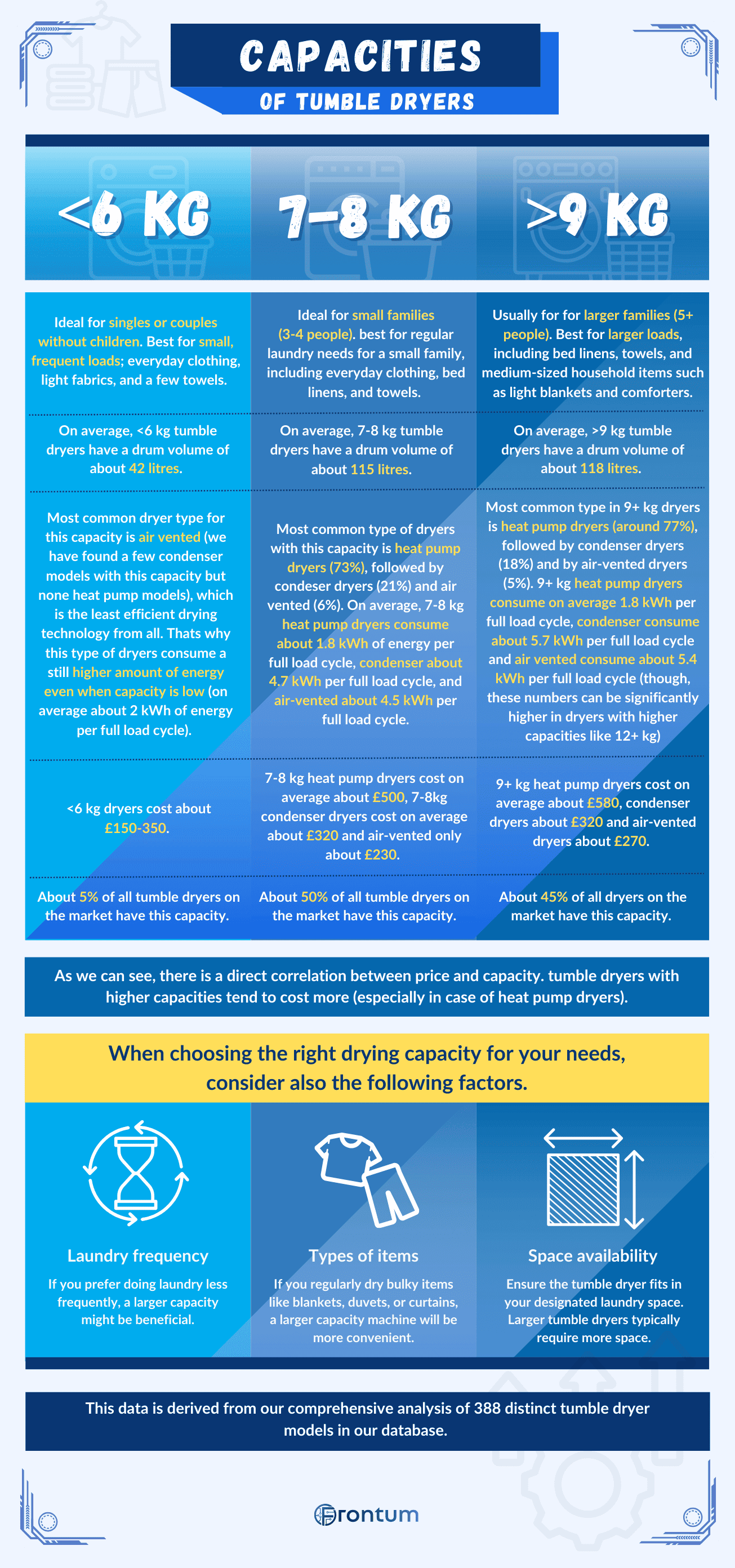
Around 35% of all dryers belong to this category. These models generally have higher capacities, with 9 kg (43%) and 8 kg (38%) being the most common, while 11 kg models make up 11%. Almost all dryers in this range are heat pump models (92%), with a few condenser dryers (8%).
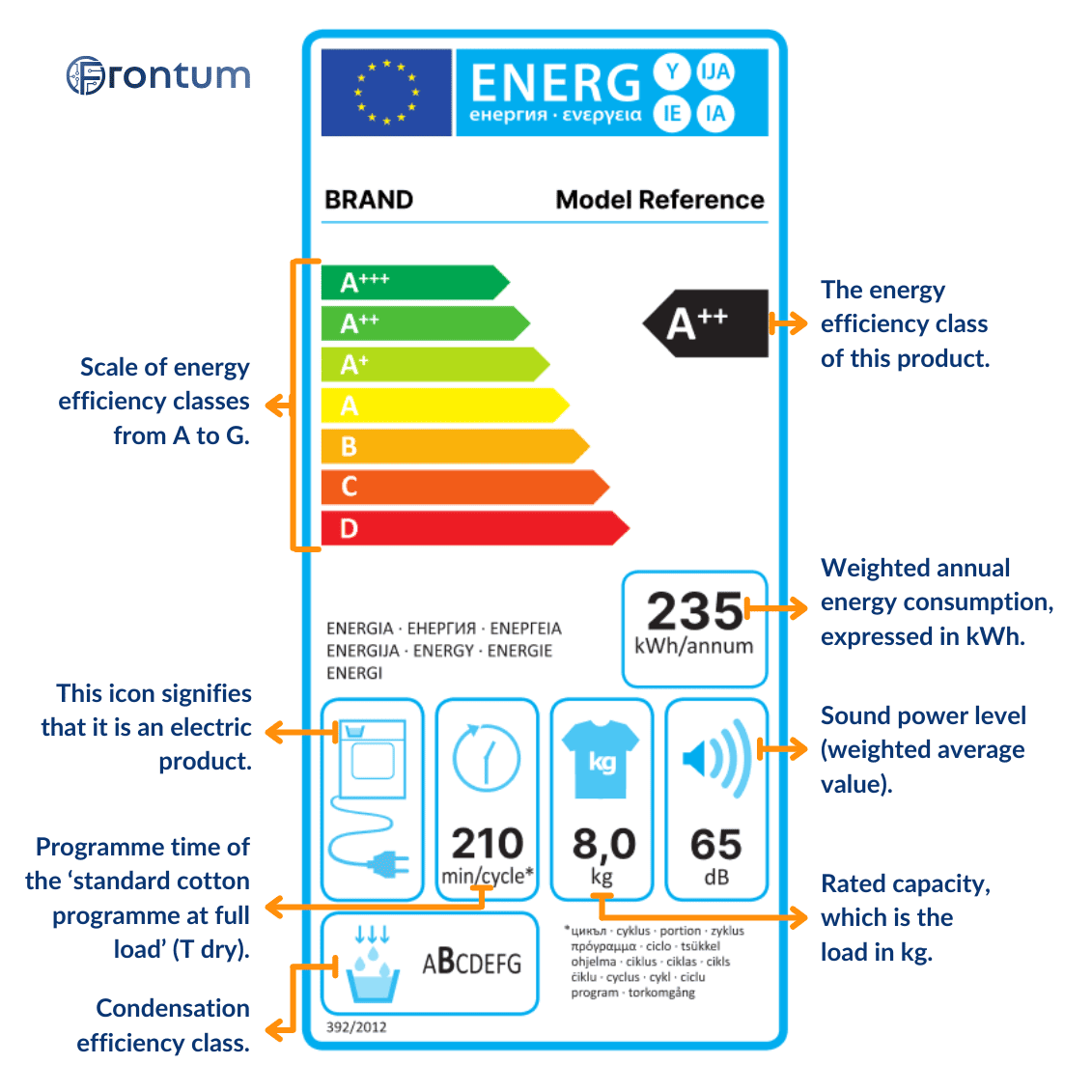
This category is already very energy efficient, consuming about 1.87 kWh per full load cycle and 1.1 kWh per partial load. Most models have good energy ratings (34% A+++ and 51% A++).
Specialized drying programs are more frequent, with Duvet (54%), Hygiene (48%), and Outdoor/Sport (90%) being common. Additional features include Laundry detection (52%), Wi-Fi (33%), Bluetooth (23%), and AI technology (9%).
45% of mid-range dryers have an inverter motor, and most include post-drying movement and bidirectional drum movement to reduce creases.
Top range (£600+)
Around 30% of all dryers belong to this category. Most have 8 kg (47%) or 9 kg (43%) capacities, and 98% use heat pump technology.
These models are the most energy-efficient, consuming 1.55 kWh per full load cycle and 0.9 kWh per partial load, despite their larger capacities. They also tend to be quieter (64 dB or less).
Advanced features are more common, with Outdoor/Sport, Bed Linen, Duvet cycles, gentle drying, fast function, and Silent mode appearing frequently. Most models have Wi-Fi (37%), ECO function, ECO indicator (26%), smart pairing (30%), and AI technology (11%).
Other premium features include Interior light (78%), Special drum design (79%), an easy-to-clean filter (67%), and a self-cleaning condenser (20%). 75% of high-end dryers come with an inverter motor, making them even more efficient and quieter than lower-priced models.
What are the cheapest dryer brands?
The cheapest tumble dryer brands are as follows.
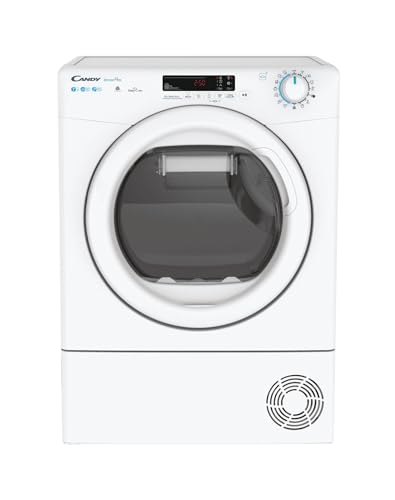
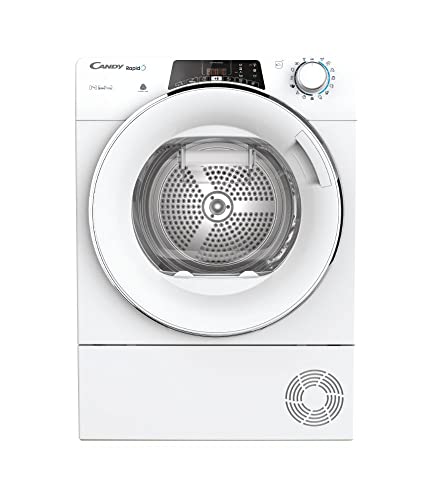
- Candy Average overall score: 6.8 pointsAverage price: £390
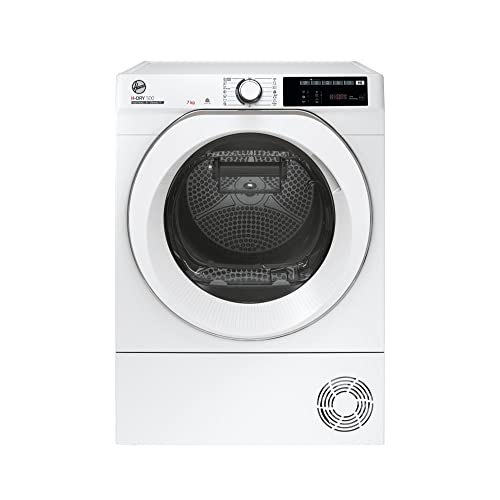
- Hoover Average overall score: 7.1 pointsAverage price: £405
- Beko Average overall score: 7.5 pointsAverage price: £430
The chart below compares dryer brands based on their price, sorted in ascending order.
[horizontal-chart-26580829414421101]