Scored using Smartwatches Methodology v3.0
Smartwatches Methodology v3.0
Mathematical & Unbiased Scoring
Products in this category are scored under Frontum Smartwatches Methodology v3.0: the technical score from the specifications is the base, and independent expert and video reviews (up to ±0.5 points), owner opinions (up to ±0.3) and best-of lists (up to +0.3) move it up or down.
Explore Smartwatches Methodology v3.0

Apple Watch NikeLab review: 127 specs compared

Avg. price:~£350Screen size:?Battery life:0.75 daysDisplay type:OLED

Apple Watch NikeLab Review: Compare 127 technical specifications to see how this product ranks in the Smartwatches category and whether it is worth buying.
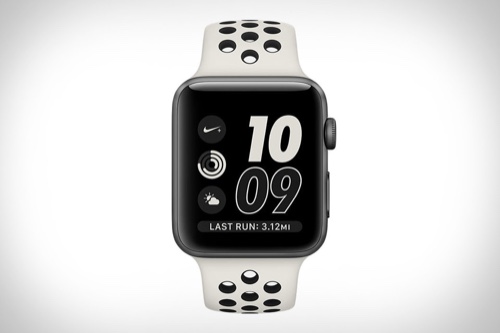
Apple Watch NikeLab
7.4/10

Overall score

Score
7.4/ 10
✕
What it is
Our main score for this model, 1–10. It combines specs, best-of lists, expert reviews and owners.
How we count it
Parts: Technical score 35%, List score 30%, Reviews score 25%, Sentiment score 10%
Marks: Each part gets a mark out of 10. For reviews, lists and owners, a typical model in this category gets about 8 and the best one gets 10.
No data yet: A part with no data shows "?". It counts as the mark of a weaker model in this category (4 in 5 models with data score higher). This way, models with reviews, lists and owners usually come out ahead.
Score distribution
â–¼
<55-66-77-88-99-10
Score components

35%

7.5

Technical score

30%

?

List scoreNot enough data yet, so we use 7.5, the mark of a weaker model in this category

25%

?

Reviews scoreNot enough data yet, so we use 7.4, the mark of a weaker model in this category

10%

?

Sentiment scoreNot enough data yet, so we use 6.8, the mark of a weaker model in this category

â–²Better than 63% of smartwatches
7.8

Value for money

Value for money
7.8/ 10
✕
What it is
An indicator that combines the smartwatch's overall rating with its cost.
When it matters
When you are looking for a smartwatch with a good balance between quality and price.
Score distribution
â–¼
<55-66-77-88-99-10
Score components

70%

7.4

Overall score

30%

8.7

Price

â–¼Worse than 51%
7.5

Technical score

Technical score
7.5/ 10
✕
What it is
How good the specs are compared with the other models in this category, 1–10.
How we count it
Areas: We rate the specs in each area against the other models in this category.
Weighting: The areas that matter most to buyers count more. The shares are shown under Score components.
Share: The technical score is 35% of the overall score.
Score distribution
â–¼
<55-66-77-88-99-10
Score components

24%

7.3

Health

21%

9.4

Fitness

16%

3.6

Battery

14%

8.6

Smart features

12%

7.8

Connectivity

9%

7.7

Display & Design

4%

8.4

Hardware

â–²Better than 71%
?

Reviews score

Reviews score
✕
What it is
Average grade from independent test sites, magazines and video reviewers, 1–10.
How we count it
Grades: Each review's own score is converted to 1–10; without one, we grade the review ourselves. Every review counts the same: written or video, short or full test.
Score: The average grade is 80% of the review mark; the number of reviews is the other 20% (1 review = 5, the typical number in this category = 8, the most-reviewed model = 10).
Enough data: With few reviews, the average grade is pulled toward the typical grade of this category. No reviews yet: 7.4 for now.
Share: Reviews count 25% of the overall score.
Score distribution
â–¼
<55-66-77-88-99-10
Grades by review (0)
We have not found an independent test of this model yet. Until we do, its review part counts as 7.4.
User ratings collected online are not part of this score.
No expert tests yet
?

List score

List score
7.5/ 10
✕
What it is
How often independent test sites, magazines and video reviewers put this model in their best-of lists for this category.
How we count it
Points: The model in the most lists of this category gets 10; the others get 8 to 10 in proportion. In no list yet: 7.5. Lists count 30% of the overall score.
Enough data: Every list counts, even a single one. With fewer than 5 best-of lists in the category, this part is left out.
Lists with this model (0)
Not in any best-of list yet, so this part counts as 7.5. Models in a list get 8 to 10.
Not in any best-of list yet
Loading...
Loading category ranking...

Technical Specifications of smartwatch Apple Watch NikeLab

Technical score
Technical score
7.5/ 10
✕
What it is
How good the specs are compared with the other models in this category, 1–10.
How we count it
Areas: We rate the specs in each area against the other models in this category.
Weighting: The areas that matter most to buyers count more. The shares are shown under Score components.
Share: The technical score is 35% of the overall score.
Score distribution
â–¼
<55-66-77-88-99-10
Score components:

24%

7.3

Health

21%

9.4

Fitness

16%

3.6

Battery

14%

8.6

Smart features

12%

7.8

Connectivity

9%

7.7

Display & Design

4%

8.4

Hardware

7.5
Reviews score
7.4
List score
?
Value for money
Value for money
7.8/ 10
✕
What it is
An indicator that combines the smartwatch's overall rating with its cost.
When it matters
When you are looking for a smartwatch with a good balance between quality and price.
Score distribution
â–¼
<55-66-77-88-99-10
Score components:

70%

7.4

Overall score

30%

8.7

Price

7.8
Heart rate monitor
yes
This smartwatch includes a heart rate monitor. 9.5% of smartwatches include a heart rate monitor.
Blood oxygen monitoring
yes
This smartwatch supports blood oxygen monitoring. 30.4% of smartwatches support blood oxygen monitoring.
Availability may vary by region or model.
ECG
yes
This smartwatch supports ECG. 82% of smartwatches support ECG.
Irregular heart rate warnings
yes
This smartwatch supports irregular heart rate warnings. 49.5% of smartwatches support irregular heart rate warnings.
HRV tracking
yes
This smartwatch supports HRV tracking. 54.9% of smartwatches support HRV tracking.
Show more
Accelerometer
yes
This smartwatch includes an accelerometer. 0.5% of smartwatches include an accelerometer.
Barometer
yes
This smartwatch includes a barometer. 46.5% of smartwatches include a barometer.
Gyroscope
yes
This smartwatch includes a gyroscope. 28.9% of smartwatches include a gyroscope.
Cadence sensor
yes
This smartwatch includes a cadence sensor. 67.2% of smartwatches include a cadence sensor.
Cadence may require external sensor/app pairing on some models.
Distance tracking
yes
This smartwatch supports distance tracking. 3.7% of smartwatches support distance tracking.
Show more
Battery life
0.75 days
This smartwatch lasts 0.75 days on a charge, which is shorter than 98.2% of Smartwatches and the same as 1.8% of Smartwatches.
Converted from the reported 18-hour battery life.
Battery life in training mode
7 h
This smartwatch records workouts for 7 h on a charge, which is shorter than 79.5% of Smartwatches and the same as 4.2% of Smartwatches.
Battery life with GPS on
6.5 h
This smartwatch lasts 6.5 h with GPS on, which is shorter than 88.3% of Smartwatches and the same as 0.5% of Smartwatches.
Battery power
273 mAh
This smartwatch has a 273 mAh battery, which is smaller than 65.9% of Smartwatches and the same as 0.5% of Smartwatches.
Charge time
120 min
This smartwatch charges from empty in 120 min, which is quicker than 13.3% of Smartwatches and the same as 44.6% of Smartwatches.
Approximate value from reported charging range: 120 minutes.
Show more
Operating system
watchOS
This smartwatch runs watchOS, which is more advanced than the system in 96% of Smartwatches and equal to 4% of Smartwatches.
OS detail: watchOS (3).
Software update frequency
ended
This smartwatch has ended software update support which is less active than that of 46.1% of smartwatches and equal to that of 53.9% of smartwatches.
Third-party app support
yes
This smartwatch supports third-party apps. 48.5% of smartwatches support third-party apps.
Support is limited to official app stores/approved app selection.
Notifications
yes
This smartwatch supports notifications. 0.3% of smartwatches support notifications.
Voice assistant support
yes
This smartwatch supports voice assistants. 30.8% of smartwatches support voice assistants.
Show more
Cellular module
yes
This smartwatch includes a cellular module. 83.5% of smartwatches include a cellular module.
SIM cards
1
This smartwatch uses 1 for cellular connectivity which is more advanced than that of 2% of smartwatches and the same as that of 98% of smartwatches.
eSIM
GPS
yes
This smartwatch supports GPS. 40.3% of smartwatches support GPS.
Galileo support
yes
This smartwatch supports Galileo navigation. 56.5% of smartwatches support Galileo navigation.
Dual-frequency GPS
no
This smartwatch does not support dual-frequency GPS. 15.1% of Smartwatches offer this.
Show more
Screen size
?
Display type
OLED
This smartwatch uses OLED, which is less advanced than the screen in 53.2% of Smartwatches and equal to 9.1% of Smartwatches.
Retina branding.
Resolution
312x 390
This smartwatch has a display resolution of 312x390 which is lower than that of 62.3% of smartwatches and equal to that of 0.1% of smartwatches.
Pixel density
?
Display brightness
1,000 nit
This smartwatch has a screen brightness of 1,000 nits, which is higher than 53.5% of Smartwatches and equal to 27% of Smartwatches.
Lab-measured brightness figure.
Show more
CPU speed
0.78 GHz
This smartwatch uses a CPU configuration of 0.78 GHz which is slower than that in 70.7% of smartwatches.
Processor model
Apple S2
This smartwatch uses the Apple S2 processor model.
RAM
?
Internal storage
32 GB
This smartwatch has 32 GB of internal storage, which is more than 81.3% of Smartwatches and equal to 15% of Smartwatches.
External memory slot
no
This smartwatch does not include an external memory slot. 0.3% of smartwatches include an external memory slot.
Show more

Apple Watch NikeLab vs the average smartwatch

246810TotalHealthFitnessBatteryConnectivityDisplay & DesignSmart featuresHardware
  • ECG support
    This smartwatch supports ECG, the average smartwatch does not. 18.1% of smartwatches support ECG.
  • More advanced operating system
    This smartwatch runs a more advanced operating system than the average smartwatch (watchOS vs Proprietary OS).
    OS detail: watchOS (3).
    watchOS vs Proprietary OS
  • Temperature sensing
    This smartwatch includes a temperature sensor, the average smartwatch does not. 31.9% of smartwatches include a temperature sensor.
    Availability may vary by model or region.
  • Built-in cellular module
    This smartwatch includes a cellular module, the average smartwatch does not. 16.6% of smartwatches include a cellular module.
  • Fall detection
    This smartwatch supports fall detection, the average smartwatch does not. 23% of smartwatches support fall detection.
  • HRV tracking
    This smartwatch supports HRV tracking, the average smartwatch does not. 45.2% of smartwatches support HRV tracking.
  • Maps support
    This smartwatch supports maps, the average smartwatch does not. 34.4% of smartwatches support maps.
    Supports offline maps.
  • Emergency SOS
    This smartwatch includes Emergency SOS, the average smartwatch does not. 44.8% of smartwatches include Emergency SOS.
  • ECG support
    This smartwatch supports ECG, the average smartwatch does not. 18.1% of smartwatches support ECG.
  • Temperature sensing
    This smartwatch includes a temperature sensor, the average smartwatch does not. 31.9% of smartwatches include a temperature sensor.
    Availability may vary by model or region.
  • HRV tracking
    This smartwatch supports HRV tracking, the average smartwatch does not. 45.2% of smartwatches support HRV tracking.
  • External heart rate monitor support
    This smartwatch supports external heart rate monitor compatibility, the average smartwatch does not. 46.6% of smartwatches support external heart rate monitor compatibility.
  • Cadence tracking
    This smartwatch includes a cadence sensor, the average smartwatch does not. 32.9% of smartwatches include a cadence sensor.
    Cadence may require external sensor/app pairing on some models.
  • Supports wireless charging
    This smartwatch supports wireless charging, the average smartwatch does not. 23.4% of smartwatches support wireless charging.
  • Built-in cellular module
    This smartwatch includes a cellular module, the average smartwatch does not. 16.6% of smartwatches include a cellular module.
  • Maps support
    This smartwatch supports maps, the average smartwatch does not. 34.4% of smartwatches support maps.
    Supports offline maps.
  • NFC functionality
    This smartwatch supports NFC, the average smartwatch does not. 45.2% of smartwatches support NFC.
  • Supports Wi-Fi
    This smartwatch supports Wi-Fi, the average smartwatch does not. 43.5% of smartwatches support Wi-Fi.
  • Galileo satellite support
    This smartwatch supports Galileo navigation, the average smartwatch does not. 43.6% of smartwatches support Galileo navigation.
  • 16.8 g lighter
    This smartwatch is lighter than the average smartwatch (28.2 g vs 45 g). The average smartwatch weighs 45 g.
    28.2 g vs 45 g
  • Stronger display glass
    This smartwatch uses Ion-X display glass, while the average smartwatch uses mineral glass.
    Ion-exchanged strengthened glass (Ion-X)
    Ion-X vs mineral glass
  • 9.2 mm narrower case
    This smartwatch has a narrower case than the average smartwatch (33.3 mm vs 42.5 mm). The average smartwatch measures 42.5 mm across.
    33.3 mm vs 42.5 mm
  • 6.4 mm shorter case
    This smartwatch has a shorter case than the average smartwatch (38.6 mm vs 45 mm). The average smartwatch is 45 mm tall.
    38.6 mm vs 45 mm
  • 250 nits brighter screen
    This smartwatch has a brighter screen than the average smartwatch (1,000 nits vs 750 nits). The average smartwatch peaks at 750 nits.
    Lab-measured brightness figure.
    1,000 nits vs 750 nits
  • More advanced operating system
    This smartwatch runs a more advanced operating system than the average smartwatch (watchOS vs Proprietary OS).
    OS detail: watchOS (3).
    watchOS vs Proprietary OS
  • Fall detection
    This smartwatch supports fall detection, the average smartwatch does not. 23% of smartwatches support fall detection.
  • Emergency SOS
    This smartwatch includes Emergency SOS, the average smartwatch does not. 44.8% of smartwatches include Emergency SOS.
  • 8x more internal storage
    This smartwatch has more internal storage than the average smartwatch (32 GB vs 4 GB). The average smartwatch has 4 GB of internal storage.
    32 GB vs 4 GB
  • More advanced processor model
    This smartwatch uses the Apple S2 processor model, while the average smartwatch uses Silicon Labs EFM32 Giant Gecko.
    Apple S2 vs Silicon Labs EFM32 Giant Gecko
  • No stress monitoring
    This smartwatch does not support stress monitoring, the average smartwatch does. 68.7% of smartwatches support stress monitoring.
  • No elevation tracking
    This smartwatch does not support elevation tracking, the average smartwatch does. 67.6% of smartwatches support elevation tracking.
  • 14.5 h shorter GPS battery life
    This smartwatch lasts less time with GPS on than the average smartwatch (6.5 h vs 21 h). The average smartwatch lasts 21 h with GPS on.
    6.5 h vs 21 h
  • 6.25 days shorter battery life
    This smartwatch runs for less time per charge than the average smartwatch (0.8 days vs 7 days). The average smartwatch runs for 7 days on a charge.
    Converted from the reported 18-hour battery life.
    0.75 days vs 7 days
  • No compass
    This smartwatch does not include a compass, the average smartwatch does. 56.7% of smartwatches include a compass.
  • 13 h shorter training battery life
    This smartwatch lasts less time in training mode than the average smartwatch (7 h vs 20 h). The average smartwatch lasts 20 h in training mode.
    7 h vs 20 h
  • Not compatible with Android
    This smartwatch is not compatible with Android, the average smartwatch is. 95.8% of smartwatches are compatible with Android.
  • Basic battery type
    This smartwatch uses a Li-ion battery, while the average smartwatch uses Li-Po.
    Li-ion vs Li-Po
  • 3.18x more expensive
    Apple Watch NikeLab is more expensive than the average smartwatch (£350 vs £110).
    £350 vs £110
  • No stress monitoring
    This smartwatch does not support stress monitoring, the average smartwatch does. 68.7% of smartwatches support stress monitoring.
  • 4 years older
    This smartwatch was released earlier than the average smartwatch (2017 vs 2021). The average smartwatch was released in 2021.
    April 2017
    2017 vs 2021
  • No elevation tracking
    This smartwatch does not support elevation tracking, the average smartwatch does. 67.6% of smartwatches support elevation tracking.
  • 5,534 m lower altitude rating
    This smartwatch has a lower altitude rating than the average smartwatch (3,000 m vs 8,534 m). The average smartwatch is rated to 8,534 m.
    3,000 m vs 8,534 m
  • 14.5 h shorter GPS battery life
    This smartwatch lasts less time with GPS on than the average smartwatch (6.5 h vs 21 h). The average smartwatch lasts 21 h with GPS on.
    6.5 h vs 21 h
  • 6.25 days shorter battery life
    This smartwatch runs for less time per charge than the average smartwatch (0.8 days vs 7 days). The average smartwatch runs for 7 days on a charge.
    Converted from the reported 18-hour battery life.
    0.75 days vs 7 days
  • 13 h shorter training battery life
    This smartwatch lasts less time in training mode than the average smartwatch (7 h vs 20 h). The average smartwatch lasts 20 h in training mode.
    7 h vs 20 h
  • Basic battery type
    This smartwatch uses a Li-ion battery, while the average smartwatch uses Li-Po.
    Li-ion vs Li-Po
  • 32 mAh smaller battery capacity
    This smartwatch has a smaller battery than the average smartwatch (273 mAh vs 305 mAh). The average smartwatch has a 305 mAh battery.
    273 mAh vs 305 mAh
  • No compass
    This smartwatch does not include a compass, the average smartwatch does. 56.7% of smartwatches include a compass.
  • Not compatible with Android
    This smartwatch is not compatible with Android, the average smartwatch is. 95.8% of smartwatches are compatible with Android.
  • Less current Bluetooth version
    This smartwatch uses a less current Bluetooth version than the average smartwatch (4 vs 5).
    4 vs 5
  • More basic display
    This smartwatch uses a more basic screen than the average smartwatch (OLED vs AMOLED).
    Retina branding.
    OLED vs AMOLED
  • Less practical form
    This smartwatch uses a rectangular form, while the average smartwatch uses round.
    rectangular vs round
  • 10 °C lower heat tolerance
    This smartwatch tolerates a lower temperature than the average smartwatch (35 °C vs 45 °C). The average smartwatch is rated up to 45 °C.
    35 °C vs 45 °C
  • Lower resolution
    This smartwatch has a display resolution of 312x390, while the average smartwatch reaches 360x360.
    312x390 vs 360x360
  • No smart alarm
    This smartwatch does not support a smart alarm, the average smartwatch does. 50.6% of smartwatches support smart alarms.

Video reviews

Hands-on testing, unboxing, and real-world video evaluations
8.0
DetroitBORG
≈ estimated
10/05/2017
Unboxing · first look at the limited band and colours
Verdict
Apple Watch NikeLab's limited band and colour combination looks great with a space grey watch, and the Nike branding sets it apart.

Third-party reviews

What customers like about Apple Watch NikeLab

  • Ventilated Nike Sport Band is lighter, more flexible, and breathable for high-intensity workouts
  • Exclusive Nike watch faces with direct complications for the Nike Run Club app
  • Seamless deep integration with Nike Run Club, including voice-activated Siri controls
  • Brilliant OLED display with high vibrancy and visibility in direct sunlight
  • Reliable water resistance (up to 50m) suitable for swimming and water sports
  • Built-in GPS allows for accurate run tracking without needing a tethered iPhone
  • Same price point as the standard aluminium model, offering extra value at no additional cost

What customers don't like about Apple Watch NikeLab

  • Battery life is relatively short, often requiring nightly charging, especially with GPS use
  • Nike Run Club software can be basic or 'flaky' for advanced athletes compared to dedicated Garmin or Polar devices
  • Limited aesthetic options as Nike exclusive hardware is only available in silver or space grey aluminium
  • Lack of an 'always-on' display on earlier models makes checking stats during a run less convenient
  • Strap perforations can collect dirt and dead skin, requiring frequent cleaning
  • Inability to easily export workout data from the Nike app to third-party services like Strava
  • Missing advanced sensors like a barometric altimeter for tracking elevation in earlier iterations

Verdict

The Apple Watch NikeLab is a limited-edition variant of the Apple Watch Series 2, featuring a Space Gray aluminium case paired with an exclusive Light Bone/Black perforated sport band. This model includes built-in GPS, a 2x brighter OLED Retina display (1000 nits), and water resistance up to 50 metres, powered by the S2 dual-core processor. Main characteristics include two exclusive Nike watch faces and deep integration with the pre-installed Nike+ Run Club app, which supports unique Siri commands for workouts. Pros consist of its lightweight, highly breathable design and the inclusion of premium Nike software at no additional cost over the standard Series 2. Cons include a relatively short battery life (up to 18 hours), the lack of an always-on display, and no built-in barometric altimeter for measuring elevation.

Compare Apple Watch NikeLab with other Smartwatches

1Product to compare no. 1
VS
2Product to compare no. 2
VS
3Product to compare no. 3 (optional)

Graphic comparison of Apple Watch NikeLab and other Smartwatches

No results found