Scored using Routers Methodology v3.0
Routers Methodology v3.0
Mathematical & Unbiased Scoring
Products in this category are scored under Frontum Routers Methodology v3.0: the technical score from the specifications is the base, and independent expert and video reviews (up to ±0.5 points), owner opinions (up to ±0.3) and best-of lists (up to +0.3) move it up or down.
Explore Routers Methodology v3.0

Reyee RG-E5 review: 77 specs compared

Avg. price:~£120Wi-Fi version:Wi-Fi 6 (802.11ax)Wi-Fi speed:3200 MbpsLAN port speeds:1 GbpsMesh Wi-Fi:yes

Reyee RG-E5 Review: Compare 77 technical specifications and 11 expert and video reviews to see how this product ranks in the Routers category and whether it is worth buying.
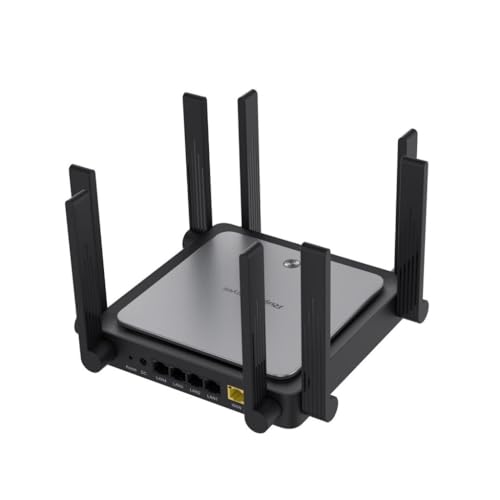
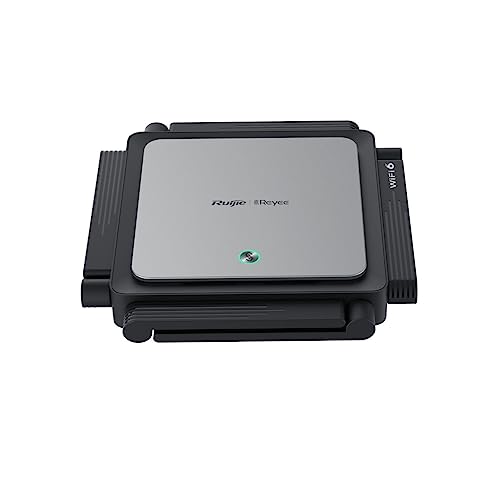
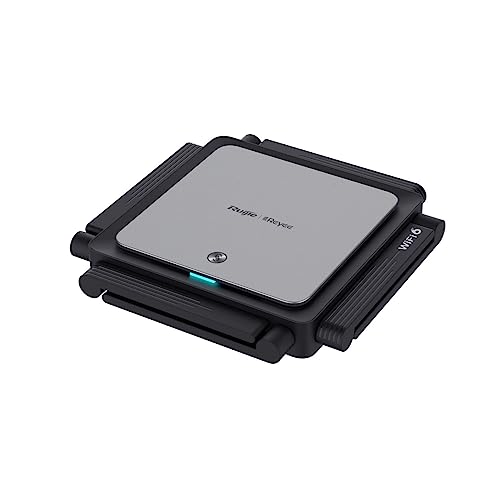
Reyee RG-E5
7.7/10

Overall score

Score
7.7/ 10
✕
What it is
Our main score for this model, 1–10. It combines specs, expert reviews, best-of lists and owners.
How we count it
Parts: Technical score 40%, Reviews score 25%, List score 25%, Sentiment score 10%
Marks: Each part gets a mark out of 10. For reviews, lists and owners, a typical model in this category gets about 8 and the best one gets 10.
No data yet: A part with no data shows "?". It counts as the mark of a weaker model in this category (4 in 5 models with data score higher). This way, models with reviews, lists and owners usually come out ahead.
Score distribution
â–¼
<55-66-77-88-99-10
Score components

40%

7.6

Technical score

25%

8.3

Reviews score

25%

?

List scoreNot enough data yet, so we use 7.5, the mark of a weaker model in this category

10%

?

Sentiment scoreNot enough data yet, so we use 6.9, the mark of a weaker model in this category

â–²Better than 64% of routers
8.3

Value for money

Value for money
8.3/ 10
✕
What it is
An indicator that combines the router's overall rating with its cost.
When it matters
When you are looking for a router with a good balance between network performance, features, and price.
Score distribution
â–¼
<55-66-77-88-99-10
Score components

70%

7.7

Overall score

30%

9.9

Price

â–²Better than 65%
7.6

Technical score

Technical score
7.6/ 10
✕
What it is
How good the specs are compared with the other models in this category, 1–10.
How we count it
Areas: We rate the specs in each area against the other models in this category.
Weighting: The areas that matter most to buyers count more. The shares are shown under Score components.
Share: The technical score is 40% of the overall score.
Score distribution
â–¼
<55-66-77-88-99-10
Score components

26%

7.8

Wireless

20%

5.4

Ports

18%

9.9

Networking

14%

10

Security

12%

4.3

Hardware

10%

7.7

Management

â–²Better than 68%
8.3

Reviews score

Reviews score
8.3/ 10
✕
What it is
Average grade from independent test sites, magazines and video reviewers, 1–10.
How we count it
Grades: Each review's own score is converted to 1–10; without one, we grade the review ourselves. Big test sites count more, short reviews half as much as full tests. A video review counts half.
Score: The average grade is 80% of the review mark; the number of reviews is the other 20% (1 review = 5, the typical number in this category = 8, the most-reviewed model = 10).
Enough data: With few reviews, the average grade is pulled toward the typical grade of this category. No reviews yet: 7.7 for now.
Share: Reviews count 25% of the overall score.
Score distribution
â–¼
<55-66-77-88-99-10

80%

8.2

Average grade

20%

8.7

Popularity

Grades by review (11)
8 reviews: 8 with a printed score, 0 estimated from the review. 3 video reviews, each counting half as much as a written test. Reviews count 25% of the overall score.
User ratings collected online are not part of this score.
â–²Better than 60%
?

List score

List score
7.5/ 10
✕
What it is
How often independent test sites, magazines and video reviewers put this model in their best-of lists for this category.
How we count it
Points: The model in the most lists of this category gets 10; the others get 8 to 10 in proportion. In no list yet: 7.5. Lists count 25% of the overall score.
Enough data: Every list counts, even a single one. With fewer than 5 best-of lists in the category, this part is left out.
Lists with this model (0)
Not in any best-of list yet, so this part counts as 7.5. Models in a list get 8 to 10.
Not in any best-of list yet
  • reyee-rg-e5
  • reyee-rg-e5
  • reyee-rg-e5
  • reyee-rg-e5
  • reyee-rg-e5
reyee-rg-e5
reyee-rg-e5
reyee-rg-e5
reyee-rg-e5
reyee-rg-e5
Where to buy
    N/A~ £120
Best rankings
Available: ranking among products currently available (including other versions of this product).All: ranking among all products in the database.

What reviewers say about the Reyee RG-E5

Based on 6 · 3

Reviewers like the easy setup, solid range and good Wi-Fi speed, but dislike the missing USB ports and doubt its security.
Praised
Mixed views
Criticised
Pick a topic to see who said what
Loading...
Loading category ranking...

Technical Specifications of router Reyee RG-E5

Technical score
Technical score
7.6/ 10
✕
What it is
How good the specs are compared with the other models in this category, 1–10.
How we count it
Areas: We rate the specs in each area against the other models in this category.
Weighting: The areas that matter most to buyers count more. The shares are shown under Score components.
Share: The technical score is 40% of the overall score.
Score distribution
â–¼
<55-66-77-88-99-10
Score components:

26%

7.8

Wireless

20%

5.4

Ports

18%

9.9

Networking

14%

10

Security

12%

4.3

Hardware

10%

7.7

Management

7.6
Reviews score
8.3
List score
?
Value for money
Value for money
8.3/ 10
✕
What it is
An indicator that combines the router's overall rating with its cost.
When it matters
When you are looking for a router with a good balance between network performance, features, and price.
Score distribution
â–¼
<55-66-77-88-99-10
Score components:

70%

7.7

Overall score

30%

9.9

Price

8.3
Brand name
Reyee
Wi-Fi version
Wi-Fi 6 (802.11ax)
This router uses Wi-Fi 6 (802.11ax), which is more advanced than 58.5% of routers and equal to 25.9% of routers.
Wi-Fi bands
2.4 GHz + 5 GHz
This router supports 2.4 GHz + 5 GHz Wi-Fi bands, which are more versatile than 24.2% of routers and equal to 65.6% of routers.
Wi-Fi speed
3,200 Mbps
This router delivers 3,200 Mbps Wi-Fi speed, which is higher than 72.7% of routers and equal to 0.6% of routers.
Channel widths supported
20 MHz + 40 MHz + 80 MHz
This router supports 20 MHz + 40 MHz + 80 MHz channel width options, which is more than 36.5% of routers and the same as 29.9% of routers.
Show more
What reviewers say
Wi-Fi security protocols
WPA3, WPA2, WPA
This router supports WPA3, WPA2, WPA Wi-Fi security protocols, which are more advanced than 85.7% of routers and equal to 14.3% of routers.
DoS protection
yes
This router includes DoS protection. 9.8% of routers include DoS protection.
SPI intrusion protection
yes
This router includes SPI-based intrusion protection. 4.7% of routers include SPI-based intrusion protection.
MAC address filtering
yes
This router supports MAC address filtering. 1.7% of routers include MAC address filtering.
URL filter
yes
This router supports URL filtering. 2.6% of routers include URL filtering.
Show more
What reviewers say
IPv6 support
yes
This router supports IPv6. 8.8% of routers are IPv6-ready.
Dynamic routing
yes
This router supports dynamic routing. 54% of routers support dynamic routing.
Inter-VLAN routing
yes
This router supports inter-VLAN routing. 75.8% of routers support inter-VLAN routing.
VLAN tagging
yes
This router supports VLAN tagging. 33.6% of routers include VLAN tagging.
QoS
yes
This router includes QoS controls. 2.4% of routers include QoS controls.
Show more
N. of LAN ports
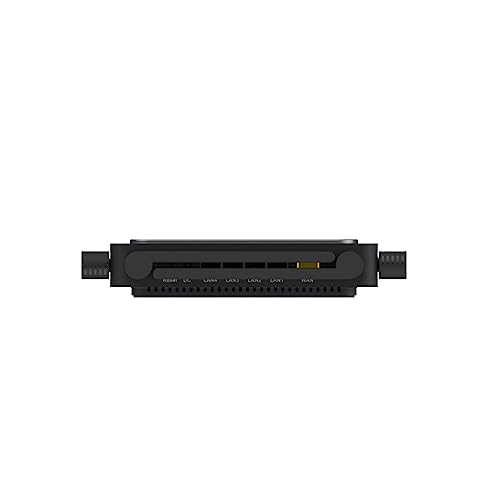
4
This router has 4 LAN ports, which is more than 34.2% of routers and the same as 59.3% of routers.
LAN port speeds
1 Gbps
This router offers 1 Gbps on its LAN ports, which is faster than 25.7% of routers and on par with 56.1% of routers.
N. of WAN ports
1
This router has 1 WAN ports, which is more than 0.8% of routers and the same as 89.4% of routers.
N. of USB ports
0
This router has 0 USB ports, which is fewer than 60.1% of routers and the same as 39.9% of routers.
Power over Ethernet (PoE)
no
This router does not support Power over Ethernet (PoE). 1.7% of routers can be powered over Ethernet.
Show more
What reviewers say
Management interface
Web UI, App
This router uses Web UI, App for management, which is more advanced than 29.7% of routers and equal to 60.9% of routers.
Firmware upgrade method
Web UI, Automatic
This router supports Web UI, Automatic firmware update methods, which are more convenient than 30.2% of routers and equal to 31.9% of routers.
Traffic monitoring
yes
This router includes traffic monitoring. 13.9% of routers include traffic monitoring.
Guest Wi-Fi network
yes
This router offers a guest Wi‑Fi network. 7.3% of routers offer a guest Wi‑Fi network.
Captive portal
yes
This router offers captive portal features. 77.8% of routers offer captive portal features.
Show more
CPU clock speed
2x 1.35 GHz
This router runs at 2x1.35 GHz, which is faster than 59.4% of routers and on par with 0.8% of routers.
RAM capacity
256 MB
This router has 256 MB of RAM, which is more than 46.3% of routers and the same as 14.9% of routers.
Internal storage
0.015625 GB
This router has 0.015625 GB of internal storage, which is less than 55.2% of routers and the same as 13% of routers.
Hardware acceleration
no
This router does not offer hardware acceleration. 75.3% of routers offer hardware acceleration.
N. of external antennas
8
This router has 8 external antennas, which is more than 95.3% of routers and the same as 4.5% of routers.
Show more

Reyee RG-E5 vs the average router

246810TotalWirelessSecurityNetworkingPortsManagementHardware
  • Stronger Wi-Fi security
    This router supports the Wi-Fi security protocols WPA3, WPA2, WPA, while the average router supports WPA2, WPA/WPA2, WEP.
    WPA3, WPA2, WPA vs WPA2, WPA/WPA2, WEP
  • Supports mesh Wi-Fi
    This router supports mesh Wi-Fi, while the average router does not. 45.2% of routers support mesh Wi-Fi.
  • Supports automatic failover
    This router offers automatic failover, while the average router does not. 31.2% of routers offer automatic failover.
  • Supports OFDMA
    This router supports OFDMA, while the average router does not. 41.5% of routers support OFDMA.
  • 49.5% wider wireless coverage
    This router has wider wireless coverage than the average router (278 m² vs 186 m²). The average router offers wireless coverage of 186 m².
    278 m² vs 186 m²
  • Newer Wi-Fi version
    This router supports a newer Wi-Fi version than the average router (Wi-Fi 6 (802.11ax) vs Wi-Fi 5 (802.11ac)). The average router uses Wi-Fi 5 (802.11ac).
    Wi-Fi 6 (802.11ax) vs Wi-Fi 5 (802.11ac)
  • Supports dynamic routing
    This router supports dynamic routing, while the average router does not. 46.1% of routers support dynamic routing.
  • 82.9% faster Wi-Fi speed
    This router has a higher Wi-Fi speed than the average router (3,200 Mbps vs 1,750 Mbps). The average router reaches Wi-Fi speed of 1,750 Mbps.
    3,200 Mbps vs 1,750 Mbps
  • 7.8% higher review score
    Reviews score
    8.3/ 10
    ✕
    What it is
    Average grade from independent test sites, magazines and video reviewers, 1–10.
    How we count it
    Grades: Each review's own score is converted to 1–10; without one, we grade the review ourselves. Big test sites count more, short reviews half as much as full tests. A video review counts half.
    Score: The average grade is 80% of the review mark; the number of reviews is the other 20% (1 review = 5, the typical number in this category = 8, the most-reviewed model = 10).
    Enough data: With few reviews, the average grade is pulled toward the typical grade of this category. No reviews yet: 7.7 for now.
    Share: Reviews count 25% of the overall score.
    Score distribution
    â–¼
    <55-66-77-88-99-10

    80%

    8.2

    Average grade

    20%

    8.7

    Popularity

    Grades by review (11)
    8 reviews: 8 with a printed score, 0 estimated from the review. 3 video reviews, each counting half as much as a written test. Reviews count 25% of the overall score.
    User ratings collected online are not part of this score.
    8.3 vs 7.7
  • Supports mesh Wi-Fi
    This router supports mesh Wi-Fi, while the average router does not. 45.2% of routers support mesh Wi-Fi.
  • Supports OFDMA
    This router supports OFDMA, while the average router does not. 41.5% of routers support OFDMA.
  • 49.5% wider wireless coverage
    This router has wider wireless coverage than the average router (278 m² vs 186 m²). The average router offers wireless coverage of 186 m².
    278 m² vs 186 m²
  • Newer Wi-Fi version
    This router supports a newer Wi-Fi version than the average router (Wi-Fi 6 (802.11ax) vs Wi-Fi 5 (802.11ac)). The average router uses Wi-Fi 5 (802.11ac).
    Wi-Fi 6 (802.11ax) vs Wi-Fi 5 (802.11ac)
  • 82.9% faster Wi-Fi speed
    This router has a higher Wi-Fi speed than the average router (3,200 Mbps vs 1,750 Mbps). The average router reaches Wi-Fi speed of 1,750 Mbps.
    3,200 Mbps vs 1,750 Mbps
  • Supports TWT
    This router supports Target Wake Time (TWT), while the average router does not. 42.6% of routers support Target Wake Time (TWT).
  • 128 more connected devices
    This router supports more connected devices than the average router (192 vs 64). The average router supports 64 connected devices.
    192 vs 64
  • 1 more spatial streams
    This router has more spatial streams than the average router (4 vs 3). The average router has 3 spatial streams.
    4 vs 3
  • Stronger Wi-Fi security
    This router supports the Wi-Fi security protocols WPA3, WPA2, WPA, while the average router supports WPA2, WPA/WPA2, WEP.
    WPA3, WPA2, WPA vs WPA2, WPA/WPA2, WEP
  • Supports automatic failover
    This router offers automatic failover, while the average router does not. 31.2% of routers offer automatic failover.
  • Supports dynamic routing
    This router supports dynamic routing, while the average router does not. 46.1% of routers support dynamic routing.
  • Supports inter-VLAN routing
    This router supports inter-VLAN routing, while the average router does not. 24.4% of routers support inter-VLAN routing.
  • Supports captive portal
    This router supports captive portal, while the average router does not. 22.3% of routers support captive portal.
  • 6 more external antennas
    This router has more external antennas than the average router (8 vs 2). The average router has 2 external antennas.
    8 vs 2
  • No hardware acceleration
    This router does not offer hardware acceleration, while the average router does. 75.2% of routers offer hardware acceleration.
  • Limited firmware updates
    This router supports the firmware update methods Web UI, Automatic, while the average router supports Web UI, App, Automatic.
    Web UI, Automatic vs Web UI, App, Automatic
  • 13.9 W higher power consumption
    This router uses more power than the average router (22 W vs 8.1 W). The average router uses 8.1 W power.
    22 W vs 8.1 W
  • 1 fewer USB ports
    This router has fewer USB ports than the average router (0 vs 1). The average router has 1 USB ports.
    0 vs 1
  • Narrower temperature range
    This router is rated for -10 to 45 C, while the average router is rated for 0 to 40 C.
    -10 to 45 C vs 0 to 40 C
  • 87.5% less internal storage
    This router has less internal storage than the average router (0 GB vs 0.1 GB). The average router offers 0.125 GB of internal storage.
    0.015625 GB vs 0.125 GB
  • No DLNA support
    This router does not support DLNA, while the average router does. 50.4% of routers support DLNA.
  • Less capable NAS services
    This router includes none NAS services, while the average router includes SMB, media server.
    none vs SMB, media server
  • No WPS support
    This router does not support WPS, while the average router does. 89.8% of routers support WPS.
  • No PPTP server
    This router cannot act as a PPTP server, while the average router can. 66.2% of routers can act as a PPTP server.
  • 1 fewer USB ports
    This router has fewer USB ports than the average router (0 vs 1). The average router has 1 USB ports.
    0 vs 1
  • Limited firmware updates
    This router supports the firmware update methods Web UI, Automatic, while the average router supports Web UI, App, Automatic.
    Web UI, Automatic vs Web UI, App, Automatic
  • No DLNA support
    This router does not support DLNA, while the average router does. 50.4% of routers support DLNA.
  • Less capable NAS services
    This router includes none NAS services, while the average router includes SMB, media server.
    none vs SMB, media server
  • No hardware acceleration
    This router does not offer hardware acceleration, while the average router does. 75.2% of routers offer hardware acceleration.
  • 13.9 W higher power consumption
    This router uses more power than the average router (22 W vs 8.1 W). The average router uses 8.1 W power.
    22 W vs 8.1 W
  • Narrower temperature range
    This router is rated for -10 to 45 C, while the average router is rated for 0 to 40 C.
    -10 to 45 C vs 0 to 40 C
  • 87.5% less internal storage
    This router has less internal storage than the average router (0 GB vs 0.1 GB). The average router offers 0.125 GB of internal storage.
    0.015625 GB vs 0.125 GB
  • 2.87x heavier weight
    This router is heavier than the average router (1,290 g vs 450 g). The average router weighs 450 g.
    1,290 g vs 450 g

Video reviews

Hands-on testing, unboxing, and real-world video evaluations

9.0
Deal Unboxing
≈ estimated
17/08/2023
Hands-on review · speed, coverage and setup tests
Verdict
Reyee RG-E5 offers excellent range and speed for the price and is highly recommended overall.
9.0
gizmochina
≈ estimated
07/07/2023
Hands-on review · speed and coverage tests
Verdict
Reyee RG-E5 offers wide, stable coverage and easy setup, and it earns a clear recommendation.
9.0
The Product Critiques
≈ estimated
10/06/2023
Short review · features and overview
Verdict
Reyee RG-E5 is a strong pick for fast, reliable internet and good value for the price.
Shop video
Brand video
Brand video
Hands-on video, no verdict
Not graded
Brand video
Hands-on video, no verdict

Expert reviews

In-depth analysis and verdict from leading tech publications
8.0
pcmag.com
✓ explicit
22/02/2022
Lab test · Midrange Wi-Fi 6
Verdict
The Reyee RG-E5 is a midrange router whose strong 5GHz speeds and wide Wi-Fi coverage suit homes up to 3,000 square feet, though it lacks USB ports and WPA3.
8.0
tomsguide.com
✓ explicit
15/02/2024
Benchmark review · Wi-Fi 6 router
Verdict
The Reyee RG-E5 is a reliable Wi-Fi 6 router with 100-foot range that suits single-floor homes, but it lacks WPA3 and USB storage.
8.1
mbreviews.com
✓ explicit
07/10/2022
Hands-on review · Teardown
Verdict
The Reyee RG-E5 isn't groundbreaking, but its eight antennas and gigabit ports suggest Wi-Fi 6 performance similar to Asus or TP-Link routers.
7.6
highspeedinternet.com
✓ explicit
14/02/2025
Lab test · Wi-Fi 6 router
Verdict
The Reyee RG-E5 is a plain but affordable router with long range, best for homes and offices that need no USB sharing or built-in VPN.
7.9
gadgetreview.com
✓ explicit
14/02/2024
Expert review · Mesh Wi-Fi 6
Verdict
The Reyee RG-E5 is a dual-band Wi-Fi 6 mesh router whose 602.4Mbps 5GHz and 90-foot range suit medium to large homes, though its security is weak.
7.0
mightygadget.com
✓ explicit
29/09/2022
Hands-on review · Wi-Fi 6 router
Verdict
The Reyee RG-E5 reaches far through brick walls and has useful features, but its Wi-Fi 6 speeds underperform.
7.6
highspeedinternet.com
✓ explicit
11/03/2025
Lab test · Long-range Wi-Fi 6
Verdict
The Reyee RG-E5 is a simple, effective router with decent speeds and strong range, best for small offices and homes without multi-gig needs.

Third-party reviews

What customers like about Reyee RG-E5

  • Excellent throughput performance and 5GHz signal range for its price
  • Very easy to install and set up, especially through the web interface
  • Strong antenna design that provides wide Wi-Fi coverage
  • Support for Wi-Fi 6 features including MU-MIMO and easy one-click mesh networking
  • Includes advanced monitoring and customization options for free that other brands often charge for
  • Affordable price point compared to routers with similar performance

What customers don't like about Reyee RG-E5

  • Lacks modern security features, such as WPA3 support
  • No USB ports for network-shared storage or printers
  • Mobile app is reported as buggy, intrusive, and difficult to use
  • Does not have multi-gig WAN/LAN ports, limiting wired speeds to 1 Gbps
  • Poor customer support and a lack of a strong online presence for troubleshooting
  • Some users reported reliability issues, such as failing to restart after power outages

Verdict

The Reyee RG-E5 is a dual-band AX3200 Wi-Fi 6 router designed for large homes up to 3,000 square feet, featuring eight high-gain omnidirectional antennas and a 1.35GHz dual-core processor. It delivers theoretical speeds of up to 800Mbps on the 2.4GHz band and 2,400Mbps on the 5GHz band, supporting advanced technologies like 4x4 MU-MIMO, OFDMA, beamforming, and seamless mesh networking. Main pros include its exceptional 5GHz throughput performance, extensive wireless range, and an easy setup process facilitated by a dedicated mobile app. However, notable cons include the lack of USB ports for storage or printer sharing, no support for WPA3 security or 160MHz channel bandwidth, and the absence of multi-gigabit Ethernet ports.

Compare Reyee RG-E5 with other routers

1Product to compare no. 1
VS
2Product to compare no. 2
VS
3Product to compare no. 3 (optional)

Graphic comparison of Reyee RG-E5 and other routers

No results found