Scored using Routers Methodology v3.0
Routers Methodology v3.0
Mathematical & Unbiased Scoring
Products in this category are scored under Frontum Routers Methodology v3.0: the technical score from the specifications is the base, and independent expert and video reviews (up to ±0.5 points), owner opinions (up to ±0.3) and best-of lists (up to +0.3) move it up or down.
Explore Routers Methodology v3.0

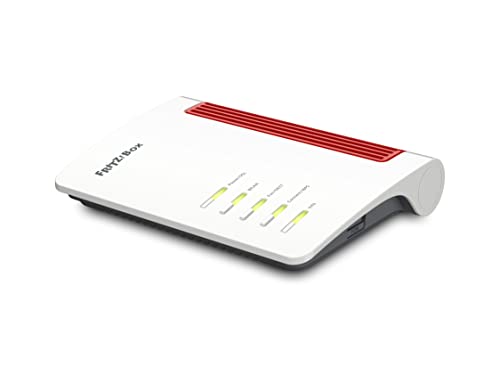
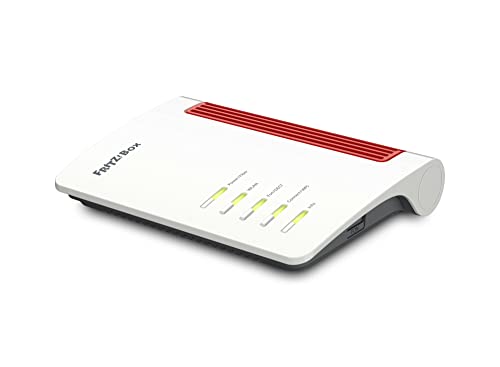
AVM FRITZ!Box 7590 AX review: 77 specs compared

Avg. price:~£160Wi-Fi version:Wi-Fi 6 (802.11ax)Wi-Fi speed:3600 MbpsLAN port speeds:1 GbpsMesh Wi-Fi:yes

AVM FRITZ!Box 7590 AX Review: Compare 77 technical specifications, 12 expert and video reviews and 11 best-of lists to see how this product ranks in the Routers category and whether it is worth buying.
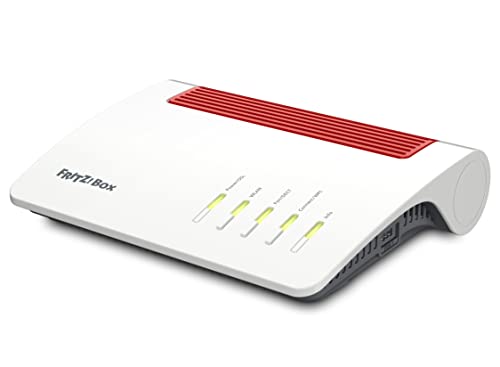
AVM FRITZ!Box 7590 AX
8.5/10

Overall score

Score
8.5/ 10
✕
What it is
Our main score for this model, 1–10. It combines specs, expert reviews, best-of lists and owners.
How we count it
Parts: Technical score 40%, Reviews score 25%, List score 25%, Sentiment score 10%
Marks: Each part gets a mark out of 10. For reviews, lists and owners, a typical model in this category gets about 8 and the best one gets 10.
No data yet: A part with no data shows "?". It counts as the mark of a weaker model in this category (4 in 5 models with data score higher). This way, models with reviews, lists and owners usually come out ahead.
Score distribution
▼
<55-66-77-88-99-10
Score components

40%

8.1

Technical score

25%

8.5

Reviews score

25%

9.3

List score

10%

8.6

Sentiment score

★Better than 96% of routers
8.9

Value for money

Value for money
8.9/ 10
✕
What it is
An indicator that combines the router's overall rating with its cost.
When it matters
When you are looking for a router with a good balance between network performance, features, and price.
Score distribution
▼
<55-66-77-88-99-10
Score components

70%

8.5

Overall score

30%

9.7

Price

★Better than 98%
8.1

Technical score

Technical score
8.1/ 10
✕
What it is
How good the specs are compared with the other models in this category, 1–10.
How we count it
Areas: We rate the specs in each area against the other models in this category.
Weighting: The areas that matter most to buyers count more. The shares are shown under Score components.
Share: The technical score is 40% of the overall score.
Score distribution
▼
<55-66-77-88-99-10
Score components

26%

7.8

Wireless

20%

6.5

Ports

18%

9.9

Networking

14%

9.3

Security

12%

7.1

Hardware

10%

8.3

Management

▲Better than 83%
8.5

Reviews score

Reviews score
8.5/ 10
✕
What it is
Average grade from independent test sites, magazines and video reviewers, 1–10.
How we count it
Grades: Each review's own score is converted to 1–10; without one, we grade the review ourselves. Big test sites count more, short reviews half as much as full tests. A video review counts half.
Score: The average grade is 80% of the review mark; the number of reviews is the other 20% (1 review = 5, the typical number in this category = 8, the most-reviewed model = 10).
Enough data: With few reviews, the average grade is pulled toward the typical grade of this category. No reviews yet: 7.7 for now.
Share: Reviews count 25% of the overall score.
Score distribution
▼
<55-66-77-88-99-10

80%

8.4

Average grade

20%

8.8

Popularity

Grades by review (12)
12 video reviews, each counting half as much as a written test. Reviews count 25% of the overall score.
User ratings collected online are not part of this score.
▲Better than 77%
9.3

List score

List score
9.3/ 10
✕
What it is
How often independent test sites, magazines and video reviewers put this model in their best-of lists for this category.
How we count it
Points: The model in the most lists of this category gets 10; the others get 8 to 10 in proportion. In no list yet: 7.5. Lists count 25% of the overall score.
Enough data: Every list counts, even a single one. With fewer than 5 best-of lists in the category, this part is left out.
Lists with this model (11)
List score: in 11 of 84 lists (13%)
★Better than 99%
  • avm-fritz-box-7590-ax
  • avm-fritz-box-7590-ax
  • avm-fritz-box-7590-ax
  • avm-fritz-box-7590-ax
  • avm-fritz-box-7590-ax
  • avm-fritz-box-7590-ax
avm-fritz-box-7590-ax
Where to buy
*As an Amazon Associate, we earn from qualifying purchases.
Best rankings
Available: ranking among products currently available (including other versions of this product).All: ranking among all products in the database.

What reviewers say about the AVM FRITZ!Box 7590 AX

Based on 0 · 12

Reviewers praise its coverage, speed and stable connection, but are split on setup and dislike its bulky build.
Praised
Mixed views
Criticised
Pick a topic to see who said what

What owners say about the AVM FRITZ!Box 7590 AX

Based on 58 owners sharing their experience in online comments

40%positive8%mixed52%negative

Owners value antenna and mesh coverage gains, but connection dropouts and disappointing DSL performance remain major frustrations.

What owners dislike

  • Owners report DSL sync failures and frequent drops, sometimes every 10 to 20 minutes, on some lines, including 250K and VDSL 250 connections.8
  • Owners say aftermarket antenna upgrades did not improve range and sometimes made reception worse, and one mounting bracket broke.6
  • Owners say the 7590 AX gave no speed gain over older models and was slower on upload on some lines, so they returned it.5
  • Owners report upload speeds lower than the older 7530 AX or the non-AX 7590, and one user saw upload capped near 6 Mbit/s.4
  • Some owners say Wi-Fi range is very short, reaching only about 3 metres, and iPhones performed poorly on it.3
  • Runs hot with weak thermal design3
  • Owners say configuration import and export between AVM models is incomplete, and a bridged ONT could not be reconfigured after a reset.3

Points mentioned by at least 3 owners, most mentioned first.

Loading...
Loading category ranking...

Technical Specifications of router AVM FRITZ!Box 7590 AX

Technical score
Technical score
8.1/ 10
✕
What it is
How good the specs are compared with the other models in this category, 1–10.
How we count it
Areas: We rate the specs in each area against the other models in this category.
Weighting: The areas that matter most to buyers count more. The shares are shown under Score components.
Share: The technical score is 40% of the overall score.
Score distribution
▼
<55-66-77-88-99-10
Score components:

26%

7.8

Wireless

20%

6.5

Ports

18%

9.9

Networking

14%

9.3

Security

12%

7.1

Hardware

10%

8.3

Management

8.1
Reviews score
8.5
List score
9.3
Value for money
Value for money
8.9/ 10
✕
What it is
An indicator that combines the router's overall rating with its cost.
When it matters
When you are looking for a router with a good balance between network performance, features, and price.
Score distribution
▼
<55-66-77-88-99-10
Score components:

70%

8.5

Overall score

30%

9.7

Price

8.9
Brand name
AVM
Wi-Fi version
Wi-Fi 6 (802.11ax)
This router uses Wi-Fi 6 (802.11ax), which is more advanced than 58.5% of routers and equal to 25.9% of routers.
Wi-Fi bands
2.4 GHz + 5 GHz
This router supports 2.4 GHz + 5 GHz Wi-Fi bands, which are more versatile than 24.2% of routers and equal to 65.6% of routers.
Wi-Fi speed
3,600 Mbps
This router delivers 3,600 Mbps Wi-Fi speed, which is higher than 74.2% of routers and equal to 3.3% of routers.
Channel widths supported
20 MHz + 40 MHz + 80 MHz + 160 MHz
This router supports 20 MHz + 40 MHz + 80 MHz + 160 MHz channel width options, which is more than 66.5% of routers and the same as 27.4% of routers.
Show more
What reviewers say
Wi-Fi security protocols
WPA3, WPA2, WPA, WPS
This router supports WPA3, WPA2, WPA, WPS Wi-Fi security protocols, which are more advanced than 78.9% of routers and equal to 6.3% of routers.
DoS protection
no
This router does not include DoS protection. 90.4% of routers include DoS protection.
SPI intrusion protection
yes
This router includes SPI-based intrusion protection. 4.7% of routers include SPI-based intrusion protection.
MAC address filtering
yes
This router supports MAC address filtering. 1.7% of routers include MAC address filtering.
URL filter
yes
This router supports URL filtering. 2.6% of routers include URL filtering.
Show more
IPv6 support
yes
This router supports IPv6. 8.8% of routers are IPv6-ready.
Dynamic routing
yes
This router supports dynamic routing. 54% of routers support dynamic routing.
Inter-VLAN routing
yes
This router supports inter-VLAN routing. 75.8% of routers support inter-VLAN routing.
VLAN tagging
yes
This router supports VLAN tagging. 33.6% of routers include VLAN tagging.
QoS
yes
This router includes QoS controls. 2.4% of routers include QoS controls.
Show more
N. of LAN ports
4
This router has 4 LAN ports, which is more than 34.2% of routers and the same as 59.3% of routers.
LAN port speeds
1 Gbps
This router offers 1 Gbps on its LAN ports, which is faster than 25.7% of routers and on par with 56.1% of routers.
N. of WAN ports
1
This router has 1 WAN ports, which is more than 0.8% of routers and the same as 89.4% of routers.
N. of USB ports
2
This router has 2 USB ports, which is more than 81.9% of routers and the same as 17.9% of routers.
Power over Ethernet (PoE)
no
This router does not support Power over Ethernet (PoE). 1.7% of routers can be powered over Ethernet.
Show more
Management interface
Web UI, App
This router uses Web UI, App for management, which is more advanced than 29.7% of routers and equal to 60.9% of routers.
Firmware upgrade method
Web UI, Automatic
This router supports Web UI, Automatic firmware update methods, which are more convenient than 30.2% of routers and equal to 31.9% of routers.
Traffic monitoring
yes
This router includes traffic monitoring. 13.9% of routers include traffic monitoring.
Guest Wi-Fi network
yes
This router offers a guest Wi‑Fi network. 7.3% of routers offer a guest Wi‑Fi network.
Captive portal
yes
This router offers captive portal features. 77.8% of routers offer captive portal features.
Show more
CPU clock speed
2x 0.55 GHz
This router runs at 2x0.55 GHz, which is slower than 58.9% of routers and on par with 0.3% of routers.
RAM capacity
512 MB
This router has 512 MB of RAM, which is more than 61.4% of routers and the same as 21.4% of routers.
Internal storage
0.5 GB
This router has 0.5 GB of internal storage, which is more than 88.9% of routers and the same as 6.6% of routers.
Hardware acceleration
yes
This router offers hardware acceleration. 24.9% of routers offer hardware acceleration.
N. of external antennas
0
This router has 0 external antennas, which is fewer than 62.7% of routers and the same as 37.3% of routers.
Show more
What reviewers say

AVM FRITZ!Box 7590 AX vs the average router

246810TotalWirelessSecurityNetworkingPortsManagementHardware
  • Stronger Wi-Fi security
    This router supports the Wi-Fi security protocols WPA3, WPA2, WPA, WPS, while the average router supports WPA2, WPA/WPA2, WEP.
    WPA3, WPA2, WPA, WPS vs WPA2, WPA/WPA2, WEP
  • Supports mesh Wi-Fi
    This router supports mesh Wi-Fi, while the average router does not. 45.2% of routers support mesh Wi-Fi.
  • Supports automatic failover
    This router offers automatic failover, while the average router does not. 31.2% of routers offer automatic failover.
  • Supports OFDMA
    This router supports OFDMA, while the average router does not. 41.5% of routers support OFDMA.
  • 2.06x faster Wi-Fi speed
    This router has a higher Wi-Fi speed than the average router (3,600 Mbps vs 1,750 Mbps). The average router reaches Wi-Fi speed of 1,750 Mbps.
    3,600 Mbps vs 1,750 Mbps
  • More advanced integrated modem
    This router uses a VDSL2 + ADSL2+ integrated modem, while the average router uses none (external modem required).
    VDSL2 + ADSL2+ vs none (external modem required)
  • 4x more internal storage
    This router has more internal storage than the average router (0.5 GB vs 0.1 GB). The average router offers 0.125 GB of internal storage.
    0.5 GB vs 0.125 GB
  • Newer Wi-Fi version
    This router supports a newer Wi-Fi version than the average router (Wi-Fi 6 (802.11ax) vs Wi-Fi 5 (802.11ac)). The average router uses Wi-Fi 5 (802.11ac).
    Wi-Fi 6 (802.11ax) vs Wi-Fi 5 (802.11ac)
  • 14.8% higher list score
    List score
    9.3/ 10
    ✕
    What it is
    How often independent test sites, magazines and video reviewers put this model in their best-of lists for this category.
    How we count it
    Points: The model in the most lists of this category gets 10; the others get 8 to 10 in proportion. In no list yet: 7.5. Lists count 25% of the overall score.
    Enough data: Every list counts, even a single one. With fewer than 5 best-of lists in the category, this part is left out.
    Lists with this model (11)
    List score: in 11 of 84 lists (13%)
    9.3 vs 8.1
  • 10.4% higher review score
    Reviews score
    8.5/ 10
    ✕
    What it is
    Average grade from independent test sites, magazines and video reviewers, 1–10.
    How we count it
    Grades: Each review's own score is converted to 1–10; without one, we grade the review ourselves. Big test sites count more, short reviews half as much as full tests. A video review counts half.
    Score: The average grade is 80% of the review mark; the number of reviews is the other 20% (1 review = 5, the typical number in this category = 8, the most-reviewed model = 10).
    Enough data: With few reviews, the average grade is pulled toward the typical grade of this category. No reviews yet: 7.7 for now.
    Share: Reviews count 25% of the overall score.
    Score distribution
    ▼
    <55-66-77-88-99-10

    80%

    8.4

    Average grade

    20%

    8.8

    Popularity

    Grades by review (12)
    12 video reviews, each counting half as much as a written test. Reviews count 25% of the overall score.
    User ratings collected online are not part of this score.
    8.5 vs 7.7
  • 10% better value for money
    AVM FRITZ!Box 7590 AX has better value for money than the average router (8.88 vs 8.1).
    8.88 vs 8.08
  • Supports mesh Wi-Fi
    This router supports mesh Wi-Fi, while the average router does not. 45.2% of routers support mesh Wi-Fi.
  • Supports OFDMA
    This router supports OFDMA, while the average router does not. 41.5% of routers support OFDMA.
  • 2.06x faster Wi-Fi speed
    This router has a higher Wi-Fi speed than the average router (3,600 Mbps vs 1,750 Mbps). The average router reaches Wi-Fi speed of 1,750 Mbps.
    3,600 Mbps vs 1,750 Mbps
  • Newer Wi-Fi version
    This router supports a newer Wi-Fi version than the average router (Wi-Fi 6 (802.11ax) vs Wi-Fi 5 (802.11ac)). The average router uses Wi-Fi 5 (802.11ac).
    Wi-Fi 6 (802.11ax) vs Wi-Fi 5 (802.11ac)
  • Wider channel widths
    This router has a higher supported channel width than the average router (20 MHz + 40 MHz + 80 MHz + 160 MHz vs 20 MHz + 40 MHz + 80 MHz). The average router supports channel width of 20 MHz + 40 MHz + 80 MHz.
    20 MHz + 40 MHz + 80 MHz + 160 MHz vs 20 MHz + 40 MHz + 80 MHz
  • Supports TWT
    This router supports Target Wake Time (TWT), while the average router does not. 42.6% of routers support Target Wake Time (TWT).
  • 1 more spatial streams
    This router has more spatial streams than the average router (4 vs 3). The average router has 3 spatial streams.
    4 vs 3
  • Stronger Wi-Fi security
    This router supports the Wi-Fi security protocols WPA3, WPA2, WPA, WPS, while the average router supports WPA2, WPA/WPA2, WEP.
    WPA3, WPA2, WPA, WPS vs WPA2, WPA/WPA2, WEP
  • Supports automatic failover
    This router offers automatic failover, while the average router does not. 31.2% of routers offer automatic failover.
  • Supports dynamic routing
    This router supports dynamic routing, while the average router does not. 46.1% of routers support dynamic routing.
  • Supports inter-VLAN routing
    This router supports inter-VLAN routing, while the average router does not. 24.4% of routers support inter-VLAN routing.
  • More advanced integrated modem
    This router uses a VDSL2 + ADSL2+ integrated modem, while the average router uses none (external modem required).
    VDSL2 + ADSL2+ vs none (external modem required)
  • 1 more USB ports
    This router has more USB ports than the average router (2 vs 1). The average router has 1 USB ports.
    2 vs 1
  • Supports captive portal
    This router supports captive portal, while the average router does not. 22.3% of routers support captive portal.
  • Supports Matter
    This router supports Matter, while the average router does not. 3.4% of routers support Matter.
  • 4x more internal storage
    This router has more internal storage than the average router (0.5 GB vs 0.1 GB). The average router offers 0.125 GB of internal storage.
    0.5 GB vs 0.125 GB
  • 8 more internal antennas
    This router has more internal antennas than the average router (8 vs 0). The average router has 0 internal antennas.
    8 vs 0
  • 2x more RAM
    This router has more RAM than the average router (512 MB vs 256 MB). The average router has 256 MB of RAM.
    512 MB vs 256 MB
  • Limited firmware updates
    This router supports the firmware update methods Web UI, Automatic, while the average router supports Web UI, App, Automatic.
    Web UI, Automatic vs Web UI, App, Automatic
  • No DoS protection
    This router does not support DoS protection, while the average router does. 90.2% of routers support DoS protection.
  • 3.9 W higher power consumption
    This router uses more power than the average router (12 W vs 8.1 W). The average router uses 8.1 W power.
    12 W vs 8.1 W
  • No beamforming
    This router does not support beamforming, while the average router does. 62.1% of routers support beamforming.
  • 2 fewer external antennas
    This router has fewer external antennas than the average router (0 vs 2). The average router has 2 external antennas.
    0 vs 2
  • Lower CPU clock speed
    This router has a lower CPU clock speed than the average router (2x0.55 GHz vs 2x1 GHz). The average router has a CPU clock speed of 2x1 GHz.
    2x0.55 GHz vs 2x1 GHz
  • 68.4% more expensive
    AVM FRITZ!Box 7590 AX is more expensive than the average router (£160 vs £95).
    £160 vs £95
  • 85.8% heavier weight
    This router is heavier than the average router (836 g vs 450 g). The average router weighs 450 g.
    836 g vs 450 g
  • 68.4% more expensive
    AVM FRITZ!Box 7590 AX is more expensive than the average router (£160 vs £95).
    £160 vs £95
  • No beamforming
    This router does not support beamforming, while the average router does. 62.1% of routers support beamforming.
  • Narrower DFS range
    This router has fewer supported DFS channels than the average router (52-64 + 100-140 vs 52-64 + 100-144). The average router supports 52-64 + 100-144 DFS channels.
    52-64 + 100-140 vs 52-64 + 100-144
  • No DoS protection
    This router does not support DoS protection, while the average router does. 90.2% of routers support DoS protection.
  • Limited firmware updates
    This router supports the firmware update methods Web UI, Automatic, while the average router supports Web UI, App, Automatic.
    Web UI, Automatic vs Web UI, App, Automatic
  • 3.9 W higher power consumption
    This router uses more power than the average router (12 W vs 8.1 W). The average router uses 8.1 W power.
    12 W vs 8.1 W
  • 2 fewer external antennas
    This router has fewer external antennas than the average router (0 vs 2). The average router has 2 external antennas.
    0 vs 2
  • Lower CPU clock speed
    This router has a lower CPU clock speed than the average router (2x0.55 GHz vs 2x1 GHz). The average router has a CPU clock speed of 2x1 GHz.
    2x0.55 GHz vs 2x1 GHz
  • 85.8% heavier weight
    This router is heavier than the average router (836 g vs 450 g). The average router weighs 450 g.
    836 g vs 450 g
  • 61 mm wider width
    This router is wider than the average router (254 mm vs 193 mm). The average router is 193 mm wide.
    254 mm vs 193 mm

Video reviews

Hands-on testing, unboxing, and real-world video evaluations

8.0
Altima News
≈ estimated
08/04/2023
Hands-on review · performance, heat and setup tests
Verdict
AVM FRITZ!Box 7590 AX is a reliable Wi-Fi 6 router for homes and small offices, though FRITZ!OS can be tricky for less technical users.
9.0
Mark J Draper
≈ estimated
07/12/2022
Quick look · Wi-Fi 6 speed and built-in telephone system
Verdict
AVM FRITZ!Box 7590 AX is a high-end Wi-Fi 6 router with full phone features, best if you need a landline.
9.0
Harald Karcher
≈ estimated
04/06/2021
First look · unboxing and overview
Verdict
AVM FRITZ!Box 7590 AX keeps the predecessor's strengths and adds Wi-Fi 6 at a moderate price.
Not graded
Not graded yet
Not graded yet

Expert reviews

In-depth analysis and verdict from leading tech publications

Third-party reviews

What customers like about AVM FRITZ!Box 7590 AX

  • High-speed Wi-Fi 6 performance with speeds up to 2400 Mbps on the 5 GHz band
  • Comprehensive all-in-one functionality including VDSL modem, router, and phone system
  • Integrated DECT base station for connecting up to six cordless phones
  • Long-term software support with frequent FRITZ!OS updates for features and security
  • User-friendly web interface and setup wizards suitable for non-technical users
  • Robust Mesh Wi-Fi capabilities to easily extend coverage with other FRITZ! products
  • Versatile connectivity options including multiple Gigabit LAN ports and two USB 3.0 ports
  • Generous 5-year manufacturer warranty

What customers don't like about AVM FRITZ!Box 7590 AX

  • High premium price compared to other Wi-Fi 6 routers
  • Lacks tri-band functionality, which can limit Mesh backhaul performance
  • Relatively large physical footprint due to additional cooling vents for Wi-Fi 6 heat
  • Middling performance of USB 3.0 ports for NAS functions compared to dedicated servers
  • Internal antennas can lead to slightly less range than competitors with external antennas
  • Some users reported stability issues when mixing with certain older non-AX repeaters
  • No 2.5 Gigabit LAN/WAN port, which may bottle-neck ultra-fast fiber connections

Verdict

The AVM FRITZ!Box 7590 AX is a high-end dual-band modem router featuring Wi-Fi 6 (802.11ax) technology, delivering speeds of up to 2,400 Mbit/s on the 5 GHz band and 1,200 Mbit/s on the 2.4 GHz band. It supports VDSL supervectoring 35b for internet speeds up to 300 Mbit/s and includes an integrated DECT base station for up to six cordless phones, along with two analogue and one ISDN telephony port. Main pros include its extensive all-in-one functionality as a telephone exchange and NAS, robust FRITZ!OS software with regular updates, and reliable Mesh Wi-Fi integration. However, notable cons include its relatively high price point, USB 3.0 ports that may underperform in actual data transfer speeds, and a bulky design compared to non-telephony routers.

Compare AVM FRITZ!Box 7590 AX with other routers

1Product to compare no. 1
VS
2Product to compare no. 2
VS
3Product to compare no. 3 (optional)

Graphic comparison of AVM FRITZ!Box 7590 AX and other routers

No results found