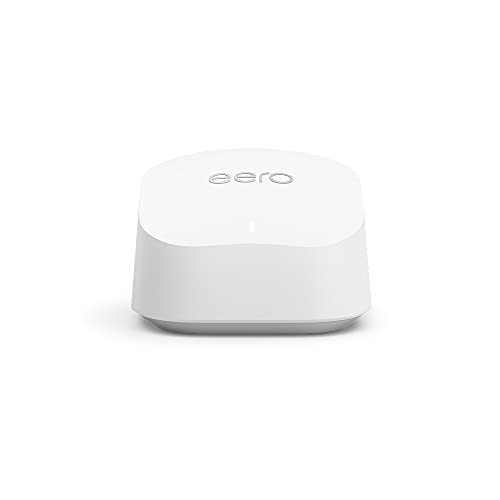
Amazon Eero 6 Plus Review | 77 Data compared

double-arrow
  • Avg. price: ~£45
  • Wi-Fi version: Wi-Fi 6 (802.11ax)
  • Wi-Fi speed: 1000 Mbps
  • LAN port speeds: 1 Gbps
  • Wireless coverage: 140

Amazon Eero 6 Plus review. Compare 77 technical specifications and user reviews to see how it ranks among routers and if it is worth buying.

7.0

Overall score

What it is: An overall evaluation of the router's quality, based on technical analyses and user reviews.

When it matters: When you need a quick reference to identify the best routers on the market.

Score components:

90.0%

6.7

Technical Score

10.0%

9.2

User score

Very good
6.7

Technical Score

What it is: An assessment of the router's technical performance, covering key areas such as Wi-Fi performance, wired connectivity, security, software features, coverage, and design.

When it matters: When you want to compare routers based on technical performance and available features.

Score components:

26.0%

6.5

Wireless

20.0%

4.0

Ports

18.0%

8.6

Networking

14.0%

8.2

Security

12.0%

7.5

Hardware

10.0%

6.5

Management

Good
9.2

User score

What it is: A rating that combines user reviews and the total number of reviews received by the router.

When it matters: When you want to know how a router performs in daily use and how reliable it is for speed, coverage, and stability according to user feedback.

Score components:

70.0%

8.8

User reviews

30.0%

10

Popularity

User score:
United Kingdom
amazon
4.3
(876)
amazon
4.6
(56)
United States
Amazon_logo.png
4.4
(10069)

(Reviews last updated: May 2026)

Exceptional
  • 6.0
    Gaming

    Score components:

    33.0%

    2.5

    Wi-Fi speed

    28.0%

    8.2

    CPU clock speed

    22.0%

    10

    RAM capacity

    17.0%

    4.0

    Maximum connected devices

  • 5.4
    Travel

    Score components:

    40.0%

    9.4

    Weight

    30.0%

    2.5

    Wi-Fi speed

    20.0%

    4.0

    Cellular modem type

    10.0%

    1.0

    SIM slot

  • amazon-eero-6-plus
  • amazon-eero-6-plus
  • amazon-eero-6-plus
  • amazon-eero-6-plus
  • amazon-eero-6-plus
  • amazon-eero-6-plus
amazon-eero-6-plus
amazon-eero-6-plus
amazon-eero-6-plus
amazon-eero-6-plus
amazon-eero-6-plus
amazon-eero-6-plus

Best prices in UK

Best rankings

?

Available: ranking among products currently available (including other versions of this product).
All: ranking among all products in the database.

Verdict

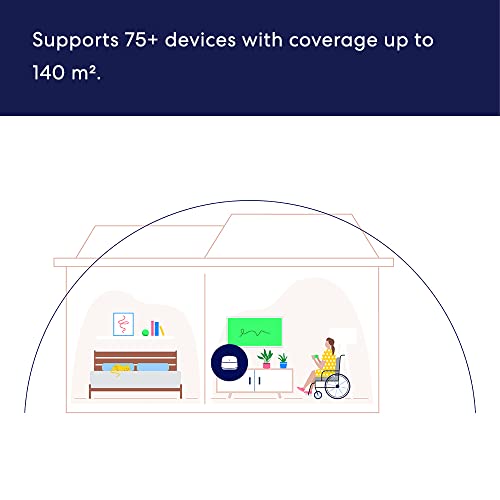
The Amazon eero 6+ is a compact dual-band Wi-Fi 6 mesh router featuring an AX3000 speed rating and support for 160MHz channels to deliver gigabit-level performance. Powered by a 1GHz dual-core CPU with 512MB RAM, it supports over 75 simultaneous devices and covers up to 140 m² per unit. Key advantages include a built-in Zigbee smart home hub with Thread and Alexa compatibility, WPA3 security, and an exceptionally simple app-based setup. However, it is limited by having only two gigabit Ethernet ports per node, no USB data connectivity, and several advanced features like parental controls and security scanning that require a recurring paid subscription.

Technical Specifications of router Amazon Eero 6 Plus

Technical Score

What it is: An assessment of the router's technical performance, covering key areas such as Wi-Fi performance, wired connectivity, security, software features, coverage, and design.

When it matters: When you want to compare routers based on technical performance and available features.

Score components:

26.0%

6.5

Wireless

20.0%

4.0

Ports

18.0%

8.6

Networking

14.0%

8.2

Security

12.0%

7.5

Hardware

10.0%

6.5

Management

6.7
Amazon Eero 6 Plus has a technical score of 6.74 points, which is higher than that of 54.9% of products in this category.
User score

What it is: A rating that combines user reviews and the total number of reviews received by the router.

When it matters: When you want to know how a router performs in daily use and how reliable it is for speed, coverage, and stability according to user feedback.

Score components:

70.0%

8.8

User reviews

30.0%

10

Popularity

User score:
United Kingdom
amazon
4.3
(876)
amazon
4.6
(56)
United States
Amazon_logo.png
4.4
(10069)

(Reviews last updated: May 2026)

9.2
Amazon Eero 6 Plus has a user score of 9.15 points, which is higher than that of 91.7% of products in this category.
Popularity
What it is: An indicator based on the number of reviews received by the router.
When it matters: When you prefer to choose a router reviewed and selected by many other buyers.
10
Amazon Eero 6 Plus has a popularity of 10 points, which is higher than 63.5% of products in this category.
Ratio quality/price

What it is: An indicator that combines the router's overall rating with its cost.

When it matters: When you are looking for a router with a good balance between network performance, features, and price.

Score components:

60.0%

7.0

Overall score

40.0%

10

Price

7.9
Amazon Eero 6 Plus has a quality-to-price ratio of 7.9 points, which is higher than 62% of products in this category.
Brand name
What it is: The manufacturer or brand of the product.
When it matters: When you prefer a specific ecosystem, support network, or design philosophy.

Importance: MEDIUM

Amazon
Wi-Fi version
What it is: Identifies the Wi-Fi generation the router supports, such as Wi-Fi 5, 6, 6E, or 7.
When it matters: When newer phones, laptops, and consoles need the latest Wi-Fi efficiency and speed features.

Importance: HIGH

Good value: Wi-Fi 6 (802.11ax)

Wi-Fi 6 (802.11ax)
Amazon Eero 6 Plus uses Wi-Fi Wi-Fi 6 (802.11ax), which is more advanced than 65% of routers and equal to 26.6% of routers.
Wi-Fi bands
What it is: Lists which wireless frequency bands the router can use, such as 2.4 GHz, 5 GHz, or 6 GHz.
When it matters: When you need to balance range, speed, and congestion across different types of client devices.

Importance: HIGH

Good value: 2.4 GHz + 5 GHz

2.4 GHz + 5 GHz
Amazon Eero 6 Plus supports 2.4 GHz + 5 GHz Wi-Fi bands, which are more versatile than 25% of routers and equal to 67.9% of routers.
Wi-Fi speed
What it is: The advertised maximum wireless throughput rating of the router under supported conditions.
When it matters: When several users stream, download, and game at once and you want more wireless headroom.

Importance: HIGH

Good value: >2700 Mbps

1,000 Mbps
Amazon Eero 6 Plus delivers 1,000 Mbps Wi-Fi speed, which is lower than 59.8% of routers and equal to 0.3% of routers.
Channel widths supported
What it is: Lists the Wi-Fi channel widths the router can use, such as 20, 40, 80, or 160 MHz.
When it matters: When you want the option to trade peak speed against stability in crowded wireless environments.

Importance: MEDIUM

Good value: 20 MHz + 40 MHz + 80 MHz

20 MHz + 40 MHz + 80 MHz + 160 MHz
Amazon Eero 6 Plus supports 20 MHz + 40 MHz + 80 MHz + 160 MHz channel width options, which is more than 72.7% of routers and the same as 24.8% of routers.
Show more
Wi-Fi security protocols
What it is: Lists the wireless security standards the router supports, such as WPA2 or WPA3.
When it matters: When you want stronger wireless protection without locking out older devices that still need compatibility.

Importance: HIGH

WPA3, WPA2, WPA
Amazon Eero 6 Plus supports WPA3, WPA2, WPA Wi-Fi security protocols, which are more advanced than 87% of routers and equal to 13% of routers.
WPA3 is available through Transition Mode on this router.
DoS protection
What it is: Provides defenses intended to reduce the impact of denial-of-service traffic against the router or network.
When it matters: When exposed services or remote access make resilience against traffic floods more important.

Importance: HIGH

?
SPI intrusion protection
What it is: Uses stateful packet inspection to track sessions and block suspicious unsolicited traffic more accurately.
When it matters: When the router needs a stronger first line of filtering on an internet-facing connection.

Importance: HIGH

yes
Amazon Eero 6 Plus includes SPI-based intrusion protection. 3.6% of routers include SPI-based intrusion protection.
WPA3 is available through Transition Mode on this router.
MAC address filtering
What it is: Lets the router allow or block devices based on their MAC addresses.
When it matters: When you want an extra device-level access rule beyond passwords and network names.

Importance: MEDIUM

no
Amazon Eero 6 Plus does not support MAC address filtering. 99.2% of routers include MAC address filtering.
WPA3 is available through Transition Mode on this router.
URL filter
What it is: Allows the router to block or allow access based on website addresses or domain rules.
When it matters: When you need to restrict specific sites for children, guests, or work-policy reasons.

Importance: MEDIUM

yes
Amazon Eero 6 Plus supports URL filtering. 1.8% of routers include URL filtering.
WPA3 is available through Transition Mode on this router.
Show more
IPv6 support
What it is: Support for the newer IPv6 internet addressing standard alongside the older IPv4 system.
When it matters: When your internet provider or network already uses IPv6, or you want the router to stay compatible as IPv6 use becomes more common.

Importance: HIGH

yes
Amazon Eero 6 Plus supports IPv6. 10.9% of routers are IPv6-ready.
WPA3 is available through Transition Mode on this router.
Dynamic routing
What it is: Supports routing protocols or dynamic route updates instead of relying only on static route entries.
When it matters: When the router sits in a more complex network with changing paths between multiple subnets.

Importance: MEDIUM

no
Amazon Eero 6 Plus does not support dynamic routing. 53.4% of routers support dynamic routing.
Inter-VLAN routing
What it is: Allows the router to pass traffic between separate VLANs under controlled rules.
When it matters: When you need segmented networks to communicate selectively instead of staying fully isolated.

Importance: MEDIUM

no
Amazon Eero 6 Plus does not support inter-VLAN routing. 22.2% of routers support inter-VLAN routing.
VLAN tagging
What it is: Lets the router mark traffic with VLAN tags for segmented or ISP-specific network setups.
When it matters: When you separate guest, office, IoT, or ISP-required traffic into different network segments.

Importance: MEDIUM

yes
Amazon Eero 6 Plus supports VLAN tagging. 37.2% of routers include VLAN tagging.
QoS
What it is: Provides quality-of-service controls that prioritize some traffic over less important traffic.
When it matters: When calls, gaming, and downloads compete and you want latency-sensitive traffic protected.

Importance: HIGH

yes
Amazon Eero 6 Plus includes QoS controls. 2.7% of routers include QoS controls.
Show more
N. of LAN ports
What it is: Measures how many LAN ports the router includes. A higher count expands direct connectivity for matching devices.
When it matters: When you run a home office with NAS, TV boxes, and desktops, having more LAN ports avoids extra switches and keeps latency lower on wired links.

Importance: HIGH

Good value: 4 ports

2
Amazon Eero 6 Plus has 2 LAN ports, which is fewer than 91.6% of routers and the same as 3.5% of routers.
LAN port speeds
What it is: Lists the Ethernet speeds available on the router’s LAN ports, such as Gigabit or multi-gig.
When it matters: When wired transfers to NAS, desktops, or access points need more than basic Ethernet speeds.

Importance: HIGH

Good value: 1 Gbps

1 Gbps
Amazon Eero 6 Plus offers 1 Gbps on its LAN ports, which is faster than 27.2% of routers and on par with 59.8% of routers.
N. of WAN ports
What it is: Shows how many separate WAN uplink ports the router provides for internet connections.
When it matters: When you use dual internet lines, backup WAN, or load balancing between multiple external links.

Importance: HIGH

Good value: 1 WAN port

1
Amazon Eero 6 Plus has 1 WAN ports, which is more than 1% of routers and the same as 90.1% of routers.
N. of USB ports
What it is: Shows how many USB ports the router includes for storage, printers, or modem accessories.
When it matters: When you plan to share storage, attach a printer, or use USB-based network extras.

Importance: MEDIUM

Good value: 1 USB port

0
Amazon Eero 6 Plus has 0 USB ports, which is fewer than 61.1% of routers and the same as 38.9% of routers.
Power over Ethernet (PoE)
What it is: Power over Ethernet support, meaning the router can receive power, deliver it, or be part of a PoE-based installation.
When it matters: When you want cleaner installation with fewer separate power cables, especially in ceilings, walls, racks, or remote locations.

Importance: MEDIUM

no
Amazon Eero 6 Plus does not support Power over Ethernet (PoE). 0.5% of routers can be powered over Ethernet.
Show more
Management interface
What it is: Shows how the router is configured and monitored, such as web UI, app, or command-line tools.
When it matters: When setup depth and day-to-day admin convenience are part of the buying decision.

Importance: HIGH

App
Amazon Eero 6 Plus uses App for management, which is less advanced than 70% of routers and equal to 2% of routers.
Firmware upgrade method
What it is: Describes how router firmware updates are installed, such as automatic OTA, web UI, or manual upload.
When it matters: When you want security fixes and new features applied with less maintenance friction.

Importance: HIGH

App, Automatic
Amazon Eero 6 Plus supports App, Automatic firmware update methods, which are less convenient than 65.1% of routers and equal to 1.5% of routers.
Traffic monitoring
What it is: Lets the router track bandwidth usage by device, app category, or time period.
When it matters: When you need to find which devices or activities are causing slowdowns or high data use.

Importance: MEDIUM

yes
Amazon Eero 6 Plus includes traffic monitoring. 17.5% of routers include traffic monitoring.
Real-time usage via app.
Guest Wi-Fi network
What it is: Lets the router create a separate wireless network for visitors or less-trusted devices.
When it matters: When guests need internet access without reaching private devices on the main network.

Importance: HIGH

yes
Amazon Eero 6 Plus offers a guest Wi‑Fi network. 8.6% of routers offer a guest Wi‑Fi network.
Captive portal
What it is: Supports a login or acceptance page that users must pass before getting internet access.
When it matters: When guest networks, rentals, cafes, or managed access points need a sign-in page.

Importance: MEDIUM

no
Amazon Eero 6 Plus does not offer captive portal features. 23.9% of routers offer captive portal features.
Show more
CPU clock speed
What it is: Shows the operating frequency of the router processor, often listed per core.
When it matters: When routing, encryption, QoS, and many active clients can put heavier load on the CPU.

Importance: HIGH

2 x 1 GHz
Amazon Eero 6 Plus runs at 2x1 GHz, which is faster than 56.2% of routers and on par with 6.9% of routers.
RAM capacity
What it is: The amount of working memory available for sessions, routing tables, and running router services.
When it matters: When many devices, VPN tunnels, or advanced features need the router to stay responsive under load.

Importance: HIGH

Good value: >=512 MB

512 MB
Amazon Eero 6 Plus has 512 MB of RAM, which is more than 65.8% of routers and the same as 22.6% of routers.
Internal storage
What it is: The built-in storage available for logs, apps, shared files, or other local router functions.
When it matters: When the router runs extra services and needs space for logs, packages, or shared content.

Importance: MEDIUM

Good value: >=8 GB

4 GB
Amazon Eero 6 Plus has 4 GB of internal storage, which is more than 89.2% of routers and the same as 10.8% of routers.
Hardware acceleration
What it is: Uses dedicated hardware paths to offload routing, NAT, encryption, or switching tasks from the main CPU.
When it matters: When heavy routing or security features would otherwise reduce throughput on the processor alone.

Importance: HIGH

yes
Amazon Eero 6 Plus offers hardware acceleration. 19.3% of routers offer hardware acceleration.
N. of external antennas
What it is: Shows how many antennas are mounted externally on the router.
When it matters: When you want stronger adjustable coverage or plan to aim antennas for difficult room layouts.

Importance: MEDIUM

Good value: 3 antennas

0
Amazon Eero 6 Plus has 0 external antennas, which is fewer than 59.7% of routers and the same as 40.3% of routers.
Show more

Amazon Eero 6 Plus vs the average router

  • Stronger Wi-Fi security
    Amazon Eero 6 Plus supports the Wi-Fi security protocols WPA3, WPA2, WPA, while the average router supports WPA2, WPA, WEP, WPS.
    WPA3 is available through Transition Mode on this router.
    What it is: Lists the wireless security standards the router supports, such as WPA2 or WPA3.
    When it matters: When you want stronger wireless protection without locking out older devices that still need compatibility.

    Importance: HIGH

    Amazon Eero 6 Plus supports the Wi-Fi security protocols WPA3, WPA2, WPA, while the average router supports WPA2, WPA, WEP, WPS.WPA3, WPA2, WPA vs WPA2, WPA, WEP, WPS
  • Supports mesh Wi-Fi
    Amazon Eero 6 Plus supports mesh Wi-Fi, while the average router does not. 37.3% of routers support mesh Wi-Fi.
    What it is: Supports mesh networking so multiple nodes can work together as one Wi-Fi system.
    When it matters: When one router alone cannot cover every floor or room reliably.

    Importance: MEDIUM

    Amazon Eero 6 Plus supports mesh Wi-Fi, while the average router does not. 37.3% of routers support mesh Wi-Fi.
  • Supports automatic failover
    Amazon Eero 6 Plus offers automatic failover, while the average router does not. 24.5% of routers offer automatic failover.
    What it is: Can switch to a backup internet connection automatically if the primary line fails.
    When it matters: When uptime matters and the network cannot stop every time the main WAN drops.

    Importance: MEDIUM

    Amazon Eero 6 Plus offers automatic failover, while the average router does not. 24.5% of routers offer automatic failover.
  • Supports OFDMA
    Amazon Eero 6 Plus supports OFDMA, while the average router does not. 35% of routers support OFDMA.
    What it is: Supports OFDMA, which divides Wi-Fi channels more efficiently among multiple active clients.
    When it matters: When many small, busy devices share the network and contention needs to stay lower.

    Importance: MEDIUM

    Amazon Eero 6 Plus supports OFDMA, while the average router does not. 35% of routers support OFDMA.
  • 4x2 GB more RAM
    Amazon Eero 6 Plus has more RAM than the average router (512 MB vs 128 MB). The average router has 128 MB of RAM.
    What it is: The amount of working memory available for sessions, routing tables, and running router services.
    When it matters: When many devices, VPN tunnels, or advanced features need the router to stay responsive under load.

    Importance: HIGH

    Good value: >=512 MB

    Amazon Eero 6 Plus has more RAM than the average router (512 MB vs 128 MB). The average router has 128 MB of RAM.512 MB vs 128 MB
  • Supports MU-MIMO
    Amazon Eero 6 Plus supports MU-MIMO, while the average router does not. 47.7% of routers support MU-MIMO.
    What it is: Supports multi-user MIMO so the router can serve more than one client stream at the same time.
    When it matters: When many active devices share the network and you want wireless capacity used more efficiently.

    Importance: MEDIUM

    Amazon Eero 6 Plus supports MU-MIMO, while the average router does not. 47.7% of routers support MU-MIMO.
  • Wider channel widths
    Amazon Eero 6 Plus has a higher supported channel width than the average router (20 MHz + 40 MHz + 80 MHz + 160 MHz vs 20 MHz + 40 MHz + 80 MHz). The average router supports channel width of 20 MHz + 40 MHz + 80 MHz.
    What it is: Lists the Wi-Fi channel widths the router can use, such as 20, 40, 80, or 160 MHz.
    When it matters: When you want the option to trade peak speed against stability in crowded wireless environments.

    Importance: MEDIUM

    Good value: 20 MHz + 40 MHz + 80 MHz

    Amazon Eero 6 Plus has a higher supported channel width than the average router (20 MHz + 40 MHz + 80 MHz + 160 MHz vs 20 MHz + 40 MHz + 80 MHz). The average router supports channel width of 20 MHz + 40 MHz + 80 MHz.20 MHz + 40 MHz + 80 MHz + 160 MHz vs 20 MHz + 40 MHz + 80 MHz
  • 14.4% higher user score
    Amazon Eero 6 Plus has a higher user score than the average router (9.15 vs 8,000).
    What it is: A rating that combines user reviews and the total number of reviews received by the router.
    When it matters: When you want to know how a router performs in daily use and how reliable it is for speed, coverage, and stability according to user feedback.
    Amazon Eero 6 Plus has a higher user score than the average router (9.15 vs 8,000).9.15 vs 8
  • Supports mesh Wi-Fi
    Amazon Eero 6 Plus supports mesh Wi-Fi, while the average router does not. 37.3% of routers support mesh Wi-Fi.
  • Supports OFDMA
    Amazon Eero 6 Plus supports OFDMA, while the average router does not. 35% of routers support OFDMA.
  • Supports MU-MIMO
    Amazon Eero 6 Plus supports MU-MIMO, while the average router does not. 47.7% of routers support MU-MIMO.
  • Wider channel widths
    Amazon Eero 6 Plus has a higher supported channel width than the average router (20 MHz + 40 MHz + 80 MHz + 160 MHz vs 20 MHz + 40 MHz + 80 MHz). The average router supports channel width of 20 MHz + 40 MHz + 80 MHz.
  • Supports TWT
    Amazon Eero 6 Plus supports Target Wake Time (TWT), while the average router does not. 36.8% of routers support Target Wake Time (TWT).
  • Stronger Wi-Fi security
    Amazon Eero 6 Plus supports the Wi-Fi security protocols WPA3, WPA2, WPA, while the average router supports WPA2, WPA, WEP, WPS.
  • Supports automatic failover
    Amazon Eero 6 Plus offers automatic failover, while the average router does not. 24.5% of routers offer automatic failover.
  • Supports Matter
    Amazon Eero 6 Plus supports Matter, while the average router does not. 3.5% of routers support Matter.
  • 4x2 GB more RAM
    Amazon Eero 6 Plus has more RAM than the average router (512 MB vs 128 MB). The average router has 128 MB of RAM.
  • Suitable for gaming
    Amazon Eero 6 Plus is designed for gaming, while the average router is not. 37.2% of routers are designed for gaming.
  • 3.6 W lower power consumption
    Amazon Eero 6 Plus uses less power than the average router (4.5 W vs 8.1 W). The average router uses 8.1 W power.
  • 24.7% 40% narrower wireless coverage
    Amazon Eero 6 Plus has narrower wireless coverage than the average router (140 m² vs 186 m²). The average router offers wireless coverage of 186 m².
  • 31% 40% slower Wi-Fi speed
    Amazon Eero 6 Plus has a lower Wi-Fi speed than the average router (1,000 Mbps vs 1,450 Mbps). The average router reaches Wi-Fi speed of 1,450 Mbps.
  • No VPN server support
    Amazon Eero 6 Plus cannot act as a VPN server, while the average router can. 67% of routers can act as a VPN server.
    WPA3 is available through Transition Mode on this router.
  • No MAC address filtering
    Amazon Eero 6 Plus does not support MAC address filtering, while the average router does. 99% of routers support MAC address filtering.
    WPA3 is available through Transition Mode on this router.
  • No dynamic routing
    Amazon Eero 6 Plus does not support dynamic routing, while the average router does. 53.3% of routers support dynamic routing.
  • 3,968 2 fewer NAT sessions
    Amazon Eero 6 Plus has fewer concurrent NAT sessions than the average router (128 vs 4,096). The average router supports 4,096 concurrent NAT sessions.
  • 2 fewer LAN ports
    Amazon Eero 6 Plus has fewer LAN ports than the average router (2 vs 4). The average router has 4 LAN ports.
  • 1 fewer USB ports
    Amazon Eero 6 Plus has fewer USB ports than the average router (0 vs 1). The average router has 1 USB ports.
  • Limited firmware updates
    Amazon Eero 6 Plus supports the firmware update methods App, Automatic, while the average router supports Web UI, App, Automatic.
  • Less capable NAS services
    Amazon Eero 6 Plus includes none NAS services, while the average router includes SMB, FTP, time machine, NFS, web access.
  • Weaker management tools
    Amazon Eero 6 Plus uses the management interface App, while the average router uses Web UI, App.
  • No DLNA support
    Amazon Eero 6 Plus does not support DLNA, while the average router does. 54.5% of routers support DLNA.
  • 2 2 fewer external antennas
    Amazon Eero 6 Plus has fewer external antennas than the average router (0 vs 2). The average router has 2 external antennas.
  • No VPN server support
    Amazon Eero 6 Plus cannot act as a VPN server, while the average router can. 67% of routers can act as a VPN server.
    WPA3 is available through Transition Mode on this router.
    What it is: The ability to host the router’s own VPN server so you can connect back into your network securely from outside.
    When it matters: When you want secure remote access to your home or office network while you are away.

    Importance: HIGH

    Amazon Eero 6 Plus cannot act as a VPN server, while the average router can. 67% of routers can act as a VPN server.
  • 2 fewer LAN ports
    Amazon Eero 6 Plus has fewer LAN ports than the average router (2 vs 4). The average router has 4 LAN ports.
    What it is: Measures how many LAN ports the router includes. A higher count expands direct connectivity for matching devices.
    When it matters: When you run a home office with NAS, TV boxes, and desktops, having more LAN ports avoids extra switches and keeps latency lower on wired links.

    Importance: HIGH

    Good value: 4 ports

    Amazon Eero 6 Plus has fewer LAN ports than the average router (2 vs 4). The average router has 4 LAN ports.2 vs 4
  • Limited firmware updates
    Amazon Eero 6 Plus supports the firmware update methods App, Automatic, while the average router supports Web UI, App, Automatic.
    What it is: Describes how router firmware updates are installed, such as automatic OTA, web UI, or manual upload.
    When it matters: When you want security fixes and new features applied with less maintenance friction.

    Importance: HIGH

    Amazon Eero 6 Plus supports the firmware update methods App, Automatic, while the average router supports Web UI, App, Automatic.App, Automatic vs Web UI, App, Automatic
  • No dynamic routing
    Amazon Eero 6 Plus does not support dynamic routing, while the average router does. 53.3% of routers support dynamic routing.
    What it is: Supports routing protocols or dynamic route updates instead of relying only on static route entries.
    When it matters: When the router sits in a more complex network with changing paths between multiple subnets.

    Importance: MEDIUM

    Amazon Eero 6 Plus does not support dynamic routing, while the average router does. 53.3% of routers support dynamic routing.
  • Less capable NAS services
    Amazon Eero 6 Plus includes none NAS services, while the average router includes SMB, FTP, time machine, NFS, web access.
    What it is: Lists the onboard file-sharing services the router can provide, such as SMB, FTP, or media sharing.
    When it matters: When the router is expected to handle light file serving without separate NAS hardware.

    Importance: MEDIUM

    Amazon Eero 6 Plus includes none NAS services, while the average router includes SMB, FTP, time machine, NFS, web access.none vs SMB, FTP, time machine, NFS, web access
  • 1 fewer USB ports
    Amazon Eero 6 Plus has fewer USB ports than the average router (0 vs 1). The average router has 1 USB ports.
    What it is: Shows how many USB ports the router includes for storage, printers, or modem accessories.
    When it matters: When you plan to share storage, attach a printer, or use USB-based network extras.

    Importance: MEDIUM

    Good value: 1 USB port

    Amazon Eero 6 Plus has fewer USB ports than the average router (0 vs 1). The average router has 1 USB ports.0 vs 1
  • No MAC address filtering
    Amazon Eero 6 Plus does not support MAC address filtering, while the average router does. 99% of routers support MAC address filtering.
    WPA3 is available through Transition Mode on this router.
    What it is: Lets the router allow or block devices based on their MAC addresses.
    When it matters: When you want an extra device-level access rule beyond passwords and network names.

    Importance: MEDIUM

    Amazon Eero 6 Plus does not support MAC address filtering, while the average router does. 99% of routers support MAC address filtering.
  • 24.7% 40% narrower wireless coverage
    Amazon Eero 6 Plus has narrower wireless coverage than the average router (140 m² vs 186 m²). The average router offers wireless coverage of 186 m².
    What it is: The estimated area the router is intended to cover with usable Wi-Fi signal.
    When it matters: When one router needs to serve a large apartment, multi-room house, or open office area.

    Importance: HIGH

    Good value: >230 m²

    Amazon Eero 6 Plus has narrower wireless coverage than the average router (140 m² vs 186 m²). The average router offers wireless coverage of 186 m².140 m² vs 186 m²

Graphic comparison of Amazon Eero 6 Plus and other routers

Attribute category
Attribute
No results found

Third-party reviews

United States

(Reviews last updated: May 2026)

What customers like about Amazon Eero 6 Plus?

  • Extremely simple setup process and user-friendly mobile app
  • Improved performance over previous models due to 160MHz channel support
  • Compact and aesthetically pleasing hardware design
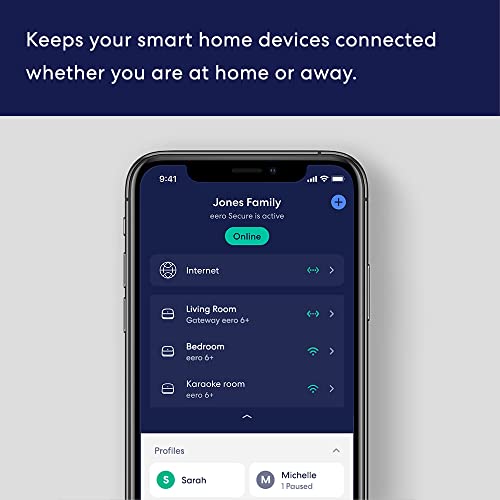
  • Built-in smart home integration with support for Zigbee and Thread
  • Reliable whole-home coverage when used in a multi-node mesh configuration
  • Effective 'set it and forget it' optimization that improves over time via automatic updates

What customers dislike about Amazon Eero 6 Plus?

  • Advanced security features and parental controls require a paid monthly subscription
  • Very limited advanced configuration options for technical users (e.g., no separate 2.4GHz/5GHz SSIDs)
  • Each node only includes two networking ports, which are limited to 1Gbps speeds
  • Lacks support for newer Wi-Fi 6E (6GHz band) or Wi-Fi 7 standards
  • Performance can be inconsistent when far from the main node or in dense housing environments
  • No web-based interface for management; relies entirely on the mobile app

Expert reviews

C
cnet.com
30/10/2024

The CNET review compares the Eero 6 Plus and Eero Pro 6E, noting that while the Pro 6E offers 6GHz support and 2.5Gbps ports for future-proofing, the 6 Plus provides superior value for most users by supporting 160MHz channels at a lower price point. The 6 Plus is highlighted for its reliable gigabit-ready performance, built-in smart home hubs, and affordability, though its dual-band...Read more

W
whistleout.com.au
03/04/2025

The Amazon eero 6+ offers a mid-range mesh upgrade by introducing 160MHz channel support, doubling bandwidth for compatible devices and enhancing mesh backhaul for faster, more stable performance. It excels in user-friendly "set and forget" functionality, featuring a simple app setup, built-in smart home integration via Zigbee, and a discreet, low-profile design that easily covers...Read more

A
androidpolice.com
05/09/2022

According to Android Police, the Amazon eero 6+ serves as a reliable, easy-to-setup, "set it and forget it" mesh system for users seeking entry-level Wi-Fi 6 coverage for large homes. The system supports 160MHz channels for faster speeds and includes integrated Zigbee/Thread hubs for smart home control, while maintaining stability for numerous connected devices. Key,, disadvantages...Read more

R
reviews.org
31/03/2025

The Amazon eero 6+ is a user-friendly, "set-and-forget" mesh Wi-Fi system praised for its simple app-based installation, compact design, and ability to eliminate home dead zones. It supports 160MHz channel width for faster, gigabit-ready speeds and includes a built-in Zigbee smart home hub with Matter support. However, key drawbacks include the necessity of an eero Plus subscription...Read more

T
trustedreviews.com
27/03/2026

The Amazon eero 6+ introduces 160MHz channel support, delivering significantly faster, more reliable performance over its predecessor, particularly for gigabit connections. Key benefits include a user-friendly setup, compact design, and integrated Zigbee/Thread smart home hub capabilities, while offering strong, stable, high-speed performance across different areas. However, the...Read more

A
androidcentral.com
27/03/2026

The eero 6+ is characterized as a high-value, dual-band AX3000 mesh system offering significant upgrades, including 160MHz channel support for improved gigabit speeds. It features a compact design, a user-friendly setup process, and integrated Zigbee/Matter support for smart home connectivity. While delivering reliable performance, the system lacks advanced user settings, requires a...Read more

T
techgearlab.com
13/01/2026

TechGearLab rates the eero 6+ as a top-performing Wi-Fi 6 mesh system, highlighting its exceptional range of over 110 feet, reliable TrueMesh technology, and simple app-based setup. In performance tests, it delivered robust speeds (346 Mbps at 35 feet) and includes two gigabit Ethernet ports per node for versatile, stable connectivity. While offering impressive performance, the...Read more

C
cnet.com
18/10/2024

The CNET review designates the Eero 6 Plus as a top, budget-friendly mesh Wi-Fi 6 system, praising its support for 160MHz channels which boosts performance over the original Eero 6. Key advantages include improved, faster data speeds (up to 304Mbps in tests), simple setup, and built-in Zigbee/Matter smart home support. However, as a dual-band system, it lacks a dedicated backhaul,...Read more

R
rtings.com
22/07/2024

The Amazon eero 6+ is a compact, dual-band Wi-Fi 6 mesh system praised by RTINGS for its simple, small-footprint design and 160MHz channel support for faster speeds. Key pros include an integrated Zigbee smart home hub, Alexa support, and effective, easy-to-use app-based setup. However, the system is limited to only two Gigabit Ethernet ports and lacks advanced networking controls...Read more

U
uk.pcmag.com
07/07/2023

The PCMag review of the Amazon eero 6+ awards it an Editors' Choice for its excellent throughput performance, ease of installation, and support for 160MHz channels in a Wi-Fi 6 mesh system. A three-pack can cover up to 4,500 square feet, providing a reliable solution for eliminating dead zones in large homes. The system doubles as a smart home hub, featuring a built-in Zigbee radio...Read more

T
techradar.com
08/05/2023

The Amazon eero 6+ is a mid-range, dual-band Wi-Fi 6 mesh system designed for affordable, high-speed networking, supporting 160MHz radio channels for up to 1.0 Gbps speeds. It boasts a compact design and an exceptionally fast, app-driven installation process, making it ideal for beginner users seeking to cover up to 4,500 sq. ft. Key pros include its built-in Thread and Zigbee smart...Read more

T
the-ambient.com
19/07/2022

The Amazon eero 6 is a budget-friendly, dual-band Wi-Fi 6 mesh system that excels in ease of use, featuring a simple app-based setup, a compact design, and a built-in Zigbee smart home hub. While it offers stable, improved coverage for average households with speeds up to 500Mbps, its performance can drop over long distances due to lack of a dedicated backhaul band. Key limitations...Read more

P
pcmag.com
06/05/2022

The eero 6+ is an Editors' Choice Wi-Fi 6 mesh system offering an excellent balance of speed, 160MHz radio channel support, and easy installation for smart home users. It provides robust performance for large homes via an intuitive app, including an integrated Zigbee hub and seamless Alexa integration. However, the system requires a subscription for advanced security, lacks USB...Read more

Video reviews

Compare Amazon Eero 6 Plus with other routers

VS
VS

Compare